
INTRODUCTION
The discovery in 1962 of heat-induced chromosomal puffing in the salivary glands of Drosophila busckii opened a new avenue of research. The proteins involved were later termed “heat shock proteins” (HSPs) after being observed in Drosophila melanogaster salivary glands and other tissues following a brief, non-lethal elevation of body temperature, approximately 5°C above normal (1). Even a mild thermal stress was sufficient to trigger a thermal shock response, characterized by the production of unique proteins infrequently found in adult tissues, alongside the upregulation of pre-existing or cognate HSPs. Over time, extensive evidence has demonstrated that different HSP families serve unique functions, with gene transcription being transiently activated to enhance protein production, particularly within cardiac tissue. The induction of HSP synthesis is now recognized as a key intrinsic defense mechanism that safeguards essential cellular systems against environmental and physiological stressors. The roles of the 70-kDa HSP, small HSPs, and heat shock factors (HSFs) have received considerable attention.
Multiple stress-inducing stimuli, both physical and chemical, stimulate HSPs production in a wide range of tissues, including the cardiovascular system (2). This process is initiated through mechanisms such as activation of membrane-associated receptors, alterations in membrane dynamics, or intracellular perturbations such as temperature changes and oxygen fluctuations. HSPs represent one of the most evolutionarily conserved protein families, present across both prokaryotes and eukaryotes. They exhibit strong interspecies conservation and are constitutively expressed at basal levels in nearly all cell types. Across organisms as diverse as corals, desert ants, plants, microbes, and mammals, stress exposure leads to HSP overexpression. Because of their universality, HSP induction has even been employed as a broad biomarker for environmental stress and pollution. At the molecular level, the transcription of the HSP gene is regulated by the binding of heat shock elements in the promoter regions to activated factors. Typically, HSFs exist as inactive monomers in the cytoplasm but undergo activation, trimerization, and nuclear translocation under stress conditions (3). This activation often involves Ras-dependent hyperphosphorylation mediated by mitogen-activated protein kinases (4). The HSF family regulates HSP transcription either independently or cooperatively, acting through gene activation or repression. In humans, six HSFs are encoded, with HSF1 and HSF2 being the most prominent in vertebrates. Functionally, HSPs exert cytoprotective effects by serving as molecular chaperones, facilitating protein folding, intracellular trafficking, and the repair of misfolded or denatured proteins. In this role, they transiently interact with diverse client proteins until their folding or stabilization is complete.
Among the HSPs implicated in atherosclerosis, HSP27, HSP60, HSP70, and HSP90 have been most extensively examined (5). HSP27 functions as an intracellular chaperone, with its activity regulated by cycles of phosphorylation and dephosphorylation within large protein complexes that form an ATP-independent network. Beyond this, HSP27 contributes to the preservation of RNA stability, facilitates antioxidant defense mechanisms, and exerts anti-apoptotic effects. Its release into the extracellular space may result from tissue injury or through secretory pathways such as lysosomes and exosomes. In the extracellular environment, HSP27 interacts with multiple Membrane receptors on endothelial and immunological cells, such as CD91, CD40, CD36, CD14, and scavenger receptor A (SR-A), and Toll-like receptors (TLR2, TLR3, TLR4) (6).
Ischemic heart disease, in both its acute and chronic forms, continues to be a leading cause of death in Western countries, despite the availability of various pharmacological treatments such as Calcium channel blockers, vasodilators, angiotensin-converting enzyme inhibitors, and adrenergic receptor antagonists. Beyond external interventions, the heart also possesses intrinsic protective mechanisms. Experimental studies in mice have shown that enhanced synthesis of HSPs improves tolerance to ischemic injury. These proteins are produced within both cardiac and vascular tissues, although the types generated in each compartment differ slightly. In adult mice under non-stress conditions, several HSPs, including Hsp27, Hsc70, Hsp70, and Hsp84, are continuously expressed across multiple organs, including the heart.
In contrast, unstressed rat hearts exhibit high levels of αβ-crystallin with comparatively lower amounts of Hsp27. Hsp27 is expressed in endothelium cells, smooth muscle cells, and cardiac myocytes in both rat and human hearts, whereas αβ-crystallin is restricted to cardiomyocytes. While limited investigations have examined the roles of heat shock factors (HSFs) in cardiac tissue, the presence of HSF1, HSF2, and HSF4 has been confirmed. Although the steady expression of HSPs in the adult heart is well recognized, their regulatory mechanisms and expression profiles during embryonic, neonatal, and developmental stages remain insufficiently understood. Only recently have studies clarified the expression of Hsp70 and Hsc70 in the immature ovine heart during perinatal and juvenile stages. Despite extensive research on HSPs in cardiovascular physiology, early reviews primarily focused on general stress responses, ischemic tolerance, and cardiac pathology, often overlooking the specific effects of climate-induced stressors such as heat waves, temperature extremes, and environmental perturbations on heart and vascular health. Moreover, the integration of molecular mechanisms, metabolic interactions, and clinical outcomes under these conditions remains limited. This review aims to bridge these gaps by providing a comprehensive synthesis of HSP-mediated cardio protection under climate stress, highlighting mechanistic insights, environmental triggers, and potential therapeutic strategies relevant to rising global temperatures. The major heat shock protein subtypes involved in climate-induced cardiovascular stress, their key cardiovascular effects, and relevant environmental triggers are summarized in Table 1.
Table 1.
Heat Shock Protein Subtypes, Cardiovascular Effects, and Climate/Stress Triggers
| HSP Subtype | Major Cardiovascular Effects | Climate / Stress Triggers Relevant to CVS |
|---|---|---|
| HSP27 (HspB1) | Stabilizes cytoskeleton; protects endothelial integrity; reduces apoptosis; modulates inflammation; protective role in atherosclerosis and vascular remodeling | Heat waves, shear stress, oxidative stress, ischemia–reperfusion, metabolic stress (obesity, diabetes) |
| αB-crystallin (HspB5) | Preserves cardiomyocyte structure; supports contractile function; enhances ischemic tolerance; protects myofilaments | Thermal stress, hypoxia, ischemia, mechanical strain |
| HSP60 | Mitochondrial protein folding; immune activation when extracellular; implicated in hypertension, atherosclerosis, and metabolic cardiovascular risk | Oxidative stress, inflammation, metabolic stress, chronic heat exposure |
| HSP70 (HspA1A/Hsp72) | Strong cardioprotection; improves ischemic tolerance; maintains calcium homeostasis; reduces arrhythmias; modulates immune responses in hypertension and atherosclerosis | Acute and chronic heat stress, heat waves, hypoxia, ischemia–reperfusion, oxidative stress |
| HSC70 (HspA8) | Constitutive chaperone; supports protein quality control; extracellular form protects against inflammatory hypertrophy | Basal cellular stress, inflammation, metabolic stress |
| HSP90 | Stabilizes signaling proteins (eNOS, kinases); regulates vascular tone; involved in endothelial function and atherosclerosis | Heat stress, oxidative stress, inflammation, disturbed shear stress |
| HSP20 (HspB6) | Enhances myocardial contractility; reduces apoptosis; limits infarct size; promotes autophagy | Ischemia–reperfusion, hypoxia, thermal stress |
| HSP22 (HspB8) | Regulates cardiac hypertrophy; supports mitochondrial function; involved in aging-related cardiac remodeling | Chronic stress, pressure overload, metabolic stress |
| HO-1 (HSP32) | Antioxidant and anti-inflammatory effects; protects vascular endothelium; improves ischemic tolerance | Heat stress, hypoxia, oxidative stress, environmental toxins |
| Heat Shock Factors (HSF1/HSF2) | Master regulators of HSP expression; coordinate cardioprotective stress responses | Heat waves, oxidative stress, ischemia, metabolic and inflammatory stress |
HSPs IN HYPERTENSION
Hypertension remains a leading risk factor for cardiovascular morbidity and mortality worldwide, with complex etiologies involving genetic, environmental, and immunological components. Emerging evidence has implicated immune-mediated mechanisms in the initiation and maintenance of elevated blood pressure, highlighting the role of endogenous antigens such as HSPs and reactive lipid modifications, including isoketals, in disease pathogenesis. Among HSPs, Heat Shock Protein 70 (HSP70) has garnered particular attention due to its immunogenic potential and consistent association with both experimental and human hypertension. HSPs are highly conserved molecular chaperones that maintain cellular proteostasis under physiological and stress conditions, including oxidative stress, ischemia, and mechanical strain (7). HSP70, in particular, is upregulated in response to cellular stress and functions to refold misfolded proteins, prevent aggregation, and facilitate protein degradation. While these protective roles are well-established, HSP70 can also serve as an autoantigen, capable of eliciting adaptive immune responses under certain pathological conditions.
Figure 1. illustrates the cellular signaling pathways involved in heat shock protein induction during stress conditions. Environmental and physiological stressors activate heat shock factors (HSFs), leading to their trimerization and nuclear translocation. Binding of HSFs to heat shock elements (HSEs) in gene promoters induces transcription of HSPs, which function as molecular chaperones to stabilize proteins, prevent aggregation, and maintain cellular homeostasis in cardiovascular tissues.
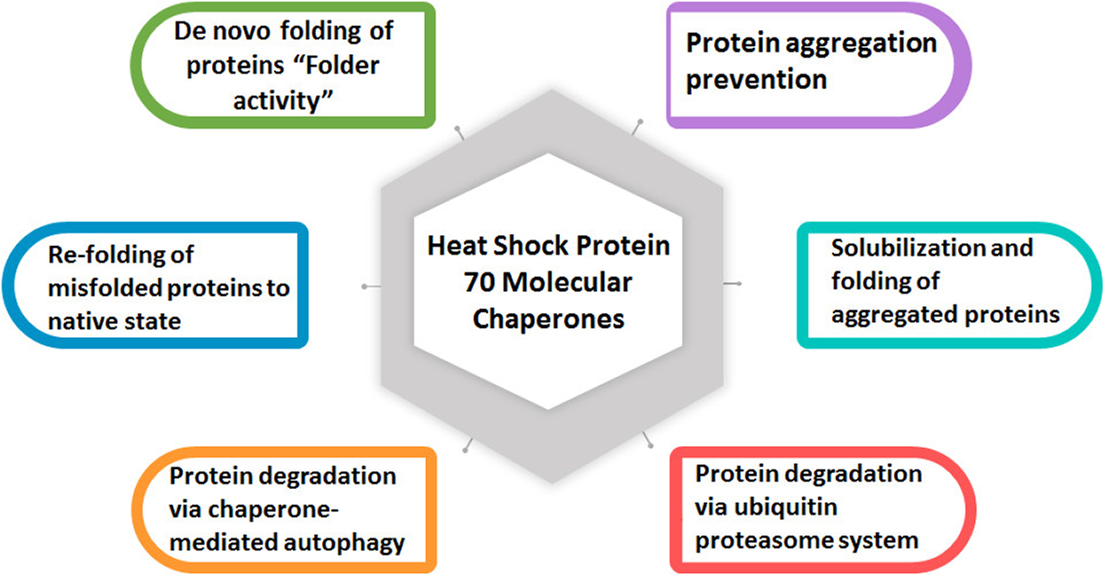
Figure 1.
Molecular Mechanisms of Heat Shock Protein
In experimental models of hypertension, HSP70 accumulation has been consistently observed in renal tissues, whereas levels of other HSP family members, such as HSP60 and HSP90, remain relatively unchanged. This selective renal deposition is of particular interest because the kidneys play a pivotal role in long-term blood pressure regulation via sodium handling, renin-angiotensin-aldosterone system (RAAS) modulation, and local vascular responses (8). Accumulated renal HSP70 may thus serve as a target for circulating immune cells, initiating a cascade of inflammatory events that exacerbate renal dysfunction and hypertension.
HSP for vascular compartment protection
In reaction to environmental stress, all cell types within the vascular wall commence the synthesis of heat shock proteins (HSPs). The production of these vascular HSPs can be induced by stimuli like circulating hormones, reactive oxygen species (ROS), and sodium arsenite (9). Nitric oxide (NO) is thought to contribute to Hsp70 induction in blood vessels, as the suppression of NO synthase (NOS) by N^ω-nitro-L-arginine (L-NNA) diminishes Hsp70 gene transcription (10). The exact signaling route by which nitric oxide (NO) induces Hsp70 production is not fully elucidated. However, it may involve enhanced calcium influx or reactive oxygen species (ROS) produced during heat shock, potentially activating both constitutive and inducible nitric oxide synthase (NOS) pathways. In the aorta, akin to cardiomyocytes, two Hsp32 isozymes: heme oxygenase-1 (HO-1) and HO-2—are expressed constitutively. HO-1 is involved in heme degradation, transforming it into biliverdin, iron, and carbon monoxide (11). The transcription in the aorta can be swiftly accelerated in reaction to acute physical stress, elevated temperatures, hypoxia, hemin, hydrogen peroxide (H2O2), heavy metals, or reperfusion after myocardial ischemia. Research indicates that previous whole-body heat shock elevates. Hsp70 levels safeguard certain essential processes in rat coronary artery endothelial cells during ischemia-reperfusion. In these hearts, vasodilation mediated by endothelial cells in response to 5-hydroxytryptamine stays entirely operational after a 4-hour ischemia interval accompanied by intracoronary cardioplegia. Moreover, in endothelial cells, heat shock-induced phosphorylation of Hsp27 seems to protect certain intracellular structures from external stresses. Upon metabolic suppression of these cells, due to glucose depletion and rotenone exposure, cytoskeletal elements, such as F-actin, undergo fast degradation.
Figure 2 depicts the protective roles of heat shock proteins within the vascular compartment under stress conditions. HSPs are induced in endothelial cells and vascular smooth muscle cells in response to oxidative stress, nitric oxide signaling, and thermal injury. Their actions preserve endothelial function, stabilize the cytoskeleton, reduce oxidative damage, and maintain vasodilatory responses, thereby contributing to vascular integrity and resistance to ischemia–reperfusion injury.
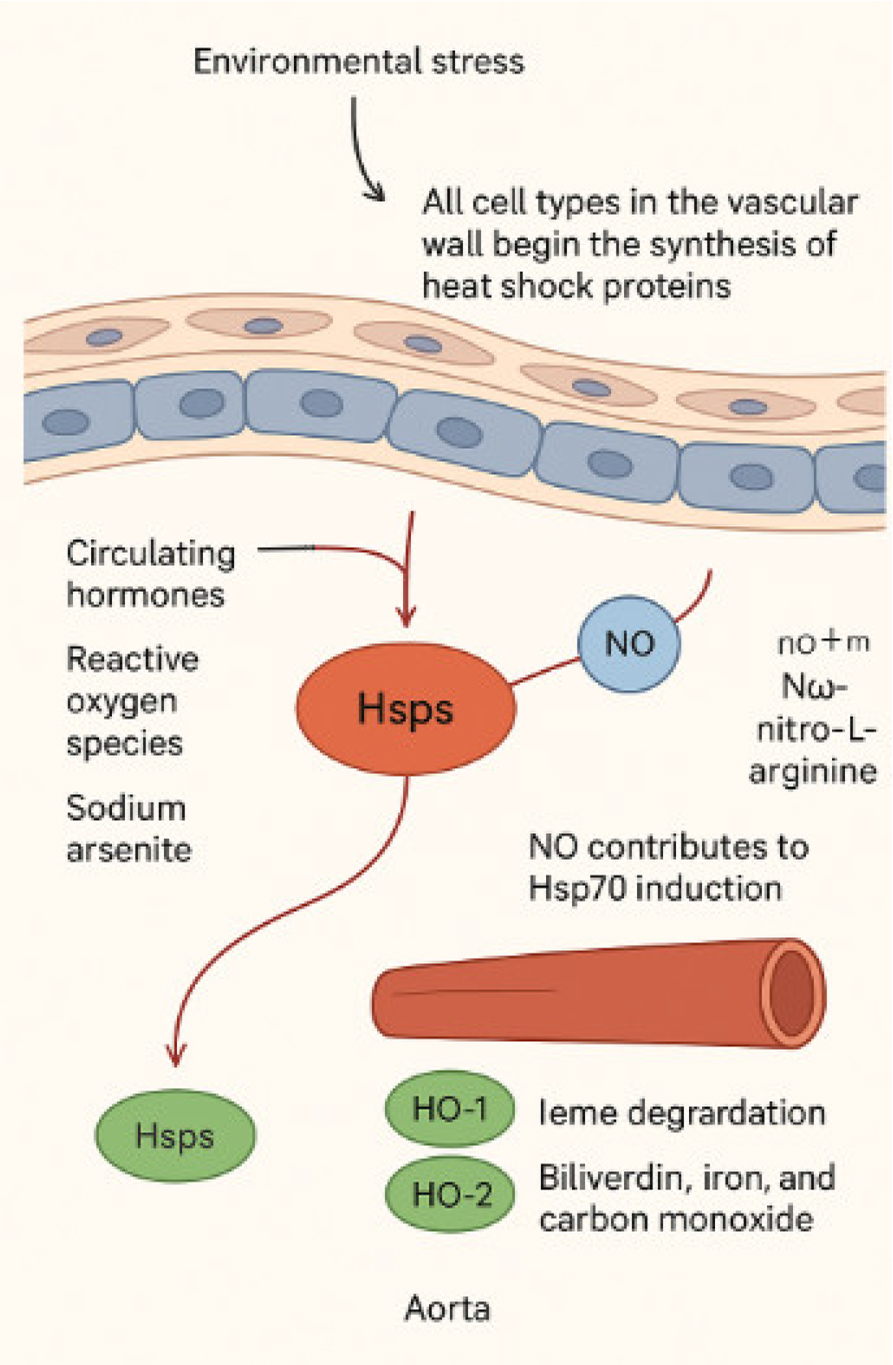
Figure 2.
HSP for vascular protection
HSP protection of cultured cardiomyocytes
Extensive research has explored how cardiac cells respond to stress in vitro. Various cell models have been utilized, including freshly isolated neonatal and adult cardiomyocytes, as well as myogenic cell lines such as C2C12 and H9c2. The cellular environment appears to influence stress responses, as extracellular matrix components like collagen can reduce both basal and thermally induced synthesis of several heat shock proteins (HSPs) in cultured cardiomyocytes. Evidence indicates that early activation of the HSP gene transcription enhances cell survival under severe or potentially lethal stress. The expression of hsp70 and hsp90 can be stimulated by heat or metabolic stress, while hsp70 and HO-1 levels can also be elevated by the antioxidant ebselen (12). Hypoxic conditions have been shown to increase HSP levels, particularly HSP70, which correlates with improved resistance to lethal heat stress. Achieving similar HSP70 levels through hyperthermic pretreatment does not always confer equivalent protection, suggesting that HSP-mediated cytoprotection is context-dependent. The function of heat shock proteins (HSPs) has been examined in relation to exposure to bacterial lipopolysaccharide (LPS), particularly within the H9c2 cell line. Originating from embryonic cardiac tissue, H9c2 cells retain several cardiac-specific characteristics, making them a valuable in vitro model for studying cardiomyocyte stress adaptation and HSP-related protective mechanisms (13).
HSP in Calcium homeostasis
Induction of heat shock proteins (HSPs) plays a protective role in cardiomyocytes by supporting calcium homeostasis during ischemic stress. Dysregulated calcium levels are a key feature of ischemia-reperfusion injury, causing impaired contraction, mitochondrial dysfunction, and cell death. Reported that hearts preconditioned with heat exhibit reduced mitochondrial calcium accumulation during ischemia, suggesting that HSPs help prevent harmful calcium overload. Subsequent studies have confirmed this effect, providing strong evidence that HSPs modulate intracellular calcium under stress conditions. Rabbit papillary muscles collected 24 hours after heat pretreatment maintained normal calcium handling during reoxygenation following hypoxia. Basal diastolic intracellular calcium levels were similar in heat-pretreated and control cardiomyocytes, indicating maintained baseline calcium regulation (14). Furthermore, myofilament calcium sensitivity remained unaltered at healthy extracellular calcium levels, ensuring proper excitation–contraction coupling. Even under elevated extracellular calcium, contractile function was not compromised, emphasizing the stabilizing effect of HSPs on calcium-dependent mechanisms. Heat-pretreated cardiomyocytes recovered diastolic cell length more rapidly and completely than untreated cells, reflecting faster restoration of relaxation dynamics and reduced risk of diastolic dysfunction. Overall, these observations highlight the critical role of HSPs in maintaining calcium balance, protecting heart cells from ischemic damage, and preserving cardiac mechanical function under stress.
HSP in Electrical stability
Preconditioning with heat stress, or the intentional induction of certain heat shock proteins (HSPs) such as Hsp70, prior to ischemic events, has been shown to provide protective effects against arrhythmias that occur after ischemia. Studies using intact rats subjected to temporary coronary occlusion and isolated rat hearts undergoing brief ischemic episodes have reported a significant reduction in post-ischemic arrhythmias and ventricular fibrillation following heat pretreatment (15). This cardioprotective effect highlights the role of stress-induced molecular adaptations in maintaining myocardial electrical stability. Research demonstrates a biphasic decline in ventricular fibrillation in heat-preconditioned rats after myocardial infarction (16), with peak protection occurring roughly 30 minutes after pretreatment. The decrease in arrhythmic incidents is accompanied by a notable reduction in infarct size compared to untreated controls. These results indicate that the induction of HSPs can alleviate both structural and electrophysiological damage caused by ischemia. At a mechanistic level, Hsp70 and associated chaperones help maintain protein structure, preserve mitochondrial function, and inhibit apoptotic pathways (17), thereby preventing the cellular dysfunction that promotes arrhythmias. Improved perfusion in surviving myocardial tissue may contribute indirectly to more uniform electrical conduction and reduced repolarization heterogeneity, further mitigating rhythm disturbances. Thus, heat shock-mediated preconditioning is a vital endogenous mechanism that enhances myocardial resilience, offering insights into therapeutic approaches to limit ischemia-reperfusion-induced arrhythmias and reduce infarct size in cardiovascular disease.
Mediators of Ischemic Tolerance
A distinct method for triggering the heart’s intrinsic protective mechanisms, independent of HSPs, is referred to as ischemic (“classic”) preconditioning. Unlike HSP-mediated cardioprotection, which manifests around 24 hours after treatment, protection from ischemic preconditioning arises within hours of the ischemic event. This preconditioning rapidly stimulates the production of new HSPs and promotes the nuclear translocation of existing ones. However, the precise role of HSPs in the immediate cardioprotective effects of ischemic preconditioning remains uncertain. During this process, small heat shock proteins such as B-crystallin and Hsp27α shift to the myofilament and cytoskeletal compartments (18). Reactive oxygen species (ROS) appear essential for activation, as interventions with allopurinol or catalase inhibit HSF1 activation. The activity of manganese superoxide dismutase (Mn-SOD) follows a biphasic pattern that closely mirrors the cardioprotective timeline. Upregulation of Mn-SOD has been shown to enhance activity of endogenous catalase, glutathione peroxidase, and glutathione reductase after ischemia preconditioning (19). Enhanced tolerance to ischemia correlates with elevated tissue Hsp70 levels and diminished incidence of arrhythmias. Ischemic preconditioning does not provide late-stage protection in the rat heart, even with increased levels of Hsp70, suggesting it operates through mechanisms separate from classical Hsp-mediated cardio protection (20). Cardiac ischemia/reperfusion injury induces higher expression of HSP70 and HSP90 mRNA, with HSP70 levels substantially exceeding HSP90. This upregulation likely results from HSF1 activation triggered by ROS accumulation. Elevated HSP70 and HSP72 provide protective effects during ischemia/reperfusion events (21). Repeated endurance exercise, which induces HSP72, has been shown to reduce Myocardial infarct dimensions and cardiac apoptosis. Furthermore, cardiac-specific overexpression of HSP20 protects against ischemia/reperfusion injury by improving contractile performance, reducing myocyte apoptosis, and markedly decreasing infarct size. The protective effects of HSP20 appear to involve the activation of autophagy, a key process in mitigating ischemia/reperfusion damage.
Cardiac Senescence
The efficacy of HSPs in safeguarding and enhancing heart function during and after ischemic events is significantly influenced by tissue age. Advances in healthcare have extended human life expectancy, resulting in a larger elderly population. Both aged humans and animals demonstrate increased vulnerability to myocardial ischemia. Since Hsp-mediated stress protection may be particularly important for older individuals, numerous studies have investigated its potential benefits in this age group. The capacity to induce heat shock protein production in response to stress diminishes with age (22). Similarly, cultured hepatocytes from older animals exhibit reduced Hsp synthesis. In senescent human fibroblasts and rat splenic cells, Hsp70 synthesis in response to heat shock is significantly diminished, corresponding with a substantial drop in HSF1 binding to heat shock elements within the Hsp70 gene promoter. Caloric restriction can completely reverse the age-associated reduction in Hsp70 gene transcription. The regulation of stress-induced Hsp production in older organisms is intricate and cannot be attributed solely to decreased HSF1 binding at the promoter regions of hsp genes (23). In the aging cardiovascular system, stressinduced Hsp production is also impaired. Hsp70 expression in the arterial walls of older animals in response to acute hypertension is considerably lower than in their younger counterparts. Despite this decline, the complete activation of hsp genes remains feasible under specific conditions, suggesting that different HSF1 activation pathways may function variably in adult versus aged tissues.
Cardiac hypertrophy
Pathological myocardial hypertrophy is acknowledged as a significant factor in sudden cardiac mortality, myocardial infarction, and heart failure. Hearts undergoing hypertrophy are more susceptible to ischemic injury. During post-ischemic reperfusion in hypertrophied hearts, common observations include chronic arrhythmias, persistent low cardiac output, and elevated release of intracellular enzymes. Investigating the capacity of hypertrophied cardiac tissue to upregulate heat shock proteins (HSPs) is valuable, as these proteins may help mitigate the decreased ischemic tolerance seen in such hearts. In fully compensated hypertrophy, basal HSP levels in the myocardium generally remain unchanged. In rat cardiomyocytes studied 2–4 days after thoracic aortic constriction, transient overexpression of Hsp70 and Hsp60 has been observed (24). Stress-induced transcription of hsp genes appears to be preserved, at least during the compensatory phase of hypertrophy. Young spontaneously hypertensive rats (SHRs) preconditioned with heat exhibited nearly a threefold increase in cardiac Hsp70 compared with agematched normotensive controls (25); this heightened heat shock response in juveniles is largely due to impaired thermoregulation rather than an intrinsic enhancement in HSP synthesis.
In contrast, hsp gene expression in animals subjected to abdominal aortic constriction is comparatively modest versus SHRs (26). In hypertrophied hearts from these models, heat exposure caused a sevenfold rise in Hsp70 mRNA, whereas non-hypertrophied controls only showed a threefold increase. The capacity of hypertrophied hearts to produce key HSPs such as Hsp70 declines with age and is influenced by the type of hypertrophy. Nonetheless, heat preconditioning can reduce ischemia-reperfusion injury in hypertrophied hearts, likely via induction of HSPs other than Hsp70. Experimental Overexpression of a dominant-negative Hsp70 or targeted silencing of histone deacetylase 2 (HDAC2) using siRNA has been shown to attenuate cardiac hypertrophy, highlighting a functional link between Hsp70 and epigenetic regulators in remodeling processes (27). In rat models, hypertrophy induced by isoproterenol or aortic constriction is associated with reduced HDAC2 activity, suggesting that Hsp70 may modulate hypertrophy by stabilizing HDAC2 and affecting downstream transcription (28). Class II HDACs—including HDAC4, HDAC6, HDAC7, and HDAC9 seem to inhibit hypertrophy through repression of transcription mediated by MEF2, GATA, and NFAT, thereby maintaining cardiomyocyte homeostasis under stress (29). Hsp22 expression increases in ventricular hypertrophy in both cultured cardiomyocytes and intact mouse hearts (30). Elevated Hsp22 correlates with the emergence of spontaneous hypertrophy and the reactivation of the fetal gene program, indicating that Hsp22 may act as a molecular regulator of abnormal cardiac growth.
HSP in atherosclerosis
Numerous members of the HSPs families have been detected in atherosclerotic plaques within human blood vessels. The physiological and pathological implications of their abundant presence in these plaques are not yet fully understood. The prevailing hypothesis suggests that their accumulation reflects the stressful microenvironment experienced by cells in developing plaques. Berberian and colleagues were among the first to report elevated levels of the inducible Hsp70 protein within the core of atherosclerotic plaques (31). This increase is particularly associated with infiltrating macrophages and is concentrated near the edges of necrotic regions within the vessel wall. In addition to Hsp70, higher levels of Hsp60, Hsp90, and Hsp27 have also been observed. The initial trigger for enhanced Hsp production in atherosclerotic tissue remains debated. Oxidized low-density lipoproteins (Ox-LDL), known for their cytotoxicity and role in atherosclerosis, have been demonstrated to induce Hsp70 production in cultured human endothelial cells (32). Hsp70 production is significantly lower in endothelial cells derived from umbilical veins compared to these cultured cells. Studies indicate that the necrosis of smooth muscle cells caused by circulating toxins can be mitigated by administering exogenous Hsp70. Moreover, pre-exposure to heat stress inhibits smooth muscle cell proliferation after mechanical injury by inducing Hsp synthesis. Variations in shear stress, a tangential component of blood flow, activate genes associated with atherogenesis in endothelial regions susceptible to lesion formation. The small Hsp27 protein, present in vascular endothelial cells, undergoes phosphorylation in response to changes in shear stress, even though its overall expression levels remain unchanged (33).
By modulating TLR signaling, HSP27 enhances NF-κB activation, leading to the production of both pro- and anti-inflammatory cytokines, particularly interleukin-10 (IL-10) (34). Evidence indicates that HSP27 exerts protective effects against atherosclerotic progression. Its interaction with estrogen receptors may account for the cardioprotective influence of estrogens observed in atherosclerosis. Evidence indicates that HSP27 exerts protective effects against atherosclerotic progression. Estrogen signaling through estrogen receptors promotes HSP27 upregulation, which enhances endothelial cell survival, suppresses inflammatory signaling, and contributes to plaque stabilization, thereby providing a mechanistic basis for the cardioprotective effects of estrogens in atherosclerosis. HSP60 also contributes to disease mechanisms, with multiple epitopes displaying cross-reactivity between bacterial HSP60 and host T and B cells. HSP70 is expressed within atherosclerotic plaques and is elevated in advanced lesions. This protein has been reported to suppress NF-κB activity, indicating potential anti-inflammatory roles (35); however, findings remain inconsistent, making its precise contribution uncertain. Circulating HSP70 levels have been associated with both increased and decreased disease severity. Administration of HSP70 stimulates pro-inflammatory IL-6 production while simultaneously enhancing regulatory T cell (Treg) responses, reflecting a dual role in immune modulation.
HSP in obesity induced CVS complications
Dysfunctional adipose tissue induces chronic systemic inflammation and metabolic irregularities, provoking both inflammatory and metabolic stress. Metabolic stress encompasses difficulties associated with obesity-related conditions, including insulin resistance, type 2 diabetes, metabolic syndrome, hormonal imbalances, tissue hypoxia, cellular edema, and increased production of reactive oxygen species. This condition triggers a physiological stress response marked by increased production and secretion of heat shock proteins (HSPs). Upon release into circulation, HSPs provoke the secretion of inflammatory mediators, hence intensifying chronic tissue inflammation and facilitating the advancement of metabolic and cardiovascular illnesses. A multitude of studies have examined the biomarker potential of HSP27, emphasizing its metabolic functions and association with cardiac events. Alterations in HSP27 expression have been identified in multiple obesity-related metabolic diseases, with diminished expression reported in the adipose tissue of women who have gestational diabetes and obesity (36).
Oliva et al. reported that HSP27 expression was reduced in the adipose tissue of 12 women with insulin-treated gestational diabetes mellitus relative to 12 women with normal glucose tolerance (37). Their study evaluated various heat shock proteins, including HSP27, HSP70, cvHSP, and HSP60, in conjunction with clinical parameters such as body mass index (BMI) and lipid profiles. One year following ablation therapy, only the basal HSP27 levels in the blood showed an increase, while higher circulating HSP27 concentrations were linked to an elevated risk of recurrent atrial fibrillation. The study found no correlation between BMI and HSP27 levels; however, patients with atrial fibrillation had a significantly higher BMI than the control group. Obesity remains a critical contributor to the development of coronary artery disease (CAD). Supporting this, Abaspour et al. reported a relationship between HSP27 mRNA copy number in peripheral blood mononuclear cells and CAD severity. However, BMI and hip circumference did not significantly differ among groups based on HSP27 expression (38). The involvement of HSP40 in obesity is still debated, as it is activated under various stress conditions, including hypoxia, inflammation, and mechanical tissue injury. Both serum and adipose tissue HSP40 levels are elevated in individuals with obesity compared to those of normal weight (39). Higher expression is observed in obese patients with insulin resistance compared to their insulin-sensitive counterparts. Furthermore, Sell et al. identified a correlation between HSP60 levels and the advancement of obesity during bariatric surgery in a group of 53 obese women (40).
Kuka et al. investigated the correlation between plasma HSP60 concentrations and multiple health indicators, including hypertension, oxidative stress, lipid profiles, and cardiometabolic risk factors such as abdominal obesity, metabolic syndrome, and diabetes mellitus, in a cohort of 129 hypertensive and 39 normotensive women (41). Their findings indicated a correlation between blood pressure and HSP60 levels in subjects with hypertension, but in the normotensive group, HSP60 levels were correlated with total glutathione. Increased anti-HSP60 levels were associated with elevated coronary artery calcium scores, suggesting subclinical atherosclerosis; however, factors such as diabetes, hypertension, obesity, and dyslipidemia did not seem to affect these antibody concentrations. The research suggested that serum anti-HSP60 may function as an independent biomarker for the early identification of atherosclerosis in asymptomatic obese persons.
CONCLUSION
Heat shock proteins (HSPs) play a multifaceted role in cardiovascular protection under diverse stress conditions. Evidence indicates their involvement in hypertension regulation, maintenance of vascular integrity, and protection of cultured cardiomyocytes. HSPs contribute to calcium homeostasis and electrical stability, thereby preserving myocardial function and preventing arrhythmias. They act as key mediators of ischemic tolerance, modulating adaptive responses to hypoxic injury. HSPs influence cardiac senescence and hypertrophy, mitigating age- and stress-related cardiac remodeling. Their role extends to metabolic and inflammatory contexts, including atherosclerosis and obesity-induced cardiovascular complications, highlighting their systemic relevance. This review stresses the therapeutic potential of HSP modulation in preventing and managing climate- and stress-induced cardiovascular damage. By integrating molecular, cellular, and clinical evidence, it provides a comprehensive framework for future research, emphasizing HSPs as critical targets for cardioprotection and translational interventions in cardiovascular medicine.