
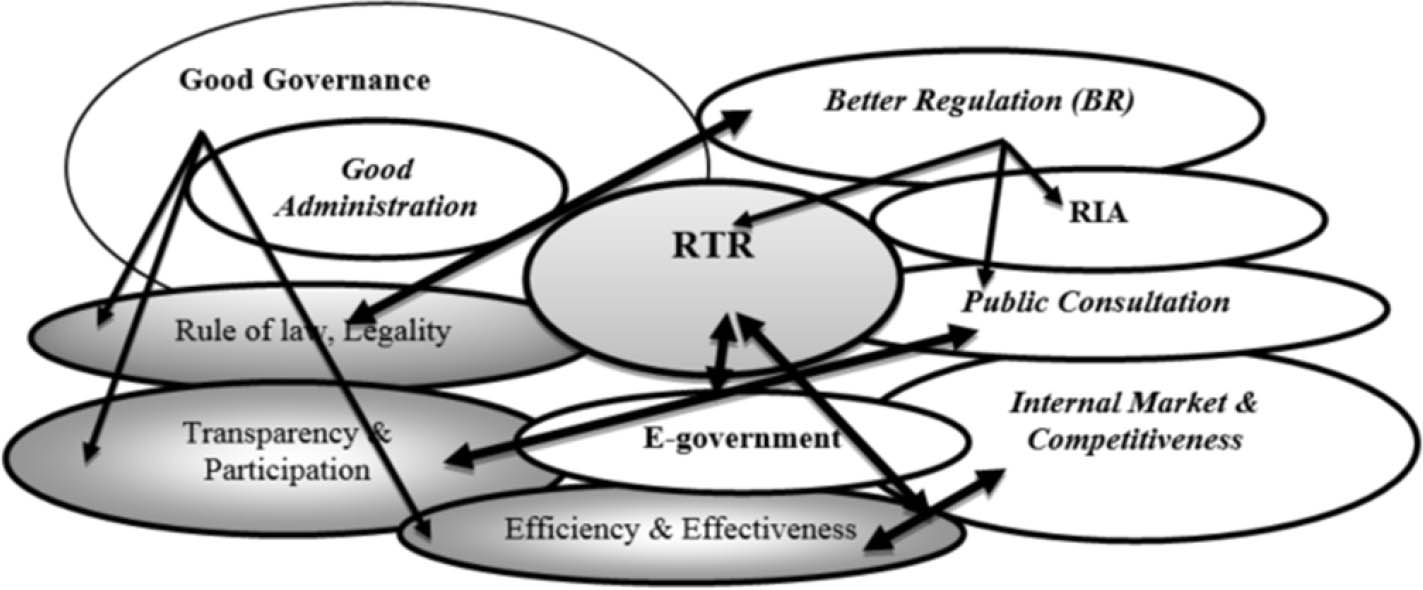
Figure 1
Red tape reduction at the intersection of contemporary concepts
Source: Kovač and Sever (2016)
Table 1
SMEs at the EU and national level
| Type of enterprise | Number of employees | Annual turnover | Annual balance sheet total |
|---|---|---|---|
| Medium-sized enterprise | EU: < 250 Slovenia: < 250 | EU: ≤ €50 mill. Slovenia: ≤ €40 mill. | EU: ≤ €43 mill. Slovenia: ≤ €20 mill. |
| Small-sized enterprise | EU: < 50 Slovenia: < 50 | EU: ≤ €10 mill. Slovenia: ≤ €8 mill. | EU: ≤ €10 mill. Slovenia: ≤ €4 mill. |
| Micro enterprise | EU: < 10 Slovenia: < 10 | EU: ≤ €2 mill. Slovenia: ≤ €0.7 mill. | EU: ≤ €2 mill. Slovenia: ≤ €0.35 mill. |
[i] Source: European Commission (2003); Companies Act (2006 and amendments)
Table 2
Key areas relevant for a business-friendly environment
| Key (administrative) areas | |
|---|---|
| Doing Business by the World Bank (research Focus is on: procedure, time & cost) | Research performed on SMEs, 2016–2017 (research focus is on the RTR perception by SMEs) |
|
|
[i] Source: Doing Business (2016, 2017, 2020); and own (2017)
Table 3
Ranking of key administrative areas
| Administrative area perceived as an area loaded with administrative burdens (N=689) | Administrative area perceived as an area loaded with administrative barriers (N=675) | |||
|---|---|---|---|---|
| Rank | Area | Share | Area | Share |
| 1 | payment of public duties | 53% | payment of public duties | 45% |
| 2 | accounting | 46% | accounting | 38% |
| 3 | inspections | 27% | employees | 29% |
| 4 | employees | 25% | inspections | 29% |
| 5 | construction permits | 22% | construction permits | 20% |
| 6 | (re)establishing an enterprise | 5% | (re)establishing an enterprise | 9% |
[i] Source: own (2017)
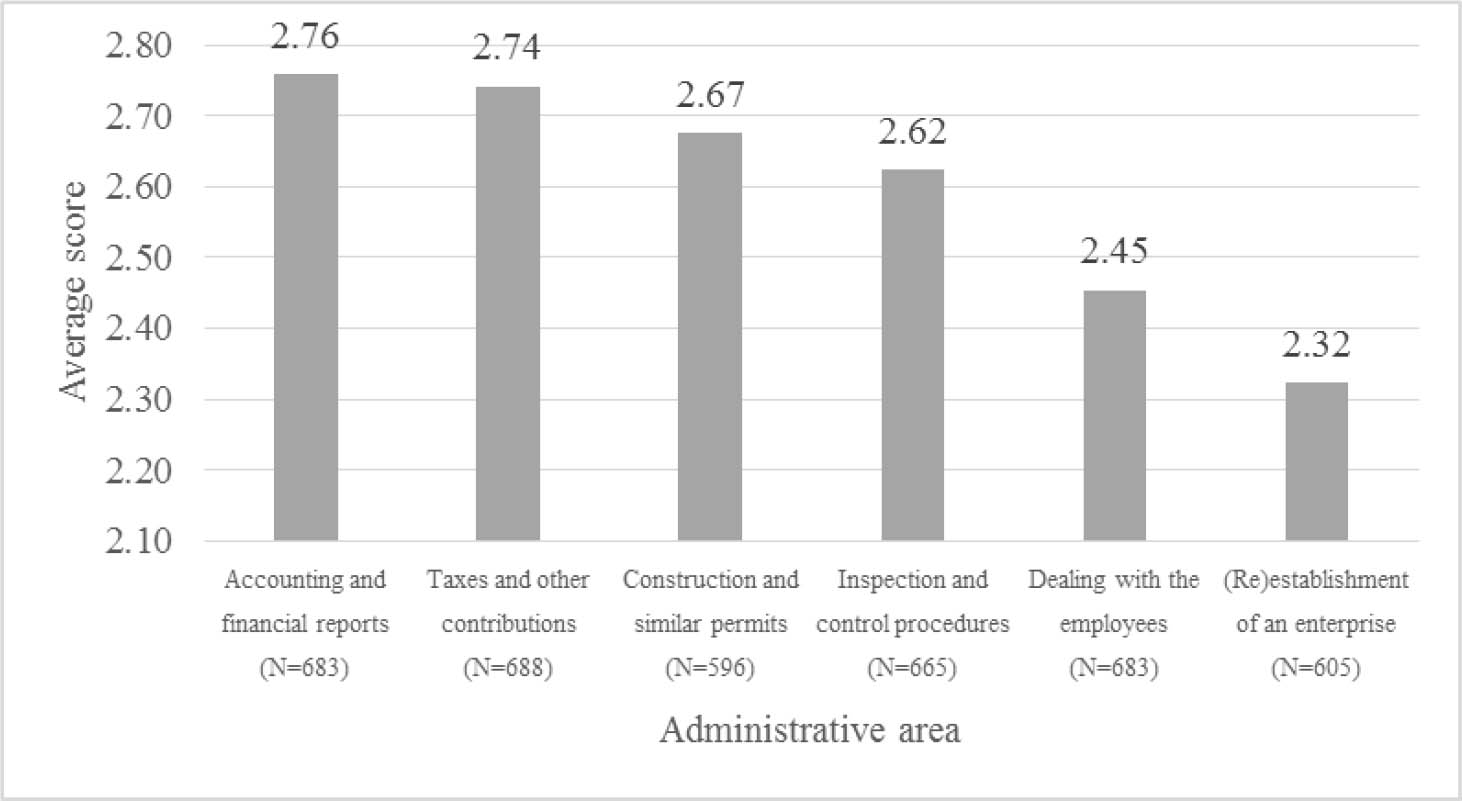
Figure 2
The extent of administrative barriers within individual areas – overview
Source: own (2017)
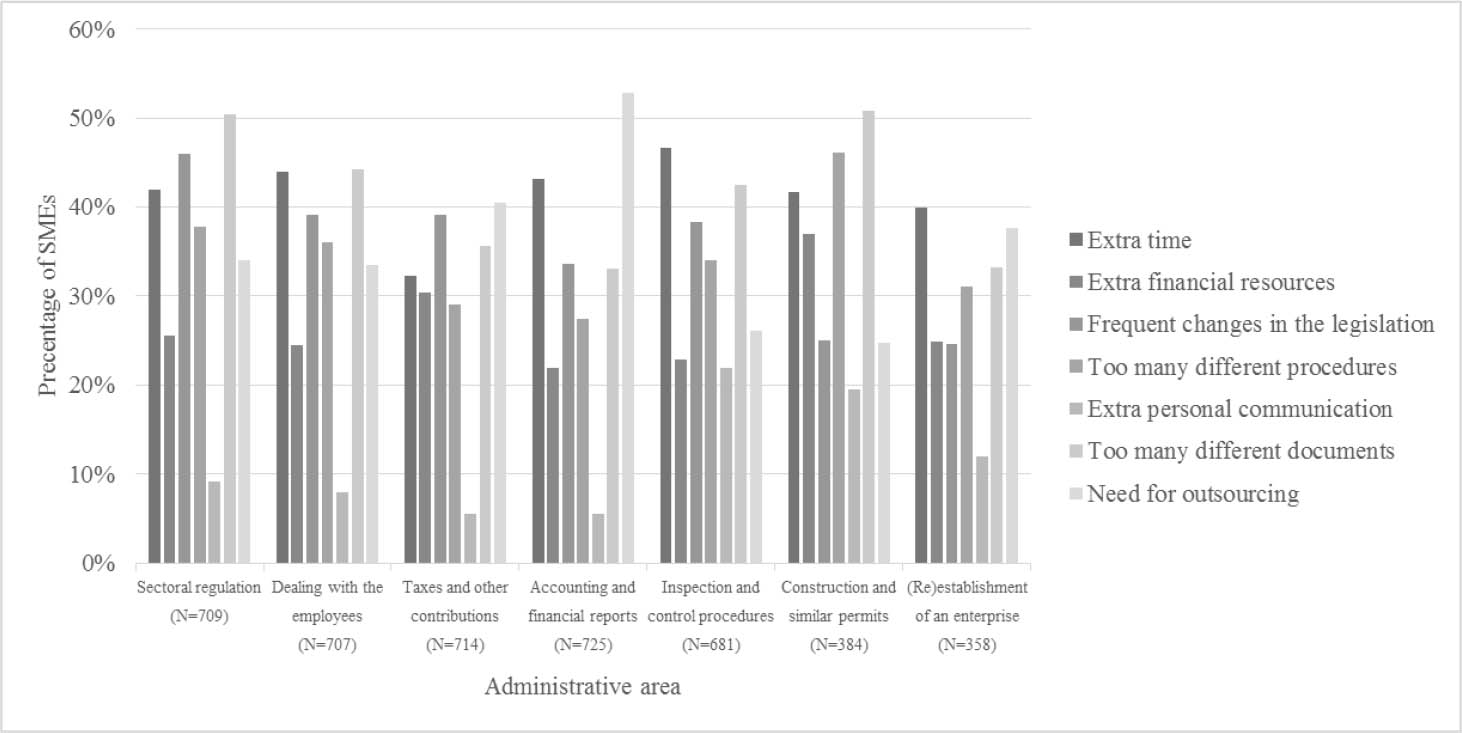
Figure 3
Administrative barriers identified by the SMEs in the selected areas
Source: own (2017)
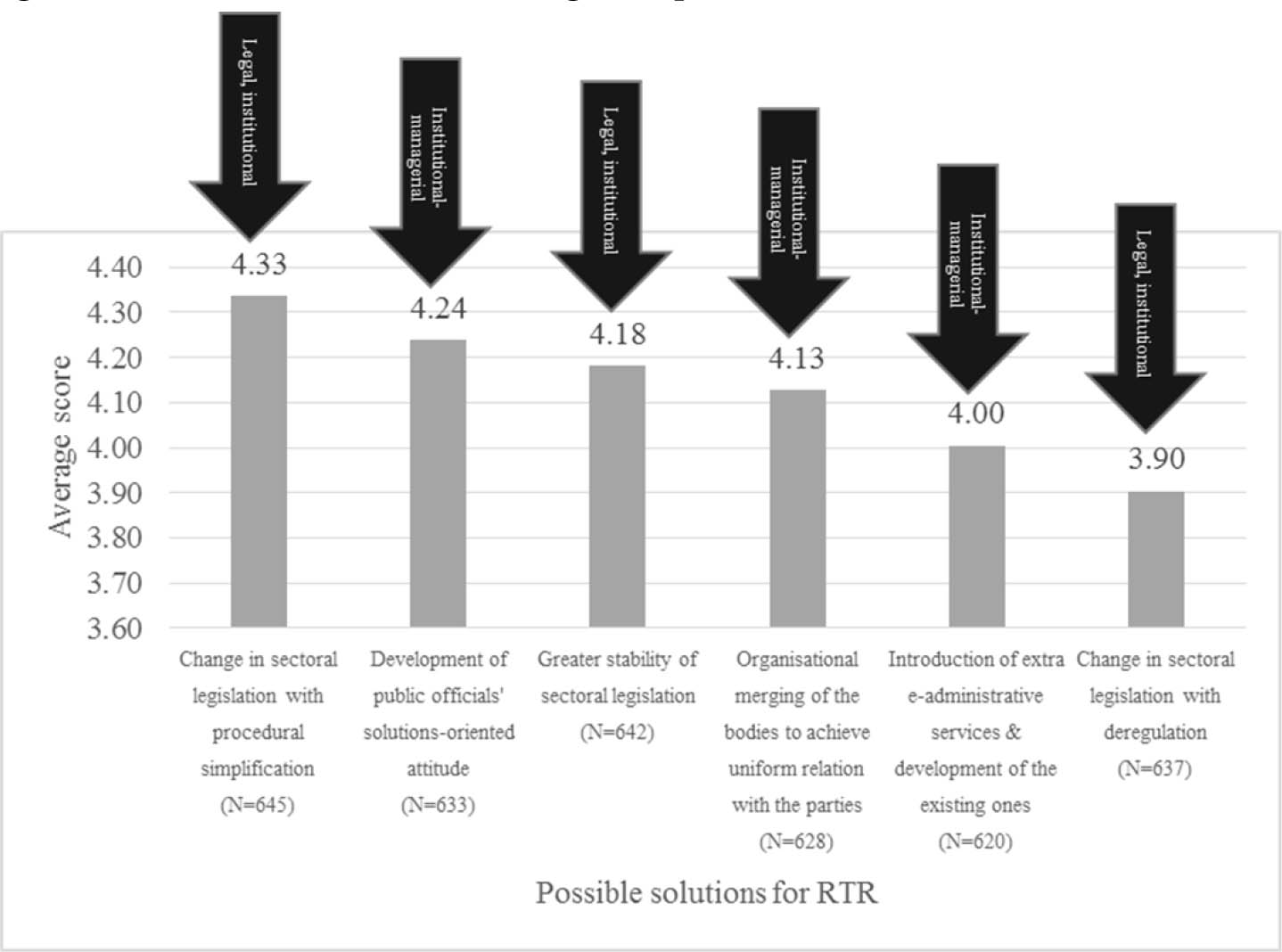
Figure 4
Solutions identified for reducing red tape in the selected areas
Source: own (2017)
Table 4
Spearman’s correlation coefficients between solutions for reducing administrative barriers and the perceived extent of administrative barriers in individual areas
| Greater stability of sectoral legislation | Change in sectoral legislation with deregulation | Change in sectoral legislation with procedural simplification | Introduction of extra e-administrative services & development of the existing ones | Organizational merging of the bodies to achieve uniform relation with the parties | Development of public officials’ solutions-oriented attitude | |
|---|---|---|---|---|---|---|
| Dealing with the employees | 0.134** (N=458) | 0.151** (N=455) | 0.076 (N=455) | 0.015 (N=450) | 0.019 (N=450) | −0.002 (N=451) |
| Taxes and other contributions | 0.051 (N=462) | 0.099* (N=461) | 0.093* (N=461) | 0.013 (N=451) | 0.073 (N=451) | 0.059 (N=454) |
| Accounting and financial reports | 0.095* (N=457) | 0.123** (N=456) | 0.122** (N=456) | 0.053 (N=448) | 0.121* (N=449) | 0.079 (N=450) |
| Inspection and control procedures | 0.166*** (N=444) | 0.132** (N=444) | 0.063 (N=444) | 0.018 (N=437) | 0.059 (N=437) | 0.096* (N=439) |
| Construction and similar permits | 0.201*** (N=407) | 0.127* (N=407) | 0.078 (N=409) | −0.053 (N=402) | 0.078 (N=405) | 0.143** (N=406) |
| (Re)establishment of an enterprise | 0.116* (N=414) | 0.179*** (N=412) | 0.069 (N=415) | −0.062 (N=409) | 0.044 (N=410) | 0.093 (N=411) |