
Table 1
Characteristics of types (models) of the welfare state
| Welfare state type | Residual | Performance-related | Institutional |
|---|---|---|---|
| Characteristic | liberal | conservative | social-democratic |
| the state’s responsibility for fulfilling the needs | minimum | optimum | complete |
| distribution according to the needs | marginal | secondary | primary |
| range of obligatorily provided services | limited | extensive | complete |
| population covered obligatorily by provided services | minority | majority | everyone |
| amount of contributions | low | medium | high |
| part of the national income intended for the state services | low | medium | high |
| neediness examination | primary | secondary | marginal |
| nature of the society’s clients | the poor | citizens | members |
| clients’ status | low | medium | high |
| specific country – example | United Kingdom | Germany | Sweden |
[i] Source: Jones (1985) in Potůček (1995), Krebs (2010), Keller (2011)
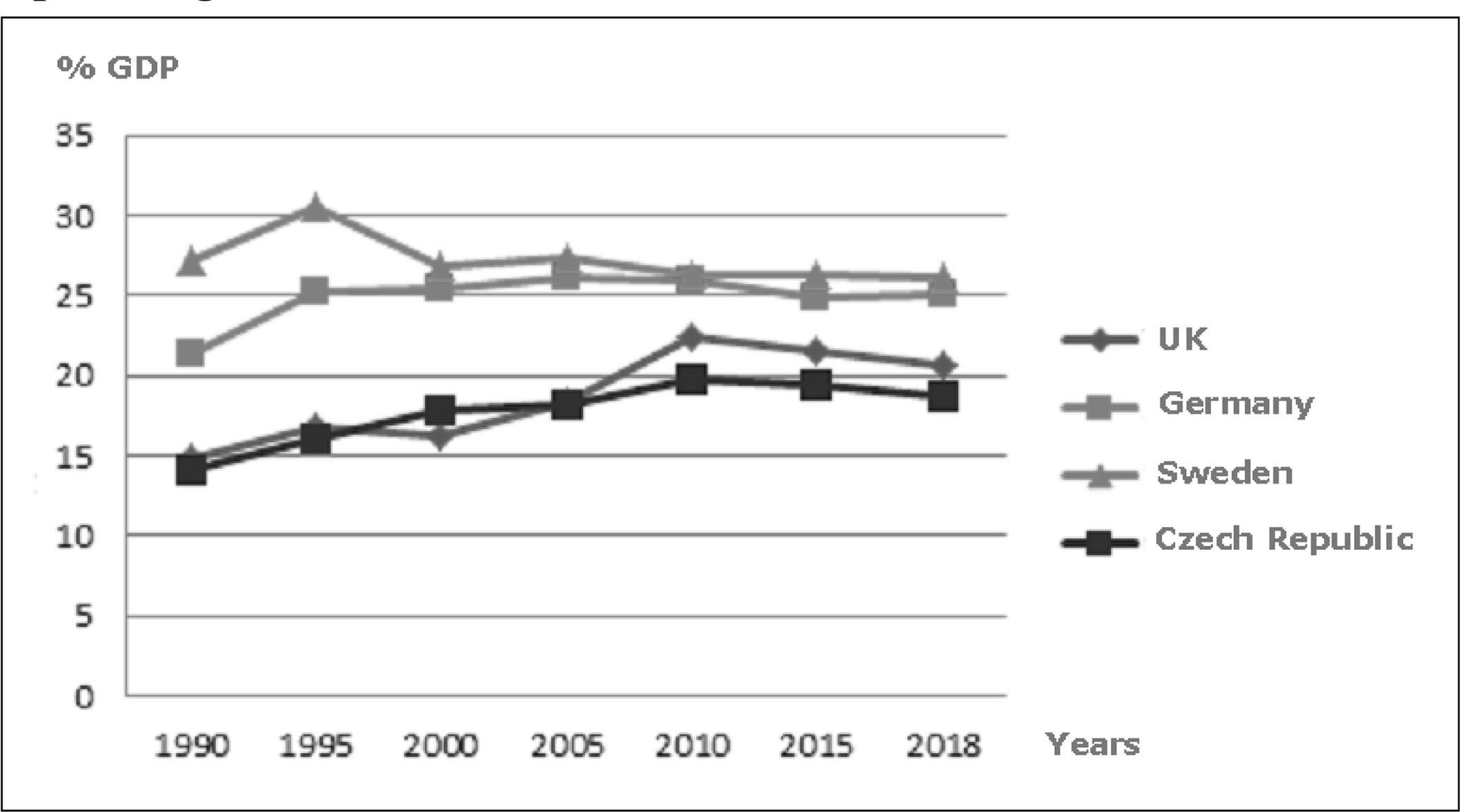
Figure 1
Overall public social spending of the selected countries between 1990 and 2018 as a percentage of GDP
Source: OECD (2019), own adaptation
Note: this is a data estimate for 2017–2018.
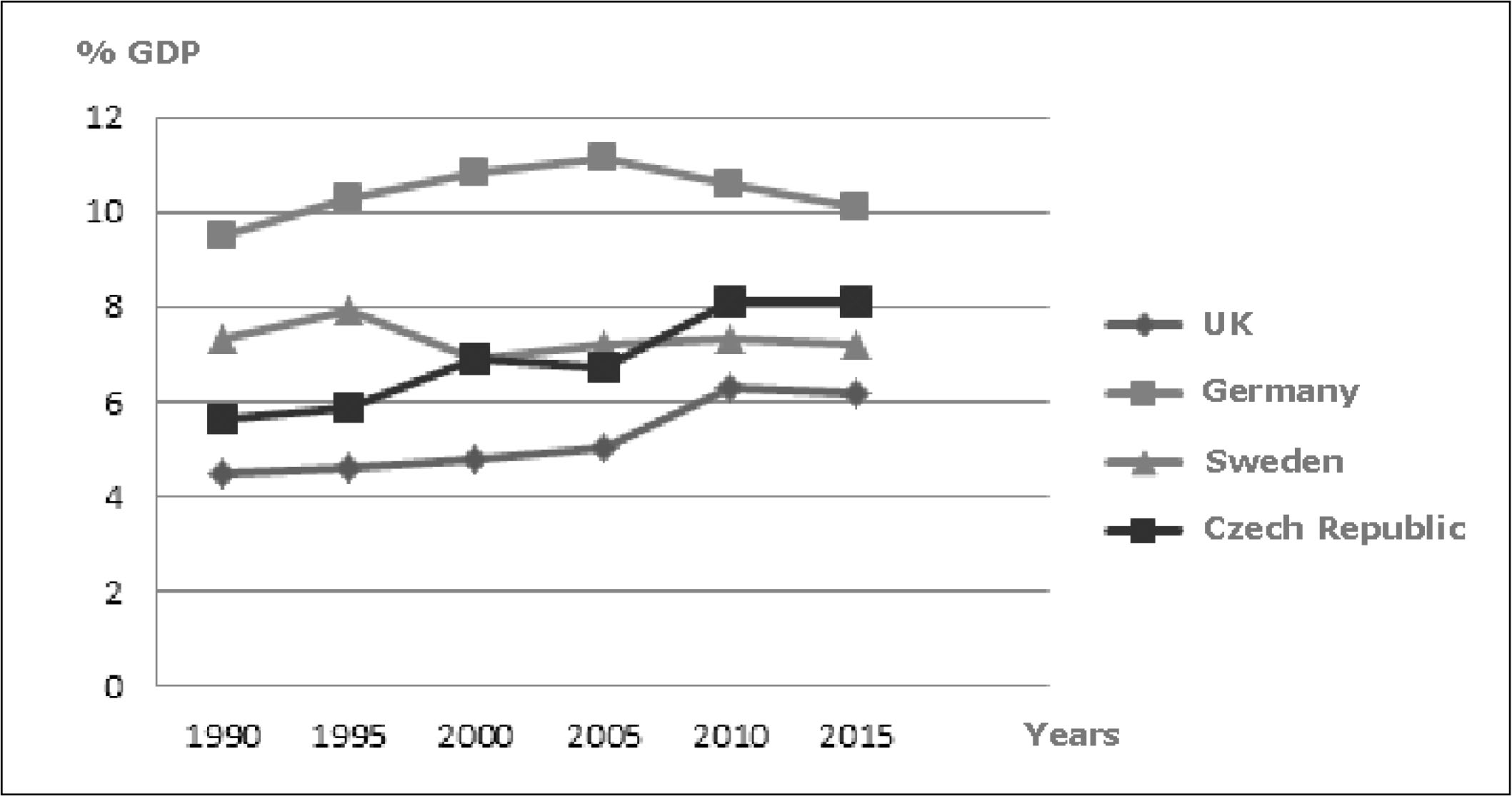
Figure 2
Total public expenditure for old-age and survivors’ pensions between 1990 and 2015 as a percentage of GDP
Source: OECD (2019), own adaptation
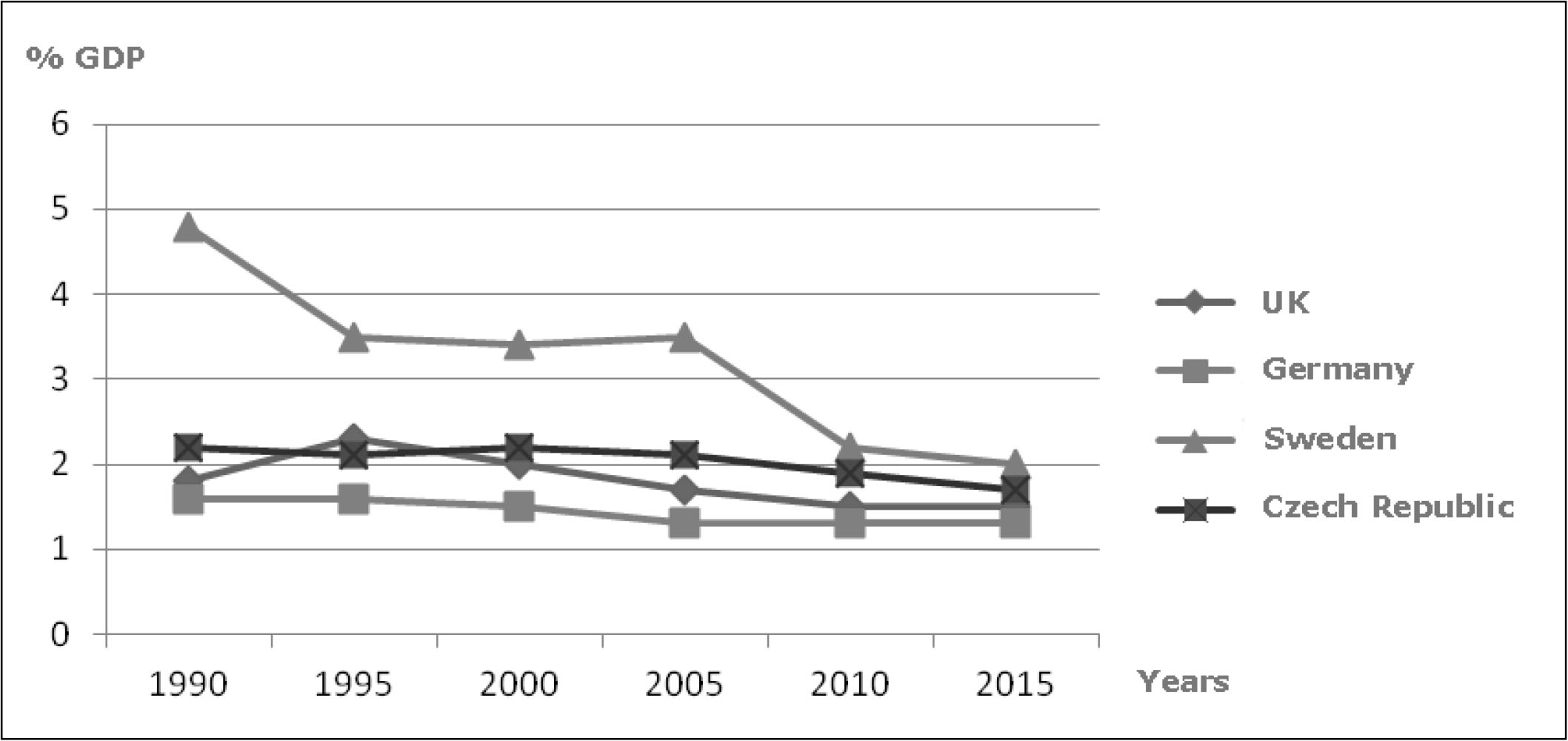
Figure 3
Total public expenditure for disability pensions and sick benefits between 1990 and 2015 as a percentage of GDP
Source: OECD (2019), own adaptation
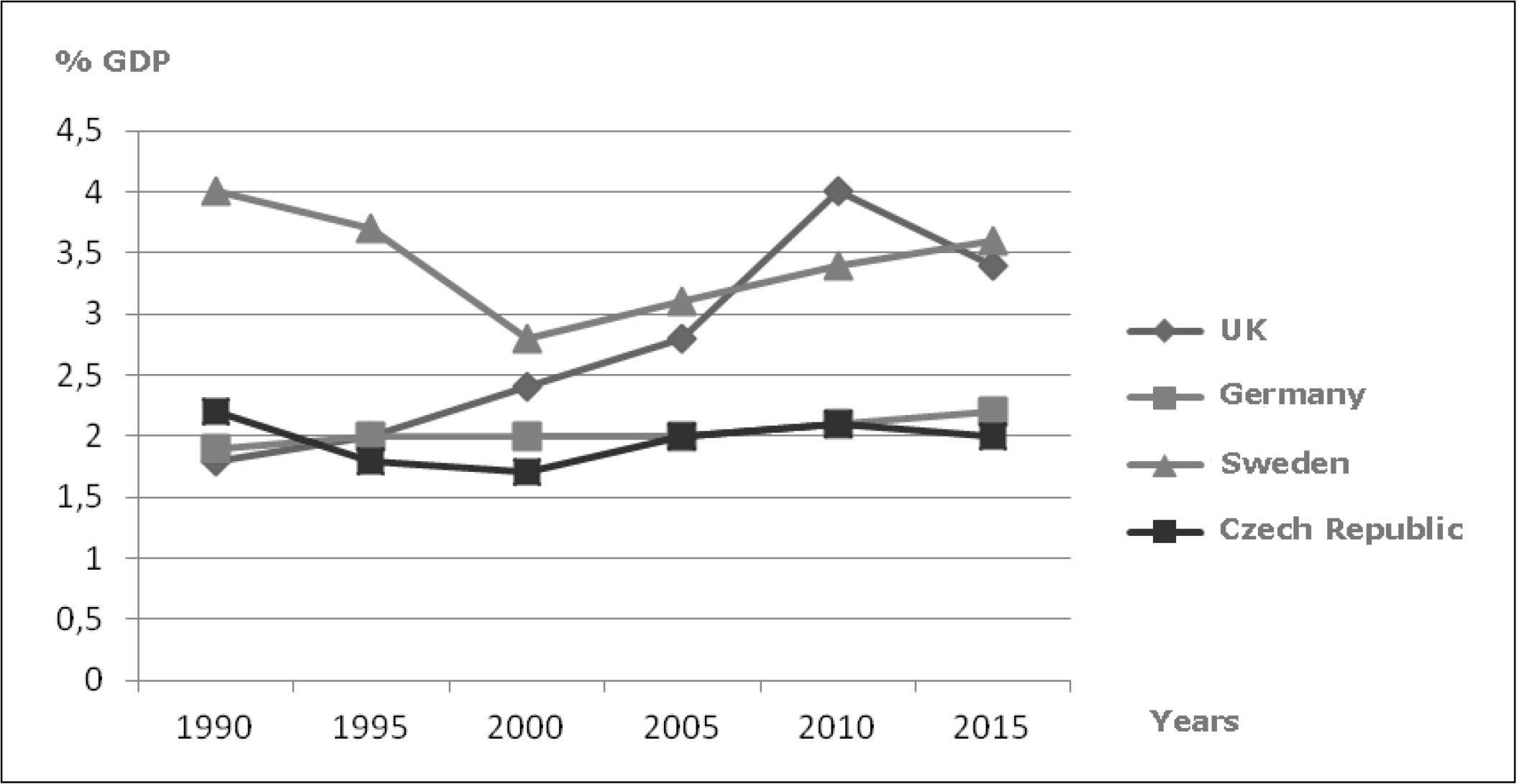
Figure 4
Total public expenditure for families between 1990 and 2015 as a percentage of GDP
Source: OECD (2019), own adaptation
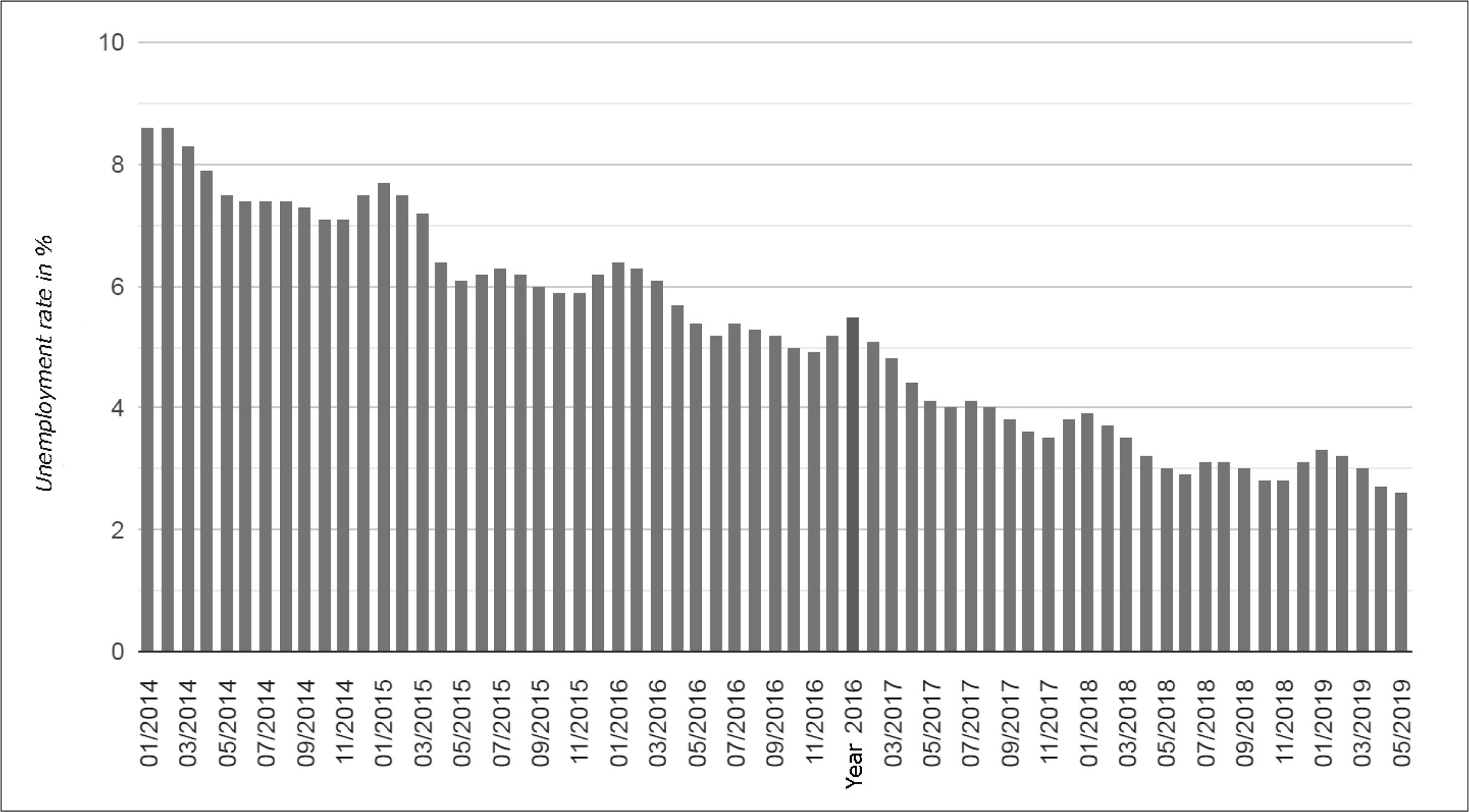
Figure 5
Unemployment rate in the Czech Republic
Source: Kurzy.cz (2019)