
1. INTRODUCTION
Tobacco cigarette smoking is a hazardous method of delivering nicotine and a major cause of death, posing global health challenge (1). There is a worldwide prevalence of approximately 1.18 billion people who regularly smoke tobacco accounting for almost 7 million fatalities per year (2020) (2). According to the global burden of diseases, injuries, and risk factors study, around 7.69 million premature deaths are estimated every year due to smoking tobacco products (3). Besides, 1.3 million deaths inferred due to second-hand smoke exposure are leading to several life-threatening health disorders across respiratory and circulatory systems, oncological processes, fertility issues, birth defects, otitis media and asthma (4, 5). The best strategy to overcome these harmful conditions is to quit smoking or prevent smoking initiation. In spite of much awareness and knowledge of smoking-related risks, most adult smokers find it challenging to quit (6, 7). Another way to reduce this harm is supportive behaviour and management of different pharmacotherapies like varenicline and nicotine replacement therapy (NRT), enhancing smoking cessation by 10–20%. Yet real-world success remains constrained, with notable long-term relapse rates (8). Hence, the pragmatic approach is to switch to smoke-free alternative products that mitigate the risk of tobacco such as heated tobacco products (HTPs), electronic vapor products (EVPs), nicotine pouches and snus. These products deliver nicotine without tobacco combustion (6). Electronic cigarettes (ECs) are reported to be more effective with greater abstinence rates than NRTs in conventional tobacco smokers (9). Additionally, the U.S. Food and Drug Administration (FDA) has authorized the legal commercialization of tobacco heating systems (THS) and ECs, affirming the appropriateness of marketing these products for tobacco control and public health protection (10, 11). However, contradictory evidence raises the safety concern for the commercialized smoke-free alternative products (12). The review aims to examine the chemistry of tobacco smoke and its link with associated diseases in tobacco smokers and compare this to different types of smoke-free products.
2. METHODOLOGY
Full-text articles published in English language were independently searched by two reviewers through an extensive exploration on PubMed/MedLine, Google Scholar, and Cochrane database with no restrictions on dates of coverage and publication status. A grey literature search was also conducted. The search included two main domains; smoke-free alternative tobacco products, tobacco heated systems, tobacco heating products, snus, e-cigarettes, electronic nicotine delivery products, and harm reduction related to the use of less harmful alternatives to conventional cigarettes as well as smoking cessation, safety and addiction with impact on public health.
3. RESULTS AND DISCUSSION
3.1. Chemistry of tobacco smoke – understanding combustion
Tobacco smoke is a dense complex of more than 7000 chemical compounds formed by the incomplete combustion while smoking conventional cigarettes (13, 14). The burning cigarette smoke formation includes processes such as pyrolysis, combustion, formation of aerosol, physical mass transfer and filtration mechanisms. The major sections of the burning zone are the combustion with a downstream pyrolysis/distillation zone. Within the combustion zone, carbon dioxide, carbon monoxide and hydrogen are produced with heat which generates a temperature up to 950 °C when the cigarette is puffed (15). The puff formed by the smoker initiates a rapid, exothermic and oxidizing reaction at the tip of the cigarette (Figure 1a) (14). The bulk chemicals are generated in the cooler pyrolysis/distillation zone. Rapid cooling of the super-saturated vapor within a few milliseconds occurs with subsequent condensation into aerosol particles that constitute the smoke (15). The three smoke aerosols formed are: mainstream emission (smoke inhaled and exhaled by smokers), side stream emission (smoke emitted to the environment) and environmental tobacco smoke (smoke exhaled by smokers and smoke emitted to the environment) (14). These emissions mix with less volatile gases, creating vapor mixtures that condense into ultrafine liquid droplets with complex chemical composition known as tobacco aerosol residue (TAR). The mainstream emissions are composed of nicotine, carbon monoxide, particulate matter (PM), and other vapor-phase compounds (14). Moreover, particles (0.3–110 μm) composed of carbon, oxygen, potassium, calcium, non-water-soluble organic compounds, traces of sodium, aluminum, and silicon are also present in tobacco cigarette smoke (16, 17). The smoke emissions are extremely harmful containing several carcinogens and mutagens such as tobacco-specific N-nitrosamines (TSNAs), polycyclic aromatic hydrocarbons (PAH) and aldehydes (18, 19).
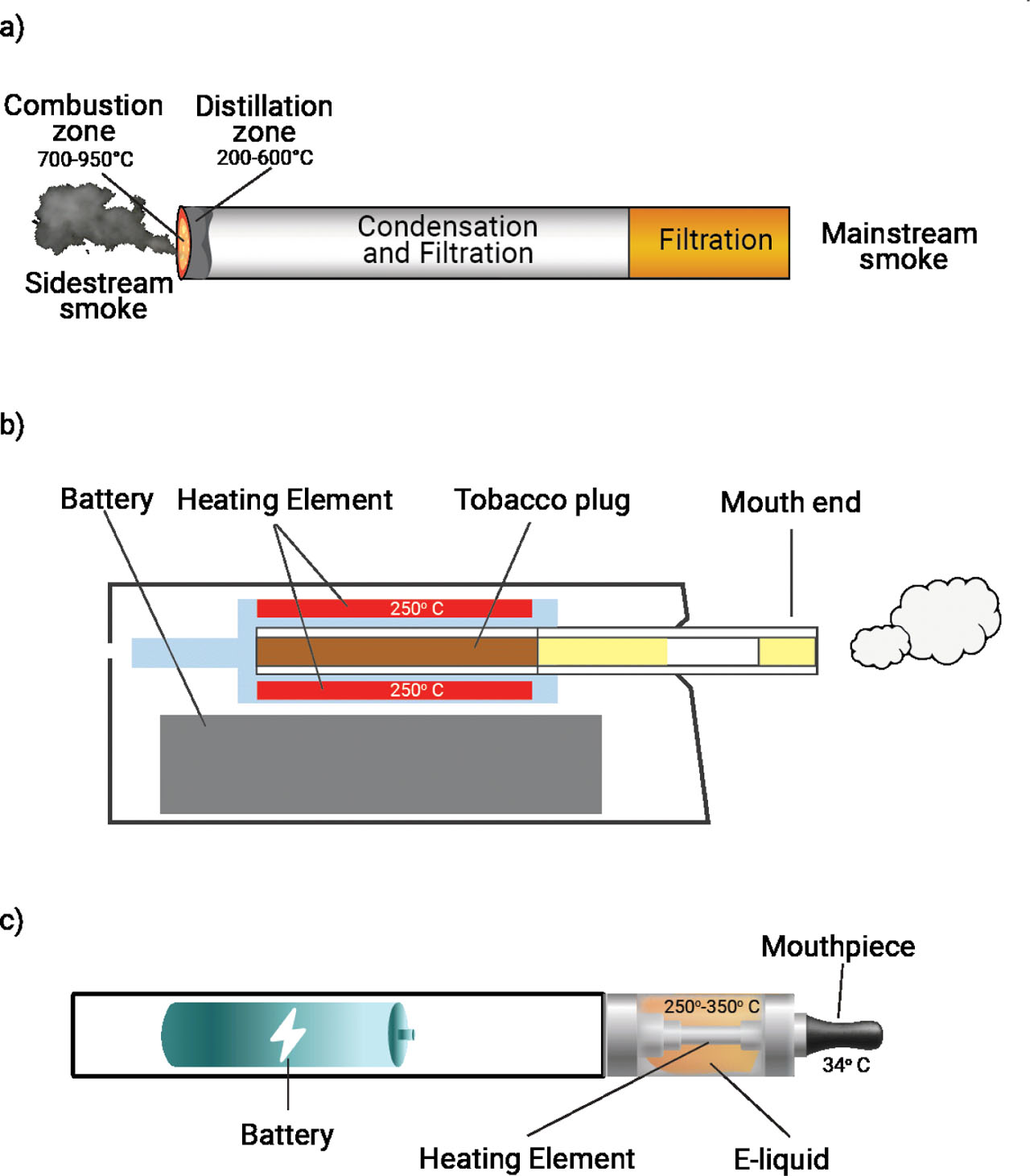
Figure 1.
Schematic diagram of the (a) combustible cigarette (tobacco burning generates combustion up to 700–950 °C during puffs) and (b) heated tobacco product (tobacco heated through a heating element source within 350 °C) and (c) electronic cigarette (vapor generated from a liquid containing flavours, nicotine and other compounds at temperature within 350 °C through heating element).
3.2. The burden of smoking – disease predominance
Tobacco smoking (TS) is the leading cause of lung cancer and ranks first globally in cancer-related morbidity (20). It is also the major cause of chronic obstructive pulmonary disease (COPD), and interstitial lung diseases that finally culminates in morbidity and mortality (21, 22). Apart from lung cancer mortality, TS is associated worldwide with cardiovascular associated morbidity and mortality. Enhanced levels of inflammatory biomarkers through combustible cigarette (CC) smoking gradually progresses towards atherogenic diseases. Research findings emphasize on the likelihood of increasing cardiovascular disease (CVD) progression among present tobacco users including conditions such as acute myocardial infarction, cerebrovascular disease, and heart failure, compared to never smokers (23). Tobacco cigarette smoking leads to worsening oral health with gradual progression towards oral cancer (24). It advances periodontal diseases, increasing plaque concentration and implant failure (24). Moreover, cigarette smoke toxins in cigarette smoke disrupt the gut microbiota equilibrium through diverse mechanisms (25). Additionally, TS is also associated with several neurological diseases. Nicotine from the cigarette is reported to increase oxidative stress causing neuro-inflammation and cerebral thrombosis (26, 27). Children exposed to second-hand smoke show higher risk of acute respiratory function, asthma exacerbation and sudden infant death syndrome (28).
3.3. New generation of smoke-free alternative products – zero combustion
3.3.1. Tobacco heating systems
Tobacco products providing nicotine without burning tobacco are one of the most promising class of commercialized next-generation products (NGPs) available in more than 90 countries. These are commonly referred as heated tobacco products (HTPs) or heat-not-burn (HnB) products (29). The HTPs significantly reduce toxicant emissions, releasing tobacco-flavored vapor containing nicotine without generating smoke and ash, the hallmarks of combustion (30). Aerosols of HTPs contain fewer and lower levels of harmful and potentially harmful constituents (HPHCs) which are emitted by a heating mechanism instead of combustion of tobacco as observed in conventional cigarettes (31) (Figure 1b). There are different upgraded models of HnB devices like ‘IQOS’ (Philip Morris International (PMI)) and ‘glo’ (British American Tobacco (BAT)), which were first launched in Japan and Italy, and subsequently expanded to different countries (12).
3.3.2. Electronic cigarettes
Electronic cigarettes (ECs) and alternate electronic nicotine delivery systems (ENDS) have been commercialized since 2003 as a smoking cessation tool for cigarette users (32). Electronic cigarettes were introduced as a potential alternative smoke- and tobacco-free product with a novel approach. ECs create a vapor by a battery-operated device that heats a liquid to generate an aerosol which the user inhales (33) (Figure 1c). These e-cigarette liquids contain vegetable glycerin, propylene glycol, and flavors with or without nicotine (34, 35).
Since 2003, various compatible designs of ECs in different shapes and sizes from first generation to fourth generation found great interest (36). The first generation ECs, also known as cig-a-likes were designed similarly to CCs, with refillable and disposable e-liquid cartridges (27). The second generation was pen-style and rechargeable; containing high-capacity batteries and regulating the number of puffs (36, 37). The third generation, called ‘Mods’ consists of modified batteries that enable users to change power and voltage (36). The fourth generation is more advanced with pod-style and preset voltage, having varied-shaped batteries, including USB or teardrop-shaped ones (38).
A comparison of the composition, heating temperature, and smoke/aerosol formation in conventional cigarettes to HTPs and ECs is presented in Table 1.
Table 1.
Comparison of conventional cigarettes, heated tobacco products and e-cigarettes.
| Factors | Conventional cigarettes | Heated tobacco products | Electronic cigarettes |
|---|---|---|---|
| Description (14, 39, 40) | Products made from tobacco leaf; consumption takes place through combustion | Made from tobacco leaf in the stick form. They are heated to a level below combustion to generate an inhalable nicotine containing aerosol | ECs comprise of e-liquids, containing glycerol, propylene glycol, flavourings, nicotine and water, which are heated to generate an inhalable nicotine containing aerosol |
| Source of nicotine (14) | Naturally present in tobacco leaf | Naturally present in tobacco leaf | Nicotine added to the liquid |
| Temperature range (14) | The temperature at the tip of a lit cigarette reaches around 900 °C during puffs; and 450–800 °C between the puffs | Around 350 °C, below temperature level at which combustion occurs | Variable (roughly 180–270 °C) |
| Formation of smoke and ash (41) | By combustion of tobacco leaf, associated with thermal degradation and pyrolysis. | No smoke or ash formed, due to the absence of tobacco combustion (formation of aerosol) | No smoke or ash formed (formation of aerosol) |
| Nicotine (in solution form) (38) | Absent | Absent | Present |
| Potential for introducing additive like cannabinoids (42) | Very low | Very low | High and easy |
3.3.3. Snus
Snus, a type of smoke-free alternative product is an oral moist powder in prepackaged portions which is non-traditional, easy to use and appealing where the users don't need to expel saliva by-product (43). Approximately 22% of men and 5% of women in Sweden use snus frequently (44). In Sweden, transition to snus, has saved approximately three thousand lives per year (45). Snus use is a healthier alternative to conventional cigarettes due to the absence of combustion and hazardous chemicals (46).
3.4. Fighting tobacco epidemic – harm reduction by smoke-free alternative products
Robust and credible evidence support smoke-free alternative products (ECs and HTPs) as harm-reduction tools that are feasible for reducing tobacco cigarette consumption among chronic users (6, 8, 47). Assessment of harm reduction in various spheres is discussed below.
3.4.1. Potential of smoking cessation or reduction
Smoke-free alternative products have gained wide acceptance globally as a viable substitute for combustible cigarettes. Smokers experience a better overall perception which mimics elements of the sensorimotor and behavioral aspects of cigarettes (48). Clinical evidences establish this fact. In one of the studies HTP and EC use was found to be directly associated with smoking cessation and a decline in the rate of withdrawal symptoms (48). Another study showed the willingness of an equal number of participants (28.3%) to switch from usual brand of cigarettes to HTP or EC (47). A network meta-analysis reported that nicotine EC users were twice as likely to quit smoking compared to CC users and 1.49 times more likely compared to NRT users (49). Moreover a meta-analysis study demonstrated that daily EC use was linked with increased quitting, whereas less-than-daily use was linked to less quitting (50). Another systematic review analyzed the effectiveness of EC on smoking cessation and showed high probability of smoking cessation with nicotine EC use (51). Hence, a connection between smoke-free alternative product use with harm reduction compared to CCs was observed from this evidence.
3.4.2. Reduction in biomarker of exposure
Several public health initiatives encourage smoking abstinence and reduced toxicant exposure to diminish health risk of cigarette smoking (52). The U.S. Institute of Medicine concluded that CC users who completely switch to potential reduced-exposure products have reduced toxicant tobacco exposure (52).
Alternative smoke-free products like HnBs and ECs reduce health-associated risks of smoking-related diseases by lowering the exposure to harmful and potentially harmful constituents (HPHCs). Favorable changes in biomarkers of potential harm (BoPH) occur after CC smokers quit smoking and switch to novel tobacco vapor (NTV) (53). Novel tobacco vapor users are significantly less exposed to nicotine and 4-(methyl-nitros-amino)-1-(3-pyridyl)-1-buta-none (NNAL) with lower levels of BoPH: triglyceride (TG), soluble intercellular adhesion molecule-1 (sICAM-1), white blood cell (WBC) counts, 11-dehydrothromboxane B2 (11-DHTXB2), 2,3-dinor thromboxane B2 (2,3-d-TXB2), and 8-epi-prostaglandin F2α (8-epi-PGF2α) than CC smokers (53). Significantly similar constant reductions in BoE levels were found over the years in a study for both participants who switched from smoking to THP use and those who quit smoking (52).
Substantially lower levels in all urinary BoE: 3-hydroxy-1-methylpropylmercapuric acid (HMPMA), monohydroxybutenylmercapturic acid (MHBMA), 3-hydroxypropylmercapturic acid (3-HPMA), total N-nitrosonornicotine (NNN), 3-hydroxybenzo-[a]-pyrene (3-OHBaP), and S-phenyl-mercapturic acid (S-PMA), 4-(methylnitrosamino)-1-(3-pyridyl)-1-butanol (NNAL) with a p value less than 0.0001 and in total nicotine equivalents (TNeq) with a p value equal to 0.0074 was observed in EC consumers when compared to smokers (54).
When users switched from exclusive cigarettes to exclusive ECs, a significant reduction in urine concentrations of tobacco-specific nitrosamines (TSNAs), polycyclic aromatic hydrocarbons (PAHs), and volatile organic compounds (VOCs) was reported (19).
Toxicant exposure may be reduced through partial substitution of CCs with alternative products (55). An overall decrease in the biomarker levels is observed in alternative smokeless products compared to combustible cigarettes.
3.4.3. Health impact assessment of smoke-free alternate products
The use of electronic nicotine delivery systems (ENDS) is not considered to cause harmful cardiovascular diseases (22). HnB products reduce the blood pressure level, myocardial deformation, and arterial stiffness compared to CCs (56). Moreover switching from cigarettes to novel nicotine products is linked with effective hypertensive management and less COPD occurrence, without any evidence of enhanced risk of asthma or prolonged respiratory problem (22).
In prospective studies of COPD patients who switched from CCs to ECs and HTPs, an improved level of exercise tolerance was observed by the marked decline in CO exposure and carboxyhemoglobin levels (57).
For periodontal health, EC use proved effective in comparison to cigarette smoking (58). In alternative smoke-free products (IQOS), the inhibitory effect was approximately eighteen times lesser compared to CCs, elucidated by marker assisted chemotaxis and trans-migration study on coronary arterial endothelial cells associated with the cardiovascular system (59). These products show significantly less toxicity in bone cells than CCs in the functionality and viability of human osteo-progenitors and mesenchymal cells (60).
Different health-associated outcomes of smoke-free alternative products on cardiovascular, pulmonary, COPD, periodontal, and cancer diseases are tabulated (Table 2).
Table 2.
Potential harm reduction of smoke-free alternative products through smoking cessation, biomarkers of exposure, health impact and environmental harm reduction.
| Reference (country) | Study type (study period) | Purpose of the study | Population (n) / number of studies / age / gender | Smoke-free alternative product used / intervention | Key findings |
|---|---|---|---|---|---|
| Reduction in biomarkers of exposure | |||||
| Sakaguchi et al., 2021 (Japan) (53) | Observational, cross-sectional, three-group, multi-centre study | Examine tobacco smoke related BoE (cotinine and NNAL), BoPH and pulmonary functions relevant to smoking-related diseases | Exclusive NTV users (n = 259), CC (n = 100), NS (n = 100); age = 20–65, male and female, BMI: < 18.5, ≥ 18.5 to < 25.0, ≥ 25.0 | NTV | Significantly higher levels of cotinine, total NNAL, and 2,3-d-TXB2, lower levels of FEV1 and FEV1 percentage observed among NTV users compared to the NS group indicating sustained reduction in exposure to harmful substances of tobacco smoke. |
| Gale et al., 2022 (UK) (52) | Parallel group, open label, ambulatory pseudo-randomized clinical trial (RCT), (1 Year) | To investigate changes in BoE and BoPH levels in current smokers and smokers who switched to THP in comparison to smokers who have quit tobacco and never users | ITT: Group A (n = 78), Group B (n = 197), Group D (n = 190), Group E (n = 40); a Healthy male or female adult current smokers | glo™ THP, NRT or varenicline | THP users: Sustained reduction in BoE levels and participants who quit smoking, the reductions were similar for both groups. |
| Haswell et al., 2023 (UK) (54) | Cross-sectional confinement study | Assessing BoPH, BoE, and physiological measures in EC users for at least 6 months in current, former, and never smokers | n = 213; age = 19–55 years | EC (Vuse Pod or Vuse ePen3) |
|
| Health impact of smoke-free alternative products | |||||
| Edmiston et al., 2022, (USA) (61) | Parallel-group, open-label, RCT (24 weeks) | Comparing BoE to HPHC and BoPH in adult smokers who switched to EVPs vs. those who continued smoking | Adult smokers (n = 450) | EVPs and Mark Ten Bold Classic, Mark Ten Bold Menthol |
|
| Hajat et al., 2022 (22) | Systematic review and meta-analysis | To assess disease end points associated with the use of ENDS | n = 755 studies | ENDS | ENDS were not causative for harmful CVD outcomes, beneficial for hypertensive patients. Switching to EC resulted in reduced exacerbations of COPD, without long-term deterioration in lung function. |
| Cobb et al., 2021 (USA) (62) | Four-arm, parallel-group, RCT (24 weeks) | Effect of ENDS and a non-nicotine cigarette substitute on tobacco toxicant exposure and cigarette consumption | n = 520; age = 21–65 years | ENDS | Use of ENDS reduces the urinary NNAL levels. |
| Begic et al., 2023 (Bosnia & Herzegovina, Japan, Poland, Arizona, Florida, Kentucky, Nebraska, Nevada, North Carolina, Ohio, Tennessee, Texas, Virginia, Germany) (56) | Systematic review | The effect of HnB tobacco products on the cardiovascular system | n = 3740 (25 studies); age ≥ 18 years | HnB | Exclusive use of HnB tobacco products results in significant reductions in BoE and favorable changes in blood pressure, arterial stiffness parameters, myocardial deformation as compared with TC. |
| Feng et al., 2024 (China) (63) | Systematic review and meta-analysis | Comparison of bladder carcinogenic biomarkers in the urine of TC and EC users | n = 16876 (six retrospective study meta-analysis) patients, 10 high evidence studies | EC | Urinary bladder cancer markers (PAHs, VOCs, and TSNAs) were significantly higher in traditional tobacco users than in EC users. |
| Thiem et al., 2023 (Germany) (58) | Systematic review and meta-analysis | Impact of electronic and conventional cigarettes on periodontal health | n = 16 studies | EC | EC use might be considered a healthier alternative to CC smoking as 0.33 fold reduced chances of BoP is observed. CC smoking enhances levels of PI, PD, AL, MBL and pro inflammatory mediators. |
| Brinchmann et al., 2023 (Norway) (64) | Systematic review | Health outcomes in snus users during pregnancy | 18 cohort studies (N = 42–1006398) | Snus | Enhanced risk of neonatal apnea, stillbirths, premature births, moderately premature birth, less birth weight, oral cleft malformations in snus-users. Risk of early neonatal mortality, altered heart rate. Enhanced chances of caesarean sections, risk of neonatal mortality in snus-users. |
| Hajek et al., 2022 (England, Scotland) (65) | RCT | EC vs. nicotine patches for smoking cessation in pregnancy | n = 1140 (EC, n = 569 or nicotine patches, n = 571) | EC, nicotine patch and NRT | EC showed more effectiveness (6.8% quit rate) than nicotine patch (3.6% quit rate) with similar safety profile. Less frequent low birth rate and low birth weight in EC group (9.6%) compared to NRT (14.8%). |
| Potential of smoking cessation or reduction | |||||
| Vanderkam et al., 2022 (France) (8) | Systematic review and meta-analysis | The duration of the effectiveness of EC on smoking cessation and reduction in daily cigarette consumption. | 7 RCTs, smokers; age ≥ 18 | Nicotinic EC, non-nicotine EC, varenicline, bupropion and NRT | Nicotine EC vs. non-nicotine EC and NRT were effective on smoking cessation and reduction in daily cigarette users. |
| Tattan-Birch et al., 2023 (England) (9) | Two-group, parallel arm, pragmatic RCT (12-week) | ECs to Augment Stop Smoking In-person Support and Treatment with Varenicline (E-ASSIST) | n = 92; avg. age = 43.9 years; women 52% (25), men 48% (23); control: women 50% (22), men 50% (22) | EC and Varenicline | 9–12 weeks of abstinence in EC-varenicline group (47.9%); 31.8% only use varenicline. Relapse rate: 43% lower risk of relapse in EC-varenicline group than only varenicline group. 59.8% encountered at least one AE 44.6% sleep disturbance, 34.8% nausea, and 27.2% reported throat or mouth irritation. |
| Funk et al., 2023 (USA) (47) | Randomized study | Examining subjective and behavioral preferences for an e-cigarette and HTP relative to participants UBC | n = 22 (African American (n = 12) and White (n = 10)) | EC and HTP | African American and White smokers substitute UBC for EC or HTP. Behavioral preference for EC (42.9%), followed by HTP (38.1%), and UBC (19.1%). |
| Lindson et al., 2023 (UK) (51) | Meta-analysis | Pharmacological and EC interventions for smoking cessation in adults | n = 319 randomised studies (835 study arms; 157,179 participants) | NRT, EC, varenicline, cytisine, bupropion or nortriptyline | Nicotine EC, varenicline and cytosine associated with higher quit rates than control. |
| Harm reduction for non-users (bystanders) | |||||
| Kawasaki et al., 2023 (Japan) (66) | RCT | Assessment of exposure and DNA damage from second-hand smoke using potential biomarker in urine | n = 746 non-smokers (to detect passive smoking) | HTPs | The NNAL levels in HTPs are one-fifth of the CCs, so the risk is comparatively lower in HTP sticks. |
| Tane et al., 2024 (67) | Review and comparative analysis | Comparative analysis of PM generated in CC and HTP's - mainstream and environmental emissions | HTP | Indoors, the number of particles generated from CS is much larger than those from HTPs by a factor of 3–6. From HTPs there was higher volatility of the PM. | |
3.4.4. Harm reduction for persons subjected to passive smoke
The environmental toxic level is detected through the size of the particulate matter (PM) present in the tobacco smoke which accumulates while CC smoking (68).
The World Health Organization has set guidelines of maximum values for outdoor air exposure (2021) as PM10 (15.0 μg/m3) and PM2.5 (5.0 μg/m3), but not for indoor environments which do not follow the full spectrum of PM characteristics. Literature evidence report that HTPs emit lesser PM (PM2.5 5.7 ± 7.6 μg/m3) compared to CCs (PM2.5 159.4 ± 57.1 μg/m3), thus mitigating the environmental harm. An increase in aerosol concentration was observed with HTP use in closed spaces although the volatile PM evaporates in seconds (68, 69). Although EC vapors consist of fine PM, they still generate a higher particle mass and number concentration than CCs. Their emissions dissipate more rapidly than CCs, within 10–20 s.
Combustible cigarette emission persists till 1.4 h in a 35 m3 room (70). The total particulate matter (TPM) of both CC and EC is composed of a high amount of environmentally persistent free radicals (EPFRs) and semi-quinones. However, EPFRs in ECs are more potent in generating hydroxyl radicals per unit EPFR than those in tobacco TPM indicating potential health risk (71).
Potential harm reduction through smoke-free alternative tobacco products in smoking cessation, health-related diseases, biomarkers of exposure, and environmental harm reduction is provided in detail in Table 2.
3.5. Evidence based debate on smoke-free alternative products
A mixed comparative overview is obtained from the clinical evidence regarding ECs. Several studies support the safety and effectiveness of ECs for long-term use while others have reported the presence of metals and metalloids in EC aerosols which get absorbed easily through the respiratory tract during inhalation and may cause serious health issues (72). Moreover, third-hand smoke through EC aerosol emission contains nicotine and carcinogenic TSNAs, which are a major public health concern (73). Besides, the increasing prevalence of EC use among youth, resulting in nicotine addiction, requires urgent attention and regulation (74, 75). A longitudinal study of 2018 adolescent students showed that adolescents who vaped nicotine-containing ECs were more prone to try other tobacco products and tended to show signs of depression compared to nicotine-free EC users (76). Another study reported EC misuse when inhaled along with marijuana, a cannabis plant-derived drug. These findings indicate the rapid progression in tetrahydrocannabinol (THC) and nicotine couse which may lead to unknown health consequences and addiction (42). One serious health consequence that emerged in 2019 was EVALI (E-cigarette or vaping product use-associated lung injury), caused by vitamin E acetate found in THC-containing ECs causing chemical pneumonitis (77). Moreover, enhanced plasma nicotine levels in EC users result in lower withdrawal symptoms and high dependence, leading to abuse potential equally manifested in non-tobacco flavored ECs which appeal to smokers (74). The safety perception of ECs has led to its widespread use among pregnant women. This is alarming since studies suggest that exposure to nicotine during the prenatal phase leads to disruption of blood-brain barrier integrity, long-term neurovascular changes in neonates and severe behavioural outcomes (78). Another smoke-free product, HTP, though not completely risk-free, reduces exposure to harmful chemicals (79). The nicotine released in HTP aerosol was found to be 70–80% compared to CCs (80). One randomized study demonstrated that HTPs were more satisfying compared to nicotine vaping products (NVPs) (48). The toxicants and hazardous compounds were present in lesser amount in the aerosol of HTPs than in combustible cigarettes. Thus the harm was significantly reduced while using HTPs (81). The HTPs and ECs had reduced emission concentration of volatile organic compounds, particulate matter, and carbon monoxide compared to CCs. The carcinogenic health risk of CCs was higher than that of HTPs (3.01-fold) and ECs (6.23-fold) (82). A 12-week randomized trial (CEASEFIRE) observed a remarkable reduction in traditional cigarette consumption for non-quitting smokers who started using HTPs which finally led to smoking cessation (57). In addition, snus use during pregnancy impairs the lung function of the infant and may cause stillbirth (83). However, randomised clinical evidence demonstrated that safety in snus users was similar to that of users of 4-mg of nicotine gum in traditional cigarette smokers who aimed to switch completely to these products (84). Multiple literature evidence including systemic reviews and clinical trials emphasized the use of snus assisting in smoking cessation and reducing harmful constituent exposure when compared to CCs (85). Hence, the direct nicotine intake through traditional smoking can be reduced through use of snus (86).
3.6. Implications for research practice
Stringent regulatory policies restrict the marketing of alternate smoke-free products in different nations due to youth addiction and adverse health impacts. India stands out as one of the few nations to have strictly prohibited the sale of e-cigarettes and HTPs, primarily to safeguard youth from potential EC use (87, 88). Major decrease in BoE levels were observed with the use of HnB devices compared to traditional cigarettes, indicating potential harm reduction. Major reduction was observed in 4-ABP (4-Aminobiphenyl), 2-AN (2-aminonaphthalene), CEMA (2-cyanoethyl mercapturic acid), and COHb (Carboxyhemoglobin); 8 out of 12 levels of BoEs in HnB participants showed insignificant differences compared to smoking abstinence. This suggests that HnB might offer enhanced safety compared to traditional cigarettes (12). IQOS (HnB) are a better alternative for conventional tobacco smokers to lower their exposure to HPHCs, leading to reduction of toxicological effects (89, 90). The rate of nicotine delivery in a single puff through HnB devices is similar to that of CCs but with reduced exposure to toxicants. However, ad-libitum use minimises the urges to smoke. A significant reduction in HPHC exposure in mainstream HnB emissions has been observed compared to CC in real-world human studies (91). HnB products are endorsed as a safer option than CC and are suggested as a tool for smoking cessation (92). HnB application has met the standard criteria mentioned under section 911 (g) (2) of the U.S. Federal Food, Drug, and Cosmetic Act for marketing and distribution of reduced harm products (93). Furthermore, a measurable substantial decrease in the morbidity and mortality rate is likely to occur in subsequent studies and if an order is granted, the health of tobacco users as well as non-users is expected to be improved. Overall, as compared to combustable cigarette smoke, the HnB products considerably decrease the exposition to potentially harmful chemicals.
4. CONCLUSION
Evidence from credible scientific research conclusively establishes that smoking-related diseases, such as COPD, CVD, and lung cancer, among many other diseases which are caused primarily by inhaling harmful compounds largely formed through tobacco combustion. Epidemiology has also established that if a smoker quits smoking, the risk of developing smoking-related diseases decreases over time. Most of the countries have adapted tobacco control strategies on supply and demand measures with a focus to prevent initiation, reduce consumption, and encourage cessation. Despite these control measures, although there has been a decline in smoking prevalence, the goal of completely eliminating smoking is not achievable. According to the World Health Organization (WHO), the the number of smokers worldwide will reach 1 billion, a figure that is unlikely to decline in the coming years. Hence, there is an urgent need to address the rapid harm progression caused by traditional smoking through replacement by alternative measures.
This narrative review provides a comprehensive overview of several commercialized smoke-free alternatives (HTPs, ECs and snus), all of which have demonstrated clear evidence of being safer substitutes to traditional cigarettes. They undergo heating instead of combustion and produce less toxic aerosol. Compared to cigarette smoking, nicotine and non-nicotine EC use is associated with reduced NNAL levels, which is a major pulmonary carcinogen, compared to CC smokers. It is also beneficial for hypertensive patients who switch from CCs to ECs. Moreover, EC users have fewer COPD occurrencies than traditional tobacco smokers. HTPs have a positive impact on blood pressure, myocardial deformation, and arterial stiffness compared to CCs. For periodontal health, the use of HTPs might be considered as a healthier alternative to cigarette smoking and may also assist in smoking cessation and reduction in CC consumption. It also has positive impact on indoor air quality. However, even as these products are safer alternatives to CC, they are not completely risk-free. Adopting a pragmatic approach towards policy formulation would go a long way in promoting individual and public health. Alternative tobacco products offer a promising solution to address the health concerns of smokers who struggle to quit smoking.
Notes
ABBREVIATIONS
- AL
Attachment loss
- BoE
Biomarkers of exposure
- BoP
Bleeding on probing
- BoPH
Biomarkers of potential harm
- CC
Combustible cigarette
- CEMA
2-Cyanoethyl mercapturic acid
- CO
Carbon monoxide
- COHb
Carboxyhaemoglobin
- COPD
Chronic obstructive pulmonary disease
- CVD
Cardiovascular disease
- EC
Electronic cigarette
- ENDS
Electronic nicotine delivery systems
- EPFRs
Environmentally persistent free radicals
- EVP
Electronic vapor product
- FEV1
Forced expiration volume
- HnB
Heat not burn
- HPHCs
Harmful and potentially harmful constituents
- HTP
Heated tobacco product
- IQOS
I quit ordinary smoking
- ITT
Intention to treat
- MBL
Marginal bone loss
- MHBMA
4-Hydroxy-2-buten-1-yl-mercapturic acid
- NGP
Next-generation nicotine-delivery product
- NNAL
4-(Methylnitrosamino)-1-(3-pyridyl)-1-butanol
- NNN
N'-Nitrosonornicotine
- NRT
Nicotine replacement therapy
- NS
Never smokers
- NTV
Novel tobacco vapor
- PAHs
Polycyclic aromatic hydrocarbons
- PD
Probing depth
- PI
Plaque index
- PM
Particulate matter
- RCT
Randomized clinical trial
- sICAM-1
Soluble intercellular adhesion molecule-1
- S-PMA
S-Phenylmercapturic acid
- TAR
Tobacco aerosol residue
- TC
Traditional cigarette
- TG
Triglyceride
- THC
Tetrahydrocannabinol
- THP
Tobacco heating products
- THS
Tobacco heating systems
- TPM
Total particulate matter
- TS
Tobacco smoking
- TSNAs
Tobacco-specific N-nitrosamines
- UBC
Usual brand combustible cigarette
- VOCs
Volatile organic compounds
- WBC
White blood cell counts
- 4-ABP
4-Aminobiphenyl
- 2-AN
2-Aminonaphthalene
- 3-HPMA
3-Hydroxypropyl mercypturic acid
- 8-epi-PGF
8-Epi-prostaglandin F2
- 11-d-TXB2
11-Dehydrothromboxane B2
- 2,3-d-TXB2
2,3-Dinor thromboxane B2