
OVERVIEW
Tobacco is an agricultural product and much of its processing and handling is like that of food products. However, one primary difference is that the only postharvest insect of any major concern to the tobacco industry, especially in North America, is the cigarette beetle, Lasioderma serricorne (Coleoptera: Ptinidae) (from this point on referred to as “CB”). The CB is also a major pest of postharvest foods, particularly processed grain products like pet food, animal feed, and also dried herbs and spices. In the United States, the CB occurs commonly in food and tobacco warehouses, especially those in the southern part of the country. As a “tropical” insect species, it is understandable that the CB has a more southern distribution in the United States and that it is not commonly found in geographic regions where there are many days a year of below-freezing temperatures. Nevertheless, CBs can be found inside northern tobacco and food plants and finished-product warehouses in which the temperatures are favorable all year round and endemic populations persist solely on spilled food and tobacco dust that is not removed or cleaned.
The CB has been the target of substantial research that has determined important aspects of its population dynamics. The optimum temperature for development of larvae through adults, the number of eggs laid per female and the effects of different food sources on development of CB brood are well known (Ashworth, 1995; Ryan, 1995; Edde, 2019). Although there are natural enemies such as parasitic wasps and insect predators that could regulate populations of CB (Edde, 2019), the habitat of tobacco storage and tobacco factories tend to lack adequate populations of these biological control agents and they provide excellent habitat and adequate food supplies for pest populations to persist and increase year-round.
In the United States, for example, insect infestation in the food industry, and the application of control methods against insect infestation in commercial food, is overseen by the U.S. Food and Drug Administration (FDA) and other regulatory agencies (e.g., at the state level) as potentially unsafe contamination. For example, the FDA has set “actionable levels” for insect fragments in food, such as 75 or more insect fragments per 100 g of wheat flour (FDA, 1998). Similar requirements are currently not required for tobacco products (https://www.fda.gov/tobacco-products/rules-regulations-and-guidance/rules-and-regulations). The U.S. Environmental Protection Agency (EPA) sets maximum allowable residue (MRL) tolerance levels of registered pesticides in foods at different points in the supply chain. Higher MRLs tend to be allowed in raw products compared to MRLs in finished food products for customers. For example, raw wheat grain in storage bins can have 8 ppm of the insecticide Malathion, but allowable levels in finished food products from wheat (e.g., flour, breads, breakfast cereals, etc.) are set much lower. The EPA regulates the specific pesticides that may be used on tobacco and other crops and specifies how the pesticides may be used, but the agency does not otherwise regulate residues of pesticides approved for use on tobacco. The U.S. Department of Agriculture (USDA), however, is required by Title II of the Dairy and Tobacco Adjustment Act to test imported and domestic tobacco for residues of pesticides not approved by EPA for use on tobacco that federal officials believe are used in other countries (see https://www.govinfo.gov/content/pkg/STATUTE-97/pdf/-STATUTE-97-Pg1128.pdf#page=24). Guidance on residue levels have been developed by the Agro-Chemical Advisory Committee (ACAC) of the Cooperation Centre of Scientific Research Relative to Tobacco (CORESTA) to provide guidance to tobacco growers and those in the tobacco industry interested in the application of crop protection agents and the implementation of good agricultural practice in tobacco production (CORESTA, 2021).
Cured tobacco leaves are commonly stored in warehouses for two years or more, where they can be subject to CB infestation (Edde et al., 2012). The CB can then come into the manufacturing plants with leaves in tobacco packages. As with raw food material coming into a food-processing plant, it would be ideal if incoming cured tobacco leaves could be CB-free before entering the door at receiving points of the plant. Fumigation with aluminum or magnesium phosphide has been used at these storage facilities to accomplish this (CORESTA, 2009; Edde, 2019). The CB, however, has developed resistance to phosphine gas in some cases, so use of this fumigant should be used carefully to avoid spread or increased incidence of resistance that may lead to lost efficacy of this material (Saglam et al., 2015). While infested raw tobacco leaves may bring CBs into a plant, the heating process during leaf conditioning can achieve temperatures of 60 °C or higher for many seconds to minutes. Such conditions are adequate to kill nearly all CBs in a product, regardless of life stage (egg, larva, pupa or adult) (see details on a conditioning cylinder sold by Muzer: https://www.muzer.com.tr/en/productdetail/conditioning/dcc-direct-conditioning-cylinder). Unfortunately, usually the time leaf tobacco spends in the heated conditioning cylinders is insufficient for all of the tobacco to reach these temperatures lethal for CBs and once the material cools, it can again be infested by resident CBs at various locations in the facility.
In the cigarette industry, it is common practice to expand the tobacco (ET) to increase its filling capacity and volume (http://www.tobaccorag.com/products/expanded-tobacco). The process that results in ET would also have lethal temperatures for CBs. However, not all of the tobacco is subjected to this process and CB infestation may happen further down the processing and packing lines following ET. Tobacco manufacturing plants vary in the degree of housekeeping. Tobacco dust tends to be common throughout a facility. Dust residing in hard-to-clean locations for periods longer than four weeks, and subjected to warm temperatures, will easily support an “in-house” population of CBs that is independent of what flies in through open doors or what comes in with the raw tobacco. Therefore, pheromone traps for CBs should be placed at recommended intervals (horizontally as well as vertically) for effective monitoring of the insect. By constantly monitoring for CBs, it may be possible to detect an unwanted infestation before it occurs. CBs may become established as a year-round endemic population at a tobacco facility, or as a collection of many sub-populations according to distinct physical locations within a manufacturing plant and related buildings. Natural CB immigration or CBs from incoming raw leaf product may occur but is likely to be inconsequential once the product is heated. Thus, most CB activity discovered in later parts of the product flow likely comes from beetles already on-site that likely represent well-established populations. Large quantities of tobacco dust contribute to maintenance of endemic CB populations. Beetles hide and persist on small amounts of food for a long time, and easily survive cleaning if such cleaning does not uncover all hidden tobacco dust or hidden product debris. Only very thorough heat treatment or fumigation with an active, effective chemical fumigant (e.g., phosphine, sulfuryl fluoride) in a well-sealed environment can effectively rid the facility of CBs. However, heat treatment or fumigation may be impractical or unsafe in many locations inside tobacco manufacturing plants. Heat treatments that are incorrectly done may not reach temperatures need to kill insects, or may be too high as to damage some equipment. Phosphine is corrosive to copper and other metals in electrical equipment and therefore fumigations with phosphine inside a manufacturing facility can damage any exposed computer or heating, ventilation, air conditioning or other electrical equipment.
A key aspect of CB behavior and life cycle is the female-produced sex pheromone that attracts males for mating. A synthetic formulation of the major pheromone component is commercially available for use in traps to detect the presence of CBs and monitor males within, throughout and outside tobacco facilities over time (Chuman et al., 1985; Edde, 2019). Trapping is an effective tool for monitoring beetle activity, but it is not a control tool. The benefit of using pheromone traps is that they provide detection and tell the sanitarians or plant managers where and when CBs are active in the plant. CB trapping information (monitoring of population trends) is extremely useful for evaluating the success of pest management decisions. Unfortunately, as with many pest-commodity situations that use pheromone traps for detection and monitoring, the CB traps do not tell you what is the actual population density, such as the number of beetles per 1000 m3, in any given location of the plant. Plant managers need to interpret pheromone trap catch numbers as a relative sample size to determine when CB numbers are too high in a given area.
IPM TOOLS FOR CIGARETTE BEETLES
The CB infestation triangle (Figure 1) illustrates that the existence of an infestation caused by CBs absolutely requires the interaction of adequate food sources for the beetles (cured leaves, dusts, finished products, etc.), presence of a CB infestation at a given population size (low vs. high), and an environment favorable for infestation development. Simply, CB infestation will not occur if the beetle is prevented from invading warehouses, manufacturing plants and finished-product environments, or if the food sources are removed, or the environmental conditions are not favorable (e.g., too hot or too cold). The severity of CB infestation depends on the favorable level of each factor. Thus, CB infestation can be prevented upon elimination of any one of these three causal components. Integrated Pest Management (IPM) requires that adequate measures be in place to help prevent an unacceptable increase in a pest population. Regular monitoring of the pest population and key aspects of the environment conducive for population increase must be practiced along with frequent decision-making for effective mitigation (e.g., fumigation) of the CB population when needed, or to continue with regular prevention and monitoring when mitigation is not needed (Hagstrum and Flinn, 1995). The following is a summary list of IPM techniques and pest mitigation methods that have been recently researched and could be considered for management of the CB in tobacco facilities.
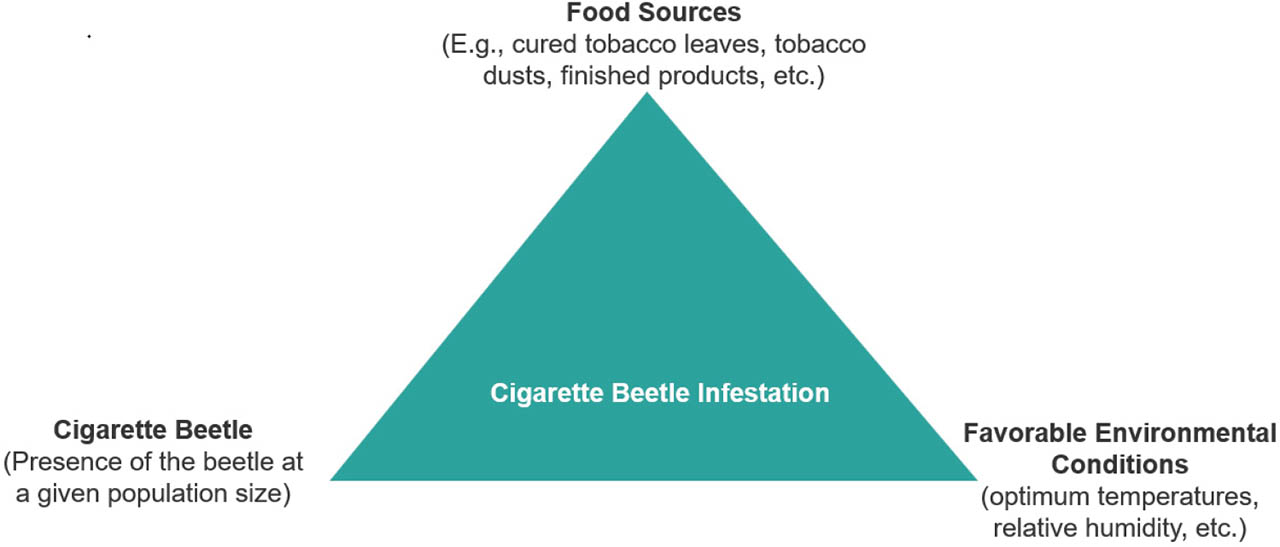
Figure 1
Cigarette beetle infestation triangle of variables needed to be favorable for a CB infestation.
a. Sanitation
Intensive and dedicated cleaning of tobacco dust in areas that may be the primary sources of CBs is a critical tool to lower or prevent infestations. Sanitation must include the opening, and possibly disassembly, of ALL equipment and machinery to vacuum out the dust and potential resident insects. Commonly used “blow-down” of dust and debris from above-floor surfaces can prove ineffective to reduce pests as dust will simply be relocated to other hidden spaces. If ledges and other surfaces are blown down, then the tobacco dust and debris with insects must be vacuumed, removed and discarded off-site. These practices will require a dedicated and experienced cleaning crew that is knowledgeable in non-liquid cleaning practices and who can operate during all production times. Therefore, proper sanitation for pest prevention must be part of the routine standard operating procedures of the facility.
b. Prevention with residual pesticides
There are few options for spraying common residual insecticides such as organophosphates or pyrethroids in tobacco storage and processing buildings. Common residuals like chlorpyriphos or deltamethrin are registered in the U.S. for commonly performed “crack-and-crevice” spray application in buildings used for food storage and processing (application label for deltamethrin https://www3.epa.-gov/pesticides/chem_search/ppls/000432-01514-20110419.pdf). Similar applications in tobacco buildings are not clearly stated on the product application labels, though “pantry pest” target would include the CB. Maximum pesticide residue levels permitted in foods are established, but residue levels in a non-food consumable like tobacco are not clearly reported. Low-risk residual chemical insecticides, such as insect growth regulators (IGRs), may have registrations for tobacco buildings and are known to be effective for controlling CBs and preventing them from infesting bulk or processed tobacco. IGRs are insect juvenile hormone “mimics” that do not have acute toxicity, but rather disrupt the normal development of the insect as it molts from one stage to another. The adult stage is never reached or is terribly disfigured and non-reproductive, and the insect population eventually dies out several weeks after treatment. One such registered insect IGR, pyriproxyfen, is labeled for use as a surface or spot treatment for stored-product pest control in food facilities in the United States (Athanassiou et al., 2011). Another IGR that was used frequently in the tobacco industry several decades ago was methoprene (e.g., commercial products named Kabat, Dianex and Diacon), but some populations of CB in the southeastern U.S. were found to have developed resistance to methoprene (Benezet and Helms, 1994). Pyriproxyfen is a structurally different molecule than methoprene and could serve as a strategic alternative to methoprene as a safe IGR. Pyriproxyfen, as with any spray-on residual insecticide, must be applied to clean surfaces; however, it may retain its activity for several weeks, even after being covered with dust.
c. Prevention via physical and chemical exclusion
Packages for raw materials or finished tobacco products can be developed that are resistant to insect penetration and infestation (Mullen et al., 2012). This is particularly attractive for high-value finished products that reside in grocery warehouses for more than a few months. Packing material can be physically resistant to insect penetration due to layering and type of package material, or it can combine durable packaging with a chemical insect repellent or low risk insecticide. Pesticide-treated nets have been in use for years to block-off sections of warehouses with bulk-stored tobacco (Rumbos et al., 2018, Figure 2). Recently there have been other nets developed with a variety of active ingredients that can be placed over groups of boxes or pallets (e.g., Wilkins et al., 2021).
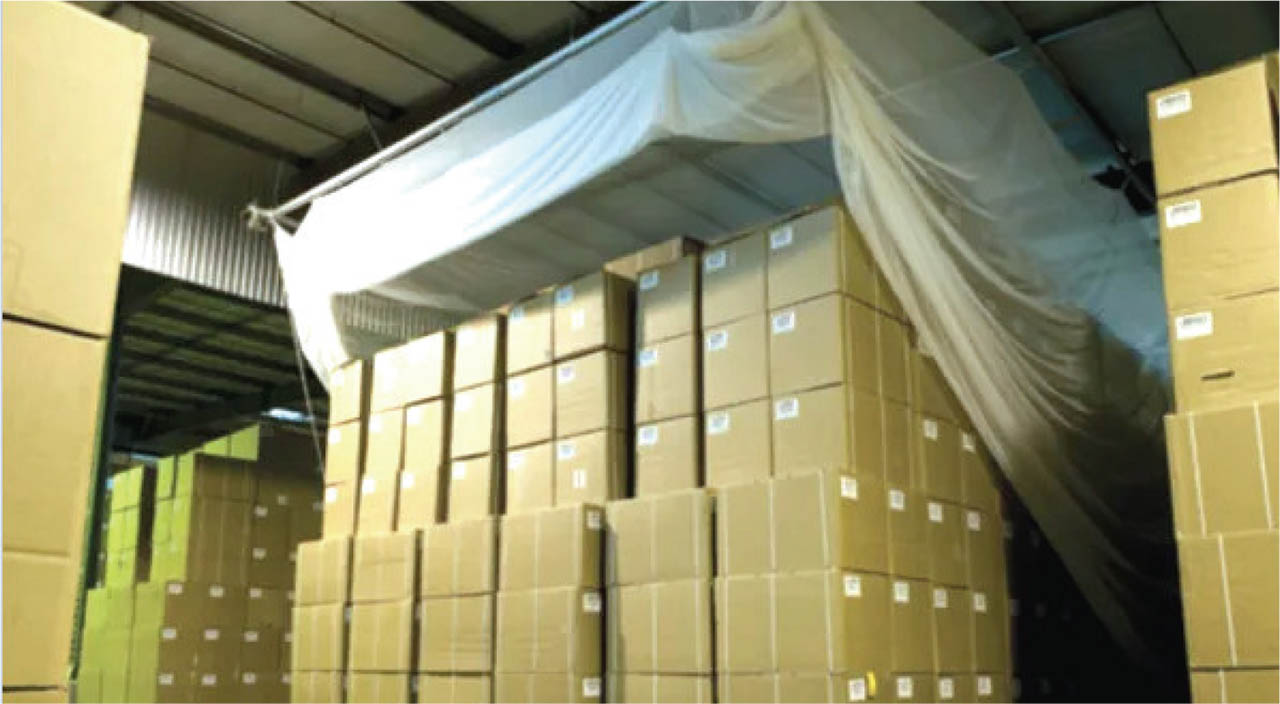
Figure 2
A large storage of boxes containing dry-cured tobacco for long-term storage being prepared for coverage with a long-last insecticide-treated netting called Carifend® (by BASF, https://agriculture.basf.com/global/en/business-areas/urban-and-rural-pest-control/use_areas/stored-product-pest-control.html).
d. Detection, monitoring and decision-making with traps
Routine trapping with the CB-specific sex pheromone remains an extremely important practice to detect the presence of CBs and to monitor this pest in many locations inside or outside a building over time. Pheromone-traps let the pest manager know when CB numbers are exceeding action thresholds, and to determine if numbers remain low following a critical mitigation like fumigation (Campbell et al., 2012).
Pheromone traps placed 1.5–2.0 m above the floor are considered in the best position for monitoring the CB in most agricultural landscapes (Edde, 2019). Male CBs, however, account for 90% or more of the population of beetles captured in pheromone-baited traps (Edde 2019). Therefore, for decision-making, the interpretation of pheromone-baited cigarette beetle counts should consider the fact that only one sex of the insect will be trapped. Light traps can determine if pheromone traps are consistent in giving reliable information about the relative size of CB populations in an area as they can capture both sexes of the beetle (Cajigas et al., 2021). There are many models and designs of light traps to consider. Insects are sensitive to light in the ultraviolet (UV) spectrum and are easily attracted to UV sources where they can be trapped. For example, ultraviolet (UV) (375 nm) and blue (470 nm) LEDs have been shown to effectively trap both sexes of the beetle, irrespective of mating condition (Katsuki et al., 2013). A downside to UV-light traps is that they are non-specific; all species of flying insects in the area may be trapped, and the numbers of any one species will be low because the UV light is not a strong attractant like a sex pheromone. Miyatake et al. (2016) suggested that devices combining UV-LED light traps with a sex pheromone may be beneficial for monitoring and mass trapping of CBs under laboratory and field conditions. An alternative to UV-light traps or sex-pheromone baited sticky traps would be traps baited with an attractant for female CBs. Preliminary studies found that extracts from various plant materials were attractive to mated CB females (Mahroof and Phillips, 2007), but more research is needed on this topic. Another alternative is to take samples of the product or the tobacco debris in an area that is under pheromone trapping, and try to determine the actual beetle population size. Direct sampling of the beetles in their food generates an average number of beetles per known amount of product sampled, such as CBs per kg tobacco or CBs per cubic meter of bulk product. Such sampling of a moving commodity along a production line or in a storage facility is done routinely in the food industry and could be developed for tobacco (NPMA, 2016). Once a routine for pest sampling is in place, then a relationship (or better yet, a statistical correlation) between CB numbers caught in pheromone traps and CB damage on the product can be in place. If CB numbers and/or CB damage has the potential to become unacceptable, and is approaching the economic threshold for financial loss, then a decisive mitigation such as fumigation or using an effective fumigant alternative must be chosen to prevent further destruction of the product and ultimate profit loss at the economic injury level (Figure 3).
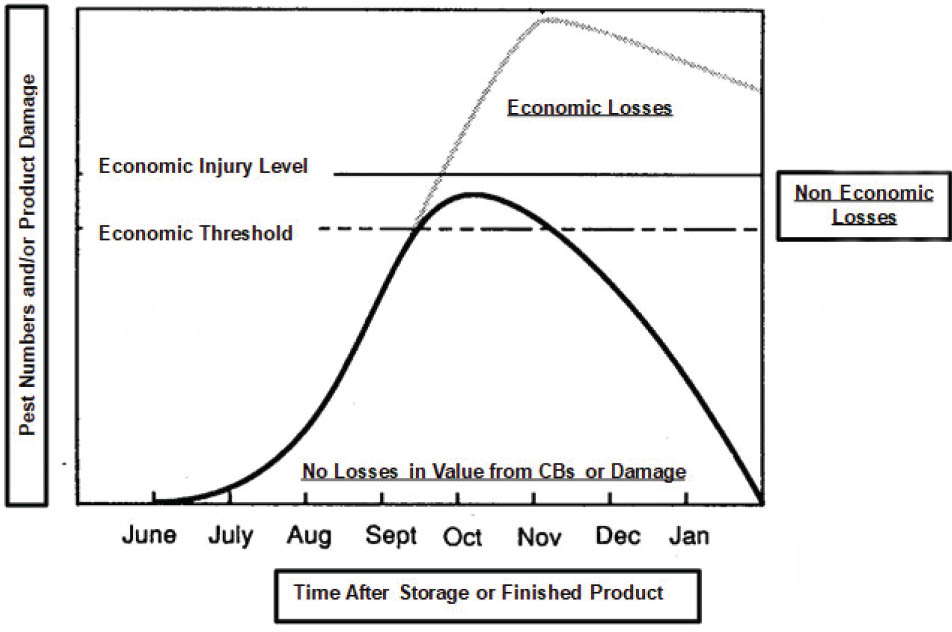
Figure 3
The practice of integrated pest management that monitors changes in pest numbers and product damage along with decisions for effective control (e.g., fumigation) before loss of profit. Modified from Hagstrum and Flinn (1995).
e. Phosphine fumigations
Hydrogen phosphide, known as phosphine gas (PH3), is the most widely used fumigant for raw bulk-stored agricultural commodities, including tobacco, worldwide. Phosphine is typically used for bulk-stored grain in large silos or metal bins, and is applied to large-scale warehouses for dried fruits, nuts and tobacco (Figure 4). Sealing of bins and buildings must be as gas-tight as possible to prevent large losses of gas during fumigation. Buildings in which phosphine fumigations are done should have minimal electrical appliance, perhaps only easily replaced lighting, because phosphine is highly corrosive to copper and other metals (Thoms and Phillips, 2004). The use of “spot” or “sheeted” phosphine fumigation application to a defined “area” of the plant or warehouse (Figure 4; Bond, 1989; Rajendran, 2000) can localize needed control within a building. Alternative fumigants to phosphine are now required because CBs are developing resistance to phosphine (Saglam et al., 2015). In the long-term it is expected that EPA registration will be received for an alternative fumigant, sulfuryl fluoride (SF). Although SF can be used to control the CB as a general stored-product pest as it commonly infests grain and other durable foods, tobacco is not an allowable commodity on the current application label. According to the current EPA-approved application label, any tobacco in a structure fumigated with SF must be stored in gas-tight containers. SF has a totally different mode of toxic action than phosphine, thus phosphine-resistant insects should be easily killed by SF. Also as mentioned above, phosphine is not recommended for other than bulk leaf treatment because it is corrosive to metals, particularly copper, and should not be used in buildings that contain sensitive and critical electrical equipment with integrated circuits or other computerized machines, as is the case throughout most manufacturing centers. Methyl bromide (MB) is a highly effective fumigant. However, MB is now phased out and no longer sold in most countries and in the U.S. for non-quarantine fumigations under legislation from the U.S. Clean Air Act because this molecule is an ozone-depleting substance (https://www.epa.gov/ods-phaseout/methyl-bromide).
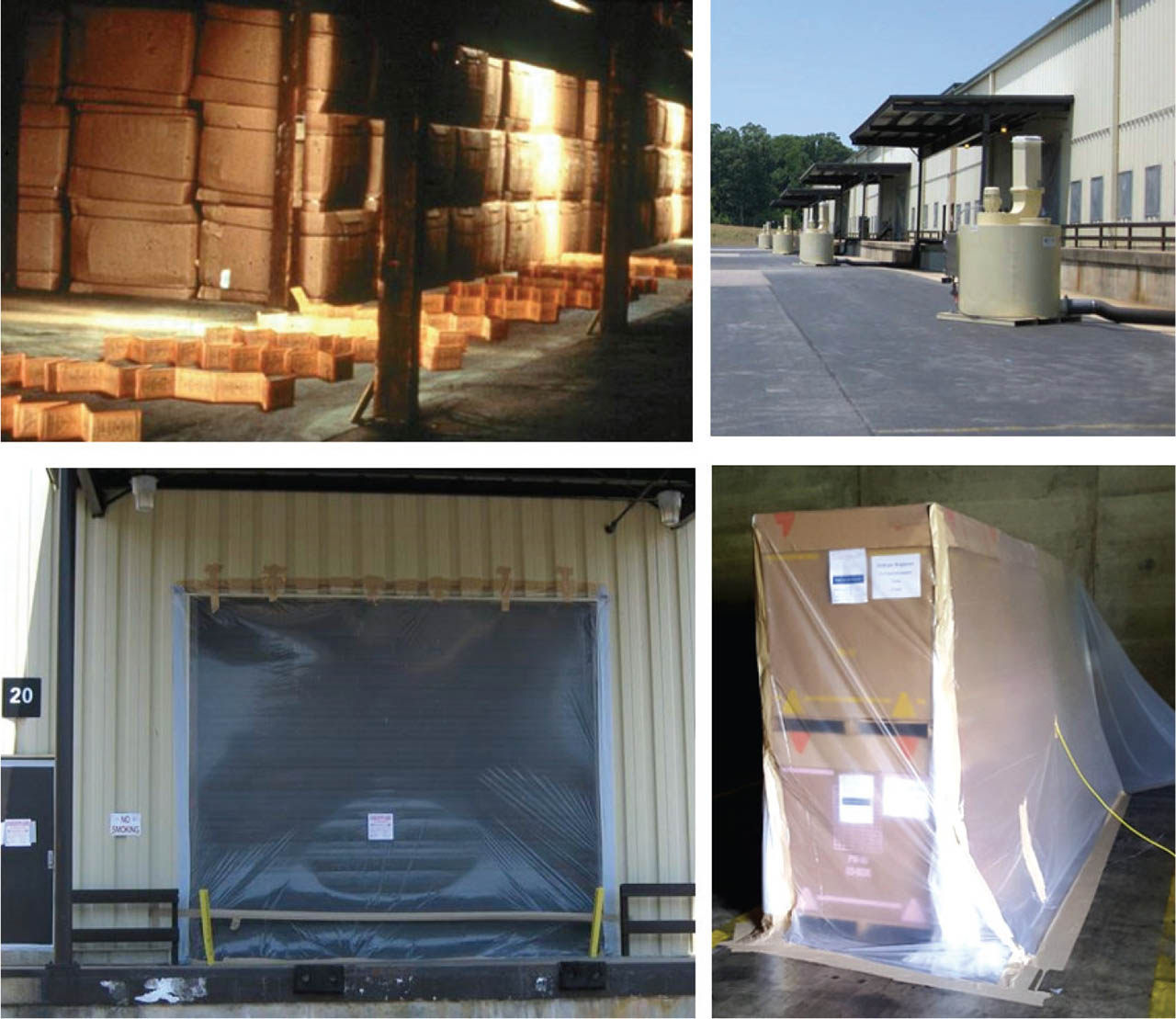
Figure 4
Gas-tight sealing for fumigation of stored tobacco showing typical situations for application of phosphine. Top-left is the inside of a warehouse prior to sealing openings to the outside, Top-right is a series of warehouses onto which windows have been sealed with thick cellophane and duct tape. Bottom-left is an example of a loading dock door that is sealed for fumigation. Bottom-right is a collection of a few boxes covered and sealed for localized, small fumigation.
f. Managing phosphine resistance
Many species of stored-product insects have developed resistance to phosphine over the past 50 years, and the CB is one of those with resistant populations (Nayak et al., 2020). A recent study (Saglam et al., 2015) reported that phosphine-resistant CBs occurred in six tobacco facilities in the eastern U.S. using a low-dose diagnostic test for adult beetles in the laboratory, and four of those facilities had more than 90% of their beetles scored resistant. A phosphine manufacturer has developed a simple test for resistance that requires minimal time, effort or analytical technology by IPM practitioners to help make short-term decisions whether to use phosphine or not (Figure 5), and recent academic research confirms the value of this simple test (Afful et al., 2021). Other experiments reported by Saglam et al. (2015) found that some CBs from those four high-resistant locations remained alive even when treated with phosphine at 600 ppm for six days at room temperature. Continued phosphine fumigations of such highly resistant CB populations could be futile and simply select for offspring that are more resistant. Fumigators and stored-tobacco managers must assess the effectiveness of routine phosphine fumigations, and take action to stop phosphine treatment and adopt an alternative method to control infestations. The tobacco industry, as with stored grain and food products, needs either alternative fumigants or alternative control methods to replace phosphine in such situations.
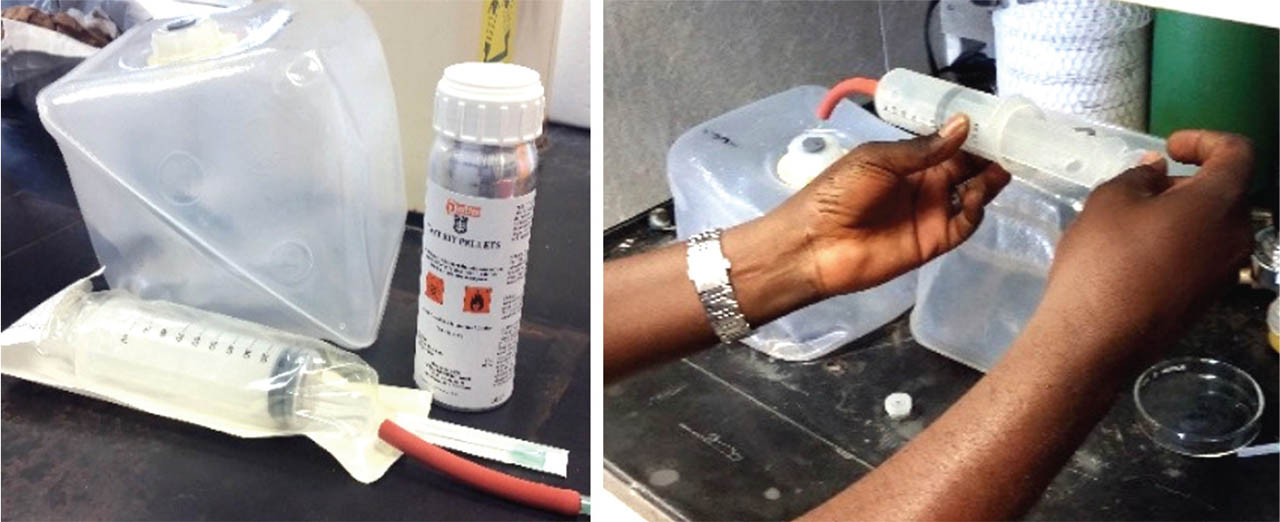
Figure 5
The Degesch™ phosphine tolerance test kit (left) (https://detia-garda.de/wp-content/uploads/2019/05/Phosphine-Tolerance-Test-Manual.pdf). The kit includes two small pellets of magnesium phosphide, a 3.7-L plastic water jug in which the pellets are reacted with a small amount of water to generate an atmosphere of 6,000 ppm phosphine (left image). A small group of beetles are placed in a large see-through plastic syringe before a blend of gas and air is added to the barrel to result in a concentration of 3000 ppm phosphine. Beetles are observed for 30 min to count the number of susceptible beetles that are knocked-down by the phosphine. Beetles that remain upright and appear normal are scored as resistant.
g. Alternative fumigants for CBs
There is at least one registered fumigant that can be used in tobacco facilities, and several others with similar registrations that could potentially be registered in the US. SF is registered for post-harvest agriculture commodities under the commercial name ProFume® (see EPA-approved application label at http://profume.com/wp-content/uploads/2019/09/20180730-ProFume-Specimen-Label_SA_clean.pdf). SF can effectively kill many pests, although the egg stage of some arthropod species is the most difficult to kill (Phillips et al., 2012; Hasan et al., 2021). SF can leave behind residues of fluoride ion in many commodities, thus the amount applied to a commodity must be kept below a certain concentration and hold time. The label for ProFume® clearly lists the CB as one of the many species it can be used for, but fumigation of raw tobacco or tobacco products is not allowed on the current label. Therefore, tobacco cannot be fumigated with SF, but an empty tobacco storage structure can receive a SF fumigation. Beside SF there are several other fumigant gases, either registered in other countries or registered in the U.S. for non-commodity application, that have potential for U.S. registration in the future. Two compounds considered “liquid fumigants”, because their boiling point is less than that of water, include ethyl formate and propylene oxide. Both are toxic against all life stages of the CB (Maille, 2019) and are registered for food or food-handling structures (See VAPORMATE™ for ethyl formate at https://www.linde-gas.com/en/images/9731_Vapormate_Application_guide_ST_tcm17-589873.pdf, and Propoxide for propylene oxide at https://www3.epa.gov/pesticides/chem_search/ppls/047870-00003-20140819.pdf). However, penetration into commodity has been problematic with ethyl formate and propylene oxide. Ethanedinitirile (C2N2) is very effective against CB (Ramadan et al., 2020) and available commercially for fumigation of soil and wood timber (see https://www.draslovka-services.com/products/edn-ethanedinitrile/). Hydrogen cyanide (HCN) is very effective against all life stages of any insects tested so far and has the potential to be used for infested agricultural commodities with the commercial product BLUEFUME® (see https://www.draslovka-services.com/products/bluefume-hydrogen-cyanide/).
h. Alternatives to fumigation: Extreme temperatures
Heat treatment of the entire building can be an effective fumigant alternative for killing stored-product insects, including all life stages of the CB (Adler, 2002; Hansen et al., 2011). Temperatures and exposure times to obtain good insect kill have been reviewed (Fields, 1992) and include a minimum of 45 ° C for 12–24 h. Technology is available for bringing in portable heating units or installing permanent units to existing steam generation and distribution systems (Figure 6). The area being treated must be relatively air-tight and also should not be contiguous to unheated areas with CB activity in the same building. Human inhabitants and workers should discontinue work and leave the treated area, though the building is usually safe to enter for short periods if needed, and adequate time is needed for the treatment and for the dissipation of heat. Heat treatment allows for a shorter re-entry period than fumigation. As an alternative to heat, freezing cold temperatures can also control pest insects. However, cold is not practical to apply to entire buildings, as can be done with heat. A temperature of −20 °C will kill unprotected insects in a matter of minutes (Fields, 1992). Infestations in the center of an 8 m3 pallet load would require several hours to be killed with freezing, and perhaps up to 24 h depending on the type and density of the commodity. Therefore, freezing can be a relatively quick, effective, and chemical-free method to control CB infestations in selected packages of raw or processed tobacco products. Care should be used when bringing treated tobaccos out of the freezer to avoid condensation, mold, spotting, etc.
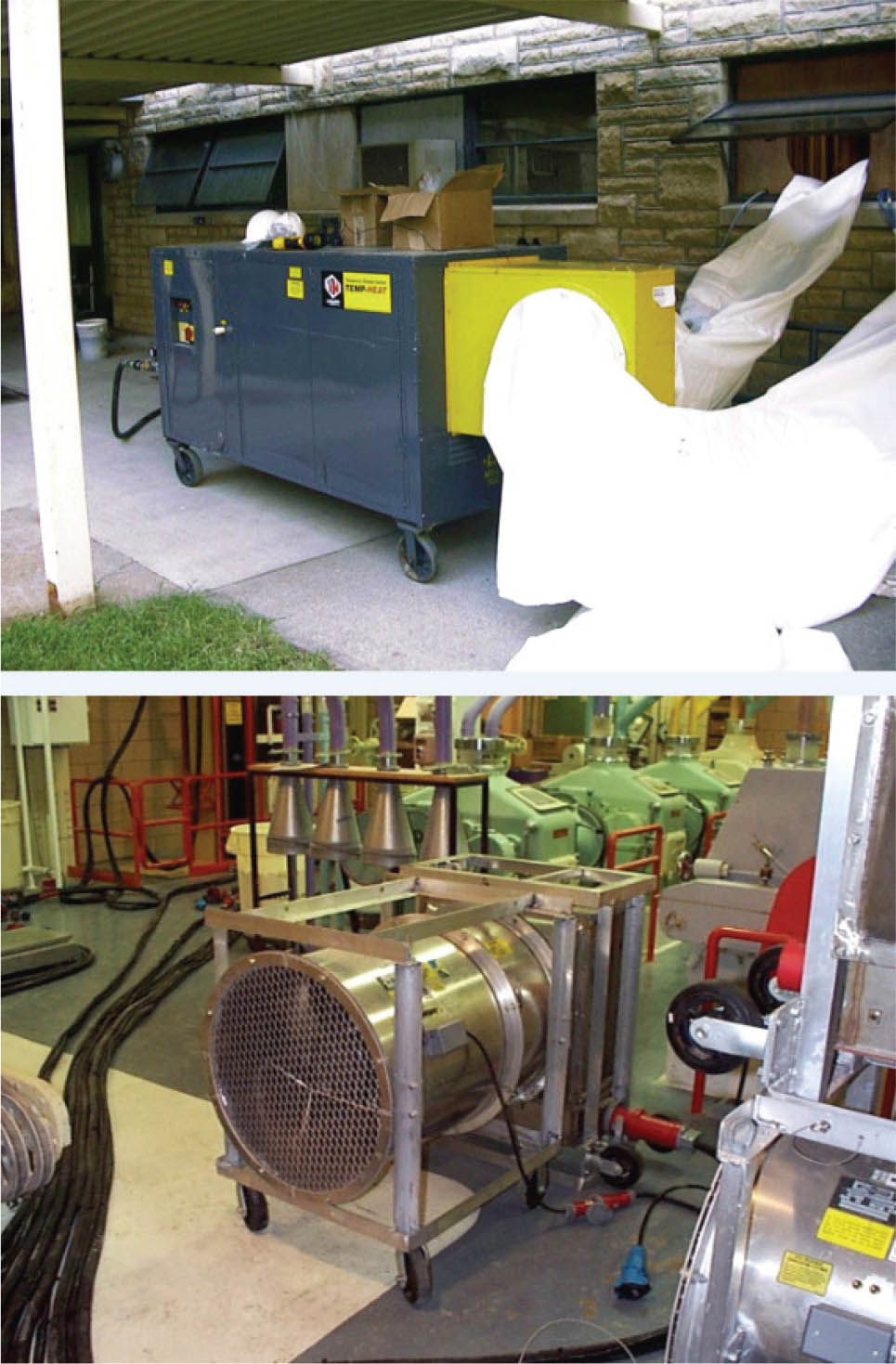
Figure 6
A portable heat-treatment device for delivering hot air into a flourmill from outdoors to control insects (top), and a hot-air blower operating inside a mill that is plumbed into the building's steam.
i. Alternatives to fumigation: Controlled or modified atmospheres
A change in the natural atmosphere around a commodity to become insecticidal can be achieved in a gas-tight structure (Navarro et al., 2012; Mitcham et al., 2006; Coresta, 2013). Controlled atmospheres are when the gas composition is changed by adding carbon dioxide to an unnaturally high and toxic level, or by reducing the oxygen in a structure by flushing with high levels of nitrogen or applying a vacuum to cause suffocation. Controlled or modified atmospheres are difficult to apply to buildings due to the lack of gas-tightness but can be used effectively with gas-tight chambers or coverings. Modified atmospheres achieve increased CO2 and low O2 in a sealed bulk of a commodity over several weeks or months from the normal respiration of living aerobic organisms and microbes in the commodity. A low-cost, safe, and quick way to achieve a low O2 atmosphere is by application of a vacuum to a sealed commodity to bring the pressure down to get 1% O2 and holding for one day at room temperature (Figure 7).
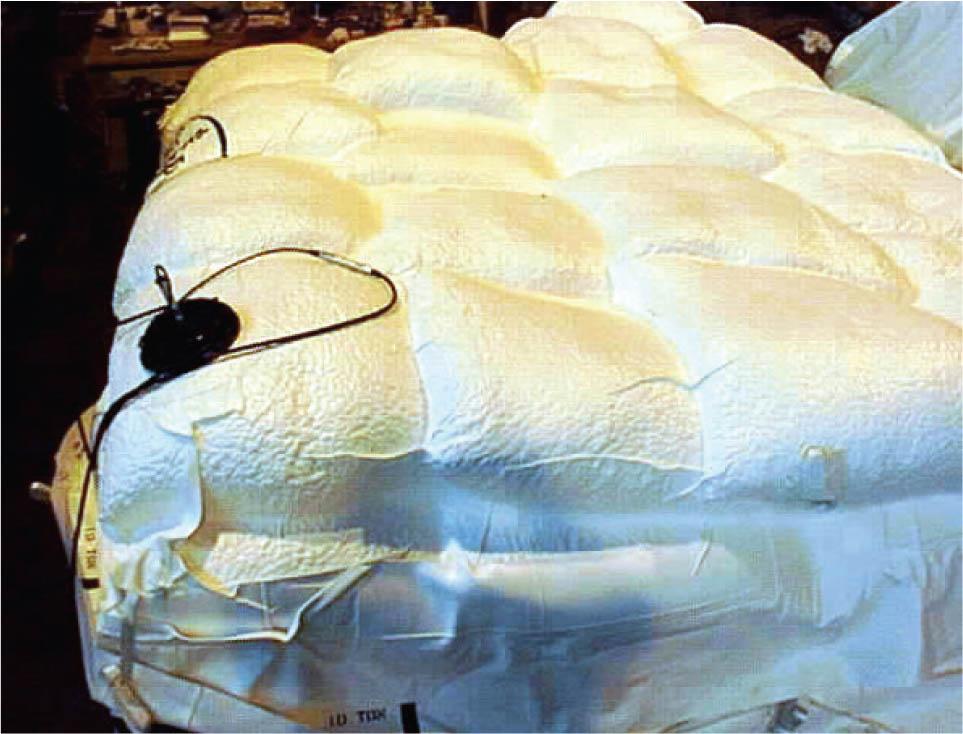
Figure 7
A GrainPro cocoon containing bagged commodity subjected to a low oxygen atmosphere using a vacuum pump to achieve approximately 1% oxygen. The same gas-tight covering could be used for tobacco under low O2 (via vacuum or high N2), high CO2, or a small application of a fumigant.
j. Behavioral control via mating disruption
The mating behavior of CBs can be interrupted using pheromone-based mating disruption (MD), a well-known biologically-based method that is very safe and used throughout agriculture for over 40 years, including stored product insects (Phillips and Throne, 2010). For MD, an unnaturally high level of synthetic sex pheromone is released in an area using controlled release technology. For CBs, the male beetle is attracted to the natural pheromone released by a sexually mature adult female. Synthetic sex pheromone has been used for CB as lures in traps for several decades. MD would require releasing quantities of synthetic CB pheromone from numerous locations in a room or building at levels that are 100s or 1000s of times higher than the amounts used in trap lures. The result is that male CBs cannot locate female CBs producing their natural pheromone because they detect pheromone “everywhere”, males fail to locate females, females do not get mated, and the population eventually goes to extinction. Large-scale research on CB mating disruption in food and tobacco industries has been conducted with very high success. For example, working in a flour mill, Mahroof and Phillips (2014) observed a significant reduction in numbers of adult CBs captured in the pheromone traps 8 weeks before and 8 weeks after MD treatment (Figure 8). Since MD is a pest mitigation method, the use of the pheromone in this way requires its registration in the U.S. as an “insecticide” with the EPA. Use of the CB pheromone in traps does not require EPA registration because trap manufacturers do not make claims of pest mitigation with the trap. Traps are used simply for detection and monitoring. At the time of this writing, we have been informed that the application for EPA registration is being submitted by the primary manufacturer of the CB pheromone for its use in mating disruption.
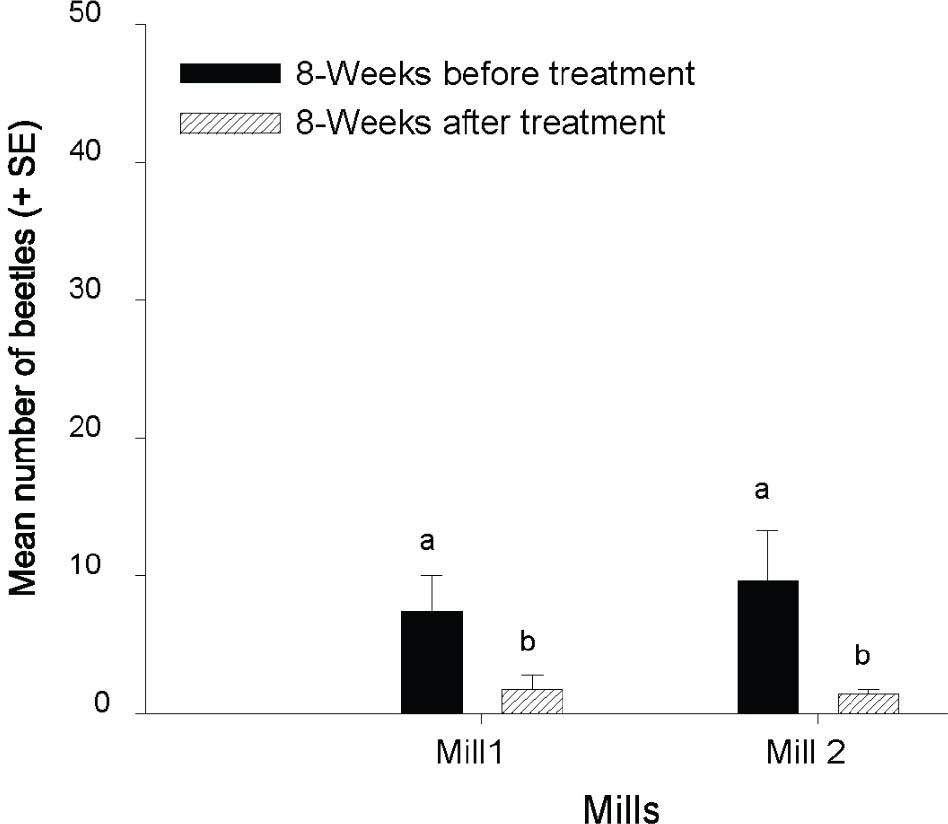
Figure 8
Mean ± SE number of CBs captured in sticky traps in treated mills 8 weeks before and after mating disruption. Mean number of beetles for a given mill followed by different letters are significantly different (P ≤ 0.05) (Adapted from Mahroof and Phillips, 2014).
k. Microbial control
The beetle-specific insecticidal bacterium called Bacillus thuringiensis tenebrionis (Bt) could be applied to the CB in various ways (Blanc et al., 2014). Several workers have described and written on the mode of action of Bt (e.g., Blanc et al., 2002, Tsuchiya et al., 2002). However, research on efficacy is needed and then registration with relevant governmental agencies would need to be pursued. Another microbial is the insect-specific fungus called Beauvaria bassiana. Beauvaria is registered for numerous insects, including stored-product insects, which would include CBs. Its activity is best under moist conditions, but it may have a role for CB management in some cases. More recently a bacterial derivative known as spinosad, from the bacterium species Saccharopolyspora spinosa, has been found very effective for stored-product insects such as the CB (Hertlein et al., 2011), and has been recently registered under the trade name Sensat™ (see label at https://www3.epa.gov/pesticides/chem_search/ppls/000264-00995-20200327.pdf).
CONCLUSION
Tobacco companies with CB activity need to have a “toolbox” of effective pest management techniques and control methods. It is expected that sometime in the near future the FDA will issue its guidance for Good Manufacturing Practices (GMP) for the tobacco industry. Implementing the tools outlined in this paper will lead to effective control of the CB and prepare facilities for GMP regulations. Avoiding use of chemical insecticides is desirable; however, cleaning alone may not be an effective form of pest control. Integrated Pest Management, or IPM, in any pest system includes the basic components of prevention, monitoring the pest population, and then uses monitoring data in facility-specific decision-making to either continue with sanitation and prevention, or take action with definitive methods of pest control like fumigation. Prevention is accomplished by keeping pests away from the protected product and engaging in vigilant sanitation to make sure that unprotected product is not exposed so that it too will not become infested. Monitoring should be done of the pest insect population (CB), the product being protected (tobacco) and the environment (temperature, relative humidity, lighting levels, etc.) where the pest and the product potentially co-exist. If pest monitoring determines that an established action threshold level has been reached, then action in the form of effective pest mitigation should be applied.
Notes
[1] ENDORSEMENT DISCLAIMER
Reference to any specific commercial products, process, manufacturer, company, or trademark does not constitute its endorsement or recommendation by the authors.