
Table 1
Summary of physical properties of selected carbonyls in cigarette smoke.
| Formaldehyde | Acetaldehyde | Acrolein | Crotonaldehyde | |
|---|---|---|---|---|
| Formula | HCHO | CH3CHO | CH2 = CHCHO | CH3CH = CHCHO |
| Boiling point (K) | 254 | 293 | 326 | 377 |
| ISO emissions from KY3R4F (mg/cigarette) | 21.5 ± 7.8 (37) | 540 ± 135 (37) | 49 ± 14 (37) | 13 ± 5 (37) |
| Proportion in particulate phase of mainstream smoke | 32% (15, 16) | 2% (15) | 0% (17, 57) | 7% (56) |
| 2% (56) | ||||
| 7% (15) | ||||
| 33% (60) | ||||
| Total retention on cigarette smoke inhalation | 95–99% (61) | 94–95% (62,19) | > 97% (61) | |
| 70–97% (19) | ||||
| 97% (61), | ||||
| 98% (61) | ||||
| 99% (63,64) | ||||
| Mouth retention from cigarette smoke | - | 30–60% (19) | 72% of 97% total retention (19) | - |
| Predicted main deposition regions in the respiratory tract | Mouth and oropharyngeal/laryngeal (21) | Mouth and oropharyngeal/laryngeal (21) | Mouth and oropharyngeal/laryngeal (21) | - |
| Trachea (22) | Deposition past generation 8 (22) | Deposition past generation 8 (22) | ||
| Toxicity | IARC Group 1 human carcinogen (11) | IARC Group 2B (58, 59) | Inflammatory and cytotoxic effects (2, 65) | Mutagenic and carcinogenic (55) |
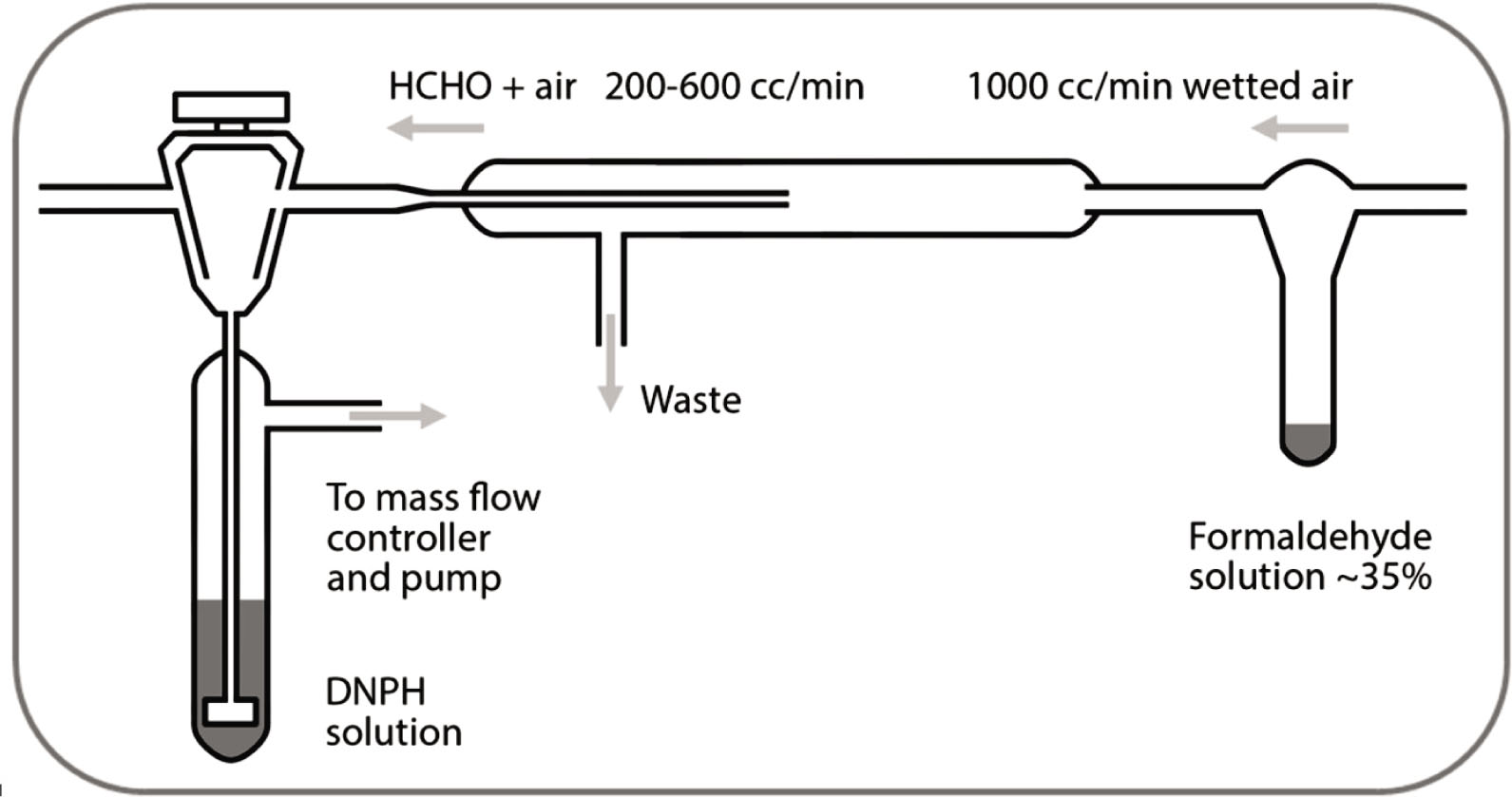
Figure 1
Experimental set-up used for the preparation of flowing formaldehyde–air gas mixtures. In the apparatus the three-way glass valve is connected to a DNPH impinger to determine the concentration of formaldehyde in the gas stream. In the denuder experiments, the impinger is replaced by a DNPH-coated denuder tube.
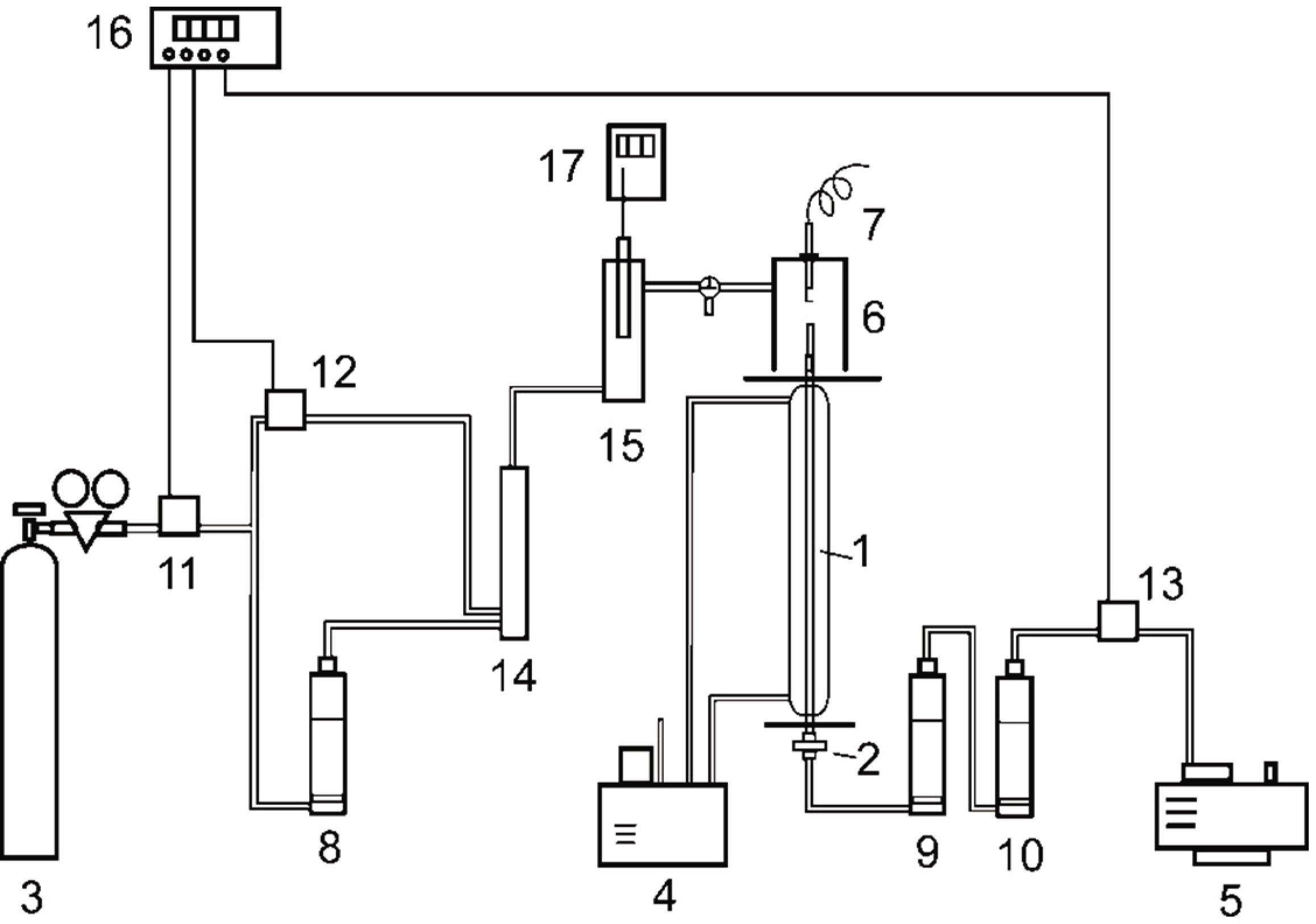
Figure 2
Schematic representation of the denuder apparatus. 1) Denuder tube; 2) Cambridge filter pad; 3) synthetic air cylinder; 4) ultrathermostat; 5) membrane pump; 6) Pyrex® hood; 7) retractable electric igniter; 8) water saturator; 9) and 10) impingers, filled with acidic DNPH solution; 11), 12) and 13) mass flow controllers; 14) mixer to mix dry and wet air flows; 15) humidity sensor; 16) control for mass flow controllers; 17) humidity indicator. Based on Figure 1 of (25).
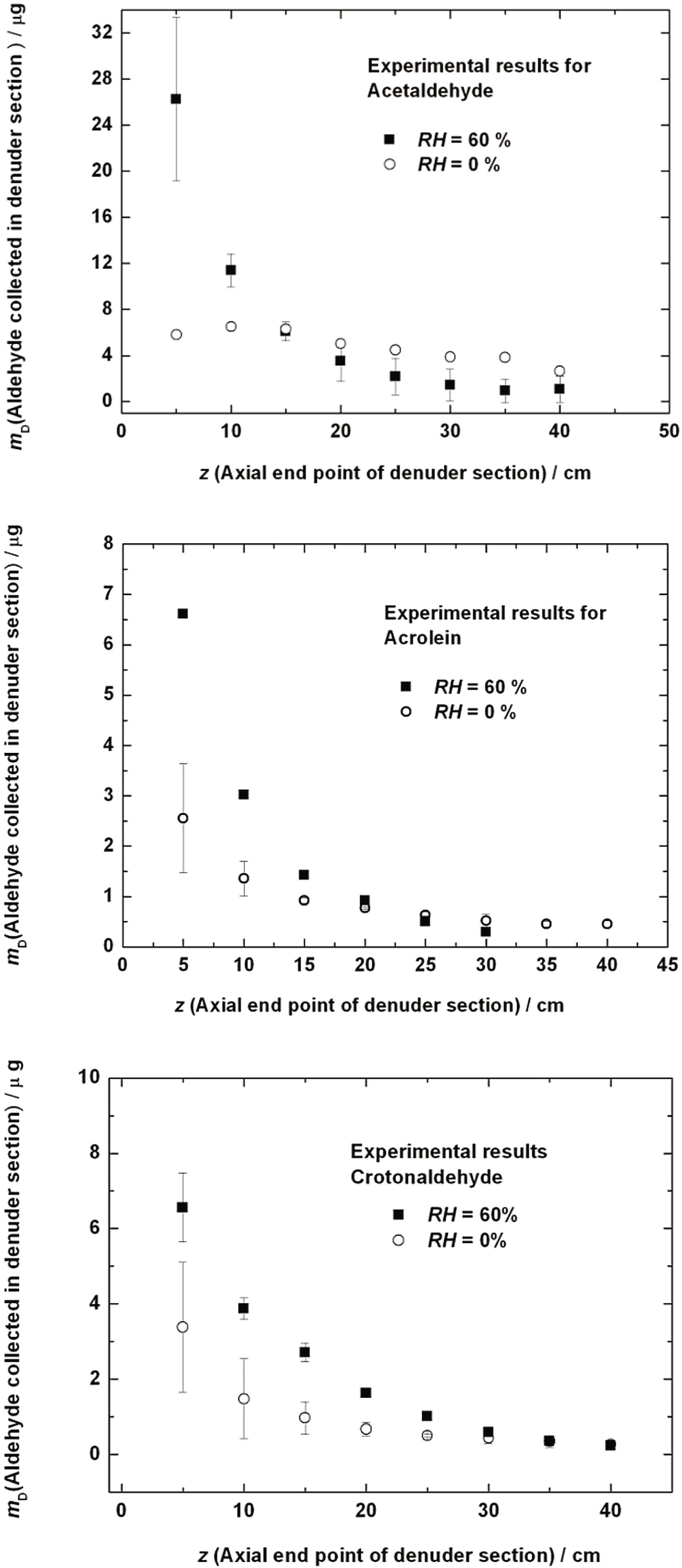
Figure 3
Depletion of acetaldehyde, acrolein, crotonaldehyde and formaldehyde along the distance of denuder tubes obtained with aldehyde–air gas mixtures prepared with 0% and 60% RH synthetic air (temperature T = 298 (± 1) K, flow Q273 = 300 (± 6) mL min−1).
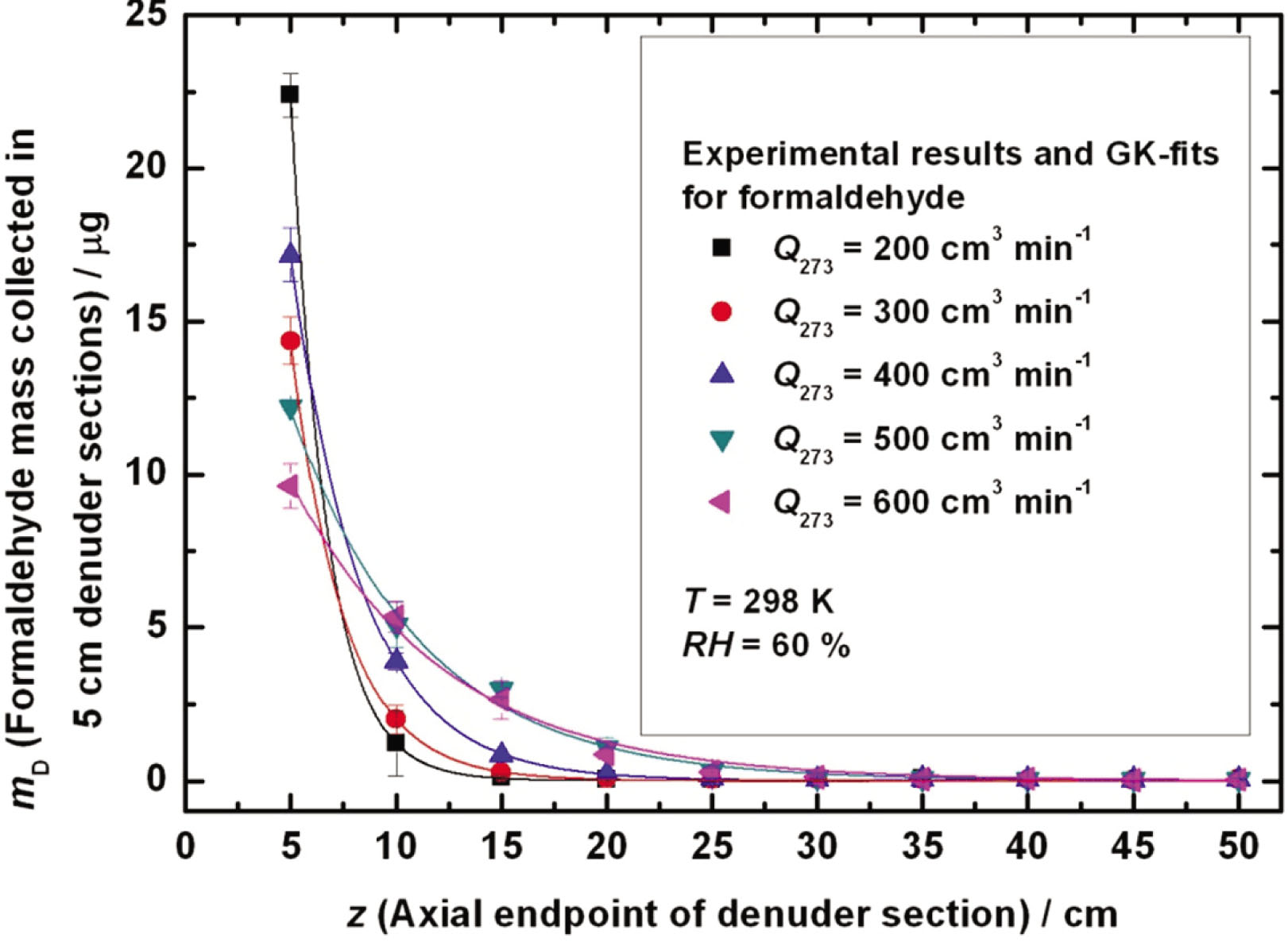
Figure 4
Effect of volumetric flow-rate variation on the formaldehyde depletion data in DNPH-coated denuder tubes at 298 K and 60% RH. The curves are two-parameter-fit results to the data using the Gormley-Kennedy equation (26).
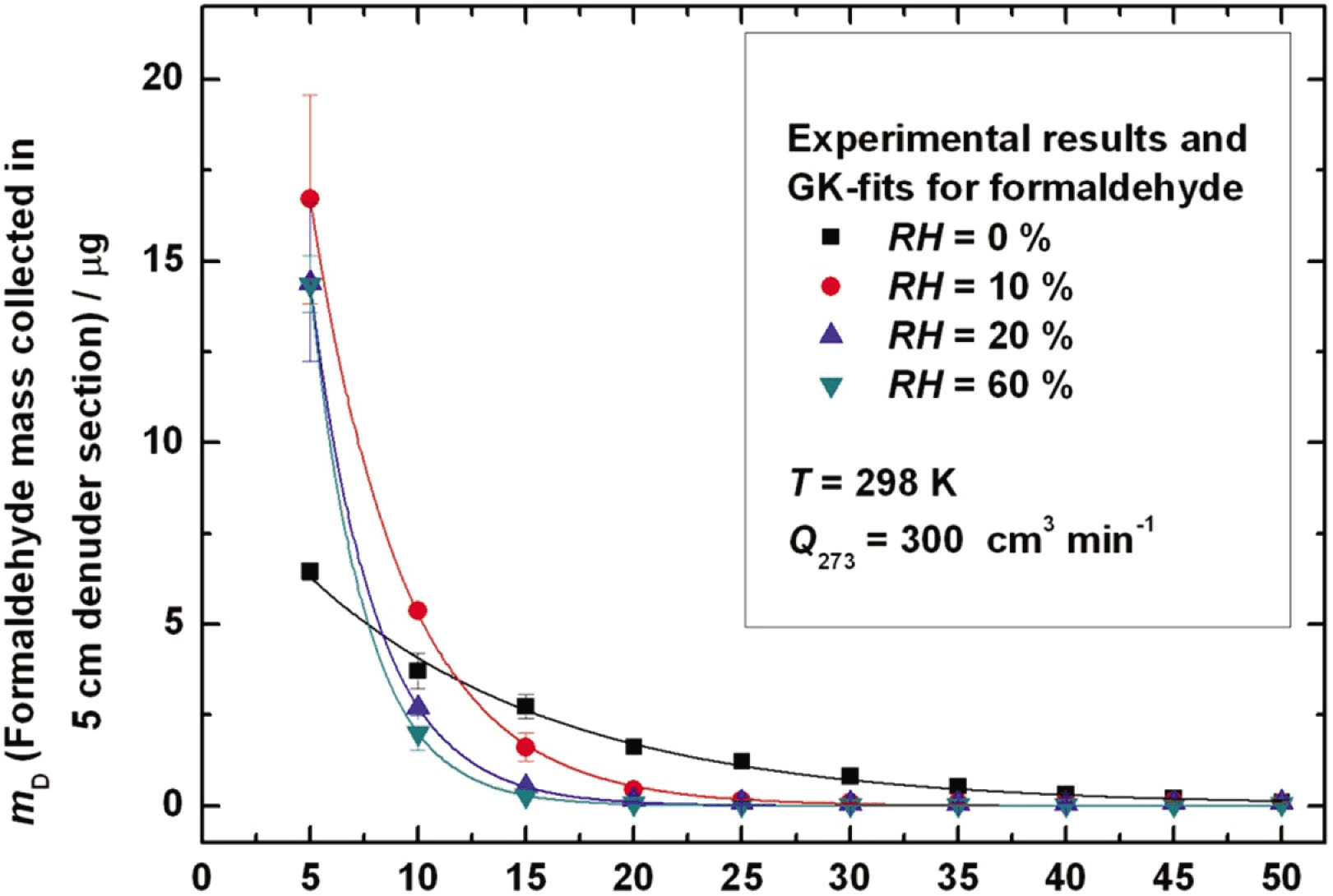
Figure 5
Effect of the air flow RH on the formaldehyde depletion data in DNPH-coated denuder tubes at 298 (± 1) K and volumetric air flow Q273 = 300 (± 6) mL min−1. The curves are two-parameter-fit results to the data using the Gormley-Kennedy equation (26).
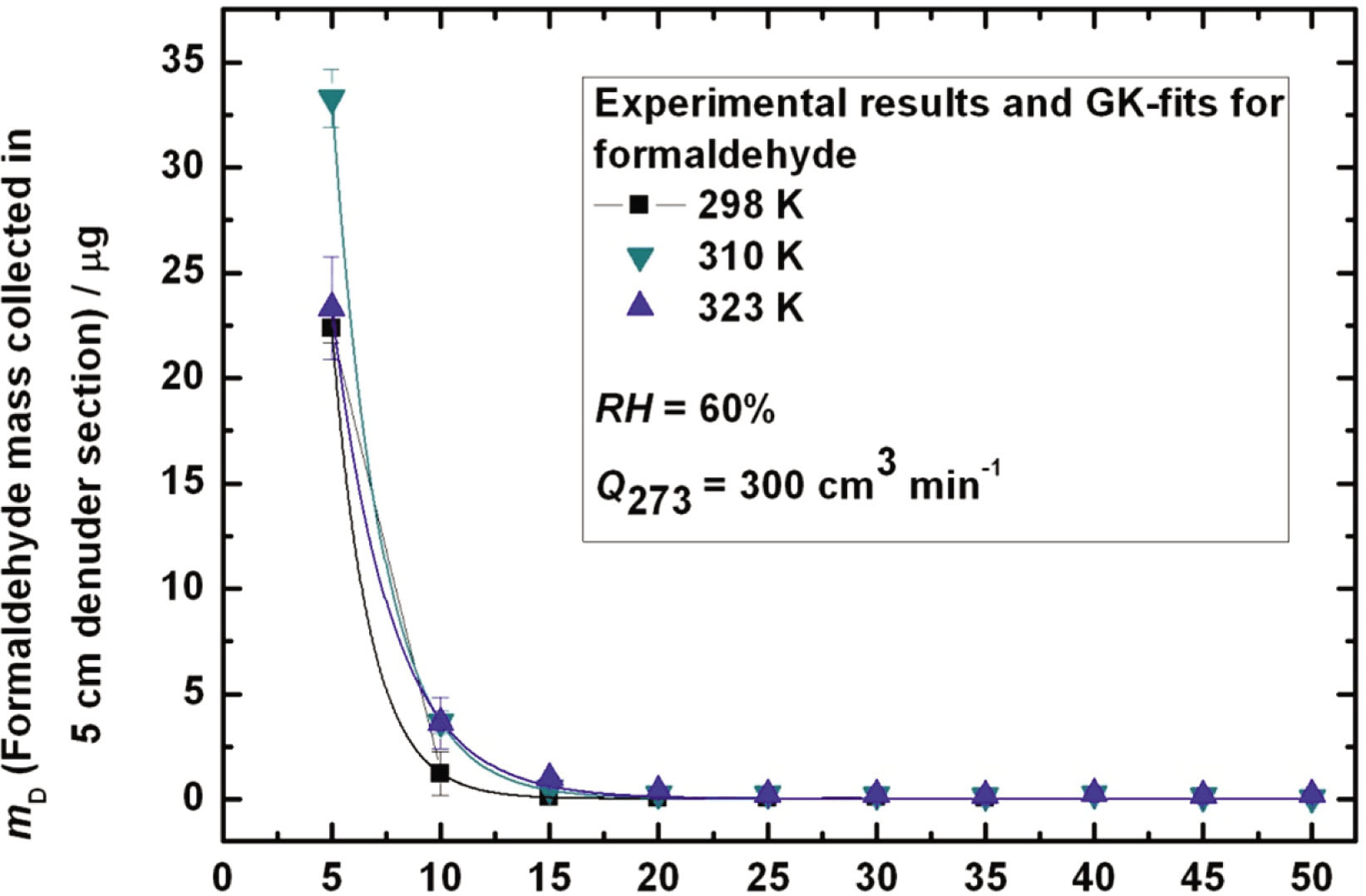
Figure 6
Effect of the denuder temperature on formaldehyde depletion data in fully DNPH-coated denuder tubes at 60% RH and Q273 = 200 (± 6) mL min−1. The curves are two-parameter fit results to the data using the Gormley-Kennedy equation (26).
Table 2
Summary of Gormley-Kennedy analysis of formaldehyde denuder dataa.
| Effect of flow rate (temperature = 298 K, RH 60%) | |||
| Q273 (mL min−1) | 1-parameter fit | 2-parameter fit | |
| D298 (cm2 s−1) | D298 (cm2 s−1) | mD(z0) (μg) | |
| 200 | 0.035 ± 0.016 | 0.184 | 499 |
| 300 | 0.049 ± 0.015 | 0.186 | 125 |
| 400 | 0.060 ± 0.018 | 0.188 | 93 |
| 500 | 0.058 ± 0.014 | 0.127 | 33 |
| 600 | 0.064 ± 0.015 | 0.130 | 33 |
| Effect of RH (temperature 298 = K, Q273 = 300 mL min−1 | |||
| RH (%) | 1-parameter fit | 2-parameter fit | |
| D298 (cm2 s−1) | D298 (cm2 s−1) | mD(z0) (μg) | |
| 0 | 0.024 ± 0.004 | 0.042 | 11.9 |
| 10 | 0.041 ± 0.011 | 0.112 | 64.3 |
| 20 | 0.046 ± 0.015 | 0.162 | 92.8 |
| 60 | 0.049 ± 0.016 | 0.192 | 125.2 |
| Effect of denuder temperature (Q273 = 200 mL min−1, RH 60%) | |||
| T (K) | 1-parameter fit | 2-parameter fit | |
| DT (cm2 s−1) | DT (cm2 s−1) | mD(z0) (μg) | |
| 298 | 0.035 ± 0.031 | 0.189 | 499.2 |
| 310 | 0.035 ± 0.024 | 0.149 | 366.6 |
| 323 | 0.032 ± 0.021 | 0.128 | 176.5 |
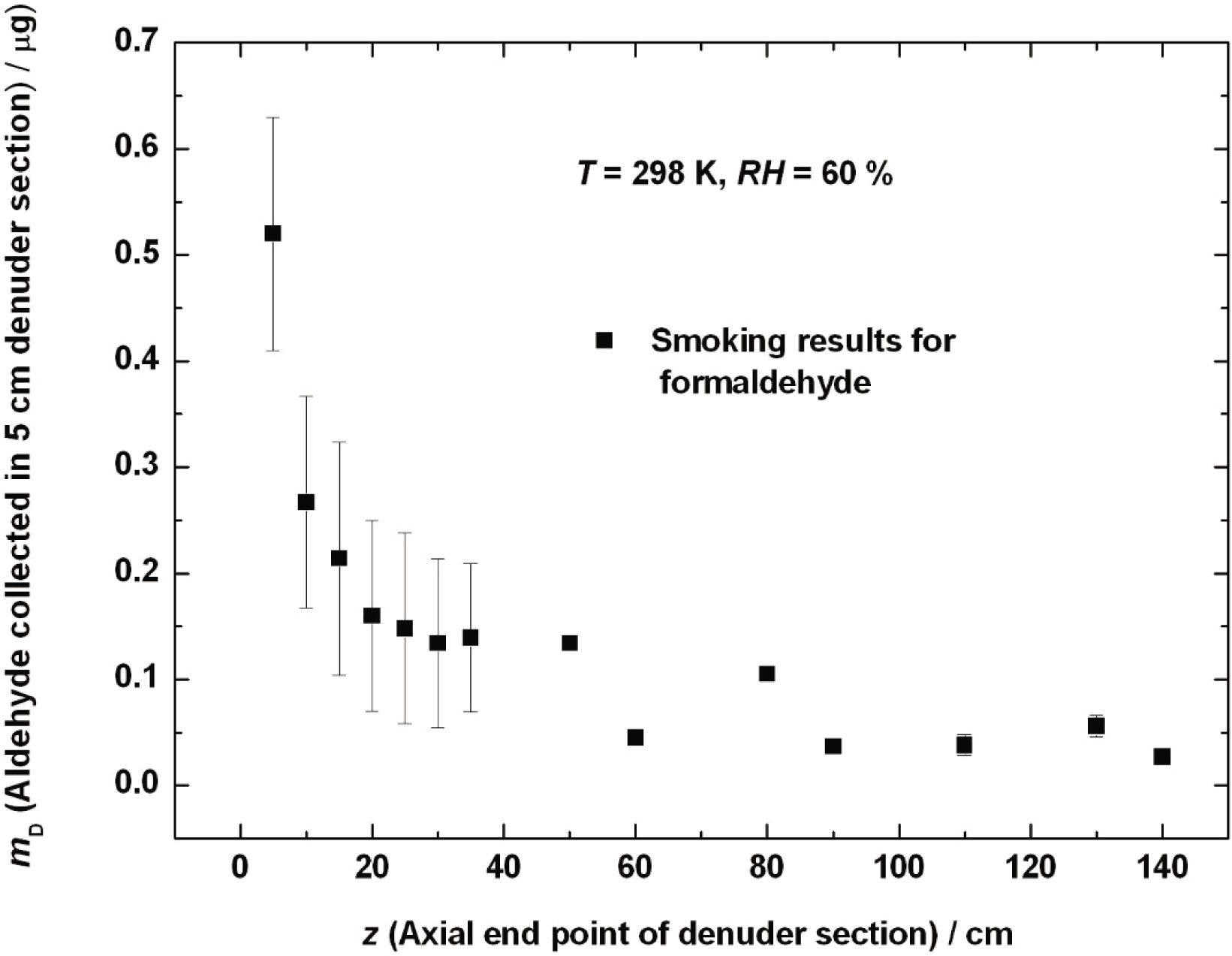
Figure 7
Formaldehyde depletion in MS from Kentucky 3R4F reference cigarettes; data determined at in DNPH-coated denuder tubes at a temperature of 298 K.
Table 3
Overall formaldehyde masses determined for cigarette MS using the diffusion denuder method.
| T (K) | Formaldehyde mass (μg) | ||||
|---|---|---|---|---|---|
| Denuder, mDL | Cambridge pad, mc | Impinger, mI | Total, mΣ | fDL | |
| 298 | 1.00 ± 0.33 | 0.33 ± 0.37 | 1.54 ± 1.52 | 2.86 ± 2.02 | 35 ± 27% |
| 310 | 1.03 ± 0.35 | 0.58 ± 0.15 | 0.80 ± 0.29 | 2.42 ± 0.54 | 43 ± 17% |
| 323 | 1.43 ± 0.22 | 0.32 ± 0.004 | 0.58 ± 0.34 | 2.34 ± 0.79 | 61 ± 23% |
| Average | 2.530 | ||||
[i] Abbreviations: mDL = formaldehyde mass deposited over the whole length of denuder tube; mC = formaldehyde mass determined in Cambridge filter pads; mI = formaldehyde mass determined in impingers; mΣ = total amount of formaldehyde, calculated as mDL + mC + mI; fDL = fraction of formaldehyde deposited over whole length of denuder tube, calculated as (mDL /mΣ) × 100. Data obtained by smoking 2 cm lengths of three 3R4F cigarettes.
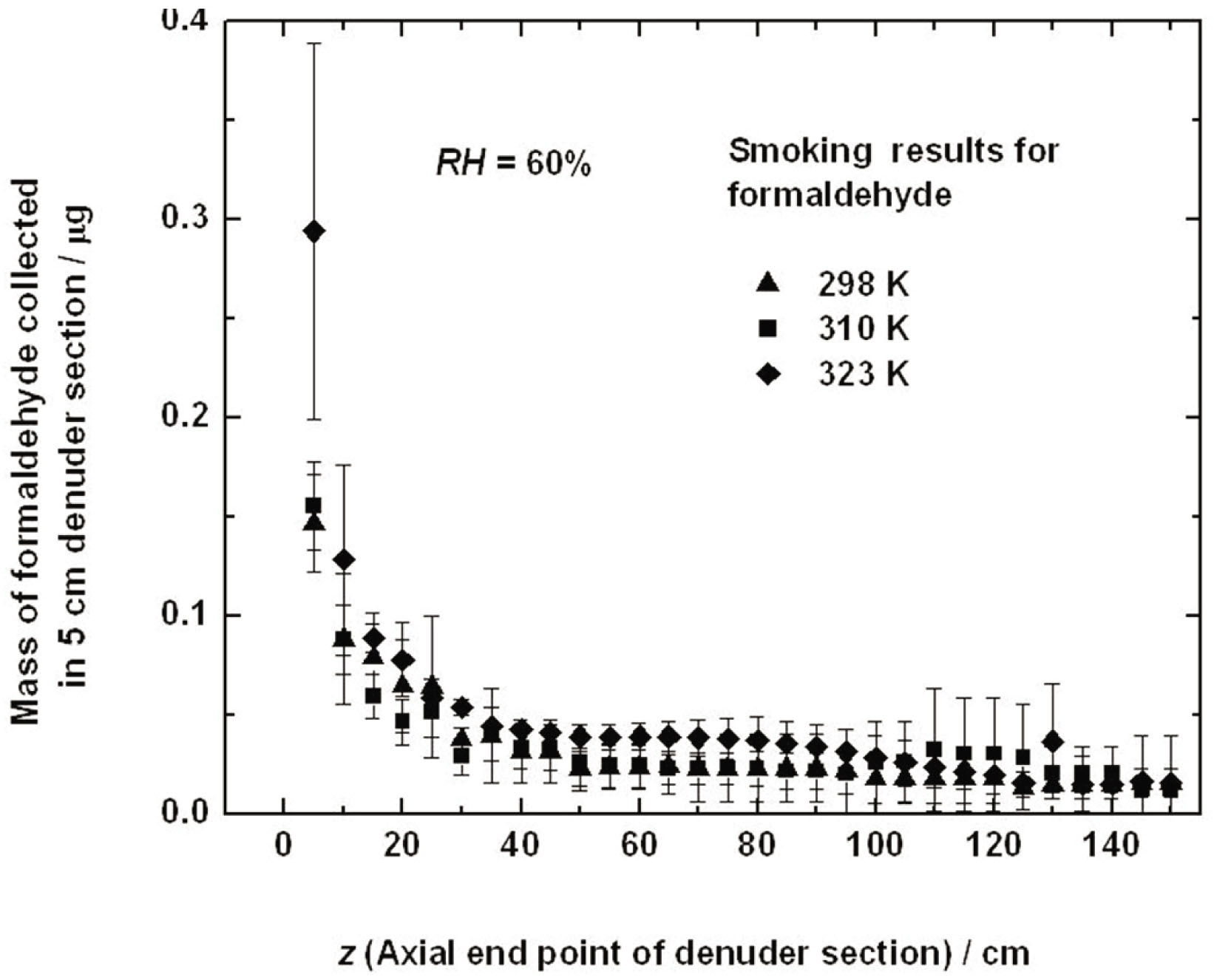
Figure 8
Temperature dependence of formaldehyde deposition from cigarette MS in diffusion denuder tubes at a flow rate Q273 = 300 mL min−1.
Table 4
Comparison of G/P partitioning for formaldehyde and nicotine determined from cigarette MS using the diffusion denuder method.
| T (K) | Formaldehyde fractiona | Nicotine fractionb | ||||
|---|---|---|---|---|---|---|
| Lewis, Colbeck and Mariner model (1994) | Lipowicz and Piadé model (2004) | Whole length of denuder tube | Lewis, Colbeck and Mariner model (1994) | Lipowicz and Piadé model (2004) | Whole length of denuder tube | |
| 298 | 5.6% | 0.49% | 35% | 1.3% | 0.09% | 6% |
| 310 | 7.3% | 0.69% | 43% | 3.0% | 0.5% | 21% |
| 323 | 11.6% | 1.33% | 61% | 5.7% | 2.5% | 53% |
| Ratio of 323 to 298 K values | ||||||
| 2.10 | 2.71 | 1.74 | 4.5 | 27.8 | 8.83 | |
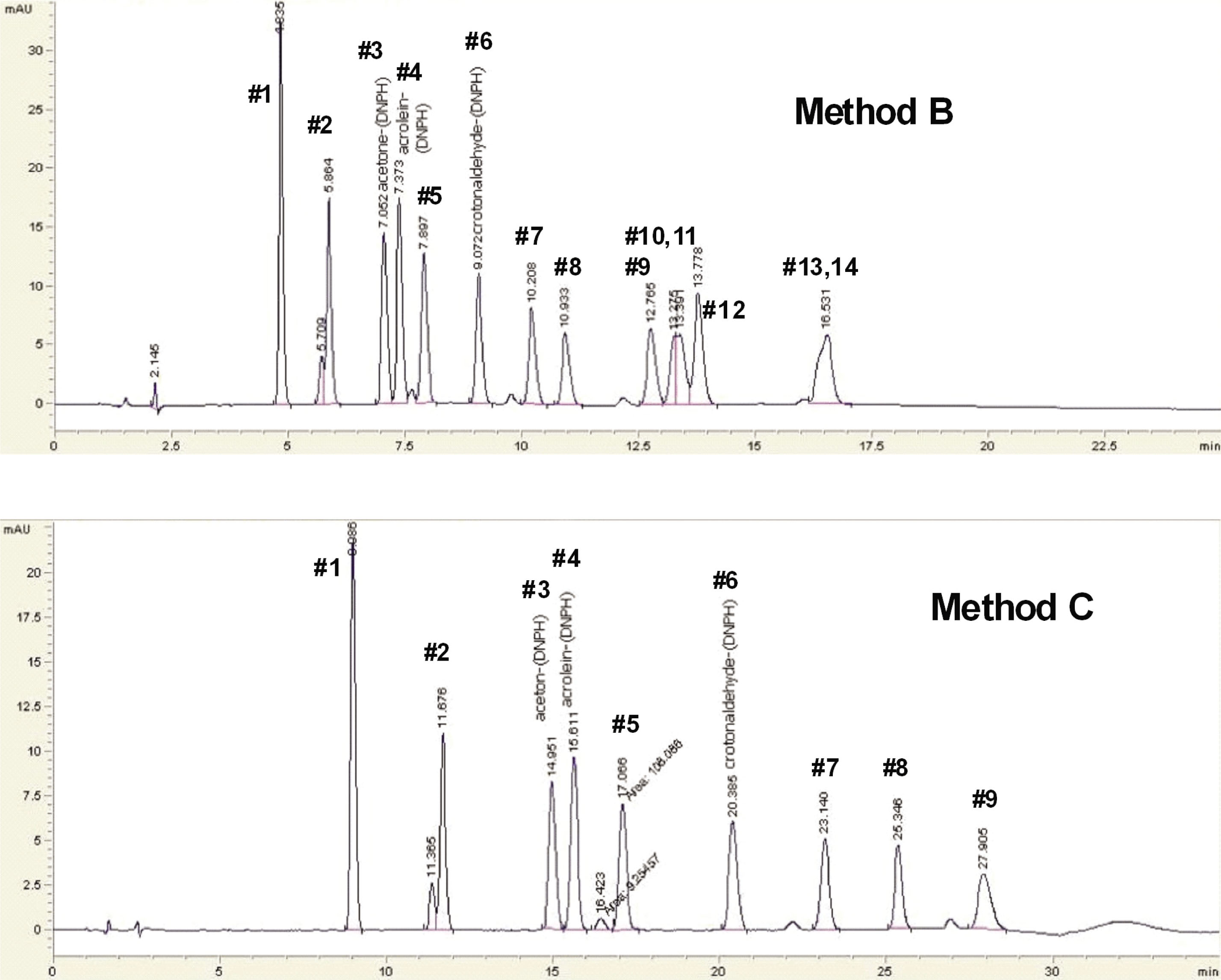
Supplementary Figure S1
Representative HPLC chromatogram. The HPLC peaks are the 2,4-DNPH derivatives of the following carbonyls: #1) formaldehyde; #2) acetaldehyde; #3) acetone; #4) acrolein, #5) propionaldehyde; #6) crotonaldehyde, #7) butyraldehyde; #8) benzaldehyde; #9) isovaleraldehyde.
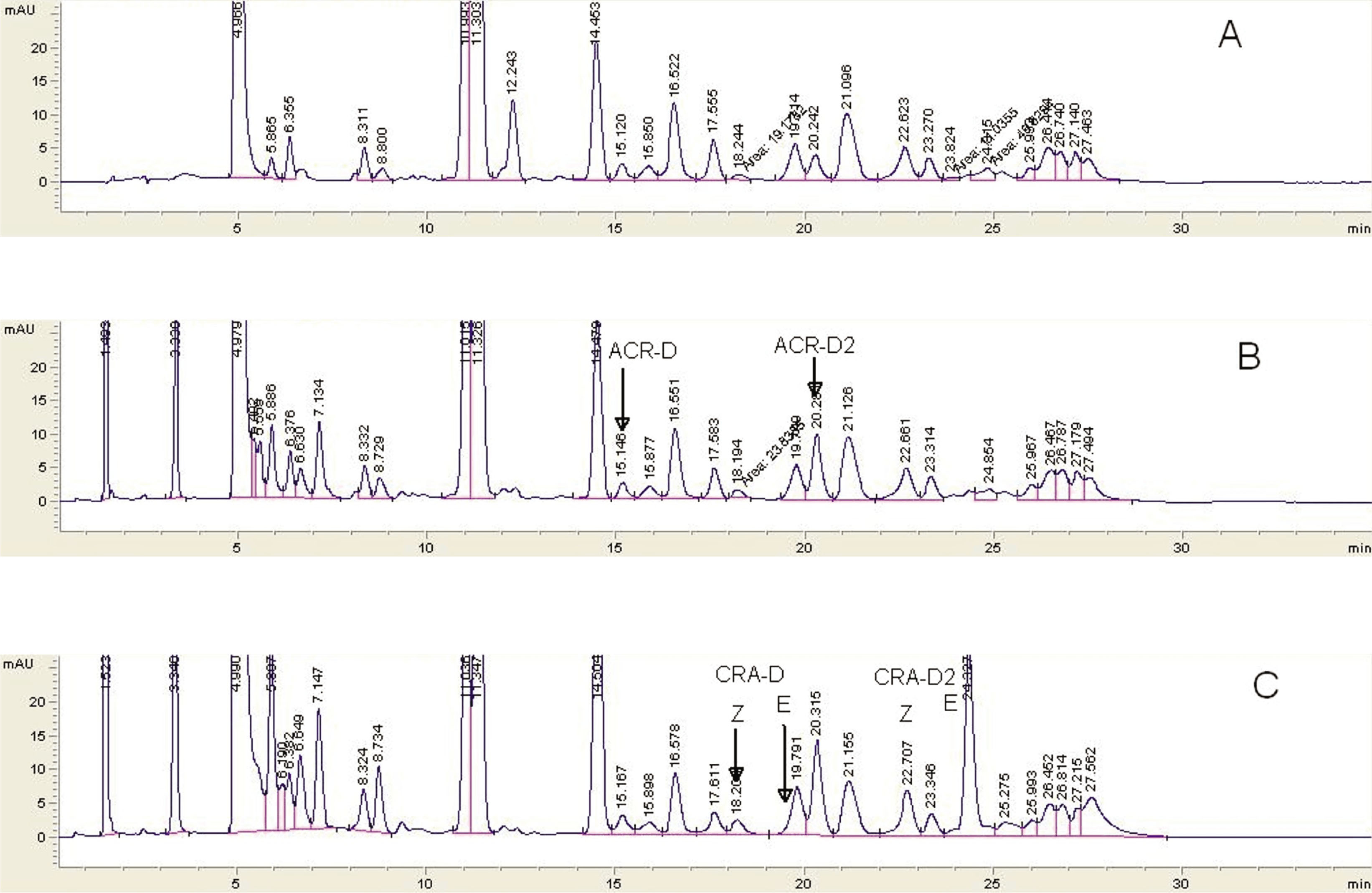
Supplementary Figure S2
HPLC chromatograms of samples from smoking denuder experiments.
A) HPLC of a denuder sample obtained with 3R4F cigarette at 298 K and 60% RH.
B) addition of acrolein + DNPH reaction mixture to the denuder sample.
C) addition of crotonaldehyde + DNPH reaction mixture to A + B.
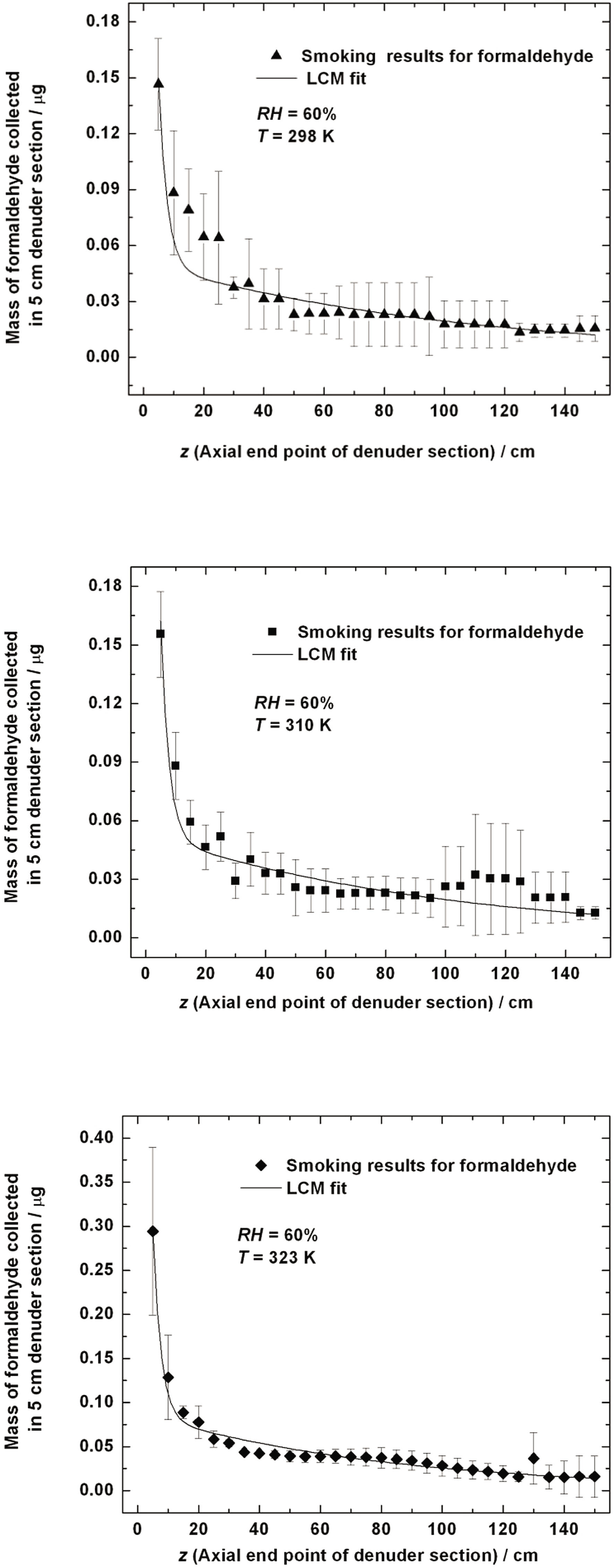
Supplementary Figure S3
Application of the semi-empirical denuder model of Lewis, Colbeck, and Mariner (1994) to model the depletion of formaldehyde from cigarette MS at a flow rate Q273 = 300 mL min−1, and 60% RH with different temperatures (T). Data are non-linear least-squares means.
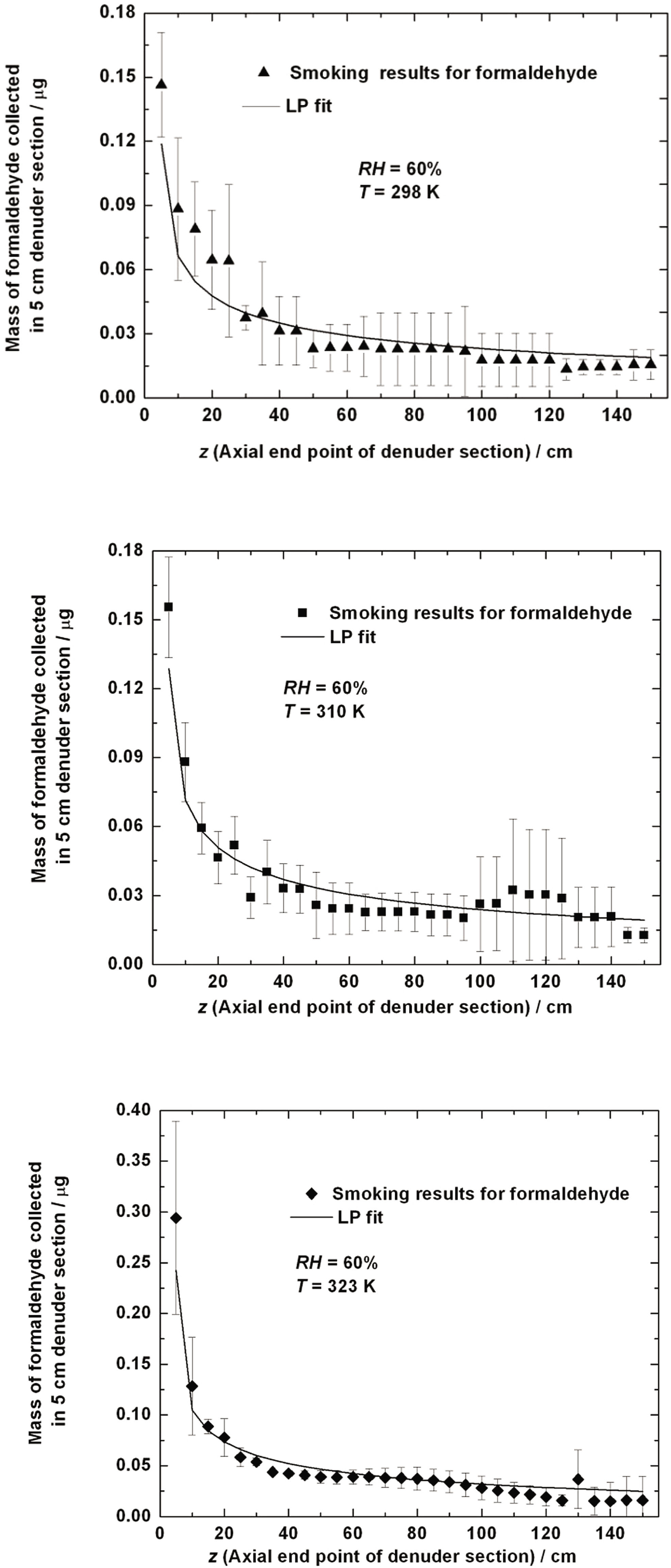
Supplementary Figure S4
Application of the theoretical denuder model of Lipowicz and Piadé (2004) to describe the depletion of formaldehyde from cigarette MS in diffusion denuder tubes. Kentucky 3R4F cigarette MS was assessed at different temperatures (T) at flow rate Q273 = 300 mL min−1 and RH 60%.