
Tab. 1
Various solutions addressing abandoned properties
| Soft Intervention | Medium Intervention | Aggressive Intervention |
|---|---|---|
Planning
| Property maintenance
| Forced change of ownership
|
Data collection
| Funding
| Adaptive reuse
|
Strategic demolition
| ||
| Token purchases |
[i] Based on the literature review (see authors below in text describing the tools in depth) and various solutions found in jurisdictions in the US, UK, and the EU (see Cole et al., 2020).
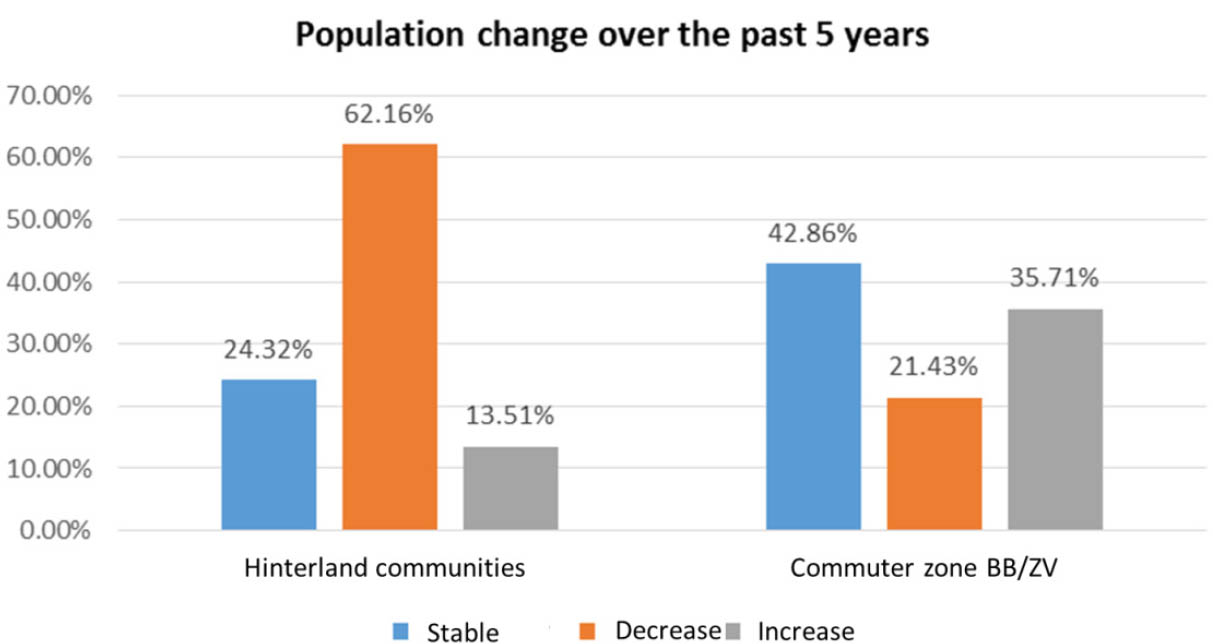
Fig. 1
Population change in the BB area as perceived by mayors
Tab. 2
Ordinal ranking of advantages and disadvantages of municipalities
| Advantages | Rank | |
|---|---|---|
| BB/ZV | Hinterland | |
| Good location (close to the city, enough jobs) | 1 | 4 |
| Good infrastructure (public transport, roads, Internet) | 2 | 2 |
| Good services (schools, health care, shops, entertainment, etc.) | 3 | 3 |
| Beautiful nature | 4 | 1 |
| Nice architecture | 7 | 5 |
| Possibility to buy real estate as a good price | 5 | 6 |
| Good social and community life | 6 | 7 |
| Disadvantages | Rank | |
| BB/ZV | Hinterland | |
| Few job opportunities, high unemployment in municipalities | 1 | 1 |
| Social Romany problems | 2 | 2 |
| Far from a bigger city | NA | 4 |
| Bad roads | NA | 3 |
| No room for development | NA | 5 |
| Lack of infrastructure | NA | 6 |
[i] Note. Other problems mentioned by the mayors of hinterland municipalities were reluctance to increase population, missing sewers, political party interference.
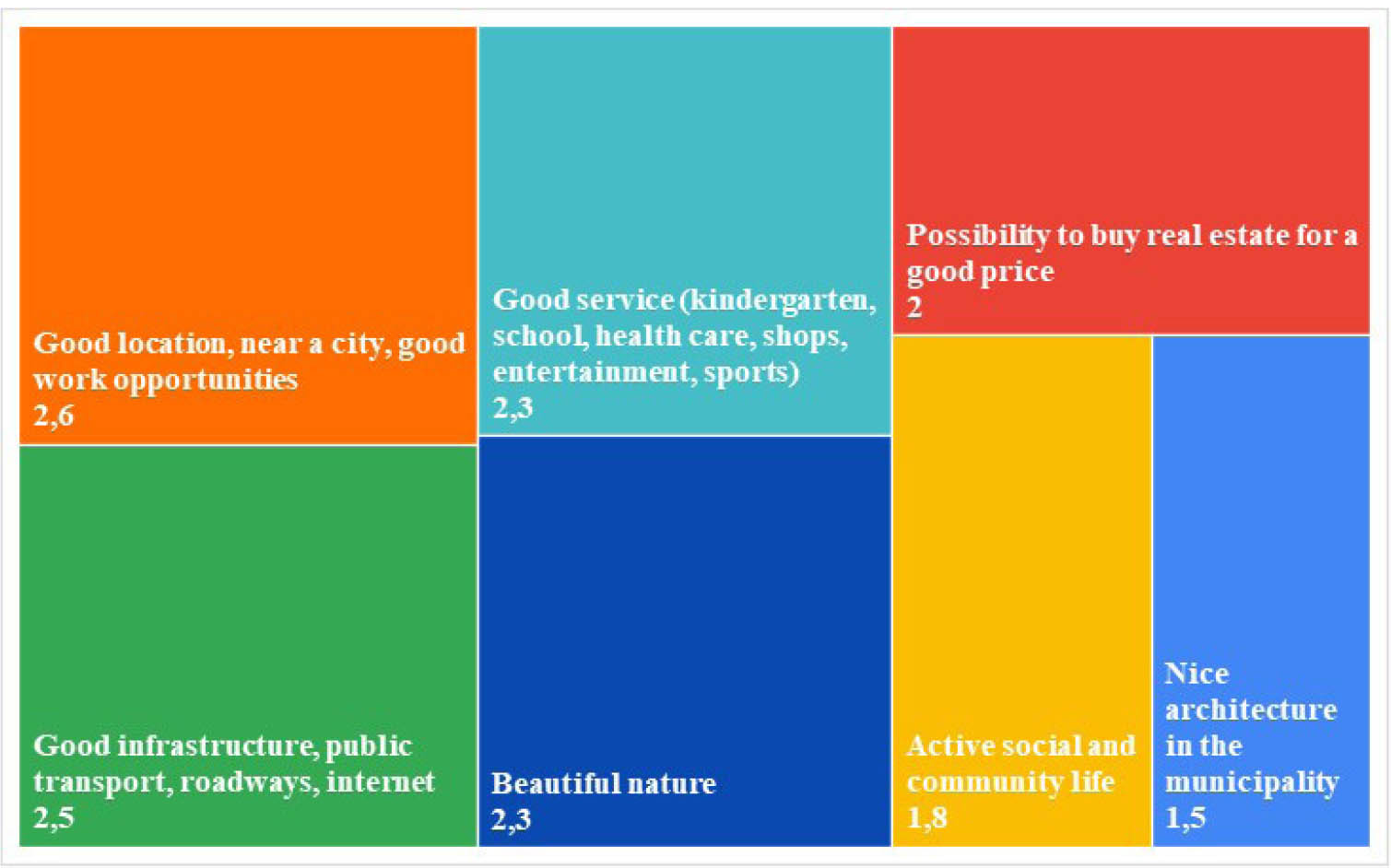
Fig. 2
Preferences in the commuter zone
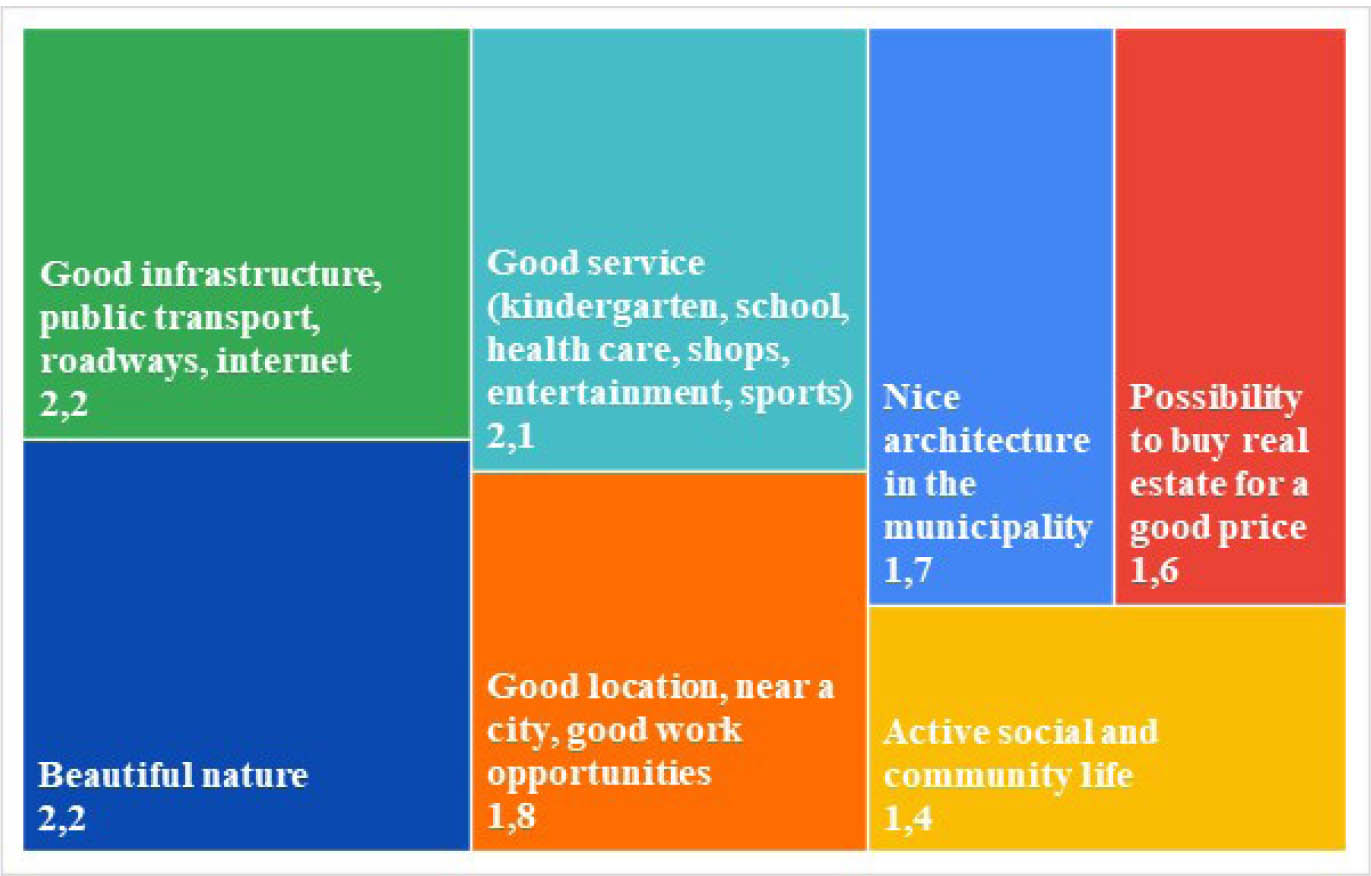
Fig. 3
Preferences in the hinterland
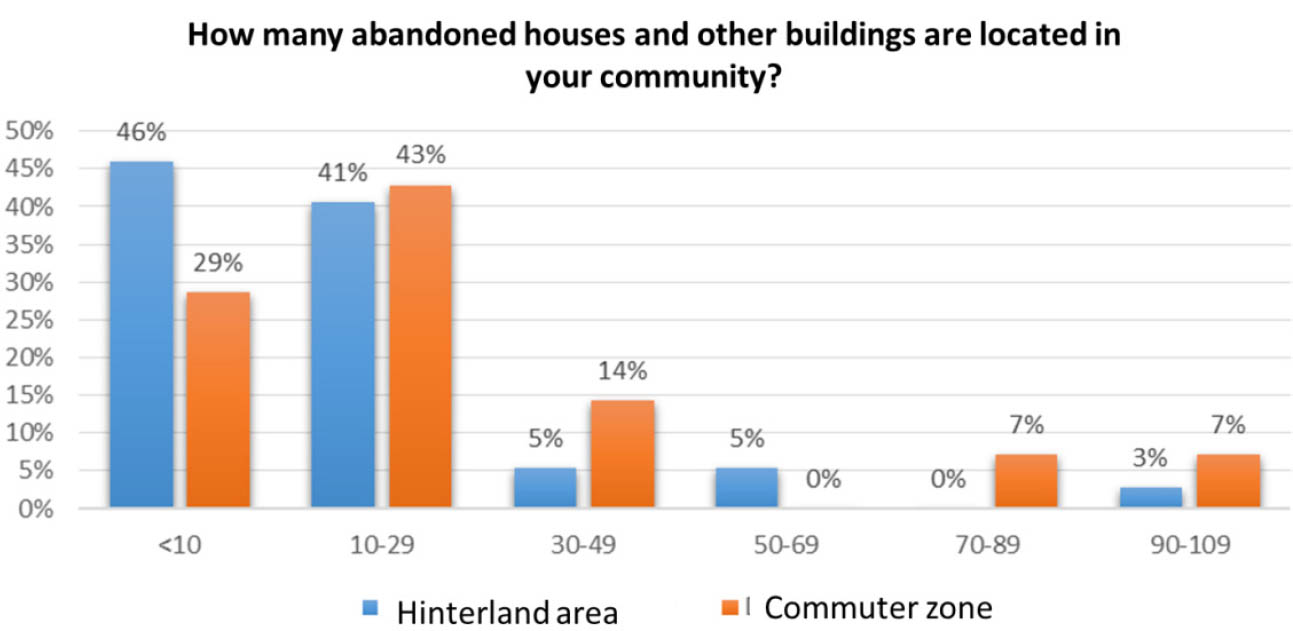
Fig. 4
The number of abandoned objects in the municipality
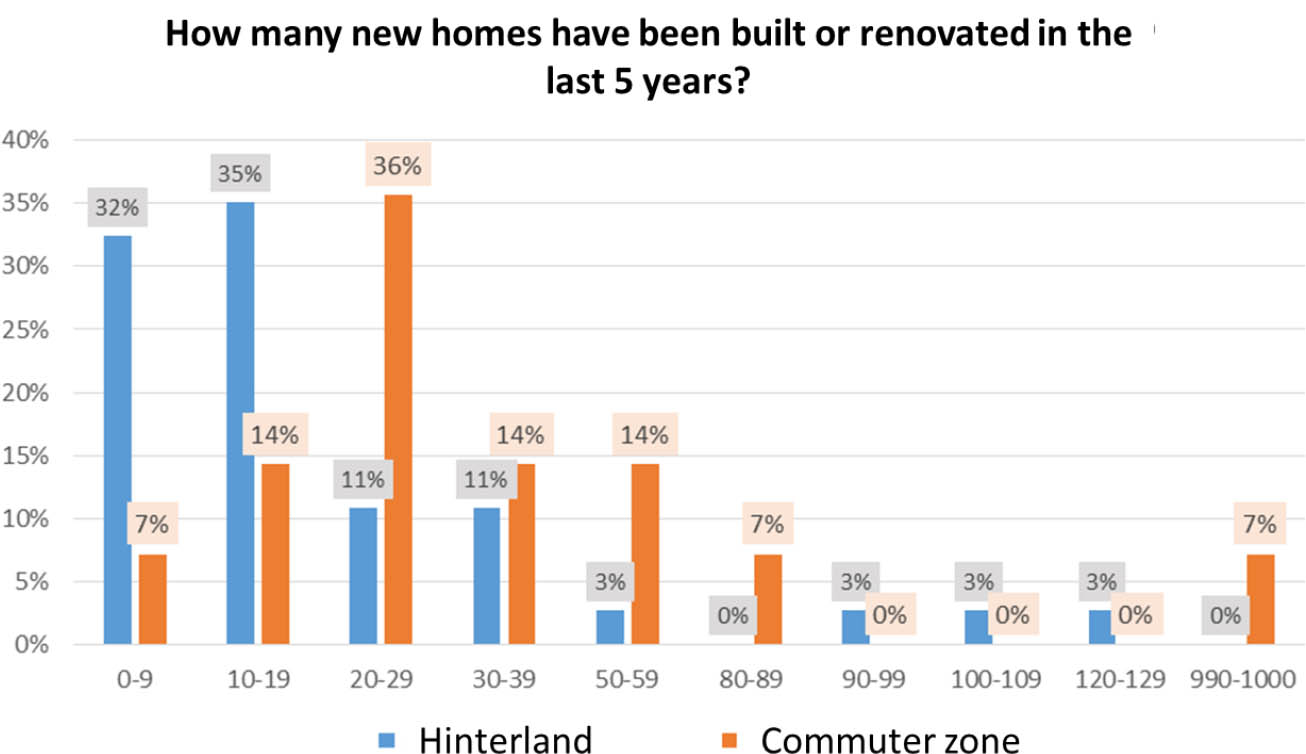
Fig. 5
New/renovated home construction in the last 5 years
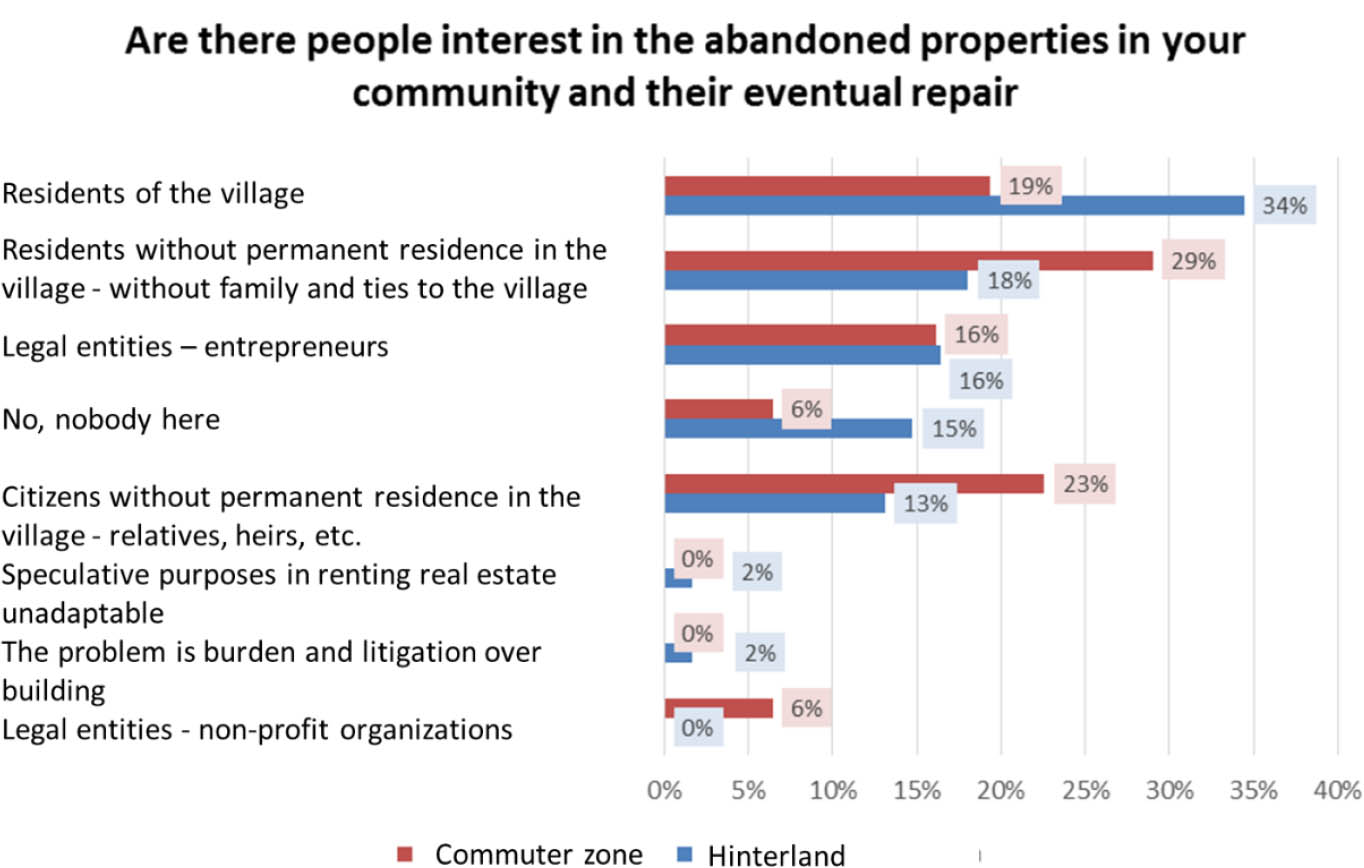
Fig. 6
Interest in abandoned property in the community
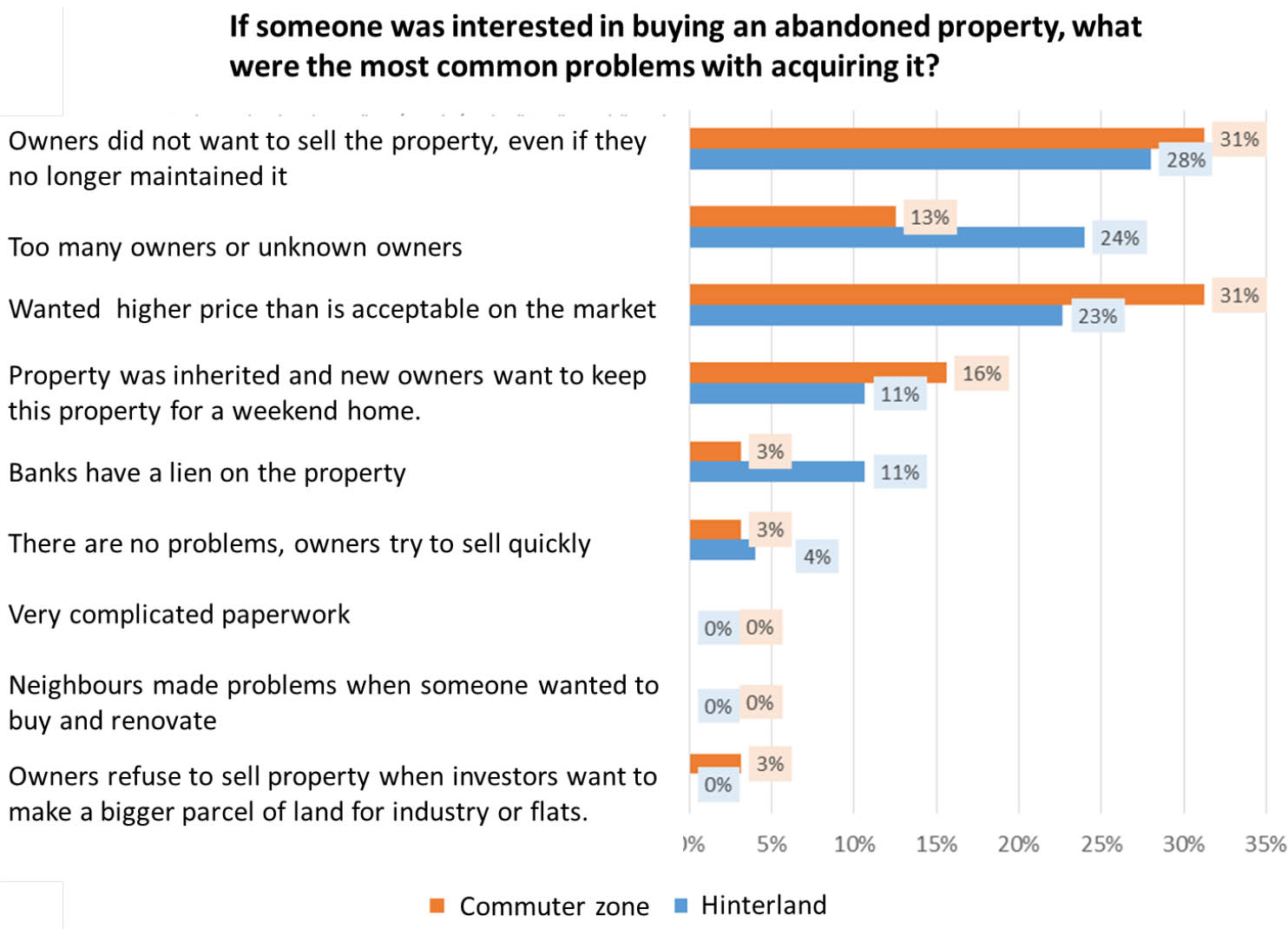
Fig. 7
Problems with acquiring property
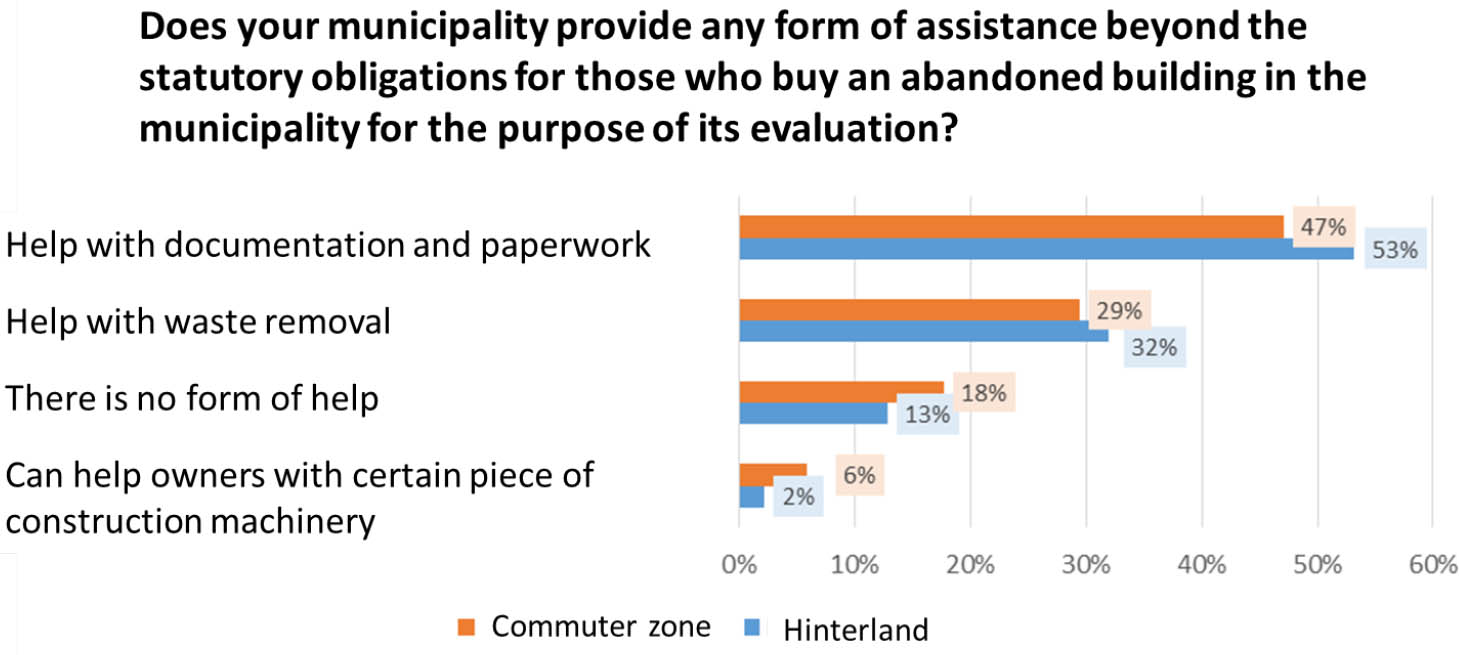
Fig. 8
Assistance to potential owners
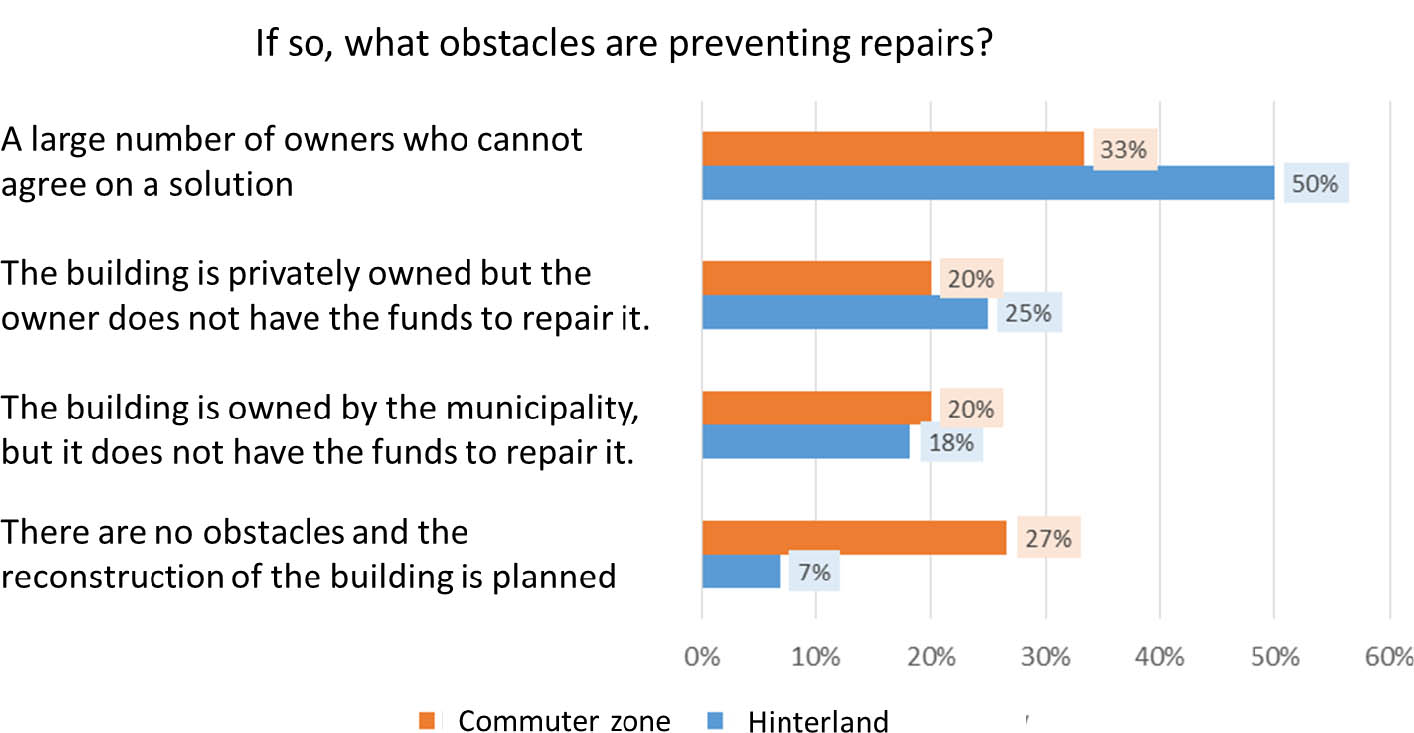
Fig. 9
Obstacles to preventing repairs of buildings with a positive influence on the local inhabitants