

1. Introduction
The global tourism industry has undergone unprecedented expansion over recent decades, establishing itself as one of the world’s largest economic sectors while simultaneously exerting substantial pressure on natural ecosystems and cultural landscapes (Ahmad et al., 2018; Filipiak et al., 2020; Lukman et al., 2022; Razzaq et al., 2021; Shang et al., 2023). This paradoxical relationship between economic development and environmental conservation becomes particularly acute at UNESCO World Heritage Sites, where management authorities must navigate the complex challenge of maximizing socioeconomic benefits while preserving irreplaceable natural and cultural values (Timothy & Boyd, 2003). The environmental consequences of intensive tourism activities manifest across multiple dimensions, encompassing wastewater discharge, solid waste accumulation, biodiversity degradation, and landscape modification (Garrod & Fyall, 2000). Marine heritage sites face heightened vulnerability due to the concentrated nature of visitor impacts, where boat operations, coral reef disturbance, and inadequate waste management infrastructure can precipitate irreversible ecological damage (Hall & management, 2001; Spalding et al., 2017). Addressing these conservation-development tensions requires innovative financing mechanisms. Recent research demonstrates that tourism-based economic mechanisms, when effectively integrated into infrastructure management frameworks, can simultaneously generate conservation revenue while improving community welfare and environmental conditions, aligning with contemporary heritage site management approaches that prioritize both ecological protection and socioeconomic development (Al-Taee & Jaleel, 2024).
Ha Long Bay, situated in Quang Ninh Province, Vietnam, exemplifies these global conservation challenges at a marine World Heritage Site. Initially designated as a World Heritage Site in 1994 and subsequently extended in 2000 to recognize both its geological significance and biodiversity values, the bay encompasses 1,553 km2 and contains nearly 2,000 distinctive limestone karst formations while supporting approximately 3,000 terrestrial and aquatic species, including over 100 threatened species (Cerrano et al., 2006; Claudino-Sales, 2018; Thung et al., 2019). As Vietnam’s premier marine tourism destination, Ha Long Bay attracted more than 17.1 million visitors between 2015 and 2019, demonstrating a sustained annual growth rate of 12% (Ha Long Bay Management, 2022). While this rapid visitor expansion has generated substantial economic benefits for local communities and national development, it has simultaneously created severe ecological pressures that threaten the site’s long-term sustainability (Huong et al., 2021; Trang et al., 2022). The environmental degradation at Ha Long Bay manifests through multiple pathways. Intensive boat traffic, discharge of untreated wastewater from tourism vessels, aquaculture encroachment, and coastal development have collectively contributed to approximately 20% coral cover decline, mangrove habitat destruction, and deteriorating water quality characterized by ammonium and suspended solids concentrations that frequently exceed national permissible limits (Toan et al., 2018). Despite implementation of plastic reduction initiatives that have achieved measurable progress, solid waste accumulation along heavily trafficked tourist routes remain a persistent environmental challenge, with over 170 tons of solid waste and more than 12,000 m3 of foam buoys and aquaculture materials collected between January and August 2023 alone. The waste composition at Ha Long Bay reflects broader patterns documented across Northern Vietnam. Recent research involving 1,000 households across five regions revealed that organic waste dominates at 58%, followed by plastics at 16.8% (Thi et al., 2024). However, significant regional variations exist urban areas face greater infrastructure constraints for waste separation, while tourism destinations encounter unique challenges related to transient visitor populations and seasonal fluctuations. These cumulative impacts collectively threaten Ha Long Bay’s ecological integrity, potentially jeopardizing its World Heritage status and undermining the long-term sustainability of tourism-dependent local economies.
Addressing these multifaceted environmental challenges requires understanding not only the physical impacts but also the economic mechanisms and behavioural factors that can drive sustainable solutions. However, empirical valuation studies addressing tourism impacts at Vietnamese heritage sites remain notably limited, particularly within marine and coastal contexts, empirical valuation studies addressing tourism impacts at Vietnamese heritage sites remain notably limited, particularly within marine and coastal contexts. Previous research has predominantly focused on terrestrial protected areas or relied on hypothetical scenarios insufficiently grounded in documented environmental problems. Internationally, while contingent valuation methodologies have been extensively applied across diverse contexts, few studies have explicitly examined marine heritage environments within developing economy frameworks. Understanding visitor behaviour – specifically, the knowledge, attitudes, and behaviour (KAB) is crucial for effective environmental management. Recent studies reveal a persistent gap between expressed pro-environmental attitudes and actual practices, emphasizing the complex interplay between environmental knowledge, social norms, and infrastructural constraints (Thi et al., 2024; Muljaningsih, 2021) This research therefore represents the first comprehensive economic valuation of tourism-related environmental impacts at a Vietnamese natural World Heritage Site, providing empirical evidence on visitor preferences and potential financial contributions while directly addressing contemporary policy requirements.
The study’s policy relevance is particularly significant given Vietnam’s evolving legal framework for environmental protection. Article 138 of Vietnam’s 2020 Law on Environmental Protection establishes that payment for natural ecosystem services requires organizations and individuals benefiting from ecosystem services to provide compensation to those responsible for service provision and maintenance. Services eligible for payment encompass those derived from forests, wetlands, marine ecosystems, karst landscapes, caves, and geological formations, as well as services related to carbon sequestration and storage. Successful implementation of such payment schemes requires not only supportive legislation but also adequate infrastructure and institutional capacity. International experience demonstrates both opportunities and challenges. In Indonesia, community-based waste management facilities known as 3R-TDS integrated systems combining reduction, reuse, and recycling operations at temporary disposal sites have successfully reduced waste volumes by up to 50% in cities like Malang (Cahyonugroho et al., 2024). However, research indicates that only 10% of 3R-TDS facilities operate effectively nationwide, with failures attributed to inadequate technical design, insufficient community engagement, and weak governance structures (Cahyonugroho et al., 2024). These lessons emphasize the critical importance of transparent governance, appropriate technical specifications, and meaningful stakeholder engagement for successful implementation at Ha Long Bay. By linking willingness to pay (WTP) for environmental protection at Ha Long Bay to this legal framework, this research provides timely, policy-relevant evidence to support Article 138 implementation and strengthen Vietnam’s compliance with international conservation commitments.
This investigation addresses identified research gaps by providing empirical evidence regarding tourists’ WTP for environmental protection at Ha Long Bay. The primary research objective involves quantifying WTP and assessing its determinants to inform sustainable financing policy development. Secondary objectives encompass evaluating tourist perceptions across five major environmental impact categories solid waste, water pollution, air quality, biodiversity loss, and landscape degradation identifying key demographic and attitudinal predictors of WTP and examining the feasibility of implementing entrance fee increases to finance environmental protection programs. From a theoretical perspective, this research extends contingent valuation method (CVM) application to marine World Heritage contexts within a developing country setting. The study advances understanding of how environmental perceptions, income levels, educational attainment, and cultural attachment influence payment preferences for conservation initiatives. Practically, the research generates critical empirical evidence for Ha Long Bay managers, national tourism authorities, and international conservation organizations. By quantifying tourists’ WTP and identifying primary predictors of payment willingness, this study provides actionable insights for designing transparent and equitable conservation financing mechanisms. The broader implications extend to other marine heritage sites confronting similar pressures, offering a replicable analytical framework for balancing conservation imperatives with tourism development objectives in emerging economies.
2. Methodology
2.1. Description of Study Area
Ha Long Bay, located in northeastern Vietnam’s maritime region within Quang Ninh Province between 106°56′ to 107°37′ East longitude and 20°43′ to 21°09′ North latitude, represents one of the world’s most significant marine heritage sites encompassing 1,553 km2 and containing 1,969 limestone islands of varying sizes. The study area borders Ha Long City, Cam Pha City, Quang Yen Town, and Van Don District, with its southwestern boundary extending to Cat Hai Island District of Hai Phong City (Figure 1). Achieving UNESCO World Heritage Site designation in 1994 and subsequently extended in 2000 to recognize both its outstanding geological-geomorphological values and exceptional biodiversity significance, the core heritage zone covers 434 km2 and contains 775 islands representing the most concentrated area of limestone karst formations shaped by marine erosion processes. This global recognition was further enhanced by the bay’s selection as one of the New Seven Natural Wonders of the World, establishing its position as Vietnam’s premier natural heritage destination and a flagship site for international marine conservation efforts. The geological significance lies in its unique karst landscape formation, created through millions of years of limestone dissolution by seawater, resulting in thousands of distinctive limestone pillars with extraordinary shapes and an extensive cave system featuring 49 caves, 42 tidal lakes (“tùng”), 81 enclosed lakes (“áng”), 193 sandy beaches, and five coral reef systems with coverage exceeding 30% (Cerrano và cộng sự, 2006; Claudino-Sales, 2018).
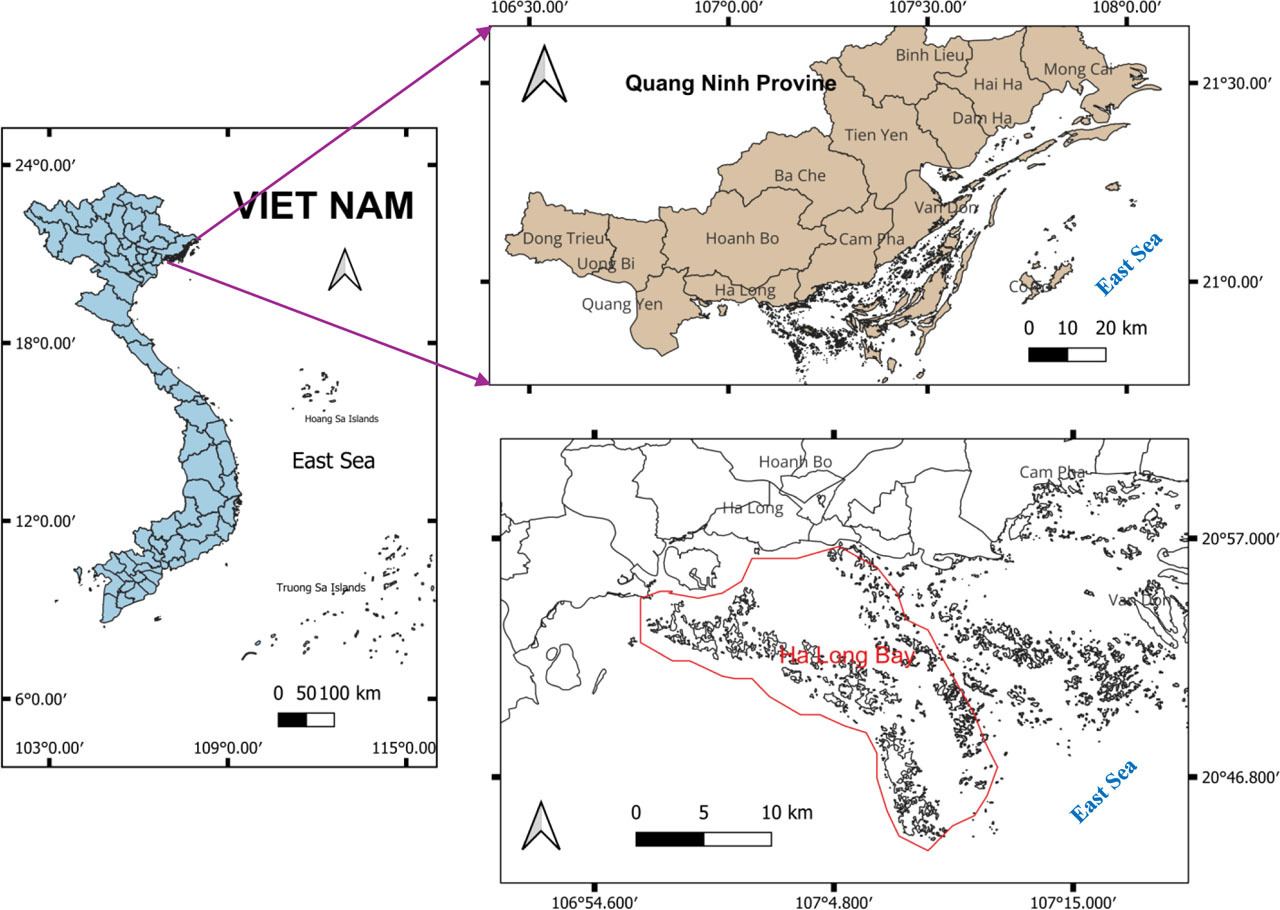
Figure 1:
Location of Ha Long Bay World Natural Heritage Site, Quang Ninh Province, Vietnam
Ha Long Bay supports exceptional biodiversity, hosting nearly 3,000 terrestrial and aquatic species across multiple distinctive ecosystems, including 507 higher plant species, 110 coral species, 156 marine fish species, 71 bird species, and 53 mammal species. The site harbors 102 rare and endangered species listed in Vietnam’s Red Book and the IUCN Red List, with 17 endemic plant species found exclusively within Ha Long Bay, including Ha Long Cycad, Ha Long Palm, and Ha Long Ginseng, representing irreplaceable genetic resources with high scientific and conservation value. As Vietnam’s flagship marine tourism destination, the bay has experienced remarkable growth reaching 4.4 million tourists in 2019 with an average annual growth rate of 10.73% from 1996–2019, supported by tourism infrastructure comprising major international passenger ports at Tuan Chau and Ha Long and approximately 505 operational tourist vessels, including 189 overnight cruise ships and 316 day-tour boats organized across five main sightseeing routes with 28 designated stops, seven overnight anchorage zones, and 12 kayaking and rowing experience areas zones (Ha Long Bay Management, 2022).
Despite its economic benefits, intensive tourism development has created significant environmental pressures requiring urgent management intervention, with over 170 tons of solid waste and more than 12,000 m3 of foam buoys and aquaculture materials collected between January and August 2023 alone. Approximately 89% tourist vessels lack onboard wastewater treatment systems, contributing to water quality degradation alongside untreated wastewater discharge from coastal communities and an estimated 40 million m3 of untreated mining wastewater with elevated suspended solids concentrations. Water quality monitoring reveals concerning trends with transparency ranging from 0.2 to 4.5 meters and oil concentrations frequently exceed national limits at key locations, while air quality degradation results from intensive boat traffic generating exhaust emissions and noise pollution that affects marine wildlife and visitor experience quality, creating localized air pollution hotspots around major departure ports and popular anchorage zones. Tourism activities have significantly impacted the bay’s natural landscape integrity through construction of tourism infrastructure including ports, restaurants, and visitor facilities that pose risks to the pristine karst landscape despite regulations limiting building density to 5% and height restrictions to 12 meters on heritage islands. Overcrowding at popular attractions such as Sung Sot Cave and Thien Cung Cave during peak seasons creates congestion that diminishes aesthetic values and visitor experience quality, while the standardization of tourist vessel colors to uniform white paint has altered the traditional colorful maritime landscape and the high density of tourist vessels creates visual pollution disrupting natural seascape harmony. Large-scale coastal reclamation projects, including Ha Long Xanh and Quang Hanh Ward’s 10B Urban Area development, have deposited soil within the heritage buffer zone, compromising geological and geomorphological features that define the site’s outstanding universal value. These multifaceted environmental challenges, combined with coral reef degradation (approximately 20% decline in coverage) and mangrove habitat destruction, underscore the urgent need for sustainable financing mechanisms to support comprehensive environmental protection while maintaining the bay’s economic viability and global heritage significance.
2.2. Contingent Valuation Framework for Environmental Protection Willingness to Pay Assessment
The research design was structured to capture both tourist perceptions of environmental degradation in Ha Long Bay and their willingness to contribute financially to environmental protection initiatives (Figure 2). Ha Long Bay was selected as the study site due to its global recognition as a UNESCO World Heritage Site, documented ecological vulnerability, and the urgent policy requirement for developing financing mechanisms consistent with Vietnam’s 2020 Law on Environmental Protection. CVM was employed as the primary analytical approach a well-established non-market valuation technique that elicits individuals’ WTP for environmental goods and services not traded in conventional markets (Carson & Hanemann, 2006). This methodology was deemed appropriate because it enables estimation of monetary values for environmental benefits, thereby providing direct empirical evidence regarding visitors’ willingness to support environmental protection through entrance fee mechanisms.
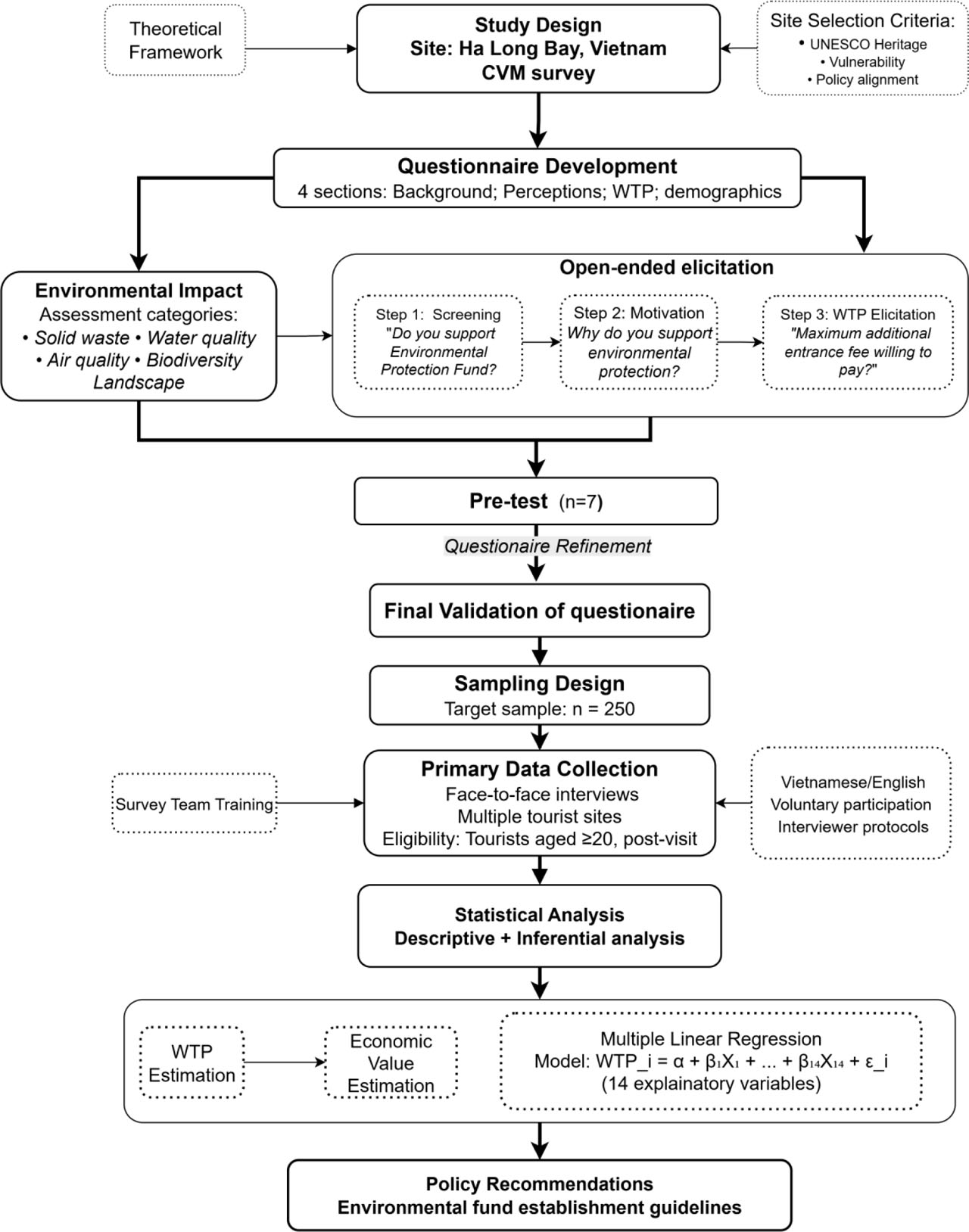
Figure 2:
Research process framework
2.2.1. Willingness to Pay for Elicitation Technique and Survey Instrument Design
This study utilized an open-ended elicitation approach within the contingent valuation framework, requesting tourists to state the maximum entrance fee increase they would accept to contribute toward environmental protection at Ha Long Bay (Carson & Hanemann, 2005). Open-ended questioning was selected to allow respondents unrestricted value expression rather than constraining responses through predetermined bid levels, thereby minimizing potential anchoring effects (Boyle, 2017). Recognizing that open-ended formats frequently generate high proportions of zero bids or protest responses, the questionnaire incorporated a structured, multi-stage elicitation process designed to enhance validity and reduce response bias.
Prior to value elicitation, respondents were reminded of current entrance fee structures to ensure that additional payments were considered within a realistic market context. The three-stage design proceeded systematically: (i) an initial screening question assessing whether respondents supported establishing an Environmental Protection Fund dedicated to Ha Long Bay environmental protection; (ii) for respondents expressing support, a follow-up question inviting explanation of their motivations, including environmental concern, social responsibility, or expectations of improved services, thereby providing qualitative depth to the valuation exercise; and (iii) a final open-ended question requesting the maximum additional amount respondents would be willing to pay, explicitly framed in relation to household budget constraints.
The final valuation question was formulated as follows: “Considering current environmental conditions at Ha Long Bay and your desire to improve and protect the environment, what is the maximum additional entrance fee you would be willing to contribute to the Environmental Protection Fund, taking into account your income and other essential family expenses?” This formulation emphasized realistic financial trade-offs while permitting unrestricted value expression, adhering to best practices in contingent valuation survey design.
The final questionnaire comprised four structured sections: (i) tourist background information; (ii) environmental impact perceptions; (iii) WTP scenarios following the three-stage elicitation design; and (iv) socio-demographic characteristics. Environmental perceptions were assessed across five impact categories solid waste, water pollution, air quality, biodiversity loss, and landscape degradation using five-point Likert scales ranging from “not serious at all” to “very serious”. These categories reflected both documented environmental pressures in Ha Long Bay and environmental issues emphasized in national monitoring reports, ensuring policy relevance and scientific validity.
2.2.2 Sampling Strategy and Data Collection
Data collection was conducted from April to June 2024 through face-to-face interviews at cruise departure points and major tourist destinations across the bay, including Bai Chay, Tuan Chau, Titop Island, and other key sites. Given limited familiarity with CVM approaches in Vietnam’s research context, survey implementation was organized in two developmental phases: a pre-test involving seven questionnaires to evaluate clarity, flow, and cultural appropriateness, followed by main survey implementation to ensure instrument comprehensibility and validity (Bateman & Großbritannien, 2002).
Given the unknown total population size of Ha Long Bay tourists during the study period and the requirement for statistically reliable estimates, multiple approaches were employed to determine appropriate sample size. For proportion estimation with unknown population size, Cochran’s formula (Cochran, 1977) was applied:
Where:Z - the Z-score for desired confidence level (1.96 for 95% confidence);
p - expected proportion (0.5 for maximum variability when unknown); q equals 1-p (0.5);
e - desired margin of error.
Targeting 95% confidence with ±7% margin of error: n = (1.96)2 × 0.5 × 0.5 / (0.07)2 = 3.84 × 0.25 / 0.0049 = 196 respondents.
For studies incorporating multiple independent variables, Hair et al. (2010) and (Hair, 2009) recommend:
Where:n - represents minimum sample size,
m - represents the number of independent variables,
With 14 primary independent variables: n ≥ 50 + 8 (14) = 162 respondents.
The study therefore targeted 250 questionnaires, satisfying both Cochran’s formula requirements and regression modeling specifications. The survey team comprised faculty and students from Hanoi University of Natural Resources and Environment who completed intensive training on survey administration, ethical principles, and methods to minimize interviewer bias prior to fieldwork implementation. Eligible participants were tourists aged 20 and above who had completed their Ha Long Bay visit, voluntarily consented to participate, and possessed ability to understand and respond to questions in Vietnamese or English. International visitors received English-language questionnaires, while domestic tourists received Vietnamese versions to ensure linguistic accessibility and response quality.
2.2.3. Data Analysis Procedures
Data analysis integrated descriptive statistics with advanced regression modeling techniques. Descriptive analysis summarized respondent demographic profiles and environmental problem perceptions. The monetary values reported in Vietnamese Dong (VND) were converted to US Dollars (USD) using the average exchange rate during the survey period (April – June 2024) of VND 24,241 per USD 1.0, as published by the State Bank of Vietnam.
Mean WTP for each tourist segment was calculated using:
Where:- mean WTP for segment j,
nj - the number of respondents willing to pay in segment j,
WTPij - individual WTP amount for respondent i in segment j.
Overall mean WTP was computed as:
Annual total economic value was estimated using official visitor volume data from Ha Long Bay Management Board (2023):
Where:Vj - annual visitor volume for segment j,
- mean WTP for segment j,
Pj - participation rate (proportion willing to pay) for segment j.
The aggregate annual economic value was calculated as:
Total economic value of WTP was estimated by multiplying mean WTP by the proportion of willing respondents and total annual visitor volume in 2023, providing a comprehensive assessment of potential environmental protection financing capacity through tourism-based mechanisms.
Multiple regression analysis was employed to identify WTP determinants, incorporating explanatory variables including income, education, gender, age, nationality, and perceived severity of environmental issues.
Linear regression analysis was utilized to analyze WTP amounts among respondents expressing positive WTP:
Where:WTP - the maximum additional entrance fee respondent i is willing to pay,
X1 to X1n - the 14 explanatory variables detailed in the analysis.
Statistical significance of regression coefficients was evaluated using t tests, with p values reported at conventional significance levels: p < 0.05 (significant), p < 0.01 (highly significant), p < 0.001 (extremely significant). Model fit was assessed using adjusted R2, which accounts for the number of explanatory variables, and overall model significance was tested using F statistics. The F-statistics examine whether the explanatory variables jointly have a statistically significant effect on the dependent variable, indicating that the model provides explanatory power beyond random variation. These statistical procedures enable robust assessment of both individual predictor relationships and overall model explanatory power.
3. Results
3.1. Sample Demographics and Representativeness
The survey yielded 245 valid questionnaires from 250 distributed instruments, achieving a response rate of 98.0%. Five questionnaires were excluded due to incomplete information or inconsistent responses. The analytical sample provides comprehensive insights into tourist perceptions, WTP, and factors influencing environmental protection support at Ha Long Bay. Domestic tourists comprised 80.4% of respondents (n=197), while international visitors represented 19.6% (n=48). The sample demonstrated gender balance with 43.7% male and 56.3% female participants, with the majority (57.1%) falling within the 25–34 age demographic. Educational attainment was distributed relatively evenly, with 49.8% holding university or college degrees, while 86.9% reported monthly household income below VND 20 million (Table 1). This demographic profile closely mirrors the typical visitor composition to Ha Long Bay, where domestic middle-income households constitute the predominant market segment, thereby ensuring sample representativeness for statistical inference and policy application.
Table 1:
Sample Demographic Characteristics (N = 245)
| Characteristics | In number (Person) | In percentage (%) | |
|---|---|---|---|
| Gender | Male | 107 | 43.7 |
| Female | 138 | 56.3 | |
| Age | From 20 to 24 years old | 60 | 24.5 |
| From 25 to 34 years old | 140 | 57.1 | |
| From 35 to 44 years old | 43 | 17.6 | |
| ≥45 years old | 2 | 0.8 | |
| Education level | High school or below | 123 | 50.2 |
| College/University | 122 | 49.8 | |
| Monthly income | < 10 million VND | 97 | 39.6 |
| 10–20 million VND | 116 | 47.3 | |
| > 20 million VND | 32 | 13.1 | |
| Origin | Domestic | 197 | 80.4 |
| International | 48 | 19.6 | |
| Travel duration | 1–2 days | 134 | 54.7 |
| ≥3 days | 111 | 45.3 | |
3.2. Environmental Impact Perception Assessment
Tourist perceptions of environmental degradation revealed considerable awareness and concern across multiple impact dimensions. Solid waste emerged as the most readily perceived environmental issue, with 83.3% of respondents rating it as serious or very serious, reflecting the high visibility of litter and waste accumulation at popular tourist sites. Water pollution constituted the second most pressing concern, cited by 65.3% of respondents, followed by biodiversity loss, which was perceived as serious by 61.2% of participants. Air quality deterioration and landscape modification were considered less severe but remained significant concerns for notable proportions of visitors (11.4% and 31.4% respectively).
Table 2:
Tourist environmental impact perceptions (N = 245)
| Environmental domain | Severity category | In number (person) | In percentage (%) |
|---|---|---|---|
| Solid Waste impact | Low (2–3) | 41 | 16.7 |
| High (4–5) | 204 | 83.3 | |
| Water quality impact | Low (1–3) | 85 | 34.7 |
| High (4–5) | 160 | 65.3 | |
| Air quality impact | Low (1–3) | 217 | 88.6 |
| High (4–5) | 28 | 11.4 | |
| Biodiversity impact | Low (1–3) | 95 | 38.8 |
| High (4–5) | 150 | 61.2 | |
| Landscape impact | Low (1–3) | 168 | 68.6 |
| High (4–5) | 77 | 31.4 | |
| Environmental protection importance | Neutral or below (≤3) | 20 | 8.2 |
| Important (4) | 65 | 26.5 | |
| Very important (5) | 160 | 65.3 |
These findings align with environmental cue theory, which suggests that visible environmental impacts such as solid waste accumulation are more readily recognized and perceived as problematic compared to less tangible forms of ecological degradation (Cheng et al., 2024; Lee et al., 2014). The results underscore both the importance of prioritizing waste management interventions and water quality improvements, which correspond to tourist concerns, and the necessity for enhanced awareness campaigns addressing less visible ecological issues such as biodiversity conservation, air quality management, and landscape preservation. By aligning environmental protection efforts with both ecological priorities and visitor perceptions, resource managers can strengthen the legitimacy and effectiveness of entrance fee reforms and environmental protection initiatives while ensuring broader stakeholder support.
3.3. Environmental Protection Support and Willingness to Pay Analysis
The analysis of tourist support for environmental protection financing mechanisms reveals encouraging patterns for policy implementation. Most of both domestic and international tourists expressed agreement with establishing an Environmental Protection Fund, with support exceeding 80% in both demographic segments. However, the proportion of respondents demonstrating actual WTP was lower than overall agreement levels: 70.1% among domestic tourists and 62.5% among international visitors expressed concrete willingness to pay (Table 3).
This discrepancy between expressed support and payment willingness aligns with behavioral economics theory regarding hypothetical bias in stated-preference studies, where stated intentions frequently exceed actual payment behavior. Such patterns have been consistently documented in environmental valuation research across various heritage tourism destinations in Vietnam (Dat et al., 2024; Doran et al., 2015; Li & Li, 2024). The phenomenon reflects the distinction between general environmental concern and concrete willingness to bear financial costs for environmental protection initiatives. Notably, domestic tourists reported higher levels of both environmental fund agreement and payment willingness compared to international visitors. This finding contrasts with common assumptions regarding international tourists’ superior payment capacity and suggests that domestic visitors exhibit stronger emotional connections and responsibility toward Ha Long Bay’s environmental protection. This pattern is consistent with previous studies demonstrating that national and local visitors often display deeper place attachment to national heritage sites (Liu et al., 2021; Thuy et al. 2023), reflecting cultural identity and stewardship values that transcend purely economic considerations.
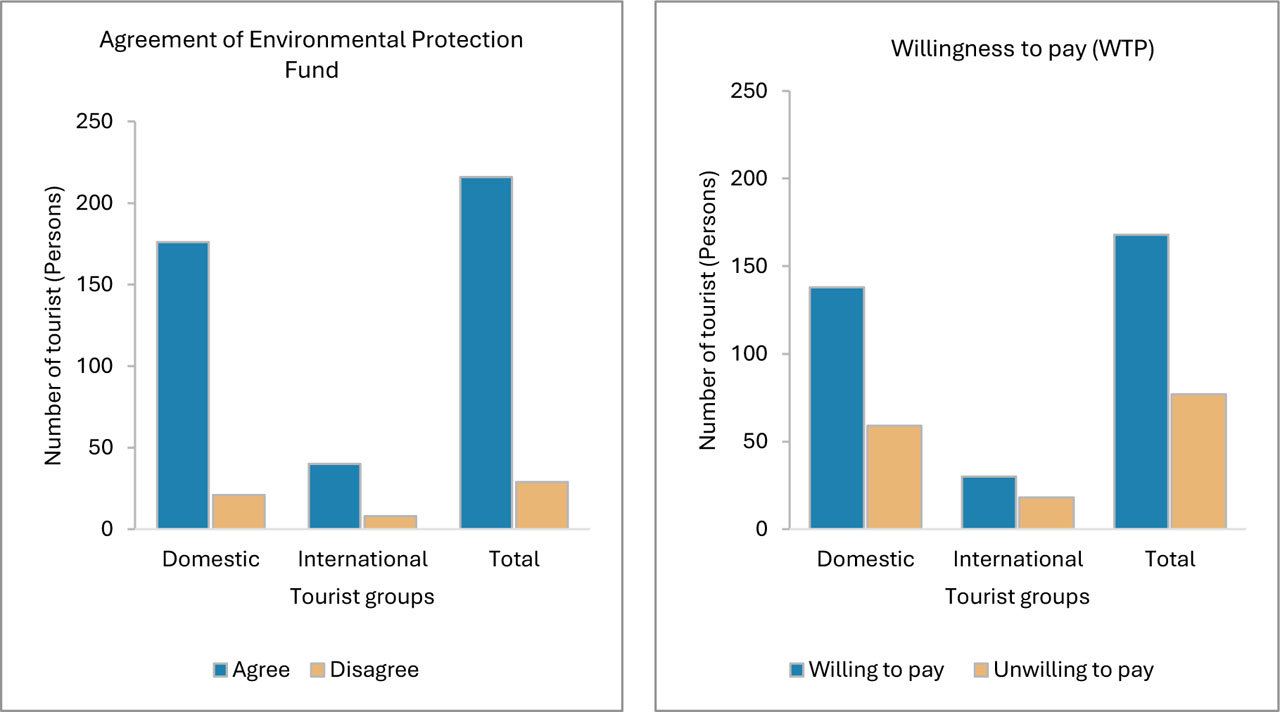
Figure 3:
Environmental fund agreement and WTP by tourist (N=245)
Among the 77 respondents refusing payment, financial constraints represented the most frequently cited barrier (21.2%), emphasizing the role of individual income capacity in determining stated WTP. Additional significant barriers included beliefs that environmental protection constitutes primarily governmental responsibility (15.5%), skepticism regarding fund effectiveness (8.6%), and free-rider expectations where individuals anticipate others’ contributions (10.6%). A minority (6.1%) considered environmental issues personally irrelevant, suggesting limited place attachment among certain visitor segments. These findings correspond with established literature on protest responses in contingent valuation studies, where non-payment frequently stems from concerns regarding fairness, institutional trust, and governance design rather than zero environmental valuation (Loft et al., 2020; Mota et al., 2023; Pagiola et al., 2010; Postuła & Radecka-Moroz, 2020).
Conversely, agreement to contribute was predominantly driven by pro-environmental and heritage preservation motivations. The primary factor was desire for improved tourism environmental quality (68.6%), followed by recognition of intergenerational heritage preservation importance (36.7%) and strong environmental stewardship responsibility (33.5%). World Heritage conservation (25.7%) and local community support (28.2%) also emerged as prominent motivational factors.
The findings suggest that tourists view their contributions not simply as short-term improvements to environmental quality, but as long-term investments in conserving heritage and enhancing community well-being. By emphasizing intergenerational heritage preservation and community support, visitors perceive their payments as fostering cultural continuity and social welfare that extend beyond immediate environmental gains.
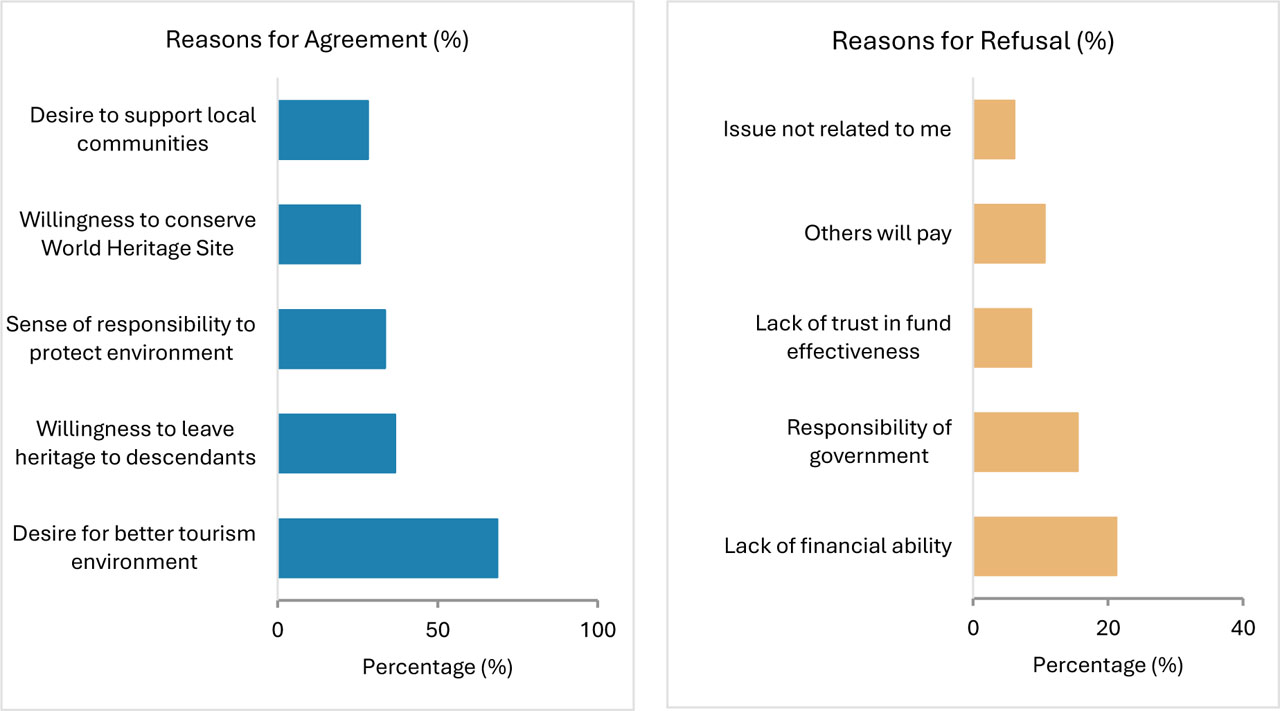
Figure 4:
Motivations and barriers for environmental fund agreement
Percentages based on total valid responses (N = 245). Multiple responses permitted.
3.4. Economic Valuation and Willingness to Pay
The quantitative analysis of WTP reveals substantial potential for tourism-based environmental protection financing at Ha Long Bay. Mean WTP estimates demonstrate modest differences between domestic and international tourists, with domestic visitors expressing slightly higher payment willingness (VND 99,086 per trip) compared to international tourists (VND 90,104 per trip), yielding an overall mean of VND 97,327 (approximately USD 4.0) (Table 4).
Table 4:
Tourist willingness to pay for environmental protection
| Tourist group | Sample size (n) | Mean WTP (VND/trip) | Std. deviation (VND) |
|---|---|---|---|
| Domestic tourists | 138 | 99,086.29 | 68,280.09 |
| International tourists | 30 | 90,104.17 | 74,444.68 |
| Total | 168 | 97,326.53 | 69,464.40 |
The estimated mean WTP of VND 97,327 (USD 4.0) represents a substantial premium above current Ha Long Bay entrance fee structures. For domestic tourists, this amount constitutes approximately 0.8% of average monthly household income, indicating meaningful financial commitment levels. The relatively high standard deviations (approximately 71% of mean values) suggest considerable heterogeneity in payment preferences, supporting the potential effectiveness of differentiated pricing strategies that account for visitor segment characteristics and payment capacity (Durán-Román et al., 2021; Vázquez-Rodríguez et al., 2024).
Based on mean WTP estimates and 2023 visitor volume data totaling 2.7 million tourists, the potential annual economic value of additional environmental contributions at Ha Long Bay reaches VND 254.65 billion (USD 10.5 million) (Table 5). This substantial sum could significantly supplement limited governmental environmental protection budgets and establish stable long-term funding for environmental protection initiatives. International experience demonstrates that tourism-based financing mechanisms, including green fees, entrance surcharges, and deposit-refund systems, can cover substantial proportions of waste management and ecosystem restoration costs while reducing dependence on public funding (Booth et al., 2022; Schuhmann et al., 2023; Shella et al., 2024). For Ha Long Bay, mobilizing visitor financial contributions represents both a feasible and necessary strategy for addressing documented environmental challenges.
Table 5:
Aggregate economic value of environmental protectionpotential
| Tourist group | Annual visitors | Mean WTP (VND) | Total annual value (billion VND) |
| Domestic tourists | 1,343,611 | 99,086 | 133.13 |
| International tourists | 1,348,625 | 90,104 | 121.52 |
| Total tourists | 2,692,236 | 97,327 | 254.65 |
[i] Source: Visitor statistics from Ha Long Bay Management Board (2023)
However, mechanism effectiveness depends critically on transparent fund governance, equitable fee structures, and robust stakeholder engagement processes. Clear institutional frameworks and strategic communication are essential for building trust among tourists and tourism operators, while meaningful local community participation ensures legitimacy and long-term sustainability (Anggraini et al., 2024; Konu et al., 2024; Mäntymaa et al., 2019; Von Saltza & Kittinger, 2022). Lessons from successful implementations in Indonesia, Thailand, and Mexico demonstrate that well-designed environmental protection financing schemes can not only cover immediate environmental costs but also finance ecological restoration and community development initiatives (Booth et al., 2022; Costedoat et al., 2015; Shella et al., 2024). In Vietnam, existing frameworks under the Payment for Forest Environmental Services (PFES) program suggest potential for extending similar approaches to marine heritage sites, provided contributions remain affordable and management remains transparent (Nguyen & Jones, 2022; Van Hieu et al., 2020).
3.5. Determining and Analyzing the Factors Affecting the WTP Values of the Respondents
The multiple regression analysis demonstrates that both socioeconomic characteristics and environmental perceptions significantly influence tourists’ WTP for environmental protection at Ha Long Bay. The model explains 65.3% of variance in WTP (adjusted R2 = 0.653; F = 23.486, p < 0.001), indicating strong explanatory power and statistical significance (Table 6).
Table 6:
Multiple regression results for environmental protection WTP
| Variable name | Independent variables | Unstandardized coefficients | Standardized coefficients | t | p-value | |
|---|---|---|---|---|---|---|
| B | Std. error | β | ||||
| Constant | 32.52 | 13.05 | 2.49 | 0.014* | ||
| Personal characteristics | Gender | 5.91 | 2.45 | 0.11 | 2.41 | 0.017* |
| Age | −6.00 | 2.04 | −0.15 | −2.95 | 0.004** | |
| Education | 5.75 | 2.02 | 0.21 | 2.85 | 0.005** | |
| Income | 6.35 | 1.90 | 0.20 | 3.34 | 0.001** | |
| Trip characteristics | Origin | −1.57 | 3.28 | −0.02 | −0.48 | 0.634 |
| Trip purpose | −6.86 | 3.30 | −0.10 | −2.08 | 0.039* | |
| Number of visits | 3.06 | 1.78 | 0.08 | 1.71 | 0.088 | |
| Travel duration | 1.14 | 1.36 | 0.04 | 0.84 | 0.402 | |
| Environmental Perception | Solid waste _ impact | 1.97 | 1.82 | 0.06 | 1.08 | 0.282 |
| Water _ impact | 4.89 | 1.83 | 0.16 | 2.67 | 0.008** | |
| Air _ impact | −2.52 | 1.53 | −0.08 | −1.64 | 0.103 | |
| Landscape _ impact | 0.57 | 1.65 | 0.02 | 0.35 | 0.729 | |
| Biodiversity _ impact | 5.35 | 1.75 | 0.21 | 3.06 | 0.003** | |
| Environmental protection _ importance | 6.59 | 2.73 | 0.16 | 2.41 | 0.017* | |
Among personal characteristics, income (β = 0.204, p < 0.01) and education (β = 0.206, p < 0.01) exerted significant positive influences on WTP, while age demonstrated negative effects (β = −0.150, p < 0.01). These findings indicate that younger, better-educated, and higher-income visitors express greater willingness to support additional environmental fees, consistent with established patterns in CVM studies across Vietnam and international contexts (Lan et al., 2024; Lan et al., 2014; Lindsey & Holmes, 2002). The income effect reflects economic capacity constraints, while the education effect suggests that environmental awareness and environmental protection knowledge enhance payment willingness. The negative age relationship may reflect generational differences in environmental values or payment preferences for novel financing mechanisms.
Regarding trip characteristics, only trip purpose achieved statistical significance (β = −0.100, p < 0.05), suggesting that leisure-focused visitors demonstrate lower payment willingness compared to those with cultural or environmental motivations. Other trip-related factors including origin, travel duration, and previous visit frequency were non-significant, reinforcing that motivational and attitudinal factors outweigh logistical considerations in determining environmental protection support. This finding aligns with research on marine protected areas and heritage tourism contexts, where visitors with explicit cultural or environmental motivation consistently demonstrate higher payment willingness.
Environmental perception variables revealed nuanced influence patterns. Tourists perceiving stronger water quality impacts (β = 0.161, p < 0.01) and biodiversity threats (β = 0.210, p < 0.01) expressed significantly higher entrance fee acceptance. Similarly, perceived environmental protection importance (β = 0.161, p < 0.05) emerged as a significant WTP predictor. These findings correspond with previous research highlighting awareness of water quality degradation, biodiversity loss, and environmental protection importance as strong WTP determinants (Lan et al., 2024; Lan et al., 2014).
Interestingly, landscape impact perceptions were non-significant, while biodiversity impact became the strongest environmental predictor. This pattern suggests that beyond visible issues such as water pollution, tourists increasingly recognize biodiversity loss significance, likely reflecting Ha Long Bay’s World Heritage designation emphasizing ecological alongside scenic values. Comparative studies from China, Thailand, and other developing countries confirm income, education, and environmental awareness prominence in determining ecosystem service WTP, with environmental responsibility and nature attachment consistently enhancing environmental protection payment willingness (Batool et al., 2024; Ge et al., 2023).
The results align with behavioral theories including salience bias, where observable or symbolically important environmental problems (water pollution, biodiversity conservation) elicit stronger payment responses. The findings underscore that enhancing environmental awareness, particularly regarding less visible ecological threats, can further mobilize financial support for Ha Long Bay’s sustainable management while building broader conservation constituency support.
4. Policy Implications for Sustainable Tourism Management
4.1. Engineering Infrastructure and Institutional Governance Framework
The estimated annual revenue of VND 254.65 billion (USD 10.4 million) provides substantial capacity for implementing concrete engineering solutions addressing documented environmental challenges while requiring robust institutional frameworks ensuring transparent and accountable fund management. Recent research demonstrates how tourism-based economic mechanisms can be effectively integrated into broader infrastructure management frameworks (Al-Taee & Jaleel, 2024). Strategic engineering investments should prioritize three critical domains aligned with visitor concerns. Wastewater treatment infrastructure for the 505 tourist vessels, of which 89% currently lack onboard treatment systems, represents a critical priority addressing water pollution concerns identified by 65.3% of respondents through installation of compact membrane bioreactor (MBR) systems or electrochemical treatment units suitable for marine environments (Corpuz et al., 2021; Giwa et al., 2019). Integrated solid waste management systems incorporating floating collection stations, automated sorting and recycling facilities, and waste-to-energy conversion technologies directly respond to the highest visitor concern, with 83.3% rating solid waste as serious, while addressing the documented collection of over 170 tons during an eight-month period (Woo et al., 2024). Experience from Indonesia demonstrates that properly designed 3R-TDS facilities can significantly reduce waste volumes through systematic sorting, composting, and recycling operations, though success requires adequate space allocation (approximately 973 m2 for comprehensive processing), appropriate equipment, and clear operational protocols (Cahyonugroho et al., 2024). Marine pollution control through real-time water quality monitoring sensor networks and port-based treatment systems at major departure points completes the priority intervention framework (Pallares-Calvo et al., 2023). These engineering interventions align with successful implementations at comparable marine World Heritage (Alava et al., 2022; Cerveny et al., 2020; Darmawan et al., 2025; Maestro et al., 2024).
Effective translation of these technical solutions into measurable environmental outcomes requires transparent institutional governance. Concerns regarding effective resource utilization were prominent among respondents unwilling to contribute, highlighting the fundamental importance of establishing clear governance structures. The Environmental Protection Fund should operate under independent oversight with multi-stakeholder participation including tourism industry representatives, local communities, environmental organizations, and government agencies. Annual public disclosure of fund expenditures, project implementation progress, and environmental indicator improvements would demonstrate direct linkage between visitor contributions and conservation outcomes. Regular communication campaigns utilizing digital platforms, visitor centers, and tourism operator networks would enhance accountability while maintaining visitor confidence in fund management effectiveness. Independent external audits conducted by internationally accredited firms combined with performance-based evaluation systems would enable adaptive management, ensuring that resource allocation responds to demonstrated needs and measurable environmental improvements that strengthen social acceptance of conservation financing mechanism.
4.2. Phased Implementation Strategy
The considerable level of tourist support indicates that entrance fee increases represent a viable policy instrument. However, to minimize potential adverse impacts on tourism demand, a phased implementation approach should be adopted. Initial fee adjustments at 25–50% of estimated WTP levels would enable resource managers to assess visitor responses, minimize risks of disruption demand, and align implementation with international best practices for introducing user-based environmental charges. This graduated approach would involve establishing baseline fee increases of approximately VND 25,000–50,000 per visitor initially, with systematic monitoring of visitor satisfaction, tourism demand elasticity, and revenue generation effectiveness. Subsequent phases could incrementally approach full WTP levels based on empirical evidence of market acceptance and demonstrated environmental protection outcomes. Such phased implementation reduces political and economic risks while building stakeholder confidence in the financing mechanism’s effectiveness.
4.3. Strategic Communication and Environmental Awareness
The strong correlation between educational attainment and WTP (β = 0.206, p < 0.01) highlights substantial potential for awareness campaigns to mobilize increased financial contributions from visitors. The determinants of WTP emphasize that visitors demonstrating highest concern levels for solid waste accumulation (83.3%), water pollution (65.3%), and biodiversity loss (61.2%) are most willing to support conservation financing. The significant positive relationship between biodiversity impact awareness and WTP (β = 0.210, p < 0.01) suggests that enhancing environmental consciousness particularly regarding less visible ecological threats can further mobilize financial support for Ha Long Bay’s sustainable management while building broader conservation constituency support. Recent research across Northern Vietnam confirms that while environmental knowledge alone does not guarantee behavioral change, the combination of knowledge, positive attitudes, and perceived behavioral control significantly influences pro-environmental actions, with infrastructure availability and social norms playing crucial mediating roles (Thi et al., 2024). Strategic communication initiatives should emphasize Ha Long Bay’s unique biodiversity values, its significance as a global heritage site, and the ethical responsibility of visitors to contribute to environmental protection efforts that ensure intergenerational heritage preservation. Leveraging digital technologies including mobile applications, interactive educational exhibits, and comprehensive eco-tourism programs can significantly enhance visitor environmental awareness while building stronger emotional connections to environmental protection outcomes. Pre-visit communication through digital marketing campaigns, tourism booking platforms, and travel agency partnerships should build emotional connection before arrival. On-site education through interpretive exhibits at departure ports, multilingual educational materials, and guided eco-tours should reinforce conservation messages during visits. Transparency regarding environmental improvements achieved through visitor contributions, communicated via public dashboards and annual reports with compelling visual documentation, would demonstrate tangible returns on entrance fee payments while strengthening ongoing support for conservation financing mechanisms. Educational programs should particularly address less visible environmental issues such as biodiversity loss and ecosystem service provision, which showed lower awareness levels but strong influence on payment willingness when recognized. The notable difference in WTP between domestic tourists (70.1%) and international visitors (62.5%) suggests that messaging should be differentiated: for domestic tourists, emphasizing national pride and intergenerational responsibility; for international visitors, focusing on global conservation significance and World Heritage status.
4.4. Regulatory Alignment and Community Participation
The research findings align closely with Vietnam’s evolving legal framework for payment for ecosystem services as articulated in Article 138 of the 2020 Law on Environmental Protection. By conceptualizing entrance fee reforms as direct contributions to ecosystem services including wastewater treatment, biodiversity conservation, and landscape preservation, policymakers can ensure full compliance with national legislation while establishing sustainable long-term funding mechanisms for marine heritage conservation. Local community participation in fund governance and benefit-sharing mechanisms will be essential for ensuring social license and long-term sustainability of environmental protection financing initiatives, creating equitable distribution that benefits both conservation objectives and local populations dependent on marine resources.
5. Conclusion
This investigation represents the first comprehensive empirical application of the CVM to estimate tourists’ WTP for environmental protection at Ha Long Bay, Vietnam’s premier marine World Heritage Site. The research demonstrates substantial visitor support for conservation financing, with 88.2% endorsing Environmental Protection Fund establishment and 68.6% expressing concrete WTP additional entrance fees. The estimated mean WTP of VND 97,327 per trip translates into potential annual revenue of VND 254.65 billion (USD 10.4 million), indicating considerable financial capacity to address documented environmental challenges through tourism-based mechanisms.
The analysis identified critical determinants of payment willingness that advance theoretical understanding of environmental valuation in heritage tourism contexts. Income and education emerged as significant positive predictors, alongside environmental perceptions of water pollution severity, biodiversity impact awareness, and recognized importance of environmental protection. These findings confirm that both economic capacity and environmental consciousness function as central determinants of visitor conservation support, with educational attainment serving as a proxy for environmental awareness and conservation knowledge.
Notably, domestic tourists demonstrated stronger commitment to environmental protection financing compared to international visitors, challenging conventional assumptions regarding international tourists’ superior payment capacity. This pattern reflects deeper emotional attachment and stewardship responsibility that domestic visitors feel toward national heritage sites, highlighting the importance of place attachment and cultural identity in conservation financing mechanisms.
The research provides robust empirical foundation for implementing sustainable conservation financing that balances heritage protection with tourism industry viability. Policy implementation should prioritize interventions addressing solid waste management, wastewater treatment, and biodiversity conservation - the environmental domains of greatest visitor concern and strongest influence on payment willingness. The substantial potential annual revenue could significantly supplement limited governmental conservation budgets while establishing stable long-term funding for environmental protection programs.
This study has several methodological limitations that should be acknowledged. The sample contained a relatively small proportion of international tourists (19.6%), mainly due to data collection coinciding with the domestic tourism peak season and language accessibility constraints, which may limit the generalizability of findings regarding international visitors’ payment behavior. The use of a cross-sectional design also restricts analysis to a single time point, whereas tourism in Ha Long occurs year-round with substantial seasonal and structural variations in visitor composition. Consequently, future research should strive for a more balanced sample between domestic and international tourists and employ longitudinal designs to capture changes in WTP across different periods. Moreover, future studies should consider integrating secondary tourism expenditures such as accommodation, services, and transport to more comprehensively assess the total environmental financing capacity of Ha Long Bay’s tourism sector.
This research advances both theoretical understanding of environmental valuation in heritage tourism contexts and practical knowledge for policy implementation, offering a replicable framework for other heritage sites confronting similar conservation financing challenges. The findings align with Vietnam’s 2020 Law on Environmental Protection Article 138 regarding payment for ecosystem services, providing timely empirical evidence to support marine heritage conservation financing policy development. Successful implementation could establish Ha Long Bay as a demonstration site for sustainable heritage tourism management in developing countries, contributing to global efforts to balance heritage conservation with economic development objectives.
Acknowledgment
The authors express sincere gratitude to the Ministry of Agriculture and Environment (MAE) of Vietnam for funding the ministerial-level research project entitled “Economic Valuation of Environmental Impacts of Tourism on Natural Heritage Sites: Pilot Application at Ha Long Bay World Natural Heritage Site, Vietnam” (Project code: TNMT.ĐL.2023.03) implemented from 2024 to 2025. The findings presented in this study constitute a significant component of this funded research initiative.
Notes
[7] Contributed by Author Contributions
T.N.T.H. conceived and designed the study. H.H.T. conducted the investigation and contributed to methodology development. H.N.T.H., T.B.T.T., and N.N.B. assisted in data collection. T.N.T.H. and H.H.T. performed the statistical analysis. T.N.T.H., H.H.T., and H.N.T.H. drafted the original manuscript. T.N.T.H., H.N.T.H., and T.D.Q. contributed to data interpretation and manuscript revision. T.N.T.H. and T.D.Q. contributed to visualization. All authors critically reviewed and approved the final version of the manuscript and agreed to be accountable for all aspects of the work.