

1. Introduction
Railway sleepers, integral components of rail infrastructure, bear the weight and responsibility of ensuring the stability and functionality of railroad tracks. By holding the rails firmly, they contribute significantly to maintaining a consistent gauge, which is crucial for the smooth operation of trains, preventing derailments and ensuring the safety of rail travel. They also play a key role in transferring loads from the rails to the subgrade, which is essential for the overall stability of the track, preventing deformations and providing a safe foundation for trains to passage through. In addition to supporting the rails and facilitating load transfer, railway sleepers also play a role in reducing vibrations generated by passing trains. This feature is vital for passenger comfort as well as mitigating wear and tear on the track infrastructure. A well-designed and properly maintained sleeper system can significantly improve the overall rail travel experience (White, 2023).
Based on the materials used, railway sleepers are classified into following types:
○ Wooden sleepers.
○ Concrete sleepers (reinforced concrete or prestressed reinforced concrete).
○ Steel sleepers.
○ Cast iron sleepers.
○ Composite sleepers.
Each of the above types of sleepers has various benefits and drawbacks (The Constructor, 2025), (Daily Civil Team, 2018) with regard to their purchase price, maintenance costs, service life, weight, stability, creep resistance, insulation properties, resistance to fire and various environmental degradation effects, versatility, areas of application, compatibility with the subgrade, recyclability, etc. Regarding the possibilities of using sleepers on bridges, basically any type of sleeper can be designed only in the case of bridges with a continuous track bed. However, for other types of track laying on the bridge, the choice of suitable sleeper types is limited. In the case of steel railway bridges with member decks, which is the subject of this article, wooden and steel sleepers are used traditionally. In recent decades, however, wooden sleepers are being replaced in many countries (Germany, Niederland, China) by high-density polyethylene (HDPE) sleepers or plastic composite sleepers made of composite materials such as plastic, fiberglass, or a mixture of synthetic resins and fibers, including in the above-mentioned monitored bridge applications (Railone, 2025), (GNEE rail, 2025), (Railpro, 2025), (Lojda et al., 2019).
Wooden sleepers are the traditional type of sleepers that are used since olden days. They can be made either of hardwood or softwood. However, the hardwood (especially oak) is the most common. Wooden sleepers offer a lot of benefits. They are easy to process, transport, install, maintain, and repair. Connecting wooden sleepers to steel rails is relatively straightforward, and they also provide effective insulation. They are suitable for all types of rail section and for any gauge of track. Wooden sleepers offer good elasticity, which helps absorb the impact of passing trains. In fact, wooden sleeper have the best track elasticity among all the types of sleepers. However, because wooden sleepers come from different parts of the tree, their elasticity, strength, and durability can vary. This inconsistency may cause uneven tracks under train loads, increasing wheel-to-rail impacts. Wooden sleepers require large amounts of high-quality timber and have a shorter lifespan, often failing due to rot, mechanical wear, or cracking (Glory Track, 2025). Without proper treatment, wooden sleepers can be vulnerable to vermin attacks. The lateral and longitudinal rigidity of the track is less as the connections between the rails and the sleepers are not so strong (Daily Civil Team, 2018). Fire vulnerability, poor resistance against creep, difficulty in maintaining gauge of the track, high maintenance cost, and low scrap value are other disadvantages of using wooden sleepers (White, 2023). Currently, the use of wooden sleepers in new railway lines and bridges is minimal, they are almost completely replaced by concrete or steel sleepers. Wooden sleepers are used mainly where the use of concrete sleepers is not effective or possible, e.g. on steel bridges with member deck (or without deck). Although these are currently designed only exceptionally, there are still a number of existing bridges of this type in service.
Steel sleepers have been used alongside wooden sleepers practically since the beginning of railway development, but to a much lesser extent due to their higher cost, especially on tropical railway lines where wooden sleepers were susceptible to termite damage and fungal decay. Steel sleepers provide several advantages, including a straightforward production process, high load-bearing capacity, strong resistance to longitudinal and transverse forces, suitability for tracks with high speeds, reliable track gauge maintenance, the ability to be repaired through electric welding, and good recyclability. However, steel sleepers are more expensive than other types. They cannot be used on insulated lines and are susceptible to corrosion from acidic soils, industrial gases, and humid or salty air. They also generate noticeable noise when trains pass. Today, steel sleepers are not so widely used as concrete ones but remain common in heavy-haul railways at critical points like bridge-to-roadbed transitions and industrial railways where track stability is vital (Glory Track, 2025). The greatest use of steel sleepers in Europe is in Switzerland and Germany, where the greatest development of these types of sleepers also took place, especially in the end of last century (Brown and Skinner, 1978), but also in England (British Steel, 2025). For application on steel bridges without track bed, hot rolled H-beam sleepers or double channel sleepers are most commonly used (Jai Dadi Group, 2025), (Galvano India, 2025), (Sutar and Tande, 2024).
In Slovakia, steel bridge sleepers were not used in the past. In 2011, Railways of the Slovak Republic (ŽSR – abbreviation of the Slovak name ‘Železnice Slovenskej republiky‘) experimentally introduced the steel sleepers on steel bridges with member bridge decks. Apparently, for the first time, these sleepers were applied on the steel truss bridge at km 5.230 of the A2 track, in the track section Žilina – Teplička, marshalling yard. Since the behaviour of this type of bridge sleepers was not sufficiently known, the Railway Research and Development Institute (VVUŽ – abbreviation of the Slovak name ‘Výskumný a vývojový ústav železníc Žilina‘), asked the Department of Structures and Bridges of the Faculty of Civil Engineering UNIZA to analyse the behaviour of steel sleepers on the aforementioned bridge, both under static and dynamic loading (Ižvolt et al., 2024), (Hlinka et al., 2024). This article presents the results of the experimental and numerical analyses performed.
2. Description of the Bridge
The bridge at km 5.230 of the A2 track is a three-span steel single-track bridge, which spans the Vah River with its main middle span and the adjacent floodplain with its two outer spans (Figure 1). The bridge is located in the Žilina railway station area, in a straight section of the track that crosses the watercourse at an angle of 56°. The bearing of the bridge on both end abutments as well as on the two intermediate piers is perpendicular. The track level on the bridge drops by 2‰. The total length of the bridge is 188.66 m, the width of the bridge is 7.25 m. The free height under the bridge above the watercourse is 15.2 m.
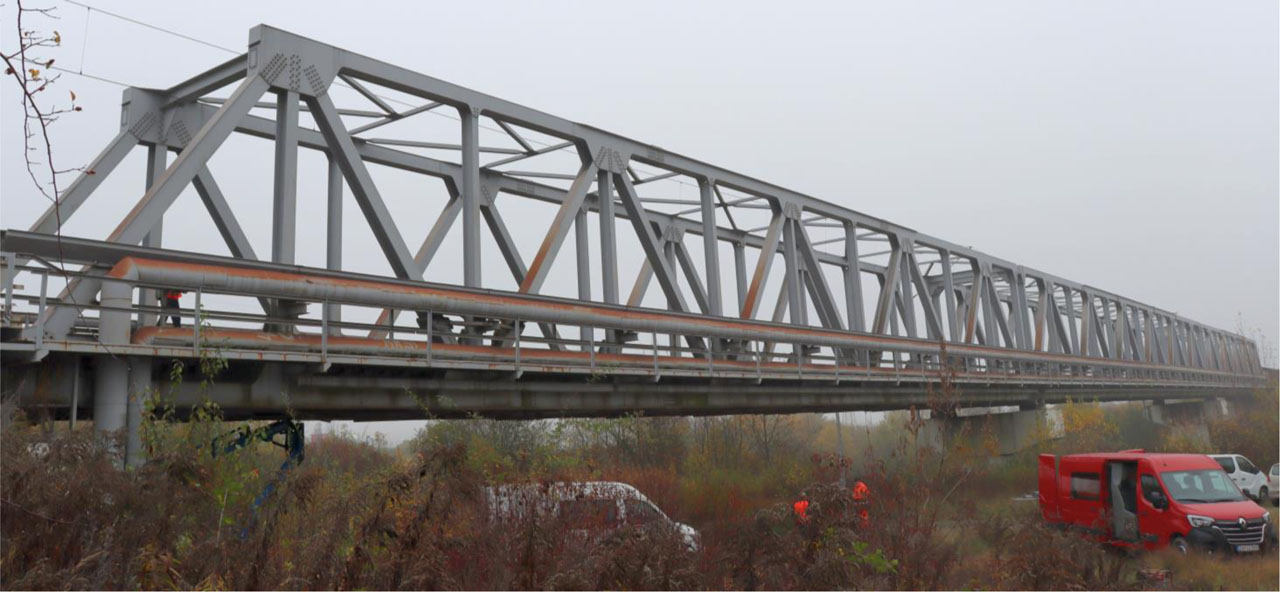
Figure 1:
View of the bridge
The bridge superstructure consists of three simply supported, steel welded structures with two main Warren-type truss girders with verticals with a span of 56.00 m + 67.20 m + 56.00 m. The axial distance of the main girders is 5550 mm, the total width of the steel structures is 6450 mm, and they are 8100 mm high. A member bridge deck, consisting of cross girders and stringers, is connected to the lower chords of the main girders. The cross girders of the asymmetric cross section with a height of 1075 mm are connected to the main girders at the nodes of the lower chords, i.e. at axial distances of 5600 mm, and the connections are rigid in both the vertical and horizontal planes. The stringers of the asymmetric I-section with a height of 800 mm are stiffened with a longitudinal truss bracing, and they are connected to the cross girders at an axial distance of 1800 mm, also rigidly in both main planes of inertia, with the lower edges of the lower flanges aligned. The cross section of the bridge superstructure is presented in Figure 2.
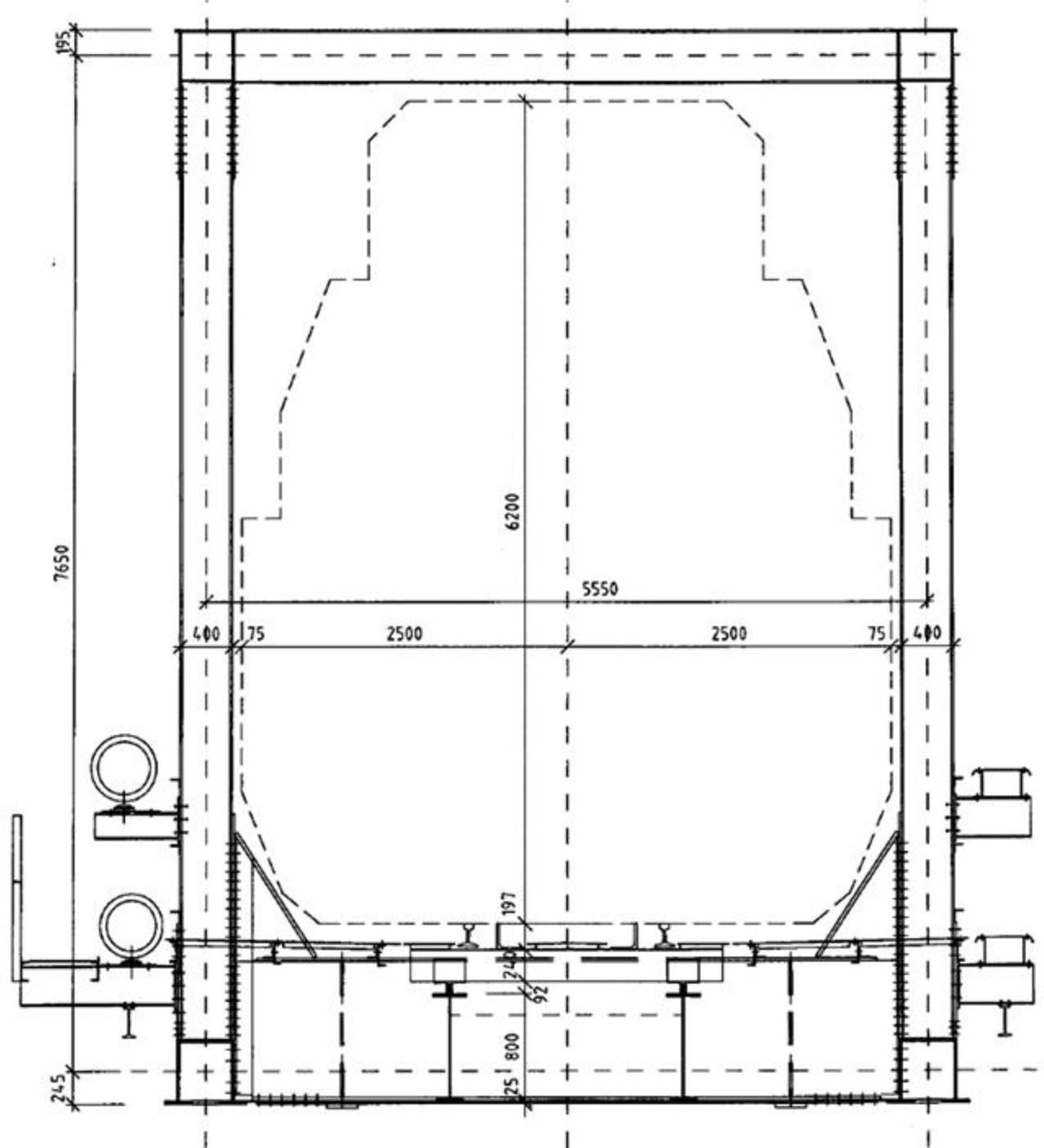
Figure 2:
Cross section of the bridge
The horizontal rigidity of the superstructure is ensured by the lower and upper lateral (wind) bracings. The diagonals of the lower X-truss bracing of a welded T-section are attached to the main girders and to the lower flanges of the stringers as well. The upper K-truss bracing consists of the struts and diagonals made of closed welded profiles 2×U120 and 2×U140, respectively. Vertical portals are located at the beginning and ends of individual steel structures.
The railway superstructure consists of steel sleepers, rails including fasteners, safety guide angles (in case of train derailment) and a floor on sleepers. The modified steel bridge sleepers SBS of the German company thyssenkrupp Schulte (thyssenkrupp Schulte, 2025) are used, made of hot-rolled steel profiles HE 200 A with a length 2400 mm. They are supported by means of a steel base welded from below to the lower flange of the SBS beam and their position is fixed by side plates equipped with a guide hook that fits into the longitudinal groove in the support strip welded to the stringer's upper flange. The installation of the steel sleepers on the stringers is documented in Figure 3.
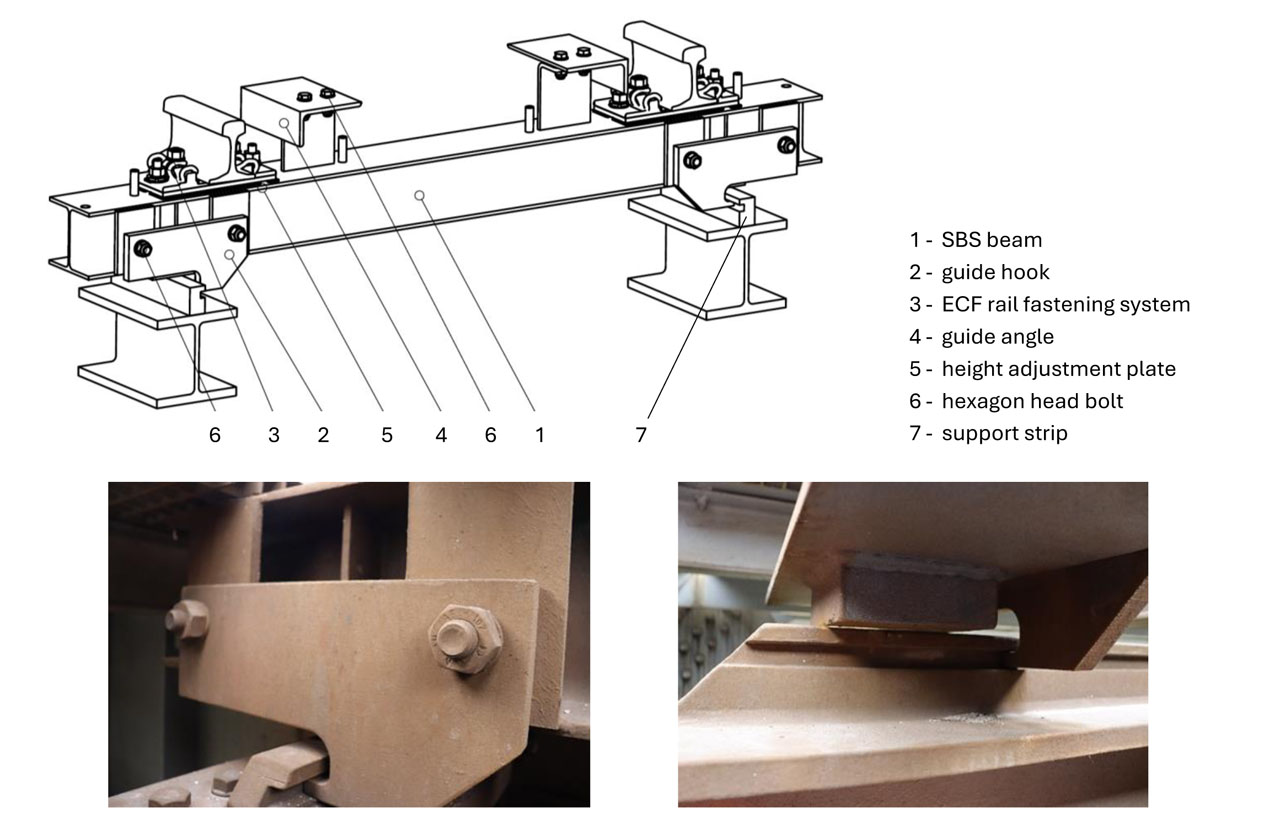
Figure 3:
Installation of steel sleepers on the stringers
3. Experimental Analysis
3.1. Static Analysis
The experimental analysis was performed during static and dynamic load tests, during which the stress-strain response of the monitored superstructure members to the test load was recorded. First, a static load test was carried out on the selected outer steel superstructure to verify its overall behaviour as well as verify the accuracy of the numerical calculation model, which was subsequently used for the theoretical analysis of the superstructure focused on the behaviour of the steel sleepers. As a test load, we used a set consisting of a locomotive HDV 740 and an emergency crane EDK 750 in the transport position together with a wagon with a counterweight (Figure 4).
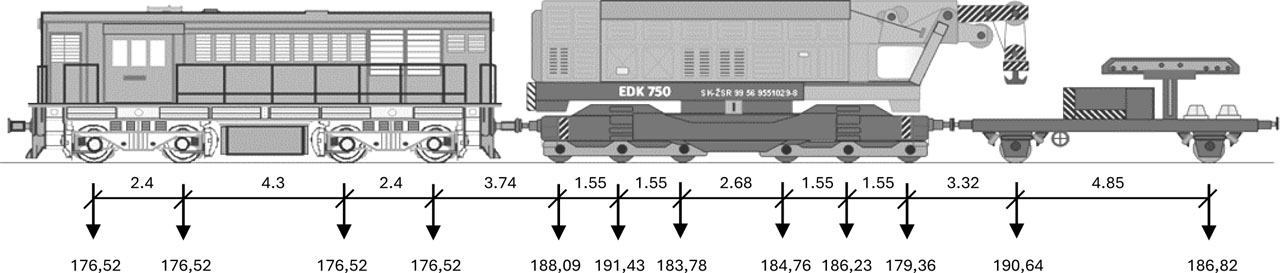
Figure 4:
Test load assembly for static load test (distances are given in [m], axle forces in [kN])
In the first part of the static load test, the test load according to Figure 4 was placed on the investigated superstructure in such a way as to achieve the greatest loading effect in the middle of the span. The vertical deflections of the main girders in the middle of the span were monitored, as well as the subsidence of the lower edges of the measured girders in the places of their support on the bearings. The vertical deformations of the bridge superstructure in the monitored points were recorded using absolute rotary encoders (ARC).
In the second part of the static test, only the HDV 140 locomotive was used, which was placed in close proximity to the abutment in such a position as to achieve the greatest possible loading effect on the outer stringer and simultaneously on the outer (first) bridge sleeper (BS1) and the middle (fifth) bridge sleeper (BS5) located above the outer stringer. The following quantities were monitored:
○ Stresses in the middle cross-section of the BS1 (by means of strain gauges S1 – S4 in Figure 5).
○ Stresses in the middle cross-section of the BS5 (by means of strain gauges S5 – S8 in Figure 5).
○ Stresses in the outer right stringer (in direction to Varín) in the middle of the span (strain gauges S9 – S12 in Figure 5).
○ Vertical deformations of both outer stringers at the locations of the sleepers BS1 and BS5 (by means of potentiometric displacement sensors D6 – D7 in Figure 5).
○ Vertical deformations of the sleeper BS1 in the middle and above both stringers (by means of potentiometric displacement sensors D1 – D5 in Figure 5).
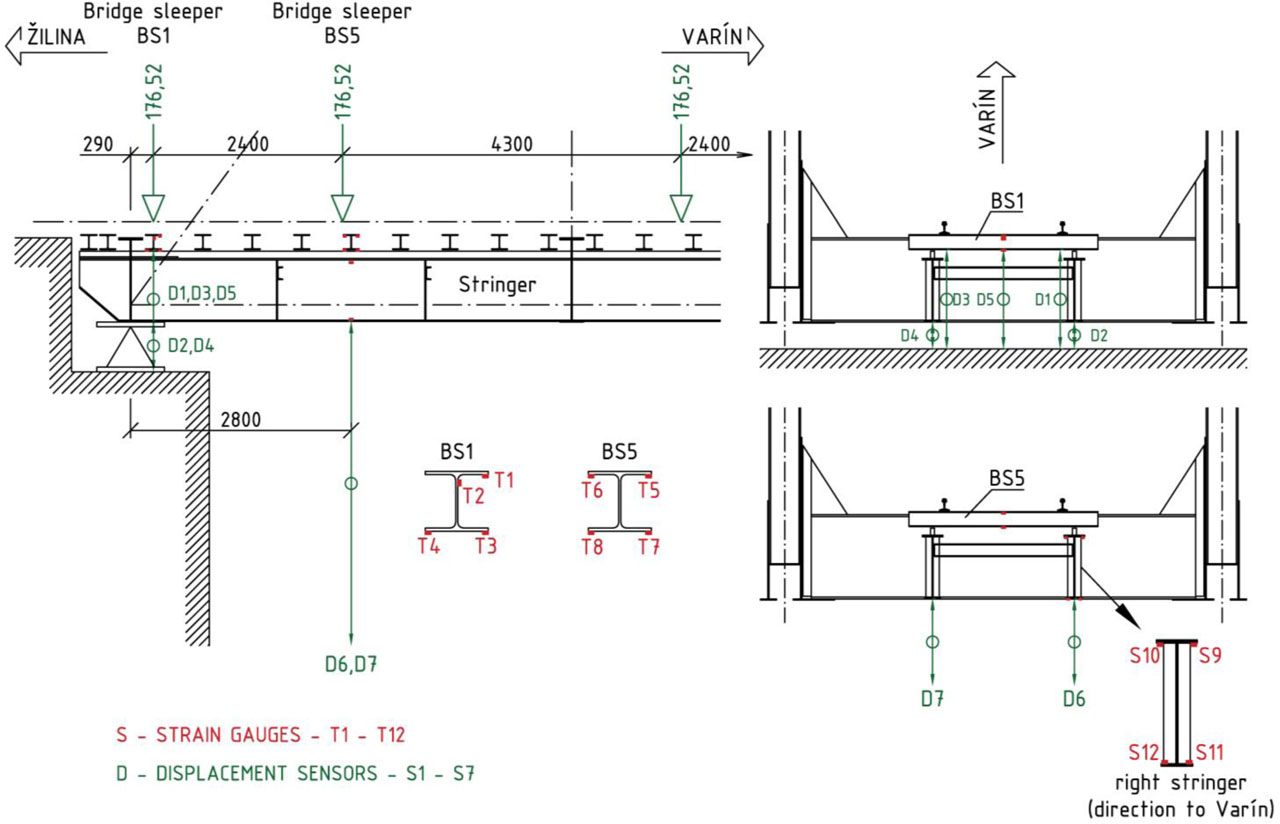
Figure 5:
Sensor placement during static load test
For the evaluation of the static load test, a computational model of the investigated superstructure (see section 4.1) created in the SCIA Engineer software environment (SCIA, 2025) was applied, with the help of which the deflections of the main girders of the tested bridge span were determined. The evaluation was carried out in accordance with the standard STN 73 6209 (1993), and it demonstrated a sufficient accuracy of the computational model for further experimental and numerical analyses, as the ratio of the calculated elastic deflections to the measured ones ranged in the interval 0.90 – 0.92.
The results of the second part of the static load test are presented in graphical form in Figure 6. Only the measured stresses in the observed outer stringer and the sleeper BS5 are shown here, since the stresses measured on the sleeper BS1 were not correct.
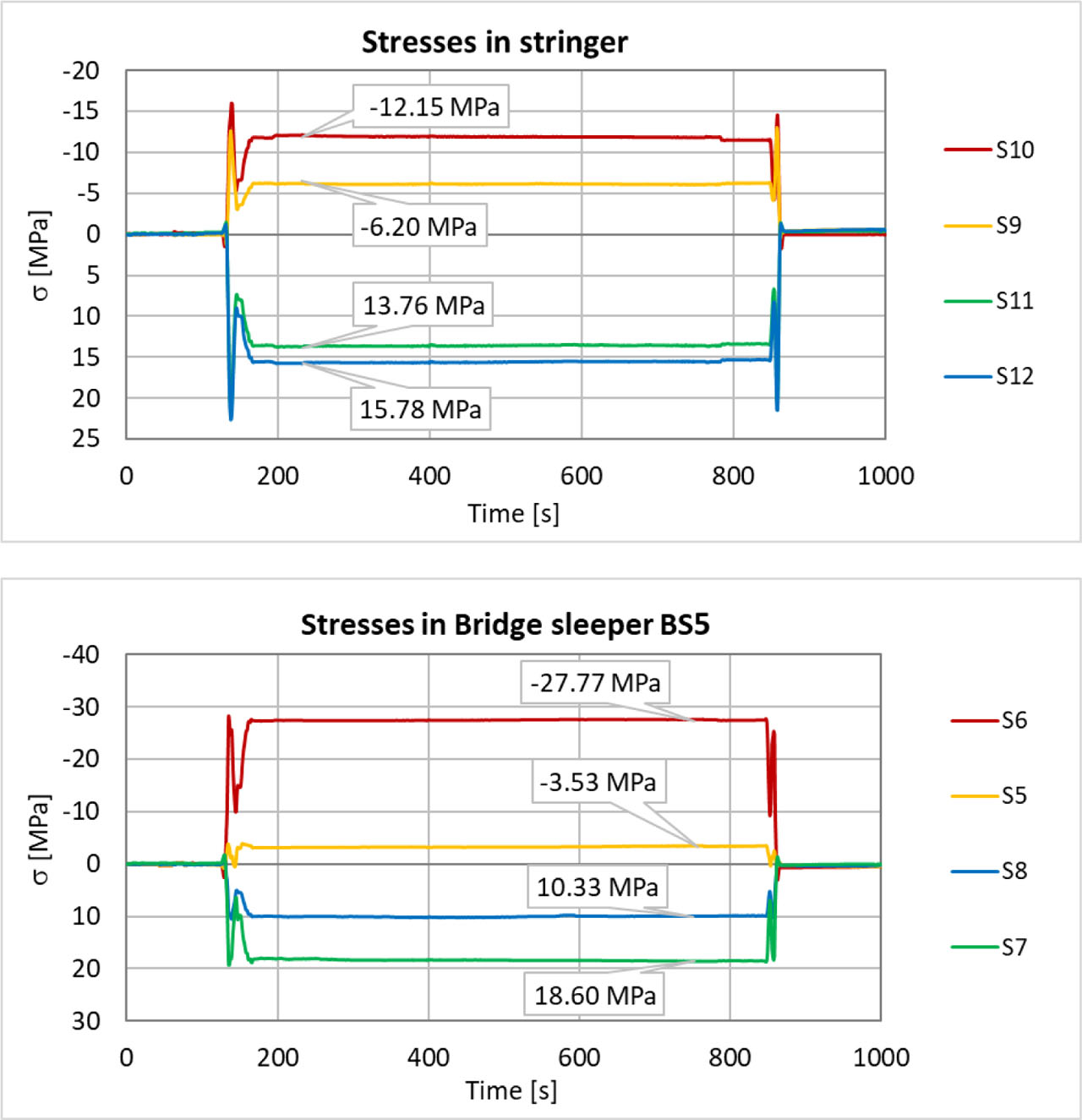
Figure 6:
Measured normal stresses in the flanges of the observed stringer and sleeper BS5
3.2. Dynamic Analysis
During the dynamic load test, the time courses of the stress response of the stringer and the sleeper BS5 were recorded. The dynamic load was induced by the HDV 740 locomotive moving over the bridge at speeds of 5 – 60 km/h. The recorded time courses of the normal stresses during the passage of the HDV 740 locomotive are presented in section 4.3 together with the results determined by numerical analysis.
One of the essential outputs of the dynamic load test is the evaluation of the dynamic load factor. Figure 7 shows the values of the dynamic load factors for the stringer and the bridge sleeper BS5 evaluated from the measurements of normal stresses depending on the locomotive speed. For comparison, the graphs also show the corresponding standard values (denoted as Φ3), determined according to STN EN 1991-2 (2006) for the design load by railway traffic represented by the load model 71 (LM71), as well as the values of the dynamic load factor (1+φ) for the actual service trains according to Annex C of the same standard. The first natural frequency of the bridge superstructure needed for calculation of the dynamic load factor (1+φ) was determined by means of dynamic modal analysis using a computational model described in section 4.
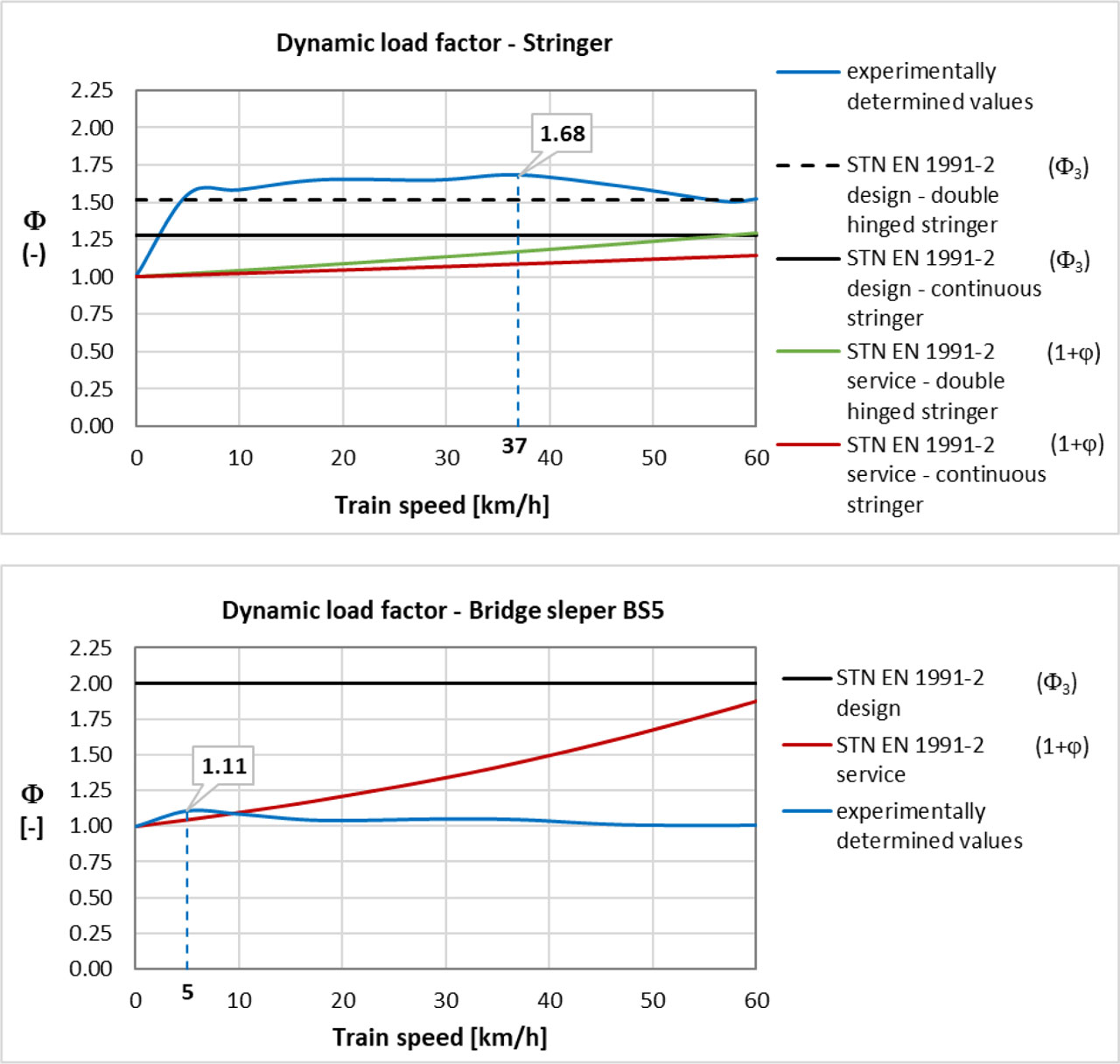
Figure 7:
Courses of dynamic load factors evaluated from the measured normal stresses on the stringer and the sleeper BS5 as well as their standard values according to STN EN 1991-2
4. Numerical Analysis
4.1. Computational Model of the Bridge Superstructure
The numerical analysis was performed using a spatial numerical computational model of the investigated bridge superstructure created in the SCIA Engineer software environment (SCIA, 2025). All members of the main girders were modelled by beam elements, with rigid connections of individual members. Similarly, the bridge deck members were modelled by beam elements with rigid the stringers-to-cross girders connections, as well as the cross girders-to-main girders connections. The members of the investigated part of the bridge deck, i.e. a pair of the outer stringers (at the Žilina abutment), including the end stringer brackets and parts of the adjacent second stringers, as well as the first two cross girders, including the corner stiffeners, were modelled by shell elements.
The steel bridge sleepers in the investigated area were also modelled using shell elements, while the other sleepers were modelled using beam elements. The sleepers' connections to the stringers were modelled including guide hooks embedded in the groove of the support strip, as shown in Figure 10, where the connection was considered to be hinged. The model also includes the rails, which are modelled using beam elements, hinged to the elements modelling sleepers. Negligible interaction of rails with stringers is excluded in the computational model by releasing longitudinal displacements (parallel to the track axis) in the connection of sleepers to stringers. In the transverse direction, sleepers are simply supported on the stringers.
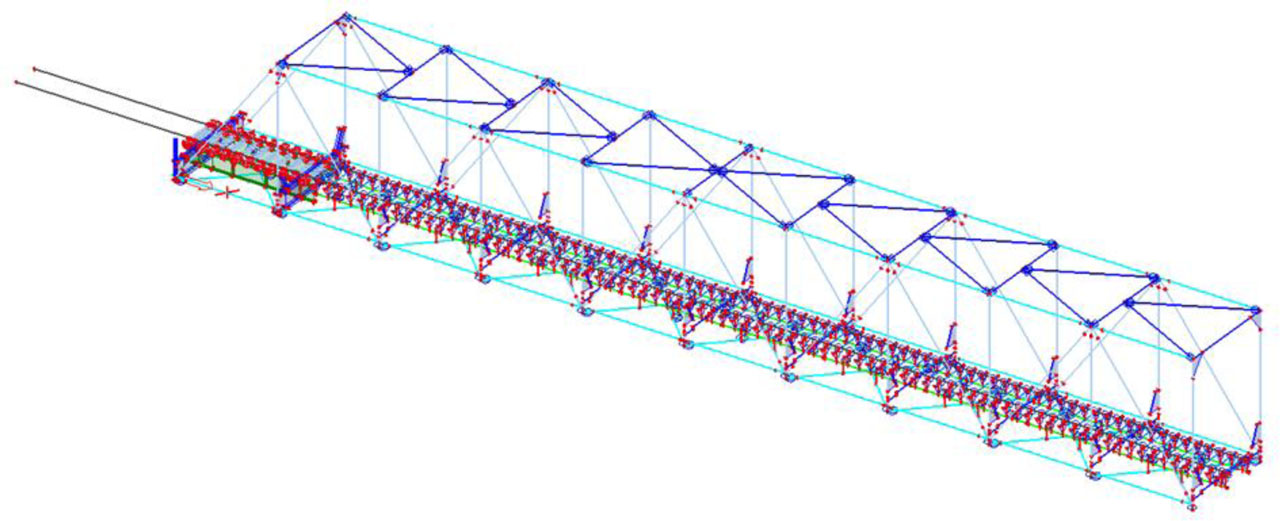
Figure 8:
Spatial computational model of the bridge superstructure for global analysis
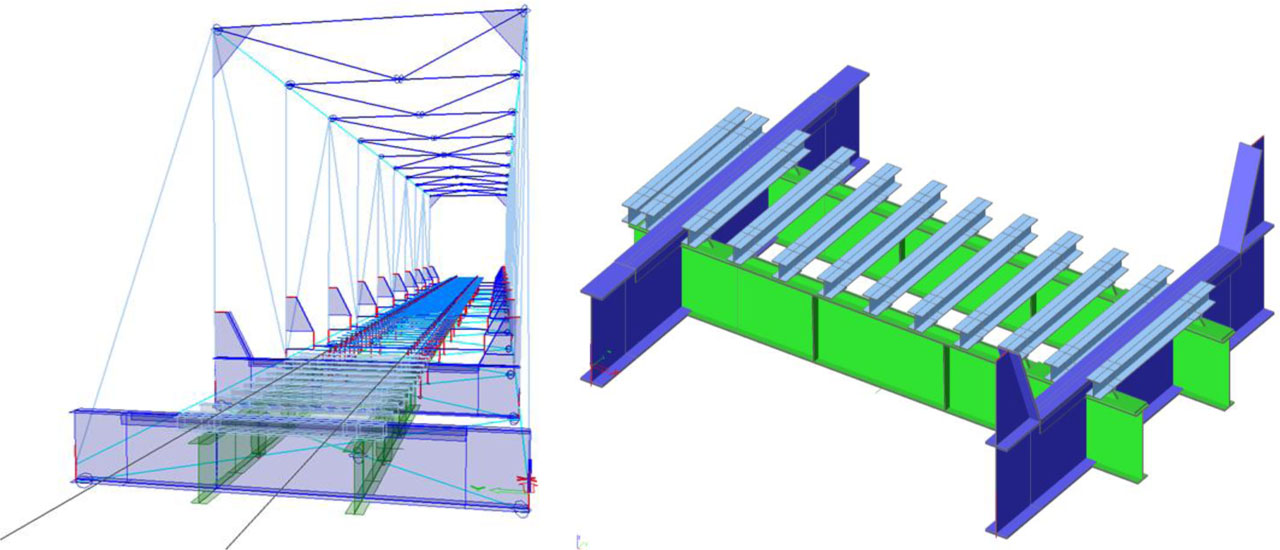
Figure 9:
Detailed view of a part of the bridge modelled with shell elements
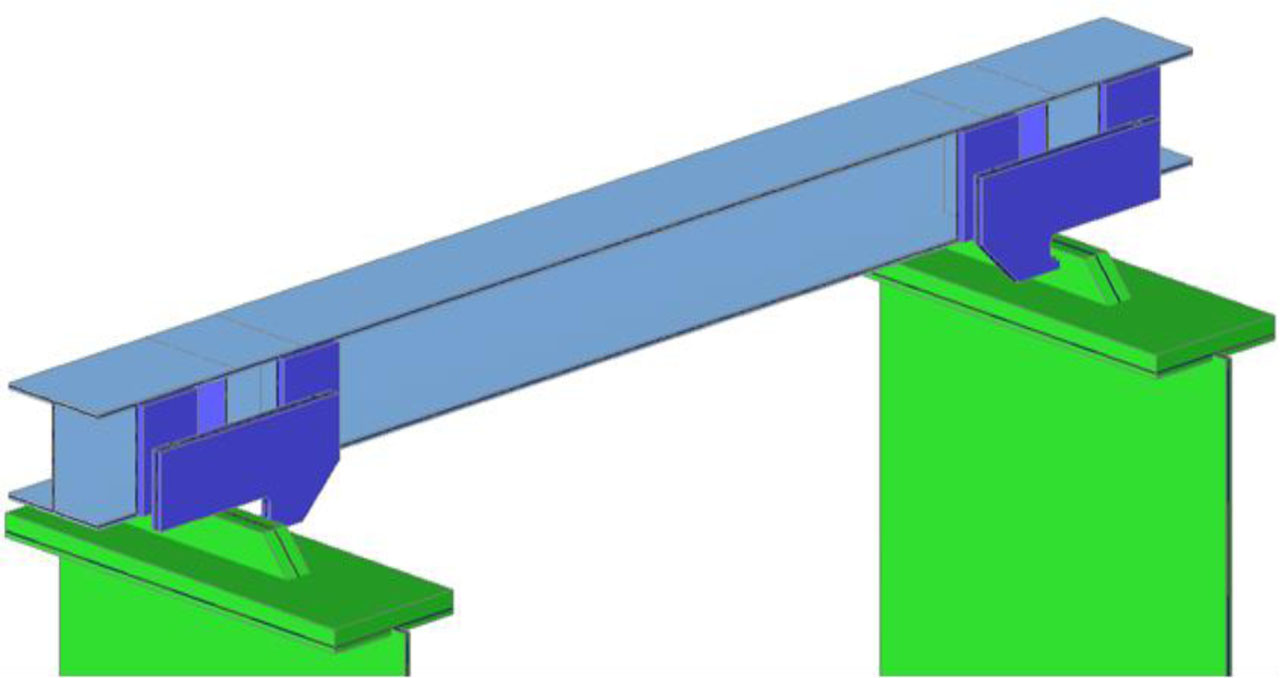
Figure 10:
Detailed view of the model of the steel sleeper's connection to the stringer
4.2. Numerical Results of the Static Global Analysis
The results of the numerical analyses are presented in Figure 11 and Figure 12. Figure 11 shows the numerically determined normal stresses at the mid-span of the stringer. From the comparison with the measured values of normal stresses, it is possible to state a relatively good agreement for the normal stresses above the stringer's web, when the relative values of the measured and calculated stress values are achieved in the range of 0.81 in the lower flange axis and 0.91 in the upper flange axis. The results thus confirmed the good accuracy of the applied calculation model also for bridge deck members.
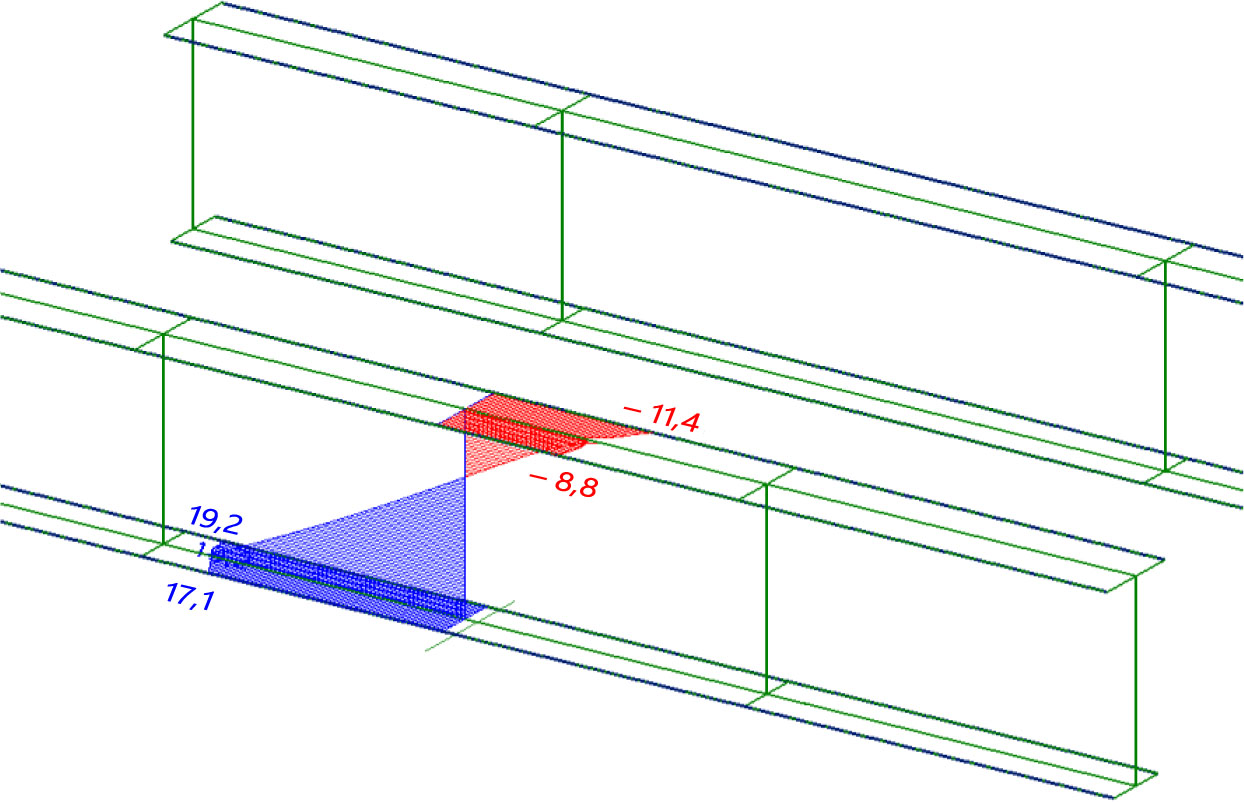
Figure 11:
Numerically determined normal stresses at midspan of the stringer
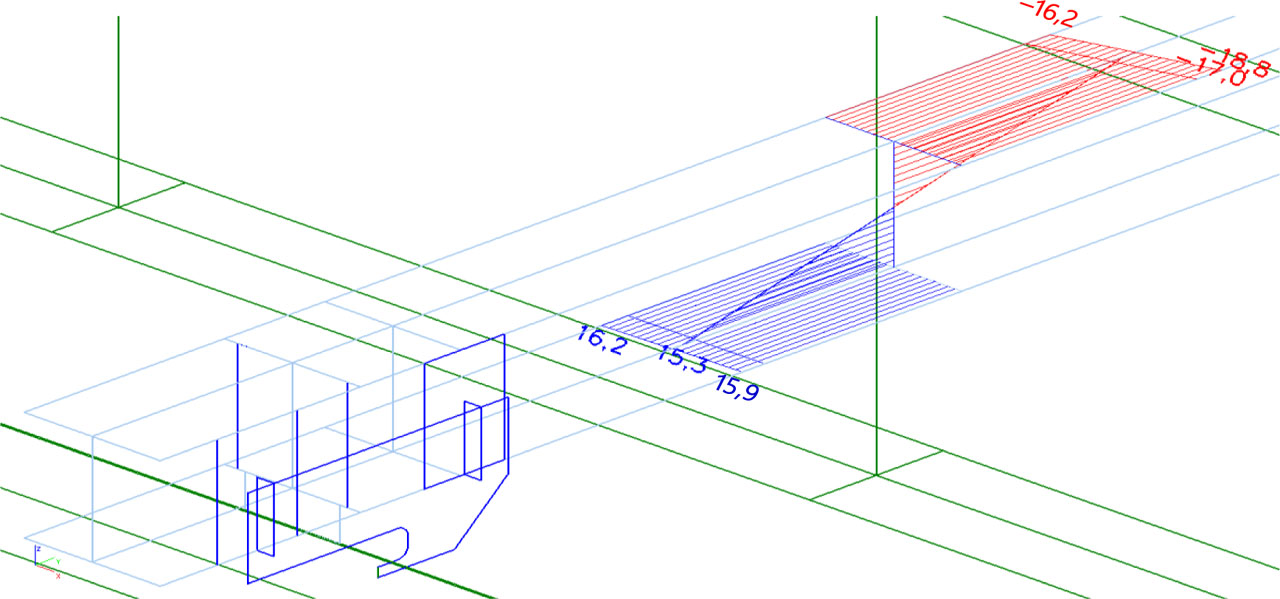
Figure 12:
Numerically determined normal stresses at midspan of the bridge sleeper BS5
Figure 12 shows the values of normal stresses at the mid-span of bridge sleeper BS5. The course of normal stresses in the flanges clearly shows the influence of the horizontal bending moment on the stress in the cross section, which is the product of the compressive normal force due to the eccentric supporting the sleeper by the guide hook embedded in the support strip.
4.3. Numerical Results of the Multistep Moving Load Global Analysis
The theoretical response of the superstructure to the passage of the HDV 740 locomotive during the dynamic load test was obtained by numerical simulation of the passage using the computational model described above (Section 4.1). Using a multi-step static global analysis simulating the movement of the locomotive over the bridge, the normal stresses were determined at the monitored locations of the investigated elements (stringer and bridge sleeper), corresponding to the locations of the strain gauges during the experiment.
Figure 13 shows the time courses of the calculated normal stresses in the flanges of the monitored stringer as well as the sleeper BS5, which are confronted with the courses measured in the same places at train speeds of 5, 10, 18, 29, 37, 47 and 60 km/h. To eliminate the influence of the horizontal moment, the stresses in the axis of the top flange (TF) and bottom flange (BF) were evaluated, which were obtained as the arithmetic mean of the theoretical or experimental values at the edges of the flanges, respectively. A comparison of the outputs of both analyses (‘ex' – experimental, and ‘th' – theoretic) indicates a good agreement between the results of experimental measurements and simulations of the HDV 740 locomotive passages using the computational model described in section 4.1.
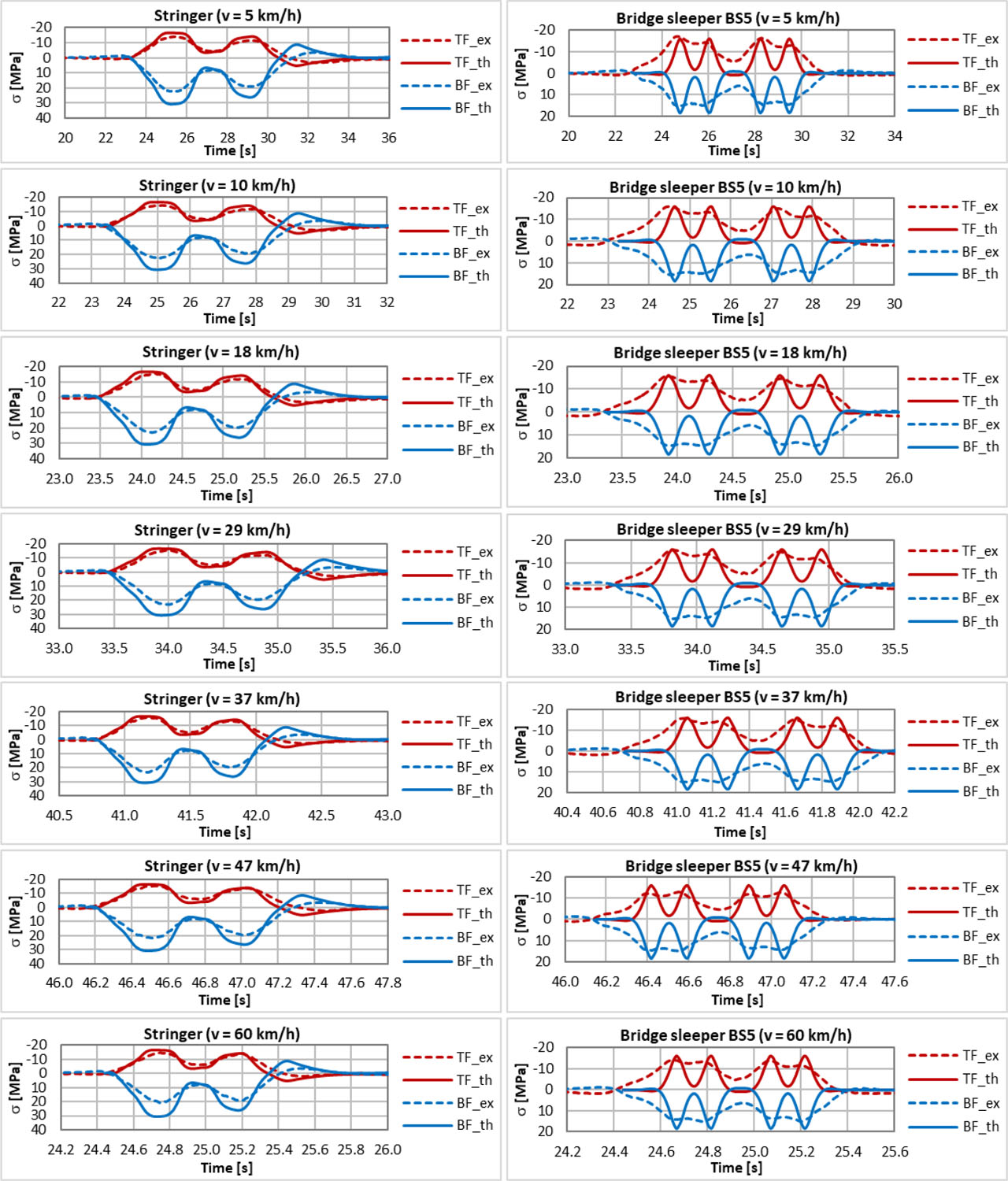
Figure 13:
Comparison of the time courses of the stress response of the observed stringer and bridge sleeper to dynamic loading by the HDV 740 locomotive (ex) with the response simulated by theoretic numerical analysis (th)
5. Discussion of Results and Conclusions
Based on the experimental and numerical analysis of the behaviour of steel bridge sleepers installed on the railway bridge at km 5.230 of the A2 track, in the track section Žilina – Teplička, marshalling yard, the following conclusions can be drawn:
The results of the static load test performed using the HDV 740 locomotive, EDK 750 crane and counterweight wagon confirmed the suitability of the selected calculation model from the point of view of the global analysis of the bridge, as well as from the point of view of the analysis of the behaviour of individual members of the bridge superstructure. The same conclusion was drawn from the static test performed with the HDV 740 locomotive.
The experimentally determined response of the stringer to both static and dynamic loading of the bridge superstructure matched very well with the numerically determined response, which once again confirms the suitability and correctness of the selected calculation model for the individual structural members of the bridge superstructure.
From the response of the stringer to the dynamic load by a moving HDV 740 locomotive at speeds of 5 to 60 km/h, its dynamic load factor was evaluated (Figure 7), the value of which (Φmax,exp = 1.68) corresponds approximately to the value of the dynamic load factor determined for this structural member by the standard STN EN 1991-2 (2006), considered for design models of the railway traffic load (LM71, SW/0, SW/2) assuming a double hinged stringer and a normally maintained track (Φ3 = 1.52). However, when considering the continuity of the stringers, the experimentally determined value of the dynamic load factor of the stringer is about 30% higher than the standard value (Φ3 = 1.28). Similarly, in comparison with the dynamic load factor (1+φ) for actual service trains according to Annex C in STN EN 1991-2 (2006), or according to VTP UZŽMO (2016), the experimentally determined value is significantly greater than the theoretical value according to these regulations. The higher value of the experimentally determined dynamic load factor for the stringer may be related to the use of steel sleepers and to their not very precise placement on the stringers (see the gap in Figure 3 on the right), which may result in higher dynamic effects on the stringer when a train passes than in the case of using standard wooden sleepers.
The ratio of the normal stresses from vertical bending of the bridge sleeper BS5 measured during the static load test and the corresponding calculated normal stresses is in the range of 0.81–1.00, which demonstrates very good agreement of the outputs. However, the analysis of the stress response obtained by in-situ measurement showed a significant influence of horizontal bending and probably also of warping torsion. Their occurrence can be attributed to the imperfect seating of the sleeper on the support strip welded to the stringer's upper flange. The sleeper is placed on the support strip by means of the steel base welded from below to the lower flange of the SBS beam and their position is fixed by one-side plates equipped with a guide hook that fits into the longitudinal groove in the support strip. Due to the deflection caused by the vertical load, the guide hooks rest against the side wall and possibly also against the lower part of the groove in the support strip, which introduces additional compressive and transverse forces into the sleeper. As a result of this eccentric support, the compressive force in the sleeper induces secondary bending moments and probably also a bimoment due to the warping torsion.
Another effect that was noticed on the bridge is also related to the imperfect seating of the sleepers on the support strip. Some sleepers did not rest tightly with the lower surface of the steel base on the support strip, but there was a gap between them visible to the naked eye (Figure 3, right). In some cases, this gap was uneven, i.e. the sleeper base rested only on part of the contact surface with the support strip. This means that such a sleeper exhibits an initial imperfection due to twisting, which ultimately, in conjunction with the effect described in the previous point 4, can also be reflected in the resulting stresses in the sleeper's cross-section. In addition, an accompanying phenomenon resulting from the sleepers not resting on the support strip is increased noise when a train passes over the bridge.
The measured maximum values of normal stresses from the vertical bending of the bridge sleeper BS5 during the dynamic load test show good agreement with the numerically determined values. Certain differences can be observed in their time courses (Figure 13), which is manifested by larger differences between the measured and calculated minimum (in bottom flange) or maximum (in top flange), respectively, values of normal stresses due to wheel forces. This effect can be explained by the fact that the real sleeper loaded by wheel forces during the movement of the train does not have time to return to the zero (unloaded) state in the real (very short) time that elapses between the passage of two adjacent axles over it.
The dynamic load factor of the bridge sleeper BS5 (Figure 7) evaluated from the experimentally determined dynamic response shows low values close to 1.00. The standards do not specify a dynamic load factor for bridge sleepers, so the theoretical value of the dynamic load factor of sleepers can only be determined using a substitute model of the transverse structural element. However, the values of the dynamic load factor determined in this way are significantly higher than the measured ones.
Considering the above conclusions from the experimental-numerical analysis, the following recommendations for the use of steel bridge sleepers made of hot-rolled profiles can be presented:
It is necessary to pay increased attention to the correct seating of the bridge sleepers on the support strips, so as to ensure good seating of the sleeper with the welded base on the support strips along the entire length of the contact surface. This will prevent possible unfavourable stress in the sleeper cross-section due to eccentric support resulting from the guide hook seating on the lower part of the groove in the support strip. At the same time, it will prevent unfavourable increased noise when the train passes over the bridge.
Instead of an eccentrically connected steel plate with a guide hook, it is recommended to place the guide hook or a backstop centrally from the bottom of the sleeper, by welding it to a steel base, i.e. in the same way as is standard in the case of wooden sleepers using.
The significantly higher measured value of the dynamic load factor of the stringer for the actual service trains compared to the theoretical value according to Annex C in STN EN 1991-2 (2006), or according to VTP UZŽMO (2016) pointed to increased dynamic strain of the stringers when applying steel bridge sleepers, which can reflect in a reduction of the fatigue life of the stringers. In this context, it is therefore recommended to pay increased attention to the bridge deck members during regular inspections in the case of the use of steel sleepers regarding possible occurrence of fatigue damage.
Acknowledgements
This research was supported by the Scientific Grant Agency of the Slovak Republic under project 1/0472/24 Evaluation of the impact of selected failures, details and degradation processes on the actual load carrying capacity and residual service life of bridges.
Notes
[1] Contributed by Author Contributions
J.G. prepared the materials for the static and dynamic load test and performed the numerical analyses, including data processing, and contributed to manuscript writing as well. J.V. participated in the evaluation of data from experimental and numerical analyses and contributed to the writing of the article. J.O. supervised and coordinated the project and the realization of experimental measurements on the bridge. R.H. participated in the realization of experimental measurements. F. B. was responsible for the execution of experimental measurements and the initial processing of the measured data. All authors critically reviewed and approved the final version of the manuscript and agreed to be accountable for all aspects of the work.