Table 1.
Clinical Features of patients With KIF11 variants.
| Patient 1 | Patient 2 | Patient 3 | Patient 4 | Patient 5 | Patient 6 | Patient 7 | |
|---|---|---|---|---|---|---|---|
| Nucleotide variant | c.2224_2225del | c.2946dupT | c.2946dupT | c.2946dupT | c.2946dupT | c.2946dupT | c.2946dupT |
| Protein alteration | p.Asn742TyrfsTer6 | p.Leu983SerfsTer6 | p.Leu983SerfsTer6 | p.Leu983SerfsTer6 | p.Leu983SerfsTer6 | p.Leu983SerfsTer6 | p.Leu983SerfsTer6 |
| Inheritance | De novo | Maternal | Maternal | Maternal | Maternal | Maternal | NA |
| Microcephaly | (−3 SDS) | (−2.15 SDS) | (+) | (+) | (+) | (+) | (+) |
| Eye abnormalities | Myopia, Astigmatism, Keratoconus, Bilateral optic nerve hypoplasia, Bilateral staphyloma | (−) | Myopia | (−) | Cataract, Severe vision loss | Severe vision loss | NA |
| Lymphedema | (−) | Dorsal pedal lymphedema | (−) | (−) | (−) | (−) | (−) |
| Intellectual disability | Moderate | (−) | (−) | (−) | Severe | Severe | Mild |
| Seizures | Afebrile seizures | (−) | (−) | (−) | (−) | (−) | (−) |
| Dysmorphic findings | Sloping forehead, synophrysis, bilateral esotropia, retrognathia and clinodactyly of the fifth finger | Upslanting palpebral fissures, anteverted nares and broad nasal tip, retrognathia, prominent ears, hypoplasic toenails | NA | (−) | NA | NA | NA |
| Additional clinical features | Increased periorbital CSF distance on brain MRI, Tantrums | Craniosynostosis | (−) | (−) | Craniosynostosis | (−) | (−) |
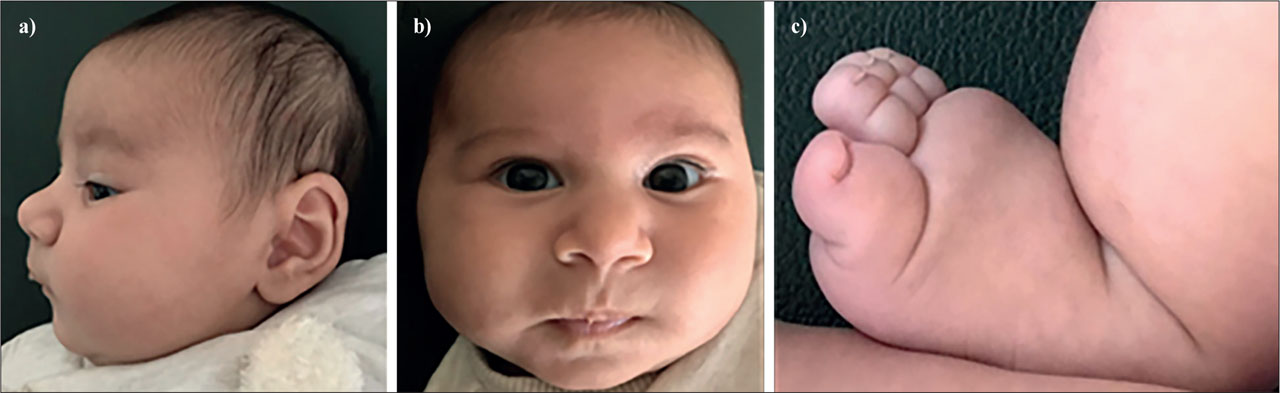
Figure 1.
Clinical Features of Patient 2. a, b. Facial phenotype of Patient 2. Note broad nasal tip, anteverted nares, upslanted palpebral fissures, retrognathia and prominent ears. c. Lymphedema of the dorsum of the foot and hypoplasic toenails.
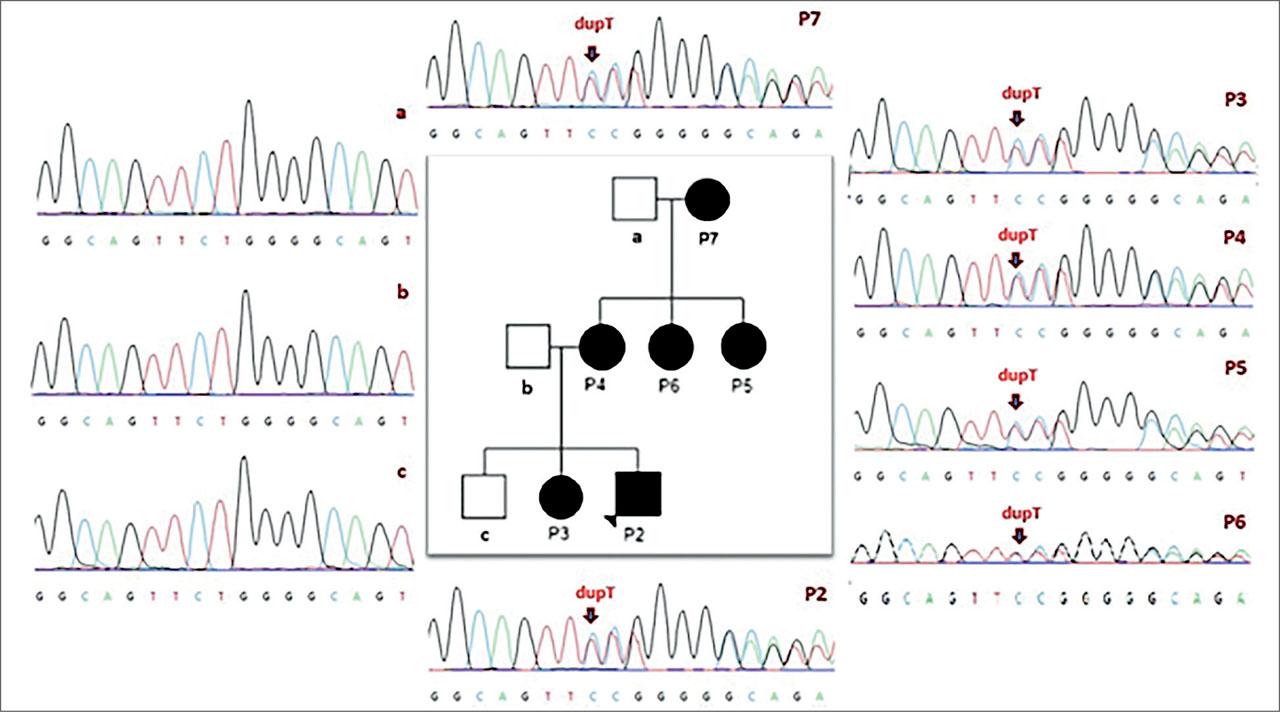
Figure 2.
Pedigree of affected family and sanger sequencing data of the KIF11 gene NM_004523.4: c.2946dup (p.Leu983SerTer6) variant.
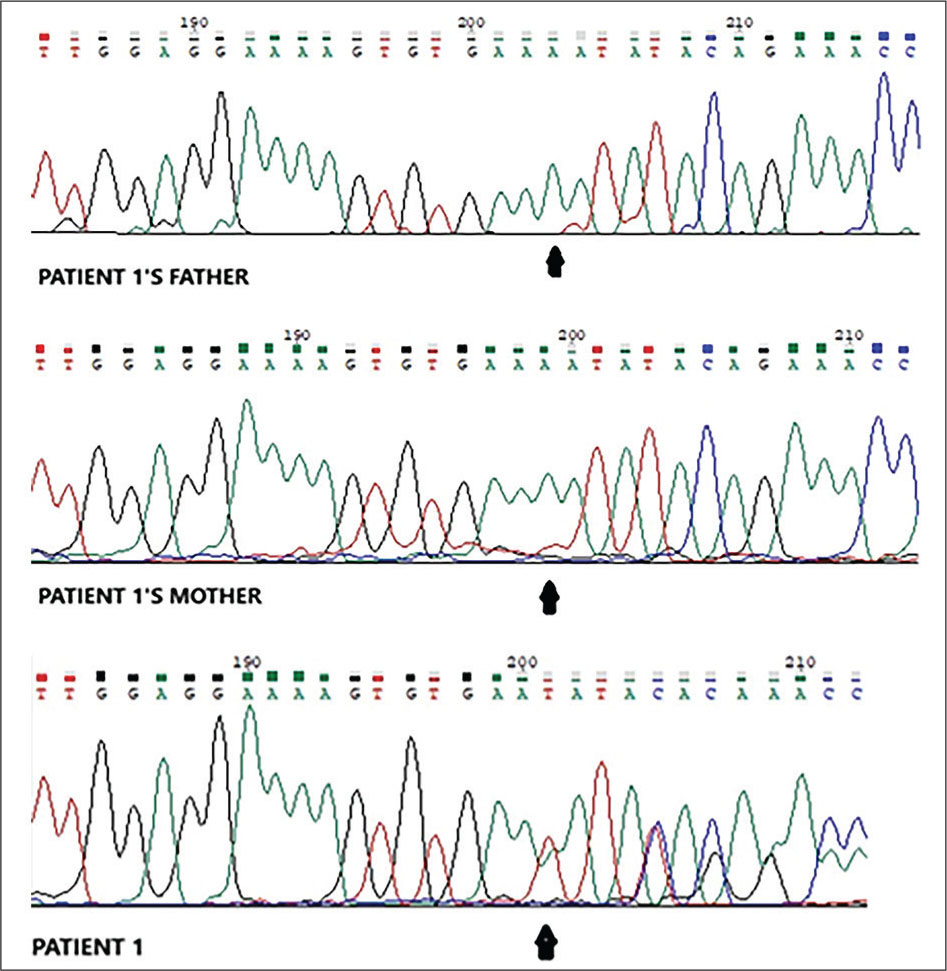
Figure 3.
Sanger sequencing chromatograms of Patient 1 and his pa rents were obtained. Patient 1 carried the NM_004523.4:c.2224_2225del (p.Asn742TyrfsTer6) variant in the KIF11 gene. This variant was identified as de novo, and no deletion was observed in the sequences of either parent.