INTRODUCTION
Townes–Brocks syndrome (TBS) is a rare autosomal dominant monogenic disorder caused by pathogenic variants in the gene encoding spalt-like transcription factor 1 (SALL1 gene) located on chromosome 16q12[1,2]. Over fifty years ago, Townes and Brocks first identified this syndrome in a father and his five children, who exhibited a spectrum of anorectal, limb, and ear anomalies [3]. The estimated prevalence is approximately 1 per 238,000 individuals in the general population [1]. De novo mutations occur in approximately 50% of the cases. It is believed that mutations in the SALL1 gene disrupt the function of cilia and/or centrosome-associated proteins, implying that TBS can be classified as ciliopathy [4]. SALL1 has an important regulatory role in early kidney organogenesis, and its disruption is associated with kidney malformations [5]. TBS is clinically defined by the clinical triad of ear malformations with or without hearing loss, anorectal anomalies, and thumb/hand deformities [6]. Other systems, including the kidneys, heart, and feet, may also be affected, with occasional developmental, ocular, or hormonal abnormalities. Ocular anomalies are rare and include iris coloboma, microphthalmia, and cataract. A range of central nervous system abnormalities may be present, including intellectual disability, behavioral disturbances, Duane anomaly, and type I Arnold–Chiari malformation. Growth impairment may also be observed. The prognosis of the disease depends on which organs are affected. If the heart and kidneys are affected, the risk of early mortality is increased [ 7, 8, 9, 10, 11].
Variants in SALL1 are generally highly penetrant, but the resulting clinical manifestations can be highly variable, even among affected members of the same family [11]. The aim of this paper is to present the variable clinical phenotype of TBS across three generations of a single family. A pedigree of this Serbian family is depicted in figure 1 and clinical features of each affected member are represented in table 1.
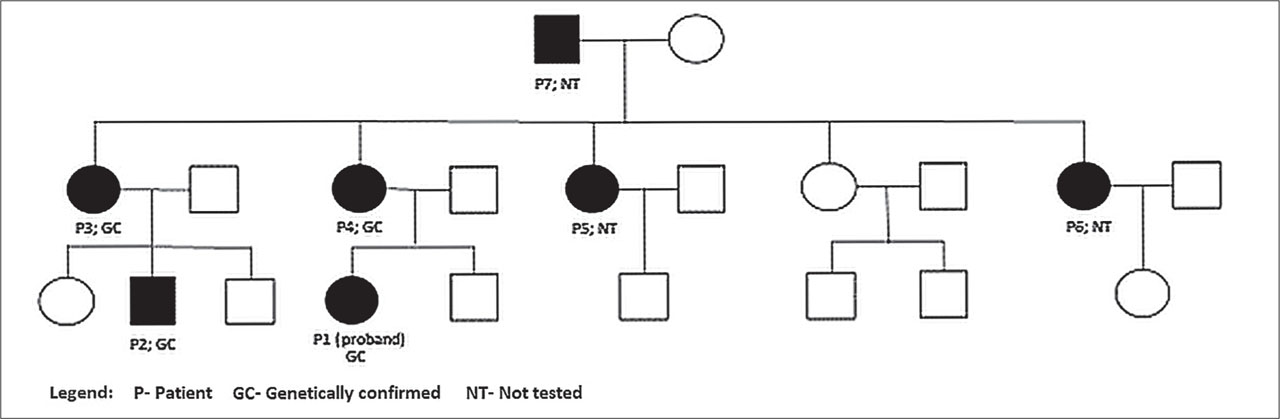
Figure 1.
Pedigree showing three generations in a Serbian family with multiple members affected by Townes Brocks syndrome
Table 1.
Phenotypic features of family members with Townes–Brocks syndrome (CKD – chronic kidney disease, ASD – atrial septal defect, VUR – vesicoureteral reflux)
| Patient | Relationship | Sex | Age (years) | Dysplastic ears | Hearing loss | Digital anomalies | Anorectal anomalies | Urogenital Anomalies | Renal anomalies | Kidney function | Endocrine abnormalities | Congenital heart disorder | Ocular disorders | Intellectual disability |
|---|---|---|---|---|---|---|---|---|---|---|---|---|---|---|
| Patient 1 | Proband | F | 19 | + | + | - | + | - | Hypodysplasia/ VUR | CKD V/Transplantation | - | - | - | + |
| Patient 2 | First cousin of proband | M | 8 | + | - | - | + | + | Hypodysplasia | CKD II stage | Hypothyroidism | ASD | - | + |
| Patient 3 | Aunt of proband, mother of patient 2 | F | 46 | - | - | - | - | - | Hypodysplasia | CKD III stage | - | - | - | - |
| Patient 4 | Mother of proband | F | 47 | - | - | - | - | - | Hypodysplasia | CKD IV stage | - | - | - | - |
| Patient 5 | Aunt of proband | F | 38 | - | - | - | - | - | Hypodysplasia | CKD IV/V stage | - | - | - | - |
| Patient 6 | Aunt of proband | F | 35 | - | - | - | - | - | Hypodysplasia | CKD III stage | - | - | - | - |
| Patient 7 | Grandfather of proband | M | 60 | - | + | - | - | - | Unknown | CKD V/Hemodialysis | - | - | - | - |
CASE REPORTS
Patient 1
The proband is a female and the first child from regularly monitored pregnancy. She was delivered at 34 weeks of gestation by cesarean section. Her birth weight was 2500 g (90–95th percentile for gestational age), body length was 47 cm (50–75th percentile), and head circumference 33 cm (50–75th) with all percentiles evaluated according to the Fenton growth chart [12]. Her Apgar score was 7/7. After birth, she was transferred to our hospital due to anal atresia and perinatal asphyxia. At admission, the patient had stable vital signs. Apart from low-set auricles and anal atresia, no other physical abnormalities were noted. Laboratory findings revealed a serum creatinine level of 160 μmol/L (estimated glomerular filtration rate (eGFR) approximately 9 mL/min/1.73 m2, calculated using the Schwartz formula, indicating reduced renal function (normal for gestational age 20–30 mL/min/1.73 m2) [13, 14]. Metabolic acidosis was the only significant laboratory abnormality. Cranial ultrasound indicated grade I hypoxic-ischemic encephalopathy, while renal ultrasound demonstrated hypo-dysplastic kidneys with mild bilateral hydronephrosis. Echocardiography was normal. In the first days of life, a posterior sagittal anorectoplasty (Peña procedure) was performed. On the 20th day of life, she was discharged from the hospital with a serum creatinine level of 80 μmol/L and eGFR of 17 mL/min/1.73 m2, which was below the expected range of 35–40 ml/min/1.73 m2 for gestational and postnatal age [14]. Regular follow-up examinations were continued. Voiding cystography was performed in the third month of life revealing bilateral vesicoureteral reflux of grade III. Endoscopic treatment of vesicoureteral reflux was performed in the second year of life.
Given the combination of congenital anorectal malformation and persistent renal abnormalities with progressive CKD, a genetic etiology was suspected. Whole exome sequencing was performed in the fifth year of life, revealing a nonsense variant c.1509C>A (p.Tyr503Ter) in the SALL1 gene. The same variant was also identified in the mother during segregation analysis.
Due to recurrent pharyngitis and adenoidal hypertrophy, she underwent tonsillectomy and adenoidectomy at the age of five. At the time, sensorineural hearing loss was diagnosed, and the use of a hearing aid was recommended. Ophthalmologic examination revealed strabismus. At school enrollment, she was assessed as having mild psychomotor delay (IQt 63), and educational placement tailored to her developmental abilities was recommended. During early adolescence, she exhibited aggressive and self-destructive behavior. She was managed by a neurologist and a psychiatrist. Brain MRI was performed, which revealed no structural abnormalities. Her pubertal development was normal. Due to obesity and insulin resistance, she was followed by an endocrinologist and weight reduction was recommended. Over time, her CKD progressed to ESRD by the age of 17. She was then referred to a national reference center, where she underwent kidney transplantation. She had not been on a chronic dialysis program prior to transplantation.
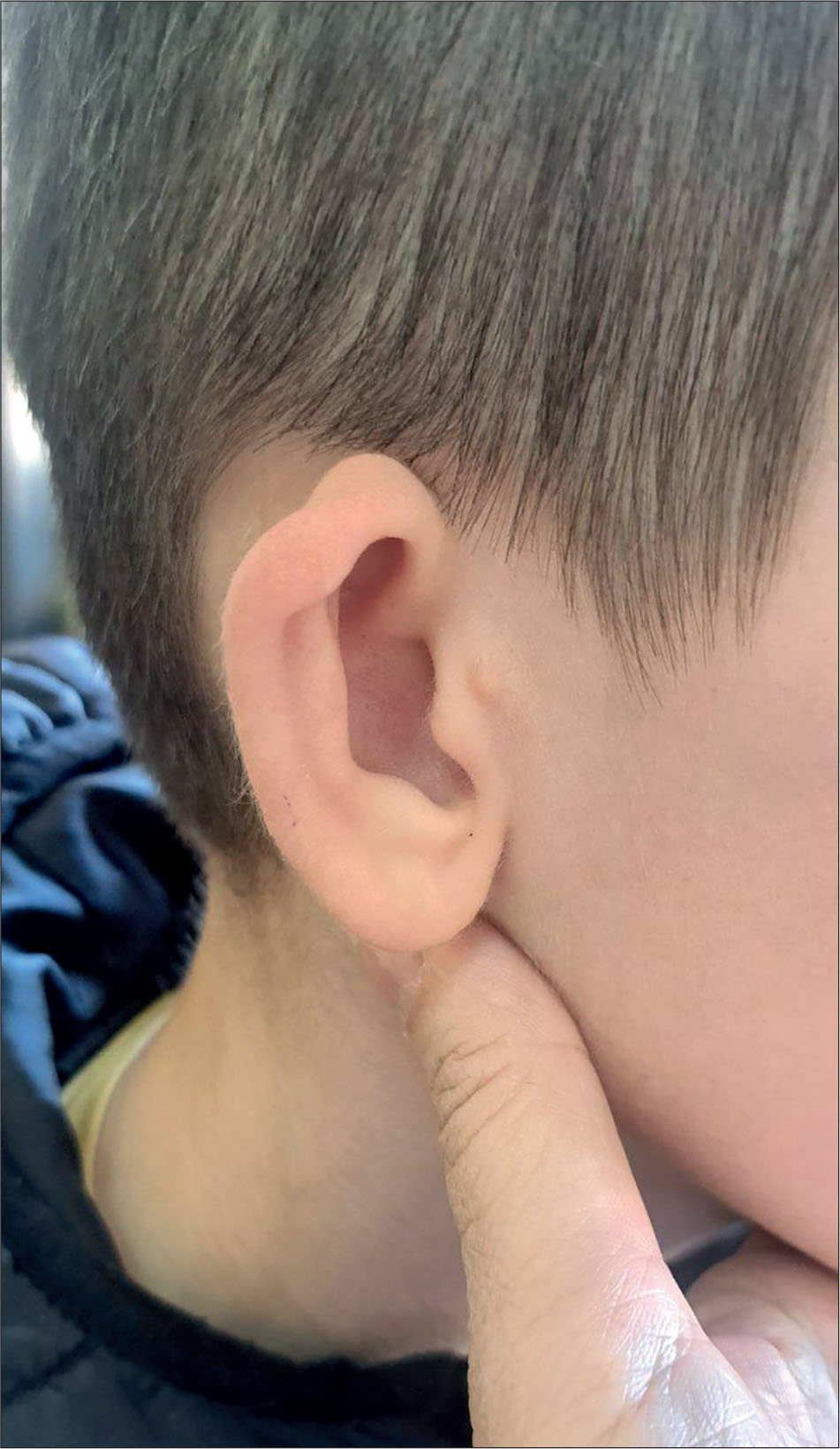
Figure 2.
Right auricle of a boy (patient 2) with Townes-Brocks syndrome demonstrating a distinct preauricular tag anterior to the tragus, accompanied by mild overfolding of the superior helix characteristic of the condition.
Patient 2
The second patient is the second male child from the mother’s fourth pregnancy and the first cousin of patient 1. The mother had experienced two spontaneous miscarriages during the first trimester. The pregnancy was regularly monitored. Delivery occurred at 31 weeks of gestation via spontaneous vaginal birth. The newborn’s birth weight was 1750 grams (75–90th percentile), body length 43 cm (50–75th percentile), head circumference 31 cm (75–90th percentile) (12). Apgar score was 6 and 7 at 1 and 5 minutes. The newborn was transferred to our hospital due to anal atresia and a surgical procedure was performed on the 2nd day of life. Physical examination revealed low-set, dysplastic auricles (figure 2) and hypospadias, with thumbs appearing normal. No other abnormalities were observed. Laboratory tests showed an elevated serum creatinine level of 173 μmol/l, corresponding to an eGFR of approximately 7.2 mL/min/1.73 m2 (13). The expected eGFR is between 10 and 20 mL/min/1.73 m2 (14). Neonatal thyroid screening revealed congenital hypothyroidism (TSH 400.2 mIJ/L (0.43–16.1), fT4 12.1 pmol/L (10.6–39.8). Treatment was started with levothyroxine. No other laboratory abnormalities were detected. Abdominal ultrasound revealed hypo-dysplastic kidneys. Voiding cystography did not detect vesicoureteral reflux. Echocardiography identified an atrial septal defect (ASD) without hemodynamic significance. The patient was discharged from the hospital on day 40 of life with a serum creatinine level of 94 µmol/l and eGFR of 14 mL/min/1.73 m2, well below the expected range of 35–40 mL/min/1,73 m2 for gestational and postnatal age. Regular follow-up visits with a nephrologist, urologist, endocrinologist, and surgeon (due to problems with constipation) were continued. Surgical correction of hypospadias was performed in the second year of life. At the age of 7 years, an audiogram was performed and showed no evidence of sensorineural hearing loss, and the ophthalmological examination was normal. Psychological testing revealed IQt of 94. The boy attends primary school and has mild difficulties with academic achievement and socialization. The boy is now 8 years old; his body weight 28.5 kg (+0SD), and height 140.2 cm (0SD), as well as serum creatinine 85 µmol/l (eGFR 80.3 ml/min/1.73 m2), correspond to stage II CKD. Genetic testing confirmed familial variant in the SALL1 gene found in patient 1, his first cousin (c.1509C>A, p.Tyr503Ter).
Patient 3
Patient 3 is a 46-year-old female, the mother of patient 2. Her family history is notable for end-stage renal disease (ESRD) in her father. She has been aware of elevated serum nitrogenous waste parameters since the age of 38, when her serum creatinine level was 127 μmol/L. She has been under regular follow-up by an adult nephrologist for the last three years. Renal ultrasonography demonstrated bilaterally reduced kidney size in patient 3, with longitudinal diameters of 91 mm (right) and 87 mm (left). The renal parenchyma was diffusely hyperechogenic, with cortical thickness of approximately 12 mm. No renal calculi or collecting system dilatation were observed. At the most recent follow-up examination in November 2024, laboratory findings showed serum creatinine 172 μmol/L, urea 9.4 mmol/L, eGFR (MDRD equation) 30 mL/ min/1.73 m2, and serum urate 403 μmol/L. Other biochemical parameters were within reference ranges. Urinalysis showed proteinuria and 3–5 leukocytes per high-power field. Twenty-four-hour urinary protein excretion was 0.51 g/day. She is currently monitored for CKD stage III with stable renal function and sub nephrotic-range proteinuria. Ongoing therapy includes renin–angiotensin system inhibition, urate-lowering therapy, an SGLT2 inhibitor, proton pump inhibitor, and a protein-restricted diet. The only additional feature of TBS in patient 3 are wide nail plates on both hands.
Patient 4
Patient four is a 47- year-old female, the mother of proband. Segregation analysis confirmed familial mutation in SALL1. Wide nail plates on hands were detected without other phenotypic features of TBS. Renal ultrasonography demonstrated bilaterally reduced kidney size, with longitudinal diameters of 89 mm (right) and 90 mm (left). The renal parenchyma was diffusely hyperechogenic. Latest laboratory findings showed serum creatinine 235 μmol/L, urea 10.7 mmol/L, eGFR (MDRD equation) 19 mL/min/1.73 m2 (CKD stage IV), serum urate 507 μmol/L and moderate proteinuria.
Patient 5
Patient 5 is a 38- year-old maternal aunt of proband. Before giving birth to a healthy male child at the age of 30, she had five spontaneous miscarriages. At the time, reduced kidney size (longitudinal diameter of right kidney of 70 mm and left of 80 mm), was incidentally discovered along with mildly elevated creatinine. Currently, her laboratory findings show serum creatinine 297 μmol/L, urea 11 mmol/L, eGFR (MDRD equation) at 15 mL/min/1.73 m2 (CKD stage IV/V) and serum urate 464 μmol/L. No other phenotypic features of TBS were present.
Patient 6
Patient 6 is a 35- year-old maternal aunt of proband. At the age of 32, during first trimester of pregnancy, elevated serum creatinine was noted. Laboratory findings showed serum creatine 122 μmol/L, urea 9.5 mmol/L, eGFR (MDRD equation) 44 mL/min/1.73 m2 (CKD stage III), and uric acid 390 μmol/L. Renal ultrasonography demonstrated bilaterally reduced kidney size, with longitudinal diameters of 82 mm (right) and 93 mm (left), and no distinct corticomedullary demarcation was observed. No other phenotypic features of TBS were observed. After delivery, she did not attend nephrology follow-up visits.
Patient 7
This patient is the father and grandfather of the previously described patients. In this patient, CKD stage V was diagnosed at the age of 60, during an examination for back pain. Kidney ultrasound revealed small kidneys with a cyst in left kidney. The patient has been on hemodialysis for the past 10 years. Apart from CKD and deafness, there are no other characteristics of TBS.
Patients 5, 6 and 7 have not been genetically tested so far, so the suspicion of TBS is mainly based on clinical findings and autosomal dominant inheritance pattern.
DISCUSSION
In this study, we presented the variable clinical phenotype of TBS across three generations of a single family. All affected family members had renal involvement with and very similar phenotype, namely renal Hypodysplasia. All of them developed CKD, which progressed to ESRD in the grandfather at 60 years of age and in the girl at 16 years of age. She was the only one with confirmed vesicoureteral reflux.
According to previous studies, congenital anomalies of the kidneys and urinary tract are expected in 20–65% of individuals with TBS, such as unilateral or bilateral renal Hypodysplasia, vesicoureteral reflux, multicystic dysplastic kidney, renal agenesis, as well as genital anomalies such as hypospadias [15]. Some patients may develop CKD that can progress to ESRD, when dialysis and transplantation are required (1,6,16). Isolated renal Hypodysplasia has been described in patients with TBS, necessitating genetic confirmation [16,17].
TBS is associated with the onset of renal insufficiency at an early age, with 15% of patients progressing to ESRD between 1 and 23 years of age [16,18]. Overall, patients in pediatric cohort presented with mild CKD [1]. In a recent study, CKD was recorded in two neonates, confirming kidney Hypodysplasia as the leading manifestation linked to CKD in TBS patients [6]. In the report by the Japanese authors, 17 of the 20 patients presented with renal Hypodysplasia or with renal dysfunction of unknown etiology [11].
Notably, renal involvement was present in all affected individuals across three generations, representing complete renal penetrance within this pedigree. This striking consistency contrasts with the well-known phenotypic variability of TBS and suggests that, in this family, renal Hypodysplasia represents the core manifestation associated with the familial SALL1 variant.
Genital anomalies such as hypospadias, cryptorchidism, and a bifid uterus have been reported, as in our patient, who presented with hypospadias [6,8]. All the patients suspected of having TBS should undergo renal ultrasonography. In cases where renal anomalies are detected, additional investigations, such as voiding cystourethrography, should be performed as indicated, and renal function should be monitored.
Previous studies report the classical triad of Townes– Brocks syndrome in 14–25% of patients [1,6]. None of the affected individuals in our family fulfilled all three criteria, indicating that exclusive reliance on the classical triad may contribute to underdiagnosis.
Auricular anomalies are the most common feature of TBS, occurring in approximately 80–85% of patients [6]. In the present family, dysplastic ears were observed in both pediatric cases, while sensorineural hearing loss was limited to two affected individuals. Subtle ear abnormalities, including overfolding of the superior helix and hypoplastic antihelix, have also been described [8].
Thumb abnormalities occur in 18% – 66.7% of individuals with TBS, with triphalangeal and duplicated thumbs being the most frequent types [1,6]. The affected members of the presented family did not have thumb anomalies.
Congenital heart defects may occur in approximately 15% of affected individuals and include atrial septal defect (ASD), ventricular septal defect (VSD), persistent ductus arteriosus (PDA), and tetralogy of Fallot. Congenital heart defects, including absent pulmonary valve syndrome and tetralogy of Fallot, have been reported in neonates with TBS [19]. In a recent study, 22.9% of patients had congenital heart disease [6]. Patient 2 from our study had an ASD that closed spontaneously over time, while patient 1 did not present with any cardiac malformations.
Endocrine abnormalities are rarely described in TBS. To date, only a small number of cases with growth hormone deficiency and hypothyroidism have been reported in patients with this genetic disorder. Including our male patient, seven patients with hypothyroidism and seven with growth retardation have been described to date [9]. In a patient with TBS syndrome, potential endocrine abnormalities should be considered, especially in patients with deletions resulting in frame-shift mutations [6,9,11].
Anorectal abnormalities are a common feature of Townes–Brocks syndrome, although their reported prevalence varies across studies. While most series describe anorectal malformations in approximately one quarter of affected individuals [1,11], a higher prevalence of 62.5% was reported in a cohort of 48 patients [6]. The most frequent presentation is anal atresia, often associated with rectourethral or rectovaginal fistula, while anteriorly positioned anus has also been described [8]. Affected children are at increased risk of gastrointestinal complications, including constipation and gastroesophageal reflux. In our family, both pediatric patients were referred to a tertiary care center on the first day of life because of anal atresia. Given the variability of extrarenal manifestations, Townes–Brocks syndrome should be considered in all infants presenting with anorectal malformations, even in the absence of other typical features. Careful assessment of family history and consideration of genetic testing are essential for accurate diagnosis.
Most patients with TBS have normal intelligence. Developmental delay and/or intellectual disability (DD/ID) are reported in approximately 15% of cases [6]. ID was recorded in 2 out of 20 children in the group of Japanese patients [11]. Behavioral disorders are more frequent than in the general population. The SALL1 gene is considered to play an important role in brain development [20,21]. Our female patient (III-1) had a mild form of ID, with an estimated IQ of 63, while our male patient’s IQt was 94. IQ data for other family members were not available. Additionally, the girl had behavioral disturbances with episodes of aggressiveness during adolescence. In another study, a patient with a deletion involving the SALL1 gene did not exhibit ID, whereas a patient with a SALL1 frame shift variant did show ID [11, 22]. Probably, additional factors influence phenotypic expression, including developmental aspects. In our study, intellectual disability was observed in the third generation.
The most common ophthalmologic abnormalities in TBS are Stilling–Duane anomaly, cataract, and refractive disorders, present in approximately 14.9% of patients (6). None of our patients had these abnormalities.
Overall, the phenotypic spectrum of TBS is highly variable, and in some cases only a single clinical feature may be present. Reports of isolated CKD confirmed by genetic testing further illustrate this diagnostic challenge [23].
To date, several families with Townes–Brocks syndrome spanning two or three generations have been reported, demonstrating variable intrafamilial expressivity of SALL1 variants [6]. In our family, chronic kidney disease was present in all affected members, indicating a consistent renal involvement across generations. In addition, congenital hypothyroidism observed in the youngest affected individual further supports previous reports suggesting a possible association between SALL1 variants and endocrine abnormalities. These findings emphasize the importance of a multidisciplinary approach, including endocrine evaluation, in the long-term management of patients with Townes–Brocks syndrome.
The contribution of SALL1 variants to monogenic kidney disease has been highlighted by their identification in approximately 1 in 1,600 tested patients, and in 1 in 340 individuals with a confirmed genetic diagnosis [1].
Intrafamilial variability associated with the SALL1 c.1509C>A variant has previously been reported, with affected siblings showing discordant renal and anorectal involvement despite a shared genotype [24]. In contrast, all affected members of our family carrying this variant exhibited bilateral renal Hypodysplasia, indicating a consistent renal phenotype within this pedigree. Congenital hypothyroidism, described in an affected individual from the previously reported family, was also present in our patient, suggesting that this rare extrarenal manifestation may recur in association with this specific variant.
At the molecular level, the nonsense variant c.1509C>A (p.Tyr503Ter) introduces a premature termination codon predicted to escape nonsense-mediated decay, resulting in the expression of a truncated SALL1 protein lacking functional zinc-finger DNA-binding domains [23]. Experimental data indicate that such truncated proteins may exert a dominant-negative effect by interfering with normal SALL-mediated transcriptional regulation rather than causing simple haploinsufficiency [25]. Given the important role of SALL1 in nephron progenitor cell differentiation, this mechanism provides a plausible explanation for the consistent renal Hypodysplasia observed in our family. Although nonsense variants represent a less frequent subset of SALL1 alterations in TBS, they are typically located in the N-terminal region of exon 2 and have been associated with a more severe renal phenotype [26].
Given the autosomal dominant inheritance across three generations, genetic counselling is essential. Each offspring of an affected individual carries a 50% risk of inheriting the pathogenic SALL1 variant. However, as demonstrated in this family, Townes–Brocks syndrome shows marked intrafamilial variability, ranging from isolated renal Hypodysplasia to multisystem involvement including anorectal anomalies, hearing loss, endocrine abnormalities, and developmental delay. Clinically, TBS should be suspected in patients with renal Hypodysplasia and CKD of unknown origin, even when extrarenal manifestations are subtle or absent, prompting consideration of SALL1 genetic testing to optimize management, follow-up, and cascade screening. Apparently mildly affected relatives may still carry the familial variant. Cascade testing of at-risk relatives is therefore recommended to enable early diagnosis and surveillance, particularly of renal function. Namely, long-term follow-up of patients with TBS should include regular monitoring of renal function (serum creatinine, eGFR, urinalysis, and blood pressure), along with coordinated multidisciplinary care involving nephrology, audiology, gastroenterology, endocrinology and clinical genetics, given the risk of progressive kidney disease and extrarenal manifestations. In reproductive counselling, families should be informed about recurrence risk, phenotypic variability—including potential neurodevelopmental impairment—and available options such as prenatal or preimplantation genetic testing.
Several limitations of this study should be acknowledged. First, segregation analysis could not be completed in all potentially affected family members, as genetic testing was not available for every individual with reported renal abnormalities. Second, functional studies confirming the pathogenic mechanism of the identified SALL1 variant were not performed, and the interpretation therefore relies on previously published experimental data on similar truncating variants. Finally, estimation of renal function in the neonatal period may be imprecise due to physiological variability of serum creatinine and limitations of currently available eGFR formulas.
CONCLUSION
The presented familial case series illustrates the phenotypic variability of Townes–Brocks syndrome (TBS), even among individuals harbouring the identical SALL1 variant (c.1509C>A). While TBS is classically defined by a clinical triad of ear, hand, and anorectal anomalies, our findings suggest that this “hallmark” triad may be absent in a significant proportion of patients. In this family, renal Hypodysplasia emerged as the most consistent and severe clinical feature, leading to ESRD across three generations. This highlights the necessity of considering TBS in any patient presenting with congenital anomalies of the kidney and urinary tract (CAKUT), even in the absence of limb or anorectal involvement.
Since the expressivity of the SALL1 gene is so diverse, molecular diagnosis is often the only way to ensure accurate counselling, appropriate surveillance for multi-organ complications, and timely intervention for progressive CKD.
ABBREVIATIONS:
- CAKUT
congenital anomalies of the kidney and urinary tract
- CKD
chronic kidney disease
- eGFR
estimated glomerular filtration rate
- ESRD
end-stage renal disease
- ID
intellectual disability
- TBS
Townes–Brocks syndrome.
ACKNOWLEDGMENT:
The authors would like to thank the patient and his family for their cooperation and consent to participate in this study.