
Table 1.
Demographic, clinical, and echocardiographic characteristics in patients with unexplained left ventricular hypertrophy
| HCM (n=120) | |
|---|---|
| Male / Female, n (%) | 51 (42%) / 69 (58%) |
| Age (years) | 60.3±15.7 |
| BMI (kg/m2) | 26.3 ± 4.7 |
| HT, n (%) | 19 (16%) |
| DM, n (%) | 7 (6%) |
| HPL, n (%) | 16 (13%) |
| CAD, n (%) | 5 (4%) |
| Ejection fraction (%) | 61.4 ± 4.8 |
| Interventricular septal wall thickness (mm) | 15.2 ± 5.4 |
| Posterior wall thickness (mm) | 13.5 ± 2.1 |
LV end-diastolic diameter (mm) | 50.4 ± 5.2 |
| LV end-systolic diameter (mm) | 30.8 ± 8.5 |
| Left atrial diameter (mm) | 44.5 ± 6.5 |
[i] Abbreviations: HCM, Hypertrophic cardiomyopathy; BMI, body mass index; HT, hypertension; DM, diabetes mellitus; HPL, hyperlipidemia; CAD, coronary artery disease; LV, left ventricular.
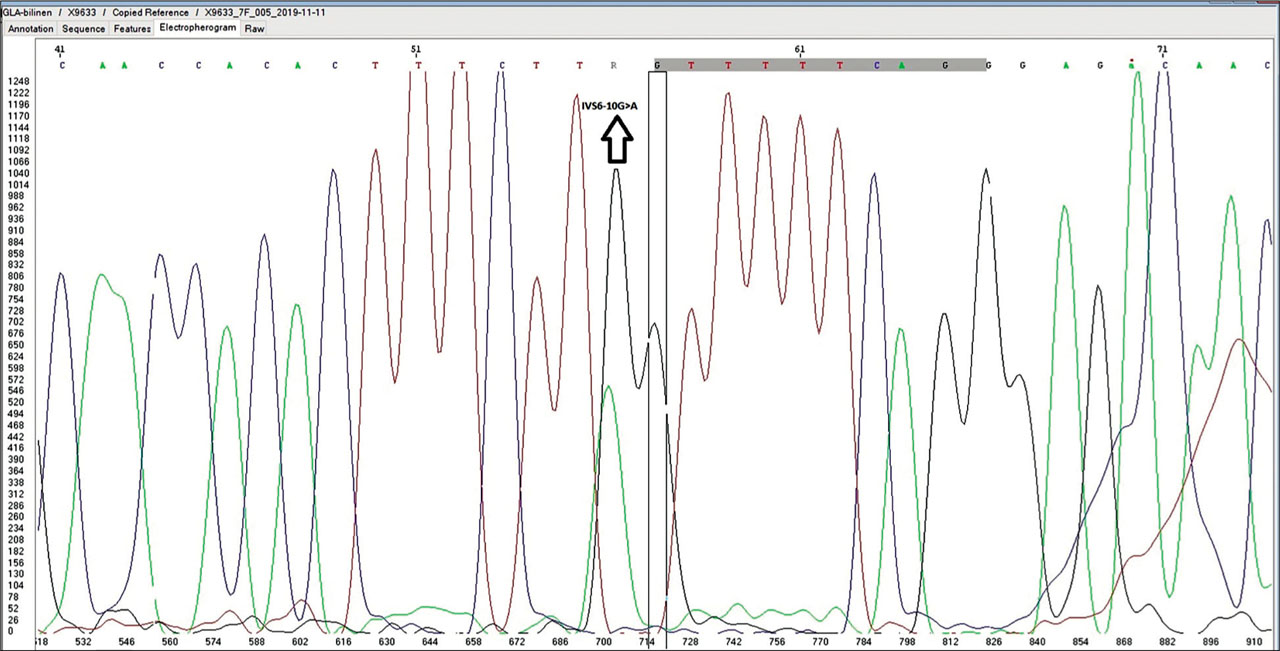
Figure 1.
Genetic analysis showed the NM_000169.2:IVS6-10G>A (c.1000-10G>A) mutation consistent with the diagnosis of Fabry Disease
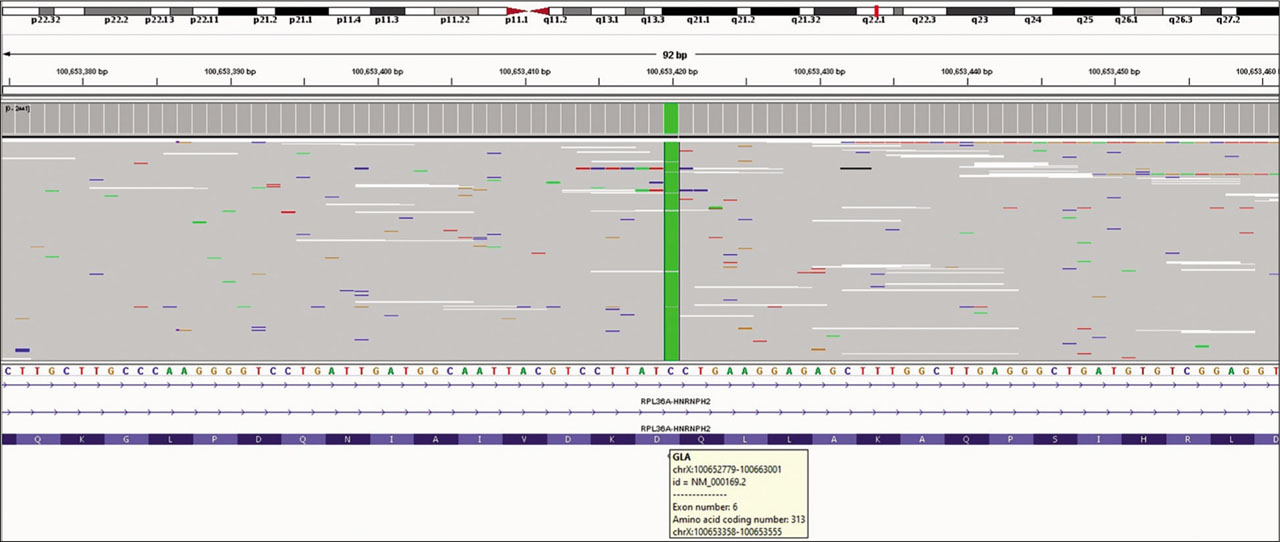
Figure 2.
Genetic analysis showed the NM_000169.2:c.937G>T (p.D313Y) (p.Asp313Tyr) mutation
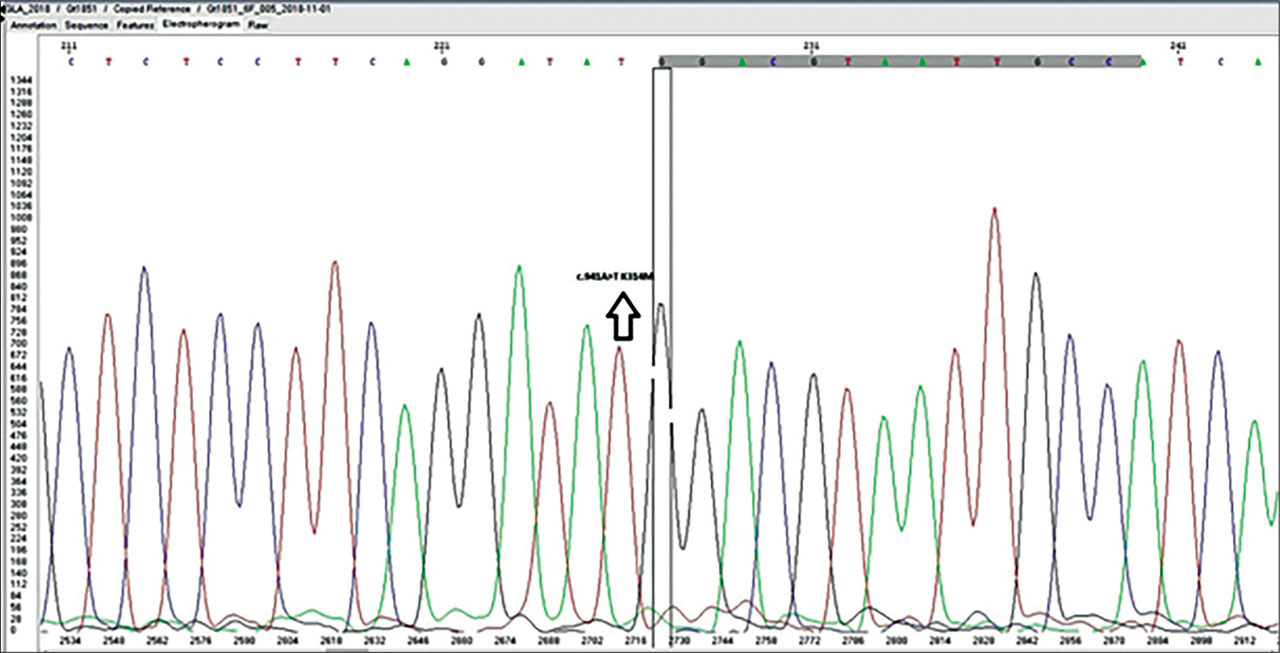
Figure 3.
Genetic analysis revealed the NM_000169.2:c.941A>T (p.K314M) (p.Lys314Met) mutation
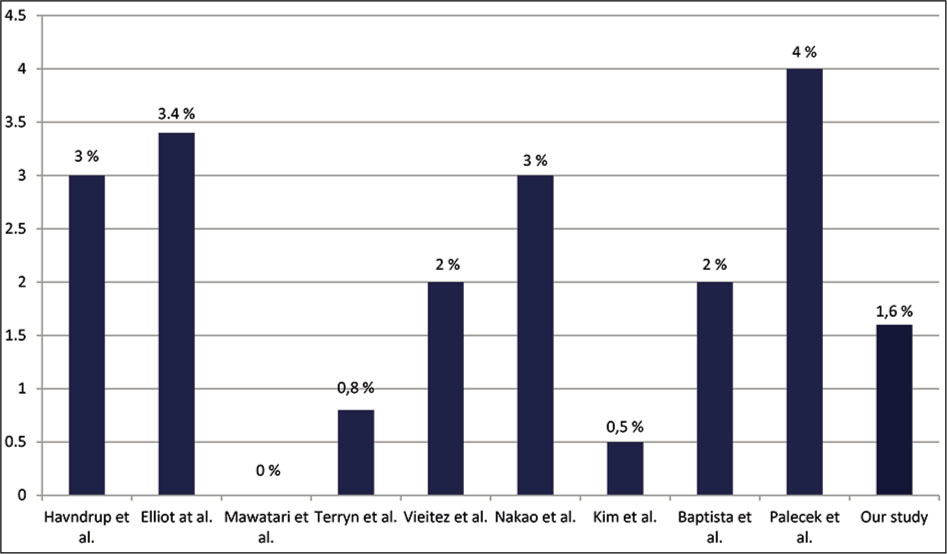
Figure 4.
Prevalence of Fabry disease in various populations in patients with unexplained LVH