
I. Introduction
In November 1859, all eyes in Key West were focused on the Stone Building, the new home of the U.S. District Court for the Southern District of Florida. 1 Inside, Judge William Marvin was presiding over a trial involving a most heinous murder, 2 one that had captivated the city for months. The victim was a New Orleanian named Vicente (routinely spelled “Beciente” in news reports) A. Morantes. 3 At the time of his death, Morantes had been the captain of the schooner Enterprise. 4 On trial were two members of his crew: Alejandro Carcer and Guillot Faustin Eloy. Testifying for the prosecution (through an interpreter) was fellow crew member Jose Maria Ortega.
By the time of the case, Marvin was a revered figure. Named to Key West's federal bench in 1839, when Florida was still a territory, he had been reappointed in 1847 when the Southern District was created. 5 In 1858, Marvin had published A Treatise on the Law of Wreck and Salvage, a 375-page work that had won him wide praise and cemented his reputation as a national expert in maritime law. 6
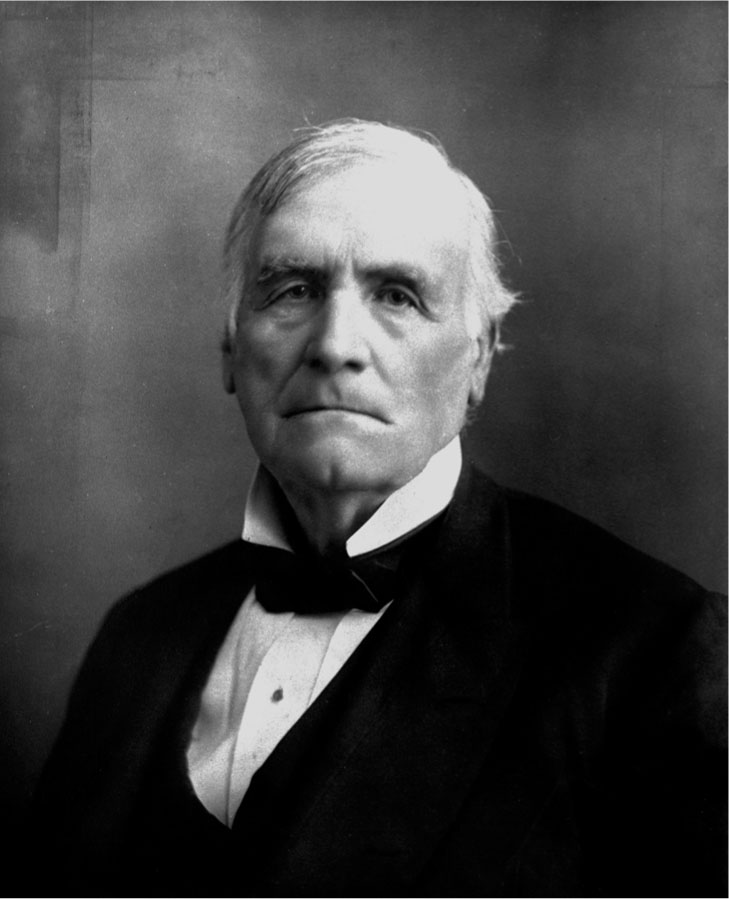
Judge William Marvin (c. 1865)
Photograph courtesy of the State Archives of Florida / Florida Memory GV000486
The government was represented by U.S. District Attorney John L. Tatum, who was being assisted by Walter C. Maloney, Sr. Little is known about Tatum, who had been appointed to his post just one year earlier at the age of 21. 7 In contrast, Maloney was a long-time Key Wester. 8
On the other side of the courtroom, Carcer and Eloy were being jointly defended by Winer Bethel and Samuel J. Douglas. Bethel was the county's probate judge. 9 Douglas was a former Florida federal judge. 10 Both men had assumed responsibility for the defense at Marvin's request. 11
Also in the courtroom were the 12 jurors who would determine whether the defendants were innocent or guilty. As Marvin later remarked, several were “seafaring men.” 12
Although headline-making in its day, the Enterprise case now has been all but forgotten. 13 Several factors account for this loss of memory.
First, the proceedings produced no published opinions.
Second, the official case file was lost in the Great Key West Fire of 1886. Possibly the work of Spanish arsonists, 14 the flames burned out of control for the better part of a day. 15 By the time they finally were extinguished, they had consumed two-thirds of the city's business district, caused $2 million in property losses (the equivalent today of $66.8 million 16), and thrown 4,000 people (constituting a quarter of the local residents) out of work. 17 The disaster also destroyed most of the court's records:
In 1885[, Key West's federal court] was moved to a building then belonging to Mr. John W. Sawyer, on the corner of Front and Fitzpatrick streets, which was destroyed in the fire of 1886. This was most unfortunate, as all the original papers and many records of important cases were lost. 18
One item that did survive the fire is the court's journal, which is titled General Minutes. 19 In it are 14 pages of handwritten notes about the Enterprise case. 20
Third, only certain issues of the Key of the Gulf, Key West's weekly newspaper, still exist. 21 Established in 1855 but shut down in 1861 because of its editor's pro-secession leanings, 22 the Key of the Gulf covered the Enterprise case with zeal. Thus, to piece the tale together and present it here, it has been necessary to supplement the surviving issues of the Key of the Gulf with articles from other contemporary newspapers. 23 Many of these latter articles reprint the accounts published in the missing Key of the Gulf issues either verbatim or with only minor editing.
II. The Murder
The events leading up to the trial began on June 5, 1859 (some sources say June 3d or 4th) when Morantes departed from Havana, Cuba, in command of the Enterprise. His crew consisted of seven men: mate George S. Heirup; a cook (whose name is unknown); and five seamen: Carcer, a Spaniard using the alias “Jaime Collado” who also went by the nickname “Frank”; Eloy, a 22-year-old Frenchman; Ortega, a deserter from the Spanish army; Charles (“Charlie” or “Charley”) Davis; and “Joe” (whose last name is unknown).
This motley band was exactly what the task at hand required. Based on information that would come out later, Morantes had given the crew the following cover story: they were sailing empty because they were going to “New Granada” to pick up a herd of cattle. Consisting primarily of present-day Colombia and Panama, New Granada provided a vague but plausible answer to anyone who might inquire about the Enterprise's intended destination. 24
The vessel's real mission, however, had nothing to do with livestock. As the crew eventually admitted, Morantes had been hired to pick up “a cargo of Indians” in Carthagena (now Cartagena), Colombia, and take them to Havana, where they were to be sold as slaves. 25
The voyage apparently got off to a bad start, for within just two days the crew had hatched a plan to kill Morantes. Newspapers later reported that the crew had mutinied because it was unhappy with the ship's food. 26
By now, the Enterprise was off the coast of present-day Pompano Beach (just north of present-day Fort Lauderdale) in South Florida. 27 Seeing an opportunity to carry out their plan, the crew decided to ground the vessel.
The scuttling occurred at 2:00 a.m. on June 8, 1859. At daybreak, a fierce struggle ensued that left both Morantes and Joe dead. After a quick burial, the six survivors broke into Morantes's belongings and found 122 “Mexican ounces” worth $1,952 28—the equivalent today of $57,068.43. 29 This money likely was meant to pay for the slaves that the Enterprise was supposed to pick up. 30
It would take several weeks for these events to become known publicly. The earliest existing account is an unsigned syndicated newspaper report with the dateline “Key West, June 18, 1859”:
On the morning of the 17th inst., a boat was seen (by schooner Delaware at anchor at Jupiter Inlet) putting in from the Gulf—came alongside the Delaware and had a crew of six men, who reported themselves a part of the crew of schooner Enterprise, ashore on the beach between Cape Florida [present-day Key Biscayne] and Jupiter Inlet; they stated that the captain of the schooner, named S. [sic] Morantes[,] had fallen overboard one hour previous to the schooner getting ashore, and that in attempting to save him, the vessel drifted in on the breakers and was lost. They acknowledged [having] robbed the trunks after the vessel was lost, but deny that the Captain met his death at their hands. Suspicions are so strong against them that Commissioner Brown [sic] has committed them for trial.
The Enterprise was fitted out at Havana for the purpose of transporting a cargo of Indians from Carthagena to Cuba, where they are made slaves of. The trade is exactly similar to the African slave-trade, except that the vessels and men engaged in it run no risk—never being overhauled by cruisers or searched by Custom House officials. The traffic has been going on for some years, and was patronized for a long time by the famous Francisco Marti, the nobleman fisherman of Havana. He used his fishing smacks for the purpose, and stole his Indians from the Yucatan and Campeachy coast.
The Enterprise went ashore on the 8th, and drove up high on the beach. She is dry at low water; being an old vessel, we doubt whether the wreckers will attempt to save her. 31
More details soon were added by a stringer for the New York Herald:
The Key West correspondent of the New York Herald, under date of June 29, gives the following account of a shipwreck and the death of a Captain, which looks [to] some like piracy and murder:
The United States revenue cutter William [sic] Appleton, Lieut. Com. Randolph, arrived [in Key West] on the 26th inst., from a cruise to the southeast coast of Florida. She brings the mate and two [sic] seamen of the schooner Enterprise, of New Orleans, lost on the 8th, on Hillsboro’ Inlet. The men are charged with the murder of Capt. Moriantes [sic], and the robbery of his trunks, and of running the vessel ashore after throwing the captain overboard.
They say that the vessel was bound from Havana to Carthagena, and that she was to bring a cargo of Indians, who were to be sold as slaves on their arrival at Havana; that when off Hillsboro’ Capt. M. accidentally fell overboard, and that while they were endeavoring to raise him the schooner struck [the reef]; that they, on finding the vessel would be a wreck, were obligated to abandon the captain to his fate; and that after getting the movables from the vessel ashore, they broke open the captain's trunk, took the specie and divided it equally among them.
At Jupiter Inlet they saw the United States schooner Delaware, and were taken on board. To Capt. Owen [actually Owens] they said nothing about the robbery of the money, but told the story of the Captain's death, and the vessel's loss. One of Capt. Owen's crew discovered a belt heavily loaded with money upon the person of one of them, and reported the fact. They were not arrested until Lieut. Randolph came up with his cutter, when Capt. Owen gave them into his charge, excepting two, who, fearing they were suspected of crime, had at night taken their boat and made their escape.
There are several very suspicious circumstances about the affair, which lead the authorities here to believe that murder as well as robbery has been committed. Commissioner Browne has had an examination and committed them for trial. Lieut. Randolph searched the men after the arrest, and found over $1000 in gold secured upon them. The two who escaped have gone up the West coast, and will no doubt be overhauled, as the cutter is on their track. 32
On July 2, 1859, the Key of the Gulf provided its own account of the crew's arrest:
On the 26th of June, the U.S. revenue cutter John Appleton, Lieut. Com. Wm. B. Randolph, returned to [Key West] from a cruise along the reef, bringing four of the crew of the schooner Enterprise, fallen in with at Cape Florida, and who were suspicioned with having murdered their captain.
The four men being arrested and brought before U.S. Commissioner J.B. Browne, for examination, it was ascertained that the schooner Enterprise, Capt. B.A. Morantes, sailed from Havana about the 4th or 5th of June, bound to Carthagena, New Granada, for cattle. On the third or fourth day after leaving Havana, a dispute arose between some of the crew and Capt. Morantes with regard to the [ship's] provisions. On that occasion one of the crew was heard to say: “Never mind, it will all be right soon.”
A day or two after this, the vessel was run ashore near Hillsborough, as it is believed intentionally, and the master most horribly murdered. It was stated that the vessel first struck the reef about 2 o’clock in the morning, (about the 8th of June,) and by daylight had drifted broadside on to the beach, so near, that it was not difficult to get ashore without a boat. About 7 o’clock two of the men—the cook and a Spaniard called Jose Maria—asked permission of Capt. Morantes to go along the beach to see if a settlement could be found, to which he consented, and they left.
Soon afterward, three others of the crew—called Charlie, Frank [i.e., Carcer] and Joe—went to the captain and asked permission to take the foresail out of the schooner and go on shore and put up a tent, to which he also assented. After the tent had been erected, the same three men returned to the schooner and asked permission to carry the provisions ashore. Capt. Morantes objected, saying that a vessel might come along at any moment and they could all go on board. This they seemed not to like, and after going forward, cursing among themselves, again returned to the Captain, when Charlie struck him with his fist. The Captain clinched him, and while in that position, Frank stepped up behind the Captain and stabbed him in the temple. He and Charlie then threw him overboard.
The Captain, being only wounded, endeavored, by keeping close under the vessel, to get out of the sight of his pursuers; but whenever his head would appear, they would throw iron pots or anything they could find at him. He then went out into deep water, but did not remain there long, before he approached the beach, with his hands crossed on his breast, begging them to spare him.
Frank went out in the water to meet him, giving him to understand at the same time that he would not further molest him, but as soon as he got to him he again stabbed him in the head; the Captain again went back into deep water. Charlie, Frank, and Joe then went on board of the vessel and lowered the stern-boat, and proceeded for the Captain, but the sea being rough, they capsized. Charlie and Frank jumped out, but Joe was caught under the boat and drowned.
Captain Morantes, with his hands crossed as before, came towards Charlie and Frank, begging them to spare him; but as soon as he got up to them, Frank stabbed him with a knife, and Charlie beat him over the head with an iron pump brake until he was dead. They then dragged him ashore and buried him, leveled the sand over the grave, and covered it with grass. They then got Joe's body, which was still under the boat, and buried it also.
After this they broke open the Captain's trunk and took out his money, in all about $1,800, and divided it among the crew, Charlie and Frank retaining the largest portion for themselves. After this, they all took to the boat, and proceeded up the coast until they fell in with the U.S. Light-house schooner Delaware.
They went on board [the Delaware], and after being there a few days Capt. Owen [sic] had good reason to believe that all was not right, and he arrested and sent them to Key West by the U.S. revenue cutter John Appleton. Previous to the arrest, Charlie and the cook made their escape in the [Delaware's] boat. Capt. Owen (Deputy Marshal for the occasion) is in pursuit of them with the Delaware, and it is to be hoped they will be caught and brough to punishment for this cold-blooded, horrible murder. They will all be committed for trial at the next term of the Court.
Capt. Morantes, the murdered Captain, was well known in this city and was a French Creole, a native of Louisiana, and was evidently bound for the coast of Africa. 33
In its July 9, 1859, issue, the Key of the Gulf printed the following correction to its previous reporting:
In an article last week giving an account of the loss of the schooner Enterprise and the murder of Capt. Morantes, we stated that the schr [sic] Delaware had gone in pursuit of the [two] fugitives [i.e., Davis and the cook], but this was a mistake. It was the U.S. schooner Florida, which went as far as Tampa but heard nothing more of them.
This morning, by order of the Court, [U.S.] Deputy Marshal [Frederick] Filer left for the scene of the wreck in the Revenue cutter John Appleton, for the purpose of disinterring and examining the body of Captain Morantes. 34
Elsewhere in the same issue, the Key of the Gulf's readers discovered a much more shocking piece of news—Heirup (the mate) was dead:
[Died], [i]n this city, on the 9th inst., of Pulmonary Consumption [i.e., tuberculosis], Mr. George S. Heirup, late mate of the schooner Enterprise. Mr. H. was on board of this vessel at the time of her wreck on the Eastern coast of Florida, near Hillsborough Inlet, and of the murder of her master [Morantes], by a part of her crew; but not a witness to this brutal and unprovoked affair.
He arrived here in very feeble health on the 26th of June, in company with others of the crew of the Enterprise, and was held in custody . . . until the charge against them could be investigated by the U.S. Commissioner [Browne]. We are pleased to state that in the examination before the Commissioner, the testimony produced entirely exonerates Mr. Heirup from any participation or knowledge of this outrageous act; and so well satisfied was the Commissioner of his innocence, that he was only held here as a witness, to give testimony in behalf of the United States, at the November Term of the Court.
Mr. Heirup we believe was a native of Belfast, Maine, where we learn he leaves a wife and family. It will be a satisfaction to them to know that although among strangers, he was kindly cared for by the officers who had [him] in [their] charge, and that his remains were followed to their last resting place by many of our good citizens. 35
On July 11, 1859, Mariano Alvarez, Spain's consul at Key West, briefed his superiors on the case:
The American coast guard cruiser Appleton arrived in Key West with four prisoners from the American schooner Enterprise. The schooner's captain, V.A. Morantes, left Havana on June 4 bound for Cartagena, Nueva Granada. The crew of the Enterprise ran the schooner aground near Hillsborough on June 8. Two or three of the crew members killed Captain Morantes and stole $1,800 from his trunk. The instigators of the crime used some of the money to bribe the other crew members, who [then were] swor[n] to secrecy.
Two Spanish crew members were arrested for the murder of Captain Morantes. One of the prisoners is J.M. Ortega, a native of Spain who was brought to Key West. He claims he is innocent of any wrongdoing and says he never was aboard [i.e., atop] the Enterprise. Ortega is twenty years old and lives in Havana. When questioned, he said he did not know who had killed the captain because he was below deck during the murder.
The other prisoner says his name is Jaime Collade [sic] [i.e., Carcer], but I do not think this is his real name. He stated that he was from Alicante [in eastern Spain], but his accent sounds like he is from Andalucia [in southern Spain]. He may be one of the ringleaders of the mutiny.
The authorities are searching for the body of the captain buried somewhere along a beach in Hillsborough. Captain Morantes was popular among the residents of Key West. He was a native of France [sic] and a Creole from Louisiana. He leaves a wife and children [sic] in New Orleans. 36
In its July 14, 1859, issue, the New Orleans Daily Picayune published its own version of the gruesome events:
The supposed murder of Capt. Moriante [sic], of the schooner Enterprise, and a native of New Orleans, has been proved too true by the confessions of the mate and one of the crew. All the murderers but two are in custody. By the confession of Gileos [sic] Faustina [sic] Elole [sic], a Frenchman and one of the seamen, the captain was murdered after the vessel had been run on shore. After the murder, one of the crew was drowned by the upsetting of a boat.
The men have been examined by the U.S. Commissioner, J.B. Browne, Esq. In the absence of the District Attorney[, J.L. Tatum, Esq.,] the United States was represented by W.C. Maloney, Esq. The examination was a lengthy one and we are unable to give it verbatim. It seems, however, that some dispute had occurred on the voyage about provisions, and ill feeling prevailed. The vessel was run ashore by one of the disaffected ones.
Sometime after striking [the reef], three of the men demanded permission to go ashore and take a sail to build a tent, but asking also for provisions, they were denied and a scuffle ensued in which the captain was stabbed and then thrown overboard. He was not killed outright, but recovered and got under the stern of the vessel, but was soon drawn thence and out into deep water. The murderers followed him in the boat, and after repeated stabs and strokes upon the head with an iron pump brake he was dispatched. His body afterwards coming on shore, was buried. The men then broke open his trunk, divided about $1800 among themselves and thence in the boat left the wreck.
They fell in off Cape Jupiter with the U.S. schooner Delaware, from which two of the party afterwards escaped. The rest were arrested by Lieut. Randolph, of the Revenue cutter Appleton, and brought to [Key West]. They will be tried in November. 37
In its July 23, 1859, issue, the Key of the Gulf reported that Morantes's body, as well as Joe's, had been located:
The Key West Key of the Gulf of the 23d ult. announces that the health of that place is good and the weather delightful. The same paper gives the following account of the examination and burial of Capt. Morantes, of the schooner Enterprise, who was barbarously murdered recently by his crew:
The United States revenue cutter, John Appleton, Lieutenant Commanding [sic] Wm. B. Randolph, arrived on the night of the 21st inst., from the wreck of the schooner Enterprise, ashore “high and dry” on the beach, forty miles north of Cape Florida lighthouse.
In our issue of the 2d inst., we gave an account of the running ashore of this vessel and the murder of her captain (B.A. Morantes) by a part of the crew, which one of them [Eloy], a Frenchman by birth, described before the United States Commissioner; and on the 9th we stated that Lieut. Randolph and Deputy Marshal Filer, with the Frenchman, had started for the scene of the murder for the purpose of examining the body of Capt. Morantes, etc., and we now announce their return after having accomplished the object of the mission.
Lieut. Randolph informs us that the witness fully sustained the evidence he gave before the Commissioner, by going directly to the graves. The seaman's (Joe) was in the usual form, with head and footboards; the Captain's was levelled and smoothed over and covered with grass-sod. On opening it the body was found in a perfectly nude state, the face about twenty inches below the surface and the knees six or eight; the body had evidently been forced into a hole much too short for it, as it was contracted and distorted. The body was recognized as that of B.A. Morantes, by both Mr. Filer and Lieut. Randolph, to whom he was well known.
They found behind the lower part of the right ear a gash which had been made apparently with a knife, extending to the collar bone, and about three inches deep; right eye cut; skull not broken, but the head had the appearance from the blood shot condition of the veins to have received some hard blows; one upper tooth on the right side of the mouth gone. The lower part of the body, which was placed uppermost in the grave, was so much decomposed that no traces of violence could be distinguished on the same.
Lieut. Randolph and Deputy Marshal Filer re-interred the body, giving it the rites of Masonic burial. 38
On August 6, 1859, Alvarez (the Spanish consul) again briefed his superiors on the case:
A French sailor [Eloy], who was a crew member on the Enterprise, testified that he knew where Captain Morantes's body was buried. The sailor was taken on a coast guard cutter to the scene of the crime in Hillsborough. The authorities also located the body of a sailor named Joe who had drowned when he was washed aboard by heavy seas during the mutiny.
When the coast guard officials arrived at the beach, the French sailor pointed out the site where Captain Morantes had been buried, and they dug up his body. The captain of the coast guard cutter inspected the corpse and noted in his report that Captain Morantes had been stabbed several times with a knife and his throat had been cut. Captain Morantes had a number of bruises on his head and body from a severe beating. Owing to the state of his body's decomposition, the officials present decided to rebury him at that same site according to Masonic rites.
One of the prisoners [Heirup], a warrant officer from the Enterprise, died in jail, and two other criminals [Davis and the cook] have not been captured yet. The two Spanish sailors [Carcer and Ortega] who were implicated in the crime are in jail here, and one will probably be hanged. 39
On the same day that Alvarez sent his report to his superiors, Joseph T. Crawford, Great Britain's Acting Consul-General in Havana, forwarded the following note to Lord John Russell, Great Britain's newly installed Secretary of State for Foreign Affairs:
The schooner “Enterprize,” [sic] which sailed from this port on the 3rd of June last, was run ashore on the coast of Florida by the crew, who murdered the Master and plundered the vessel, but some of them, who had proceeded in a boat to a lighthouse vessel, representing themselves as shipwrecked seamen, were arrested and sent for trial to Key West by the United States’ revenue-cutter “John Appleton.” 40
III. The Grand Jury
On September 30, 1859, Marvin issued an order commanding two dozen local citizens to come to the U.S. courthouse on Monday, November 7, 1859, for possible appointment as grand jurors. 41 On October 31, 1859, U.S. Marshal Fernando J. Moreno 42 advised Marvin that all but one of the 24 had been located and served with a summons to appear. 43
At 10:00 a.m. on November 7th, with Marvin on the bench, Moreno called the list, and 19 of the 24 answered “present.” 44 After Richard R. Roberts was excused, 45 the names of the remaining 18 were placed in a hat and drawn one by one. 46 The first name to come out was Daniel Davis, who was designated the foreman. 47
On the following day (November 8th), Marvin excused four of the grand jurors from further service. 48 Carcer and Eloy then were brought into the courtroom and explained that they did not have counsel. 49 In response, Marvin appointed Bethel and Douglas as the pair's lawyers and adjourned the grand jury until Thursday, November 17th. 50
On Saturday, November 12th, Carcer and Eloy were back in court. While Eloy pleaded “not guilty” to the charges against him, Carcer's indictment was quashed because of the confusion surrounding his identity. 51 The men then were sent back to their cells. 52
On November 17th, the grand jury returned indictments for murder against Carcer and Eloy. 53 Both immediately entered pleas of “not guilty.” 54 With these formalities over, Marvin adjourned the proceedings and ordered the trial to begin at 9:00 a.m. on the following Monday. 55
By now, it was obvious that the trial would be proceeding without Morantes's actual killer (i.e., Charlie Davis). As a result, the case's style was changed from United States v. Carcer, Eloy, and Davis to United States v. Carcer and Eloy. 56
IV. The Trial
On Monday, November 21st, Carcer and Eloy's trial began with jury selection. 57 After interviewing 55 potential jurors, a 12-man panel was seated. 58 Next, Peter Crusoe was “sworn as Interpreter for the Court, Jury, bar and witness[es]”; 59 three bailiffs (E.A. Coste, H.B. Dailey, and William Fine) were appointed “to attend the Jury”; 60 the jurors were “charged . . . as to their duty”; 61 and U.S. Marshal Moreno was ordered to “furnish the Jury and Bailiffs with their meals.” 62 The proceedings then were adjourned to the next day. 63
The trial lasted two days (November 22nd–23rd), at the end of which the jury, after three hours of deliberation, found both Carcer and Eloy guilty. 64
In its December 10, 1859, issue, the Key of the Gulf published a detailed summary of the trial. Although most of the testimony confirmed what already had been reported by the press, the trial helped to straighten out the case's timeline:
During the last session of the Grand Jury of this place, a bill of indictment was found by them against Alejandro Carcer and Guillot Faustin Eloy, part of the crew of the American schooner Enterprise, charging them with the murder of B.A. Morantes, captain of said schooner.
Their trial commenced on Monday the 21st of November last, before the U.S. District Court, Judge Wm. Marvin presiding.
For the prosecution appeared the District Attorney, Mr. John L. Tatum, assisted by Mr. Walter C. Maloney. For the defense, Messrs. S.J. Douglas and Winer Bethel.
The first and principal witness brought forward by the prosecution, was Jose Maria Ortega, who testified as follows:
Is 21 years of age. Was born in old Spain, belonged to the Spanish army in Cuba, from which he deserted, secreting himself on board the schooner Enterprise, then lying in the harbor of Havana. She sailed from thence on the 5th of June last, at which time there were on board eight persons in all, viz: Capt. Morantes, the mate [i.e., Heirup], and crew, consisting of Charlie, Joe, Alejandro [i.e., Carcer], Guillot [i.e., Eloy], the cook and himself the witness.
At about 2 o’clock in the morning of the third day out, the vessel ran ashore on the coast of Florida. At daylight, witness and cook went ashore to look for houses. Returned soon after, unsuccessful. After breakfast while they were all seated on deck, Charlie rose and asked of the mate permission to kill the captain. The mate shrugged his shoulders and went below. Charlie then went behind the captain, who was seated on the binnacle [a waist-high stand housing the ship's compass], and with his open hand slapped him on the cheek. Alejandro then attacked him with a knife, cutting him severely over the temple. Joe and Guillot then took the captain up, and threw him overboard. They then all went ashore.
Joe and Guillot soon return[ed] on board [and] threw some iron pots at the captain in the water; one of which struck him on the head. The captain, however, continued swimming, dodging from one side of the vessel to to the other to avoid the blows. Soon after Charlie and Alejandro returned on board. Alejandro said, “If you wish to kill the captain, why kill him at once!” The captain begged for his life, telling Joe to remember that he (Joe) had a wife and children as well as himself.
They then lowered a boat; Joe, Charlie and Guillot got in, and pushed off in pursuit of the captain, who now began to swim out towards the deep sea. The boat had scarcely left the ship, when she was capsized [by] a heavy sea; Charlie and Guillot saved themselves, but Joe being caught underneath the boat, was drowned. Then Guillot taking a rope made a noose in it, and threw it at the captain, that he might catch him, but did not succeed. Soon after, Charlie, taking in his hand a stick of wood, called a pump-brake, waded into the water, and on reaching the captain, struck him several heavy blows on the head; then taking him by the arm, he pulled him ashore, dead. He was immediately buried by the cook and himself (the witness), the grave having been already dug.
Charlie, Guillot and Alejandro then drew Joe out from under the boat, took him ashore and rolled him in a barrel, trying to bring him to, but to no purpose—he was dead. All remained that day ashore, having brought provisions from the vessel. The next morning, the mate, (who during the scene of the murder, had been shut up in the cabin,) came ashore, and recommended them to bury Joe. They did so, the mate accompanying, and ordering them to take off their caps, while he read prayers. The next day Alejandro broke open the captain's trunk, and of the money he there found, gave each man fourteen gold doubloons.
About eight days after, they all put to sea in the boat, cruised about three or four days and were picked up by the U.S. schooner Delaware.
The second witness called, was Charles R. Cook, who testified that he was then mate and navigator of the U.S. schooner Delaware. While lying off Jupiter, picked up six men in a boat, who reported themselves as the mate, cook, and four seamen, belonging to the schooner Enterprise. They said that the captain of said schooner had been knocked overboard by the main-boom, and drowned; the schooner afterwards ran ashore. They then delivered the papers of the Enterprise to the captain of the Delaware. At evening we got underweigh [sic—now spelled “underway”] and started for Cape Florida. Next day [we] arrived at the wreck, which they pointed out. She lay broadside to the beach, with sand so banked up on the inside, that I could walk ashore. [We] [t]ook on board [the] captain's trunk, chronometer and other things belonging to the vessel. A day or two after two of the men, viz., Charlie and the cook, stole a boat from the schooner and escaped. This aroused suspicion. We searched the rest, and found fourteen doubloons on each. Then got irons from on board the Revenue cutter [John Appleton] lying at Cape Florida, and ironed them. Two days after delivered them into the charge of Lieut. Randolph commanding said Revenue cutter, by whom they were brought to Key West.
Next witness was Lieut. W.B. Randolph, who after testifying as to the receipt and delivery of said prisoners to the proper authorities at Key West, proceeded to say during July last, he left Key West to visit the wreck of the Enterprise, accompanied by Mr. Frederick Filer, and Guillot, one of the prisoners. On arriving there Guillot pointed out the grave of the captain. On disinterring his body, found it so much discomposed, that it could not be taken out. The hole was too short for the body, the knees being doubled up; recognized it, however, as the body of Capt. Morantes, whom I had seen repeatedly in Key West. Head and face showed the marks of blows, one cut about two inches long, near the right ear.
[The] [n]ext witness was John P. Baldwin, Mayor, who testified to having received [the] prisoners, papers of [the] vessel &c., from Lieut. Randolph. Recognized said papers, when produced in Court.
Two others were then called, viz: Jose Garcia, and Manuel Farina, residents of Key West. They testified to having known [the] deceased intimately, and when he was born, his personal appearance, manner of life, &c.
The last witness called by the prosecution was Hubert H. Booley, now lying in jail, charged also with the crime of murder. He testified to certain declarations made to him by the prisoners while in jail, how that Guillot said that he and Ortega, the witness, were both innocent. That he, Guillot, did not dare to assist the captain. Frank [i.e., Carcer] also said that he would never have stuck the captain with the knife, if it had not been for Charlie.
No witnesses being brought forward by the counsel for the defense, Mr. Maloney proceeded to address the jury on the side of the prosecution. He was followed by Messrs. Bethel and Douglas, the District Attorney, Mr. Tatum, concluding. Then[,] after a short charge by the Judge, [during which he] recapitulated the evidence [] and instruct[ed] the jury as to the applicability of the law to the case, the jury went out [] [and] were absent about three hours[.] [W]hen they returned [they gave] a verdict of “Guilty,” against both prisoners.
Afterwards a motion was made for a new trial on various grounds of supposed misrulings by the Court, but was denied. And on Saturday [December] 3d . . . the prisoners were brought in and the Court pronounced the following sentence:
After a full and fair trial before a jury, composed in part of seafaring men like yourselves, and in which you have had the assistance of two zealous and able lawyers, you, Alezandro [sic] Carcer, and you, Guillot Faustin Eloy, have been found guilty of the murder of Beciente A. Morantes, the master of the vessel on board of which you, at the time of the murder, composed a part of the crew. The punishment for this crime is, by the laws of all, or nearly all, civilized nations, death.
The President of the United States has authority, by the Constitution and laws, to pardon you or to commute your sentence, and time will be given to you to make application to him for that purpose. But it is my duty to inform you, lest you should be beguiled by false hopes, that you have no reasonable ground to expect his interposition in your behalf. He will, undoubtedly, in your case, permit the law to take its course.
But, although you have no reason to hope for the President's pardon, yet, notwithstanding the magnitude and enormity of your crime, you may, nevertheless, hope for pardon from that Almighty and Merciful Being, whose government and laws you have so greatly despised. You are not beyond the reach of His mercy. Your religion teaches you that God's forgiveness may be extended to you, upon the condition of deep, earnest, and sincere contrition and sorrow for the past, and faith in the atonement His Son has made for us all.
To enable you to seek His pardon, as well as to apply to the President, if you should think proper to do so, time will be allowed you until Monday, the 9th of January next. In the meantime, any priest or minister of the gospel whom you may desire to see, will be permitted to visit you in your prison. You will also be allowed to write to your friends aboard, and the Marshal will see that your letters are duly mailed.
Although you are strangers in this community, you have no enemies here. You are in a Christian country, and the courtesies and charities, which belong to Christian churches, will be extended to you in your great extremity.
The sentence of the law is, that you, Alezandro [sic] Carcer, and you, Guillot Faustin Eloy, be taken to the jail of the county from whence you came, and from thence to the place of execution, on Monday, the 9th day of January next, and between the hours of ten o’clock in the forenoon and twelve o’clock at noon of that day, on the public common surrounding the jail, you be hanged by the neck until you are dead; and may God have mercy on your souls! 65
The Key of the Gulf ended its story by reporting on Ortega's subsequent separate trial:
Jose Maria Ortega, the witness in the above case, was tried in this Court on Tuesday [November] 29th . . . for grand larceny—having in his possession a portion of the money said to belong to the Enterprise, being his portion of the division after the murder—and was acquitted. 66
V. Aftermath
News of Marvin's sentence spread rapidly, although the details sometimes got muddled. In its reporting, for example, the Pittsfield Sun (a Massachusetts weekly) “forgot” about both Joe and Ortega:
Two sailors, a Spaniard [Carcer] and a Frenchman [Eloy], have been convicted at Key West of the murder, in June last, of Capt. B.A. Morantes of New Orleans, master of [the] schooner Enterprise, of which they formed part of the crew. . . . Davis and another [the cook] escaped at Tampa, a third [Heirup the mate] died at Key West, and the other two [Carcer and Eloy] were disposed of as above mentioned. 67
Similarly, the Daily National Democrat, a newspaper in Marysville, California, misstated what had happened to Carcer and Eloy's fellow crew members:
In the United States Circuit Court of Key West, Florida, on the 23d November, Aleijandro [sic] Carcer and Geuillot [sic] Faustin Eloy, two of the crew of the schooner Enterprise, were convicted for the murder of B.A. Morantes, the captain of the schooner. After the captain was killed, his money was divided among the crew. The other mutineers, six in number, had not been arrested. 68
In his autobiography, Marvin makes no mention of the case. 69 A 2009 profile of Marvin, however, begins:
William Marvin was a hanging judge. So learned Alejandro Career [sic] and Guillot Eloy of the American schooner Enterprise when they snapped and swung for the murder of Captain B.A. Morantes in 1859. Known as a legal lion and the only moral force in southern Florida, Federal Judge William Marvin played by the book. And when there was no book, he wrote it, authoring Law of Wreck and Salvage as he imposed order on those who lived off shipwrecks in the Florida Keys. 70
In fact, Eloy did not hang. Three weeks after Marvin pronounced sentence, President James Buchanan issued the following order:
James Buchanan,
President of the United States of America.
To all to whom these presents shall come, Greeting:
Whereas, it appears that at a term of the District Court of the United States of America, for the Southern District of Florida, begun and holden at Key West, within and for said District, on the [left blank in original] day of November, in the year of our Lord one thousand eight hundred and fifty-nine, Guillot Faustin Eloy, one of the crew of the American Schooner “Enterprise” was convicted of the murder of Beciente A. Morantes, the master of the said Schooner, and on the [left blank in original] day of [left blank in original] in the same year, was sentenced by the said Court to be hanged on the ninth day of January in the year of our Lord one thousand eight hundred and sixty; —
And whereas, the said convict has besought me to commute his said sentence of death to some punishment of less severity, and has alleged in his behalf that he was surrounded on board of said Schooner “Enterprise” by a band of determined and lawless murderers, and in fear of his own life should he resist them, and that any participation he may have appeared to have taken, in the murder of the said Beciente A. Morantes, was from a desire to save himself, and not from a desire to take the life of the said Morantes, and that he voluntarily made known the fact that the said Morantes had been murdered, and voluntarily accompanied the [Deputy] Marshal of the United States to the place where the murder had been committed, and pointed out the spot where the body of said Morantes was buried;
And whereas, it has been stated to me by the Judge before whom the said Guillot Faustin Eloy was tried and convicted, that the said convict did voluntarily make known the fact that the said Morantes had been murdered and did willingly go with the [Deputy] Marshal and point out the spot where the body of the said Morantes was buried;
And whereas, Samuel J. Douglas and Winer Bethel, the Counsel appointed by the Court to defend the said Guillot Faustin Eloy, have stated to me in writing, that the facts set forth in his petition are substantially true, and have earnestly besought me to commute his sentence;
Now therefore, be it known, that I, James Buchanan, President of the United States of America, in consideration of the premises, and for other good and sufficient reasons me thereunto moving, have commuted and by these presents do commute the sentence of death pronounced by the said Court upon the said Guillot Faustin Eloy to imprisonment for seven years, that is to say, I have granted, and do hereby grant unto the said Guillot Faustin Eloy a pardon, so as to remit to him the penalty of death, on condition that he undergo an imprisonment at hard labor in the Penitentiary of the District of Columbia for and during the term of seven years.
In testimony whereof, I have herewith signed my name and caused the Seal of the United States to be affixed.
Done at the City of Washington, this twentieth day of December A.D. 1859, and of the Independence of the United States the Eighty-fourth.
James Buchanan
By the President:
Lewis Cass,
Secretary of State. 71
Once again, the press was quick to report this latest development. In its December 24, 1859, issue, for example, the Pittsburgh Post informed its readers:
Guillot Faustin Eloy, one of the several persons convicted in the United States court for the [Southern] district of Florida, for the murder of the master of the American schooner Enterprise, and sentenced to be hanged on the 9th of January, has had his sentence commuted, by the President, to imprisonment in the penitentiary of the District of Columbia for the period of seven years. It appears from papers laid before the President, that Eloy only participated in the murder through fear of his more criminal companions on board the vessel, and that he stated the facts of the murder to the authorities of the law at Key West, and voluntarily accompanied the [deputy] marshal to the scene of the tragedy and pointed out the spot where the captain was buried. The prisoner is a Frenchman, twenty-two years of age. 72
In its January 7, 1860, issue, the Key of the Gulf expressed its displeasure with Buchanan's decision to spare Eloy's life:
The President of the United States has been pleased to commute the sentence of [] Guillot F. Eloy convicted as accessory to the murder to Capt. B.A. Morantes of the schooner Enterprise from death, to imprisonment for seven years, in the Penitentiary of the District of Columbia.
The same steamer which bro’t [sic] this document by a strange coincidence brought as a passenger [Adele Morantes,] the widow of Captain Morantes[,] on her way to Havana to arrange the affairs of her deceased husband.
We do not share in the sympathy manifested in behalf of this convicted felon, and we are glad to believe that it is confined to a few only; who by the influence of their positions, nevertheless, have counselled the President to an act which nineteen twentieths [95%] of this community condemn.
Our sympathies are with the disgustingly mutilated remains of the deceased and his surviving widow and daughter.
We have been told that the steamer Isabel refused compensation for the passage of this afflicted lady, and that she has received like kindnesses from other managers of other public conveyances on the route hither. Gentlemen, you have your reward in the consciousness of a charity not misplaced. 73
To the modern reader, Buchanan's decision to pardon Eloy likely seems inexplicable. During his presidency (1857–61), however, Buchanan showed generosity to a wide range of persons (150 in all). 74 Notable recipients included Mormon president Brigham Young (for instigating the 1857–58 “Utah War”) 75 and former Pennsylvania state judge Daniel B. Vandersmith (convicted by a federal court in 1859 of two counts of forgery). 76
Likely also difficult for a modern reader to understand is Buchanan's directive that Eloy serve his sentence in the District of Columbia penitentiary. As has been explained elsewhere, however, in the late 1850s the D.C. penitentiary, which was under-utilized, began accepting prisoners from other jurisdictions to help cover its operating costs. This delighted Congress, which, as the facility's overseer, was on the hook for any financial shortfalls. 77 Thus, Buchanan's decision to send Eloy to the D.C. penitentiary was just a bit of frugal bookkeeping.
On March 14, 1860, the New York Daily Tribune reported that Eloy was on his way to the nation's capital to begin serving his sentence:
The steamship Isabel has arrived [here in Charleston, South Carolina] from Havana 10th inst., via Key West.
Among the passengers are the [Maximillian] Maretzek opera troupe and Guillott [sic] V. [sic] Eloy, in charge of the Marshal at Key West, en route to the Penitentiary at Washington, having been convicted of being [an] accessory to the murder of Capt. Morantes. 78
As matters turned out, this was the last time any newspaper would report on Eloy's whereabouts. 79
In contrast, Carcer did hang. In its January 14, 1860, issue, the Key of the Gulf reported:
Alejandro Carcer suffered the extreme penalty of the law on the 9th inst. At 11 a.m., he was taken from the Jail by the U.S. Marshal and his assistants, and from thence under guard of the U.S. troops to the gallows, in the rear of the same. The prisoner was attended by two Catholic clergymen, one of them a Spanish gentleman, invited from Cuba by the Marshal for the purpose.
The appearance of the prisoner was anything but pleasant—his conduct and bearing indicating utter abandonment and debasing recklessness, extremely repulsive.
He ascended the ladder on a run, and until nearly the last moment appeared very much excited and indulged in a few violent invectives; he however thanked the officers for their kindnesses, said he forgave all, and asked to be forgiven. When placed on the trap he became as fixed as a statue; and when the drop fell, died almost instantly. He remained suspended about thirty minutes, and was then taken down and buried.
This is the only execution that has taken place on our Island for over twenty years past, and we were gratified to find the number of spectators much smaller than was expected, but regretted to see that it was in part made up of females—sad evidence of immodesty and morbid curiosity—gazing unmoved upon the revolting spectacle. 80
It is not known what happened to Charlie Davis (the crewman who killed Morantes) or the cook. After their furtive escape from the Delaware, no further mention of them turns up. This suggests they either: (a) drowned; or (b) never were caught. 81
VI. Conclusion
Despite my best efforts, there is still much we do not know about the Enterprise case, including: 1) who planned the voyage and outfitted the ship?; 2) where was the vessel actually headed?; 3) why did Morantes have so much gold in his trunk (and where did it come from)?; 4) did the crew really commit mutiny, and kill their captain, because of bad food?; 5) what became of Ortega after he was exonerated?; 6) did Eloy serve his full sentence, and if so, what happened to him following his release?; and, 7) how did Davis and the cook manage to elude capture? It is, of course, unlikely that we will ever learn the answers to any of these questions.
Many thanks are due to Brad Bertelli, the curator of the Florida Keys History and Discovery Center; Sara E. Brewer, an archives specialist at the National Archives (Atlanta); and Crystal M. Toscano, the reference librarian of the New-York Historical Society. I also wish to thank Dr. Cheryl L. Booth and Robert J. Beharriell of the NSU Panza Maurer Law Library.