Have a personal or library account? Click to login
The Crucial Role of Thermodynamic Gates in Living Systems Cover
By: David W. Snoke  
Open Access
|Dec 2024

Figures & Tables

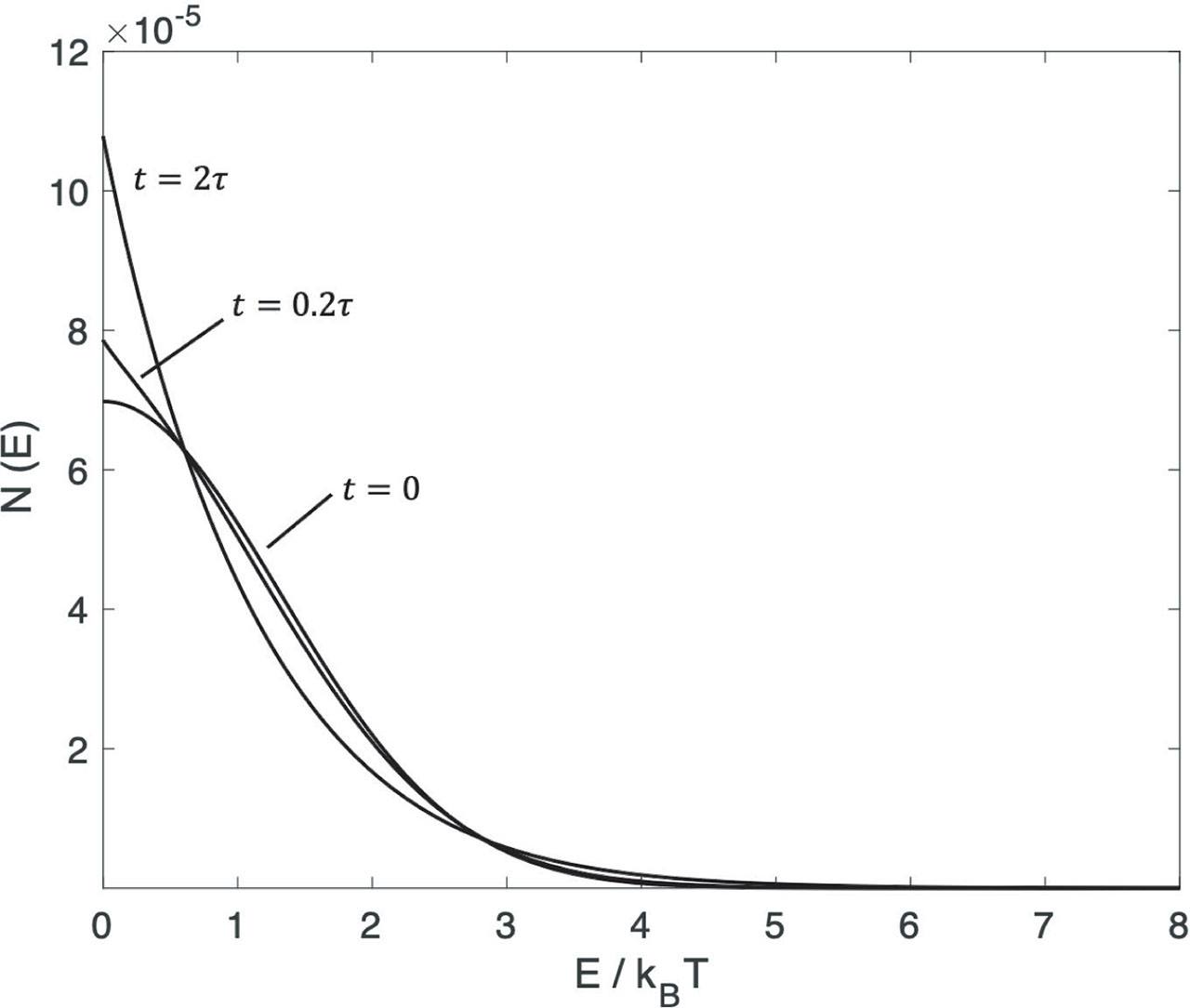
Figure 1.

The solution of the quantum Boltzmann equation for various times after starting in a nonequilibrium initial state, for a low-density, two dimensional gas with collisional interactions. The times are given in terms of τ, the average collision time. Image credit: Hassan Alnatah.
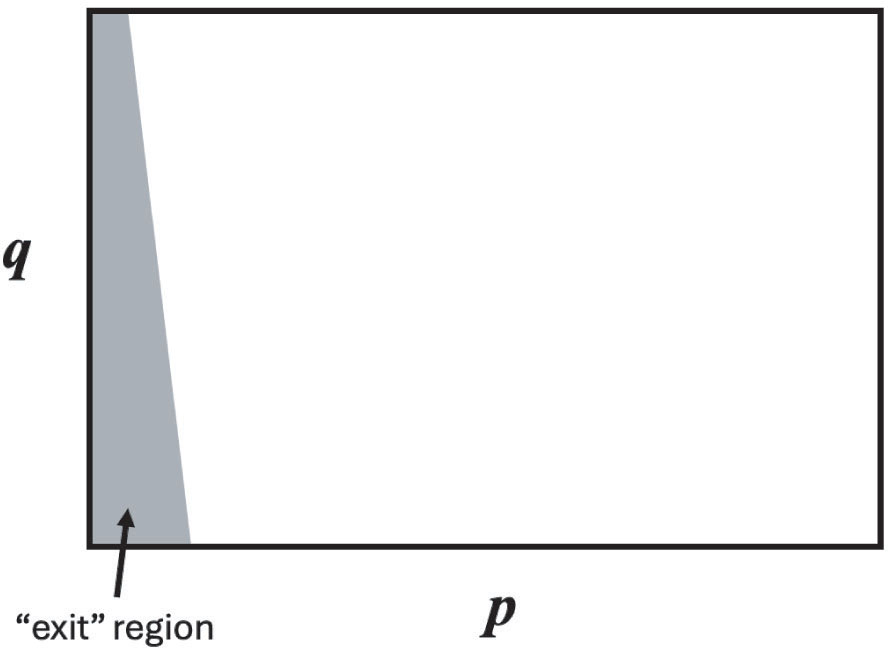

Figure 2.

A generalized parameter space for a non-closed subsystem, with parameters p and q, in which only certain ranges of parameter values, which we can call “surfaces,” correspond to transition into or out of the subsystem.
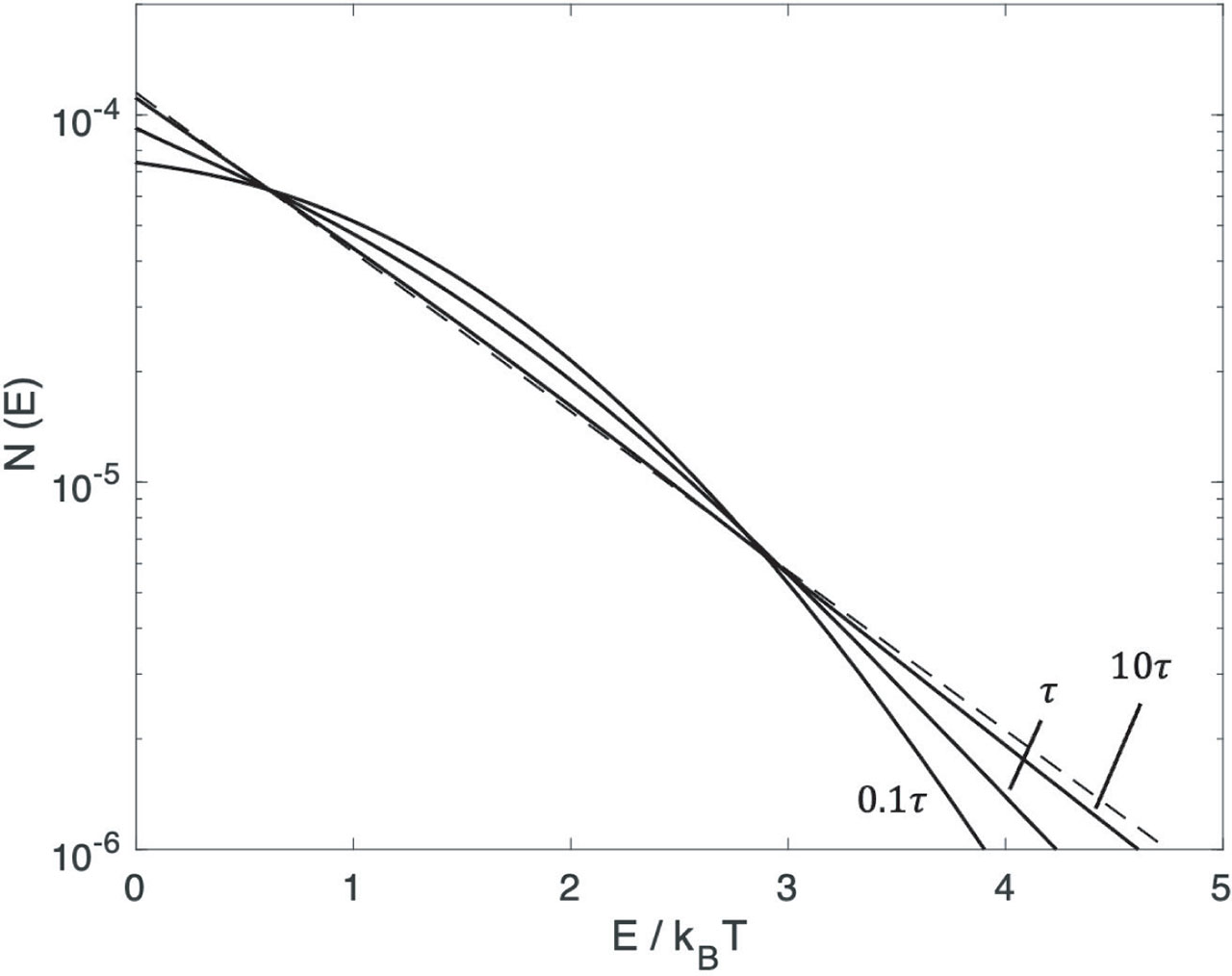

Figure 3.

Log plot of the solution of the quantum Boltzmann equation for collisional equilibration in the t → ∞ limit, for a low-density, two-dimensional gas, for three values of the leakage time to the outside of the system, offset by a steady-state replenishment with a N(E) profile of the same form as the initial state of Figure 1, to keep the total density constant. The solid lines correspond to different values of the leakage time in units of the average collision-scattering time, τ. The dashed line corresponding to the infinite-lifetime case is equal to a thermal Maxwell-Boltzmann distribution, N(E) ∝ e−E/kBT. Image credit: Hassan Alnatah.
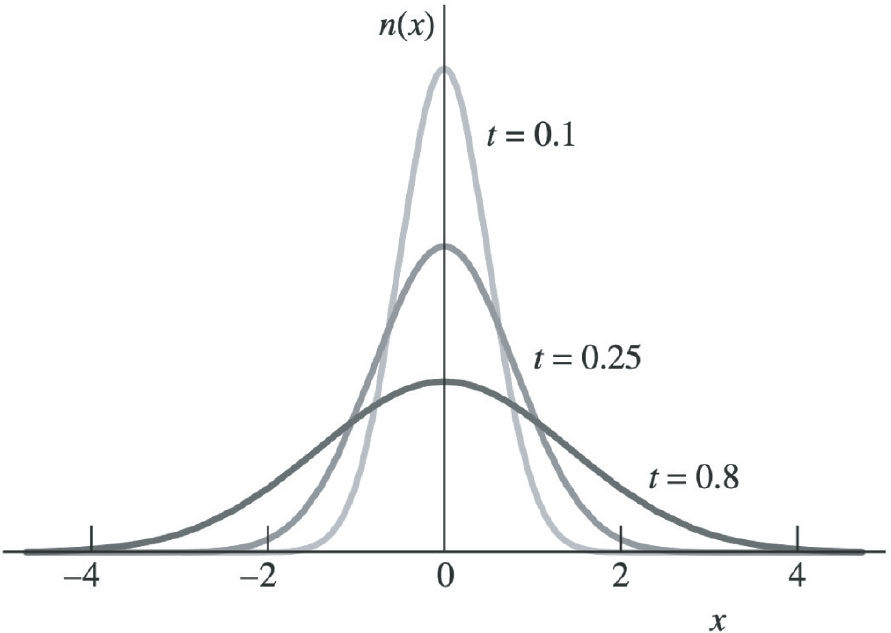

Figure 4.

The solution of the diffusion equation (15) for a nonequilibrium initial state, for D = 1. From Ref. [14].
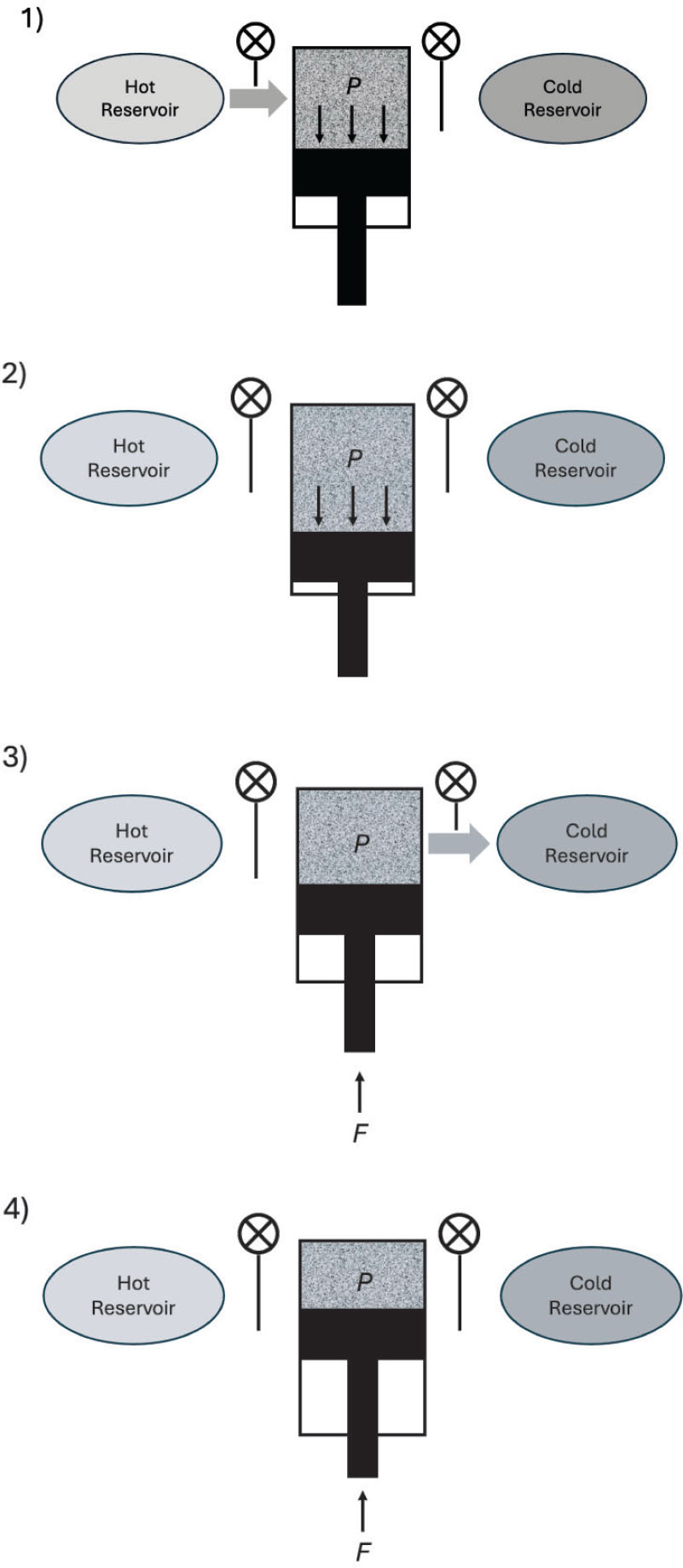

Figure 5.

Standard model of the four cycles of a Carnot engine: 1) isothermal expansion with heat input, 2) adiabatic expansion with temperature drop, 3) isothermal compression with heat input, and 4) adiabatic compression with temperature increase.
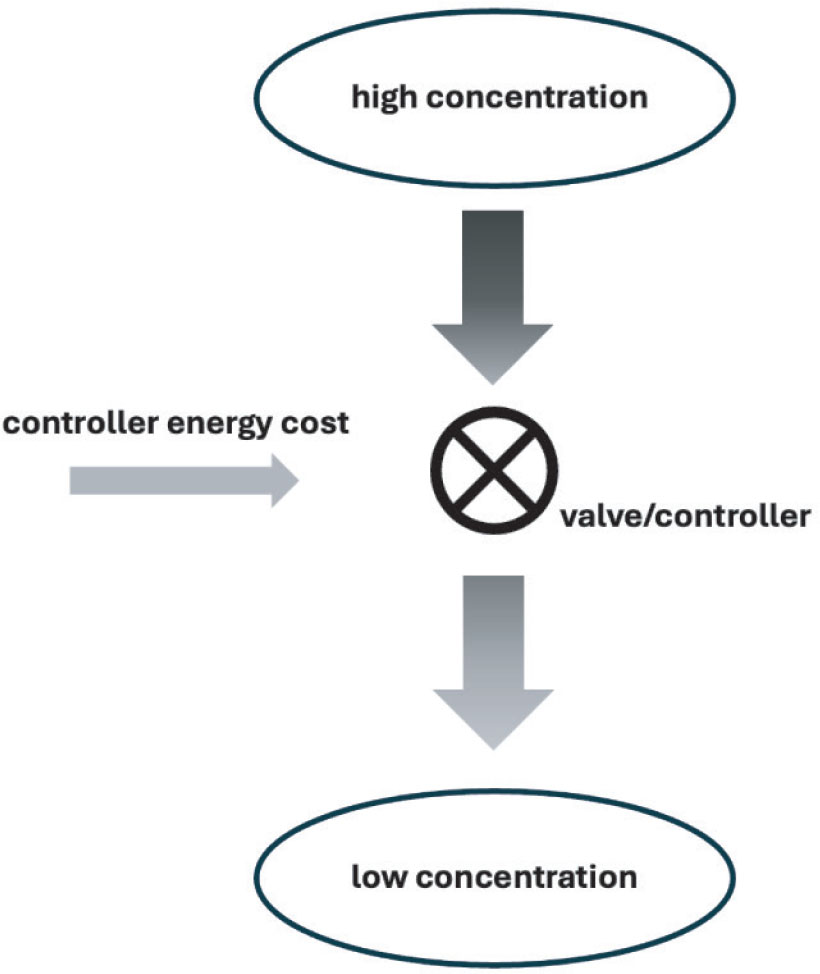

Figure 6.

Illustration of the action of a general gate across a thermodynamic interface.
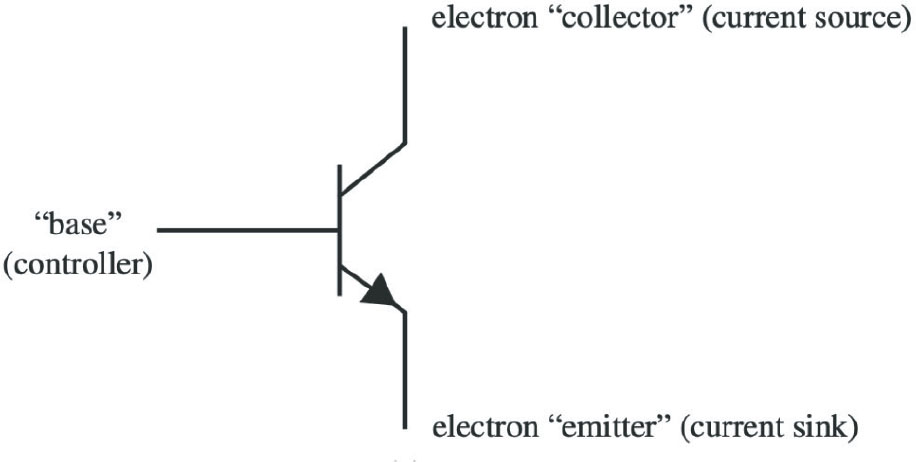

Figure 7.

Typical transistor symbolism and terminology. From Ref. [23].
Language: English
Page range: 42 - 56
Published on: Dec 12, 2024
Published by: The Israel Biocomplexity Center
In partnership with: Paradigm Publishing Services
Publication frequency: 1 issue per year

© 2024 David W. Snoke, published by The Israel Biocomplexity Center
This work is licensed under the Creative Commons Attribution-NonCommercial-NoDerivatives 4.0 License.