
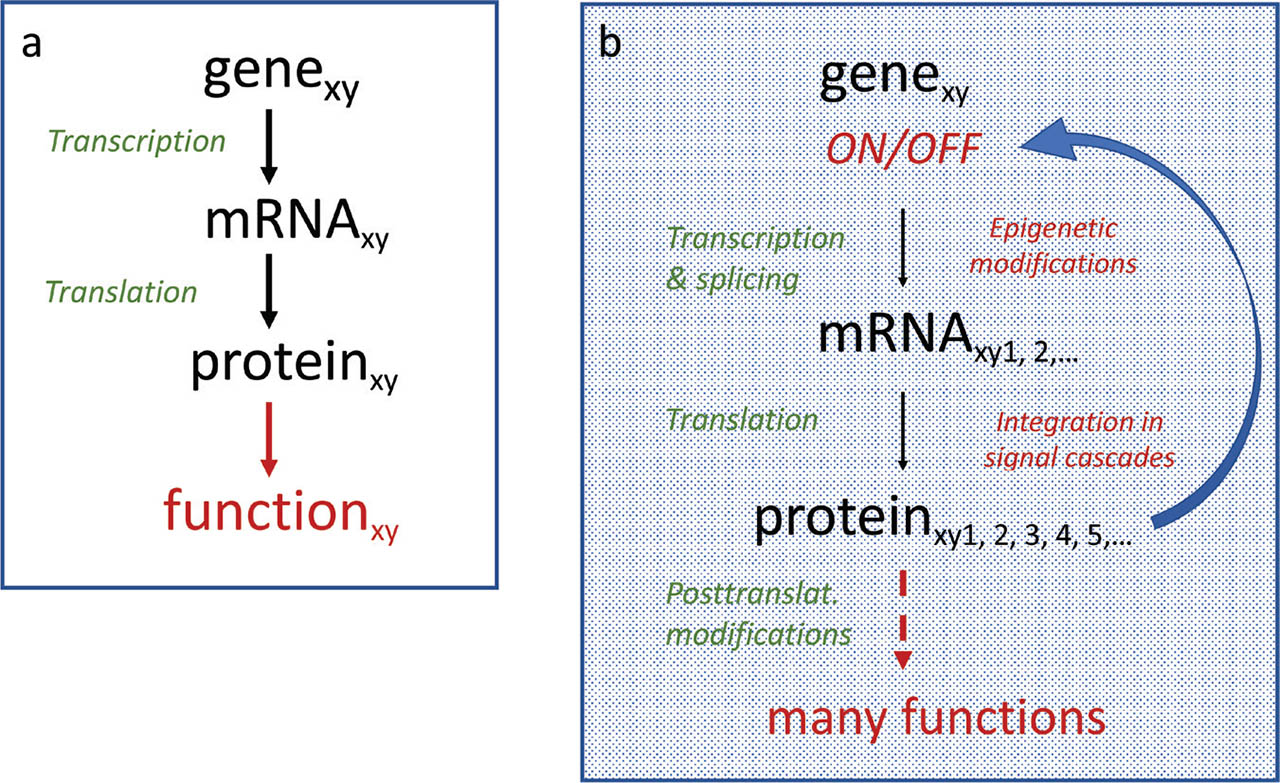
Figure 1
Two concepts of gene action in comparison. – a. The classic concept of one gene-one protein was strictly deterministic. The environment (including the inner milieu of the developing embryo) remains irrelevant (white background). A particular gene, and its coded protein were assigned only one function. – b. According to a postgenomic conception, one gene can code for more than one protein, and be involved in many functions. Note feedback effects on gene switches (ON/OFF; blue arrow), which are derived from many environmental sources (dotted blue background; misses in a.).
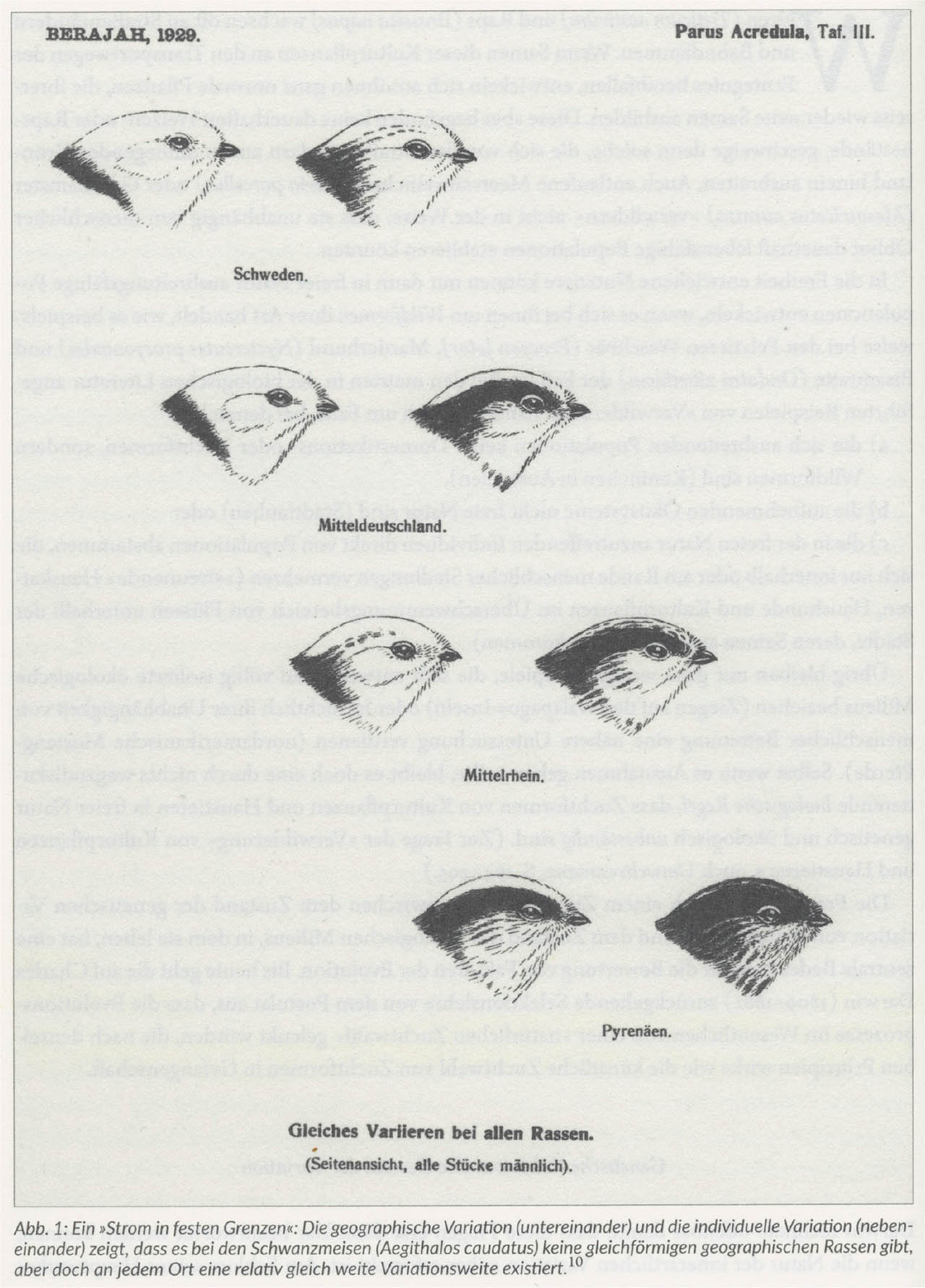
Figure 2
Avian Formenkreise as analyzed by Otto Kleinschmidt (denoted as “super-species” by E. Mayr), exemplified here with the long-tailed tit (Aegithalos caudatus): regional variations are arranged vertically from Sweden (on top) to the Pyrenees (bottom), while variations within local populations are presented side by side (30,31).
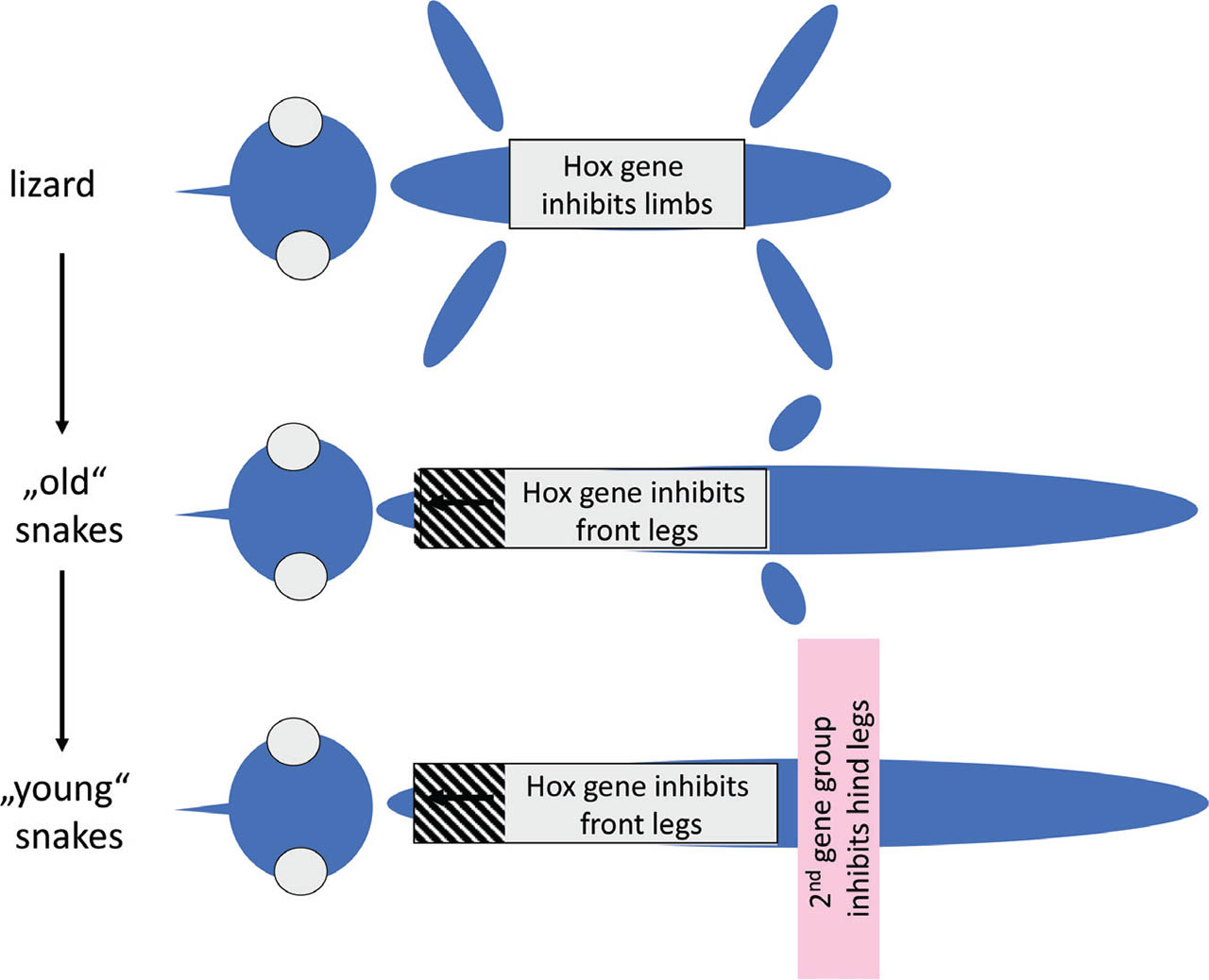
Figure 3
Evo-Devo can (in theory) explain a macroevolutionary transition from a saurian to a serpent’s bauplan by only two mutational steps of master genes (scheme, simplified): in step 1 expression of a Hox-gene is extended toward the front (anteriorily, left), suppressing formation of front legs, thereby achieving an evolutionary status of limb reduction as revealed in ancient snakes (e.g., pythons, boas; their skeleton still presents remnants of pelvis girdle and hind limbs). In step 2, a 2nd master gene inhibits formation of hind limbs, a status found in young snakes (e.g., vipers).
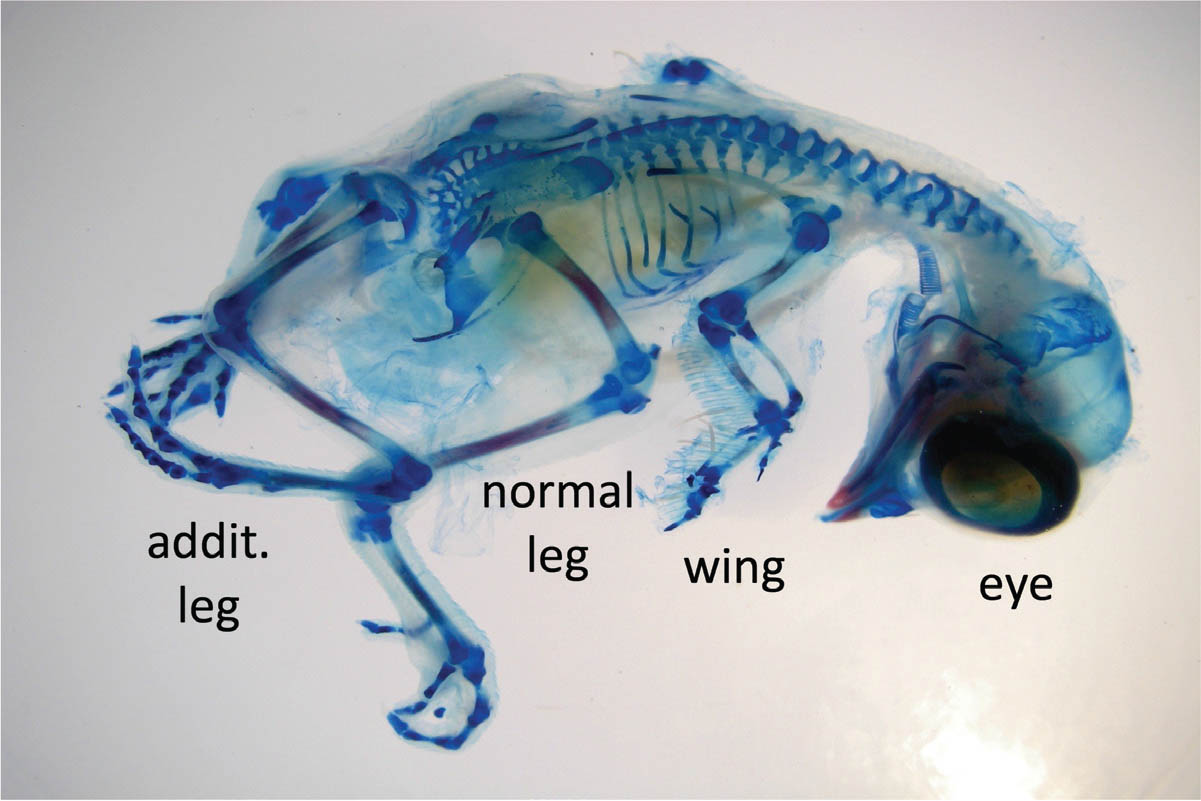
Figure 4
Modular phenotypic change in a bird with additional pair of legs at its hind end documents “Evo-Devo in action”. Supposedly, only minor genetic changes have caused these drastic malformations, e.g., induced by hormonal stress (c.f. also Fig. 3). Note normal morphology of additional legs (see text: drive to wholeness – holism, teleonomy). Evidently, such a malformation will not provide any survival advantage, and thus will not evolutionarily persist. Yet this specimen exemplifies the occurrence of abrupt and far-reaching alterations (specimen and photo: laboratory of author).
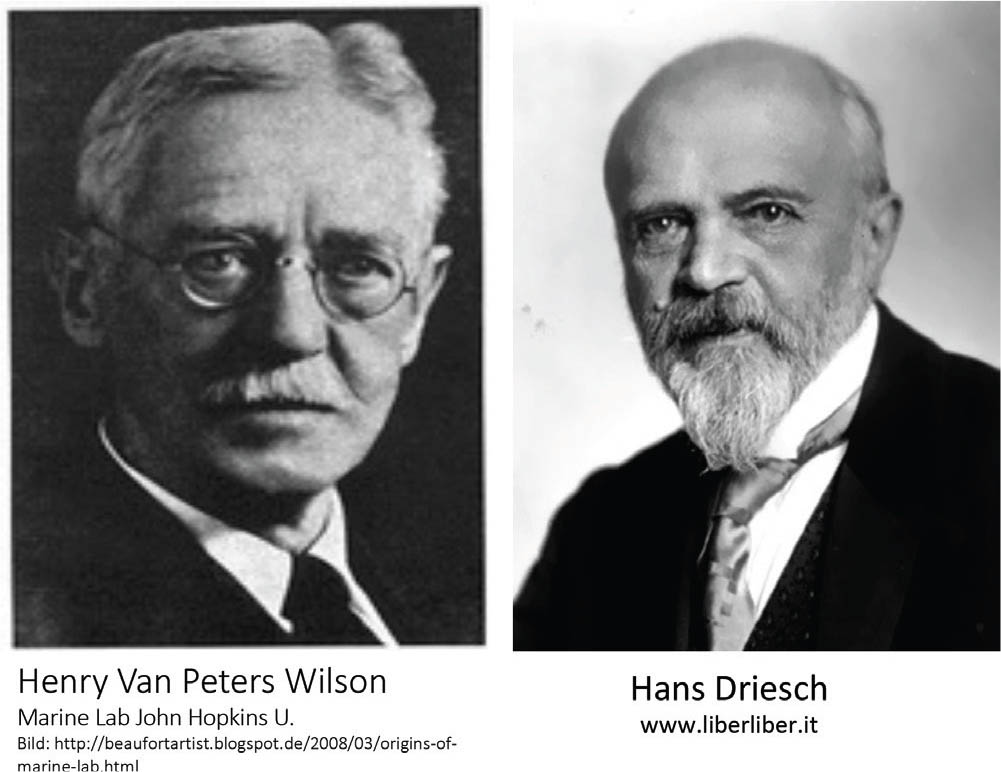
Figure 5
H. P. Wilson and H. Driesch – two widely forgotten fathers of regeneration and stem cell biology. Driesch was the eminent proponent of Neovitalism.
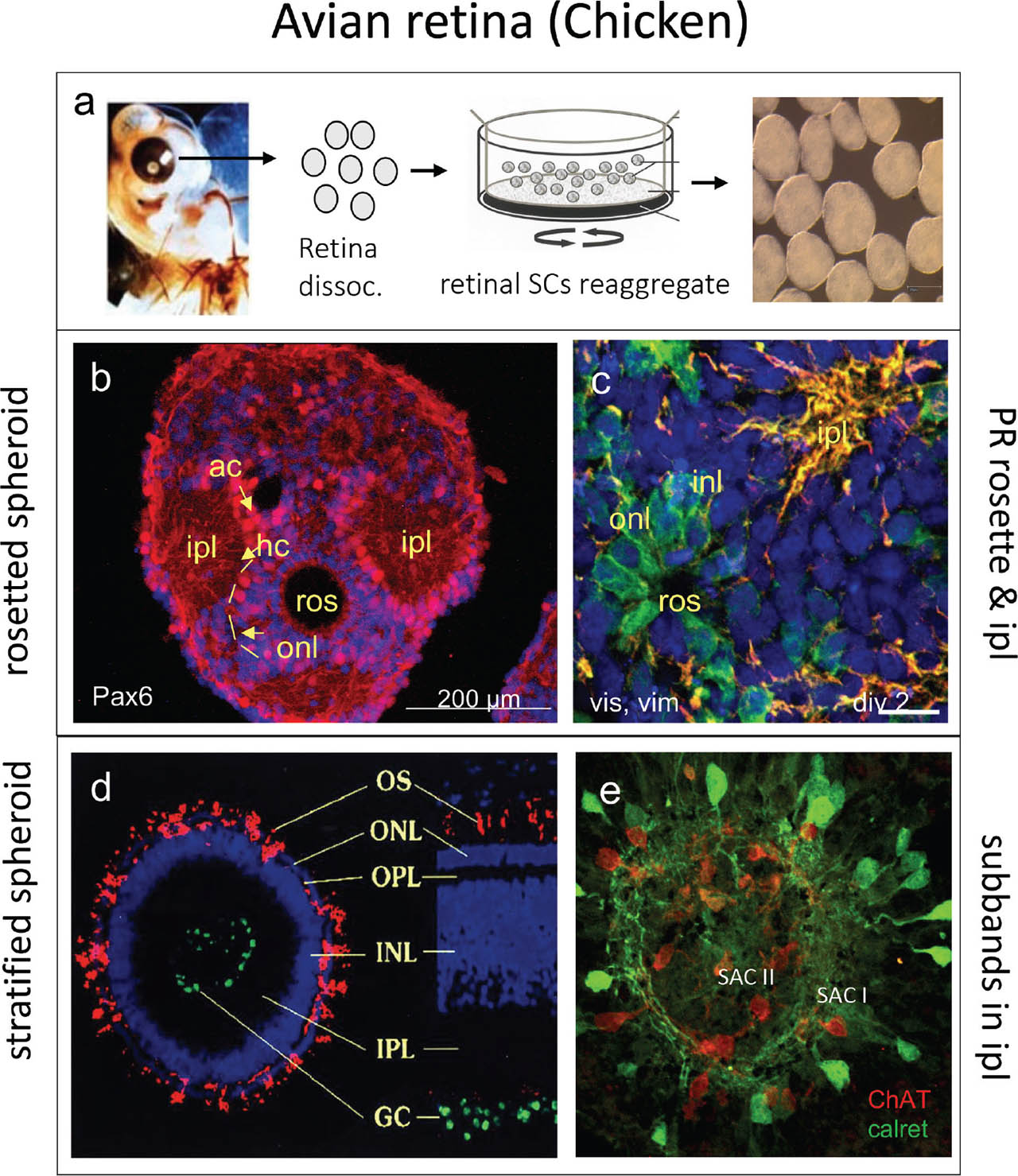
Figure 6
Target-directed self-organization in reaggregated spheroids from chick embryonic retina, initiated by cells of outer retina. A. experimental set-up (left, 6 days-old embryo; right, reaggregated spheroid); b. section of “rosetted spheroid” (cf., right in a), presenting PR rosettes(ros), and IPL-like synaptic areas (ipl); c. higher magnification of a rosette (ros) and a close-by ipl; d. so-called stratospheroid with correct and complete laminar organization, onl is outside and gcl is inside (d. on right, chicken retina for comparison); e. enlarged ipl presenting formation of synaptic subbands. Stainings: DAPI (blue) for cell nuclei; b. Pax6 (red) for Acs; c. visinin (green) for PRs; vimentin (yellow) for MCs; d. CERN901 (red) for PRs, dACs (green); e. calretinin (green) for Acs; ChAT (red) for SACs. Note different magnifications in a-e. Abbreviations: INL, ONL, inner and outer nuclear layer; GCL, ganglion cell layer; IPL, OPL, inner and outer plexiform layer; PR, photoreceptor; HC, horizontal cell; BP, bipolar cell; AC, amacrine cell; dAC, displaced amacrine cell; SAC, starburst amacrine cell; GC, ganglion cell; ChAT, choline acetyltransferase; ros, cell rosette holding mitotic cells and/or photoreceptors. Figs. 6a, b, d from (1); Figs. 6 c, e from (64).
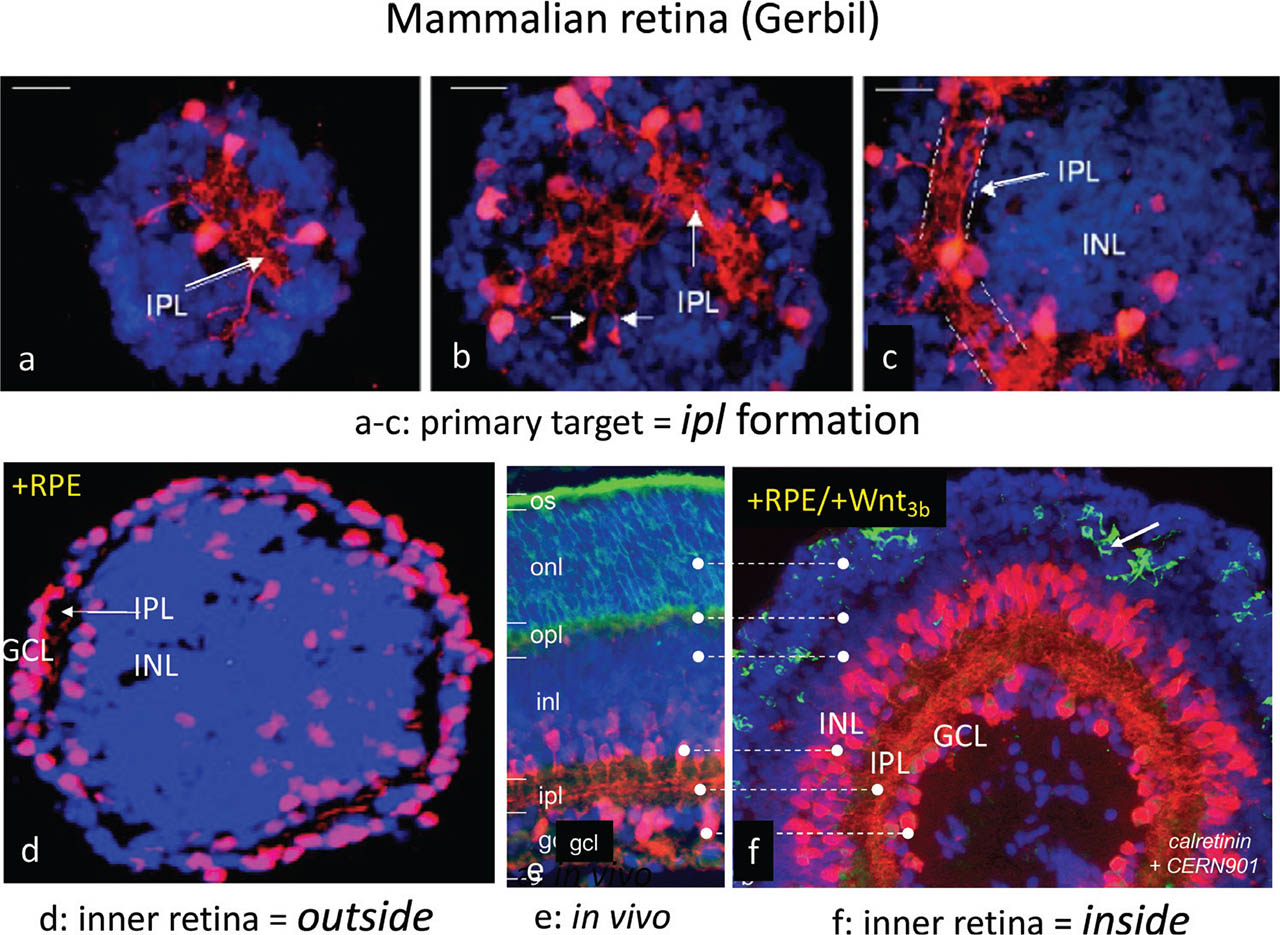
Figure 7
Alternate routes of target-directed self-organization in reaggregated spheroids from a mammalian neonatal retina (Gerbil, Mongolian desert rat), initiated by cells of inner retina. A-c) ipl formation is leading target (not PR rosettes, as in Fig. 1): in control reaggregates, calretinin+ ACs (red) sort out and begin to organize an ipl, including synaptic subbands (at 7, 9, 12 dic., resp.); d) inside- out laminar retina: in presence of RPE, all ACs and dACs plus their ipl become arranged under surface (outside) of spheroid; HCs and few PRs are found inside); e) shows in vivo gerbil retinaat P9 for comparison; f) correct laminar structure and advanced ipl differentiation: addition of Wnt-3b and RPE counteracts laminar inversion (as seen in d), and promotes ipl differentiation. Stainings: calretinin+ (red) for Acs and dACs; CERN901 (green) for PRs. For abbreviations., see legend to Fig. 6. Figs. 7a-d from (65); Fig. 7e, f from (66).
| Process & terms | Explanation |
|---|---|
| Assimilation, genetic | Environment-dependent phenotypic alterations, which are inherited and fixed in progeny. |
| EcoEvo-Devo | Ecological Evo-Devo processes, directed by environmental conditions. |
| Environment | as used in here, does not only refer to external surrounds of an organism, but internal environments, from molecular to cellular to organismic, etc. |
| Epistemic closure of SET | Mindset of SET proponents to neglect opposing arguments (see 20). |
| Constraints | Development-dependent restrictions on evolution, i.e., physical, or morphogenetic constraints; c.f., tinkering. |
| Epigenetic patterns | Individually acquired molecular changes on DNA or histone levels; epigenetic patterns can be passed on; contradicts Weismann’s barrier. |
| Gene duplication | Important for evolution: entire families of related genes originated via gene duplication (i.e., Hox genes). One of the two duplicated genes first can be redundant to only later take on a certain new function. |
| Genocentrism | Gene-centric determinism of NeoD, postulating that the genotype exclusively determines the phenotype. |
| Gradualism | Concept that evolutionary change occurs at a slow and steady rate; opposite to punctualism. |
| Holism | Here: tendency to establish whole structures (teleonomy; cf. Fig. 4). |
| Hox genes | Important family of developmental genes (master genes). On gene level they present a conserved homeobox (sequence of 180 nucleotides), on protein level a homeodomain of 60 amino acids. |
| Genotype | Genetic outfit of an individual. |
| Canalization | Conditional regulation of development; e.g., by environment; c.f., constraints. |
| Convergence, evolutionary | Independent evolution of similar features in non-related organisms, to adapt to similar environment. |
| Macroevolution | Large and abrupt morphologic changes of species in evolution. |
| Microevolution | Minor evolutionary alterations; c.f., Macroevolution. |
| Modularity | Not only morphology is modular, but also many DNA regions, which can function as enhancers. |
| Mosaic theory of animal development | August Weismann’s postulate, according to which the later cell fate (the cell type) is fixed right after fertilization in so-called cleavage cells. In most cases, this presumption is false. |
| Nature-vs.-Nurture Discussion | Question of relative influences of the genome versus environment on development and life of organisms. |
| Neodarwinism | Standard theory of evolution (SET), as developed in the 1st half of 20th century. |
| Neolamarckism | Epigenetics shows that environmentally-acquired individual traits can - under certain circumstances - be passed on into the next generation. |
| Organoids | Spherical (3D) cell constructs cultured from stem cells, which resemble histotypic tissue or organ structures; cf., cell spheroids. |
| Parsimony, molecular | „Molecular toolbox“: Development works with (is achieved by) a restricted set of genetic and molecular networks. |
| Phenotype | Morphologic appearance of an organism; the organism „as a whole“. |
| Plasticity, phenotypic | Environment-dependent morphologic adaptation, i.e., jaw size dependent on diet; becomes genetically fixed. |
| Pleiotropy | Capacity of a gene to code for various functions in different cells. |
| Ploidy, degree of | Number of sets of chromosomes in a cell, e.g., haploid, diploid, polyploid = single, double and more than double set of chromosomes. |
| Punctualism | Opposite of gradualism, see above. |
| Regulation, biologic | Regeneration of a whole bodily structure from few (stem) cells, i.e., regeneration of lizard tail. |
| Robustness | Property of developmental processes to reliably (re-)establish a certain target structure; cf. teleonomy. |
| Teleology | Directionality of biologic processes, incl. metaphysical “vital” forces; distinction to teleonomy; see next. |
| Teleonomy | Directionality of biologic processes, driven by natural forces; opposite to teleology. |
| The Big Five | 5 major periods of mass extinctions at approx. 440, 365, 250, 210 and 65 mys ago. |
| Tinkering, with „toolbox“ | Spatio-temporal expression of identical or similar genes (or their resp. proteins) can lead to alternate phenotypes, through mechanism of:
|
| Vitalism, biologic | Meaning here: Life conceived as unique unseizable phenomenon, influenced by some transcendental vital force; cf. teleology. |
| Weismann barrier | Weismann’s obsolete postulate of segregation of early germ and somatic cells; e.g., that genetic information is passed on exclusively via the germline, without any influence from environment; c.f., epigenetic patterns, Neolamarckism. |