
1. Introduction
Bodybuilding focuses on extreme muscular development, symmetry, and low body fat through resistance training, nitrogen balance, and caloric restriction during the preparation phase (Helms et al., 2014, 2015). Prolonged energy restriction increases the risk of low energy availability (LEA), a key factor in relative energy deficiency in sport (RED-S) (Areta et al., 2021). Natural bodybuilders must comply with strict anti-doping regulations and abstain from substances banned by the World Anti-Doping Agency (WADA) (Helms et al., 2014). Their regimen typically involves intensive training, adherence to evidence-based nutrition strategies, and the use of approved supplements; however, some individuals may resort to alternative methods, such as fad diets (FDs). In contrast to evidence-based dietary approaches, FDs promise rapid results, restrict certain food groups, and lack scientific support, e.g., ketogenic and detox diets (Tahreem et al., 2022). The “pro-metabolic” diet (becoming increasingly popular with bodybuilders), based on Dr Ray Peat’s work, emphasizes thyroid support through frequent meals, the inclusion of simple sugars, and a preference for saturated fats (Oettel & Mukhopadhyay, 2004). Although some of its principles overlap with conventional bodybuilding practices, concerns exist regarding food group restrictions (such as vegetables, grains, legumes, nuts, and seeds) and the limited availability of long-term data, especially for natural male bodybuilders (Rossow et al., 2013).
The study investigated the competition preparation-phase and post-competition recovery-phase of a natural male bodybuilder adhering to a “pro-metabolic” diet, with a focus on its potential effects on LEA and overall health. Given the limited research on natural bodybuilders and their specialized diets, this case study provides valuable insights into the health implications of extreme training and alternative dietary practices within this athletic group.
2. Material and methods
2.1. Case study design
In 2023–2024, a 26-year-old natural amateur male bodybuilder (176 cm, 88 kg) participated in a study. The participant was selected for his strong performance in a previous World Natural Bodybuilding Federation competition. During his most recent event in July 2022 (London, UK), he achieved one of the top places in both the “First Timers” and “Novice” categories and was recognized for presenting one of the best physiques on stage.
The case study included observation of the bodybuilder across three distinct phases: 1) the adaptation phase (3 weeks), 2) the preparation phase (14 weeks), and 3) the recovery phase (11 weeks). All study procedures and their respective frequencies were presented in Figure S1 (Supplementary Material). The study was conducted in accordance with the Declaration of Helsinki and was approved by the relevant institutional Ethical Committee in 2023 (approval details withheld for double-blind peer review). The participant provided written informed consent to participate in the study and to publish specific competition details (including the organization and his top placements), with the understanding that such information may allow for his indirect identification. The case study participant understands the purpose of disclosing this information and agrees to its use in a scientific publication.
2.2. “Pro-metabolic” diet
The “pro-metabolic” diet was based on unprocessed foods such as tropical fruits, fresh orange juice, raw milk, meat, offal, seafood, eggs, gelatin, butter, coconut oil, natural ice cream, coffee, honey, and white sugar. Depending on the observation phase, the participant consumed 4–7 meals daily, with energy intake distributed as 60% carbohydrates, 20% protein, and 20% fat. Supplementation included vitamins D3 (4,000 IU/d), E (400 IU/d), B1 (100 mg/d), and taurine (1,000 mg/d). The participant had been following this dietary approach since mid-January 2021.
Food intake was recorded daily during all three study phases using a kitchen scale (Sabichi) and analyzed for energy and macronutrient content using the MyFitnessPal calorie tracking application. A trained dietitian monitored the recording throughout the study. All dietary interventions were determined by the athlete and his coach, with no researcher involvement, as this was an observational study.
2.3. RED-S symptom assessments
Physiological symptoms of RED-S were assessed using the Low Energy Availability in Males Questionnaire (LEAM-Q) (Lundy et al., 2022). LEA was calculated as dietary energy intake minus exercise energy expenditure, normalized to fat-free mass (FFM). Energy expenditure was estimated based on its assigned metabolic equivalent of task value, as outlined in the Compendium of Physical Activities 2024 (Herrmann et al., 2024).
2.4. Body composition, muscle strength, and heart rate (HR)
Body mass (BM) and composition (fat mass (FM), lean soft tissue, and FFM) were assessed using a Lunar Prodigy Dual-Energy X-ray Absorptiometry (DXA) system (GE Healthcare, USA). Measurements were performed as single-point assessments in a fasting state at the end of the adaptation phase, the preparation phase, and the recovery phase. Additionally, BM was recorded daily using a standard bathroom scale.
To minimize fatigue and injury risk associated with maximal strength testing, muscle strength was assessed indirectly using the one-repetition maximum (1RM) calculator based on the following measurements: Flat Bench Press (BP), Back Squat (SQ), and Classic Deadlift (DL) conducted during the adaptation phase, the preparation phase, and the recovery phase. 1RM was calculated with Epley’s equation (Buckner et al., 2017; Schoenfeld et al., 2021). Daily heartbeats per minute were measured using Xiaomi Mi Band 5 (2020) to draw weekly averages (King & Lowery, 2025).
2.5. Blood clinical chemistry
Blood samples were collected in a fasting state, from the left antecubital vein by qualified personnel using a closed vacuum system. Cortisol, testosterone, and creatine kinase serum concentrations were analyzed with Sysmex XN 1000, Roche Cobas Integra 400, and Radiometer ABL 90 analyzers, respectively. The anabolic–catabolic balance index was calculated as follows: Testosterone/Cortisol × 102 (Obmiński & Opaczowski, 2011).
2.6. Well-being and stress levels
Three instruments were used to assess distinct psychological constructs: the World Health Organisation-Five Well-Being-Index (WHO-5-Index) measured subjective well-being, the Perceived Stress Scale 10 (PSS-10) assessed perceived stress, and the Sport Anxiety Scale (SAS) evaluated sport-specific anxiety. Well-being was assessed biweekly using the WHO-5-Index, with scores ranging from 0–25 (<13 poor well-being, ≥13 good) (Cichoń et al., 2020). Stress levels were assessed via PSS-10 (Buckner et al., 2017; Smith & Emerson, 2014) every 4 weeks and using SAS (Smith et al., 2006) at the start of the preparation phase, the competition phase, and at the end of the recovery phase. PSS-10 ranged from 0 to 40 scores (≤13 low stress, 14–19 moderate, ≥20 high) (Smith & Emerson, 2014), while a maximum SAS score for sports-related anxiety was 84 points (Smith et al., 2006).
2.7. Statistical analyses
Daily measurements, including energy intake, BM, and HR, were averaged to obtain weekly values. All other variables (e.g., DXA, 1RM, blood markers, questionnaire scores) were presented as raw data, i.e., raw values measured at each time point without further processing.
3. Results
3.1. Nutrition intake and energy availability
Across the three study phases, dietary intake was adjusted in consultation with the athlete and his coach. Energy and carbohydrate intake showed the greatest change (Figure 1). Daily energy intake ranged from 2,200 (the preparation phase) to 4,093 kcal (the recovery phase). Carbohydrate intake increased from 2.6 g/kg BM during the preparation phase to 6 g/kg BM during the recovery phase. Protein, fat, and fiber intake remained relatively stable across the three phases, increasing only slightly from the preparation phase to the recovery phase – from 2.0 to 2.5 g/kg BM for protein, 0.6 to 1.1 g/kg BM for fat, and 22 to 36 g/day for fiber.
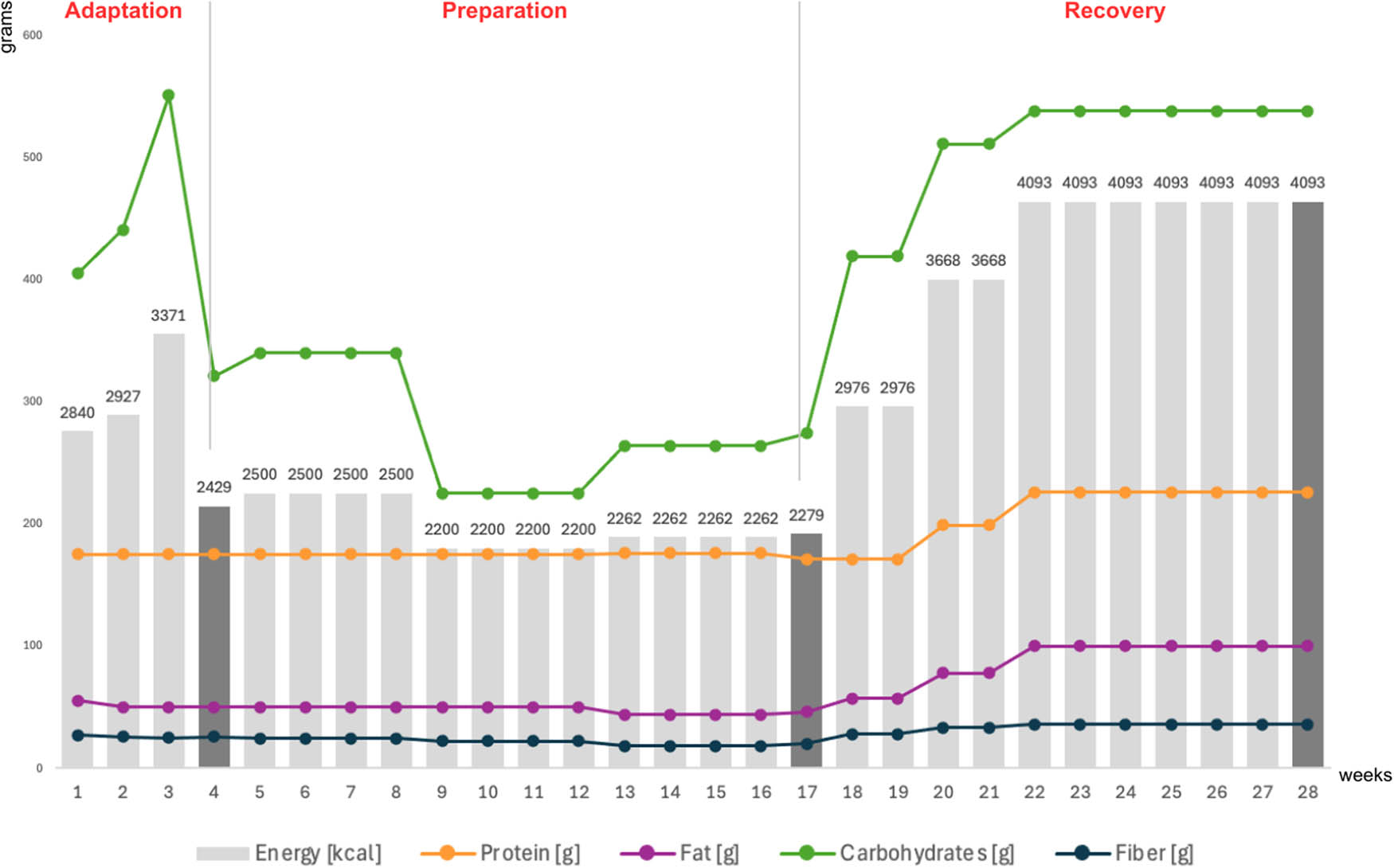
Figure 1
Nutritional value of the diet during the adaptation phase, the preparation phase and the recovery phase in a 26-year-old natural male bodybuilder following a “pro-metabolic diet”
Source: Authors’ contribution.
Energy availability ranged from 33 kcal/kg FFM/d during the preparation phase to 54 kcal/kg FFM/d during the recovery phase.
3.2. Body composition, HR, and muscle strength
Within the preparation phase, BM and FM decreased accordingly by 4 and 5% (Figure 2). Between weeks 17 and 25, BM increased by 7% (84.5–90.2 kg) and FM by 39% (10.1–14.0 kg) (Figure 2). Daily HR increased by 18% (from 63 to 74 bpm) in the preparation phase, then decreased by 21% to 59 bpm in the recovery phase.
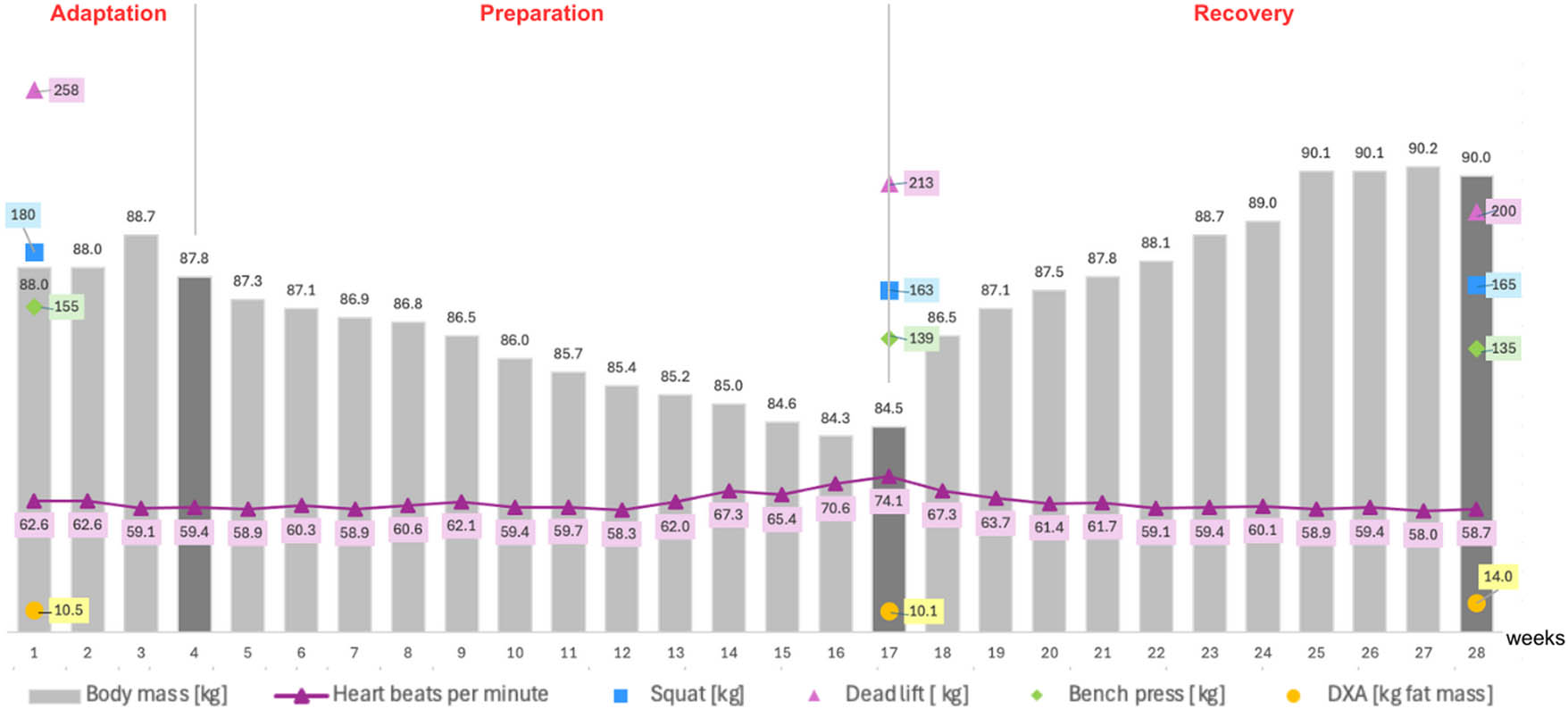
Figure 2
Selected parameters of body composition and heart rate during the adaptation phase, the preparation phase and the recovery phase in a 26-year-old natural male bodybuilder following a “pro-metabolic diet”
Source: Authors’ contribution.
Relatively to the first measure (week 1), muscle strength decreased during the preparation phase and the recovery phase by 9–8% for SQ, 17–22% for DL, and 10–13% for BP, respectively (Table 1).
Table 1
Selected strength parameters via 1 RM at the start of the-adaptation-phase, during the competition phase and at the end of the recovery phase
| Adaptation | Preparation | Recovery | ||
|---|---|---|---|---|
| Squat (SQ) | kg | 180 | 163 | 165 |
| Deadlift (DL) | kg | 258 | 213 | 200 |
| Bench Press (BP) | kg | 155 | 139 | 135 |
1RM – One repetition maximum.
Source: Authors’ contribution.
3.3. RED-S symptom assessments
According to LEAM-Q, no issues with dizziness, digestion, sleep, energy, or recovery were reported at week 4. Sex drive was high, with morning erections 5–7 times per week. One overload injury and one illness (7 days each) occurred, along with muscle pain and headaches post-training. By week 17 (competition time), another overload injury and illness (7 days each) were noted. Symptoms included dizziness, fatigue, poor concentration, decision-making delays, muscle stiffness, pain, exhaustion, and reduced sex drive, but no sleep, recovery, or energy issues. At week 32 (end of the recovery phase), the same injury and illness recurred, with continued concentration issues, decision delays, and new sleep disturbances. Recovery and energy remained stable, while sex drive and morning erections returned to pre-competition levels.
3.4. Blood clinical chemistry
The effects of stress due to physical exercise and energy restriction were evident (Table 2). Creatine kinase increased by 33% during the preparation phase compared with the adaptation phase and remained 11% above the preparation phase levels during the recovery phase. Cortisol increased by 2% in the preparation phase. Testosterone levels were lowest during the adaptation phase and increased by 44 and 39% in the preparation phase and the recovery phase, respectively. The anabolic–catabolic index peaked during the preparation phase (2.6) and declined slightly in the recovery phase (2.5), indicating partial return toward the first measure (week 1).
Table 2
Selected biochemical parameters in blood at the start of the adaptation phase, during the competition phase, and at the end of the recovery phase
| Adaptation | Preparation | Recovery | Reference range | ||
|---|---|---|---|---|---|
| Creatine kinase | U/l | 351 | 466 | 390 | 0–190 |
| Cortisol | nmol/l | 709 | 722 | 679 | 136–633 |
| Testosterone | nmol/l | 12.8 | 18.6 | 17.2 | 8.6–29.0 |
| Anabolic-catabolic index* | — | 1.8 | 2.6 | 2.5 | >2.4 |
3.5. Well-being and stress levels
Both the athlete’s subjective well-being and perceived stress, measured using the WHO-5-Index and SAS, increased as the preparation phase progressed (WHO-5-Index from 12 to 21 points; SAS from 33 to 59 points). During the recovery phase, both well-being and stress levels declined (WHO-5-Index from 21 to 10 points; SAS from 59 to 42 points). However, stress assessed using the PSS-10 did not change substantially across the three phases (Figure 3).
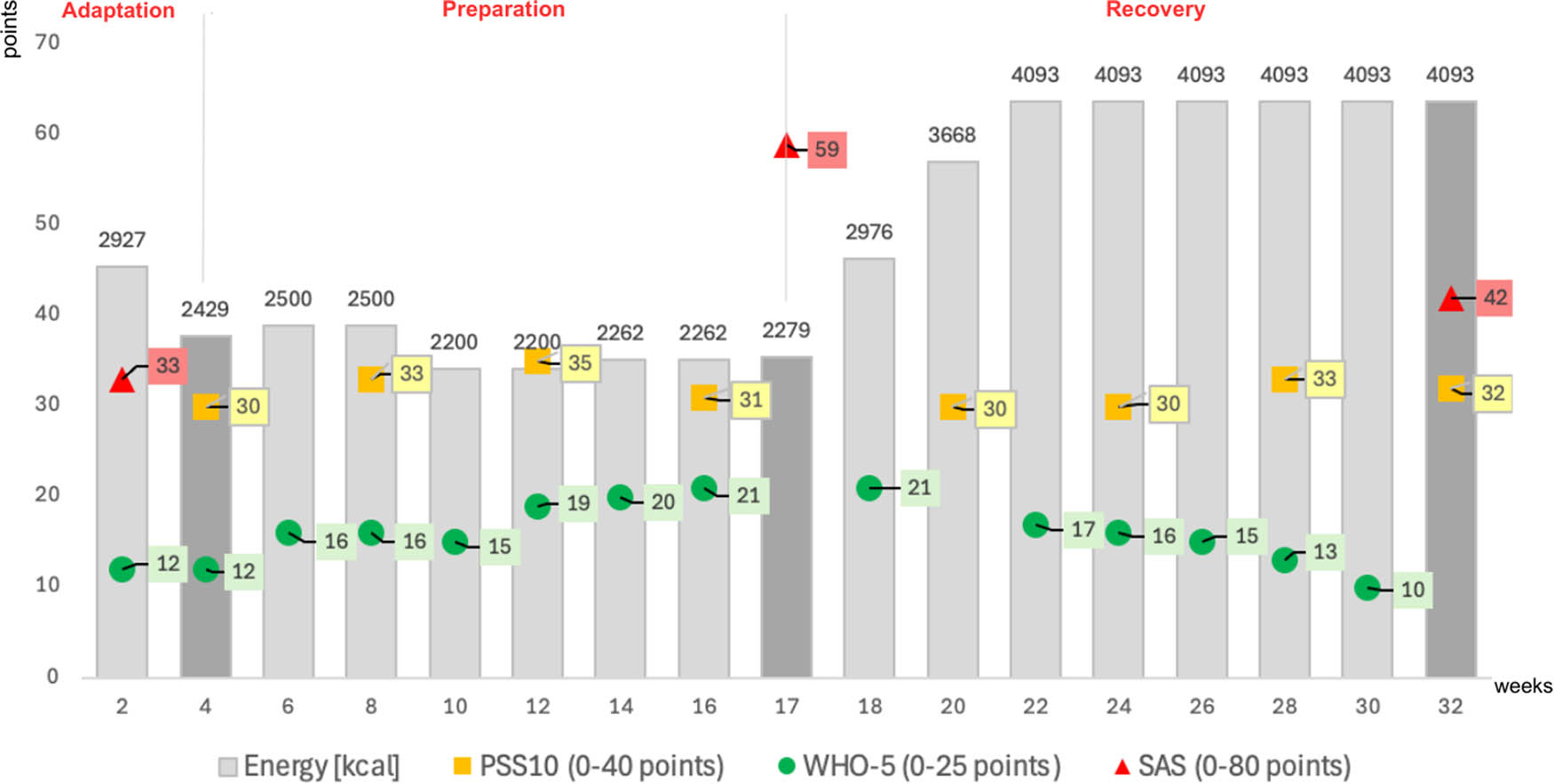
Figure 3
Well-being and stress level during the adaptation phase, the preparation phase, and the recovery phase in a 26-year-old natural male bodybuilder following a “pro-metabolic diet”
Source: Authors’ contribution.
4. Discussion
This is the first study to analyze the preparation phase and the recovery phase for natural bodybuilding competition in a man following a “pro-metabolic” diet. We provide novel data by demonstrating that losing body FM for a bodybuilding contest is insufficient without reaching the LEA threshold.
The preparation phase was inadequate, preventing the competitor from achieving the desired conditioning. Controlled studies in healthy men show threshold effects when total energy intake and exercise energy expenditure are regulated. It is speculated that the LEA’s threshold in males appears to be lower than in females, i.e., 10–25 kcal/kg FFM/day (Areta et al., 2021; Hagmar et al., 2013). There is evidence that most men can maintain lower levels of energy availability before physiological and psychological disturbances occur, such as clinically low free or total testosterone or reduced morning erection, which are identified as long-term LEA consequences (Mountjoy et al., 2015a). In our study, the athlete was exposed to an energy availability of 33 kcal/kg FFM/day (week 4–17; the preparation phase), which did not reach <20–30 kcal/kg FFM/day (Fagerberg, 2018). As a result, the body fat reduction was only 0.4 kg over 14 weeks of calorie deficit. Despite having a larger physique, the athlete was outperformed by a smaller, sharper-looking competitor, highlighting the importance of leanness over size in competition.
However, failing to reach this threshold does not necessarily exclude physiological consequences associated with insufficient energy availability. Recent evidence suggests that individual susceptibility to LEA may vary considerably, and symptoms related to RED-S can occur even when traditionally proposed cut-off values are not reached (Mountjoy et al., 2015a). Therefore, the interpretation of LEA should consider not only calculated energy availability but also the presence of functional outcomes, including hormonal, reproductive, psychological, and performance-related changes (Mountjoy et al., 2015b).
A concerning trend in physique sports is the use of extreme or unproven methods, such as FDs, for rapid results. In this case, the athlete followed a diet based on appeal rather than evidence. The training loads combined with a calorie-restricted diet did not provide sufficient stress to disrupt the balance between anabolic and catabolic processes. This is evidenced by minimal changes in cortisol levels, an increase in testosterone, and anabolic–catabolic index during both the preparation phase and the recovery phase compared to the adaptation phase. The result was a suboptimal the preparation phase marked by significant strength loss, failure to achieve adequate conditioning, and a notable post-competition rebound characterized by increased body-fat accumulation. This scenario highlights the risks of short-term strategies compared with sustainable, evidence-based approaches. Athletes should avoid extreme diets and anecdotal practices, favoring gradual fat loss, lean mass preservation, and overall health to optimize performance and reduce adverse outcomes.
HR reflects the heart’s oxygen delivery capacity; lower resting HR indicates better cardiovascular fitness; and higher suggests poorer fitness (Cichoń et al., 2020; King & Lowery, 2025). In this study, HR was highest during the-preparation-phase, coinciding with reduced strength. The decline in muscle strength during contest preparation is primarily linked to the energy deficit required for fat loss and the associated reduction in BM. A carbohydrate deficit lowers muscle glycogen stores, impairing performance during high-intensity resistance training (Helms et al., 2015). Furthermore, loss of fat and lean tissue alters leverage and biomechanical efficiency, further reducing strength potential. These effects, combined with hormonal changes such as decreased testosterone and elevated cortisol, exacerbate strength loss as competition approaches (Chappell et al., 2021). The testosterone/cortisol ratio reflects metabolic balance; a low ratio, due to low testosterone and elevated cortisol, indicates metabolic imbalance, often associated with overreaching or energy restriction (Ficarra et al., 2023). Although in our study the endocrine indicators did not reflect this, the subjectively assessed stress levels using the SAS increased across the preparation phase and reached their highest levels in the pre-competition phase. Natural bodybuilders often experience significant psychological challenges during competition preparation.
Beyond metabolic and hormonal perturbations, prolonged energy restriction can compromise neuromuscular function, which is critical for sustaining athletic capacity during resistance training. Such neuromuscular alterations – characterized by reduced force-generating capacity and impaired muscle activation – frequently drive the performance decrements observed during rigorous contest preparation. Recent findings suggest that neuromuscular performance metrics provide valuable insights into fatigue status and functional adaptations in physically active individuals. Consequently, incorporating these assessments alongside traditional physiological indicators may elucidate the precise mechanisms limiting performance during periods of energy restriction (Thomas et al., 2023).
Caloric restriction and intense training for peak conditioning can cause mood disturbances, irritability, and social strain. Nonetheless, many athletes report increased self-esteem and a sense of achievement from pursuing goals and validating their efforts. Competitors often rate quality of life higher during the-preparation-phase, driven by excitement, self-efficacy, and pride in overcoming physical limits. However, this demanding process can elevate stress, increasing the risk of mental fatigue, sleep issues, and anxiety. Thus, the recovery phase (post-competition) is crucial for restoring psychological well-being and reestablishing balance (Chappell et al., 2021).
In the screening of male athletes for RED-S using the LEAM-Q, only the low sex drive sub-section is considered discriminatory for identifying LEA cases (the threshold ≥2 points from A1/B1 and/or ≥1 point from B2 section) (Lundy et al., 2022). During the competition time, the studied bodybuilder experienced sex drive problems, which classifies him as a high risk of RES-S (RED-S CAT) (Mountjoy et al., 2015b). Lundy et al. (2022) suggest that decreased libido and reduced frequency of morning erections may result from weight fluctuations. Importantly, this finding does not imply that the athlete exceeded the established LEA threshold; rather, it suggests that functional disturbances may emerge before or independently of reaching predefined energy availability cut-offs. This case highlights the complexity of identifying LEA-related consequences in male athletes, where individual variability and interactions among dietary restriction, training stress, psychological factors, and changes in body composition may influence the clinical presentation.
Crucially, the observed changes in body composition, performance, hormonal profiles, and psychological outcomes cannot be attributed solely to the dietary intervention. Instead, they reflect the synergistic effects of structured resistance training, energy restriction, the cumulative demands of contest preparation, and the specific nutritional strategy applied during this period.
Several limitations of the study warrant acknowledgement. First, the absence of a control following alternative dietary models limits the ability to determine whether the observed effects are specific to the investigated nutritional approach. Second, exercise energy expenditure was not measured directly, which may have affected the accuracy of the assessment of physiological responses. Additionally, dietary intake was based on self-reported food diaries, which are subject to reporting bias and inaccuracies. Finally, heart rate was monitored using wearable devices, which, despite their practical advantages, may yield less precise measurements than validated laboratory-based methods.
This case study provides novel insights into the health and performance effects of natural bodybuilding contest preparation and recovery using a “pro-metabolic” diet within the LEA and RED-S frameworks. However, findings from a single participant should be interpreted with caution. Future research should examine the effects of repeated exposure to a “pro-metabolic” diet, as bodybuilders often undergo frequent weight loss and muscle restoration, to better understand the long-term effects of chronic low EA and strict dietary protocols. Furthermore, future practical applications should emphasize the importance of individualized, evidence-based nutritional planning for natural bodybuilders during contest preparation, rather than relying on prevailing dietary trends. Such an approach may support more informed decision-making and promote strategies that prioritize health, performance, and long-term sustainability.
5. Conclusions
This study provides novel data by demonstrating that in a male natural bodybuilder: 1) an energy availability of 33 kcal/kg FFM/d may be insufficient for achieving the level of fat loss required for contest conditioning, while remaining low enough to impair sex drive; and 2) the “pro-metabolic” diet, without a substantial calorie deficit, fails to support meaningful fat loss or restore muscle mass and strength after competition.
It should be emphasized that these results are based on a single participant case study; therefore, caution is warranted when extrapolating the findings to wider populations. Further studies, ideally through randomized controlled trials, are needed to establish thresholds at which physiological and performance impairments occur in male natural bodybuilders and to evaluate the long-term effects of the “pro-metabolic” diet. Finally, we encourage all athletes undertaking BM reduction to do so under the guidance of qualified sports dieticians to reduce the health and performance risk associated with LEA and the use of FDs.
Acknowledgments
The authors thank the participant for his time and participation in the study.
Funding information
This research was funded by the Polish Ministry of Science and Higher Education, with funds from the Institute of Human Nutrition Sciences at Warsaw University of Life Sciences (WULS), for scientific research purposes.
Author Contributions
Conceptualization, K.Ł., J.K. and O.S.; methodology, K.Ł, J.K. and O.S.; formal analysis, K.Ł, J.K. and O.S.; investigation, resources, O.S.; data curation, O.S.; writing-original draft preparation, K.Ł., writing-review and editing, K.Ł., J.K. and O.S.; visualization, K.Ł, J.K. and O.S.; supervision, J.K. and O.S.; project administration, J.K. and O.S. All authors have read and agreed to the published version of the manuscript.
Conflict of interest statement
The authors declare that they have no conflict of interest.
Data availability statement
Data related to the study will be made available upon a justified request (to corresponding author).