
Table I.
Information about the adhesive and composites used in the study
| Type | Material and Manufacturer | Composition |
|---|---|---|
| Bioactive composite | Activa Bioactive Restorative Pulpdent, Watertown, MA, USA | Blend of diurethane and other methacrylates with modified polyacrylic acid (44.6%), amorphous silica (6.7%), and sodium fluoride (0.75%), reactive glass particles, shock absorbing ionic resin component containing acidic monomers with antimicrobial properties. Filler load: 56% by weight(12) |
| Conventional flowable composite | G Aenial Universal Flo GC, Tokyo, Japan | Urethane dimethacrylate (UDMA), bisphenol A ethoxymethacrylate (bis-MEPP), triethylenglycol dimethacrylate (TEGDMA), silicon dioxide, strontium glass, pigment, photoinitiator Filler load: 69% by weight(13) |
| Universal adhesive | G-Premio Bond GC, Tokyo, Japan | 10-MDP, 4-META, 10-methacryoyloxydecyl dihydrogen thiophosphate, methacrylate acid ester, distilled water, acetone, photo-initiators, silica fine powder(14) |
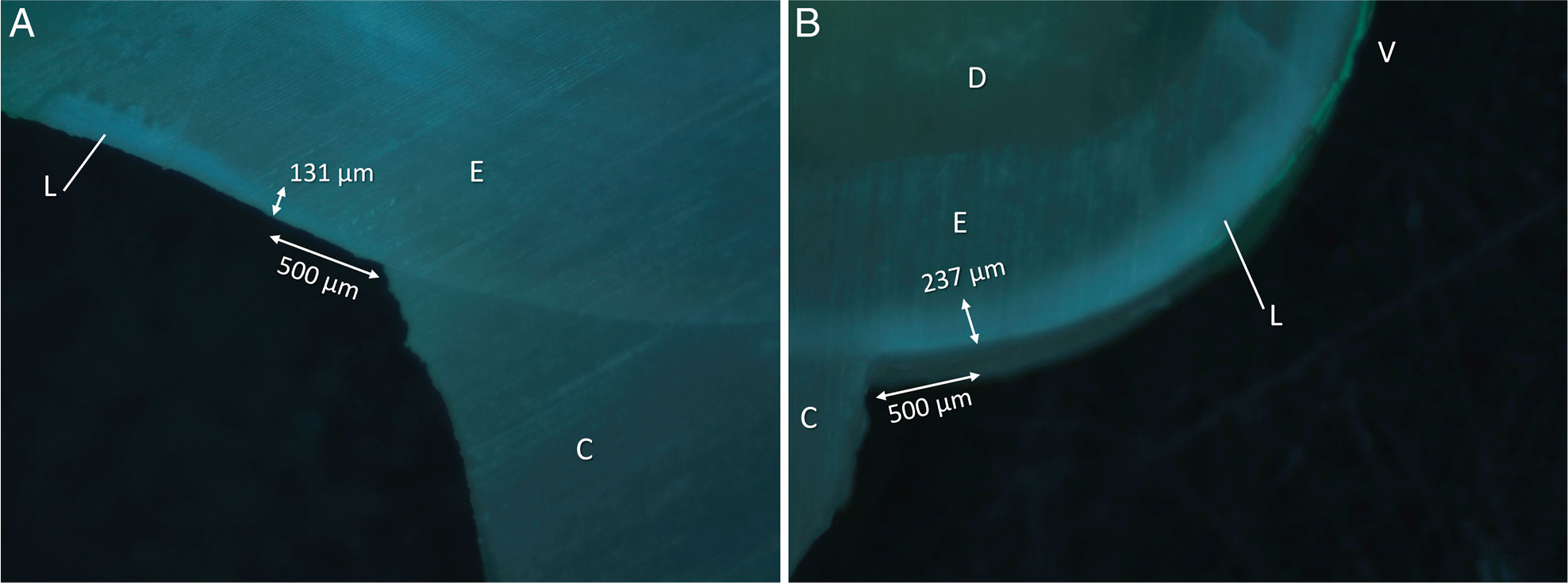
Figure 1.
Representative images obtained from sections of the attachment area using a digital microscope. (A) Activa Bioactive Restorative, (B) G-Aenial Universal Flo. In the images, C represents the composite attachment, D represents the dentine, E represents the enamel, L represents the artificial lesion, and V represents the acid-resistant varnish.
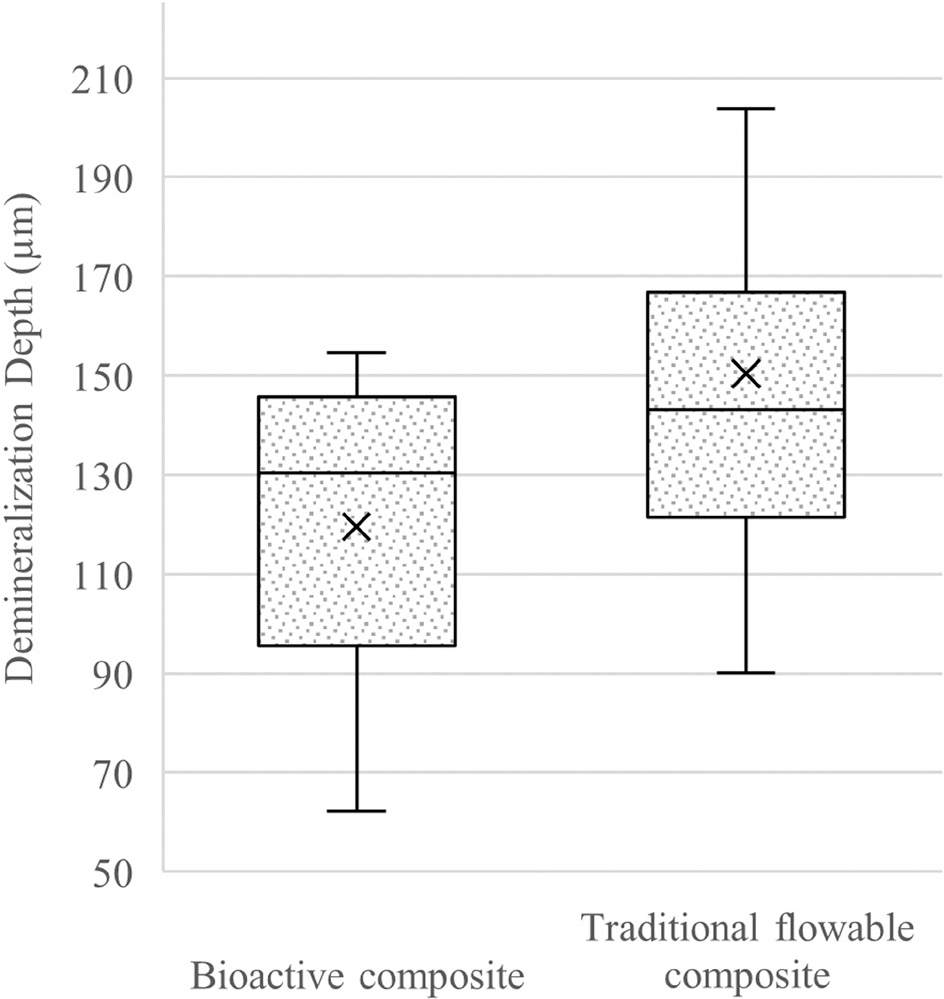
Figure 2.
Box and whisker plot showing the demineralisation depth of the artificial lesions in both groups.