
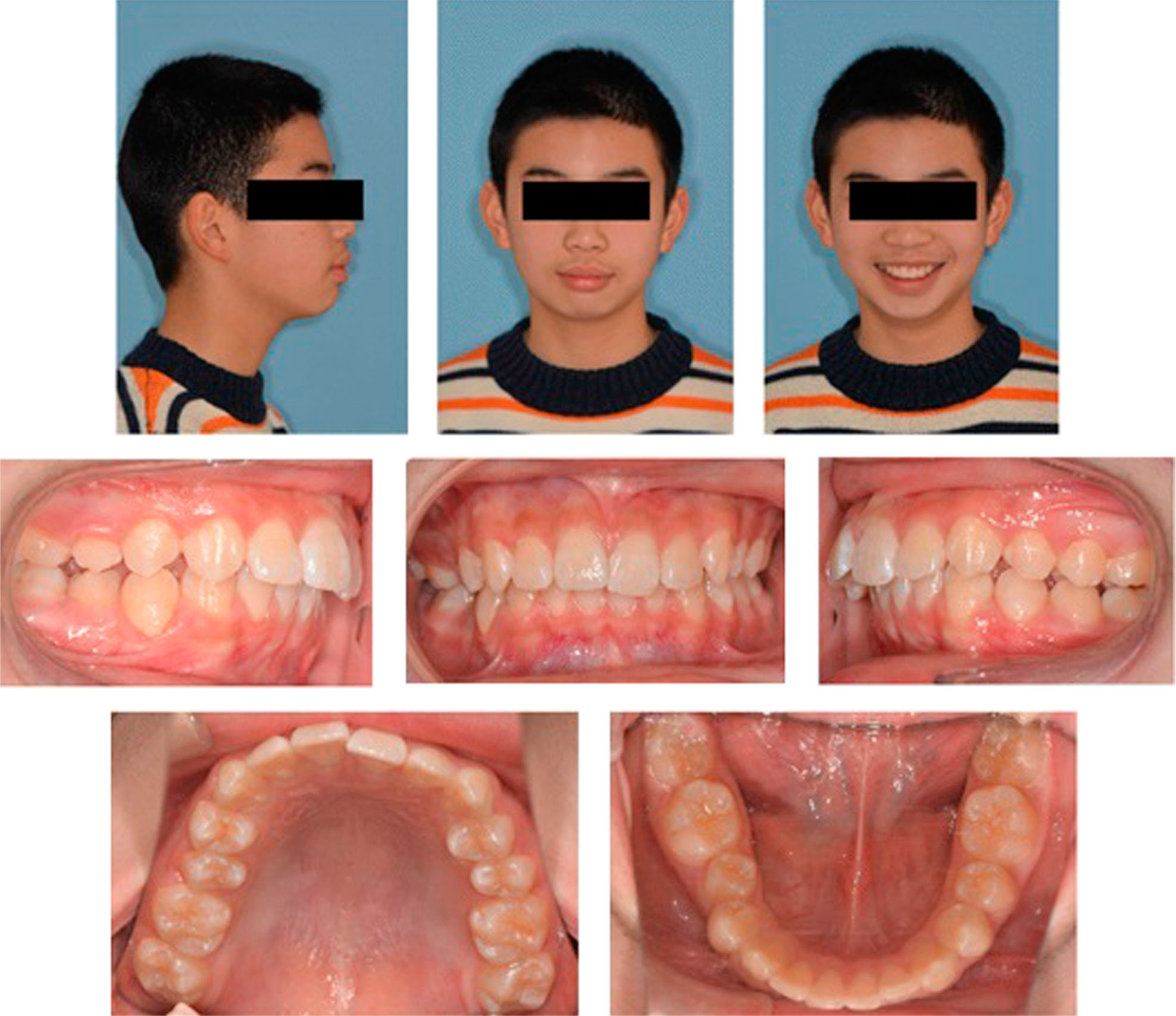
Figure 1.
Pretreatment extraoral and intraoral photographs showing the convex profile and Class II molar relation.
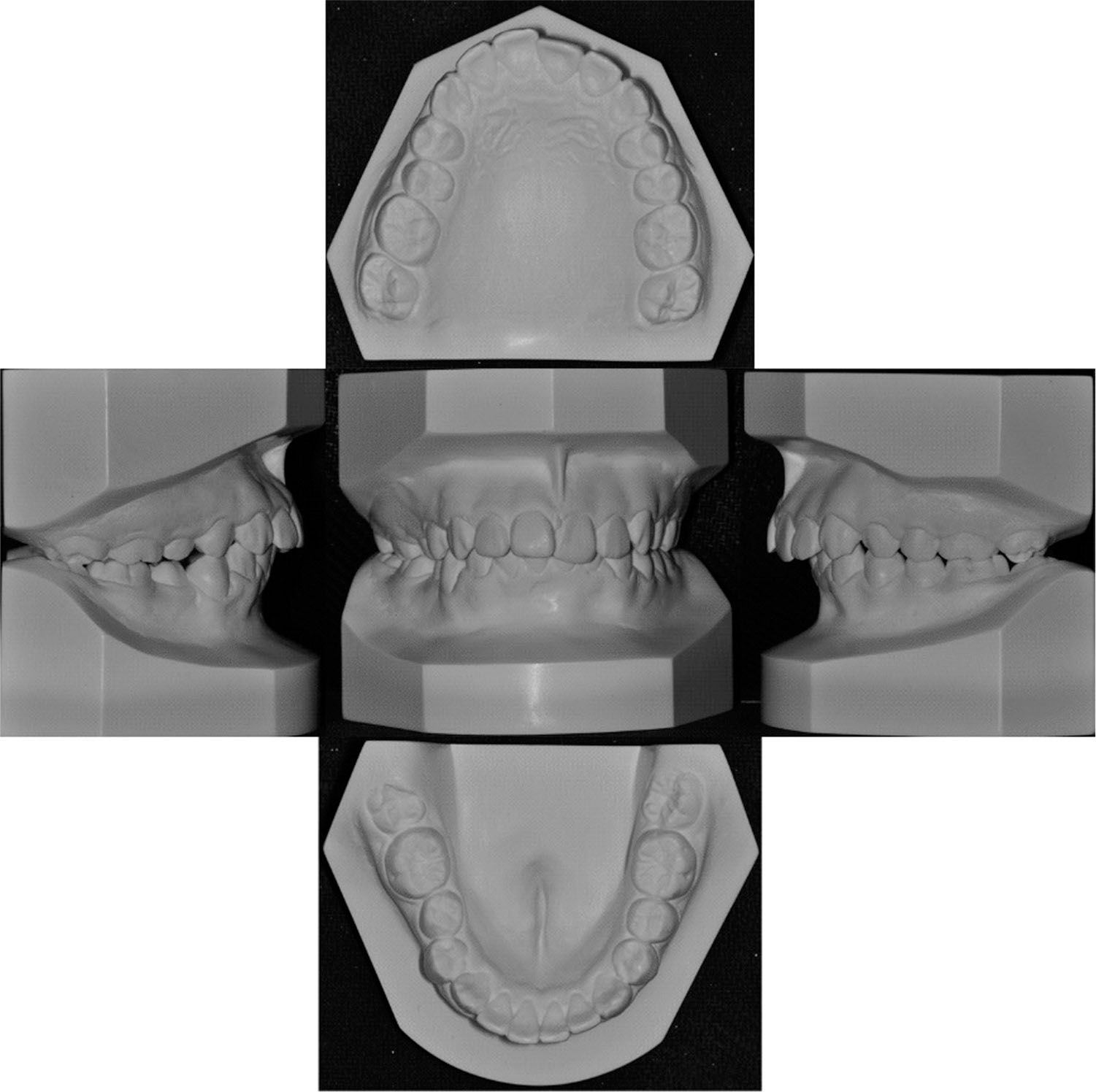
Figure 2.
Model scanning photos of pretreatment.
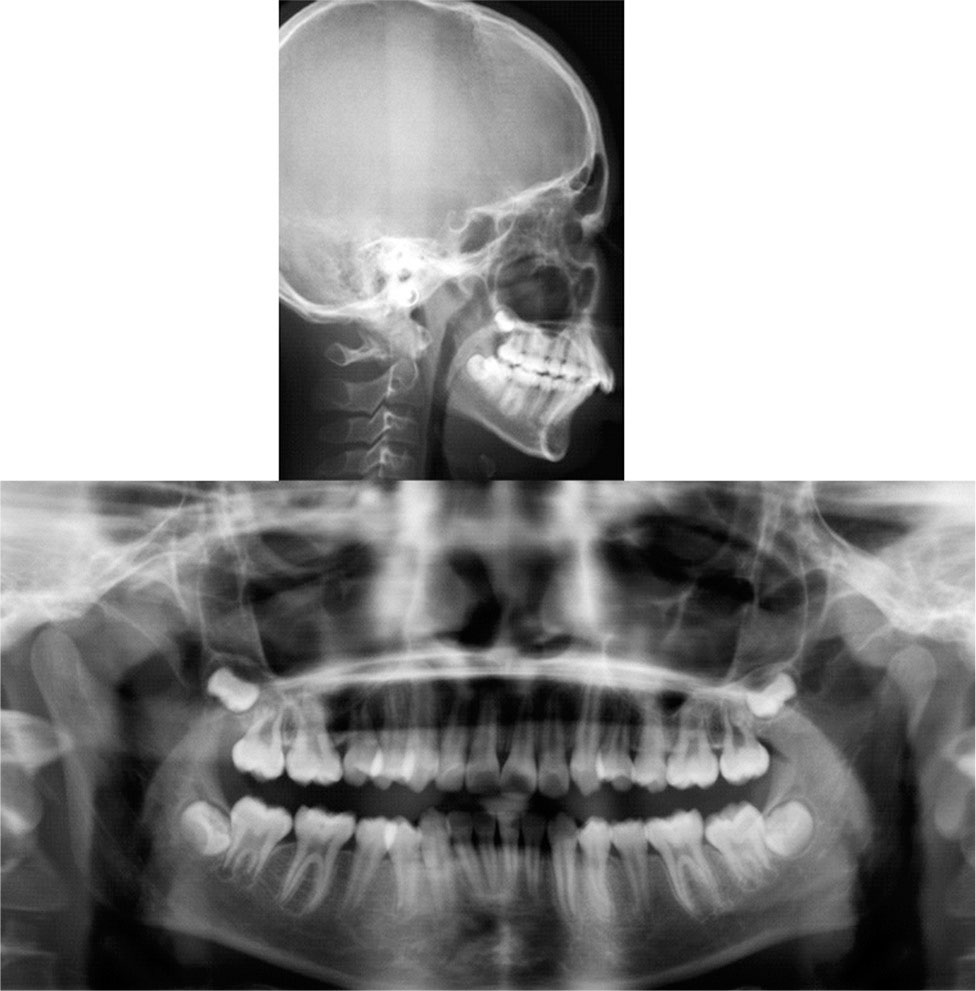
Figure 3.
Pretreatment cephalogram and panoramic radiograph.
Table I.
Cephalometric measurements (T1 Pretreatment; T2 12 months after Twin-block treatment; T3 36 months after fixed orthodontic treatment)
| Measurement | Norm | T1 | T2 | T3 |
|---|---|---|---|---|
| SNA(°) | 83.0 | 87.3 | 86.8 | 86.1 |
| SNB(°) | 80.0 | 77.9 | 79.6 | 81.6 |
| ANB(°) | 3.0 | 9.4 | 7.2 | 4.5 |
| NP-FH(°) | 85.0 | 81.5 | 84.5 | 84.4 |
| NA-PA(°) | 6.0 | 19.8 | 16.5 | 10.0 |
| U1-SN(°) | 105.0 | 108.8 | 101.3 | 107.9 |
| U1-NA(°) | 22.0 | 21.6 | 14.5 | 21.9 |
| L1-NB(°) | 30.0 | 37.3 | 41.4 | 25.6 |
| IMPA(°) | 88.0 | 111.0 | 113.2 | 98.7 |
| FMIA(°) | 67.0 | 44.0 | 43.1 | 59.0 |
| FMA(°) | 25.0 | 25.0 | 23.7 | 22.3 |
| Y-axis angle (°) | 65.8 | 65.8 | 64.2 | 64.0 |
| Z-angle(°) | 75.0 | 52.8 | 59.7 | 65.3 |
| Po-Go(mm) | – | 6.9 | 7.2 | 7.3 |
| Gn-Co(mm) | – | 10.2 | 10.8 | 11.1 |
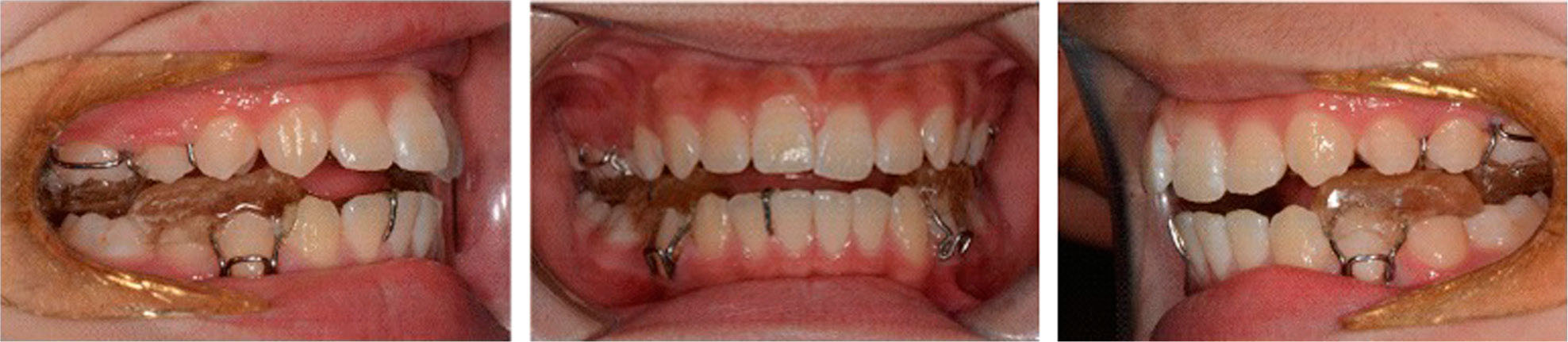
Figure 4.
Intraoral display of Twin-block appliance.
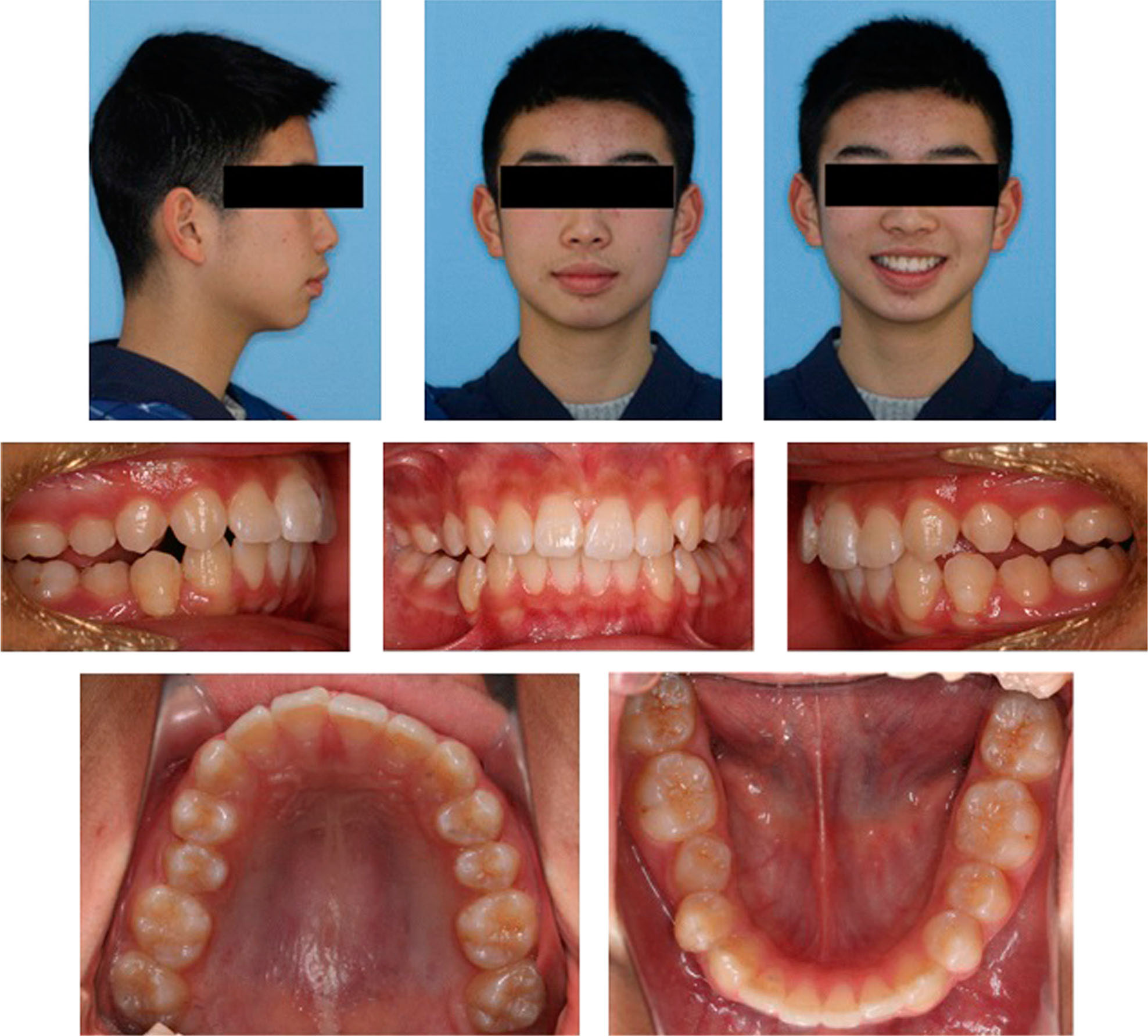
Figure 5.
Facial appearance and intraoral photos of patients after functional correction.
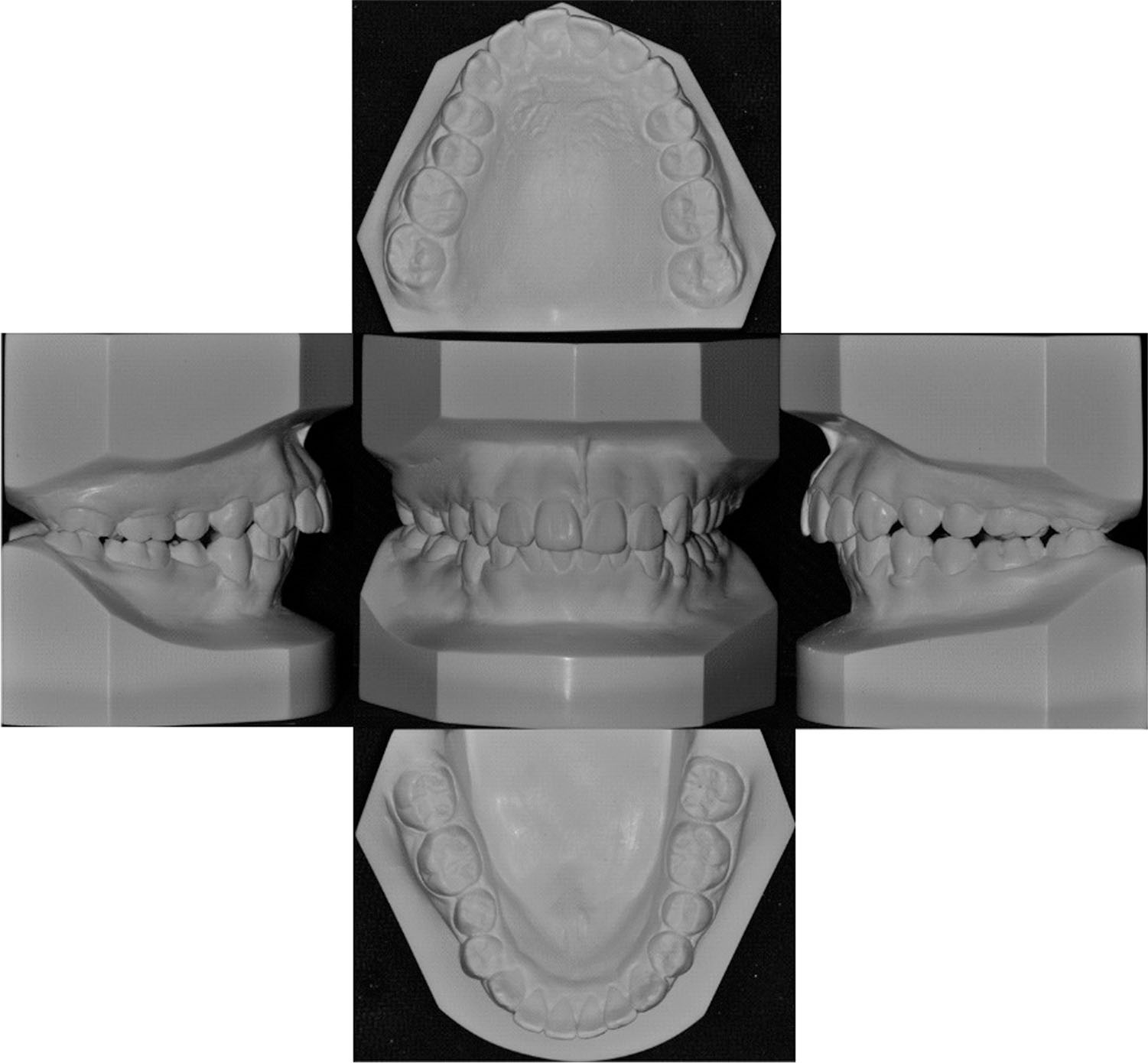
Figure 6.
Model scanning photos of 12 months after Twin-block treatment.
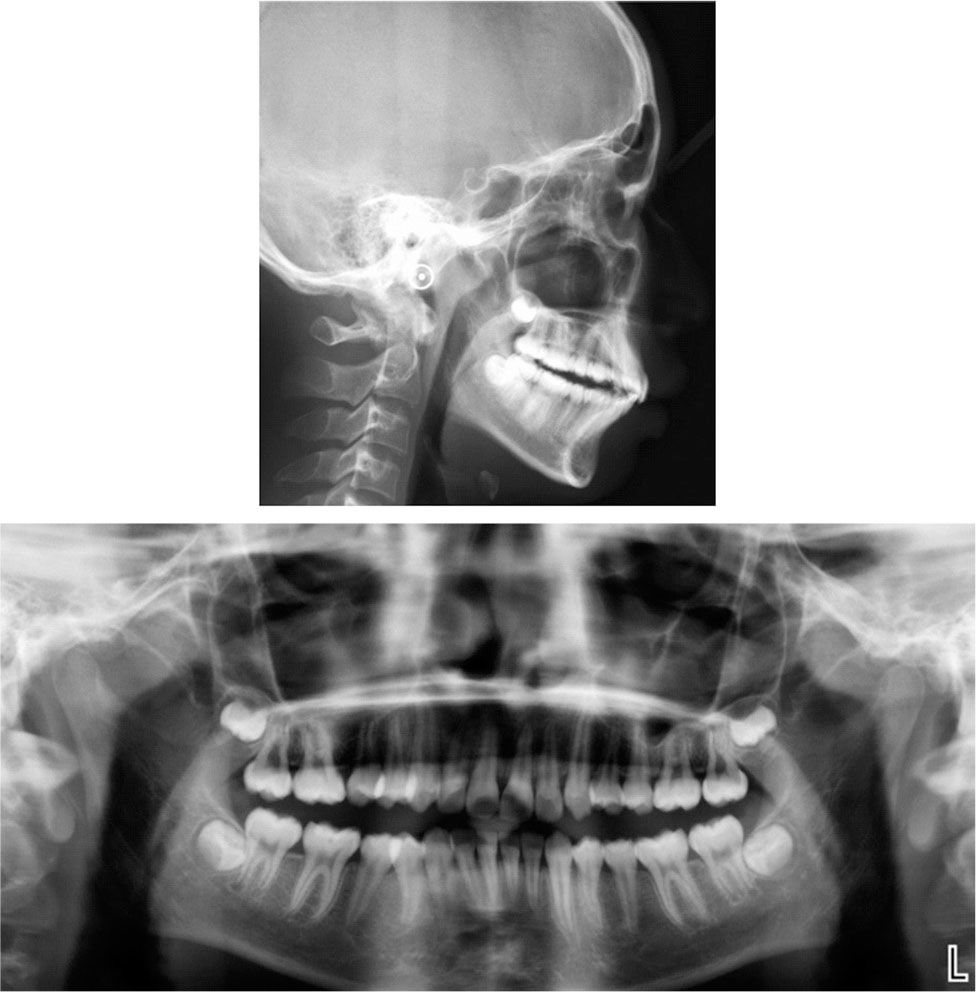
Figure 7.
Posttreatment cephalogram, cephalometric superimpositions, and panoramic radiograph.
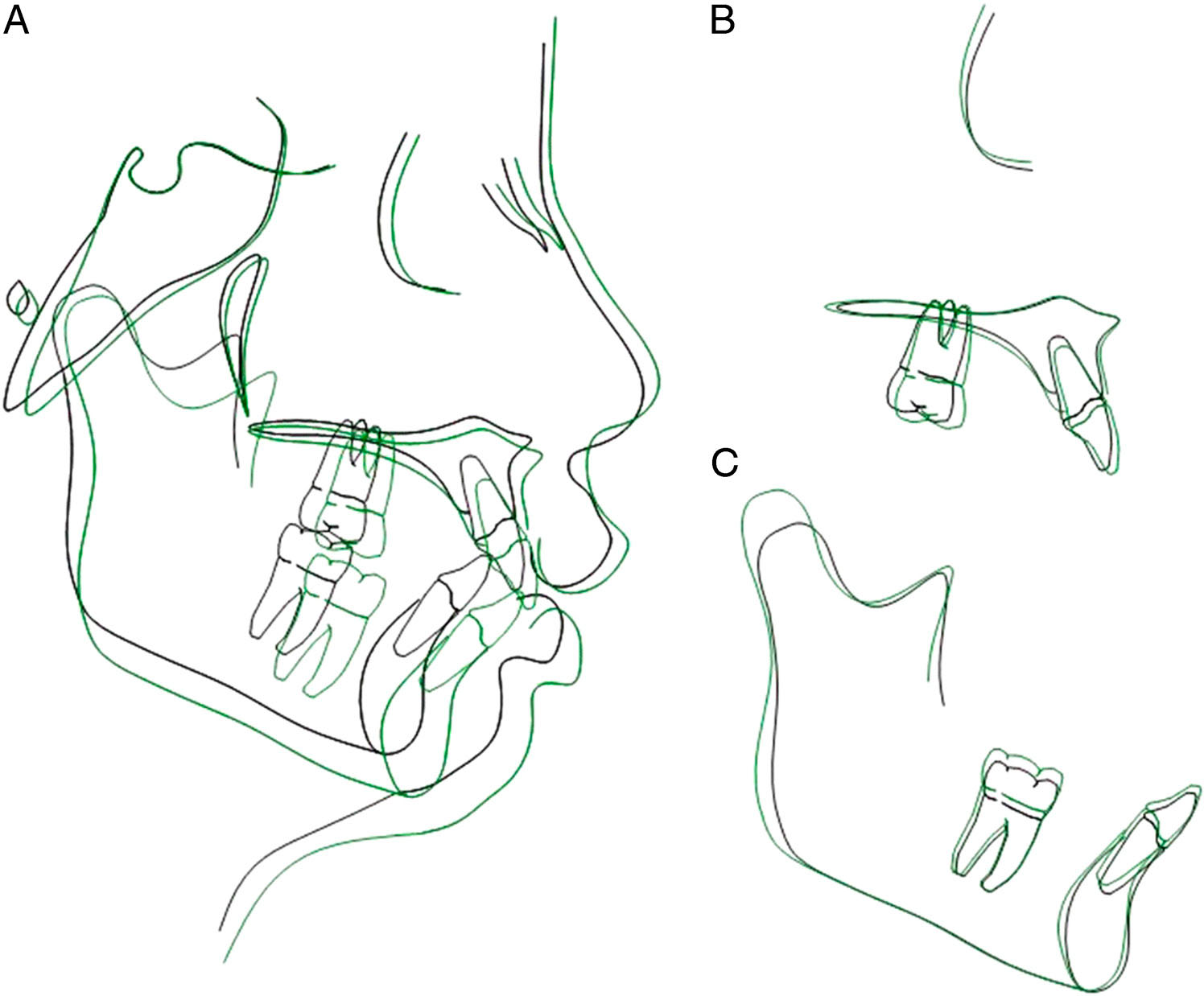
Figure 8.
Cephalometric superimpositions after Twin-block treatment. Black line, pretreatment; Green line, after Twin-block treatment. A, The overall super-imposition was registered on SN at sella; B, the maxillary superimposition was registered on the palatal plane at ANS; C, the mandibular super-imposition was registered on the long axis of the mandible at protuberance menti.
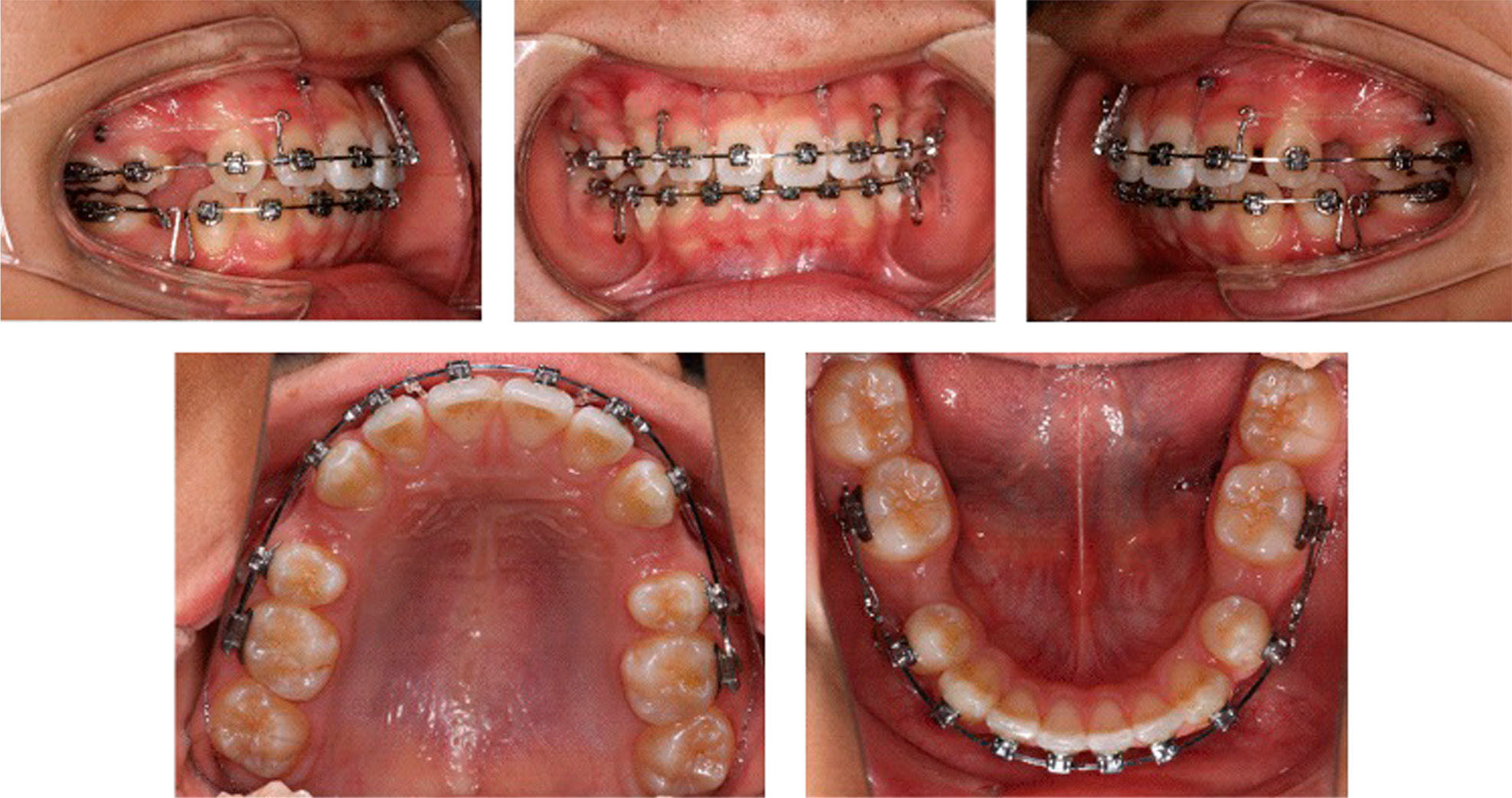
Figure 9.
In the 6th month of fixed treatment when the 0.018 × 0.025-in stainless steel archwires were placed in both arches, microimplant anchorages were placed to lower the upper anterior teeth.
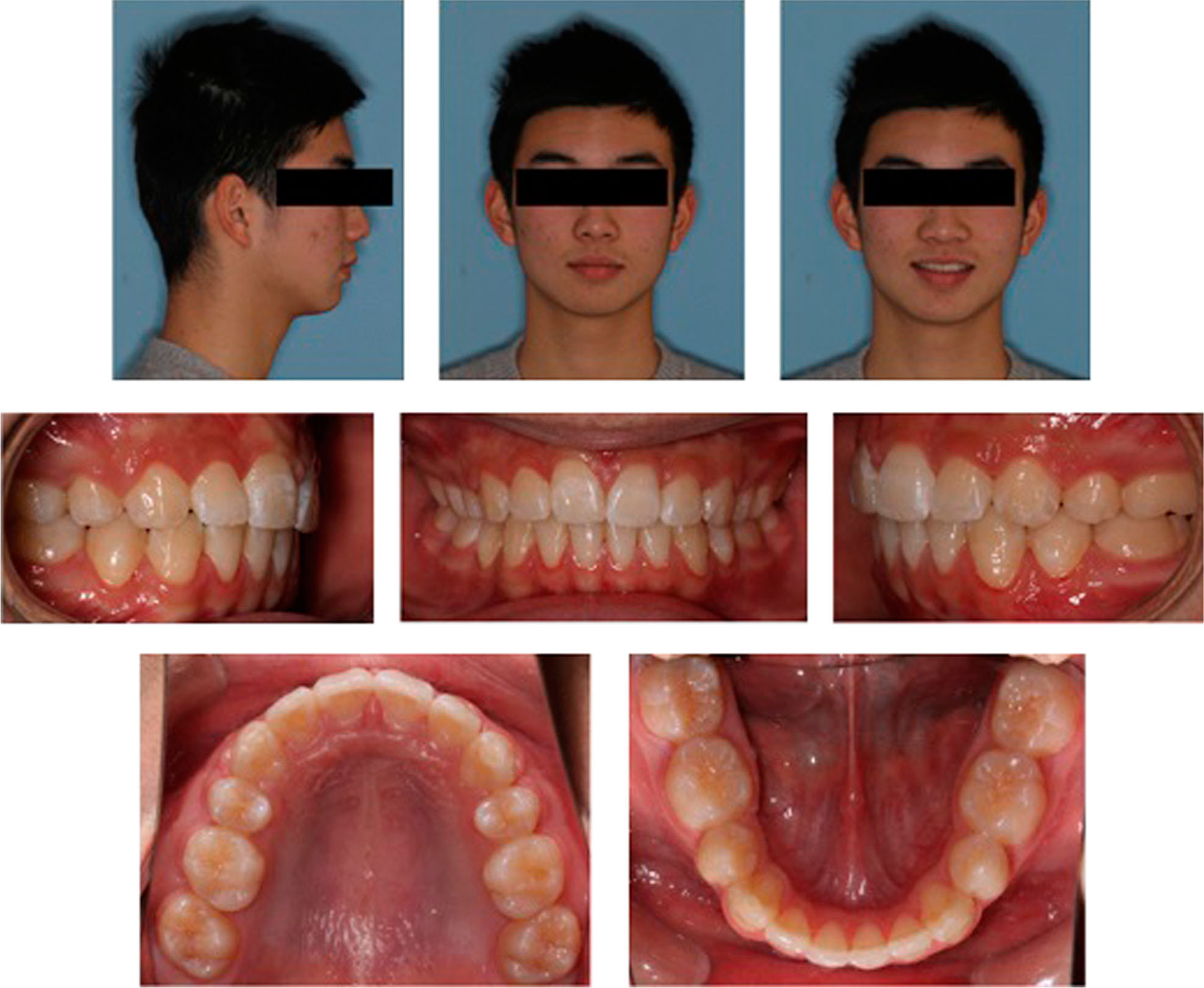
Figure 10.
Posttreatment extraoral and intraoral photographs showing the improved facial appearance and molar relationship.
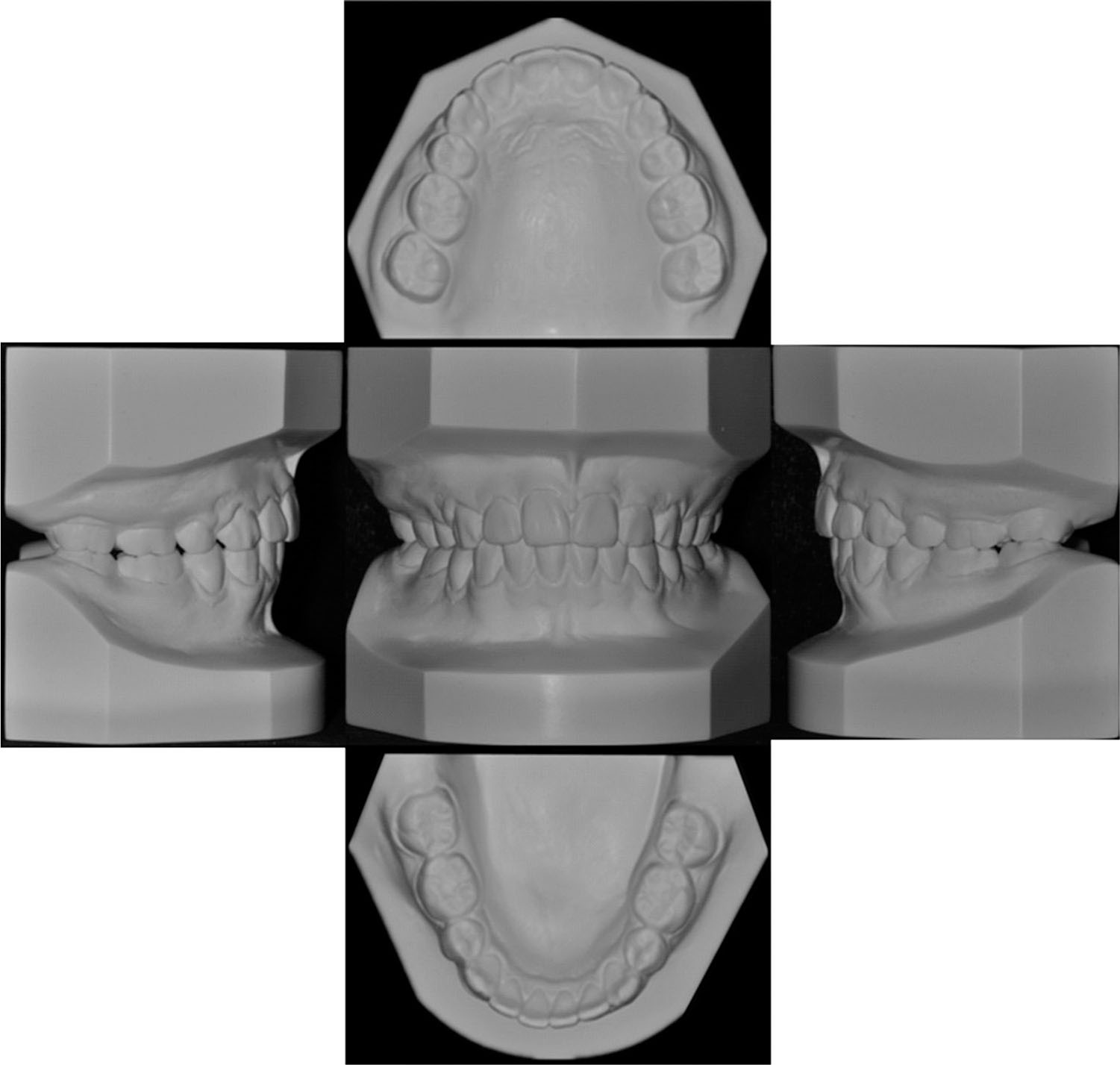
Figure 11.
Model scanning photos of 36 months after fixed orthodontic treatment.
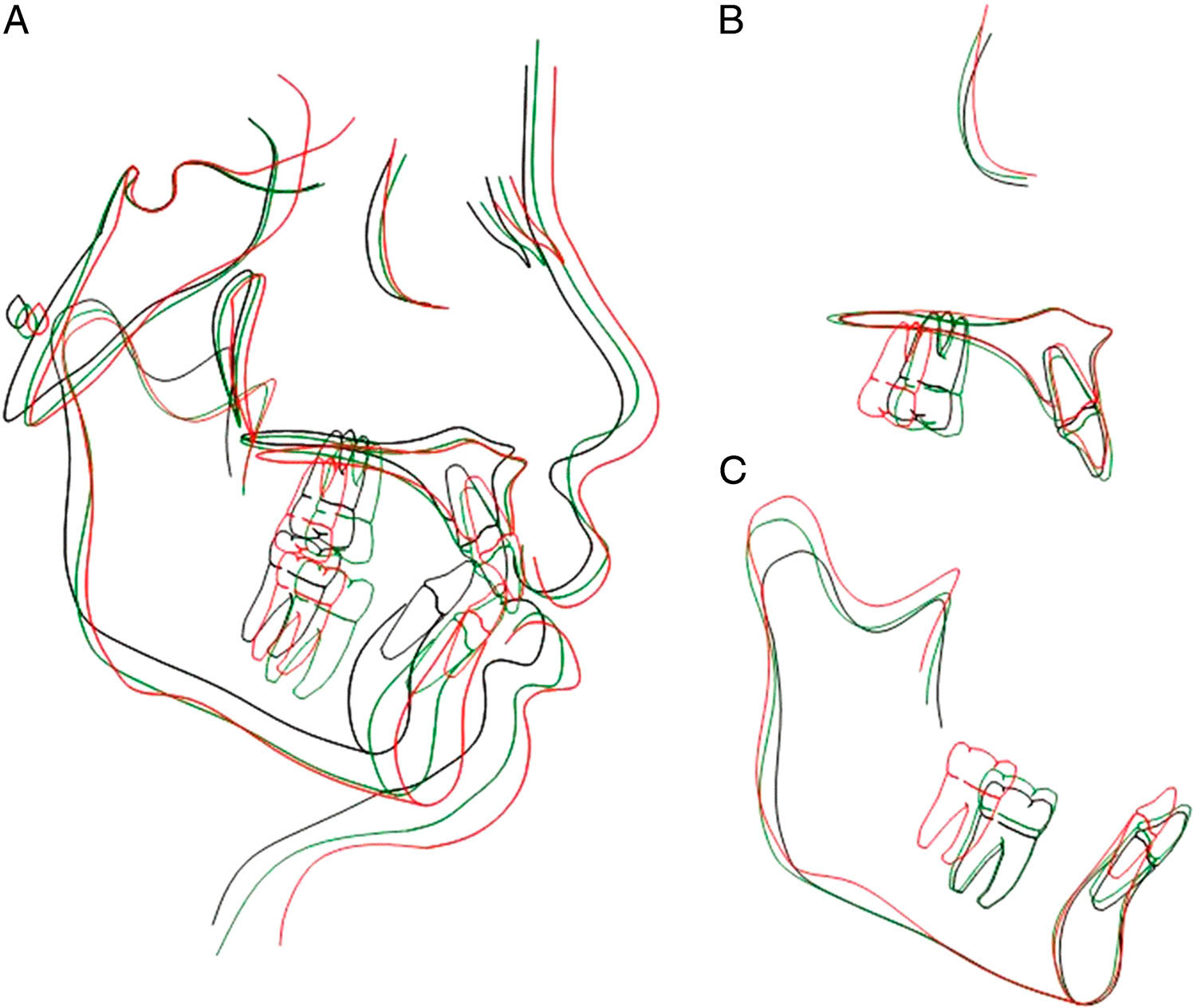
Figure 12.
Posttreatment cephalometric superimpositions. Black line, pretreatment; Green line, after Twin-block treatment; Red line, posttreatment. A, The overall superimposition was registered on SN at sella; B, the maxillary superimposition was registered on the palatal plane at ANS; C, the mandibular super-imposition was registered on the long axis of the mandible at protuberance menti.
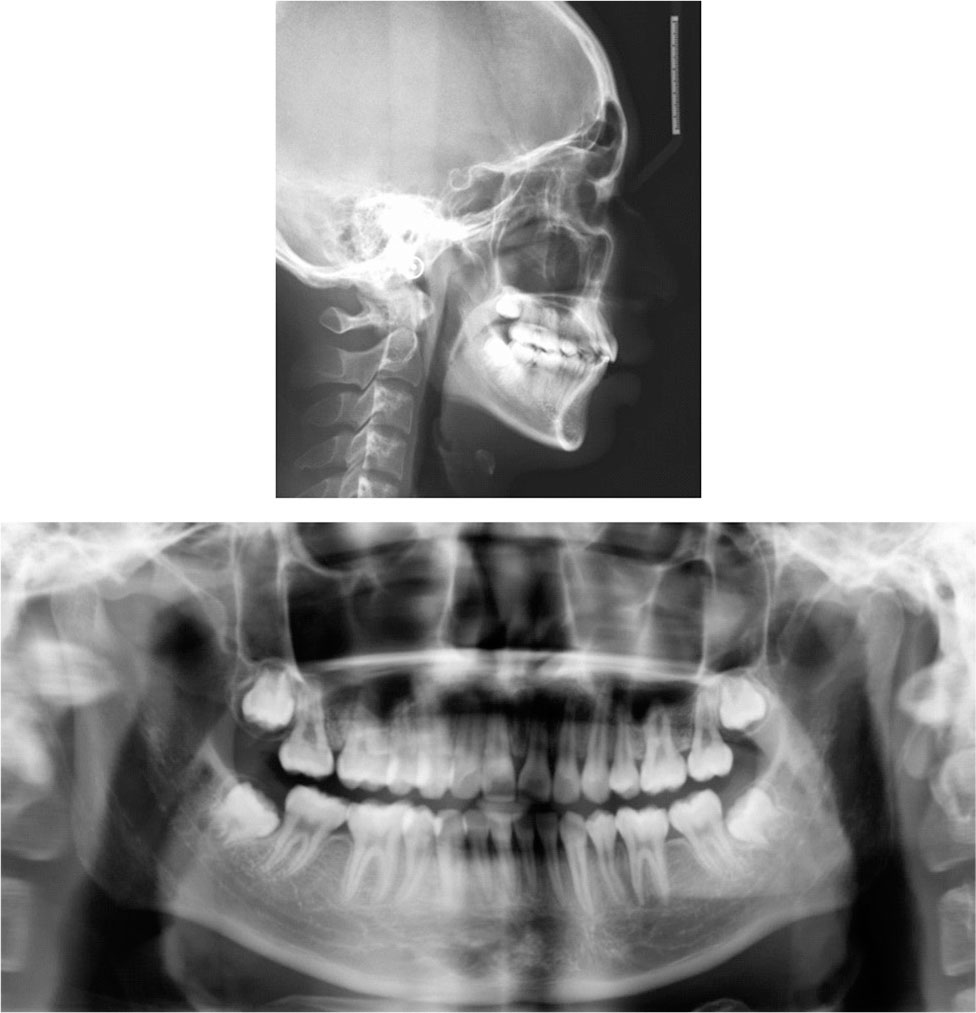
Figure 13.
Posttreatment cephalogram and panoramic radiograph.
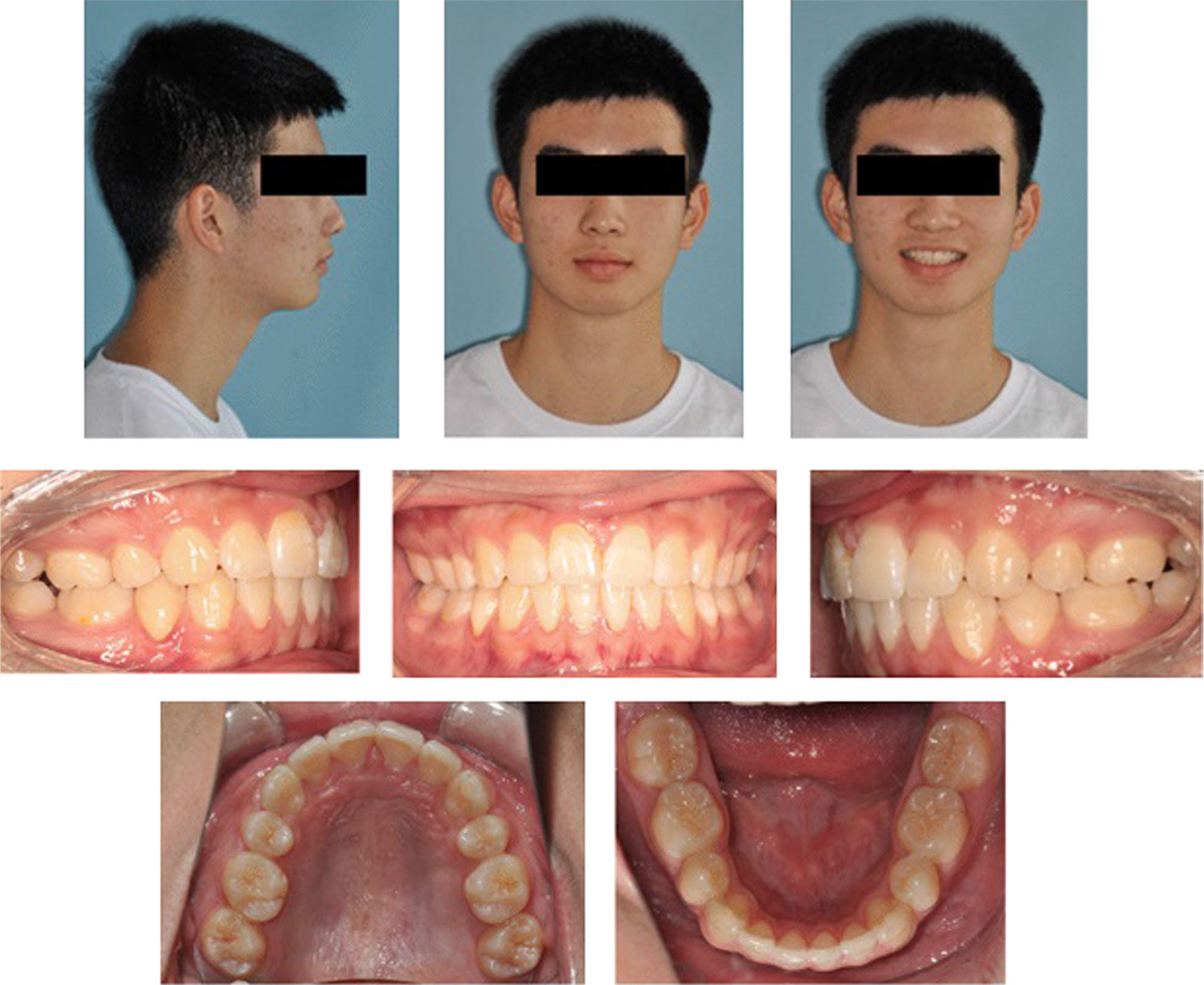
Figure 14.
Follow-up after 2 years of retention.
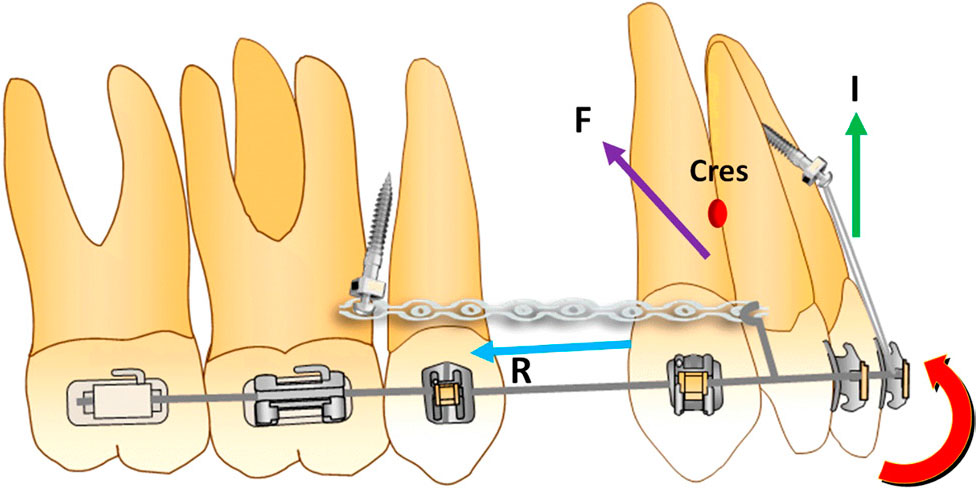
Figure 15.
Biomechanical design for closing the space, where I=intrusive force, R=distal force, F=resultant force and Cres=Centre of resistance of the an-terior teeth, the anterior mini-screws and elastics can give the stainless steel rectangular wire an upward force and positive torque, the posterior mini-screws and power arm can achieve body movement of the anterior teeth, the red curve represents counterclockwise rotation of maxillary anterior teeth.