
1. Introduction
The ongoing need to improve farm animal welfare has led to a growing body of research on environmental enrichment (EE) worldwide (Bachetti et al., 2024). EE can be categorized into sensory, occupational (cognitive), nutritional, social, and physical dimensions (Bloomsmith et al., 1991). Even though the use of EE has shown positive effects for farmed animals (Orihuela et al., 2019; Taylor et al., 2023), it must offer stimuli that allow animals to acquire information, experience pleasure, and enhance their behavioural adaptability (Veissier et al., 2024) to express natural behaviours and satisfy intrinsic motivations (Newberry, 1995).
EE is also widely used to promote positive affective states by providing animals with opportunities for sustained engagement and stimulation, thereby reducing boredom and monotony in captive environments (Newberry, 1995). In addition, enrichment may allow animals to exert greater agency and control over their environment (Abou-Ismail & Mendl, 2016; Mielke et al., 2022), which is considered an important component of positive welfare. However, the effectiveness of enrichment can depend on several moderating factors including the novelty of the stimulus, the level of challenge it provides, and the potential for habituation over time. Enrichments that are too simple may fail to maintain animals’ interest, whereas overly complex stimuli may induce frustration (Abou-Ismail & Mendl, 2016; Sambrook & Buchanan-Smith, 1997). Moreover, not all enrichment strategies directly induce positive experiences; some may primarily reduce negative states or improve biological functioning. Consequently, the outcomes of enrichment can vary depending on the type of enrichment provided and the behavioural and physiological processes it targets.
Physical enrichment is one of the most used forms of EE for dairy calves, as it can be applied in various ways. This includes modifying the size or complexity of calves’ enclosures by adding elements such as objects, substrates, or permanent structures (Mandel et al., 2016). Interest in the adoption of EE for dairy calves is growing, and literature reviews have been conducted to systematize the scientific knowledge obtained so far (Figure 1). For instance, Welk et al. (2023) reviewed studies evaluating different milk-feeding practices, while Mota-Rojas et al. (2024) focused on tactile, auditory, and visual stimulation as EE for dairy cattle. The social housing of dairy calves was reviewed by Miller-Cushon & Jensen (2025), Costa et al. (2016), and meta-reviewed by Donadio et al. (2024). Roland et al. (2016) reviewed the effects of housing type (indoor vs outdoor) on calves’ thermoregulation and their response to climatic conditions. However, no review has systematically reviewed the literature to describe how effective physical enrichment is for dairy calves. Thus, we conducted a systematic review to evaluate the effects of physical enrichment on the behaviour, growth, feed intake, health, and physiology of dairy calves.
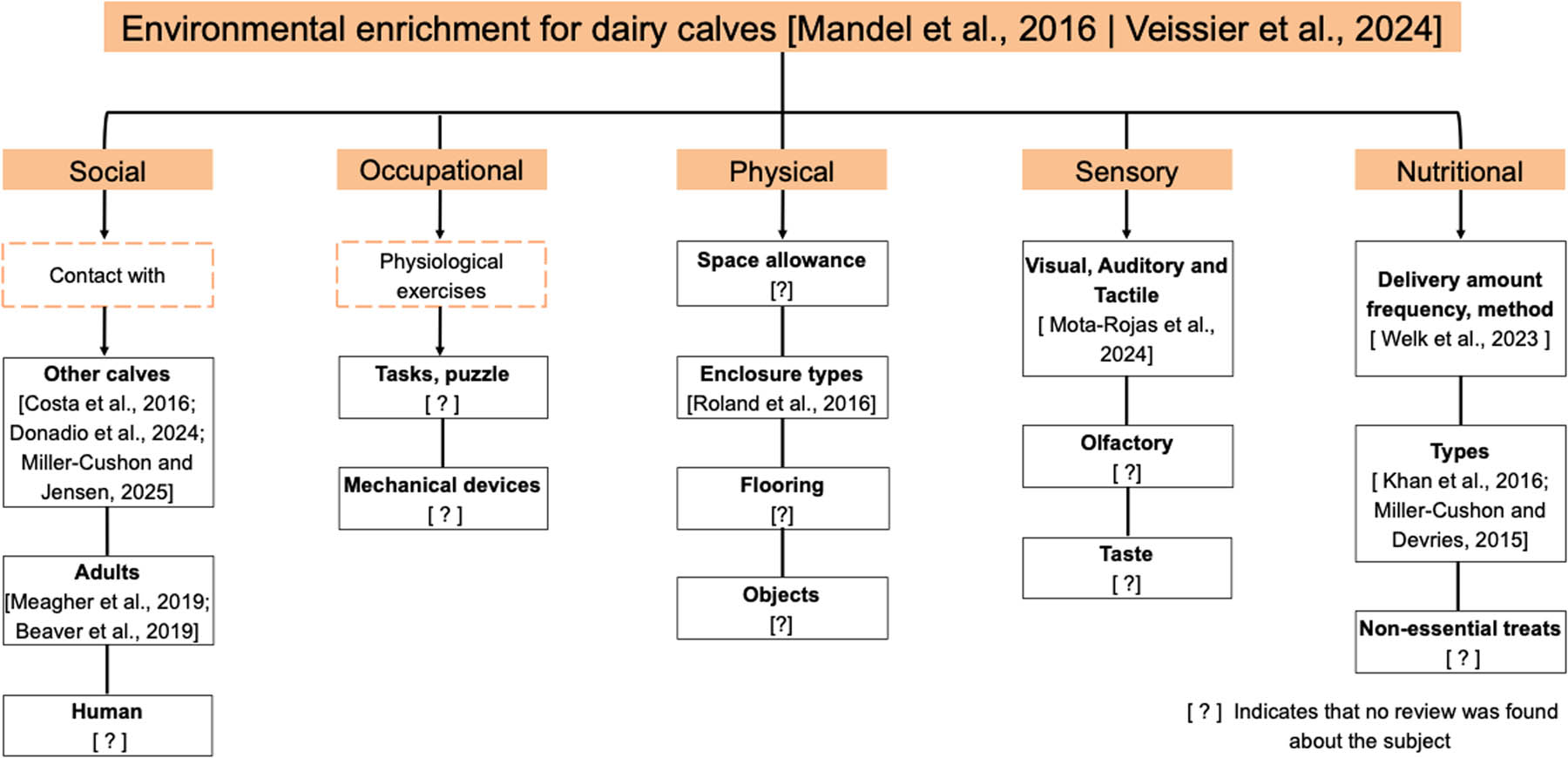
Figure 1
Diagram of knowledge gaps in literature reviews regarding EE for dairy calves. For this review, we used physical enrichment as defined by Mandel et al. (2016) and Veissier et al. (2024).
2. Methods
This review was conducted following the guidelines of preferred reporting items for Systematic review and Meta-analysis Protocols (Page et al., 2021). The protocol used for this systematic review can be found in the Supplementary File S1.
2.1. Search strategy
We searched for studies that evaluated the effect of physical enrichment on dairy calves (up to 12 months of age) in the Web of Science and PubMed databases. Boolean operators (i.e., AND, OR, NOT) were integrated to string together words or phrases, as well as wildcard truncations (denoted as “”) to designate a range of possible word forms. We used the “*” symbol to consider alternate spelling words (e.g. American English vs British English). All the search terms are shown in Table 1.
Table 1
Population and outcome search term strings used for the final search in the systematic review
| Acronym | Search string |
|---|---|
| Population | (calf OR calves OR heifers) AND (dairy OR milking) |
| Intervention and comparison | (“environmental enrichment” OR “space allowance” OR (indoor AND outdoor) OR substrate OR floor OR “wood shavings” OR sand OR accessories OR furnished OR objects OR brush OR ball OR rope OR “dry teat”) |
| Outcome | (behavio* OR play OR explor* OR lying OR intake OR growth OR “body weight” OR “weight gain” OR mortality OR health OR diarrhoea OR respiratory) |
2.2. Study inclusion criteria and screening
Peer-reviewed studies that evaluated the effect of physical enrichment on dairy calves (up to 12 months of age) published before April 2024 were systematically reviewed. Although the term “calf or calves” is commonly associated with pre-weaned animals, dairy science literature (Fantuz et al., 2024; Van Niekerk et al., 2021) frequently discusses dairy calves within a broader pre-pubertal developmental phase extending up to approximately 12 months of age, depending on breed, growth rate, and management conditions. So, for consistency, the term “calf or calves” in this review encompasses dairy calves (up to 12 months of age). The studies included had to present primary research with either experimental or observational design. Only original research studies were considered, and full-text access was required. Eligible studies were required to include one or more treatment groups addressing one or more of the following physical enrichment categories (defined by Mandel et al., 2016): (1) space allowance (e.g. 3 m2/calf vs 5 m2/calf), (2) types of enclosures (e.g. indoor vs outdoor housing); (3) flooring materials (e.g. wood shavings vs sand); and (4) objects (e.g. brushes, ropes, or balls) or permanent structures (e.g. wooden walls or bars). For consistency, the term “flooring” in this review encompasses all types of surface materials calves walk on, including substrates and bedding.
The search on Web of Science returned 679 results, while the search on PubMed returned 354 results. The selection process was conducted in the Rayyan application (Ouzzani et al., 2016), where first the references were uploaded and the duplicates were identified and removed by J.P. Donadio. The remaining studies underwent a four-step screening process, conducted by J.P. Donadio and B.D. Alcantara and the disagreements were resolved by a third investigator (M. Deniz). Step 1: Publications written in a language other than English were removed. Step 2: Studies that involved animals other than dairy calves were removed (exclusion reason: wrong population). Step 3: Studies addressing topics unrelated to the physical enrichment subject were also excluded (exclusion reason: out of the subject). Step 4: Finally, review studies regarding EE for dairy calves were also excluded (but were used in the discussion section of this review), and full texts of the remaining studies were read in detail. The remaining studies were included in the systematic review. During full-text screening, studies were excluded if they were unavailable (exclusion reason: full text unavailable or no feedback from the corresponding author), if the outcomes were unrelated to dairy calves (e.g. fly populations in bedding types; exclusion reason: wrong outcomes), or if the study was addressed for other location than calf rearing environment (e.g. space allowance during transportation; exclusion reason: not rearing environment). Additionally, reference lists from the remaining studies were checked to identify potential studies that were missed in the initial search. Any studies identified that met the inclusion criteria were reviewed in full text and added to the analysis. All references were managed using the Zotero software and a full-text data extraction was performed and compiled into an Excel sheet.
2.3. Data extraction
Data collection was conducted using Excel® by B.D. Alcantara and verified by J.P. Donadio and K.T. De-Sousa. The information extracted from each study was basic information (authors; journal; volume; issue; pages; ISSN; year; country); study design (experimental period [months and year]; number of animals [total and per treatment]); animals (genetic group; sex; age); housing system and management (enclosure environment [indoor, outdoor or semi-open]); housing type (individual; pair; group [more than three animals]); feeding method (manual, automatic, bottle, bucket, or nipple bucket); milk allowance (litres per day); weaning method (gradually or abrupt); physical enrichment (type [space allowance; enclosure types; flooring; objects]); study design; treatments; measurements; and main findings. The quality of each study was assessed by checking if the following information was available and well described in the text: study design; statistical analysis; interobserver reliability (only for observational measures, such as faecal scores and behaviour observations); and discussion about limitations, potential biases, or sources of error. Finally, to assess how effective physical enrichment is for dairy calves, we summarized the direction of evidence regarding the effects of different types of physical enrichment and classified the strength of evidence. The strength of evidence was classified based on the proportion of studies reporting significant effects for each outcome category. Evidence was considered strong when ≥75% of studies reported consistent effects, moderate when 50–74% reported effects, limited when 25–49% reported effects, inconsistent when studies reported conflicting directions of effect, and none when no studies reported significant effects. To facilitate the interpretation of the results, figures and schematic illustrations were developed throughout the manuscript. All figures included in the manuscript were created by the authors and are original. No figures were adapted or reproduced from other publications.
3. Results
3.1. Overview
Sixty-four peer-reviewed studies were included in this review. The number of studies screened, assessed for eligibility, excluded, and included in this review is presented in detail in Figure 2. Twenty-one studies (33%) were published in the Journal of Dairy Science, 12 (19%) in Applied Animal Behaviour Science, 5 (8%) in the Journal of Animal Science, and 3 in Animals (5%). The remaining 23 studies (35%) were published in 21 different journals (refer supplementary file). The studies were carried out mainly in the United States (20 studies – 31%), Canada (8 studies – 12%), New Zealand (7 studies – 11%), Turkey (4 studies – 6%), Denmark (4 studies – 6%), Ireland (3 studies – 2%) ,and United Kingdom (3 studies – 2%). Regarding the study quality assessment, all studies (100%) reported the study design, 55 studies (86%) described the statistical analysis in detail, and 19 studies (30%) discussed (discussion section) caveats and biases of the study. Of the 62 studies (excluding 2 non-observational studies), only 17 (27%) reported interobserver reliability. The relatively low reporting of interobserver reliability may limit confidence in outcome measures that relied on observer-based assessments across studies.
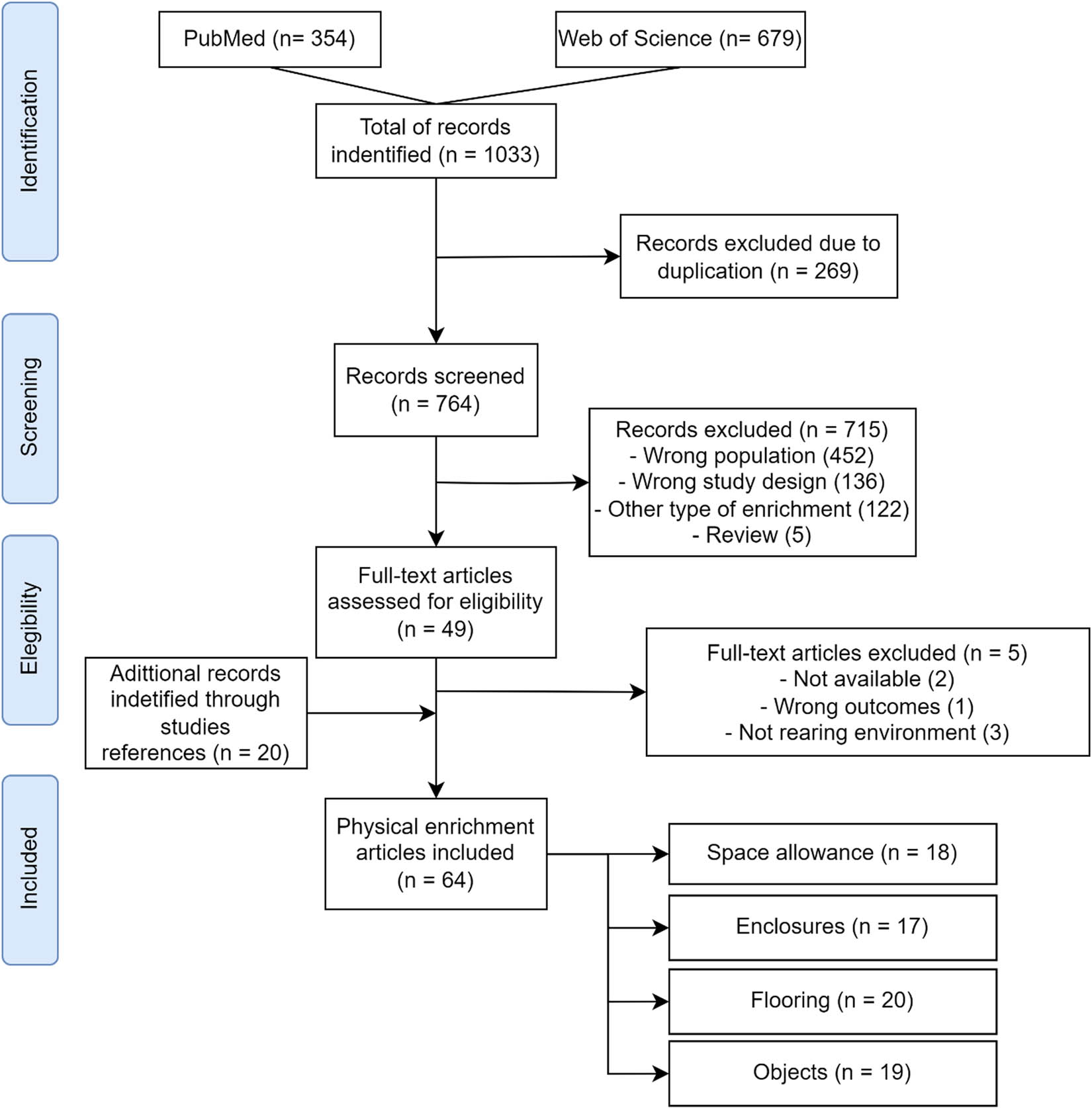
Figure 2
Flowchart following preferred reporting items for Systematic Review and Meta-Analyses guidelines (Page et al., 2021) showing the process used to identify and screen articles for eligibility and inclusion in this systematic review.
The average number of calves enrolled in the studies was 20 per treatment (range: 5–240). Thirty-nine studies (61%) enrolled calves in the experiment after receiving colostrum (range: 2–5 days old), and the average duration of data collection was 85 days (range: 11–364 days). The most evaluated calf breeds were Holstein (35 studies – 55%), Holstein-Friesian (13 studies – 20%), Friesian-cross (9 studies – 14%), Jersey (6 studies – 9%), Brown Swiss (3 studies – 5%). Four studies (6%) used other less represented breeds (e.g., Ayrshire and Guernsey), and 2 studies (3%) did not specify the animals’ breed. Twenty-five studies (39%) evaluated female calves, 19 (29%) male calves, 18 (28%) both (male and female), and 3 (5%) did not report the calf sex.
Regarding liquid diet (milk or substitute), most of the studies (49 studies; 75%) used manual feeding (e.g., buckets; bottles), 5 (9%) used the automatic milking system, 2 (3%) used both (manual and automatic system), and 4 (6%) did not report the feeding method used to offer liquid diet. Five studies (8%) evaluated only weaned calves and did not report milk-feeding methods, since inconsistencies in the reporting of weaning age and developmental stages across studies, comparisons between pre-weaning and post-weaning responses to physical enrichment were not performed. Considering the studies that fed calves manually (n = 51), 19 (37%) used nipple buckets, 13 (25%) used open buckets, 8 (16%) used bottles, 1 (2%) compared open bucket vs nipple bucket, and 10 (20%) did not specify the milk delivery method.
Of the 59 studies that evaluated pre-weaned calves, 11 (19%) reported the milk allowance as a percentage of body weight (range: 5%–12% per day) and 7 (12%) did not report the milk allowance. Forty-one studies (69%) reported milk allowance as litres per day; in 16 (39%) of these studies, milk allowance ranged from 3 to 5 L/day, in 23 (56%) ranged from 5 to 8 L/day, and in 2 (5%) ranged from 8 to 12 L/day. The weaning method was gradual (e.g. step-down method) in 22 studies (37%) and abrupt in 12 studies (20%). Overall, weaning age ranged from 28 to 94 days. Twenty-three studies (39%) reported weaning age between 30 and 60 days, 9 (15%) reported weaning after 60 days, and 2 (3%) reported weaning calves before 30 days of age. Twenty-five studies (42%) did not report the age and weaning method.
Forty-two studies (65%) raised calves indoors, 3 (5%) raised calves outdoors, 3 (5%) evaluated calves in semi-open environments, and 17 (26%) compared indoor vs outdoor housing. Thirty-four studies raised calves individually (52%), 6 in pairs (9%), 19 in groups of 3–6 calves (29%), 9 in groups of 7–12 (14%), and 4 in groups of 13–20 calves (6%). Of the 65 studies that met the selection criteria, 8 (12%) evaluated more than one type of physical enrichment within the same study, leading to repeated counts for studies involving multiple enrichment types.
Overall, the results indicated that behavioural responses showed the most consistent positive effects across enrichment types, whereas effects on growth, feed intake, and physiology were generally limited or inconsistent among studies. The direction of evidence for each enrichment type and outcome category is summarized in Table 2, and the overall strength of evidence is shown in Figure 3.
Table 2
Summary of the direction of evidence for the effects of physical enrichment type on dairy calves reported in studies (n = 64) included in this systematic review
| Outcomes | Physical enrichment type | |||
|---|---|---|---|---|
| Space allowance | Outdoor access | Flooring type | Enrichment objects | |
| Behaviour | ↑ 12 · ↔ 4 | ↑ 4 · ↔ 3 | ↑ 14 · ↓ 0 · ↔ 1 | ↑ 19 · ↓ 0 · ↔ 0 |
| Growth | ↑ 2 · ↓ 0 · ↔ 4 | ↑ 3 · ↓ 4 · ↔ 6 | ↑ 3 · ↓ 3 · ↔ 7 | ↑ 2 · ↓ 0 · ↔ 7 |
| Intake | ↑ 0 · ↓ 0 · ↔ 5 | ↑ 1 · ↓ 3 · ↔ 5 | ↑ 3 · ↓ 3 · ↔ 2 | ↑ 1 · ↓ 0 · ↔ 5 |
| Health | ↑ 0 · ↓ 0 · ↔ 3 | ↑ 7 · ↓ 1 · ↔ 2 | ↑ 3 · ↓ 2 · ↔ 4 | ↑ 0 · ↓ 1 · ↔ 5 |
| Physiology | ↑ 5 · ↓ 2 · ↔ 1 | ↑ 1 · ↓ 0 · ↔ 2 | ↑ 4 · ↓ 2 · ↔ 3 | ↑ 0 · ↓ 0 · ↔ 2 |
↑ improvement or increase associated with enrichment; ↓ reduction associated with enrichment; ↔ no statistically significant effect. Values represent the number of studies reporting each outcome direction.
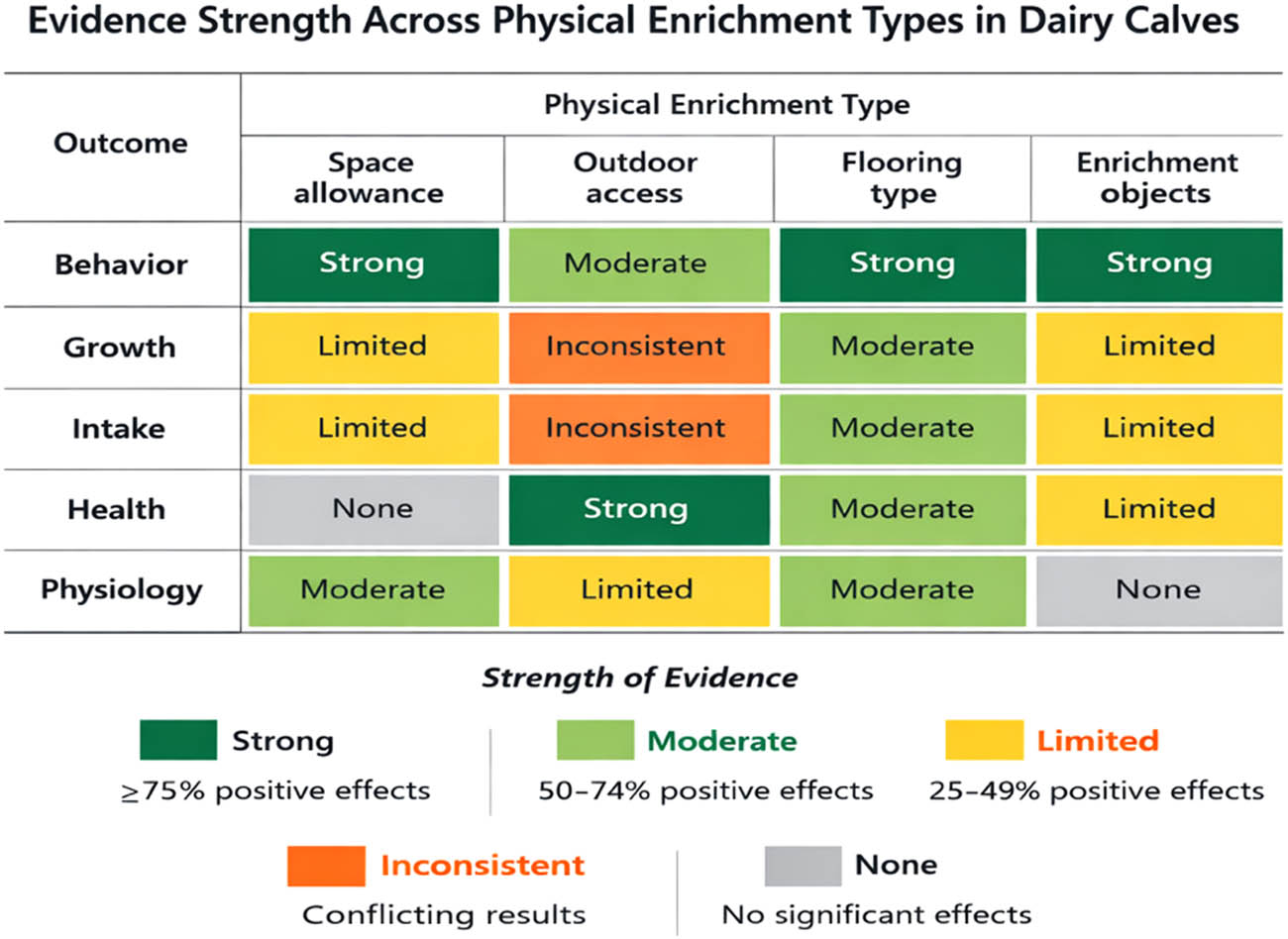
Figure 3
Heatmap showing the strength of evidence from studies included in this systematic review (n = 64) evaluating different physical enrichment types for dairy calves.
3.2. Space allowance
Eighteen studies (28%) evaluated the effects of increasing the space in calf-rearing environments. The characteristics and main findings of the included studies that compared space allowances for dairy calves are summarized in Supplementary Table S1. Figure 3 illustrates the space allowances (m2 per calf) used as treatments across the 18 studies. Seventeen studies (94%) reported increasing the total available area for the calves (range of studied areas per calf: 0.25–5.75 m2), while one study (6%) maintained the same total area but increased the resting area from 0.5 to 2 m2 per calf. Of the 18 studies investigating the effects of space allowance, 15 (83%) were conducted indoors, 1 (6%) was conducted in a semi-open environment, and 2 (11%) compared indoor vs outdoor systems within the same study. Housing systems were predominantly individual (39%), but also included pair housing (6%), groups of 3–6 calves (22%), and larger groups of 6–15 calves (11%) allocated to different space allowances. The remaining studies (22%) evaluated multiple types of housing, such as individual housing alongside groups of 3–6 calves, within the same study. Three studies (17%) combined two social housing types in their comparison of space allowances (Figure 4).
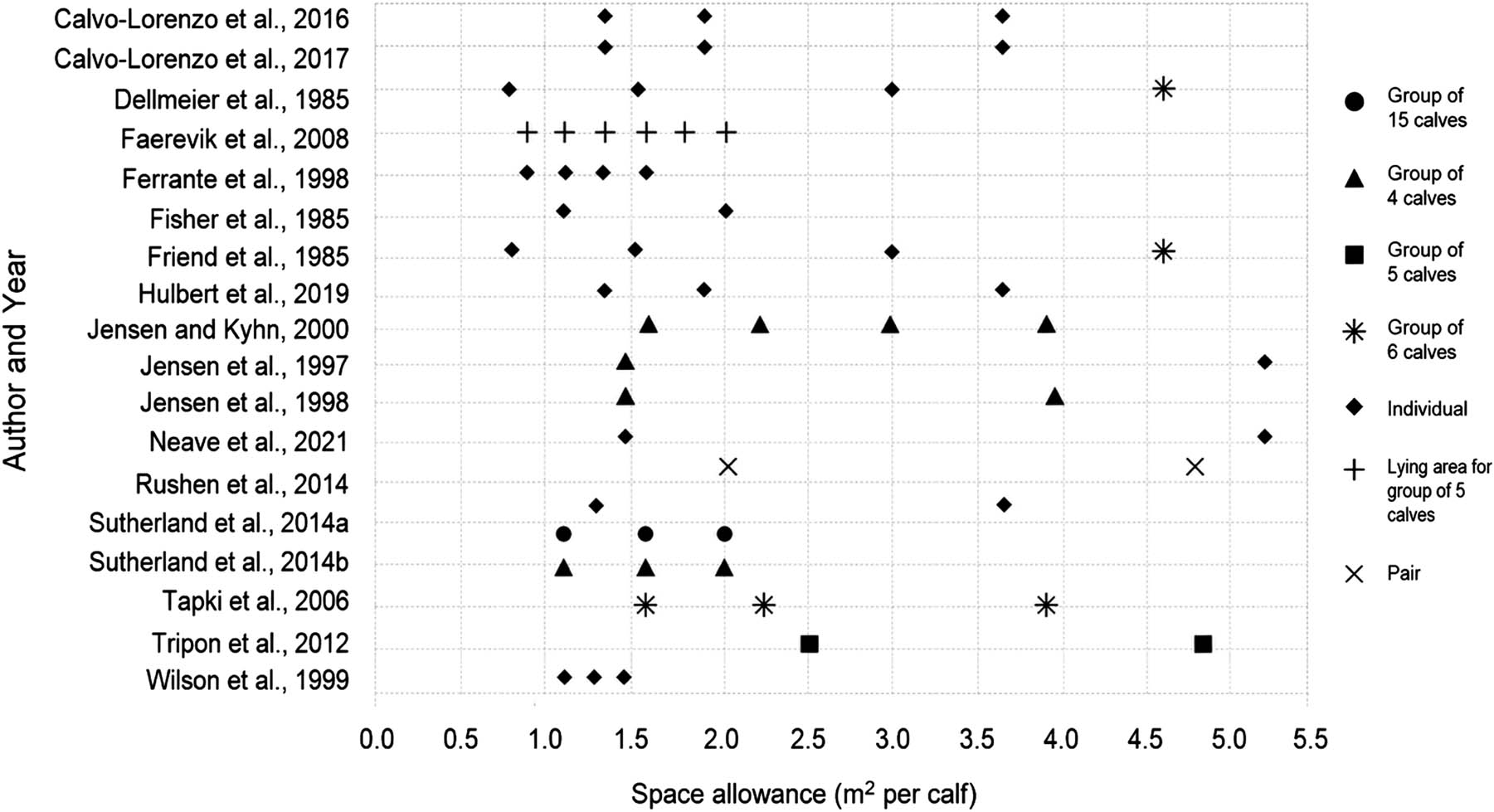
Figure 4
Representation of different space allowances (m2 per calf) and social housing evaluated in 18 studies included in this systematic review. Each group size evaluated is represented by a symbol.
The outcomes evaluated in the studies were related to behaviour (n = 16; 89%), intake (n = 5; 28%), growth (n = 6; 33%), health (n = 3; 17%), and physiology (n = 8; 44%).
Of the 16 studies that evaluated calf behaviour, 10 (62%) assessed posture frequency within the home pen. Findings of 6 studies indicated that larger pen areas increased activity levels and reduced the lying time (Calvo-Lorenzo et al., 2016, 2017; Dellmeier et al., 1985; Færevik et al., 2008; Hulbert et al., 2019; Sutherland et al., 2014b) and three studies reported no effect of space allowance in lying time (Jensen & Kyhn, 2000; Neave et al., 2021; Wilson et al., 1999). Among the six studies that examined play behaviour, four observed a higher frequency of play in calves housed in larger areas (Dellmeier et al., 1985; Jensen et al., 1998; Jensen & Kyhn, 2000; Tapki & Şahin, 2006), while the remaining two found no significant differences (Færevik et al., 2008; Neave et al., 2021). Grooming behaviour was more frequent in calves provided with larger pen areas in two (Ferrante et al., 1998; Wilson et al., 1999) of the four studies that assessed this behaviour, whereas the other two studies (Færevik et al., 2008; Neave et al., 2021) reported no differences. Additionally, five studies investigated calves’ responses in behavioural tests, such as arena and reward tests (Jensen et al., 1997; Jensen & Kyhn, 2000; Neave et al., 2021; Rushen & De Passillé, 2014; Sutherland et al., 2014a). Three studies reported that calves housed in smaller areas were more active and engaged in more locomotor play (e.g. running) during arena tests (Jensen & Kyhn, 2000; Rushen & De Passillé, 2014; Sutherland et al., 2014a).
In five studies, the feed intake was unaffected by increased space allowance; however, one of these studies (Hulbert et al., 2019) reported that calves housed in larger areas (1.85 m2 and 3.71 m2) consumed set amounts of feed (250, 750, and 1,000 g) at earlier ages than calves in smaller areas (1.23 m2). Of the six studies evaluating calf growth, two found that calves reared in larger pen areas (3.71 m2 vs 1.23 m2) showed greater body weight (8% – Calvo-Lorenzo et al., 2016; and 10% – Hulbert et al., 2019). In contrast, four studies found no significant differences (Fisher et al., 1985; Friend et al., 1985; Sutherland et al., 2014b; Tapki & Şahin, 2006).
None of the three studies assessing health parameters reported significant differences in disease incidence across space allowances (Calvo-Lorenzo et al., 2016; Fisher et al., 1985; Sutherland et al., 2014b). Regarding physiological variables (n = 8), seven studies (75%) reported significant effects of space allowance on physiological parameters (Calvo-Lorenzo et al., 2016, 2017; Ferrante et al., 1998; Fisher et al., 1985; Friend et al., 1985; Hulbert et al., 2019; Wilson et al., 1999) and 1 study (Sutherland et al., 2014b) found no difference on physiological parameters. Three studies measured blood cortisol levels, with two (Calvo-Lorenzo et al., 2017; Wilson et al., 1999) of these finding that rearing calves in larger spaces (1.36 m2 vs 1.00 m2 and 3.71 m2 vs 1.23 m2) reduced cortisol levels (1.69–1.04 ng/mL and 25.8–24.2 ng/mL).
3.3. Enclosure types
Seventeen studies (23%) included in this review assessed the effects of outdoor access on dairy calves. Sixteen studies (94%) directly compared indoor vs outdoor housing systems, while one (6%) descriptively examined the impact of providing outdoor access to calves reared indoors. The outcomes and main findings of these studies are summarized in Supplementary Table S2. Indoor housing refers to fully enclosed environments where calves are sheltered from outdoor weather conditions, typically with controlled lighting and temperature. In contrast, outdoor housing involves exposure to natural weather conditions and access to diverse stimuli, such as sunlight, fresh air, views of the landscape, and, in some cases, pasture.
Housing systems were predominantly individual (n = 7; 39%) but also included pair housing (n = 1; 6%), groups of 3–6 calves (n = 4; 22%), and larger groups of 6–15 calves (n = 2; 11%) allocated to different space allowances. The remaining two studies compared individual housing with group housing of 3–6 calves within the same experiment. Indoor housing systems included pens (n = 11; 65%), barns (n = 4; 24%), elevated cages (n = 2; 12%), cubicles (n = 1; 6%) and monopitch barn (n = 1; 6%). Outdoor housing systems consisted of pasture paddocks or yards (n = 9; 53%), hutches (n = 8; 47%), open sheds or shelters (n = 2; 12%), and straw-dust paddocks (n = 1; 6%). The outcomes evaluated across the studies included calf behaviour (n = 7; 41%), growth (n = 13; 76%), feed intake (n = 9; 53%), health (n = 10, 59%), and physiological responses (n = 3; 18%).
Of the seven studies that evaluated calf behaviour, the most frequently assessed behaviours were standing (n = 6; 86%), comfort behaviours (e.g. grooming; n = 3; 43%), and play (n = 3; 43%). Reported behavioural effects when comparing enclosure types included higher frequency of standing and comfort behaviours, and locomotor play in outdoor reared calves compared to calves housed indoors (Boyle et al., 2008; Dellmeier et al., 1985; Hepola et al., 2006; Sinnott et al., 2022). Indoor housing systems were associated with increased risks of slips, trips, and falls (Boyle et al., 2008; Dellmeier et al., 1985).
Findings regarding growth and feed intake were mixed. Among the 13 studies assessing growth parameters, outdoor-reared calves exhibited greater growth in 3 studies (23%; Davis et al., 1954; Razzaque et al., 2009; Richard et al., 1988) and lower in 4 studies (31%; Boyle et al., 2008; Hill et al., 2011; Sinnott et al., 2022; A. Wójcik et al., 2013), with no difference found in 6 studies (46%; Earley et al., 2004; Friend et al., 1985; Hepola et al., 2006; Jorgenson et al., 1970; Murley & Culvahouse, 1958; Van Horn et al., 1976). Similarly, of the nine studies evaluating feed intake, outdoor calves showed greater intake in only one study (11%; Murley & Culvahouse, 1958), lower intake in three studies (33%; Boyle et al., 2008; Hill et al., 2011; J. Wójcik et al., 2013), and five studies reported no differences (55%; Earley et al., 2004; Hepola et al., 2006; Jorgenson et al., 1970; Richard et al., 1988; Van Horn et al., 1976).
Health outcomes were assessed in ten studies. Outdoor-reared calves showed better health outcomes in seven studies (70%), showing reduced incidences of respiratory diseases and diarrhoea, lower counts of coccidia oocysts, improved limb lesion scores, cleaner body conditions, and mortality risk rate (Davis et al., 1954; Earley et al., 2004; Murley & Culvahouse, 1958; Razzaque et al., 2009; Richard et al., 1988; J. Wójcik et al., 2013). However, other two studies (Jorgenson et al., 1970; Sinnott et al., 2022) reported no significant differences in health parameters between indoor pens and outdoor hutch systems and one study (Hill et al., 2011) showed a lower faecal score on calves housed in an indoor pen compared to outdoor individual hutch housed calves. Physiological parameters were affected in just one (Earley et al., 2004) of the three studies (33%) that assessed this variable. The authors observed higher serum IgG1 concentrations in outdoor calves wearing jackets, whereas red blood cell parameters were lower in indoor calves compared to outdoor groups.
3.4. Flooring
Out of the 64 studies included in this review, 20 studies (31%) investigated the impact of various flooring types as a form of physical enrichment for dairy calves. A detailed summary of the study characteristics and key findings is provided in Supplementary Table S3. Figure 5 illustrates the distribution of the 18 different flooring types examined across these 20 studies. Solid flooring materials, including concrete, wood, stones, and slatted floors, were considered harder surfaces and typically used as the control (non-enriched) group. Physical enrichments included softer flooring like organic and inorganic materials such as rubber mats, straw, sawdust, sand, hay, grass, rubber chips, and wood shavings. Less commonly used materials included chaff, pea gravel, granite fines, bagasse, and rice hulls. Most studies (n = 16; 80%) focused on flooring types within indoor systems, while one study examined flooring in a semi-open environment, and three studies also compared different enclosure types. The outcomes assessed in these studies were related to calf behaviour (n = 15; 75%), feed intake (n = 8; 40%), growth (n = 13; 65%), health (n = 9; 45%), and physiological parameters (n = 9; 45%).
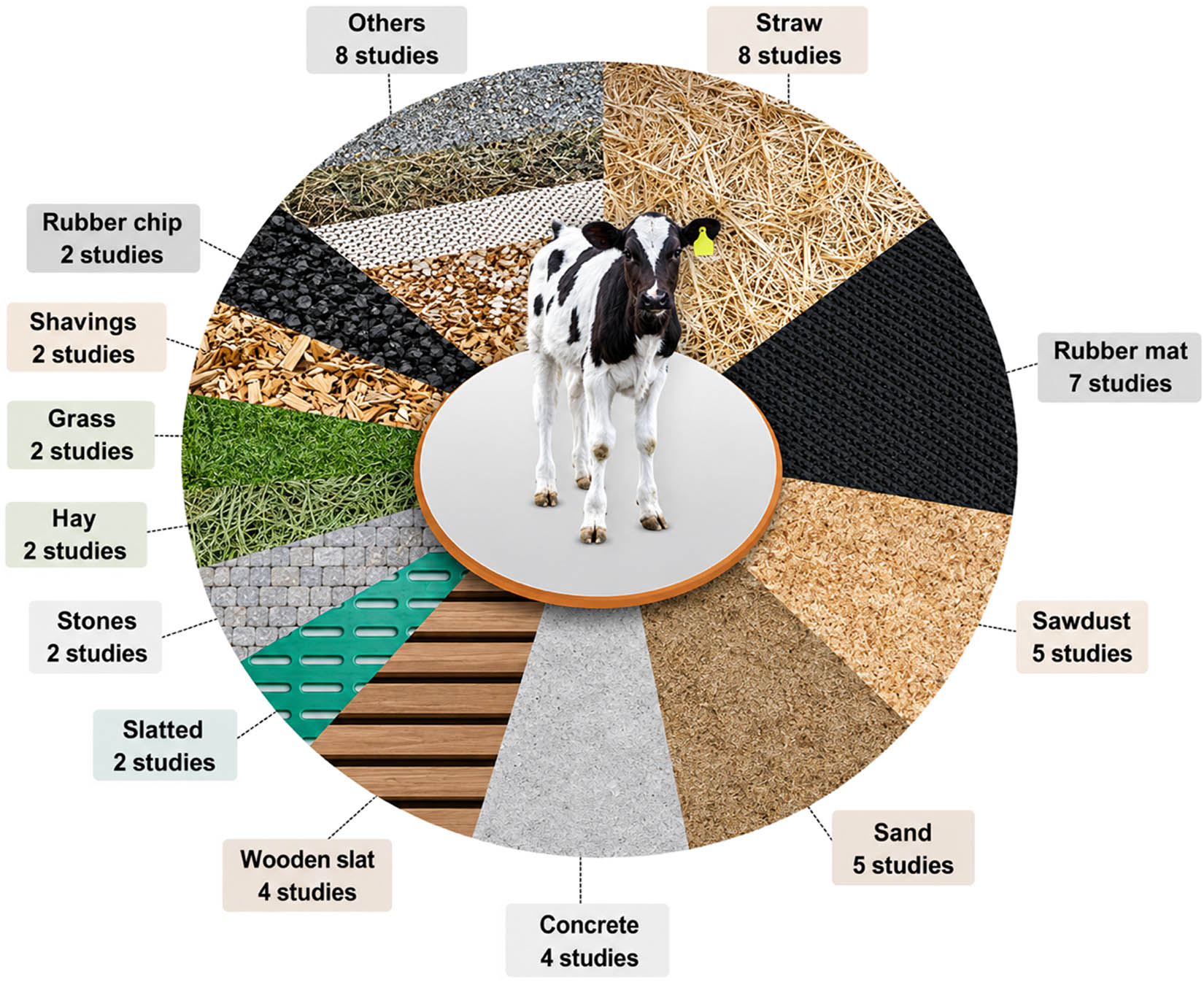
Figure 5
Illustration of different flooring types used for dairy calves in 20 studies included in this systematic review. Note that all studies evaluated at least two flooring types.
Of the 15 studies that evaluated calf behaviour in response to different flooring types, only one (7%) found no effect on calves’ behaviour (standing and resting were measured) comparing rubber mat to concrete flooring (Hänninen et al., 2005). Four studies (27%) specifically assessed calves’ responses in behavioural tests, such as arena and preference tests. Calves housed on harder surfaces, such as stones and wooden slats, displayed reduced playfulness, increased time lying down, and signs of discomfort in their environment (Camiloti et al., 2012; Kartal & Yanar, 2011; Sutherland et al., 2013, 2014b; Yanar et al., 2010). Interestingly, calves reared on river stones exhibited a high frequency of play during arena tests (Sutherland et al., 2014a).
Flooring type significantly influenced feed intake in six of eight studies (75%; Hill et al., 2007, 2011; Hosseini et al., 2021; Panivivat et al., 2004; Yanar et al., 2010, 2022), whereas two studies (25%) found no effect (Fisher et al., 1985; Kartal & Yanar, 2011). Details of outcomes of feed intake are shown in Supplementary Table S3. Growth parameters were affected in 6 of 13 studies (46%; Hill et al., 2007, 2011; Hosseini et al., 2021; Kartal & Yanar, 2011; Yanar et al., 2010, 2022), while 7 of 13 studies (54%) reported no differences (Fisher et al., 1985; Friend et al., 1985; Hänninen et al., 2005; Panivivat et al., 2004; Sutherland et al., 2013, 2014b, 2017). Detailed comparisons showed that rubber mats resulted in lower body weight at 6 months and lower weight gain between 4 and 6 months of age compared to concrete and wooden slats (Kartal & Yanar, 2011). Similarly, another study found that calves housed on wooden slats achieved greater weight gain from birth to 4 months and better feed efficiency from weaning to 4 months compared to those on concrete or rubber mats (Yanar et al., 2010). However, contrasting findings were reported by Yanar et al. (2022), who observed better performance in calves reared on rubber mats compared with straw bedding, despite greater hay intake on rubber mats. When comparing straw to inorganic materials such as sand and solid wood, calves reared on straw showed greater growth (Hill et al., 2007, 2011) and higher feed intake (Fisher et al., 1985; Hill et al., 2007).
Health outcomes were affected by flooring type in five studies, while four (44%) found no effect of the flooring type on calves’ health. Flooring type played a key role in calf cleanliness and hygiene. Calves housed on rubber mats were consistently dirtier; two studies reported that the pens became wetter over time compared to those on straw, sand, or wooden slats (Hosseini et al., 2021; Yanar et al., 2022). Straw bedding stands out for its superior absorbency compared to inorganic substrates such as sand or granite fines, creating a cleaner and more hygienic environment (Panivivat et al., 2004). In contrast, inorganic surfaces have been associated with increased joint problems and eye issues in calves, likely due to the accumulation of moisture and pathogens on less absorbent surfaces (Hosseini et al., 2021). Physiological parameters were affected in six studies (Friend et al., 1985; Hänninen et al., 2006; Hosseini et al., 2021; Sutherland et al., 2013, 2014b, 2017), and three studies found no effects (Fisher et al., 1985; Panivivat et al., 2004; Worth et al., 2015).
3.5. Objects
Out of the 64 studies included in this review, 19 (29%) evaluated the usage of objects for EE. The included studies’ outcomes and main findings are displayed in Supplemental Table S4. Figure 6 illustrates the distribution of the 10 types of objects used for enriching dairy calves’ enclosure over the 19 included studies. Most of the studies were conducted indoors (n = 15; 79%); one study (5%) was conducted in a semi-open environment; and three studies (16%) were conducted in outdoor rearing systems. Four studies (21%) were conducted with individually housed calves, 3 studies (16%) used pair housing, 3 studies (16%) housed calves in groups of 3–6 calves, and 5 studies (32%) housed calves in groups of 7–20 calves. The remaining three studies (16%) compared individually and pair housed calves within the object treatments. Outcomes were related to behaviour (n = 19; 100%), growth (n = 9; 47%), intake (n = 6; 32 %), health (n = 6; 32%), and physiology (n = 2; 10%).
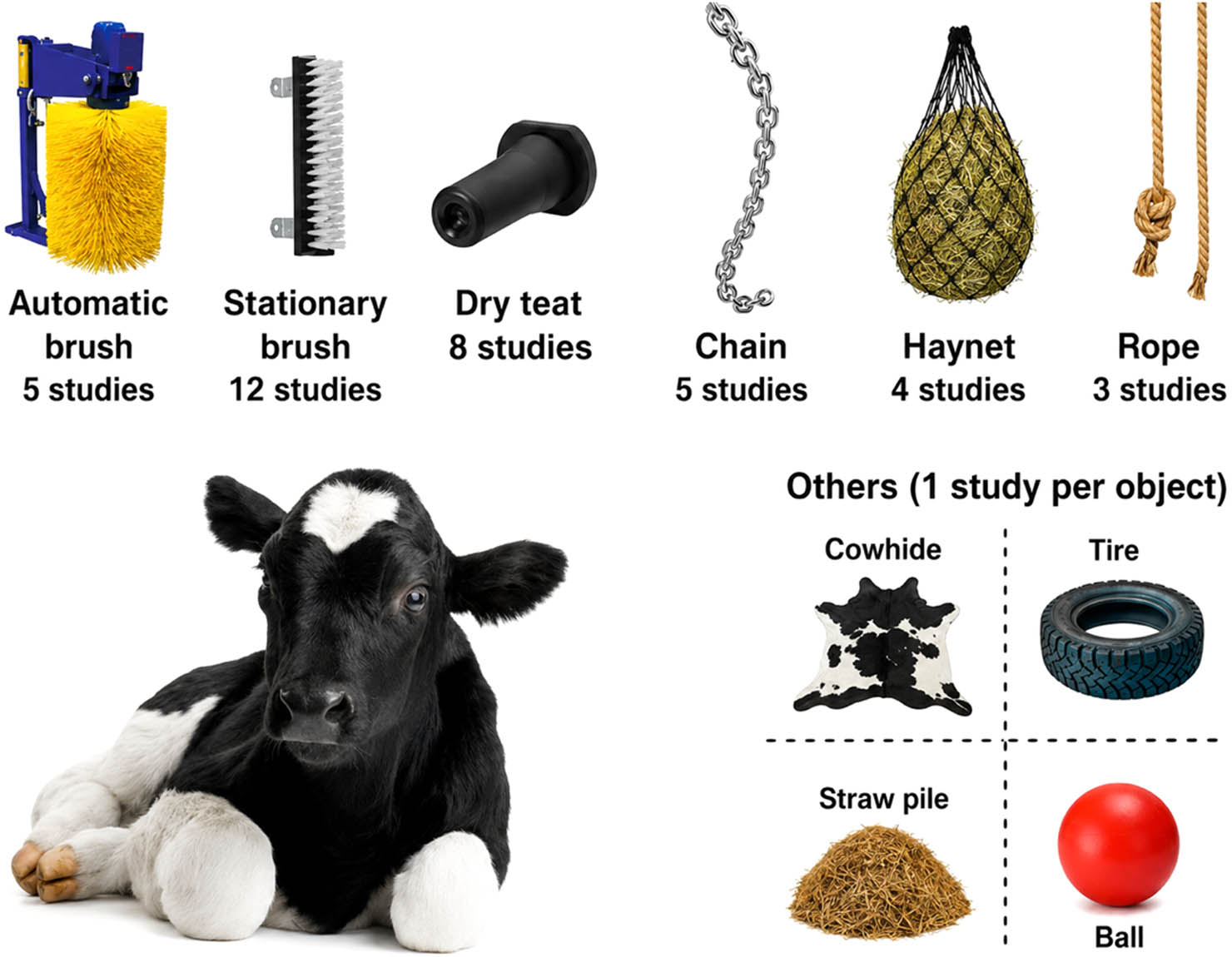
Figure 6
Graphical illustration of the enrichment objects used for enriching dairy calves’ enclosure over 19 studies included in this systematic review.
All studies (n = 19; 100%) that evaluated calves’ behaviour reported that the use of objects affected at least one observed behaviour. Four of these studies (21%) evaluated calves’ responses in behavioural tests, such as arena and preference tests (Pempek et al., 2017; Zhang et al., 2021; Zhang et al., 2022a, b). Seventeen studies (89%) used a brush as an enrichment object; among these, 4 studies used automatic brushes (Georg et al., 2007; Neave et al., 2021; Velasquez-Munoz et al., 2019; Zobel et al., 2017), 12 used stationary brushes (Horvath et al., 2020; Horvath & Miller-Cushon, 2019; Miranda et al., 2023; Pempek et al., 2017; Reyes et al., 2022; Silva et al., 2022; Van Os et al., 2021; Zhang et al., 2021; Zhang et al., 2022a, b), and 1 used both types (Strappini et al., 2021). Two studies (Georg et al., 2007; Pempek et al., 2017) found that the time of brush usage increased as calves grew older. In two studies, calves with access to brushes were cleaner (Horvath et al., 2020; Horvath & Miller-Cushon, 2019). Furthermore, one study (Strappini et al., 2021) found that calves interacted more frequently with brushes than ropes, when both were available simultaneously.
Other enrichment objects evaluated in the studies were dry teats (n = 8; 42%), chains (n = 5; 26%), hay nets (n = 4; 21%), ropes (n = 3; 16%), and balls, tires, straw piles, cowhide, a calf “lollie” and barriers at nipples for milk were each assessed in one study, resulting in six distinct studies (32%). Calves housed with multiple enrichment objects exhibited lower incidences of cross-sucking compared to those in barren environments (Ude et al., 2011; Zhang et al., 2021). Furthermore, calves in enriched pens spent more time eating (Horvath et al., 2020) and displayed increased exploratory behaviour (Zhang et al., 2022a).
Of nine studies that evaluated calves’ growth, two studies (22%) observed improved growth in calves provided with access to enrichment objects (Zhang et al., 2021; Zhang et al., 2022b), whereas seven (88%) reported no significant differences (Deikun et al., 2020; Horvath et al., 2020; Pempek et al., 2017; Silva et al., 2022; Ude et al., 2011; Veissier et al., 2002; Velasquez-Munoz et al., 2019). Five studies (83%) that evaluated feed intake found no differences between calves with or without access to enrichment objects, but one study found that enriched calves presented higher feeding efficiency (Zhang et al., 2021). Health outcomes were unaffected in 83% of studies (n = 5), while one study reported calves reared on barren environments had a longer time to first disease (9 days) compared to calves with access to brush (6 days; Velasquez-Munoz et al., 2019). Two studies (100%) that evaluated physiological parameters found no impact from the presence of enrichment objects (Silva et al., 2022; Miranda et al., 2023).
4. Discussion
Our findings indicate that enriched environments impact behaviours in calves. Overall, increased space allowances and outdoor systems stimulate active behaviours, while softer substrates provide dairy calves with more comfortable rest areas, a cleaner environment, and better health. Besides, enrichment objects stimulate calf activity and reduce undesirable behaviours such as cross-sucking. However, feed intake, growth, health, and physiological parameters are only influenced by certain types of physical enrichment. Impoverished conditions are often present in conventional rearing systems, making it essential to introduce natural complexity into these environments. Enrichment solutions should meet the biological needs of animals (e.g. dairy calves), promote healthier growth and enhance their quality of life (Veissier et al., 2024). Future research must prioritize identifying and refining strategies that address the limitations of conventional calf-rearing systems. Addressing these knowledge gaps will allow us to establish more effective and sustainable standards for managing dairy calves.
We found that all types of physical enrichment stimulated calf activity. This reinforces the intrinsic motivation of calves to engage in locomotor behaviours such as walking, playing, and exploring (Jensen, 1999; Jensen & Kyhn, 2000). For example, larger space allowances in calf-rearing systems promoted active behaviours such as playing and exploring while reducing cortisol levels. The increase in play behaviour in calves housed in larger spaces and in outdoor systems likely reflects more than elevated activity. Play behaviour typically occurs in the absence of fitness threats and is commonly associated with positive affective states (Held & Špinka, 2011). Thus, increased play in enriched environments may indicate enhanced affective experience or reduced environmental restriction. Animals that engage in playful and exploratory behaviours appear to be less likely to experience anxiety and may be better prepared to cope with future challenges, as evidenced by studies in other species, including mice (Richter et al., 2016) and humans (Magnuson & Barnett, 2013). Calves naturally explore their surroundings, engage in social interactions, and perform highly motivated behaviours, such as grooming and sucking (De Passillé, 2001; Ede et al., 2022; Whalin et al., 2021). In barren or under-stimulating environments, calves are more prone to frustration (Hulbert & Moisá, 2016; Mellor, 2012), often manifesting as undesirable behaviours like non-nutritive oral activities (Doyle & Miller-Cushon, 2023; Unsal et al., 2025). Similar patterns have been observed across other species, including laboratory mice (Bailoo et al., 2018; Whittaker et al., 2012), growing pigs (Averós et al., 2012; Chidgey, 2024), and hens (Widowski et al., 2017). Promoting a positive environment during early life is critical for promoting long-term welfare, as it fosters resilience and better coping mechanisms (Adcock, 2021; Miller-Cushon & Jensen, 2025). However, practical challenges, such as limited housing capacity and potential impacts on productivity, often discourage farmers from adopting enrichment practices. Innovative approaches, such as providing “play areas” for indoor-housed calves, could promote active behaviours and mitigate the effects of confinement (Jensen et al., 1998).
Establishing the optimal space allowance and flooring type to stimulate active behaviours, optimize comfort and hygiene, and balance cost-effectiveness while minimizing labour requirements is essential in the design of a good rearing system. Effective shelter provision in outdoor systems is critical for maintaining calf welfare, protecting against extreme weather, and preventing thermal stress (Verdon, 2021). Also, providing softer, well-bedded surfaces has been shown to reduce discomfort and promote lying time, it is an important calf comfort indicator (Fregonesi et al., 2009; Haley et al., 2001; Norring et al., 2010; Tucker et al., 2009). Organic substrates like sawdust and straw are effective for maintaining better hygiene and comfort, though they require frequent replacement to prevent contamination and sustain their benefits (Panivivat et al., 2004). Inorganic materials, such as sand, while durable, tend to retain moisture, which can increase pathogen exposure and elevate the risk of health issues such as hoof diseases or respiratory infections (Hosseini et al., 2021). The choice of substrate plays a pivotal role in ensuring both animal welfare and operational efficiency. Among the available options, straw has been demonstrated to support better growth performance and overall feasibility, likely due to its ability to provide insulation, cushioning, and a dry resting surface. Additionally, offering enrichment items should target specific behaviours (as suggested by Vicino et al., 2022), such as brushes to stimulate grooming behaviour (Horvath et al., 2020; Horvath & Miller-Cushon, 2019), while hanging objects (e.g. ropes or chains; Zhang et al., 2021), teats (Unsal et al., 2025), and nipple buckets (Donadio et al., 2025) can be used to redirect oral manipulation to reduce cross-sucking. Protocols successfully developed for other species, such as zoo or laboratory animals, hold an important role in establishing models of environments that mimic natural habitats to promote natural behavioural expression (Arechavala‐Lopez et al., 2022). Furthermore, comprehensive EE programmes may lead to improved animal welfare outcomes, increased positive behaviours, and greater resilience in dairy cattle systems.
4.1. Potential limitations
To provide a comprehensive overview of the issue, no limitations were placed on the sample size, journal, or country of origin to provide an inclusive overview of the topic; therefore, some caution is required in extrapolating our findings. First, caution is required when extrapolating our results to all dairy cattle age categories, as this review included five studies that evaluated only weaned calves. Although dairy calves are commonly defined as animals during the pre-weaning phase, some studies included post-weaning evaluations or animals classified differently according to the original authors’ criteria. In addition, inconsistencies among studies regarding the reporting of weaning age and management practices limited a more detailed stratification between pre-weaning and post-weaning periods. Another important limitation is that some studies evaluated the long-term effects of physical enrichment provided during the pre-weaning phase by assessing animals’ variables (e.g. weight, average daily gain) after weaning. Consequently, separating outcomes exclusively according to developmental stage was not always possible. Furthermore, the relatively small number of studies involving post-weaning animals limited our ability to perform deeper comparisons between enrichment effects during the pre-weaning and post-weaning phases. For this reason, the review primarily emphasized outcome variables and overall responses to physical enrichment rather than focusing specifically on age period classifications. These methodological inconsistencies across studies also prevented the development of a meta-analysis. Therefore, this study remained within the scope of a systematic review following PRISMA guidelines, with emphasis on qualitative synthesis and strength-of-evidence classification. Finally, we recognize that animals of different ages are morphologically, physiologically, and behaviourally distinct, which may influence their responses to environmental interventions. To minimize the heterogeneity, this review specifically focused on physical enrichment strategies rather than including broader categories of EE that could generate even greater variation among age categories.
5. Conclusion
The available evidence supports that physical enrichment generally improves calves’ welfare compared to barren rearing environments. Providing calves with larger spaces enables greater movement and expression of active behaviours. Substrates like straw and sawdust enhance comfort, and the use of enrichment objects promotes greater activity, with each object eliciting specific behavioural responses. However, the variability in outcomes, particularly in terms of calf growth, emphasizes the complexity of calf-rearing systems. This highlights the importance of considering not only physical enrichment but also management factors to achieve a holistic approach to enhancing calf welfare. Therefore, we advocate that some of these practices, including the provision of minimal space for movement, teats, or nipple buckets, should not be considered enrichment or a refinement of the rearing system but rather fundamental requirements for the calves’ biological functioning.
Acknowledgments
Bárbara D. Alcantara acknowledges São Paulo Research Foundation (FAPESP – https://fapesp.br/en) for the scholarship (Grant n°2023/08449-9) during her Bachelor’s degree in Animal Science at the School of Veterinary Medicine and Animal Science, São Paulo State University, Botucatu, São Paulo, Brazil. João P. Donadio acknowledges CAPES (Coordination for the Improvement of High Education Personnel, Brasília, Distrito Federal, Brazil) for the scholarship during his Master’s degree on the Graduate Program in Animal Science at the School of Veterinary Medicine and Animal Science, São Paulo State University, Botucatu, São Paulo, Brazil. Also, we thank the São Paulo Research Foundation (FAPESP – https://fapesp.br/en) for the financial support to perform this project. Maria J. Hötzel, Karolini T. De-Sousa, and M. Deniz acknowledge the support from CNPq (National Council for Scientific and Technological Development, Brasília, Distrito Federal, Brazil).
Funding information
This study was supported by the São Paulo Research Foundation (Grant n°2023/08449-9).
Author contributions
Conceptualization, J.P.D., K.T.S. and M.D.; Data curation, J.P.D. and B.D.A.; Formal analysis, J.D.P.; Funding acquisition, M.D.; Investigation, J.P.D. and B.D.A.; Methodology, K.T.S. and M.D.; Project administration, K.T.S. and M.D.; Supervision, M.D.; Validation, G.T. and M.J.H.; Visualization, G.T. and M.J.H.; Writing – original draft, J.P.D.; Writing – review & editing, K.T.S., M.D., G.T. and M.J.H.
Conflict of interest statement
The authors have not stated any conflicts of interest.
Data availability statement
The data presented in this study are available on request from the corresponding author.
Supplementary material
Supplementary material for this article is available at https://doi.org/10.17605/OSF.IO/SMYXP.