
Aquaculture is one of the fastest-growing industries which helps to meet the increasing demand for seafood (Mohan et al., 2022 a). Global aquaculture production contributed 122.6 million tons in 2020 (FAO, 2022). A variety of fish, shellfish, and seaweed species have been cultured for their nutritional and economic value. Among other organisms, fish and shellfish are cultured predominantly for their food value. In addition, China, India, Indonesia, Vietnam and Bangladesh are considered the largest and dominating aquaculture producers in Asia (Jolly et al., 2023). Most importantly, aquaculture is one of the significant income-generating sectors in many developing and developed nations. Aquaculture production will need to reach 231 million tons by 2050 to reduce the global market demand (Kearney, 2010).
The global crustacean aquaculture industry has achieved a market value of USD 81.5 billion, with a total production volume of 11.2 million metric tons (FAO, 2022). The crustacean farming including shrimp, crab and lobster is rising faster (Boenish et al., 2022). In the crustacean seafood industry, shrimp is expected to dominate in 2023, and reaching 5.7% annually (Villarreal, 2023). Emergence of disease outbreaks, including WSSV, baculovirus, and yellow head disease, poses a major threat to crustacean farming (Lee et al., 2025; Munro and Owens, 2007; Rajan et al., 2000). Both wild catch and farmed crustacean production reached 10 million metric tons per annum (Stentiford et al., 2012).
Previous studies reported that the cost increase is one of the main reasons hindering aquaculture development (Alfiko et al., 2022). Research evidence highlights that the scarcity of fish feed stocks is another issue that is forcing the aquaculture sector to search for alternative feed sources (Olsen and Hasan, 2012). Large quantities of feeds are required with high nutritional value to improve the growth of targeted organisms in aquaculture. However, researchers are engaged in formulating novel feeds by replacing them with plant, animal and insect proteins. There are several research investigations that highlight the usage of insect-based feeds in aquaculture (Henry et al., 2022; Ge et al., 2022). For instance, a wide range of insect species were utilized for partial and complete feed replacement in the aquaculture sector (Fantatto et al., 2024). Earlier studies demonstrated that various insect species like superworm (Zophobas morio), yellow mealworm (Tenebrio molitor) and black soldier fly (Hermatia illucens) serve as a good source of protein (Richardson et al., 2021; Henry et al., 2022; Ge et al., 2022). Mainly, insects comprise 60–70% of protein, and they can serve as an alternative feed for aquatic organisms (Udomsil et al., 2019; Stamer, 2015).
Likewise, BSFL is not only a rich source of protein (Richardson et al., 2021). Nevertheless, it also serves as a good source of amino acids and fatty acids (Zulkifli et al., 2022). Preparation and utilization of BSFL-based feeds in the aquaculture sector is rising steadily. For instance, the role of BSFL feed in fish aquaculture has been reviewed previously (Mohan et al., 2022 a). Many studies have proven that BSFL feeds can improve the growth and immunity of aquacultural crustaceans. The use of BSFL in crustacean feed lies in its sustainable, protein-rich, and cost-effective nature. BSFL serves as an excellent alternative to fishmeal, reducing dependence on marine resources. It enhances growth performance, immunity, and feed conversion efficiency in crustaceans. Moreover, black soldier fly cultivation supports waste recycling and circular bioeconomy practices. However, there is no detailed review stating the role and limitations of BSFL in crustacean aquaculture. Hence, this review aims to highlight the role of BSFL in crustacean aquaculture. The review further examines the key challenges, and possible future prospects.
Nutritional profiles of BSFL Body composition
BSFL serves as an exceptional source of crude protein, fat, and ash contents. Specifically, lauric acid, a type of fatty acid, is also present in BSFL (Ewald et al., 2020). Studies demonstrated that the black soldier fly proximate composition varies among different stages and the diet used for rearing (Khan et al., 2025). Previous studies suggested that the rearing substrate can influence the amino acid, protein and fatty acid contents of BSFL (Fitriana et al., 2022). Different substrates provide varying nutrient profiles that directly influence amino acid balance, protein levels, and fatty acid composition. Protein-rich substrates enhance the essential amino acid content and overall protein yield (Fitriana et al., 2022). Conversely, lipid-rich substrates promote larval fat accumulation, improving lipid yield for biofuel or feed applications. However, excessively high lipid levels may reduce substrate aeration and impair larval growth efficiency (Cattaneo et al., 2023). Therefore, optimizing substrate composition is essential to produce BSFL with desirable nutritional qualities for feed applications. The BSFL were recognized as nutrition-rich stages (Hui et al., 2009). Furthermore, minerals and chitin were also reported from BSFL. It is noteworthy to mention that BSFL have an essential nutritional composition for producing poultry or aquatic feed (Moula et al., 2018). However, clearer information on different stages of body proximate composition would pave the path for outstanding novel feed formulations for aquaculture.
Protein/amino acid content
BSFL contains about 40–45% of crude protein and is rich in essential amino acids (Zheng et al., 2012; Liu et al., 2024). It provides a sustainable alternative protein source for aquaculture. Huseynli et al. (2023) reported that the dry matter of BSFL contains 30 to 53 g/100 g of protein. The freeze-dried BSFL sample contains 30.12 g/100 grams of crude protein, as reported earlier (Miron et al., 2023). Likewise, Lu et al. (2022) reported a BSFL crude protein concentration of 414.7 g/kg. The essential amino acids, including arginine, glutamic acid, aspartic acid, proline, serine, valine, leucine, tyrosine, glycine, and lysine, were reported in BSFL (Zulkifli et al., 2022; Miron et al., 2023). Meanwhile, the quantity of amino acids can vary among different larval stages and feeds utilized in rearing the BSFL (Dillard et al., 2025). BSFL reared using different wastes was found to exhibit a sufficient quantity of protein and amino acids, ensuring that it can be utilized for partial or complete crustacean meal replacement.
Fatty acid content
BSFL fat contains saturated fatty acids and polyunsaturated fatty acids. Specifically, lauric acid, palmitic acid, and arachidonic acid were reported from different stages of BSFL (Ewald et al., 2020). Lee et al. (2025) mentioned the composition of fatty acids from BSFL. Lauric acid is the predominant medium-chain fatty acid in BSFL, known for its strong antimicrobial properties. It enhances feed quality and promotes gut health in aquatic species. Ewald et al. (2020) reported that lauric acid is the major saturated fatty acid in BSFL, with levels up to 52%. In another study, Fitriana et al. (2022) reported 36.74% of lauric acid from BSFL (Fitriana et al., 2022). Further, BSFL comprised 85.6% of saturated fatty acids and 14.4% of unsaturated fatty acids. In another study, Srisuksai et al. (2024) confirmed the presence of fatty acids in the BSFL oil. Recently, Gatlin III et al. (2024) reported the presence of fatty acid compositions using GC-MS analysis. Furthermore, DHA (docosahexaenoic acid) and EPA (eicosapentaenoic acid) in diets are important for the growth and survival of crustaceans. For instance, a previous study demonstrated that diets containing DHA and EPA levels of 0.70 and 0.84 in the crab diet improved growth and survival rates in Portunus trituberculatus (Hu et al., 2017). Jiang et al. (2022) reported that DHA is an important fatty acid for ovarian development in Eriocheir sinensis.
Mineral contents
Minerals play an important role in crustacean’s skeletal formation (Muralisankar et al., 2022). The requirements of minerals vary based on the different developmental stages (Truong et al., 2023). Previous findings reported the effects of 12 different minerals on diet using P. monodon juveniles (Truong et al., 2020). BSFL are rich in essential minerals, including calcium, phosphorus, magnesium, potassium, and sodium, as well as trace elements such as iron, zinc, and manganese. Their exceptionally high calcium-to-phosphorus ratio makes them valuable for animal feed, especially in aquaculture. A study reported that BSFL reared on fruit peels can improve Ca, K, P, and Mg concentrations (Romano et al., 2023). A study documented that calcium (Ca) was predominantly present in the BSFL (Zulkifli et al., 2022). Previous findings stated that BSFL could serve as a good source of mineral contents (Kouřimská and Adámková, 2016). A study stated that the quality of calcium ranges from 1.2 g/kg to 35.7 g/kg (Lu et al., 2022). Meanwhile, the role of minerals in crustacean species is not clearly explored. However, additional investigation on BSFL mineral content will pave a way to improve the feed formulation and their impacts in crustacean culture.
Chitin content
Chitin is a natural biopolymer, reported in crustaceans, fungi, molluscs, insects (Mohan et al., 2019; Zainol Abidin et al., 2020; Mohan et al., 2020, 2021; Iber et al., 2022; Karthick Rajan et al., 2024). Chitin can be extracted from various natural resources via chemical and greener approaches (El Knidri et al., 2018; Maddaloni et al., 2020; Mohan et al., 2022 b). Among them, the greener approach is gaining importance for its eco-friendly properties. Mohan et al. (2024) reported that BSFL serves as a good source of chitin and chitosan and is used for various applications. Chitin yield was reported as 200 g kg−1 from BSFL and 155 g kg−1 from T. molitor larvae (Hahn et al., 2018). Previous findings have shown that an excess of chitin in the aquaculture diet can negatively affect lipid and protein digestibility (Marono et al., 2015; Pascon et al., 2025). On the other hand, chitin present in insect meal may exhibit negative impact on nutrient availability and affect the fish performance (Rangel et al., 2024). Distribution of chitin in different larval stages of BSFL was reported earlier (Wang et al., 2020). Based on the crystalline allomorphs, chitin has been categorized into three different types (α, ß, and γ). The chitin found on the BSFL is of the α type, and this type is predominantly present in shrimps and insects. A chitin concentration of 11.78±0.13% was reported from the prepupae stage after being fed on vegetable wastes (Rampure et al., 2023).
Rearing strategies for black soldier fly
A variety of food and vegetable wastes has been utilized for rearing the BSFL. Different methods have been applied to rear insects, and it has been developed globally (Lähteenmäki-Uutela et al., 2021). Mainly, BSFL was used for the bioconversion of food wastes and considered as an alternative solution to avoid the environmental issues created by food and agriculture wastes (Siddiqui et al., 2022; Rehman et al., 2023; Abirami et al., 2024). The nutritional values of BSFL derived from fruit and vegetable wastes were reported previously (Deshmukh et al., 2024). Likewise, BSFL reared using fermented coconut endosperm waste enhanced the lipid and protein profile of BSFL (Mohd-Noor et al., 2017). Rasdi et al. (2023) evaluated the rearing efficiency of BSFL using different agricultural wastes. Fischer and Romano (2021) reported that BSFL reared using a vegetable waste source have higher amino acid levels and protein content. Yandi et al. (2023) reported that chicken, fruit and vegetable mixed waste sources can be used to rear BSFL and could be used to replace the fish meal partially. Overall, previous literature reviews demonstrated that BSFL can grow in various organic wastes (Rampure et al., 2023; Mohan et al., 2024). On the other hand, the rearing medium used for culturing the BSFL has certain limitations, including pathogenic microbial communities, foul odor and more chances for heavy metal contamination. Hence, it would be better to analyze or evaluate the substrate to avoid the risks.
BSFL meal as a feed ingredient for crustacean aquaculture
BSFL meal is a sustainable alternative protein source for crustacean aquaculture, reducing reliance on fishmeal. It enhances growth performance, immunity, and feed efficiency while supporting eco-friendly farming practices (Figure 1; Table 1).
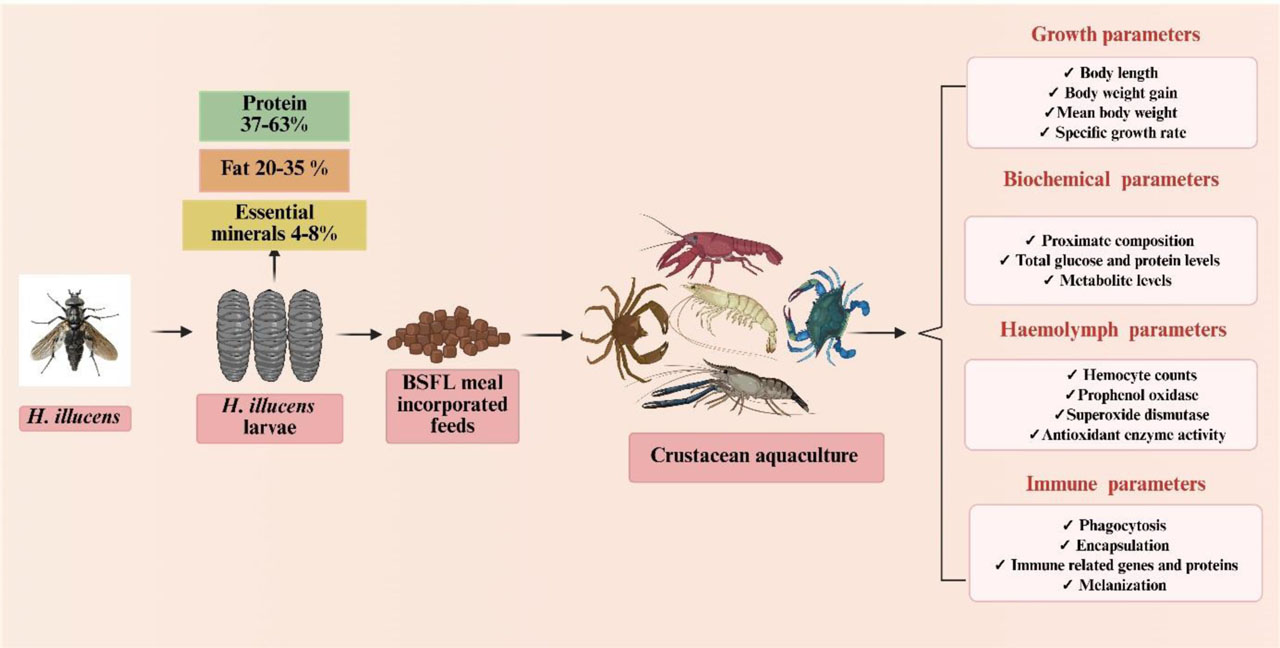
Figure 1.
Overall illustration of black soldier fly larvae meal in crustacean aquaculture
Table 1.
Black soldier fly (Hermetia illucens) larvae meal as potential feed ingredient for crustacean aquaculture
| S.No | Inclusion level | Level of replacement | Duration of the study (days) | Growth performance | Survival rate | Body biochemical parameters | Immune response | Blood parameters | Digestibility/Nutrient utilization | References |
|---|---|---|---|---|---|---|---|---|---|---|
| Pacific white shrimp (Litopenaeus vannamei) | ||||||||||
| 1 | 0, 5, 10, 20 and 30% | 50% | 84 | ↑ Weight gain (5%) | n.d. | ↑ Fillet lipid content (20%) | Inhibition of Vibrio parahaemolyticus (20%) | No significant change in THC, hemocyanin, serum protein, cholesterol | n.d. | Yildirim-Aksoy et al., 2022 |
| 2 | 0, 10, 20 and 30% | 10–20% | 49 | ↓ Growth rate (30%) | n.d. | ↓ Lipid content; ↑ CPT, SOD, IDH activities | ↑ Antioxidant enzymes | ↓ ACP, ALP, lipase (30%) | n.d. | Chen et al., 2023 a |
| 3 | 0, 1, 1.5, and 2% | n.d. | 42 | ↑ Growth, feed and protein efficiency | No significant effect | ↑ Protein retention | n.d. | n.d. | n.d. | Herawati et al., 2024 |
| 4 | 0, 25, 50, 75 and 100% | 34.92% | 56 | ↑ % weight gain (75%) | n.d. | ↑ Lauric acid; lipid-related gene expression | ↑ Immune-related gene expression | ↑ ACP, PO, NOS | n.d. | He et al., 2024 |
| 5 | n.d. | n.d. | 28 | ↓ Growth | No significant effect | n.d. | n.d. | n.d. | ↓ Digestibility of protein and dry matter | Li et al., 2022 |
| 6 | 0, 25, 50, 75 and 100% | 50% | 45 | ↑ Weight gain (25%) | ↑ Survival (25%) | ↑ Hepatosomatic index | ↑ SOD, GPx | n.d. | ↑ Protease activity (25%) | He et al., 2022 a |
| 7 | n.d. | 24% | n.d. | ↑ RGR, FCR, protein efficiency | n.d. | ↑ Amino acid and fatty acid profile | n.d. | n.d. | n.d. | Herawati et al., 2023 |
| 8 | 0, 7, 14, 21, 28 and 36% | 36% | 63 | ↓ Weight gain and SGR | n.d. | ↓ Whole-body protein and lipid | n.d. | n.d. | n.d. | Cummins et al., 2017 |
| 9 | n.d. | n.d. | 45 | n.d. | ↑ Survival | n.d. | ↑ PO, SOD, immune gene expression | n.d. | n.d. | Shin et al., 2021 |
| 10 | 0, 25, 50, 75 and 100% | 50% | 45 | n.d. | n.d. | ↑ Hepatosomatic index | ↑ SOD, GPx | n.d. | ↑ Protease activity (25%) | He et al., 2022 b |
| 11 | 0, 25, 50, 75 and 100% | 26.46% | n.d. | ↑ Growth performance | n.d. | n.d. | n.d. | n.d. | ↑ FCR | Nunes et al., 2023 |
| 12 | 0, 10, 20, and 30% | 75% | 49 | n.d. | ↑ Survival (10%) | ↓ Intestinal folds (20–30%) | ↑ AMP genes | n.d. | n.d. | Chen et al., 2021 |
| 13 | 0, 25, 50, 75 and 100% | 50% | 45 | n.d. | n.d. | n.d. | ↑ Gut microbiota diversity | n.d. | n.d. | He et al., 2024 |
| 14 | Exuviae, cocoons, imago | n.d. | n.d. | n.d. | n.d. | n.d. | n.d. | n.d. | ↑ Protein digestibility | Fricke et al., 2024 |
| 15 | Multi-insect meals | n.d. | 65 | ↑ Growth (BSF best) | n.d. | ↑ AA and FA content | ↑ Antioxidant enzymes | n.d. | ↑ ADC | Shin et al., 2021 |
| 16 | 0, 1 and 2% | n.d. | n.d. | ↑ Palatability | n.d. | ↑ Free AA content | n.d. | n.d. | n.d. | Terrey et al., 2021 |
| 17 | 0, 20, 40, 60, 80 and 100% | 20% | 60 | ↓ Flesh protein, collagen | n.d | ↑ PUFA, free AA | n.d. | n.d. | n.d. | Zheng et al., 2024 |
| 18 | 0, 0.5 to 5% | 50% | 90 | ↑ Growth and feed efficiency | ↑ Against V. harveyi | n.d. | ↑ THC, lysozyme | n.d. | n.d. | Novriadi et al., 2023 |
| 19 | 0, 20, 40, and 60% | n.d. | 57 | ↑ Growth (40–60%) | n.d. | n.d. | ↑ PO, SOD, GPx | n.d. | n.d. | Shin et al., 2020 |
| 20 | 0, 10, 20, 30, 40 and 50% | n.d. | 60 | ↓ Growth | n.d. | n.d. | ↑ TRAF6, TOLL1 genes | n.d. | n.d. | Chen et al., 2023 b |
| 21 | 0, 7.5, 15 and 22.5% | 22.5% | 49 | No sig. change | n.d. | ↑ Protein content | n.d. | n.d. | n.d. | Fahrur et al., 2021 |
| 22 | 0, 15, 30, 45, 60 and 80% | 60% | 56 | ↓ Growth (80%) | n.d. | ↓ Crude protein | ↑ TAC (80%) | n.d. | n.d. | Wang et al., 2021 |
| 23 | 0, 10, 15, 20, 25 and 30% | 30% | 56 | ↑ Growth and SGR (10–30%) | n.d. | ↑ Calcium (25%) | ↑ TAC, POD, CAT (20%) | n.d. | n.d. | Hu et al., 2019 |
| 24 | 0, 20, 40, 60, 80 and 100% | 80% | 56 | ↑ Growth (80%) | ↑ Survival (100%) | ↑ AST, ALT, cholesterol (100%) | ↓ GPx, SOD (100%) | n.d. | n.d. | Ming et al., 2024 |
| 25 | 0, 10, 20 and 30% | n.d. | 49 | ↓ Growth (30%) | No significant difference | ↓ Lipid, TAG, cholesterol | Gene regulation changes | n.d. | n.d. | Chen et al., 2022 |
| 26 | 0, 2, 5 and 10% | 5–10% | 45 | ↑ Weight gain | ↑ Survival | ↓ Vibrio spp. count | ↑ Immune parameters | n.d. | n.d. | Keetanon et al., 2024 |
| 27 | 0, 4.12, 8.24, 12.36, 16.48 and 20.61% | 75% | 56 | No significant effect (≤20.61%) | n.d. | ↓ Inflammation (>16.48%) | ↑ Antioxidant capacity | n.d. | n.d. | Chang et al., 2025 |
| 28 | n.d. | n.d. | 83 | ↑ Weight gain | n.d. | ↓ Protein digestibility | – | n.d. | n.d. | Candela-Maldonado et al., 2025 |
| 29 | 0, 5, 10 and 15% | n.d. | 56 | ↑ Growth | n.d. | ↑ Lauric acid | ↑ PO, LZM, GPx, immune genes | n.d. | n.d. | Ko et al., 2025 |
| 30 | 0, 25, 50, 75 and 100% | n.d. | 56 | ↑ Growth (100%) | ↑ Survival | ↑ Fatty acid content | ↑ SOD, GPx | n.d. | n.d. | Shin et al., 2025 |
| 31 | 0, 25, 50 and 100% | n.d. | 70 | ↑ Growth (50%) | n.d. | n.d. | n.d. | n.d. | ↑ Trypsin and lipase (50%) | Zamani and Jafari, 2025 |
| Freshwater shrimp (Macrobrachium rosenbergii) | ||||||||||
| 32 | n.d. | n.d. | 7 | ↑ Growth | n.d. | n.d. | n.d. | n.d. | n.d. | McCallum et al., 2020 |
| 33 | 0, 3 and 20% | n.d. | 60 | No negative effect | No significant effect | ↑ α-tocopherol, carotenoids | No significant change in immune genes | ↑ B cells | n.d. | Zarantoniello et al., 2023 |
| 34 | 0, 15, 30 and 45% | n.d. | 35 | ↑ Growth | ↑ Survival | n.d. | n.d. | n.d. | n.d. | Raja Hishamudin, 2020 |
| 35 | 0, 5, 10 and 15% | 50% | n.d. | n.d. | n.d. | n.d. | n.d. | n.d. | ↑ Protein digestibility | Harun et al., 2021 |
| 36 | 0, 5, 10 and 15% | n.d. | n.d. | n.d. | n.d. | ↑ Protein, lipid | n.d. | n.d. | ↑ Protein digestibility | Amiruddin et al., 2021 |
| Freshwater crayfish | ||||||||||
| 37 | 0 and 12% | n.d. | 56 | ↑ Growth | n.d. | n.d. | ↑ Immune gene expression | ↑ THC | ↑ Lactobacillus in gut | Foysal et al., 2021 |
| 38 | n.d. | n.d. | 60 | n.d. | n.d. | ↑ Protein, energy in muscle | ↑ Immune enzymes | ↑ THC | ↑ Bacterial activity | Foysal et al., 2019 |
| 39 | n.d. | n.d. | 60 | ↑ Growth | ↑ Survival | n.d. | n.d. | n.d. | n.d. | Koca et al., 2024 |
| 40 | 0, 50 and 100% | n.d. | 98 days | ↑ Growth | ↑ Survival | ↑ FA (C16:0, C18:1, C18:2) | n.d. | n.d. | n.d. | Alvanou et al., 2023 |
| 41 | 0, 20, 40, 60, 80, and 100% | 40% | 60 days | ↑ Growth | – | – | n.d. | n.d. | n.d. | Özdoğan et al., 2024 |
| 42 | n.d. | n.d. | 56 days | ↑ Growth | n.d. | ↑ FA, EPA, DHA | ↑ SOD, PO, GPx | n.d. | ↑ Digestibility | Chu and Huang, 2024 |
| 43 | 0, 50, 100, 150 and 200 mg/kg AMP | n.d. | 56 days | ↑ Growth (100–150 mg/kg) | ↑ Resistance to A. hydrophila | n.d. | ↑ Immune enzymes and gene expression | n.d. | ↑ Gut microbiota | Zhang et al., 2024 |
| 44 | 0, 7, 14, 21 and 28% | 17.1% | 60 days | ↑ Growth (14%) | n.d. | ↓ MDA (14%) | ↑ SOD, GPx, CAT | n.d. | n.d. | Wang et al., 2022 |
| 45 | n.d. | n.d. | 28 days | No sig. growth | n.d. | n.d. | n.d. | n.d. | ↓ FCR | Subchan et al., 2024 |
| 46 | 0, 20, 40, 60, 80 and 100% | 34.25% | 90 days | ↑ Growth (40%) | n.d. | ↑ Protein (80%) | ↑ Lysozyme, SOD | n.d. | ↑ Nutrient efficiency | Han et al., 2023 |
| Crab | ||||||||||
| 47 | 0, 25, 50, 75 and 100% | 50% | 56 days | ↑ Growth (25–50%) | ↑ Survival 25–50%) | n.d. | ↑ ACP, ALP, LZM | n.d. | ↑ Intestinal folds | Yao et al., 2024 |
| 48 | 0, 6, 12, 18 and 24% | n.d. | n.d. | n.d. | n.d. | ↑ Ovarian lipid metabolism | n.d. | n.d. | n.d. | Qiao et al., 2025 |
| 49 | 0, 10, 20, 30, 40 and 50% | 50% | 56 days | ↓ Growth (50%) | n.d. | n.d. | ↓ Antioxidant enzymes | n.d. | n.d. | Wang et al., 2024 |
| 50 | 0, 5, 10 and 15% | 10% | 56 days | ↑ Growth (10%) | n.d. | ↑ Protein, lipid | ↑ Digestive enzyme activity | n.d. | n.d. | Yang et al., 2023 |
| 51 | 0, 25, 50 and 75% | 25–50% | 28 days | ↑ Growth (25–50%) | n.d. | ↓ PUFA (75%) | n.d. | n.d. | n.d. | Zhang et al., 2023 |
| Lobster | ||||||||||
| 52 | n.d. | 15% | n.d. | n.d. | n.d. | ↑ Body glycogen | n.d. | n.d. | ↑ Chitinase activity | Goncalves et al., 2024 |
| 53 | 25% | n.d. | 56 days | ↑ Growth | n.d. | ↑ MUFA, SFA, ω9 FA | n.d. | n.d. | n.d. | Saputra et al., 2024 |
| 54 | 0, 25, 35 and 50% | n.d. | n.d. | n.d. | n.d. | n.d. | n.d. | n.d. | ↓ Feed dry matter loss (high salinity) | Saputra and Fotedar, 2023 |
| 55 | 0, 25, 35 and 50% | 50% | 56 days | No sig. effect | n.d. | n.d. | ↑ Inflammatory cytokines (35%) | n.d. | n.d. | Saputra and Fotedar, 2024 |
[i] AA: amino acid, ACP: acid phosphatase, ADC: apparent digestibility coefficients, ALP: alkaline phosphatase, ALT: alanine aminotransferase, AMP: antimicrobial peptides, AST: aspartate aminotransferase, CPT: crude protein, DHA: docosahexaenoic acid, EPA: eicosapentaenoic acid, FA: fatty acid, FCR: feed conversion ratio, GPx: glutathione peroxidase, IDH: isocitrate dehydrogenase, LZM: lysozyme activity, MDA: malondialdehyde activity, MUFA: monounsaturated fatty acids, n.d. – not detected, NOS: nitric oxide synthase, PO: phenoloxidase activity, PUFA: polyunsaturated fatty acids, SFA: saturated fatty acids, SGR: specific growth rate, SOD: superoxide dismutase, TAC: total antioxidant capacity, THC: total hemocyte count, TRAF6: tumor necrosis factor receptor-associated factor 6, ω9 FA: omega-9 polyunsaturated fatty acid.
Pacific white shrimp (Litopenaeus vannamei)
The shrimp species L. vannamei, also known as the Pacific white leg shrimp, has gained special attention for its nutritional value (Cuzon et al., 2004). Consequently, its global market value is anticipated to grow every year. In this context, BSFL feed presents a potential role in the aquaculture sector, although there are some limitations. For example, Yildirim-Aksoy et al. (2022) described that L. vannamei fed with different (0, 5, 10, 20, and 30%) levels of BSFL meal for 12 weeks significantly increased in weight. Notably, among the tested concentrations, a 20% inclusion level also developed resistance against the pathogenic Vibrio parahaemolyticus. On the contrary, L. vannamei supplemented with 10% and 20% of BSFL meal for 7 weeks displayed no significant improvement in terms of growth and lipid content, which were found to be reduced. However, total antioxidant and SOD enzymes were elevated (Chen et al., 2023 a). Additionally, L. vannamei diets containing 1, 1.5 and 2% BSFL meal supplementation for 42 days affected total feed consumption and feed utilization (Herawati et al, 2024). A study conducted by He et al. (2024) revealed that shrimp diets containing 75% and 100% of BSFL meal improved the weight gain, fatty acid content, and lipid synthesis in L. vannamei. Further, BSFL meal upregulated the immune-related mRNA expressions in L. vannamei. In another study, L. vannamei fed with BSFL meal for 28 days showed decreased growth rate (Li et al., 2022). Furthermore, BSFL meal incorporated diet supplemented for 45 days improved survival rate, body weight, and displayed higher hepatopancreas enzyme activity on L. vannamei (He et al., 2022). In another finding, Herawati et al. (2023) described that BSFL diet supplementation enhanced the fatty acid as well as amino acid content in L. vannamei. A 45-day trial conducted using BSFL diet on L. vannamei revealed that SOD and phenol oxidase activities were found to be increased (Shin et al., 2021). A study conducted by He et al. (2022) evidenced that 75% and 100% BSFL diets significantly improved the hepatosomatic index and protease activity, whereas a reduction in intestinal fold height was also observed. Nunes et al. (2023) studied shrimp diets containing graded concentrations (0, 25, 50, 75, and 100%) of BSFL diets. Among the tested diets, shrimp fed using 0% and 100% of BSFL displayed highest FCR values of 1.25±0.04 and 1.24±0.08, respectively when compared with 50% diet. Notably, BSFL feed incorporated with different levels (10, 20, and 30%) evidenced that mRNA levels of antimicrobial peptides-related genes were upregulated, whereas mRNA levels of non-specific immune genes were downregulated (Chen et al., 2021). In another investigation, L. vannamei fed with BSFL incorporated meal for 45 days increased alkaline phosphatase, acid phosphatase, and nitric oxide, followed by a decrease in hepatopancreas activity (He et al., 2022). Fricke et al. (2024) reported that different stages of BSFL feed supplements increased the digestibility. Shin et al. (2021) documented the effects of various insect-based diets, and results revealed that insect-based diets can promote the growth, antioxidant enzymes, and immune response of shrimp L. vannamei. Terrey et al. (2021) reported that 1% and 2% diets incorporating BSFL improved palatability potential and the amino acid profile. In another study, BSFL meal diets supplemented for 60 days were found to reduce the amino acid, lipid, and collagen content in flesh (Zheng et al., 2024). A BSFL diet at 0.5% to 5% supplementation for 90 days was found to enhance feed utilization and growth performance (Novriadi et al., 2023). Most importantly, the 40% and 60% BSFL meal incorporated diet improved feed efficiency and growth rate. In addition, it was also found to enhance the enzyme levels and immune gene crustin (Shin et al., 2020). Contrary results were observed in L. vannamei supplemented with different inclusion levels of BSFL after 60 days (Chen et al., 2023 b). Whereas, Fahrur et al. (2021) reported that no improvement in terms of growth, survival, and weight was observed after 49 days of BSFL diet supplementation in L. vannamei. Similarly, Wang et al. (2021) reported that reduced specific growth rate (SGR) and body weight were observed in L. vannamei supplemented with BSFL diet. Further, antioxidant levels and higher FCR were also noticed after 56 days. Different inclusion levels (0–30%) of BSFL-based diet supplemented for 8 weeks improved the SGR and weight gain rate of L. vannamei, and increased calcium content was also observed (Hu et al., 2019). Among the tested concentrations, a concentration of 80% BSFL diet improved the SGR, weight gain, and enhanced enzyme activities. Further, the group supplemented with a maximum concentration of 100% BSFL exhibited a lower survival rate (Ming et al., 2024). In particular, different levels of BSFL (10%, 20% and 30%) meal incorporated diets supplemented to L. vannamei for 7 weeks decreased the growth performance and lipid contents. Further, no changes in survival rate were also observed (Chen et al., 2022). Keetanon et al. (2024) reported that diets incorporated with various concentrations of BSFL improved body weight, and immune status, followed by a decrease in hepatopancreatic activity and intestinal Vibrio spp. counts. Recently, Chang et al. (2025) demonstrated that a BSFL diet supplemented to L. vannamei for 8 weeks did not alter the growth performance, reducing the intestinal inflammation and boosting the antioxidant and immune status, respectively. Some of the studies pointed out that the BSFL feed incorporated diets significantly affect the growth rates, and the reason remains unclear. But overall, all the findings reported earlier were not similar, and a deeper analysis is required, and more studies related to detailed investigations of growth-related genes will pave the path for understanding growth rates.
Giant freshwater prawn (Macrobrachium rosenbergii)
The freshwater prawn Macrobrachium rosenbergii is cultured for its high nutritional value. It has been considered an economically important freshwater prawn species. There is a steady increase in use of BSFL meal for partial or complete feed replacement in fish and finfish aquaculture. For instance, McCallum et al. (2020) documented that BSFL meal supplementation for 1 week improved the growth performance of M. rosenbergii. Likewise, M. rosenbergii fed with different percentages (15, 30, and 45%) of BSFL meal significantly increased the growth and survival rate (Raja Hishamudin, 2020). In another study, M. rosenbergii supplemented with 5, 10 and 15% of BSFL meal improved the protein digestibility (Harun et al., 2021). Furthermore, a significant increase in protein and lipid content, and improved protein digestibility were observed in M. rosenbergii fed with 5, 10, and 15% of BSFL meal (Amiruddin et al., 2021). In another study, Zarantoniello et al. (2023) reported that α-tocopherol and carotenoid contents were found to be increased after being supplemented with 3 or 20% BSFL meal for 60 days. Further, the study also highlighted that BSFL meal diets did not affect the immune expression and stress-related markers. However, few research studies have investigated the role of BSFL diets using M. rosenbergii. Hence, it is recommended to investigate the growth-related and immune-related genes, followed by enzyme levels in the near future.
Lobster
Lobster is a high-protein, low-fat food rich in several essential vitamins and minerals, including selenium, zinc, copper, and vitamin B12, as well as omega-3 fatty acids (Barrento et al., 2009). Hinchcliffe et al. (2022) reported the challenges involved in lobster, Homarus gammarus culture. Lobster meal is a protein-rich by-product from lobster processing, used as a sustainable ingredient in aquaculture feeds. It enhances growth, feed efficiency, and nutritional quality of aquaculture. Homoarus gammarus was fed with BSFL up to 15% and it showed elevated body glycogen content, increased exo- and endochitinase activity (Goncalves et al., 2024). Likewise, in the initial stage of 0.24 g weight Panulirus ornatus was fed with BSFL around 25% in the overall feed for 56 days exposure and it showed increased ash and protein contents, high total contents of monounsaturated fatty acids, saturated fatty acids, omega-9 fatty acids, villus size, muscle thickness in the intestine was also not affected, and improvements in the growth rate, final body weight, final total length and length increment were also noticed (Saputra et al., 2024). Similarly, P. ornatus was fed with 0, 25, 35 and 50% of BSFL, which helped to reduce the dry matter loss of the feed at high salinity (Saputra and Fotedar, 2023). Recently, P. ornatus at initial weight of 0.24 g was fed with 0, 25, 35 and 50% of BSFL at 56 days, which did not alter the whole-body proximate composition, significantly affected the superoxidase dismutase, increased the inflammatory cytokine cells; no difference was observed in final weight, specific growth rate, length size, survival rate, molting rate and molt interval (Saputra and Fotedar, 2024).
Crayfish
The crayfish aquaculture is one of the rapidly growing industries. Crayfish species are found in both freshwater and saltwater habitats and are consumed especially for their vitamin and mineral content (El-Sherif et al., 2021). BSFL meals with 0 and 12% inclusion levels fed to freshwater crayfish Cherax cainii improved the immune status, intestinal microbes, and hemolymph parameters (Foysal et al., 2021). In another investigation, Foysal et al. (2019) reported that BSFL meal supplemented to C. cainii for 60 days improved the hemolymph enzyme levels and THC. A previous report suggested that a BSFL meal supplemented to Pontastacus leptodactylus diets for 60 days improved the survival rate and weight gain (Koca et al., 2024). Additionally, a study conducted by Alvanou et al. (2023) reported that different inclusion levels (0, 50, and 100%) of BSFL incorporated diet improved the survival rate percentage (SRP), SGR, weight gain, and enhanced the body proximate composition of P. leptodactylus. Similarly, different concentrations of BSFL meal supplemented to P. leptodactylus improved the SGR and weight gain (Özdoğan et al., 2024). Recently, Chu and Huang (2024) highlighted that a BSFL meal supplement for Cherax quadricarinatus for 56 days improved the growth rate, enhanced immunity, and improved digestibility. Most importantly, feed incorporated with 0, 50, 100, 150, and 200 mg/kg of crude peptide extracts for 56 days increased the immunity and antioxidant response (Zhang et al., 2024). Similarly, Wang et al. (2024) investigated the effects of different concentrations of BSFL diet supplementation using C. quadricarinatus, and the results showed positive effects on crayfish. In contrast, Subchan et al. (2024) reported that a BSFL diet supplemented to C. quadricarinatus for 28 days did not result in improved growth rate and a low FCR. Han et al. (2023) reported the effects of BSFL diet supplementation using Procambarus clarkii, and the results revealed that the BSFL meal can improve the enzyme levels, protein content, and final body weight.
Crab
A limited number of crustacean species have been reared for their market value. Portunus pelagicus is one of the commercially important crab varieties reared for their nutritional values (Fujaya et al., 2016). Syafaat et al. (2021) documented the fundamentals of Scylla serrata farming. BSFL at various concentrations (0, 25, 50, 75, 100%) was fed with initial stage of 7.15 g weight of Eriocheir sinensis at 56 days, and it showed increased final weight, weight gain, feed conversion ratio, increased survival (25% and 50%), immune enzyme activity, acid phosphatase, alkaline phosphatase and lysozyme activity; no significant differences were observed in antioxidant activity, total antioxidant capacity, superoxide dismutase, glutathione peroxidase activities (25% and 50%), high level of intestinal number of folds and folds height (25% and 50%) (Yao et al., 2024). Similarly, Scylla paramamosain with initial weight of 1.43 g was fed with BSFL at various concentrations (0, 5, 10 and 15%); with replacement of 10% for 56 days, it showed highest weight growth rate and specific growth rate (10%), and slightly increased crude protein content and activities of amylase, protease and lipase, higher lipid content (5%) were noticed (Yang et al., 2023). Also, S. paramamosain with initial weight of 5.2 g was fed with BSFL at various concentrations (0, 25, 50 and 75%) with replacement of 25% ~50% for 28 days; it showed significantly increased body length, body width and body weight of crabs (25% and 50%), increased body height of crabs, reduced cysteine content of crab body (75%), decreased PUFA and PUFA (n-3) in crab body (75%) (Zhang et al., 2023). Furthermore, E. sinensis with initial weight of 0.7 g was fed with BSFL at various concentrations (0, 10, 20, 30, 40, 50%) with replacement of 50% for 56 days and it showed decreased weight gain and specific growth rate (50%), lower total antioxidant capacity (50%), lower activities of antioxidant enzymes (30, 40 and 50%), without affecting the weight gain rate, specific growth rate, the relative expression of genes related to the nonspecific immunity, deformed hepatopancreas (50%) (Wang et al., 2024).
Negative impacts of BSFL meal on crustacean feed
Few studies have reported that the inclusion of BSFL meal in crustacean diet can pose negative impacts on growth performance and feed utilization, especially at higher inclusion levels or under suboptimal processing conditions (Cummins et al., 2017; Wang et al., 2021, 2024; Chen et al., 2022, 2023 a; Li et al., 2022; Zhang et al., 2024). Furthermore, excessive BSFL meal replacement (above 20–30%) often resulted in reduced feed intake, poor growth performance, and a lower FCR due to imbalanced amino acid profiles (especially low methionine and lysine) or due to high chitin content and lower palatability (Cummins et al., 2017; Wang et al., 2021). Zulkifli et al. (2022) stated that inadequate processing methods, including improper drying or the lack of fermentation, can also decrease protein digestibility and increase the presence of antinutritional factors. Similarly, the use of full-fat BSFL meal may elevate lipid oxidation and reduce feed stability, whereas defatted forms may improve digestibility but alter energy balance (Ko et al., 2025). Moreover, the larval developmental stage significantly affects nutritional composition; older larvae tend to accumulate more chitin and saturated fats, reducing digestibility compared to younger instars (Rangel et al., 2024). These are some of the main factors that led to contradictory results and negative impacts across studies evaluating the inclusion of BSFL in crustacean feeds.
Feed safety regulation for using BSFL in crustacean aquaculture
In the European Union (EU), BSFL have been legally authorized for incorporation into aquaculture feeds since July 1, 2017. These are governed by Commission Regulation 2017/893, which allows insects, such as BSFL, to be utilized as sources of processed animal protein, provided they are raised on substrates that adhere to EU regulations (e.g., excluding catering waste, manure, or unapproved animal by-products) and comply with the Animal By-Products Regulation (EU No 1069/2009). Similar to the USA, BSFL is permitted under the Generally Recognized as Safe (GRAS) framework; however, producers are required to confirm the safety of the contaminants and adhere to both federal and state regulations. The safety of BSFL rearing is fundamentally dependent on the substrates utilized (Tariq et al., 2025). EU regulations restrict substrates to those derived from vegetable sources or specific approved animal-origin materials, explicitly prohibiting manure and catering waste. According to research, depending on the diet content, BSFL can bioaccumulate heavy metals, particularly cadmium, lead, arsenic, and mercury (Wu et al., 2020). Certain bioaccumulation factors are higher than 1, especially for cadmium and mercury. Furthermore, BSFL may contain allergenic proteins, such as tropomyosin and arginine kinase, which can cross-react with allergies to crustaceans (Delfino et al., 2024). The Singapore Food Agency (SFA) permits the use of BSFL in aquafeed under strict safety regulations, ensuring they are reared on approved substrates and processed hygienically. These guidelines aim to prevent contamination and ensure feed quality for crustacean aquaculture. In many other Asian countries there is no specific feed-ingredient regulation for insects (or BSFL) in aquaculture or crustacean feed.
Challenges of using BSFL in crustacean aquaculture
The inclusion of BSFL as a sustainable protein source in crustacean aquaculture raises various nutritional challenges (Dîrvariu et al., 2025). Despite being high in protein, BSFL meal's amino acid composition might not entirely meet the unique needs of crustaceans, such as shrimp and crabs, which could cause growth and health problems if it is not complemented with other protein sources. BSFL has chitin in its exoskeleton, which may impair nutrient digestibility in certain species, especially during early developmental stages when digestive enzymes are reduced (Eggink et al., 2022). This requires the application of processing techniques or enzyme additives to enhance bioavailability. Economic and processing limitations prevent broad application. For successful large-scale commercialization, BSFL rearing requires good quality control strategies, a complete drying and defatting process to minimize spoilage and preserve nutritional quality (Oh et al., 2024). The processing steps may elevate production costs, potentially reducing the competitiveness of BSFL relative to conventional fishmeal in specific markets. Moreover, the variations in larval rearing substrate can negatively affect the nutritional composition of BSFL, which may result in poor or inconsistent feed quality, and which is not recommended for healthy aquaculture practice (Ribeiro et al., 2022). Moreover, the use of insect-based feeds in crustacean farming may progress slowly due to a lack of awareness among both farmers and consumers. Resolving these issues is crucial prior to the widespread integration of BSFL into crustacean aquaculture diets.
Conclusions and future trends
BSFL represents a viable, sustainable ingredient for crustacean feed, characterized by high protein content, a desirable amino acid profile, and beneficial bioactive compounds. Research indicates that substituting conventional protein sources, including fishmeal, with BSFL can yield similar or enhanced growth performance, feed conversion efficiency, and health in different crustacean species. Furthermore, the production of BSFL uses organic waste streams, thereby supporting circular economy objectives and limiting environmental impact. Challenges persist in the large-scale acceptance of this approach, notably in optimizing nutrient digestibility, balancing chitin levels, standardizing rearing substrates, and maintaining cost competitiveness with conventional feed ingredients. Future trends indicate a focus on improving processing methods to increase digestibility and palatability, potentially utilizing enzymatic or microbial treatments. Improvements in genetic selection and automation within insect farming may enhance yield consistency and quality. Investigating the functional properties of BSFL, including its immunostimulatory and antimicrobial effects, could enhance its application beyond nutrition into health management. Market penetration will also be influenced by regulatory frameworks and the acceptance of the product by consumers. In summary, ongoing innovation and incorporation into sustainable aquaculture practices indicate BSFL as a promising and environmentally friendly protein source for crustacean farming.
Acknowledgements
The author KM expresses his sincere gratitude to the Department of Zoology, Sri Vasavi College, Erode, Tamilnadu, India for providing necessary facilities for the preparation of review.