
Fish is a prime source of animal protein in many countries and serves as the main daily animal protein source in some countries because of its valuable nutritional values such as protein, vitamins, and other essential nutrients that are needed for human health as well as low affordable prices (Maulu et al., 2021). Globally, fish supplies provide 6.5% of the protein consumed by humans. However, there has been a decrease in the global fish supply over the past years (Naylor et al., 2000).
For decades, farming of aquatic species, including seaweed, carps, bivalves, tilapia, and catfish, has been a main goal for a sustainable supply of food (Naylor et al., 2021). By applying responsible practices, aquaculture has an enormous role in global food security and economic prosperity (Orobets et al., 2019). The production of food from aquaculture is the fastest among other sectors, making it a growing segment of the global food production industry (Martins et al., 2015). Fish from aquaculture increased from 50% in 1980 to 63% in 2012, mostly reliant on inland finfish aquaculture in Brazil, India, Egypt, Myanmar, and Bangladesh (Adeleke et al., 2020; Prabu et al., 2019).
Tilapia are freshwater fishes belonging to the family Cichlidae and are one of the most farmed fish species throughout the world and have experienced rapid expansion in recent years in the aquaculture sector. Tilapia is a valuable fish species with substantial economic value in the global aquaculture business and many rural communities (El-Sayed, 2019). Since 2000, tilapia production has expanded significantly, reaching both domestic and international markets. Globally, over 70 species of tilapia have been identified. Among the various species of Nile tilapia, Oreochromis niloticus represented 70% of the total tilapia production in 2017. More than 90% of all commercially produced tilapia farmed, excluding Africa, are Nile tilapia (Prabu et al., 2019). Over 135 countries across the world cultivate tilapia due to its low price, moderate flavor, and nutritious benefits. In the upcoming years, it is anticipated that the demand for tilapia will increase globally due to several reasons like population growth, rising earnings, and growing knowledge of the health advantages of fish eating (Paredes-Trujillo and Mendoza-Carranza, 2022).
FAO estimates that the value of the world’s tilapia output in 2020 was roughly USD 9.8 billion, or about 7.5 million tons. While global tilapia production is estimated to reach 7.3 MT by 2030, China (1.78 MT), Indonesia (1.12 MT), and Egypt are now the top tilapia producers. The Philippines, Thailand, Honduras, Ecuador, Costa Rica, and Ghana are all major tilapia producers. There are several reasons that make tilapia preferable for all the aforementioned countries, including its fast growth rates, broad environmental tolerance, stress and disease resistance, captive reproduction capability, and quick generation time (Munguti et al., 2022).
Fish parasites are the leading cause of economic losses in aquaculture. They are highly economically burdensome because they cause numerous adverse effects, including tissue damage, decreased growth, and mortality. Furthermore, fish infected with parasite infections may be less valuable commercially because of the possible health problems they pose. For example, high infestations of protozoan parasites in farmed fish can harm the financial success of fish farms by raising mortality and stunting growth. Therefore, to preserve healthy fish and reduce the economic impact of parasitism, it is crucial to adopt efficient biosecurity programs (Boerlage et al., 2017). Health and disease control programs are crucial in supporting aquaculture health (Debnath et al., 2023), and many preventative approaches have been applied for controlling such challenges (Assefa and Abunna, 2018).
Parasitic disease overview
Fish parasites include a vast number of internal and external parasites. External parasites are found on the skin, gills, or fins of fish and cause irritation and inflammation of the host tissues (Mortuza and Al-Misned, 2015; Indahsari et al., 2019). Internal parasites are found in the respiratory, reproductive, and digestive systems of fish (Ojwala et al., 2018). Four internal parasites are found in fish: trematodes, cestodes, acanthocephalans, and nematodes. These parasites rarely affect fish health unless they are prevalent in high populations (Gebremedhn and Tsegay, 2017). Various fish parasites were detected in Nile tilapia as listed in Table 1.
Table 1.
Fish parasites that were detected in Nile tilapia in different countries worldwide
| Prevalent parasites | No. of fish sample | Infection (%) | Country | References |
|---|---|---|---|---|
| Gyrodactylus cichlidarum | 40 | 55 | Egypt | Abdel-Latif and Khafaga, 2020 |
| Trichodina sp. | 300 | 81 | Egypt | Abd-Elrahman et al., 2023 |
| Digenetic trematode | 50 | 3 | Egypt | Ahmed et al., 2023 |
| Chilodonella species | 180 | 25 | Liberia | Addo et al., 2021 |
| Acanthocephala | 149 | 7 | Indonesia | Kolia et al., 2021 |
| Monogenean | 384 | 39 | Ethiopia | Areda et al., 2019 |
| Trematode | 302 | 44 | Ethiopia | Mitiku et al., 2018 |
| Acanthocephala | 320 | 6 | Mexico | Arguedas et al., 2017 |
| Tetrahymena corlissi | 580 | 11 | Mexico | Paredes-Trujillo et al., 2016 |
| Nematode | 61 | 2 | Brazil | Pinto et al., 2014 |
| Trichodina sp. | 304 | 15 | Brazil | Valladão et al., 2013 a |
| Trichodina sp. | 140 | 26 | Uganda | Akoll et al., 2012 |
| Acanthocephala | 650 | 25 | Uganda | Akoll et al., 2012 |
Economic and health impacts of the most common fish parasites
Protozoan parasites
Numerous single-celled creatures that live freely in watery environments are known as protozoans. Several protozoans infect fish, mollusks, and amphibians as both internal and external parasites (Martins et al., 2015). Protozoa can induce harmful effects on the fish’s gills and skin and stunt the growth of fish, increases the subsequent risk of bacterial infections and fish death. Because of their direct life cycle, they can multiply quickly, especially when fish are crowded. The small-scale aquaculture operations and commercial fishing sectors have experienced substantial losses because of parasitic protozoan diseases (Xu et al., 2012). Female tilapia fish were found to be more vulnerable to protozoan infections than males by seven different parasite species: Tetrahymena corlissi, Apiosoma spp., Trichodina spp., Cryptobia spp., Chilodonella spp., Ambiphrya spp., and Ichthyophthirius multifiliis. Among these, the protozoan parasite Trichodina spp. had the highest prevalence, mean intensity, and mean abundance (Kolia and Widiyani, 2021).
Ciliates are considered the most harmful parasites of fish, producing mass mortalities and thus significant economic losses among protozoan parasites in fish culture systems. Ichthyophthirius spp. and Trichodina sp. are important members of ciliates which are external parasites with a direct life cycle (Li et al., 2023). Ichthyopthirius multifiliis (I. multifiliis), the most well-known protozoan of freshwater fish, is one of the most important fish parasites. It results in icthyophthiriasis, commonly referred to as “itch” or “white spot” disease and is most likely the most important protozoan disease that affects freshwater-feeding fish in their early stages (Coyne et al., 2011).
Trichodina is another external ciliate parasite having a macronucleus (horseshoe in shape), an adhesive disc has a denticulate ring, and a body covered in a thin membrane encircled by ciliary spirals (Hu, 2012). The buccal cavity, gills, and body surface of their fish host are their predilection sites (Rodríguez-Santiago et al., 2019). Elevated water temperatures, high organic matter concentrations, and high stocking density all negatively impact trichodinid reproduction in fish farms (Valladão et al., 2013 b). Fish farming tools, contaminated water, and direct contact are the three possible modes of transmission (Martins et al., 2010). The attachment and rotational motions of trichodinids have the potential to severely irritate and harm fish epithelial or epidermal cells. Diseased fish can exhibit hypoxia, dark spots on their skin, white gill patches, and flashing on the surface of ponds or aquariums (Martins et al., 2015).
The occurrence of Trichodina sp. and I. multifiliis has been reported in tilapia species (Abdel-Baki and Al-Quraishy, 2014; Valladão et al., 2013 a; Abdel-Baki et al., 2014; Mitiku et al., 2018). Furthermore, the prevalence and intensity of Trichodina nobilis in Nile tilapia showed that the highest prevalence was found in ponds with low stocking density. Conversely, the lowest prevalence was observed in ponds with moderate and high stocking densities (Indahsari et al., 2019). In Costa Rica, a study of 320 larvae from a concrete pond revealed the presence of several protozoan parasites including Ichthyobodo sp., Apiosoma sp., Chillodonella sp., Heteropollaria sp., and Trichodina sp. Except for Trichodina sp., other protozoans were more common during the rainy season, which had higher levels of solid waste in the water (Cortés et al., 2017). While in a study on the prevalence, mean intensity, and abundance of trichodinid ectoparasites in Nile tilapia across different seasons over two consecutive years, it was found that water quality and nutritional factors are the primary influences on parasite occurrence, while temperature, seasonality, and stocking density play a lesser role (Suliman and Al-Harbi, 2016). Other researchers demonstrated that the infestations by protozoan parasites were mainly during autumn and winter seasons (Jerônimo et al., 2011).
Trematodes
Parasites with a heterogeneous life cycle are commonly referred to as flukes (Gebremedhn and Tsegay, 2017). Trematodes could be either monogeneans or digeneans. Digeneans are internal parasites that typically reside in the digestive tract and require several host species to complete their life cycle. In contrast, monogeneans are external parasites that have specialized posterior attachment organs unique to each species and only need one host (Iyaji and Eyo, 2008).
1. Monogenean infections
These infections are significant because they spread quickly and are easily transferred among fish, resulting in high rates of illness and mortality as well as financial losses for farmers (Reed et al., 2012). Most monogeneans live on the exterior surfaces of fish, such as skin, gills, fins, mouth cavities, and nostrils. However, a small number of species take up an endoparasitic lifestyle, infiltrating the gut, stomach, ureter, rectal cavity, and body cavity (Chong, 2022). The opisthaptor, a unique set of attachment organs located posteriorly, is responsible for attaching monogeneans to the host body (Hutson et al., 2018). All monogeneans are hermaphrodites and are host- and site-specific and have a simple life cycle with just one host (Iyaji and Eyo, 2008).
The two most prevalent genera of monogenetic trematodes that infest freshwater fish are Gyrodactylus and Dactylogyrus. Most dactylogyroids are gill parasites, except for the skin parasite Gyrodactylidae (Hutson et al., 2018). Fish with severe Gyrodactylus infection appear pale clinically because of increased mucus secretion and epithelial growth. In the areas of the skin that are more severely infected, there is skin erosion, skin epithelium desquamation, isolated hemorrhagic lesions, and scale loss (Shinn et al., 2023). Dactylogyrus sp. mostly affects the gills of freshwater fish, hence it is also referred to as the “gill fluke”. Dactylogyrosis is characterized by the destruction of gill filaments via huge anchor hooks forming white cysts on top of the gills (Stoskopf, 2015). Although there have been studies in the past indicating that severe parasite infestations resulted in mass mortality in carp fries, the precise mortality rates of Dactylogyrus sp. are unknown (Borji et al., 2012; Blazhekovikj-Dimovska and Stojanovski, 2021). Some contaminants, like metals, pulp-mill effluent, and eutrophication, can have significant effects on monogeneans. Gyrodactylidae, for example, may respond positively to disturbance contaminants and strongly negatively to metals (Jianying et al., 2003; Koskivaara and Valtonen, 1992; Cortés et al., 2017).
Compared to wild tilapia, cultured fish have a higher chance of being infected with monogeneans (Lim et al., 2016; Mitiku et al., 2018). The prevalence and intensity of Dactylogyrus sp., and Gyrodactylus sp. in Nile tilapia across ponds are density dependent (Indahsari et al., 2019). Gyrodactylus cichlidarum, a pathogenic monogenean, was found in 26 out of 29 farms with a 31% frequency nationwide (Paredes-Trujillo et al., 2016). Cichlidogyrus species have been documented in tilapia, including C. sclerosus and C. tilapiae (Le Roux and Avenant-Oldewage, 2010). G. cichlidarum represents a significant proportion of the monogenean species that infest juvenile Nile tilapia (Abdel-Latif and Khafaga, 2020). This parasitic infestation can cause substantial mortality rates globally among highly cultivated fish populations (Abdel-Latif et al., 2020).
2. Digenetic trematodes
Digenean trematodes are flatworms with an indirect life cycle involving multiple hosts and must have an intermediate host. They are found externally or internally (Feliu et al., 2006). The digenean species can use fish as either the primary or intermediate host. Tylodelphys clavata in the vitreous humor of the eyes, Postdiplostomum cuticola (the “black spot”) on skin and fins, and Diplostomum spathaceum in the lens of the eye can all be found in fish, which can act as an intermediate host for these metacercarial digeneans. The fish-eating birds like herons serve as final hosts. Fish can act as a definitive host for adult worms such as Sphaerostoma bramae in the gut, Bunodera luciopercae in the blood, and Sanguinicola intermis in the blood (Derbel et al., 2012; Oliveira et al., 2017).
Diplostomum metacercariae have a complex life cycle with three hosts: fish, snails, and avian birds serving as the definitive host, first intermediate host, and second intermediate host, respectively. Piscivorous birds are the most frequent definitive hosts of Diplostomidae, Clinostomatidae, and Heterophyidae encysting as metacercariae in fish (Duan et al., 2021). The metacercariae in fish cause significant losses by migrating to the brain, spinal cord, nasal cavities, and the lens, retina, and aqueous humor of the fish’s eyes. They produce diplostomosis, sometimes known as the “eye fluke disease”, which is characterized by blindness, lens opacity, and severe ocular involvement (Horák et al., 2019). The presence of this parasite reduces a fish’s capacity to function and compete effectively with other fish due to malfunction of swimming, feeding, and mating that depend on eyesight. Fish growth is eventually impacted by inadequate feeding, which has an impact on the fish farming industry. Moreover, it can expose the fish to predators, raising their death rate (Ibrahim et al., 2016). Diplostomum parasites were found in the eye lenses of 33.2% of the catfish samples in a study conducted in Nigeria (Ibrahim et al., 2016) and these parasites were more common in males (23.5%) than in females (9.7%).
Clinostomum and Euclinostomum are two digenetic trematodes infecting tilapia with subsequent rise to various disease issues (Pinto et al., 2014; Bari et al., 2024). Digenetic metacercariae have been seen in various tilapia tissues, including the gill chamber, the mouth cavity’s submucosa, operculum, muscles, mesentery, viscera, and abdominal cavity. In Africa, the prevalence of Clinostomum and Diplostomum spp. in farmed tilapia in Tana River, Kenya, was 22.4% and 54.3%, respectively (Florio et al., 2009). Clinostomum spp. have been reported from O. niloticus, Tilapia zilli, and Clarias gariepinus in Lake Ziway and appear as a large, yellow, or white metacercarial stage that makes the fish look unappealing to customers. The presence of encysted metacercaria of Euclinostomum heterostomum in tilapia fish in Egypt has been documented (Pinto et al., 2014; Caffara et al., 2016; Younis et al., 2022).
Furthermore, a study that examined the occurrence of heterophyid encysted metacercariae in tilapia as their second intermediate hosts, found the intensity of the parasite infection with higher levels observed during the summer and lower levels during the winter (Elsheikha and Elshazly, 2008). Also, the prevalence of encysted metacercariae in O. niloticus revealed the presence of Prohemistomum vivax, Mesostephanus appendiculatus, and Centrocetus armatus (Saad et al., 2019).
Cestodes
Fish infections can occur in the digestive tract, muscles, or other internal organs due to cestodes, commonly referred to as tapeworms (Lima dos Santos and Howgate, 2011; Gebremedhn and Tsegay, 2017). The majority of cestodes need at least one intermediate host including fish. Fish have two life cycle stages: adults live in the intestine, and plerocercoid larvae of the same or different species reside in the viscera and musculature. Aquatic crustaceans are typically home to the first-stage larvae, or procercoids (Bula et al., 2023).
Numerous tapeworm species have the potential to negatively impact both wild and farmed fish populations. A fish with a cestode parasite infection will exhibit varied degrees of dropsy, an enlarged belly, and decreased activity. People may get the infection with them if they consume undercooked meat or food prepared in an unclean manner (Tesfaye et al., 2017). Diphyllobothrium spp. is responsible for the dangerous fish-borne zoonosis known as diphyllobothriasis. The adults of D. latum, also known as broad fish tapeworms, reside in mammals, while the larvae live in the muscles and body cavities of fish (intermediate host). Typically, D. latum is a human parasite that is found all over the world and can spread to new areas through aquaculture activities. It is most common in cold lake locations where freshwater fish is consumed raw or undercooked (Mitiku et al., 2018).
Tilapia showed a higher incidence of cestodal infections. The invasive cestode Schyzocotyle spp. had the highest prevalence rates in tilapia populations. These parasites typically infect a wide range of fish species, though there have been reports of accidental human infection by the egg stage, which can lead to symptoms like abdominal pain (Acosta-Pérez et al., 2022 b).
Nematodes
Among the 80,000 identified species in the phylum Nematoda (“so called roundworms”), which is widely distributed among animals, more than 15,000 are parasitic to plants and animals such as fish (Gebremedhn and Tsegay, 2017). Depending on their species, nematodes can have an indirect life cycle that includes fish, copepods, mammals, and avian predators.
The most well-known genera of nematodes are Amplicecum, Contracecum, and Porrocaecum (Mitiku, 2017). Over 40 species of adult nematodes representing 9 families of fish were found in Africa. There have been reports of nematode Contracaecum sp. larvae infecting cichlid fish’s pericardia in Ethiopia, Lake Victoria, Egypt and Kenya. Amplicaecum spp. have been documented in Sudan, Ethiopia, and from the lakes in East Africa, such as Tanganyika, Chamo, and Tana, Paracamallanus spp. in Egypt, Capillaria zederi, and Aplectana hamatospicula from Nigeria and Procamallanus spp. collected from C. gariepinus in Lake Heritage, Crocodile River, South Africa (Paperna, 1996; Ogbeibu et al., 2014).
Acanthocephalan parasites
Acanthocephalans are intestinal parasites that are called thorny-headed or spiny worms, infect a variety of species, including fish, amphibians, birds, and mammals (Kennedy, 2006). They are classified into three classes, Archiacanthocephala, Eoacanthocephala, and Palaeacanthocephala, and comprise over 1200 species. They are all intestinal parasites that affect fish, amphibians, mammals, birds, and other vertebrates (Madanire-Moyo and Barson, 2010; Perrot-Minnot et al., 2023). Fish are harmed when adult acanthocephalans attach to their digestive tracts or when larval stages are encapsulated in tissues.
It was found that the majority (47.9%) of all the parasites identified in Oreochromis urolepis were acanthocephalans and strigeid trematodes, according to a study conducted in Tanzania’s lakes Uba and Ruwe (Mwita and Lamtane, 2014). Acanthogyrus tilapiae was found in the intestines of both wild and farmed Nile tilapia from the River Nile in Assiut city, Egypt. There was a positive correlation between the size (and age) of the fish and the infection rates by A. tilapiae, with larger and older fish showing significantly higher infection rates than younger fish (Abdallah et al., 2017).
Crustacean parasites
Crustaceans are a diverse group of animals with over 60,000 species that may inhabit freshwater or marine habitats. Parasitic crustaceans play a vital role in the aquaculture and fisheries industries impacting other crustaceans, mollusks, and fish. Parasitic Crustacea includes caligid copepods (sea lice), cymothoid isopods, and pea crabs, all of which have significant economic consequences for commercially valuable aquatic species (Abdelsalam et al., 2025; Atwah et al., 2025).
The two most dangerous crustacean parasites that might cause issues in Africa’s intensive aquaculture systems are Argulus japonicus and Lernaea cyprinacea. Infections with these crustacean parasites are especially deadly for young fish (Misganaw and Getu, 2016; Mitiku, 2017). Argulids, sometimes known as “fish lice”, have a rounded or horseshoe-shaped shell covering them dorsally. For a maximum of three weeks, they separate from their hosts to pair up, lay eggs, and then attach themselves again behind the fish operculum, where they consume mucus and shed scales, or they can puncture the skin and consume internal fluids of fish (Paperna, 1996; Mitiku, 2017). The Argulidae family consists of mostly freshwater parasitic crustaceans, commonly referred to as “carp-lice” or “fish lice” (Jahan et al., 2025). They are primarily ectoparasites of fish but can sometimes be found on amphibians or invertebrates (Truter et al., 2023). Dolops ranarum and Argulus africanus are opportunistic to inhabit a variety of fish in all of Africa’s culture systems (Paperna, 1996). Argulus rhiphidiophorus and Argulus cunningtoni replace A. africanus in some East African lakes connected to the upper Nile due to later artificial introductions of fish. The high prevalence of these species was reported from the Congo basin followed by that of Lake Tanganyika (Fryer, 1968). In South African fish, Dolops ranarum is widespread as is the ubiquitous Eurasian species in addition to a few locally endemic species. A. japonicus was introduced apparently with carp (Avenant-Oldewage, 2001).
Lernaeidae family is a significant group of cyclopoid parasitic copepods harmful to freshwater fish in aquaculture, consisting of ten genera, with Lamproglena and Lernaea making up around 77% of the family (Ho, 1998; Nur et al., 2022). The genus Lamproglena commonly targets the gills of freshwater fish and has the potential to cause substantial fish losses in aquaculture settings (Öktener, 2008). A study investigating the prevalence of gill and skin parasites in four different farmed tilapias at El-Abbassa fish farms revealed significant infestations by Lernaea elegans, and Lamproglena monodi. The authors demonstrated that the crustacean parasitic copepods showed a 100% prevalence in O. niloticus, T. zillii, and Sarotherodon galilaeus during autumn. Lernaeasis is identified by the presence of fibrotic nodules on the external body surface of infested fish, along with severe skin ulcers, scale damage, and hemorrhaging resulting in fatal secondary infections. High concentrations of these parasites on the gills can hinder respiration and lead to significant mortalities and recognizable loss in aquaculture (Al Malki, 2021). A report showed that an outbreak has occurred in Lake Qaroun caused by infestation with Renocila thresherorum (Crustacea: Isopoda: Cymothoidae) with infestation rate 37.14% of T. zilli. The infection caused pale, atrophied, and eroded gill filaments (Ali and Aboyadak, 2018). It was estimated to have a significant economic loss in Lake Qaroun by losing more than 70% of the lake catch (Mehanna, 2020).
Factors influencing parasitism in fish
Fish parasitic infections have the potential to spread rapidly among many hosts, particularly in contaminated areas. The distribution of parasites in fish is influenced by several factors, including sex, weight, total length, and the season in which the fish were collected (Addo et al., 2021), as shown in Figure 1. Therefore, it is important to prioritize the development of fundamental fish culture techniques, efficient pond management strategies, and other relevant measures to reduce the potential risks associated with parasite infestation. Monitoring fish parasites can reveal important details about the state of the aquatic ecosystem and the effectiveness of fish farm management techniques (Bahri, 2012). Additional research should be undertaken to investigate the life cycle and source of the detected parasites to implement effective preventive and control measures for these parasites (Ahmed et al., 2023).
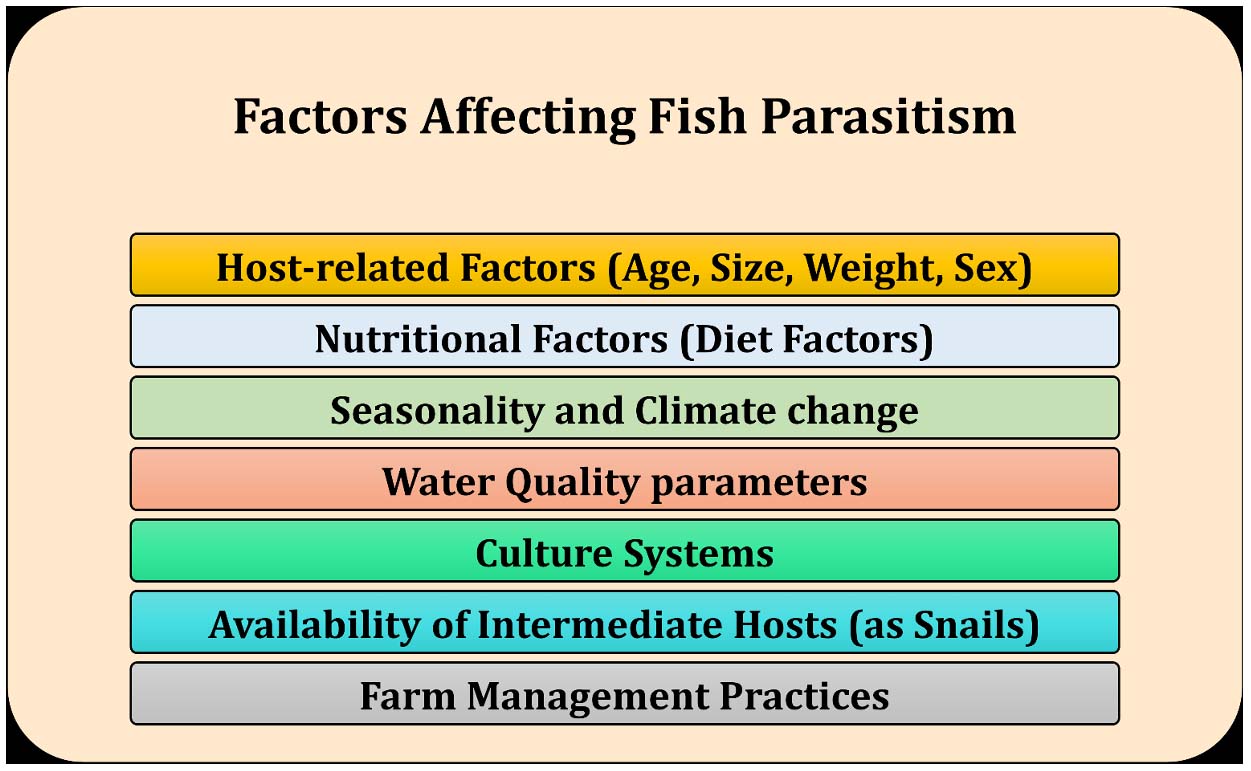
Figure 1.
Factors influencing fish parasitism
Farm management practices
Poor management practices, including stocking density, fish sources, poor water quality (as high nitrate concentrations), and infrequent water exchange in fish culture facilities have been linked to reports of bacterial and parasite illnesses (Paredes-Trujillo et al., 2016; El-Son et al., 2021). Over 393 cases of different parasites were identified in Brazil, the presence of these parasites was linked to high stocking numbers and high organic matter content (Martins et al., 2015). Ectoparasites differ among low- and high-tech farms of Nile tilapia in Mexico, based on management practices and environmental factors (Paredes-Trujillo et al., 2016). The water source used for fish farming has a significant impact on the spread of parasites. The role of water sources and life cycle type in parasite transmission by comparing helminth infestations in a reservoir, cages, and earthen fishponds was studied. Their prevalence in reservoir-dwelling hosts was strongly correlated with their incidence in caged fish, suggesting the critical role that water supply plays in the transmission of helminths. Their incidence in fish raised in ponds was higher than that of fish living in streams (Akoll et al., 2012).
Host factors (age, size, and sex)
1. Age and size
The occurrence and/or severity of parasite infections are positively correlated with the age and size of fish (Mitiku et al., 2018, Karvonen and Lindström, 2018). It has been found that older fish may inhabit more internal and exterior space for parasite infections and have more time to accumulate parasites than younger fish. This was attributed to changes in the fish’s feeding habits (they may stop feeding on a particular object that serves as an intermediate host during the adult phase), the development of the immunity reaction that happens in older fish, or the early death of older individuals who are infected.
Larger hosts harbored more parasite species and a higher parasite burden than smaller ones. There is a positive significant link between the prevalence and mean parasite intensity with total host length. This was explained by the observation that larger fish had a greater capacity to collect parasites than smaller fish. A positive correlation between the weight and length of Nile tilapia and the intensity of I. multifiliis was reported and this suggests that parasitism is increased in relation to fish growth (Pantoja et al., 2012). The mean intensity of the monogenean Microcotyloides spp. identified on the gills of the tiny-scaled fish (Terapon putta) was positively correlated with fish body weight (Khidr et al., 2012). Contrarily, there was a negative link found between body weight and Lernaeid ectoparasites. A report showed that Lernaea spp. had the highest prevalence (25.9%) in the weight group of less than 500 g, but its prevalence was 20.6% and 13.4% in the weight groups of 501–1000 g and >1000 g, respectively (Ali et al., 2014).
2. Sex
It is anticipated that males will have higher immunosuppressive effects from testosterone production and sexual selection, making them more vulnerable to parasite infestation than females (Nunn and Dokey, 2006). Additionally, ecology may also give rise to differences in parasite infestation across genders. For instance, habitat might lead to unequal parasite exposure, with females or males displaying increased parasitism with the likelihood of the parasite (Mitiku et al., 2018).
Research on parasites in Lake Naivasha largemouth bass (Micropterus salmoides) revealed that female fish had more infestations than male fish. Because the endocrine glands of female and male fish behave differently, the immunological response of the host was thought to be the cause of the sex variation in infestation (Aloo, 1998). In another study, Mwita and Lamtane (2014) demonstrated that males had a higher mean intensity (21.6%) and overall prevalence (88.5%) of parasites than females in Tanzania’s lakes Uba and Ruwe, however, there was no statistically significant difference among them. Since most of the females had ripened gonads, indicating a spawning time, this was attributed to their inactivity.
Nutritional (dietary) factors
Interspecific variations in host diets have been linked to variations in trematodes (Coitocaecum parvum) infestation levels among fish species in the Lake Waihola ecosystem in New Zealand (Lagrue et al., 2011). However, the nematode Hedruris spinigera and the Acanthocephalus galaxii have little to no correlation, if any, with the diets of their fish hosts. There is no clear correlation between the diet of a specific fish host and the degree of helminth infestation (Cirtwill et al., 2016).
Seasonality of parasite transmission
The seasonality of parasite prevalence is mostly determined by temperature and rainfall. Since high temperatures would shorten the generation time, the absence of seasonal temperature changes would suggest a dynamic equilibrium of the parasite population with constant infection and maturation (Bertaglia et al., 2023). The hot climate in the area has been linked to the high frequency of Lernaea polymorpha and Lernaea cyprinacea in some fish species produced in Pakistani nurseries and hatcheries (Ali et al., 2014). Helminth parasites in fish from Nigeria’s Niger Delta Creek showed that parasite densities peaked during the dry season. Seasonal variations in salinity and other physicochemical factors were also linked to parasite densities (Ogbeibu et al., 2014).
A study revealed that sea bass kept in cages had a higher prevalence of monogenean parasitism in autumn and this resulted from the lower temperatures and climatic circumstances (Vagianou et al., 2006). No patterns in seasonal changes were observed on helminth parasites in largemouth bass from Lake Naivasha (Aloo, 1998). While there was a positive correlation between the mean intensity of Microcotyloides spp. and water temperature. Specifically, the mean intensity of these parasites appeared to increase as water temperature increased, leading to a seasonal cycle of the parasite (Khidr et al., 2012).
Water quality parameters
Fish living in an unfavorable environment that is stressful can result in an increased risk of parasite outbreaks. Unhealthy water quality criteria include high levels of organic matter, ammonia, dissolved oxygen, and bacteria (Acosta-Pérez et al., 2022 a). Salinity has a significant role in determining the presence of a particular parasite, as many parasites can only thrive in brackish water, while others can only tolerate freshwater. For example, dinoflagellates Amyloodinium spp. do not occur in freshwater since they are limited to brackish and marine environments. However, some Trichodina species are limited to freshwater environments and can perish in water containing as low as 5 ppm of salt (Dartnall, 1974). A negative link between the salinity of the fish water and the mean intensity of Microcotyloides spp. on the gills of the tiny scaled terapon fish (Terapon putta), is likely due to the parasite’s reduced tolerance for fluctuations in salinity (Khidr et al., 2012).
Rainfall has an impact on water quality by diluting nutrients, food remnants, and other elements and increasing turbidity because of an excess of sediment particles in the water. Fish housed in cages in Greece showed an increase in the frequency and severity of the monogenean Diplectanum aequans in sea bass during a period of high rainfall, which is usual throughout the autumn (Sipaúba-Tavares et al., 2007). Additionally, the higher water turbidity and suspended solids load facilitates the parasites’ transmission to the hosts, or the abrupt drop in salinity, which causes stress-induced immunosuppression (Vagianou et al., 2006).
The presence of intermediate hosts (as snails)
Pulmonated and prosobranch snails are intermediate hosts for fish trematodes (Cribb et al., 2001). Trematode infection in snails is more prevalent during the rainy season due to high suitability of low-lying snails in the middle of the rainy season to sarcoptic infection with meracidium (Tigga et al., 2014). The freshwater pulmonates, such as Biomphalaria spp., Bulinus spp., and Lymnea spp. were discovered in Tanzania’s Bahati District. The availability, location, quantity, and quality of food sources all influenced their presence. Warm seasons’ high temperatures contribute to the persistence of vector populations. This is accomplished by encouraging reproduction, guaranteeing food supply, and maintaining the presence of aquatic weeds, which serve as a haven for snails’ eggs as well as themselves. There is less trematode infection in snails during the dry season, but in permanent ponds, the presence of final hosts such as wading and migrating birds can raise the risk of infection (Darby et al., 2003).
Diagnostic methods
Parasitic infections can be diagnosed through clinical observation and direct visualization using a light microscope. Microscopic analysis of freshly mounted scraps of the skin, fins, and gills of suspicious fish is used to diagnose these parasites. The parasite’s mobility is seen on newly mounted slides. Moreover, molecular diagnostic techniques have significantly enhanced the diagnosis and control of parasites in aquaculture by offering improved specificity, speed, and sensitivity (Martins et al., 2015; Younis et al., 2023).
Histopathology is an efficient method for monitoring fish health and provides a unique biological endpoint for evaluating histological exposure. Histopathology is considered a vital tool in assessing the effects of parasites on fish tissue since it can detect early cellular damage (Abdelkhalek et al., 2024). Light microscopy is used to analyze stained sections of fish tissue and immunohistochemical staining techniques have been developed for detecting parasites and their associated reactions. Immunohistochemical techniques differentiate parasites within tissue fragments and can be made more efficient using specific antibodies (Behera et al., 2022).
Molecular techniques have become essential in the detection and identification of fish parasites. These techniques involve the use of molecular markers and DNA sequencing to identify and study various parasite groups, aiding in species identification, population studies, and phylogenetic analysis for different fish parasite groups such as monogenean, digenea, and cestode (da Graça et al., 2016). Overall, molecular approaches have significantly contributed to the accurate and efficient detection of fish parasites, overcoming the limitations of traditional morphological identification methods (Behera et al., 2022).
ELISA is a widely used biochemical technique used to quantify the concentration of specific antibody agents (Werner et al., 2011). Antibody-based techniques, such as monoclonal and polyclonal methods, have been used in diagnosing infections and studying their pathogenesis. Monoclonal techniques offer high specificity and accuracy in detection, while polyclonal techniques are not limited to specific parasite life stages (Adams et al., 1995). The fluorescent antibody test (FAT) is a diagnostic technique that utilizes fluorescently labeled antibodies to detect specific antigens in a sample, particularly protozoal parasite (Shah et al., 2020).
Management strategies and control measures
Aquaculture farmers use a variety of management practices to ensure that their tilapia grow quickly and healthily (Ashouri et al., 2023). These practices include water quality management, feeding management, and disease management (Harohau et al., 2020; El-Sayed and Fitzsimmons, 2023). Fish parasite management often involves administering chemotherapeutic drugs to the affected fish, but risks are associated with using chemical substances in water (Tavares-Dias, 2021). Even very successful new chemicals may lose their effectiveness after being used for a few years due to drug resistance. Switching up the chemical, medicinal, biological, and mechanical control techniques can stall the emergence of such resistance.
Effective management by using CuSO4, or salt/sodium chloride treatments are also used (Debnath et al., 2023). Praziquantel, a pharmacological agent with anthelmintic properties, is an effective treatment option for flatworm infections in fish. It is widely used in human and veterinary medicine due to its wide-ranging applications (Norbury et al., 2022). However, the duration required for the host to eliminate praziquantel in most treatment regimens remains unknown. Praziquantel has shown fish tolerance with minimal toxicity levels (Maciel and Affonso, 2021). Additionally, vaccination, nanovaccines, and alternative methods such as probiotics, prebiotics, and therapeutic baths with natural compounds are being explored to control parasitic diseases in tilapia aquaculture (Thompson et al., 2023).
Manual removal of parasites from aquarium fish is effective but becomes unfeasible in large quantities of fish or parasites. The task becomes more challenging when dealing with diminutive organisms, as parasites must be visible to the human eye. This approach is more suitable for crustacean parasites or leeches. However, caution and expertise are needed when dealing with parasites. Damage can occur due to incomplete extraction or rupture of host muscle tissues, leading to secondary microbial infections (Schelkle et al., 2009).
Conclusions and recommendations
Fish parasites are diverse, ubiquitous, and represent a significant part of the aquatic ecosystems. They have potential devastating effects on their fish hosts, including depressed growth performance, reduced reproduction, and elevated mortality rates. In aquaculture, fish parasites pose a principal economic threat, leading to significant damages. Besides, certain fish parasites are with zoonotic health importance as they can be transmitted to humans who consume raw or undercooked fish, posing a public health risk. Consequently, understanding the ecological patterns of fish parasites is critical and of vital importance for maintaining healthy fish, ensuring sustainable fisheries, and also protecting human health. This review underscored the common fish parasites and their effects on the health status and sustainability of fish farming with reference to tilapia culture. There are several factors that affect parasite infectivity among fish populations. This review also spotlights on the importance of developing strategies to combat parasitic infections in aquaculture generally and Nile tilapia aquaculture.
Notes
[1] Funding
This research did not receive any specific grant from funding agencies in the public, commercial, or non-profit sectors.