
Mastitis is a major health and economic issue in dairy cattle, affecting 15–20% of cows annually and causing milk losses of 25–43% (Dal Pozzo et al., 2012). It results in both direct (treatment, diagnostics, milk loss) and indirect costs (reduced yield, culling), with productivity dropping up to 30% per infected quarter (Hogeveen et al., 2011). Losses exceed €185 per cow annually in the European Union (EU), and $35 billion globally (Touza-Otero et al., 2024). Costs can vary by region, with losses ranging from €17 to 198 per cow in the Netherlands (Hogeveen et al., 2011). Beyond economic losses, mastitis poses significant concerns for animal welfare, contributing to up to 15% of cows being culled due to the disease (Gruet et al., 2001; Rollin et al., 2015). Additionally, it impairs reproductive performance, reducing fertility, and increasing the risk of abortion (Cao et al., 2023). From a public health perspective, mastitis can present risks as milk from infected udders may contain harmful pathogens and toxins (Benić et al., 2018).
Bovine mastitis is an intramammary infection primarily caused by bacteria, classified as contagious (e.g., Staphylococcus aureus, Streptococcus agalactiae) or environmental (e.g., Escherichia coli, Streptococcus uberis) (Radinović et al., 2021; Sharun et al., 2021). Pathogen prevalence varies by region, with E. coli predominant in the Netherlands, United States, and Canada (Thompson-Crispi et al., 2013), while S. aureus and S. agalactiae are more common in Serbia (Kovačević et al., 2021 b). Opportunistic pathogens, such as Mycobacterium bovis and Pseudomonas spp., may also be involved in immunocompromised animals (Constable et al., 2016).
Antibiotics remain the primary approach for controlling mastitis, accounting for 60–70% of veterinary prescriptions. However, extensive antibiotic use has led to resistant mastitis pathogens, reducing treatment effectiveness, and complicating disease management (Tomanić et al., 2023 b; Kovačević et al., 2022). Due to the rising prevalence of antibiotic resistance of mastitis-causing bacteria, plant-derived alternatives such as essential oils (EOs) are being explored for their antimicrobial, antifungal and anti-inflammatory properties (Tomanić et al., 2023 a). EOs extracted from plants, such as Thymus vulgaris (thyme) and Origanum vulgare (oregano), have shown activity against mastitis pathogens by disrupting membranes and biofilms. Moreover, their natural origin and lower likelihood of inducing resistance make EOs a compelling complementary or alternative therapy in managing bovine mastitis (Ebani and Mancianti, 2020).
Given the challenges outlined, mastitis treatment remains a critical issue in veterinary practice and modern dairy farming. Although interest in alternative therapies such as EOs is growing, significant gaps persist regarding their efficacy, mechanisms of action, and practical application on farms. This review explores the current research on EOs for bovine mastitis, highlighting their potential to reduce antibiotic use, improve animal welfare, and decrease economic losses.
Conventional treatments and their limitations
Over 50% of global antimicrobials are used in veterinary medicine, particularly in intensive livestock systems (Andjelkovic and Radonjic, 2017). Combined systemic and intramammary antibiotic therapy improves clinical outcomes by increasing drug concentrations in milk and tissue. Supportive treatments further enhance antibiotic efficacy by reducing inflammation and promoting recovery (Gruet et al., 2001; Sharun et al., 2021).
Clinical mastitis is typically treated during lactation, while subclinical mastitis is treated less frequently due to low cure rates and economic considerations (Gruet et al., 2001; Pyörälä, 2009). Some studies have shown minimal differences in bacteriological recovery between treated and untreated subclinical mastitis cases (Pyörälä, 2009). On the other hand, pathogen identification can take at least 48 hours, so treatment for clinical mastitis should begin immediately, based on clinical symptoms and veterinary experience (Pyörälä, 2009), although this empirical approach should be carefully monitored to avoid contributing to antimicrobial resistance (AMR).
Antibiotic use in the mastitis treatment depends on etiology and the cow's immune response (Ruegg, 2013). Approximately 25–30% of clinical mastitis cases show no detectable pathogens, making it difficult to justify antibiotic treatment (Ruegg, 2013). Many farmers treat affected animals based on symptoms rather than conducting microbiological analysis, resulting in unnecessary antibiotic use in cases where they are ineffective (Oliveira and Ruegg, 2014). Despite widespread use, antibiotics often fail to improve mild mastitis cases (Sharun et al., 2021). While antibiotics can lead to clinical recovery, bacteriological recovery rarely exceeds 60% (Hillerton and Kliem, 2002), partly because not all mastitis cases are of bacterial origin. Some may be caused by fungi, such as Prototheca spp., or result from non-infectious inflammation, highlighting the importance of accurate pathogen identification before initiating treatment. For S. aureus infections, antibiotic effectiveness is even lower, with only about 15% of treatments proving successful (Rogožarski et al., 2011), mainly due to the ability of this species to form biofilms and survive inside host cells. Additionally, a “post-bactericidal effect” can persist after treatment, leading to high somatic cell counts and recurring mastitis (Cao et al., 2023).
Antibiotics account for up to 30% of mastitis treatment costs (Williamson et al., 2022). Intramammary therapy leads to milk discard due to residues, costing over $100 per cow annually (Lago et al., 2011). Residues may persist post-processing, disrupting microbial balance, impairing fermentation, and posing environmental risks via manure (Andjelkovic and Radonjic, 2017; Oliver et al., 2020; Guo et al., 2023).
As concerns grow over antimicrobial use in agriculture, particularly with its link to the development of AMR, there is increasing pressure to revise drug use policies. While AMR continues to escalate, the development of new antibiotics has slowed, making AMR a major global health threat that contributes to higher morbidity, mortality, and economic losses. In the EU alone, AMR is responsible for over 5,000 deaths annually and EUR 1.5 billion in healthcare costs and productivity losses (European Commission, 2024). By 2050, AMR could cause 10 million deaths annually and USD 100 trillion in losses (O'Neill, 2021). Reducing antibiotic use in food animals is crucial, underscoring the need for natural alternatives (Tang et al., 2019).
The role of essential oils in veterinary medicine
The rise of AMR and side effects from prolonged antibiotic use has led to increased interest in natural alternatives. Phytotherapeutics, offering synergistic effects from plant compounds, have fewer side effects and are more affordable to develop. The growing resistance to antibiotics highlights the need for new treatments, increasing interest in aromatic plants, particularly due to the proven antimicrobial action of monoterpenes in EOs (Tomanić et al., 2023 b; Carrasco et al., 2024).
EOs are gaining recognition as safe and effective alternatives to conventional antibiotics due to their pharmacological properties and safety profiles (Tomanić et al., 2023 b). Over 3000 EOs have been identified, with 10% already in use in industries such as pharmaceuticals, food, sanitation, and cosmetics (Langeveld et al., 2014). These oils, obtained mainly through distillation or extraction, are aromatic lipophilic compounds produced as secondary metabolites in various plant parts (e.g., roots, stems, leaves, flowers, seeds) (Adaszyńska-Skwirzyńska and Szczerbińska, 2017). The chemical composition of EOs is a key factor in determining their quality, which is regulated by international standards and verified through methods like gas chromatography (Tomanić et al., 2022 a).
Many EOs, classified as GRAS (Generally Recognized as Safe) by the US Food and Drug Administration, are considered safe for use in food and medicine (Dal Pozzo et al., 2011). They exhibit low toxicity, minimal environmental impact, and a reduced risk of AMR (Cao et al., 2023). EOs are also widely used on organic farms for animal therapy due to their antimicrobial, insect repellent, and growth-promoting properties (Fratini et al., 2014). Moreover, they are recognized for their potential to modify rumen fermentation, reduce pathogen growth, and prevent lipid oxidation (Wang et al., 2016).
EOs from plants in the Lamiaceae family, such as T. vulgaris, T. serpyllum, Satureja montana, and O. vulgare, are recognized for their diverse biological and pharmacological properties. The chemical composition of these oils can vary based on environmental conditions and plant growth, affecting their potency (Caneschi et al., 2023). These EOs are particularly rich in terpenoids, especially monoterpenes like carvacrol and thymol, which are known for their antimicrobial and antioxidant activities (Mancini et al., 2015; Horky et al., 2019).
In addition to their antimicrobial properties, EOs exhibit strong antioxidant properties, often outperforming synthetic antioxidants in comparative studies. Their antioxidant mechanisms include free radical scavenging and the inhibition of oxidative damage (Tongnuanchan and Benjakul, 2014). Numerous studies have also emphasized their effectiveness against a wide range of pathogens, including bacteria, fungi, and yeasts, and their positive impact on digestion, immune function, and gut health (Omonijo et al., 2018).
Some EOs exhibit antimutagenic and anticancer effects by blocking mutagen entry, enhancing DNA repair, and inhibiting cancer cell growth (Gautam et al., 2014). These properties suggest EOs could serve as alternatives to conventional antibiotics and synthetic drugs for both infectious and non-infectious diseases (Burt, 2004; Bakkali et al., 2008).
Mechanisms of action of essential oils against mastitis pathogens
The antimicrobial action of EOs is not fully understood but likely involves multiple mechanisms due to their diverse components, which may lower but not eliminate resistance risk. EOs disrupt cellular membranes, electron transport, ion gradients, protein translocation, phosphorylation, and enzyme activity. Their effects range from bacteriostatic to bactericidal depending on the concentration (Vaou et al., 2022).
The antimicrobial effectiveness of EOs depends largely on their chemical composition, especially oxidized terpenoids like alcohols, aldehydes, ketones, esters, and ethers (Barreiros et al., 2022). Genera such as Thymus and Origanum are potent due to the monoterpene alcohols thymol and carvacrol, respectively, whose activity ranges from membrane disruption at low levels to cell death at higher doses. The position of functional groups affects activity; for instance, thymol and carvacrol differ in their action on Gram-positive and Gram-negative bacteria (Chouhan et al., 2017). Lipophilic EO components penetrate bacterial membranes, causing loss of integrity and cell lysis (Lopes et al., 2020). EOs may also disrupt cytoplasmic coagulation, lipid and protein biosynthesis, and mitochondrial function, leading to apoptosis or necrosis (Hyldgaard et al., 2012).
Eugenol, a major EO component, inhibits enzymes such as ATPase and proteases, and can induce mitochondrial depolarization, leading to electrolyte leakage, disrupted protein metabolism, and ultimately apoptosis or necrosis (Hyldgaard et al., 2012). Methicillin-resistant S. aureus (MRSA) is a critical multidrug-resistant pathogen causing severe infections (Song et al., 2016). Oregano EO, rich in carvacrol, has shown effectiveness against MRSA by damaging membranes, disrupting metabolism, and interacting with bacterial DNA to reduce toxin production (Cui et al., 2019).
The antimicrobial activity of EOs can differ from that of their individual components due to interactions that may be indifferent, additive, antagonistic, or synergistic (Bassolé and Juliani, 2012). Synergistic effects often enhance efficacy, as seen with cinnamaldehyde and thymol, which reduce the required dose against E. coli by 25% (Bošković et al., 2013). Combinations like tea tree oil+thymol or thymol+carvacrol show additive effects against Gram-negative bacteria and Candida albicans, suggesting potential in mastitis therapy (Corona-Gómez et al., 2022 b). However, antagonistic interactions have also been reported (Paiano et al., 2023).
Material and methods
Here we present a narrative review based on a structured literature search. It aims to summarize the current knowledge on the use of EOs in the treatment of bovine mastitis, with emphasis on antimicrobial efficacy observed in both in vitro and in vivo studies. Although not a formal systematic review, transparent methods were used to ensure reproducibility and relevance of the included literature.
Search strategy
A comprehensive search was conducted using Web of Science and Scopus core collection databases, covering articles between 2008 and 2024. The following Boolean search terms were applied: (“bovine mastitis” OR “intramammary infection”) AND (“essential oils” OR “plant extracts” OR “phytotherapy”). This strategy ensured inclusion of a wide range of relevant studies evaluating the potential of EOs as antimicrobial agents against mastitis-causing pathogens.
Inclusion and exclusion criteria
Studies were included if they met all of the following criteria: 1) peer-reviewed full-text article published in English, 2) published between 2008 and 2024, 3) focused on dairy cows with clinical or subclinical mastitis, 4) investigated the antimicrobial potential of EOs in vitro or in vivo, 5) study type: clinical/preclinical trial, short communication, or case-control study.
The exclusion criteria were: 1) article type: review articles, conference abstracts, and non-peer-reviewed publications, 2) language: non-English, 3) scope: studies not primarily addressing EOs as a treatment strategy for mastitis, 4) incomplete: studies without available full-text versions. Although other plant extracts may have similar properties, their inclusion was excluded to maintain focus and ensure consistency.
Screening and data extraction
Two authors independently assessed the articles for eligibility. Any disagreements were resolved by consensus. A total of 190 articles were identified (100 from Web of Science and 90 from Scopus). After removing 57 duplicates, 133 articles were screened. Of these, 62 were excluded (23 due to article type, 11 language, 27 scope, and one incomplete), leaving 71 studies that met all inclusion criteria (Figure 1). For each included study, the following parameters were extracted: EO name and chemical composition, study type (in vitro or in vivo), target mastitis-associated pathogen(s), application method and dosage, and measured outcomes (e.g., MIC, inhibition zone diameter, somatic cell count, clinical improvement).
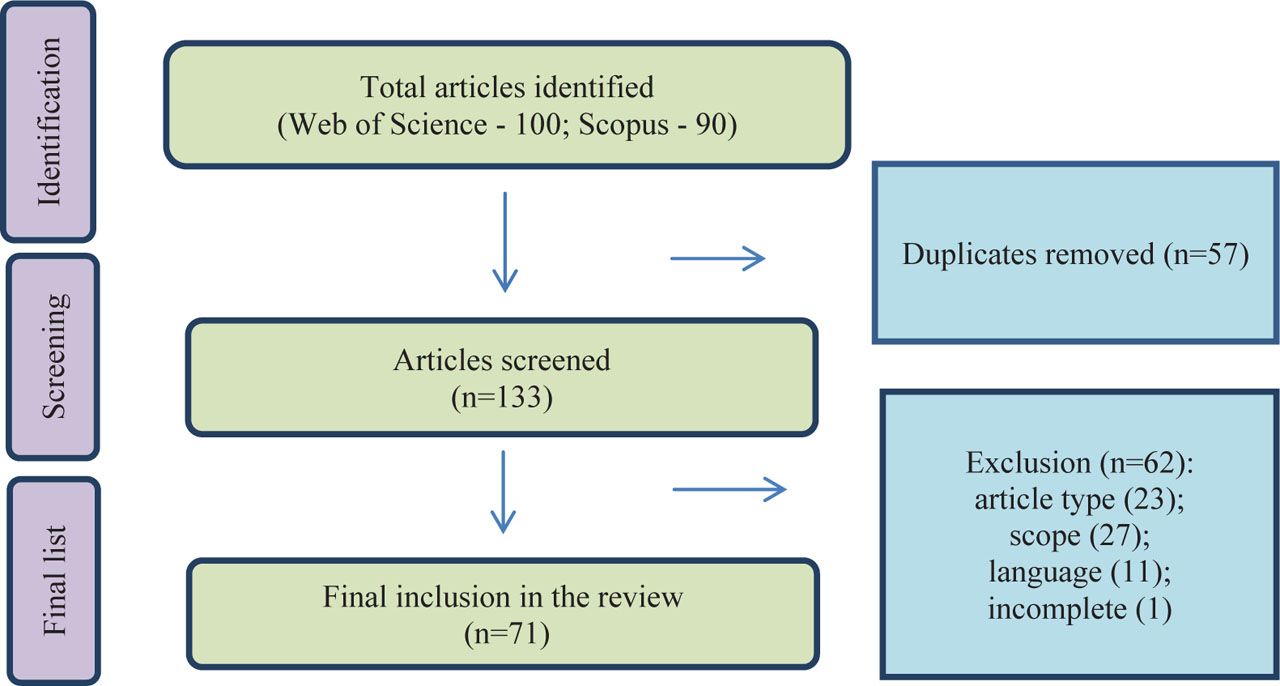
Figure 1.
Flowchart of the article selection process for this review
Data synthesis
Data were synthesized narratively within thematically organized sections. Results from in vitro and in vivo studies were clearly distinguished and compared to highlight differences in methodology, efficacy, and practical application in mastitis control.
Recent studies on essential oils as alternative mastitis treatment
To date, studies on EOs as alternative mastitis treatment have been the focus of many researchers, mainly due to the fact of increasing trends of AMR development and spread. The distribution of studies by publication year (Figure 2) clearly highlights a significant increase in research output, particularly in the last three years of interest (2022, 2023, and 2024). This could be attributed to growing interest in the subject, advancements in technology, or increased funding and research opportunities in the field, particularly in the development of antimicrobial alternatives. On the other hand, the fewest publications were published between 2008 and 2011, with only two studies per year. This period of limited output could indicate a lack of sufficient attention or resources dedicated to the field at the time, while the steady rise in publications in more recent years suggests a shift towards more intense focus and activity in this area.
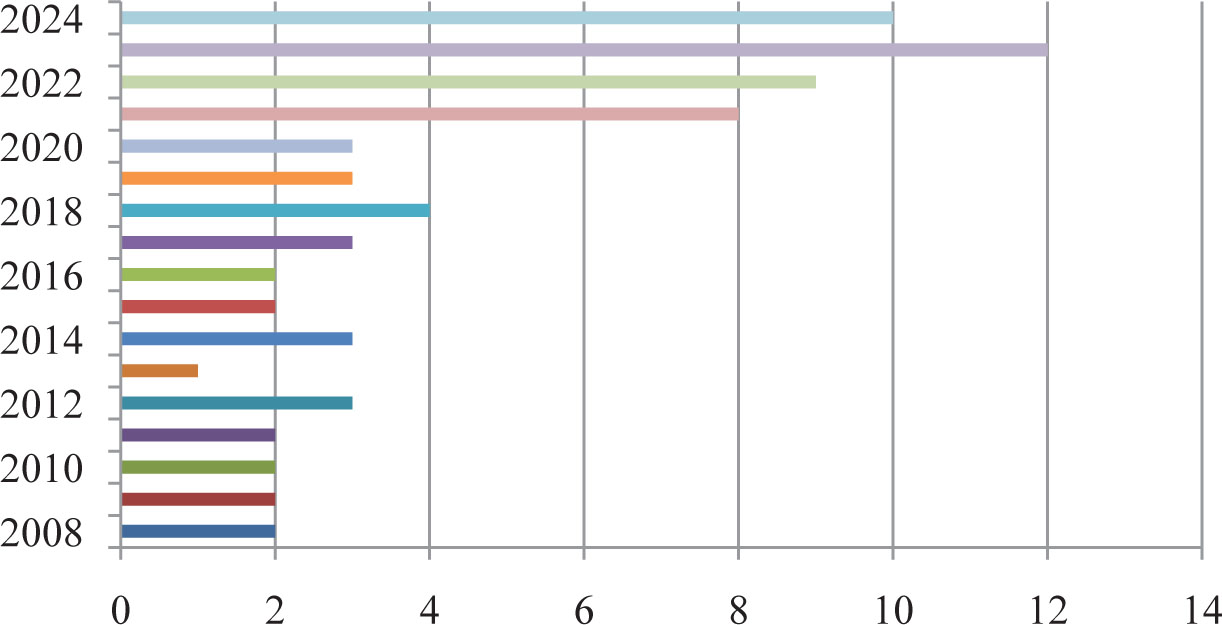
Figure 2.
Distribution of studies by publication year
Figure 3 illustrates the geographic distribution of the conducted studies, highlighting the countries where the most research has been carried out. The highest proportion of studies was conducted in Brazil, followed by Argentina and Iran, showing the significant commitment of these countries to research in this field, possibly due to the fact that they have high milk production and consumption, favourable research environments, strong academic institutions, and focus on addressing relevant local issues. This figure also includes data from 11 other countries, indicating that research on this topic is not limited to just a few regions but is being explored globally. Moreover, this global engagement underscores the importance of international collaboration and the widespread interest in advancing research in this area.
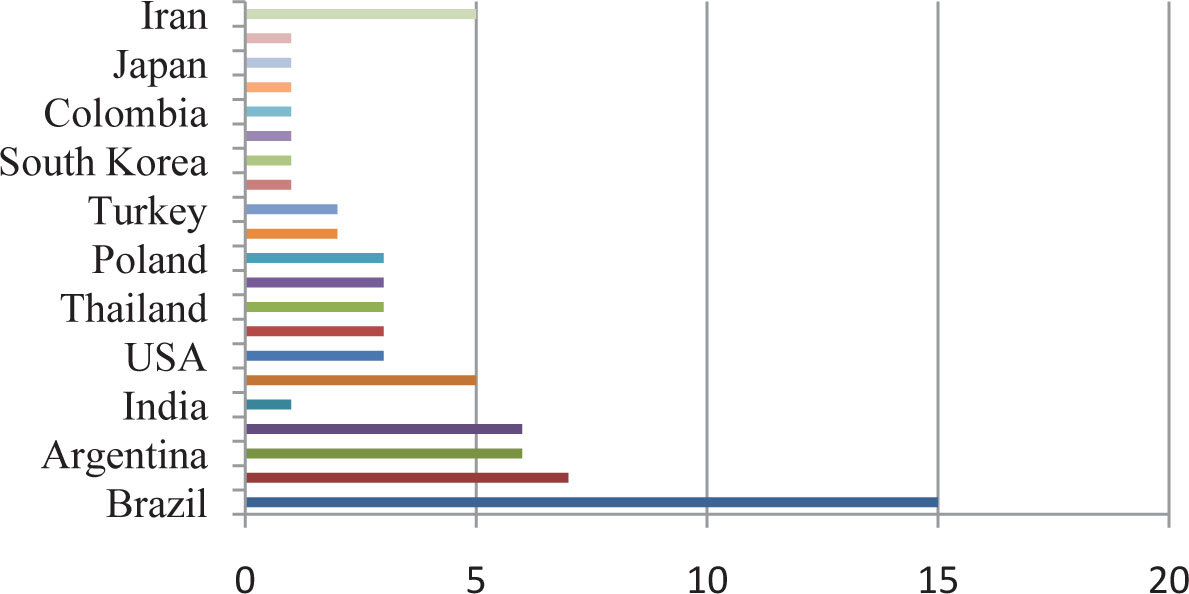
Figure 3.
Geographic distribution of conducted studies
Figure 4 presents the distribution of study designs. Of the 71 total studies, 61 were conducted using in vitro methods. While these studies support the antibacterial properties of the tested EOs, there is a significant gap in in vivo research, especially in bovine, to verify their effectiveness and safety. Only six studies employed in vivo approaches, indicating that this type of research is less common, while four studies utilized a mixed design, combining both in vitro and in vivo research (Figure 4). This distribution reflects the current research focus, with a strong emphasis on controlled, laboratory experiments, while in vivo studies remain relatively limited. On the other hand, the mixed design studies, though fewer in number, provide valuable insights by integrating both laboratory and field data.
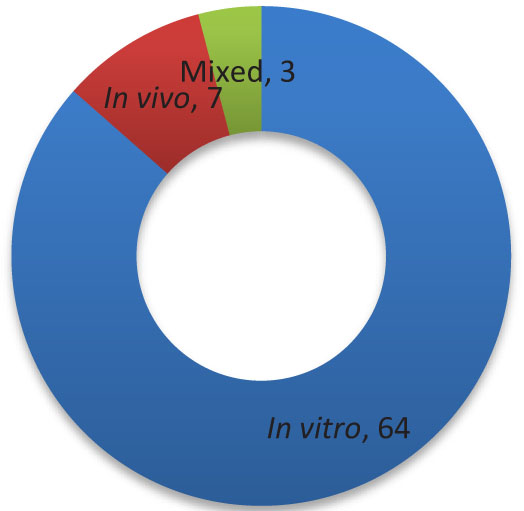
Figure 4.
Study design distribution
It is always challenging to find the optimal concentration of EOs that provides sufficient antibacterial activity without causing irritation or exacerbating inflammation in the already affected mammary gland tissue. This delicate balance is crucial, as excessive concentrations may lead to local tissue damage, while suboptimal concentrations might fail to achieve the desired therapeutic effect. Therefore, careful developments of pharmaceutical formulation, as well as testing, are required to ensure both efficacy and safety in clinical applications (Tomanić et al., 2023 a).
Numerous in vitro studies have demonstrated encouraging antibacterial activity against the most common mastitis-causing pathogens, as outlined in Table 1 (Supplementary 1). Despite the promising in vitro findings, only a limited number of studies have advanced to the development of formulations with potential clinical applications (Pinedo et al., 2013; Marcelo et al., 2020; Pașca et al., 2020; Aiemsaard et al., 2023; Tomanić et al., 2023 a, 2024). This lack of in vivo studies poses a critical challenge in translating the promising in vitro results into practical applications for dairy farming. In addition, in vivo trials are essential to evaluate the pharmacokinetics, pharmacodynamics, and potential toxic effects of EOs in dairy animals, as factors such as the bioavailability, metabolism, and excretion of EOs compounds in bovine remain insufficiently explored. However, the withdrawal period of dominant compounds for EO-based formulations used in the treatment of mastitis in cows has been determined, following intramammary administration for five consecutive days, twice daily, ensures residue depletion to safe levels (Kovačević et al., 2022 b). Another important consideration is the development of effective delivery systems that ensure the stability and controlled release of EOs at the site of infection, while minimizing possible adverse effects. These factors could be achieved by conducting clinical trials in field conditions on dairy farms (Kovačević et al., 2022 b; Tomanić et al., 2023 a). Additionally, the potential for resistance development against EO compounds justifies further investigation. Although EOs are generally regarded as less prone to resistance compared to traditional antibiotics, their long-term efficacy under real-world conditions in dairy herds must be confirmed. The synergistic interactions within EO compounds and antibiotics are also worthy of further study to unveil the mechanisms beyond the antibacterial activity of these compounds, and then to discover multiple pathways to be targeted (Kaseke et al., 2023).
Figure 5 illustrates the diversity of plant families explored for their antimicrobial properties against mastitis pathogens. The Lamiaceae family is the most prominent, with 46 studies, emphasizing its significant role in mastitis research. The Myrtaceae family follows with 21 studies, indicating its notable contribution to this field. These findings align with previous research (Kaseke et al., 2023; Ucella-Filho et al., 2024), which also identified Lamiaceae and Myrtaceae as the most frequently studied families. This can likely be attributed to the presence of a variety of bioactive compounds within these families, known for their broad spectrum of biological activities, including antioxidant, antimicrobial, anti-inflammatory, antiviral, and anticancer properties.
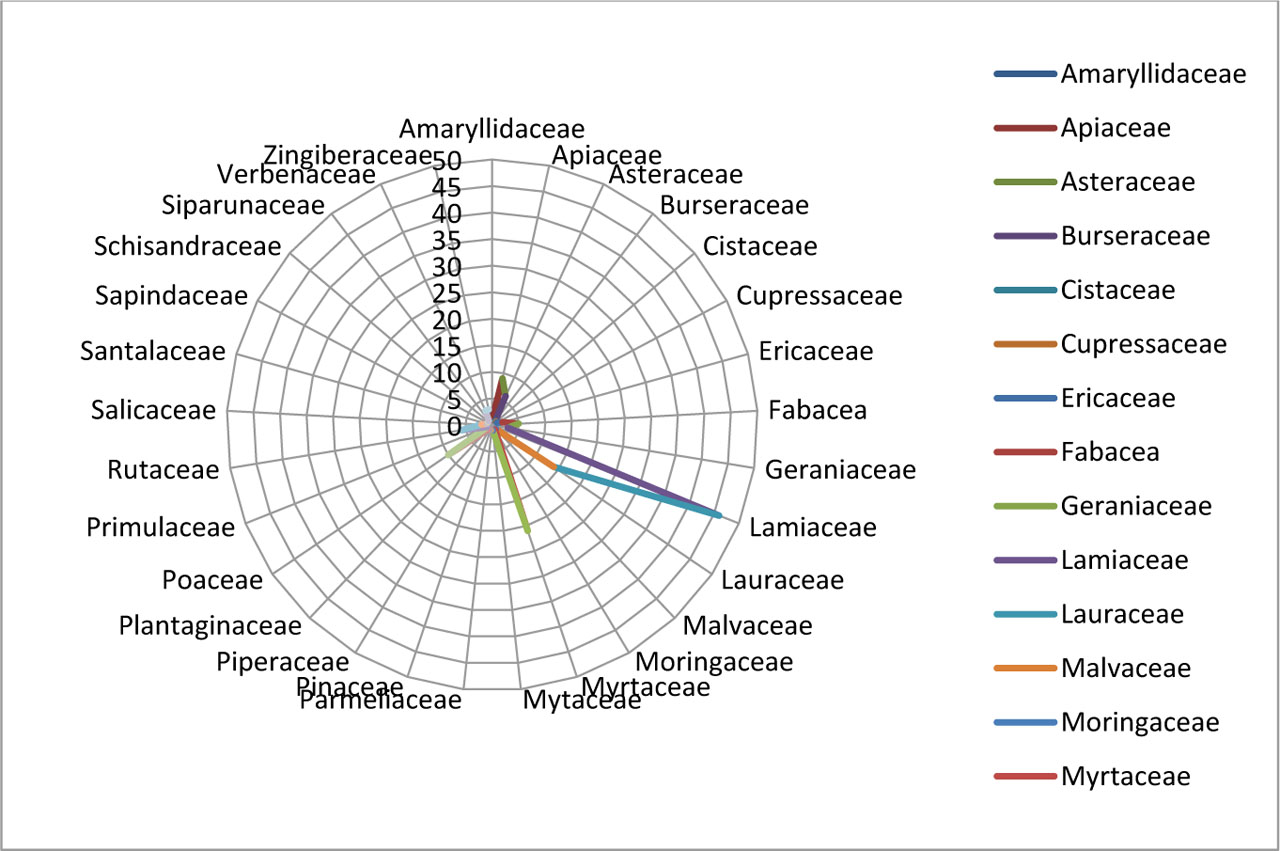
Figure 5.
Distribution of essential oil families used in studies on mastitis pathogens
Other families, such as Lauraceae (14 studies) and Poaceae (10 studies), also show considerable involvement in this area of research. Several families, including Apiaceae, Asteraceae, and Rutaceae, contribute moderately, with six to nine studies each, while numerous families such as Amaryllidaceae, Burseraceae, Cistaceae, and others, are represented by a single study, suggesting limited but potentially valuable exploration of EOs from these families.
Safety and toxicity considerations for essential oils
With the increasing popularity of herbal preparations, concerns about their safety have become a significant public health issue. While herbal products are generally considered safe, the toxic potential of plant-derived compounds is often underestimated. It is well known that no medication, including natural compounds, is entirely risk-free, and as such herbal products should be thoroughly evaluated before they can be recommended for disease prevention or treatment. Hence, understanding the chemical composition of EOs is crucial in evaluating their potential impacts on biological systems, while preliminary toxicity studies provide important insights into their safety profiles (Sivamaruthi et al., 2024).
EOs carry certain risks and require comprehensive preclinical studies on pharmacokinetics, pharmacodynamics, and toxicology, as well as clinical evaluations of their efficacy and safety. The variability in active compounds, viscosity, and hydrophobic properties complicates toxicity testing, especially given the lack of standardized protocols (Horky et al., 2019). Moreover, while components such as carvacrol, carvone, cinnamaldehyde, and menthol are generally considered safe, substances like estragole and methyl eugenol have been removed from the safe list due to their genotoxicity (Burt, 2004). Unlike conventional drugs, which undergo extensive testing before market release, herbal products are often based more on empirical evidence (Petrović et al., 2012). Additionally, the pharmacovigilance system for herbal products remains underdeveloped (Bent, 2008).
Risk assessment plays a critical role in evaluating safety, involving the identification of risks, dose-response analysis, exposure time, and toxicity mechanisms (Horky et al., 2019). EOs, while offering many benefits, can also cause adverse effects such as irritation and toxicity at high doses. For example, components like eugenol, menthol, and thymol can irritate mucous membranes, and frequent use may lead to allergic contact dermatitis (Burt, 2004; Bakkali et al., 2008; Bošković et al., 2013). Furthermore, EOs have been associated with hepatotoxicity, nephrotoxicity, reproductive toxicity, and oxidative stress (Bakkali et al., 2008; Horky et al., 2019; Ebani and Mancianti, 2020). Interestingly, although EOs are generally non-carcinogenic, some can act as secondary carcinogens after metabolic activation, stimulating estrogen secretion and potentially increasing the risk of estrogen-dependent cancers (Bakkali et al., 2008; Bošković et al., 2013).
Hollenbach et al. (2015) reported that high doses of oregano EO can affect fertility and fetal development in rats, highlighting its potential reproductive toxicity. The cytotoxicity of EOs is primarily attributed to membrane damage and prooxidative effects, which lead to the formation of free radicals (Bakkali et al., 2008). However, in vitro studies may not always accurately reflect the full extent of in vivo toxicity (Horky et al., 2019). Additionally, EOs can cause phototoxicity when exposed to sunlight, leading to skin reactions, especially in oils containing photoactive molecules, such as those derived from certain Citrus species. Furthermore, the genotoxicity of thymol and carvacrol has been investigated, though with inconsistent results (EMA, 2016). To ensure safety, EOs should be produced according to good manufacturing practices, with labels clearly indicating their origin, composition, and intended use (Smith et al., 2005).
Application methods of essential oils in dairy herds
The application of EOs in dairy herds involves various methods designed to maximize their therapeutic potential while ensuring safety and practicality for on-farm use. These methods can be broadly categorized based on the intended purpose, route of administration, and formulation used. One of the most commonly used routes of administration is intramammary infusion, which involves delivering EO-based pharmaceutical formulations directly into the teat canal (Pinedo et al., 2013; Guo et al., 2023; Tomanić et al., 2023 a, 2024). This method ensures that EO compounds reach the infection site in the mammary gland. However, it requires precise formulation to balance antibacterial efficacy with safety, avoiding irritation or disruption of the delicate mammary epithelium. Moreover, the European Medicines Agency issued guidelines addressing data requirements for demonstrating preclinical and clinical efficacy of products for intramammary use in cattle (EMA, 2017). Although these guidelines are designed for testing intramammary products containing antimicrobial substances, they could serve as a standardized protocol in preclinical and clinical testing of EO-based intramammary formulations.
Topical application is another common method, particularly for treating mastitis. EOs are incorporated into ointments, gels, or sprays that are applied directly to the udder (Marcelo et al., 2020; Aiemsaard et al., 2023; Moliva et al., 2023). This method allows for localized treatment, targeting the infection site while minimizing systemic exposure. On the other hand, the application of EOs may be limited by their instability, biodegradability, and low solubility in specific solutions, so the development of delivery systems, such as metal nanoparticles, has the potential to address and enhance these limitations (Neculai-Valeanu et al., 2021).
Oral supplementation with EOs, often as part of feed additives, aims to enhance systemic immunity and overall health (Tudor et al., 2023). These formulations are typically encapsulated or emulsified to improve bioavailability and protect the active compounds from degradation in the gastrointestinal tract. While not directly targeting mastitis, this approach may provide preventive benefits by reducing systemic inflammation and boosting the animal's resistance to infections. EOs can also be applied in the farm environment as part of hygiene and biosecurity measures (Mariotti et al., 2022). For instance, they may be incorporated into teat dips, sprays, or disinfectants to reduce pathogen loads on the udder and in the milking area (Aiemsaard et al., 2023; Sungkatavat et al., 2023). This method primarily serves as a prevention strategy to minimize the risk of infection. Additionally, EOs show promise for preventing infections in farm animals through nebulization in livestock housing, helping sanitize confined environments and improving hygiene standards in intensive livestock operations, thereby supporting food safety (Mariotti et al., 2022).
Cost-benefit analysis of essential oils and conventional therapies in mastitis management
The economic feasibility of EO-based formulations must be considered, as sustainable alternatives are essential for effective mastitis control programs. Developing cost-effective solutions is key to their adoption in the dairy industry. Although non-monetary outcomes (e.g., improved health, prolonged lactation) are difficult to quantify, economic evaluations should be applied to both conventional and EO-based treatments (Caneschi et al., 2023).
A major concern with antibiotic therapy is the presence of residues in milk, which can disrupt dairy processing and contribute to AMR. Milk rejection costs during withdrawal periods may exceed treatment costs, highlighting the need for more in vivo studies on EO formulations (Caneschi et al., 2023). To date, only one study has established a withdrawal period for an EO-based product (Kovačević et al., 2022 b), enabling pharmacoeconomic comparison with conventional therapy (Kovačević et al., 2022 a).
Pharmacoeconomics evaluates the costs and outcomes of treatment strategies. In veterinary medicine, it supports decision-making to reduce AMR while maintaining animal health (Oztuna, 2025). However, the lack of standardized protocols and comparable data on outcomes, antimicrobial use, and AMR incidence remains a challenge (Hennessy, 2006).
A pharmacoeconomic analysis in Serbia compared conventional antimicrobial therapy and the EO-based formulation Phyto-Bomat for bovine mastitis (Kovačević et al., 2022 a). The total cost per episode was €80.32 for conventional treatment and €76.34 for Phyto-Bomat, including product, veterinary, and milk rejection costs. Phyto-Bomat's clinical efficacy was recently confirmed, showing symptom resolution and prevention of subclinical mastitis progression (Tomanić et al., 2023 a). The analysis suggests Phyto-Bomat could save about €4.00 per case, offering a cost-effective alternative, especially for subclinical infections. Key non-monetary factors such as withdrawal period and milk yield were also evaluated, as they significantly affect production efficiency (Kovačević et al., 2022 a).
According to previous analyses, several key recommendations can contribute to improving pharmacoeconomic research in veterinary medicine. These include the creation of standardized metrics, enhancement of data-sharing frameworks, adoption of more sophisticated modelling approaches, and consideration of the societal and environmental costs of AMR (Oztuna, 2025).
Conclusion
Despite the demonstrated antibacterial potential of EOs against mastitis-associated pathogens, their practical application faces several challenges, including variability in chemical composition, lack of standardized dosage and application protocols, and limited clinical data confirming their efficacy and safety in animals. Regulatory uncertainties and the absence of clear guidelines further hinder their broader use in veterinary medicine. To advance EO-based mastitis treatment, future research should prioritize standardization of extraction and testing methods, conduct well-designed clinical trials, and explore the integration of EOs with conventional therapies. Strong collaboration among researchers, veterinarians, and farmers will be essential to translate the promising in vitro findings into effective on-farm applications.
Acknowledgment
This research was funded by the Ministry of Science, Technological Development and Innovation Republic of Serbia [Grant number 451-03-137/2025-03/200117 and 451-03-136/2025-03/200222].