
The rabbit (Oryctolagus cuniculus) is a livestock species with versatile uses, including meat, fur, wool, laboratory research, companionship, and hobby breeding. Currently, the most popular branch of rabbit production in Poland, as well as globally, is meat production (Lukefahr et al., 2022). According to FAOSTAT data from 2022, Poland produces approximately 3,300 tons of rabbit meat annually, 80% of which is sold to markets within the European Union.
Due to their short production cycle and high feed conversion efficiency into muscle mass, rabbits can be considered one of the best livestock species for meat production (Lacková et al., 2022). However, to meet the nutritional requirements of animals with high production potential, it is essential to provide them with sufficient quantities of the highest quality feed. For breeders, the economic aspect of feeding is also crucial, as it constitutes the highest maintenance cost for rabbits, estimated at around 80–85% (Lukefahr et al., 2022).
Soybean, used in complete feed mixtures for rabbits, is the most expensive feed component widely used in large-scale production. Furthermore, with the implementation of regulations prohibiting the use of genetically modified (GM) feeds in animal nutrition, it will need to be replaced by alternative components. Consequently, numerous studies are being conducted on the potential use of other protein feeds in rabbit breeding, as well as feeds not typically used for other livestock species (e.g., herbs, weeds, fruit processing by-products). Attention is also being directed toward improving the quality parameters of meat production through dietary means to meet the increasingly high expectations of consumers regarding the quality of the final product (Nguyen et al., 2024).
A significant group of additives used in the nutrition of livestock, including rabbits, consists of by-products from the agri-food industry (Bogucki and Neja, 2008). Pumpkin seed cake is a by-product obtained during the production of pumpkin seed oil. According to literature data, the protein content in pumpkin seed cake can reach as high as 54.94%, which is higher than that reported for soybean meal (~46%). Pumpkin seeds contain all nine essential amino acids: histidine, isoleucine, leucine, lysine, methionine, phenylalanine, threonine, tryptophan, and valine (Singh and Kumar, 2023).
The crude fat content in pumpkin seed cake is significantly reduced compared to whole pumpkin seeds as a result of the oil production process, amounting to approximately 12.5%. The fat primarily consists of oleic acid (C18:1) (50.4 g/100 g of all identified fatty acids) and linoleic acid (LA, C18:2 n-6) (29.9 g/100 g of all identified fatty acids) (Zduńczyk et al., 1998). Additionally, pumpkin seed cake contains a range of biologically active compounds present in unprocessed pumpkin seeds, which can positively influence not only animal performance but also the quality of the derived products and the health of the animals.
Pumpkin seeds are rich in tocopherols, carotenoids, terpenoids, terpenes (cucurbitacin), alkaloids (moschatin), squalene, phytosterols, phenols, coumarins, provitamins, pigments, and flavonoids. Additionally, they are a source of magnesium, iron, calcium, potassium, phosphorus, and numerous trace elements (Dotto and Chacha, 2020). Scientific studies have shown that consuming pumpkin seeds reduces blood cholesterol levels (Sedigheh et al., 2011). Other studies have demonstrated that pumpkin seeds lower the levels of alanine aminotransferase (ALT) and aspartate aminotransferase (AST), enzymes commonly measured to diagnose and monitor liver diseases (Makni et al., 2010). They also enhance overall immunity and improve the secretory functions of the prostate gland and testes (Hussain et al., 2022).
Pumpkin has been shown to positively affect reproductive health. Pumpkin seeds are a good source of zinc, an essential element for the proper development of male germ cells (Aghaei et al., 2013). In recent years, numerous studies have been conducted to explore the role of pumpkin in both the prevention and treatment of male infertility (Shaban and Sahu, 2017). Moreover, pumpkin seed shells contain cucurbitacin, a compound with antiparasitic, antibacterial, and anticancer properties (Zdrojewicz et al., 2016).
Based on the available scientific literature, the following research hypothesis was formulated: The addition of pumpkin seed cake (Cucurbita pepo L.) at 5% and 10% to the diet of Popielno White rabbits will have a positive effect on meat quality without compromising growth performance or post-slaughter traits, compared to rabbits fed a standard mixture with soybean meal.
The aim of the study was to investigate the effects of a 5% and 10% addition of pumpkin (Cucurbita pepo L.) seed cake to the feed given to Popielno White rabbits on their growth, slaughter performance, and meat quality.
Material and method
Animals
All animal procedures were performed in accordance with applicable national and institutional guidelines for the care and use of animals. The experiment was approved by the 1st Local Institutional Animal Care and Use Committee (IACUC) in Kraków (agreement No. 721/2023) and every effort was made to minimize discomfort to the animals and to ensure high welfare standards throughout the study.
The animal studies were conducted at the K-083 rabbit farm, which belongs to the National Research Institute of Animal Production. The experimental material consisted of 60 Popielno White rabbits (28 males and 32 females), reared from 35 to 90 days of age.
The young animals were raised with their mothers until the 35th day of life and kept in pens with deep bedding in an unheated, confinement facility. After weaning at 35 days of age, the growing rabbits were housed in two-story metal mesh cages designed for commercial rabbit rearing, with four animals of the same sex per cage. The experiment was conducted during the spring months (March to May) in an insulated hall within a concrete livestock building, equipped with natural gravity ventilation. The cage area in which the rabbits were kept met the minimum conditions for keeping fur-bearing animals (Journal of Laws 2019, item 1966). The zoohygienic and technological conditions complied with the guidelines for farm production. The rabbits were included in a veterinary prophylaxis program appropriate for this group of animals. At 42 days of age, they were vaccinated against hemorrhagic disease (Pestorin, 1 ml intramuscularly) and myxomatosis (Myxoren, 1 ml subcutaneously).
Rabbits were randomly divided into three experimental groups at the time of weaning: the control group (C) – 20 rabbits fed a complete pelleted feed mixture with a standard formulation containing 13% post-extraction soybean meal; experimental group 1 (E1) – 20 rabbits fed a complete pelleted feed mixture with 5% pumpkin seed cake (Cucurbita pepo L.) and 6.5% post-extraction soybean meal; experimental group 2 (E2) – 20 rabbits fed a complete pelleted feed mixture with 10% pumpkin seed cake and no post-extraction soybean meal. The component composition of the feed mixtures is presented in Table 1. Throughout the rearing period, the rabbits were fed the complete pelleted feed mixture ad libitum and had continuous access to drinking water.
Table 1.
Component composition of the feed mixtures given to the rabbits (%)
| C | E1 | E2 | |
|---|---|---|---|
| Post-extraction soybean meal | 13 | 6.5 | 0 |
| Alfalfa hay | 20.1 | 20.1 | 22.1 |
| Wheat bran | 18.1 | 20 | 17 |
| Barley meal | 29.8 | 33.8 | 42 |
| Corn meal | 10 | 6.65 | 2 |
| Rapeseed oil | 2.1 | 1.05 | 0 |
| Phosphate | 1 | 1 | 1 |
| NaCl (salt) | 0.4 | 0.4 | 0.4 |
| Mineral-vitamin premix | 1 | 1 | 1 |
| Arbocel (wood cellulose) | 4.5 | 4.5 | 4.5 |
| Pumpkin seed cake | 0 | 5 | 10 |
The analysis of pumpkin seed cake samples, the prepared complete feed mixtures and meat samples was conducted at the Central Laboratory of the National Research Institute of Animal Production (CL).
For the preparation of the feed mixtures, organic pumpkin seed cake purchased from a commercial oil press in Grudziądz was used. Before making the complete pelleted feed mixtures for the rabbits, a basic analysis of the pumpkin seed cake was performed (moisture content, crude protein, crude fat, crude fiber, and crude ash). The results of the analysis are presented in Table 2.
Table 2.
Chemical composition of pumpkin seed cake (%)
| Analytical component | Pumpkin seed cake |
|---|---|
| Dry matter | 92.48 |
| Crude ash | 7.12 |
| Crude fat | 26.52 |
| Crude protein | 43.36 |
| Crude fiber | 2.44 |
The chemical composition of the feed mixtures used is presented in Table 3. The fatty acid profile of the experimental mixtures is shown in Table 4, and the amino acid profile is presented in Table 5.
Table 3.
Chemical composition of the rabbit feed mixtures
| C | E1 | E2 | |
|---|---|---|---|
| Dry matter | 90.2 | 90.04 | 90.28 |
| Crude ash | 6.02 | 5.76 | 5.71 |
| Crude fat | 5.19 | 5.05 | 5.45 |
| Crude protein | 16.52 | 16.31 | 16.45 |
| Crude fiber | 10.68 | 11.92 | 11.16 |
Table 4.
Fatty acid profile in the feed mixtures (g/100 g of all measured fatty acids)
| C | E1 | E2 | |
|---|---|---|---|
| C8:0 | 0.00 | 0.00 | 0.00 |
| C10:0 | 0.00 | 0.00 | 0.00 |
| C12:0 | 0.00 | 0.00 | 0.00 |
| C14:0 | 0.11 | 0.13 | 0.16 |
| C16:0 | 10.88 | 12.72 | 15.01 |
| C16:1n-9 | 0.18 | 0.15 | 0.14 |
| C18:0 | 1.84 | 2.80 | 3.75 |
| C18:1n-9 | 40.43 | 32.04 | 22.72 |
| C18:2n-6 | 39.17 | 47.13 | 55.14 |
| GLA | 0.00 | 0.01 | 0.00 |
| C20:0 | 0.46 | 0.41 | 0.36 |
| C18:3n-3 | 6.47 | 4.22 | 2.43 |
| C22:0 | 0.36 | 0.32 | 0.28 |
| C20:4n-3 | 0.00 | 0.00 | 0.00 |
| C22:1 | 0.08 | 0.05 | 0.01 |
| C20:5n-3 (EPA) | 0.00 | 0.01 | 0.00 |
| C22:6n-3 (DHA) | 0.00 | 0.00 | 0.00 |
| SFA | 13.65 | 16.38 | 19.56 |
| UFA | 86.35 | 83.62 | 80.44 |
| MUFA | 40.69 | 32.24 | 22.87 |
| PUFA | 45.66 | 51.38 | 57.57 |
| PUFA n-6 | 39.18 | 47.14 | 55.14 |
| PUFA n-3 | 6.47 | 4.23 | 2.43 |
| DFA | 88.19 | 86.42 | 84.19 |
| UFA/SFA | 6.32 | 5.10 | 4.11 |
| MUFA/SFA | 2.98 | 1.97 | 1.17 |
| PUFA/SFA | 3.34 | 3.14 | 2.94 |
| PUFA n-6/n-3 | 6.05 | 11.15 | 22.71 |
Table 5.
Amino acid composition in the feed mixtures (g/kg)
| C | E1 | E2 | |
|---|---|---|---|
| Aspartic acid (Asp) | 15.86 | 11.55 | 10.26 |
| Threonine (Thr) | 6.32 | 4.73 | 4.30 |
| Serine (Ser) | 8.43 | 6.23 | 5.82 |
| Glutamic acid (Glu) | 30.14 | 24.78 | 22.82 |
| Proline (Pro) | 11.21 | 9.72 | 9.27 |
| Glycine (Gly) | 7.96 | 6.34 | 6.00 |
| Alanine (Ala) | 8.28 | 6.16 | 5.80 |
| Valine (Val) | 8.11 | 6.33 | 5.92 |
| Isoleucine (Ile) | 6.63 | 5.07 | 4.36 |
| Leucine (Leu) | 12.58 | 9.54 | 8.60 |
| Tyrosine (Tyr) | 5.86 | 4.16 | 3.31 |
| Phenylalanine (Phe) | 8.03 | 5.86 | 5.35 |
| Histidine (His) | 5.53 | 2.99 | 2.63 |
| Lysine (Lys) | 9.69 | 6.43 | 5.79 |
| Arginine (Arg) | 10.00 | 8.82 | 8.87 |
| Cysteine (Cys) | 2.62 | 2.44 | 2.31 |
| Methionine (Met) | 2.41 | 2.20 | 2.32 |
After weaning at 35 days of age, the young rabbits were regularly weighed to determine the following production results: body weight of each rabbit at 35, 56, 70, 77, and 90 days of age, weight gain from 35 to 56, 70, 77, and 90 days of age, and feed consumption per 1 kg of weight gain.
Slaughter analysis
After completion of experimental rearing, 10 rabbits (5 males, 5 females) were randomly selected from each group. One individual was randomly selected from each cage, so the experimental unit in the study conducted is the animal. The body weight of each animal did not differ by more than 10% from the average body weight of the individuals in each study group. The body weight of the all animals on the day of slaughter was in the range of 2600–3300 g. The rabbits were slaughtered after a 16-hour starvation period with constant access to drinking water. Slaughter and post-slaughter processing were carried out according to the methodology described by Blasco et al. (1993). Slaughter was carried out in accordance with the principles of humane treatment of animals. The rabbits were stunned by a blow to the back of the head with a stick. Rapid bleeding was then carried out to minimize the risk of contamination of the meat and to preserve its quality. After slaughter, the carcasses were assessed for their quality and then subjected to appropriate post-slaughter treatments, such as removal of internal organs, hides and other elements, in accordance with the sanitary and technological standards of animal production. During post-slaughter processing, a slaughter analysis was conducted. Data included: body weight of the rabbit after 16 hours of fasting, weight of edible parts, and weight of inedible parts. Based on the collected data, hot and chilled dressing out percentage was calculated using the following two formulas:
Dressing out percentage hot and chilled was calculated according to Gugołek et al. (2008):
After 24 hours of cooling, the carcass was divided into three main cuts: the fore part, the middle part, and the hind part. The obtained cuts were weighed, and then the middle and hind part were subjected to dissection to isolate the muscles: the longissimus lumborum and the biceps femoris. All samples for further testing were taken in accordance with guidelines to ensure representativeness and to avoid contamination. All muscle samples were taken from the right side of the carcass. Longissimus lumborum muscle samples were taken from the cephalic part of the muscle in the lumbar region, taking care to obtain representative samples for meat texture analysis and immunohistochemical analysis of muscle fiber composition.
Meat acidity and color
Forty-five minutes and 24 hours after slaughter, the color (L* – lightness, a* – redness, b* – yellowness) and acidity of the rabbit meat were measured. The measurements were taken on the longissimus lumborum muscle and the biceps femoris muscle. pH was measured using a pH meter from Hanna Instruments (HI98163, Hanna Instruments Inc., Woonsocket, USA), and the color was measured using a Minolta CR-410 reflection colorimeter (Minolta Co. Ltd., Osaka, Japan).
Cooking loss, shear force and texture profile analysis
Samples weighing 50 g were cut from the longissimus lumborum muscle and tightly sealed in Ziplock bags. The prepared samples were placed in a water bath heated to 80°C for 40 minutes, in accordance with the method described by Kozioł et al. (2017). After cooking, the samples were cooled to room temperature, dried, and weighed to an accuracy of 0.01 g. The cooking loss, expressed as a percentage, was calculated as the difference in weight before and after cooking, divided by the weight of the sample before cooking. Shear force and texture profile analysis (TPA) parameters such as hardness, cohesiveness, springiness, and chewiness were measured using the TA.XT Plus texture analyzer (Stable Micro Systems Co. Ltd., Godalming, UK) on the same samples used for cooking loss analysis. Shear force was measured on cubic samples using a Warner-Bratzler triangular blade. Samples with a cross-sectional area of 10 × 10 mm were cut perpendicular to the muscle fiber direction at a blade speed of 2 mm/s. The texture profile analysis was performed using the same texture analyzer fitted with a cylindrical attachment of 50 mm diameter. The double compression test was carried out on cubic samples to 70% of the sample height. The roller speed was set at 5 mm/s, with a 5-second pause between compressions. All obtained results were automatically calculated using the Exponent for Windows ver. 5.1.2.0 software (Stable Micro Systems Co. Ltd., Godalming, UK), which is compatible with the texture analyzer software. All analyses were performed according to the methodology described by Pałka et al. (2021).
Immunohistochemical analysis of muscle fiber composition
During the post-slaughter processing (15 min after slaughter), samples of the longissimus lumborum muscle were taken. The samples were cut into pieces with a volume of 1 cm³ (parallel to the muscle fibers) and frozen in isopentane, which was cooled with liquid nitrogen and stored at −80°C until further analysis. The samples were mounted on a cryostat holder with several drops of tissue freezing medium (Tissue-Tek; Sakura Finetek Europe, Zoeterwoude, Netherlands). Cross-sections (10 μm thick) were cut at −20°C using a cryostat (Slee MEV, Mainz, Germany). To differentiate muscle fiber types (I, IIA, and IIB), a modified combined method was used with NADH-tetrazolium reductase activity (Dubovitz and Brooke, 1973), followed by immunohistochemical detection of the slow myosin heavy chain, the same section using mouse monoclonal antibody with specificities for myosin heavy chain slow/I isoforms for one hour at room temperature (NCL-MHCs, clone WB-MHCs Leica Biosystems, Germany, dilution 1:80) (Wojtysiak and Kaczor, 2011).
The reaction was visualized using the NovoLink™ Polymer Detection System (Leica, Nussloch, Germany). Finally, all sections were dehydrated in a graded series of ethanol, cleared in xylene, and mounted in DPX mounting medium (Fluka, Buchs, Switzerland). In each section, at least 300 muscle fibers were counted using a NIKON E600 light microscope. The percentage and diameter of different muscle fiber types were quantitatively determined using the image analysis system with the Multi Scan v. 14.02 software (Computer Scanning Systems Ltd., Warsaw, Poland).
Statistical analysis
Data, i.e., growth performance, carcass traits and meat quality traits were tested for normality before analysis using the Shapiro-Wilk test (Shapiro and Wilk, 1965). The assumptions of normality were met for the growth performance and carcass traits, however in the case of meat color traits the lack of a normal distribution was stated.
The effect of feeding on growth performance and carcass traits was analyzed using a one-way analysis of variance (ANOVA) with Duncan's multiple range test. This part of analysis was performed using the Statistica 13.1 PL statistical package.
The effect of feeding on meat color was examined using the Kruskal–Wallis test (Kruskal and Wallis, 1952) with the Dunn (Dunn, 1964) post-hoc test. The results (meat color traits) were analyzed using Python (Van Rossum and Drake, 2009) with NumPy (Harris et al., 2020), SciPy (Virtanen et al., 2020), Scikit-learn (Pedregosa et al., 2011), and Pandas (McKinney, 2010).
Significance was considered when the p-value was 0.05 or less.
Results
Growth
On the 35th day of life, at the time of weaning, the average body weight of young rabbits was uniform. Statistical analysis revealed that the addition of pumpkin seed cake to feed mixtures significantly influenced (P≤0.05) the body weight of rabbits on the 56th day of life. The highest average body weight was observed in the control group, while the lowest was recorded in the E1 group. This decrease in body weight on the 56th day of life could be attributed to a longer adaptation period to the taste of the experimental feeds. By the 70th and 77th days of life, the body weight of rabbits in all groups was at a similar level. On the 90th day of life, although no statistically significant (P≤0.05) differences were observed, body weight tended to increase with a higher proportion of pumpkin seed cake in the diet.
The conducted experiment demonstrated a significant effect of adding pumpkin seed cake on the weight gains of young rabbits during specific weeks of rearing. Weight gains between the 35th and 56th days of life differed statistically significantly (P≤0.05) among the groups, with the highest value observed in the control group and the lowest in the E1 group. In contrast, during the period from the 56th to the 70th day of life, the highest body weight gain was recorded in rabbits from the E1 group, while the lowest was noted in the control group. From the 77th to the 90th day of life, the highest body weight gains were achieved by rabbits from the E2 group, and the lowest by those in the control group. These trends were also observed regarding daily weight gains during the specified rearing periods. The average feed consumption per kilogram of body weight gain did not differ significantly between the groups, ranging from 4.176 to 4.542 kg, with the lowest value recorded in the E1 group (Table 6).
Table 6.
Effect of pumpkin seed cake on body weight and weight gains (g) of rabbits during rearing weeks (mean ± SEM)
| C (n = 20) | E1 (n = 20) | E2 (n = 20) | ||
|---|---|---|---|---|
| Body weight on day 35 | 962.2±11.8 | 973.3±13.2 | 972.5±11.8 | 0.779 |
| Body weight on day 56 | 1635.0±39.9 a | 1505.0±35.7 b | 1547.0±43.3 ab | 0.024 |
| Body weight on day 70 | 2059.3±48.1 | 2042.8±41.3 | 2020.3±54.1 | 0.847 |
| Body weight on day 77 | 2346.0±51.3 | 2330.0±41.4 | 2298.0±54.2 | 0.782 |
| Body weight on day 90 | 2769.0±66.5 | 2869.8±46.8 | 2926.3±55.7 | 0.150 |
| Gains (days 35–56) | 672.8±36.0 a | 531.7±29.7 b | 574.5±39.0 ab | 0.019 |
| Gains (days 35–70) | 1097.0±47.5 | 1069.5±35.9 | 1047.7±49.0 | 0.736 |
| Gains (days 35–77) | 1383.7±49.2 | 1356.8±37.6 | 1325.5±49.5 | 0.668 |
| Gains (days 35–90) | 1806.8±64.3 | 1896.5±49.9 | 1953.7±50.9 | 0.176 |
| Gains (days 56–70) | 424.3±26.1 b | 537.8±24.0 a | 473.3±31.8 ab | 0.018 |
| Gains (days 70–77) | 286.8±26.1 | 287.3±14.5 | 277.8±15.2 | 0.926 |
| Gains (days 77–90) | 423.0±44.3 b | 539.8±39.8 ab | 628.3±23.1 a | 0.001 |
| Daily gains to day 56 | 32.04±1.72 a | 25.32±1.41 b | 27.36±1.86 ab | 0.019 |
| Daily gains to day 70 | 31.34±1.35 | 30.56±1.02 | 29.93±1.40 | 0.736 |
| Daily gains to day 77 | 32.95±1.17 | 32.30±0.89 | 31.55±1.17 | 0.668 |
| Daily gains to day 90 | 25.15±0.89 | 24.66±0.68 | 24.66±0.90 | 0.668 |
| Daily gains (days 56–70) | 30.30±1.86 b | 38.41±1.72 a | 33.80±2.27 ab | 0.018 |
| Daily gains (days 70–77) | 40.96±3.73 | 41.04±2.06 | 39.68±2.17 | 0.926 |
| Daily gains (days 77–90) | 30.21±3.17 b | 38.55±2.84 ab | 44.87±1.64 a | 0.001 |
| Feed conversion (kg/kg gain) | 4.542±0.17 | 4.176±0.14 | 4.447±0.19 | 0.305 |
Slaughter analysis
The study demonstrated that the addition of pumpkin seed cake did not significantly (P≤0.05) affect the weight of the: slaughter weight, hot carcass weight without head, head, liver, heart, kidneys, perirenal fat, edible parts, skin with fur, blood, hind legs, gastrointestinal tract, and inedible parts (Table 7). A significant difference (P≤0.05) between feeding group (C, E1 and E2) was observed only in the weight of the lungs, which was highest in the control group. The highest carcass and edible parts weight was recorded in group E1, however the differences between feeding groups were not significant (P>0.05).
Table 7.
Effect of pumpkin seed cake on the parameters of hot and chilled carcass analysis (g) and dressing out percentage (%) (mean ± SEM)
| C (n = 10) | E1 (n = 10) | E2 (n = 10) | ||
|---|---|---|---|---|
| Hot carcass analysis | ||||
| Slaughter weight | 2821.5±88.0 | 2893.0±57.1 | 2881.0±83.6 | 0.784 |
| Carcass weight without head | 1412.6±52.9 | 1499.8±34.4 | 1477.2±57.3 | 0.441 |
| Head | 243.6±9.02 | 240.9±3.51 | 236.0±4.81 | 0.684 |
| Liver | 83.20±5.79 | 83.34±1.92 | 81.29±4.98 | 0.938 |
| Heart | 9.44±0.34 | 9.54±0.42 | 10.54±0.62 | 0.221 |
| Kidneys | 18.05±0.86 | 17.74±0.75 | 17.18±0.89 | 0.761 |
| Lungs | 19.14±1.43 a | 15.76±0.47 b | 15.70±0.71 b | 0.026 |
| Perirenal fat | 16.01±2.63 | 11.03±4.18 | 10.67±3.08 | 0.464 |
| Total edible parts | 1802.1±66.5 | 1878.2±38.5 | 1848.6±63.0 | 0.644 |
| Skin with fur | 308.0±14.5 | 311.2±12.3 | 298.5±11.3 | 0.766 |
| Blood | 151.0±4.35 | 146.9±7.40 | 156.4±6.75 | 0.576 |
| Hind legs | 80.50±2.19 | 81.16±1.47 | 81.92±2.32 | 0.885 |
| Gastrointestinal tract | 479.9±11.5 | 475.5±12.6 | 495.6±10.7 | 0.449 |
| Total inedible parts | 1019.4±23.5 | 1014.8±20.9 | 1032.4±22.2 | 0.846 |
| Chilled carcass analysis | ||||
| Cold carcass weight without head | 1375.3±53.1 | 1468.0±37.9 | 1430.4±52.5 | 0.406 |
| Chilling loss | 37.32±3.69 | 31.78±6.71 | 46.78±10.11 | 0.356 |
| Weight of fore part | 542.0±24.7 | 599.0±16.4 | 585.7±25.9 | 0.198 |
| Weight of middle part | 316.0±10.4 | 321.0±13.4 | 308.2±13.1 | 0.763 |
| Weight of hind part | 517.3±18.9 | 548.0±13.2 | 536.5±15.8 | 0.410 |
| Dressing out percentage | ||||
| Dressing out percentage hot | 50.004±0.49 | 50.667±1.42 | 51.09±2.50 | 0.900 |
| Dressing out percentage chilled | 47.046±0.92 | 49.348±1.43 | 49.807±2.63 | 0.519 |
[i] C – control group fed with a standard pelleted basal diet, E1 – group fed with a diet containing 5% pumpkin seed cake, E2 – group fed with a diet containing 10% pumpkin seed cake, a, b – values in rows marked with different letters differ significantly (P≤0.05), SEM – standard error of the mean.
The feeding did not affect significantly the chilling loss, weight of the cold carcass without head, fore part, middle part as well as the hind part. The highest weight of the chilled carcass and its respective cuts was found in rabbits from the group fed with a diet containing 5% pumpkin seed cake (E1), however the feeding did not significantly affect the weight of the chilled carcass.
No significant differences (P≤0.05) in dressing out percentage between feeding groups were observed. However, there was a noticeable trend of increased dressing out percentage in the group fed with a diet containing 10% pumpkin seed cake (E2) compared to the other groups.
pH and color
The study demonstrated that pumpkin seed cake had a significant impact (P≤0.05) on the pH value measured at 45 minutes and 24 hours post-slaughter in the middle part. The highest pH values were observed in the meat of rabbits from the control group. Additionally, pH values decreased as the proportion of pumpkin seed cake in the diet increased. In the biceps femoris muscle, a similar trend was observed, where the pH value decreased as the proportion of pumpkin seed cake in the diet increased.
It was found that the average pH value of the meat from rabbits in the control group, measured 24 hours after slaughter, was higher than the reference values reported in the literature for this species, indicating a potentially reduced technological quality of the raw material.
The addition of pumpkin seed cake also affected the color of the biceps femoris muscle 24 hours post-slaughter. The highest value for the color component a* (redness) was recorded in the meat of rabbits from the E1 group, while the lowest was observed in the E2 group. For the other color components, no statistically significant (P≤0.05) differences were found in either the middle part or hind part muscles (Table 8).
Table 8.
Effect of pumpkin seed cake addition on the acidity and color of muscles: longissimus lumborum and biceps femoris (mean ± SEM)
| C (n = 10) | E1 (n = 10) | E2 (n = 10) | |||
|---|---|---|---|---|---|
| m. longissimus lumborum | |||||
| pH45 | 6.715±0.04 a | 6.601±0.05 ab | 6.504±0.03 b | 0.006 | 6.10–6.80 (Pałka et al., 2022) |
| pH24 | 5.733±0.27 a | 5.588±0.03 b | 5.563±0.02 b | 0.001 | 5.60–5.90 (Zając, 1999) |
| L*45 | 60.82±0.63 | 62.71±0.98 | 62.97±0.92 | 0.183 | |
| a*45 | 6.562±0.65 | 6.590±0.61 | 5.260±0.80 | 0.246 | |
| b*45 | 3.871±0.62 | 4.474±0.43 | 3.875±0.61 | 0.801 | |
| L*24 | 56.18±1.62 | 59.29±1.45 | 60.27±0.69 | 0.078 | |
| a*24 | 8.578±0.85 a | 9.068±0.46 b | 7.090±0.29 c | 0.038 | |
| b*24 | 6.750±0.38 | 6.929±0.41 | 6.130±0.30 | 0.179 | |
| m. biceps femoris | |||||
| pH45 | 6.791±0.04 a | 6.714±0.05 ab | 6.554±0.06 b | 0.012 | 6.10–6.80 (Pałka et al., 2022) |
| pH24 | 5.969±0.05 a | 5.695±0.06 b | 5.679±0.03 b | 0.001 | 5.60–5.90 (Zając, 1999) |
| L*45 | 53.54±0.67 | 54.85±0.36 | 55.16±0.52 | 0.155 | |
| a*45 | 4.020±0.41 | 4.369±0.54 | 4.016±0.29 | 0.971 | |
| b*45 | 2.739±0.43 | 3.499±0.41 | 2.994±0.34 | 0.546 | |
| L*24 | 55.17±0.97 | 54.51±0.62 | 56.99±0.58 | 0.145 | |
| a*24 | 6.337±0.42 | 6.058±0.34 | 5.618±0.61 | 0.496 | |
| b*24 | 5.083±0.44 | 5.010±0.31 | 4.848±0.43 | 0.774 | |
Cooking loss and meat texture
The analysis showed that the addition of pumpkin seed cake significantly affected (P≤0.05) shear force, with the highest value in the meat from animals in the E1 group, while the lowest value was in the meat of rabbits from the control group. The highest hardness was recorded in the meat of rabbits from the E1 group, which was higher than the hardness of meat from the control group. Additionally, the hardness differed significantly between the diet supplementation. The lowest cohesiveness and chewiness values were measured in the meat of rabbits from the control group, and the highest in the E1 group. No significant effect of pumpkin seed cake addition was found on the springiness of the meat or on cooking loss (Table 9).
Table 9.
Effect of pumpkin seed cake addition on cooking loss, shear force and profile texture analysis of the longissimus lumborum muscle (mean ± SEM)
| C (n = 10) | E1 (n = 10) | E2 (n = 10) | ||
|---|---|---|---|---|
| Shear force (kg) | 0.967±0.08 a | 1.661±0.16 b | 1.524±0.11 b | 0.001 |
| Hardness (kg) | 8.753±0.85 a | 13.268±1.39 b | 10.897±1.26 ab | 0.040 |
| Cohesiveness | 0.414±0.01 a | 0.487±0.01 b | 0.458±0.01 b | 0.001 |
| Springiness | 0.488±0.02 | 0.537±0.01 | 0.504±0.01 | 0.086 |
| Chewiness (kg) | 1.871±0.27 a | 3.731±0.57 b | 2.704±0.42 ab | 0.021 |
| Cooking loss (%) | 16.906±2.46 | 22.287±0.66 | 18.452±1.54 | 0.092 |
Immunohistochemical analysis of muscle fibers composition
The analysis did not show any effect (P≤0.05) of the dietary supplement on the diameter and percentage composition of muscle fibers type I, IIA, and IIB in the longissimus lumborum muscle, sampled within 30 minutes of slaughter (Table 10).
Table 10.
Effect of pumpkin seed cake on the diameter (μm) and proportion of muscle fibers type I, IIA, and IIB in the longissimus lumborum muscle (mean ± SEM)
| C (n = 10) | E1 (n = 10) | E2 (n = 10) | ||
|---|---|---|---|---|
| ØI | 48.09±1.06 | 48.79±1.35 | 47.78±1.38 | 0.865 |
| ØIIA | 50.67±1.76 | 49.74±0.81 | 50.28±1.28 | 0.887 |
| ØIIB | 66.19±1.35 | 66.44±1.38 | 66.68±1.20 | 0.966 |
| %I | 5.87±0.58 | 6.49±0.48 | 6.44±0.47 | 0.637 |
| %IIA | 23.32±1.05 | 23.37±1.16 | 23.10±0.91 | 0.981 |
| %IIB | 70.81±1.30 | 70.14±1.32 | 70.46±1.20 | 0.930 |
[i] C – control group fed a standard pelleted basal diet, E1 – group fed a mixture with 5% pumpkin seed cake, E2 – group fed a mixture with 10% pumpkin seed cake, I – type I fibers (oxidative, slow, red) – stained brown, IIA – type IIA fibers (oxidative-glycolytic, intermediate) – stained blue, IIB – type IIB fibers (glycolytic, fast, white) – no reaction, white color, SEM – standard error of the mean.
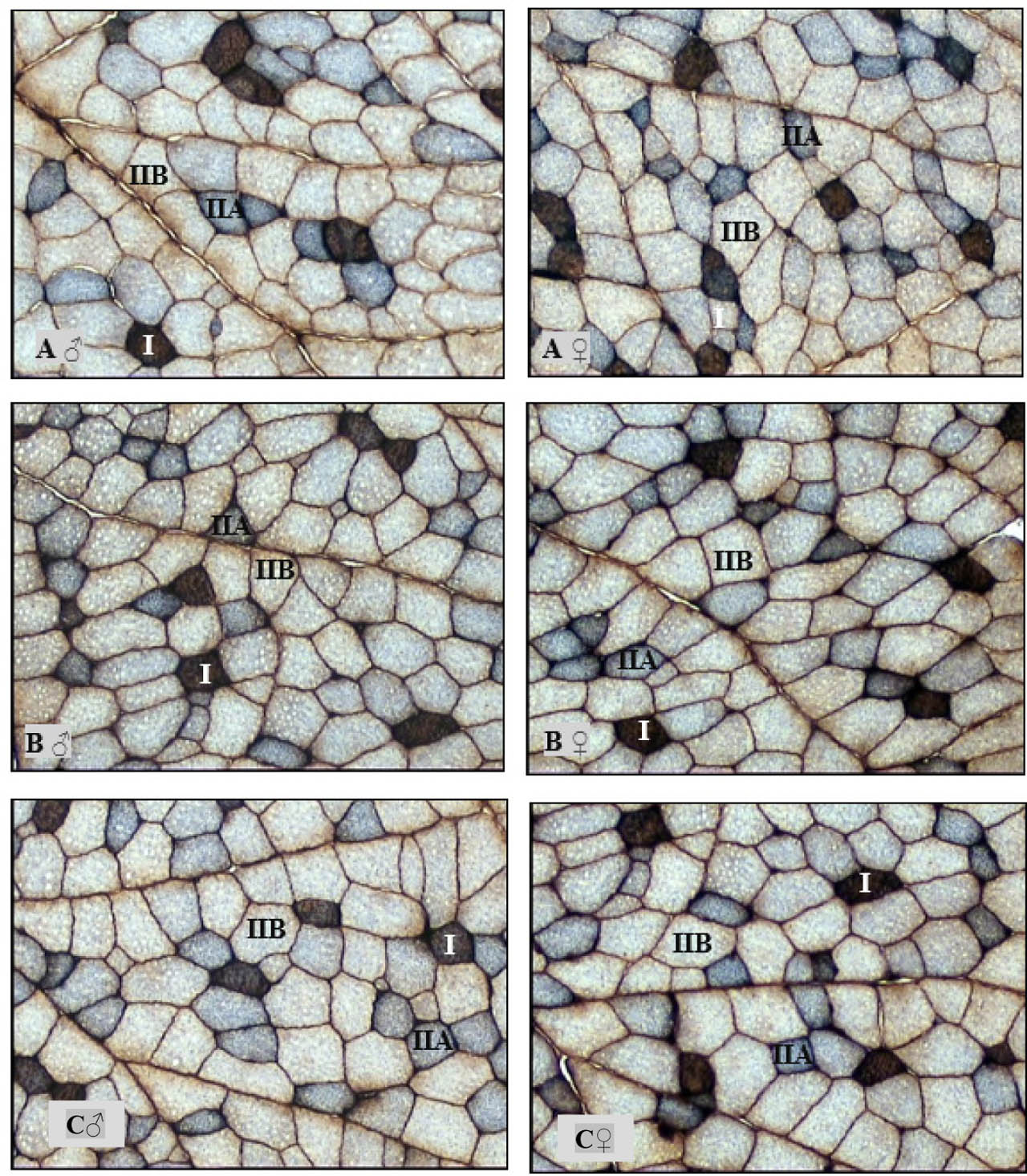
Figure 1.
Cross-sectional view of the m. longissimus lumborum of Popielno White rabbits. Control group (A), group fed 5% pumpkin seed cake (B), and group fed 10% pumpkin seed cake (C). Histochemical reaction for NADH-TR dehydrogenase activity and immunohistochemical reaction for the presence of the slow myosin heavy chain isoform. Red muscle fibers (type I), intermediate fibers (type IIA), and white fibers (type IIB). Scale bar 100 μm
Discussion
The diet of wild rabbits significantly differs from that of rabbits kept in captivity. In their natural environment, rabbits consume large amounts of fibrous forages, which are high in dietary fiber but relatively low in high-quality protein and fat, resulting in lower growth rates. The availability of more nutrient-dense feed is seasonal and dependent on the time of year (Prebble et al., 2015). In contrast, farmed rabbits are provided with high-quality, well-balanced feed throughout the rearing period, optimized for protein, fat, and fiber content, which enhances their productivity. Special attention is given to the quality of protein, which serves as a building material in the process of muscle mass development (Gidenne et al., 2009). Scientific studies have demonstrated that protein isolated from pumpkin seeds exhibits very high bioavailability and digestibility, comparable to that of soybean protein. Soya is considered one of the most valuable sources of vegetable protein, mainly due to its high content of essential amino acids, particularly lysine, leucine and isoleucine. The amino acid profile of soya protein largely meets the nutritional requirements of monogastric animals, making it a standard ingredient in many compound feeds (Rezig et al., 2013). There is a lack of data in the literature regarding the replacement of soybean meal with pumpkin seed cake in rabbit diets and its effects on body weight, growth, and slaughter analysis results. However, many researchers have attempted to replace soya meal with other seeds and are trying to find a suitable alternative, although this is not easy due to limitations in the protein composition of seeds from other plants.
Other legumes and oilseeds such as lupine (Lupinus spp.), linseed (Linum usitatissimum), beans (Phaseolus vulgaris), rapeseed (Brassica napus) and sunflower (Helianthus annuus) also contain significant amounts of protein, but their amino acid profile differs significantly from that of soya. Lupine contains about 40% protein, is rich in arginine and lysine, but deficient in the sulfur amino acids methionine and cysteine. This makes it a good supplement to cereal proteins, which are deficient in lysine (Duranti, 2006). Linseed contains 20–25% protein, and despite its favorable lipid profile (rich in α-linolenic acid), its protein is deficient in lysine and threonine, which limits its use as a sole source of protein in animal diets (Zhang et al., 2023). Common beans have 20–25% protein and a relatively high lysine content, but like other legumes they are deficient in methionine and tryptophan. In addition, the presence of antinutritional factors (lectins, trypsin inhibitors) can limit the digestibility of the amino acids if not properly processed (Nurzyńska-Wierdak and Papliński, 2023). Rapeseed, in the form of rapeseed meal, contains 35–38% crude protein and has a good methionine content but a relatively low lysine content. It also contains glucosinolates, which may limit its contribution to the diet, although modern varieties (e.g. ‘00’) are much lower in these. Sunflower contains 28–35% protein, but its main nutritional limitation is its low lysine content, which contributes to the limited biological value of this protein. It does, however, contain useful amounts of methionine (Sá et al., 2021).
Volek and Mauronek (2011) used white lupine seeds (Lupinus albus L.) (120 g/kg of feed) as an alternative to sunflower seed meal (150 g/kg of feed). The researchers did not observe differences in the average body weight of animals at 33 and 75 days of age, nor in daily growth rates during the growth period or daily feed intake. The authors also found no significant effect of the tested supplement on the warm carcass weight, perirenal fat mass in the carcass, or carcass yield between the groups. These results suggest that commercial protein sources such as soybean meal and sunflower seed meal can be successfully replaced by white lupine or pumpkin seed cake without adversely affecting rabbit performance. The only notable difference observed in our own study occurred on day 56, which may be due to an adaptation period following the introduction of new dietary components. This transient phase may have influenced feed intake, nutrient digestibility and gut microbiota balance, particularly in young growing rabbits. Although the diets were similar in total protein content, differences in amino acid composition – particularly the lower lysine content of the pumpkin seed cake – may have initially limited muscle protein synthesis. However, from day 70, body weights were comparable in all groups, indicating physiological adaptation and supporting the use of pumpkin seed cake as an effective alternative protein source in rabbit diets.
Kouba et al. (2008) used a commercial supplement, Croquelin® (60 g/kg of feed), to completely replace rapeseed meal in rabbit diets. Croquelin® contained 50% extruded flaxseed (Linum usitatissimum), which, according to the authors, positively influenced daily weight gains, feed conversion per 1 kg of weight gain, and improved rabbit meat quality. However, its significant effect on slaughter body weight and warm carcass weight was not observed.
Peiretti and Meineri (2008) included a 10% and 15% addition of chia seeds (Salvia hispanica L.), which contain approximately 24 g of crude protein, in rabbit diets. The addition did not negatively impact body weight, daily gains, or feed utilization by rabbits. The researchers also noted no effects on characteristics such as the weight of the warm carcass, head, liver, kidneys, heart, lungs, or skin.
Abou-Shehema et al. (2023) fed rabbits with diets enriched with powdered pumpkin seeds at levels of 0.05%, 0.1%, and 0.2%. The results showed that growing rabbits fed a diet containing 0.1% powdered pumpkin seeds experienced significant improvements in final body weight, weight gain, feed conversion ratio, performance index, and economic efficiency compared to rabbits in the other groups.
Nworgu et al. (2008) administered an extract of fluted pumpkin leaves (Telfairia occidentalis) at concentrations of 0, 50, 100, and 150 ml/L of water to weaned rabbits aged 42 days over a period of 10 weeks. This extract was rich in crude protein (30.5%) and minerals (ash content of 8.4–10.9%). The researchers found that the addition of 150 ml/L of water positively affected weight gain (62.9% higher compared to the control group) and improved feed utilization. Bakeer (2021) demonstrated a statistically significant increase in the average body weight of rabbits fed a diet supplemented with pumpkin seed oil (5 g/kg of diet) compared to the control group.
Most studies on the use of pumpkin seeds in various forms as feed for livestock have been conducted on broiler chickens. In these studies, increased body weight gain and carcass yield were observed. Martínez et al. (2011) reported greater body weight and breast muscle mass when 33 and 66 g/kg of pumpkin seed meal was included in the diet, while Mathewos et al. (2019) improved body weight gain with the inclusion of only 1% Cucurbita maxima seeds in the diet of chickens. Wafar et al. (2017) found no adverse effects on the liver, lungs, kidneys, heart, and spleen mass when pumpkin leaves were incorporated into the diets of rabbits. Similarly, Ragab et al. (2013) did not observe a significant reduction in the mass of the liver, kidneys, heart, lungs, spleen, head, or gallbladder when 5 g of pumpkin seed oil per 1 kg of feed was provided to rabbits.
Based on the reviewed literature, it can be concluded that dietary supplements containing a protein level similar to commercially used protein feeds for livestock (seeds of soybeans, rapeseed, and sunflower) do not adversely affect production traits such as body weight, growth gains during the growing period, and feed efficiency in meat rabbit breeds. Studies utilizing pumpkin products (oil, seed meal, and leaf extract) in rabbits and poultry indicate their positive impact on the analyzed parameters.
One of the fundamental parameters used in assessing rabbit meat is its acidity (pH). The pH value measured immediately after slaughter is close to neutral, and it decreases over time. This change results from the process of postmortem glycogenolysis occurring in the muscles (Siudak et al., 2023). The color of the meat, which arises from qualitative changes in its structure primarily due to the chemical transformations of hemoglobin and myoglobin, is one of the first parameters evaluated by consumers of rabbit meat. Ragab et al. (2013) investigated the effects of a feed mixture for rabbits supplemented with pumpkin seed oil (5 g/kg feed), black cumin seed oil (5 g/kg feed), or a combination of these oils (2.5 g/kg feed each) on the animals' health and carcass traits. They found no negative effects of these supplements on the pH value, color, tenderness, or water-holding capacity of the meat.
Bianchi et al. (2006) tested the effects of an 8% flaxseed (Linum usitatissimum) supplement in rabbit feed on the acidity and color of loin muscle. The researchers demonstrated that flaxseed significantly increased the a* parameter measured 24 hours post-slaughter. Additionally, the tested pumpkin seed cake also had a significant impact on this parameter. Other traits did not differ significantly between groups. The meat from the cited experiment was characterized by a very high pH24 value (6.16 and 6.19), which may indicate significant pre-slaughter stress. Elevated muscle pH 24 hours post-mortem is often the result of insufficient glycogen reserves at the time of slaughter, limiting the extent of post-mortem glycolysis and thus reducing lactic acid accumulation. This may be due to stress-induced glycogen depletion in live animals prior to slaughter. The variation in a* values between treatments may be biochemically related to these pH changes. Higher final pH affects protein denaturation and water-holding capacity, which in turn affect light reflectance and pigmentation in muscle tissue. As a result, meat with higher pH tends to appear darker and redder due to reduced protein denaturation and stabilization of oxymyoglobin, the pigment responsible for the red color (Santos et al., 2019). Therefore, the observed color differences may be the combined result of dietary effects, such as the fatty acid and antioxidant profiles in flaxseed, and physiological responses to stress that affect muscle energy metabolism and post-mortem biochemical processes.
Volek et al. (2018) demonstrated that a 7% addition of hulled white lupine (Lupinus albus L.) seeds, intended to replace commercially used soybean meal in rabbit feed mixtures, did not significantly affect meat acidity or its color components. Similarly, Antunović et al. (2018) fed 70-day-old lambs one of three diets: a control diet and two experimental diets in which soybean meal was partially replaced with 10% or 15% pumpkin seed cake. According to the authors, the inclusion of either 10% or 15% pumpkin seed cake in the lambs' diet had no significant effect on the color of their meat.
These data do not indicate a significant effect of the tested protein supplements on the acidity and color of rabbit meat, unlike the pumpkin seed cake used in the present experiment, which significantly improved meat pH by lowering it and positively influenced the color components of the meat.
The composition of muscle fibers largely determines the color of meat. Rabbit meat, classified as white meat, is characterized by a high content of type IIB fibers, which have low myoglobin content and a high proportion of myofibrils (Ruusunen and Puolanne, 2004; Ryu et al., 2008). Fast-twitch glycolytic type IIB fibers primarily rely on anaerobic glycolysis as an energy source, and muscles with a predominance of these fibers exhibit a faster decline in pH and lower ultimate pH values (Schiaffino and Reggiani, 1994). Glycolytic fibers have higher myofibrillar ATPase activity, glycogen content, and contraction speed, which, combined with low myoglobin concentration, result in a lighter meat color (LeMaster et al., 2024). Meat with a higher content of type IIB fibers is characterized by greater tenderness (Karlsson et al., 1993).
According to scientific reports (Ryu and Kim, 2005), an increased content of type I fibers – slow-twitch, oxidative fibers utilizing aerobic metabolism (LeMaster et al., 2024) – is positively correlated with higher values of the redness (a*) of meat color. This finding is confirmed by the present study, which shows that the highest percentage of type I fibers was observed in the meat of animals from the E1 group. This group also exhibited the highest statistically significant a* value measured 45 minutes post-slaughter.
Pałka et al. (2021) examined the effects of two dietary supplements – common nettle (Urtica dioica L.) (1%) and fenugreek (Trigonella foenum-graecum L.) (1%) – on the diameter and percentage content of muscle fibers in Termond White rabbits. The researchers demonstrated a significant effect of the dietary supplement on the percentage of type I fibers. The lowest proportion of these fibers was noted in the control group, while the highest was observed in the group receiving the fenugreek supplement.
In the present study, the diameters of all analyzed fibers were larger compared to the cited experiment. In the research by Pałka et al. (2021), the percentage content of type I and IIA fibers was lower, while the proportion of type IIB fibers was higher than in animals fed with pumpkin seed cake. The observed differences may also stem from breed differences and the timing of sample collection. In the referenced study, the samples were collected 24 hours post-slaughter when the meat had already matured.
Conclusion
The aim of this study was to investigate the effects of 5% and 10% addition of pumpkin seed cake (Cucurbita pepo L.) to the diet of Popielno White rabbits on their growth performance, slaughter parameters and meat quality. The results indicate that the inclusion of pumpkin seed cake at both levels did not negatively affect body weight or daily weight gain throughout the rearing period. Feed conversion efficiency remained comparable among all groups, as indicated by similar average feed intake per kilogram of body weight gain. Slaughter performance parameters did not show any significant deterioration due to the dietary treatment. While most carcass traits were unaffected, meat pH tended to decrease with higher levels of pumpkin seed cake, suggesting a potential improvement in technological meat quality. Texture analysis revealed increased hardness, cohesiveness and chewiness in the experimental groups, without significant changes in springiness or cooking loss. Furthermore, immunohistochemical analysis showed no significant differences in the diameter or proportion of type I, IIA and IIB fibers in the longissimus lumborum muscle, indicating that the muscle fiber composition was not altered.
In conclusion, supplementation of rabbit diets with 5% and 10% pumpkin seed cake did not affect growth performance, carcass performance or meat quality, confirming that this by-product can be a viable and nutritionally safe alternative in the diet of Popielno White rabbits.