
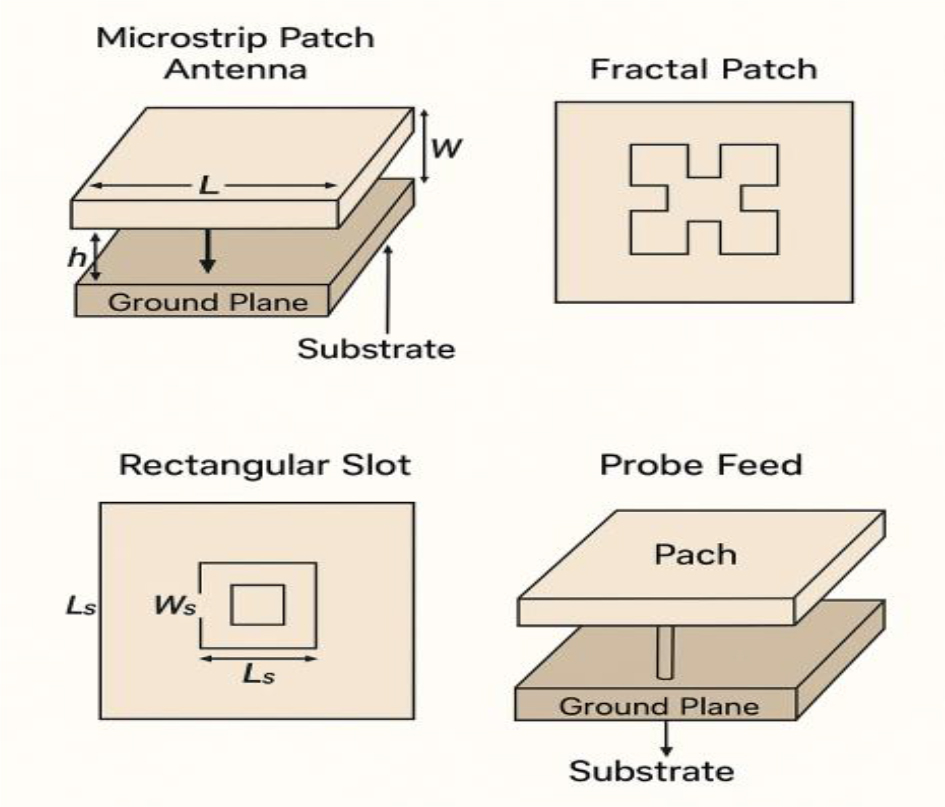
Fig. 1.
Microstrip patch antenna
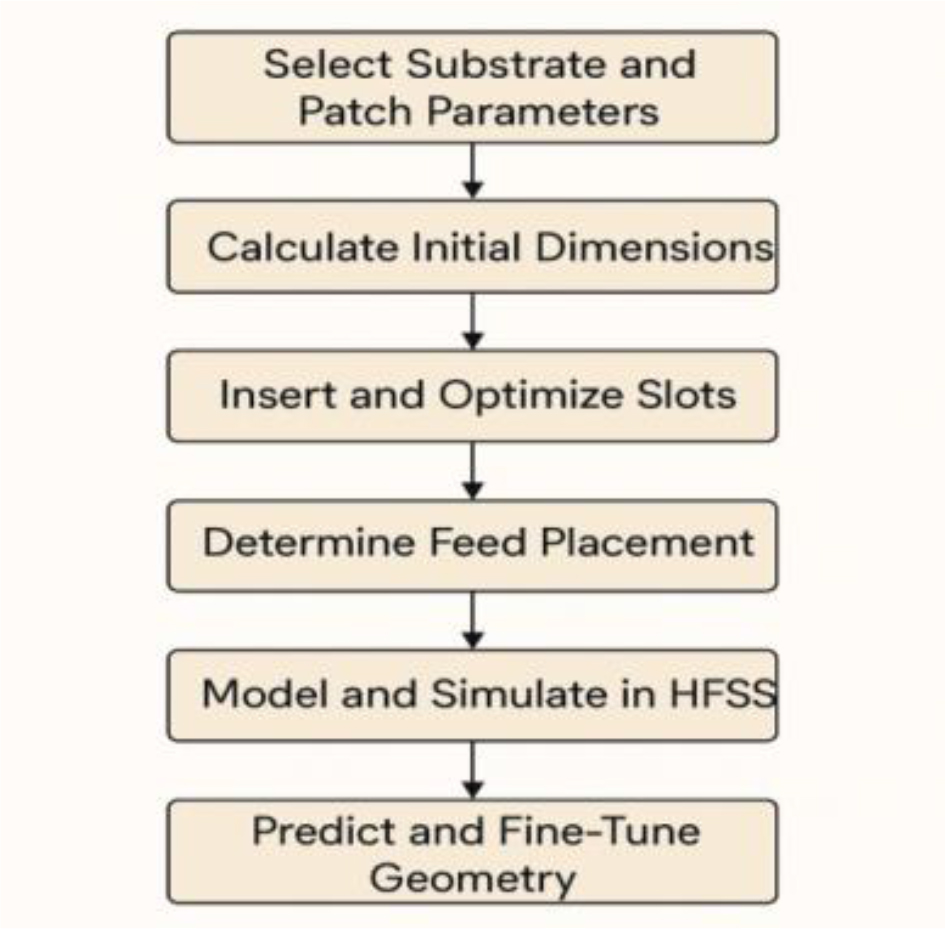
Fig. 2.
Antenna Design and Methodology
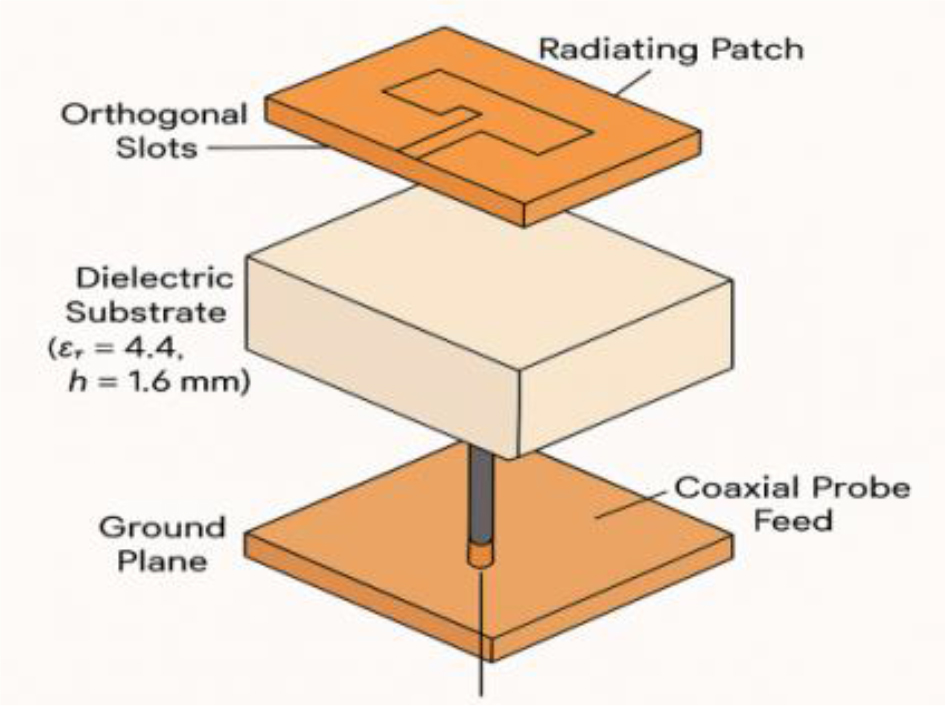
Fig. 3.
Design Antenna
Tab. 1.
Performance comparison table
| Parameter | Proposed (ANN+HFSS) | Iqbal et al. dual-band | Sharmila et al. multiband |
|---|---|---|---|
| Bands (GHz) | 2.35–2.50, 3.55–3.75, 5.60–5.90 | 2.50–2.70, 5.75–5.85 | 8.20, 11.40, 14.90, … |
| Return loss (dB) | –20, –18, –22 | –18 at 2.5, –18 at 5.8 | <–10 dB at all bands |
| VSWR | 1.2–1.4 | <2.0 | <2.0 |
| Peak gain (dBi) | 7.0, 6.2, 8.0 | ~5.0–6.0 | 2–6 |
| Optimization method | ANN-assisted HFSS | Manual CST tuning | Manual HFSS tuning |
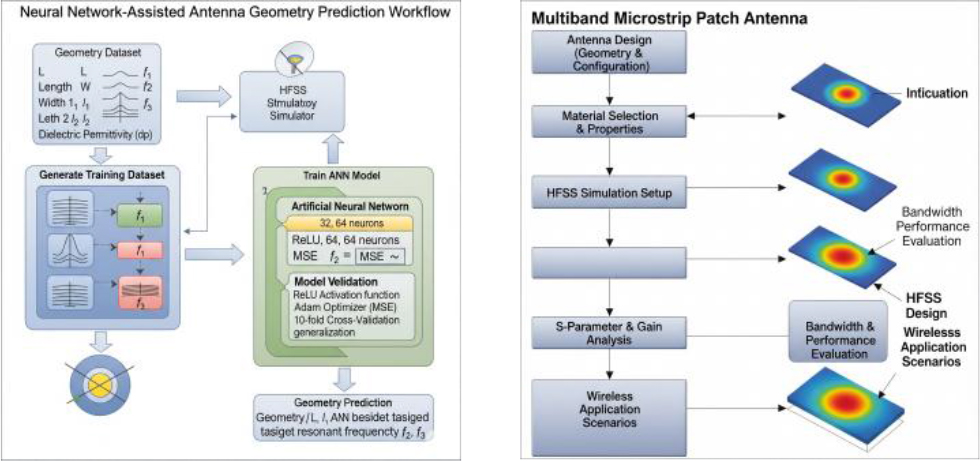
Fig. 4.
Neural Network-Assisted Antenna Geometry Prediction Workflow
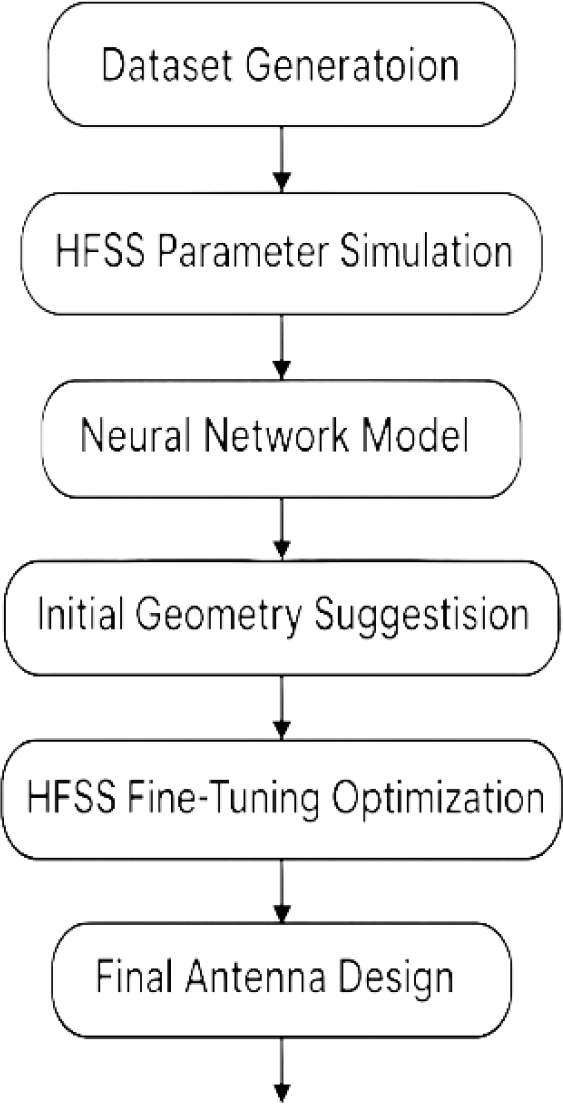
Fig. 5.
Workflow of ANN-Assisted Antenna Design
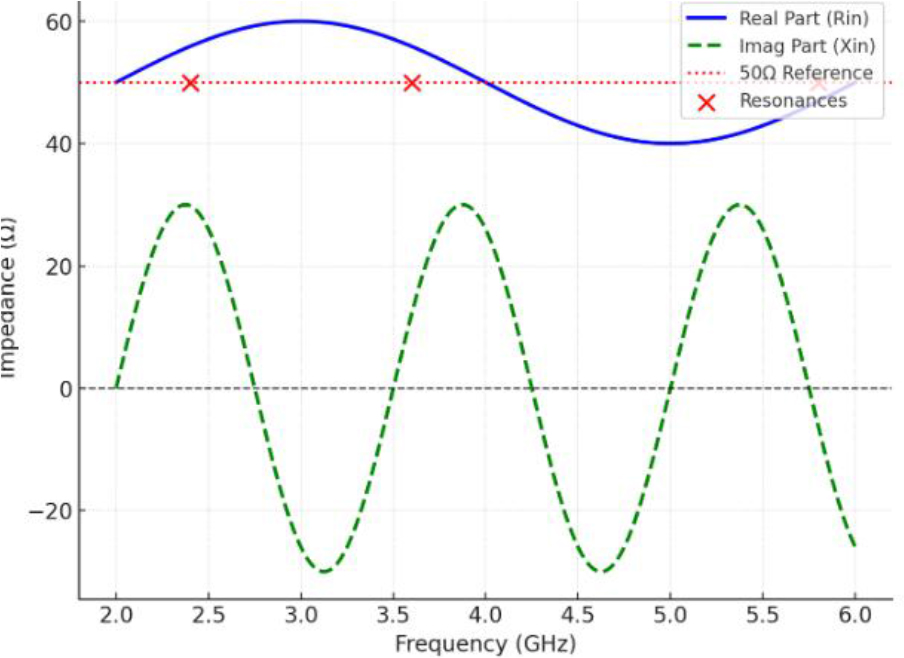
Fig. 6.
Input Impedance vs Frequency
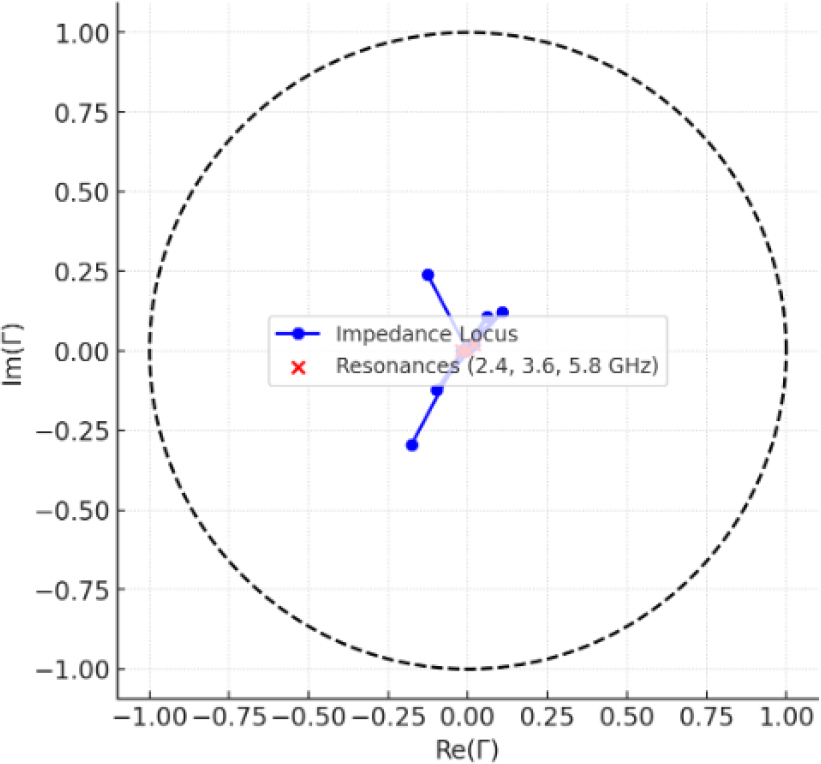
Fig. 7.
Smith Chart (impedance loci approaching chart center at resonances, confirming good matching)
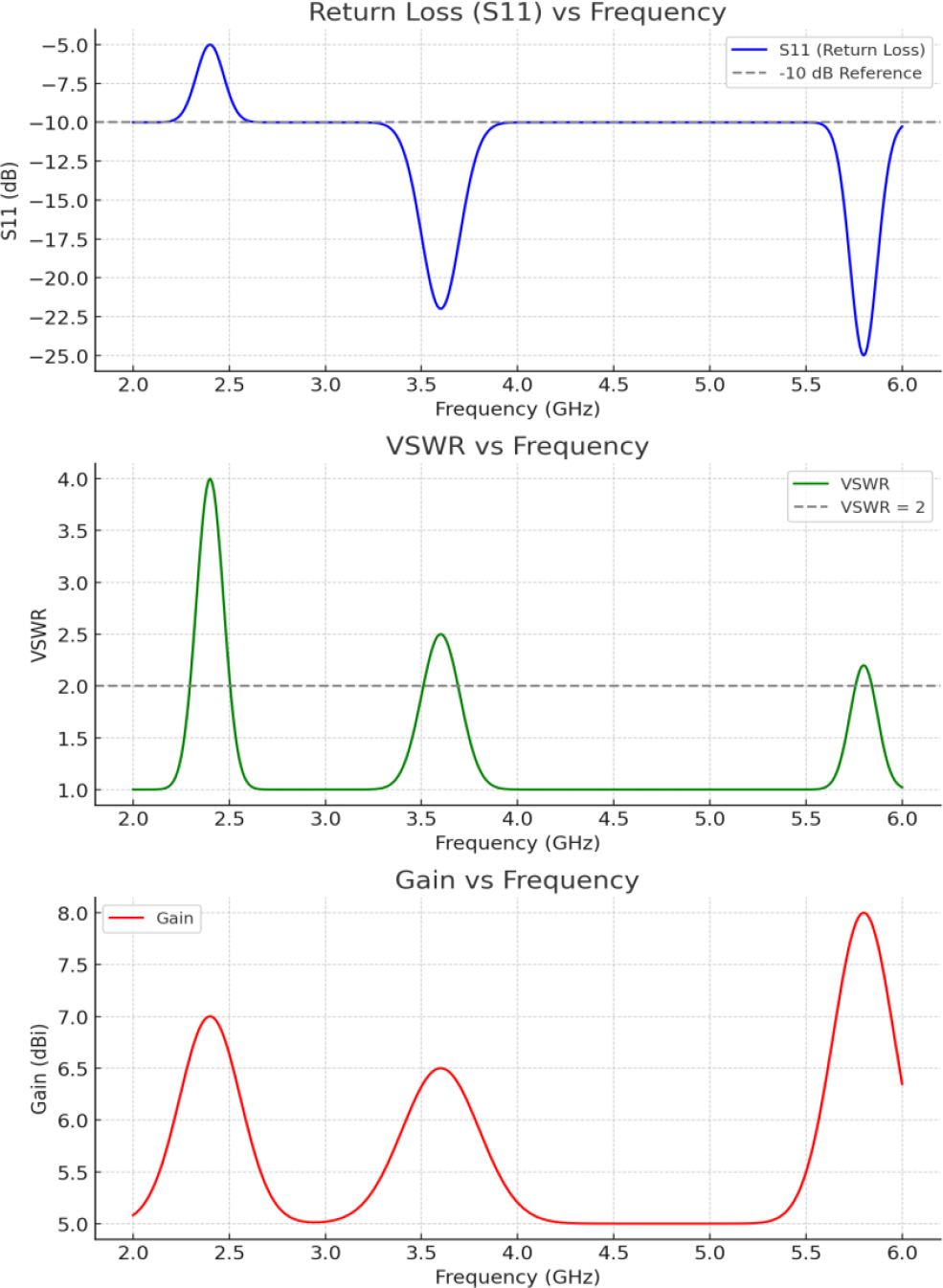
Fig. 8.
Output Curves of S11, VSWR, and Gain
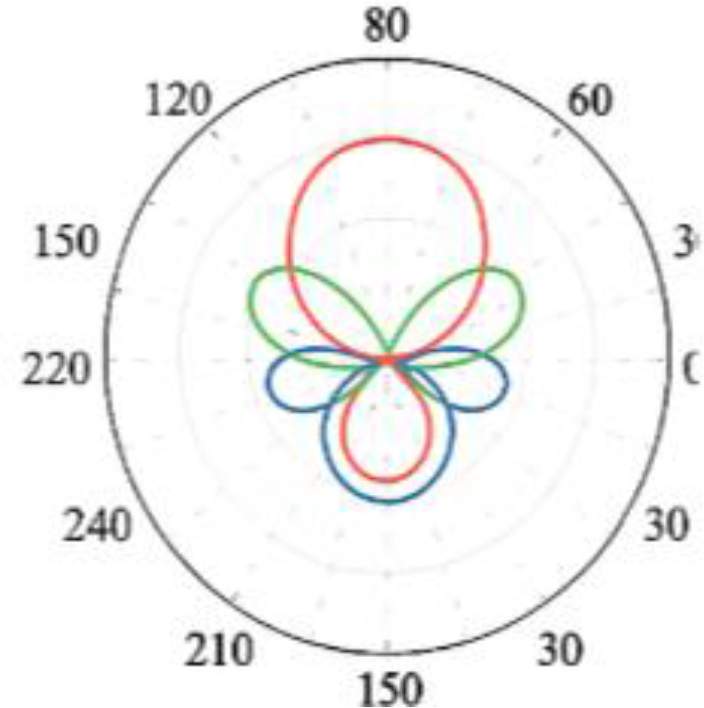
Fig. 9.
Radiation Patterns at 2.4 GHz and 3.6 GHz
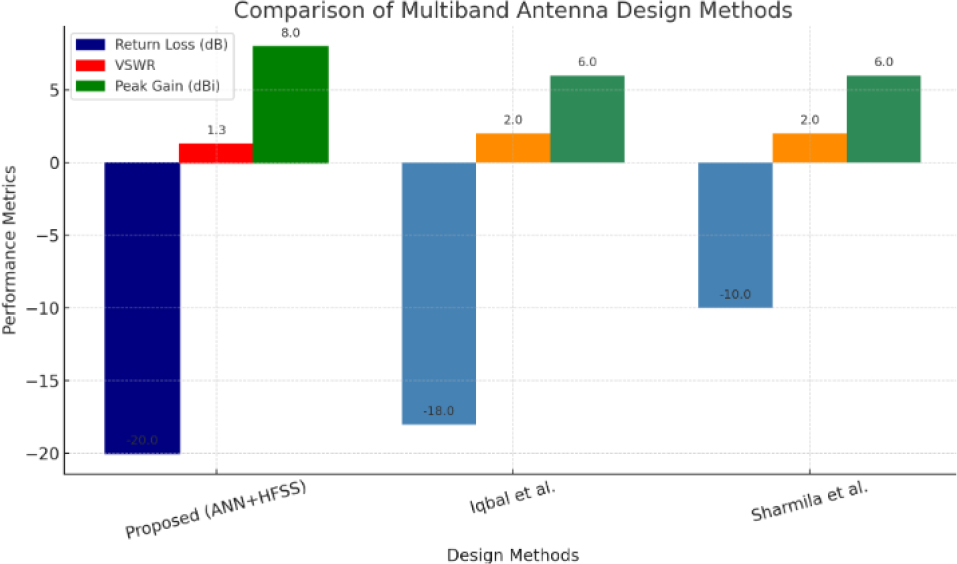
Fig. 10.
Comparative Bar Graph of Return Loss, VSWR, and Gain for Proposed ANN+HFSS Method vs. Existing Works
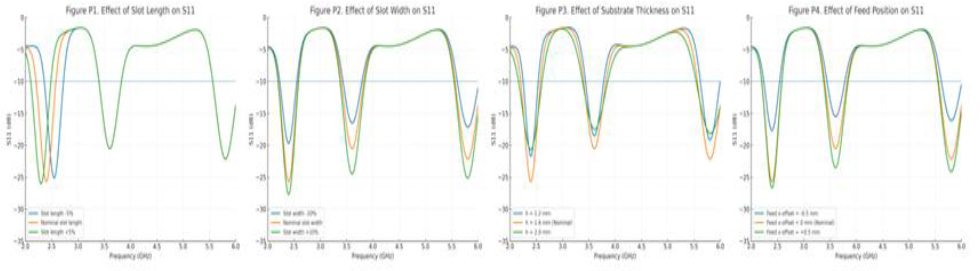
Fig. 11.
Parametric study results of the proposed antenna: (a) Effect of slot length on S11,(b) Effect of slot width on S11, (c) Effect of substrate thickness on S11,(d) Effect of feed position on S11
Tab. 2.
Comparison of proposed antenna with existing works
| Reference | Methodology | Operating Bands (GHz) | Bandwidth (MHz) | Reported Limitations | Proposed Work Advantages |
|---|---|---|---|---|---|
| Sharmila et al. 2019 [3] | Slotted patch, HFSS | 2.4/5.2 | 80/100 | Limited bands, no AI integration | Covers 2.4 / 3.6 / 5.8 GHz, AI-assisted optimization |
| Djermane & Talbi, 2015 [5] | Neural Network for design | 2.45 | 70 | Single-band only | ANN + HFSS, multiband design |
| Wang et al. 2015 [20] | Tri-band slot design | 2.4/3.5/5.5 | 60-120 | Narrow bandwidth | Wider bands, improved matching |
| Rahman et al., 2014 [2] | Dual-band MPA | 2.4/5.8 | 100/110 | Only 2 bands supported | Stable 3-band operation |
| Proposed Work | ANN–HFSS optimized slotted patch | 2.4/3.6/5.8 | 100–150 each | - | Reduced design iterations, stable radiation, IoT/5G applications |