Have a personal or library account? Click to login
Control of Free Convection by Flexible Fins in a Square Cavity Containing a Heated Triangular Block Cover

Control of Free Convection by Flexible Fins in a Square Cavity Containing a Heated Triangular Block

Open Access
|Sep 2025

Figures & Tables

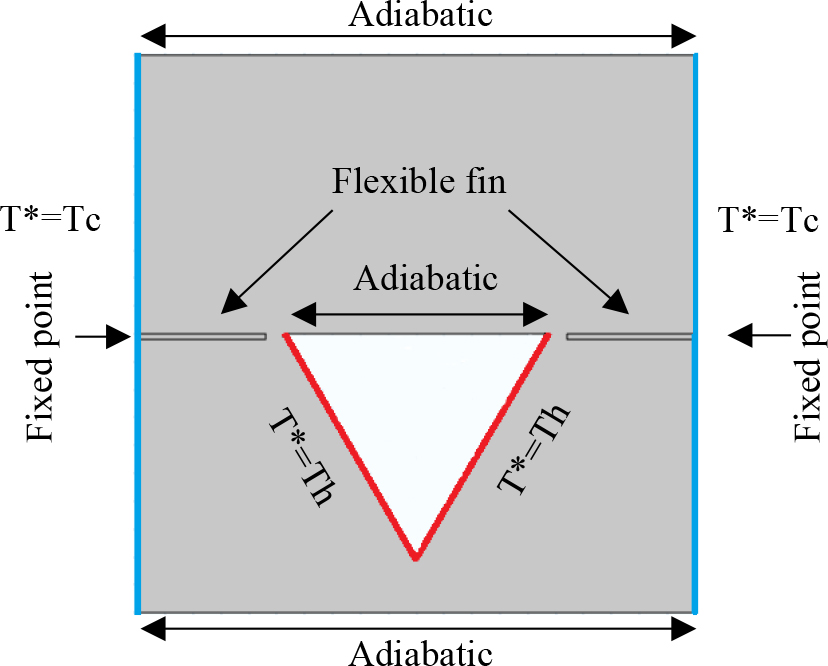
Fig. 1.

Physical 2D model of our study
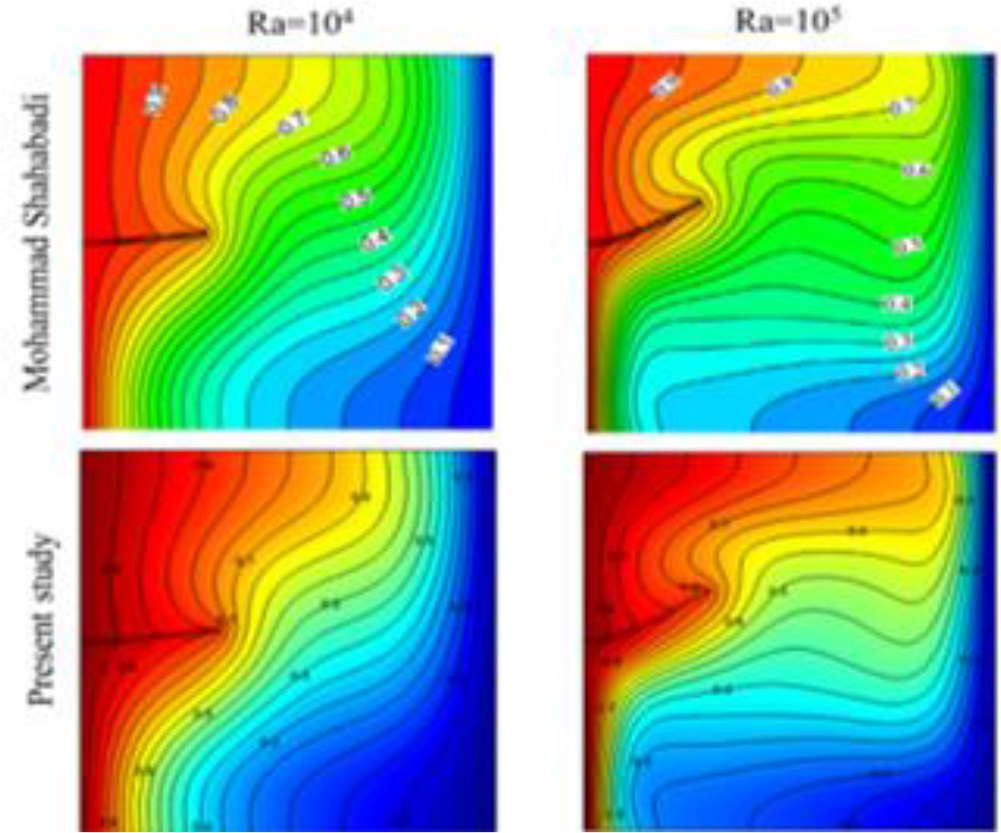

Fig. 2.

Comparison of the results of the contours of isotherms when Pr = 10 and Et = 1010 between the present study and the study of Mohammad Shahabady et al.
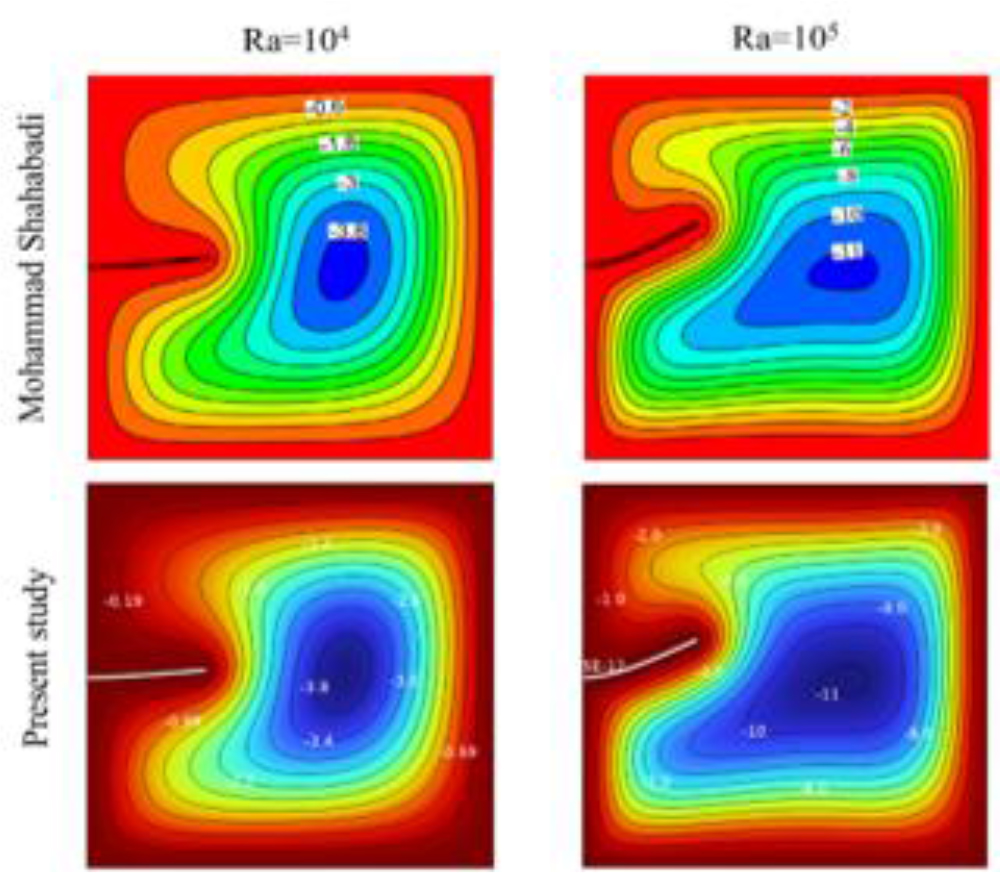

Fig. 3.

Comparison of the results of the streamlines when Pr = 10 and Et = 1010 between the present work and the work of Mohammad Shahabady et al.

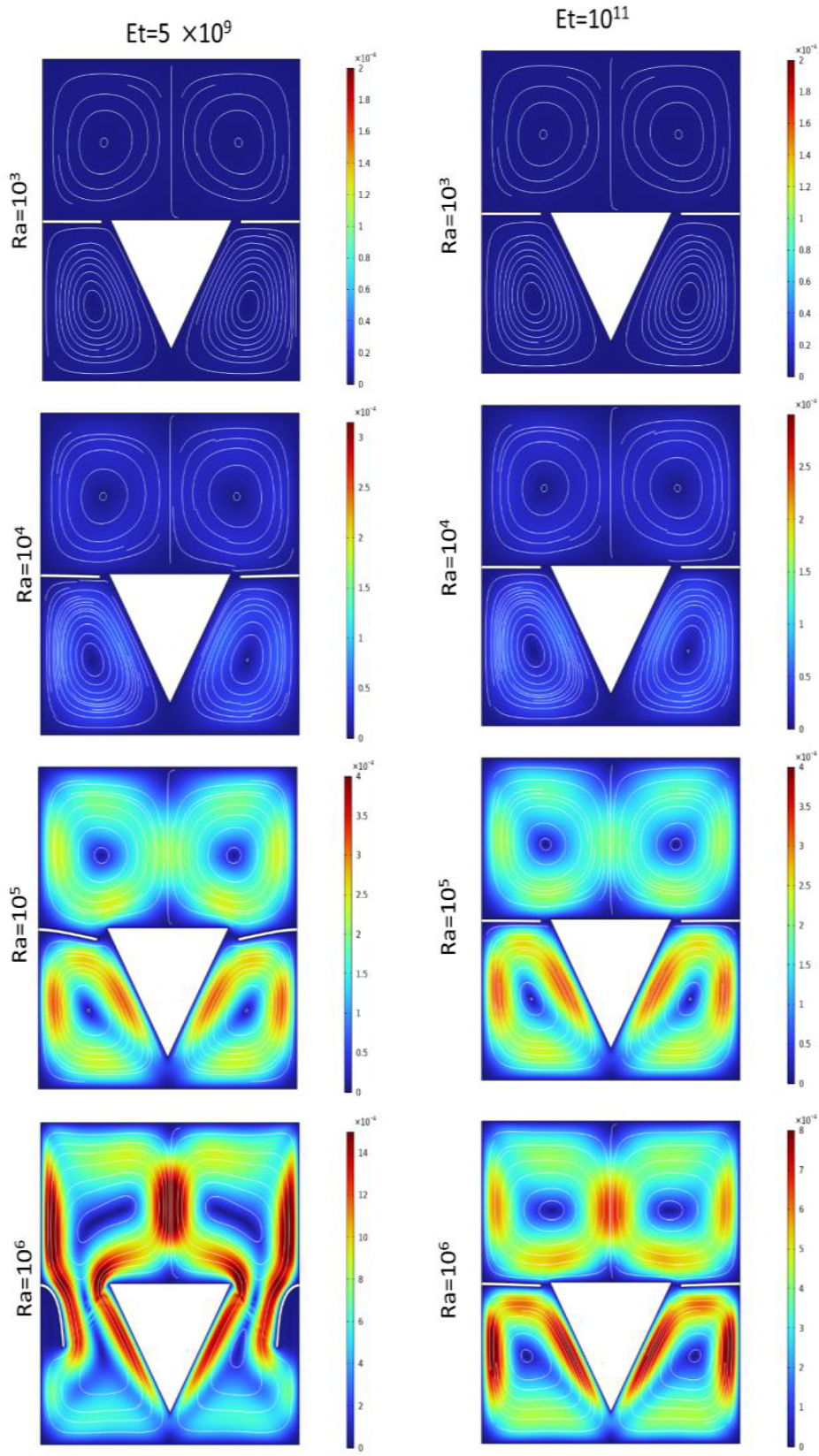
Fig. 4.

Streamlines of the velocity when Et=5×10⁹ and Et=1011 for different Rayleigh numbers
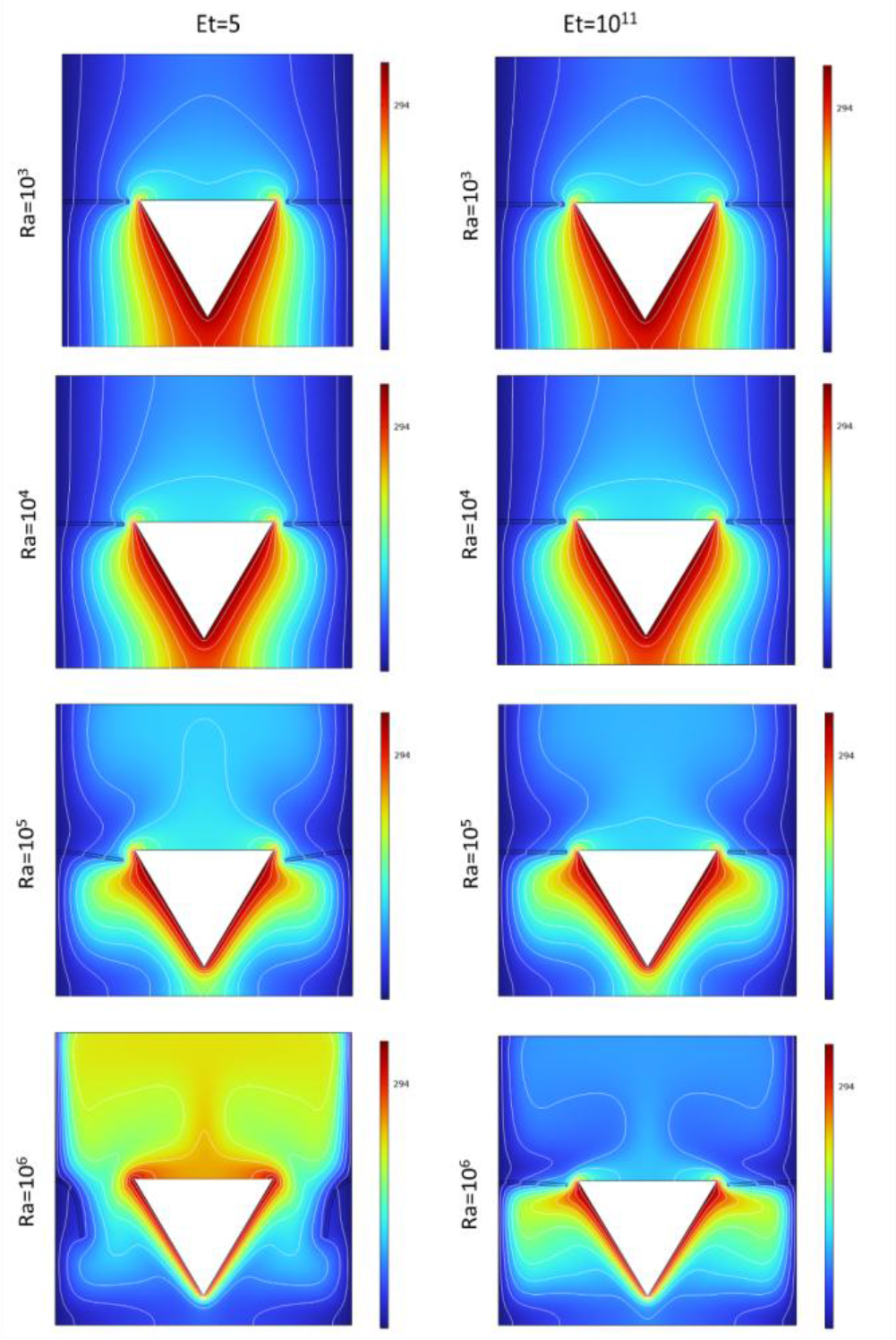

Fig. 5.

Isotherms for Et=5×10⁹ and Et=1011 for different Rayleigh numbers
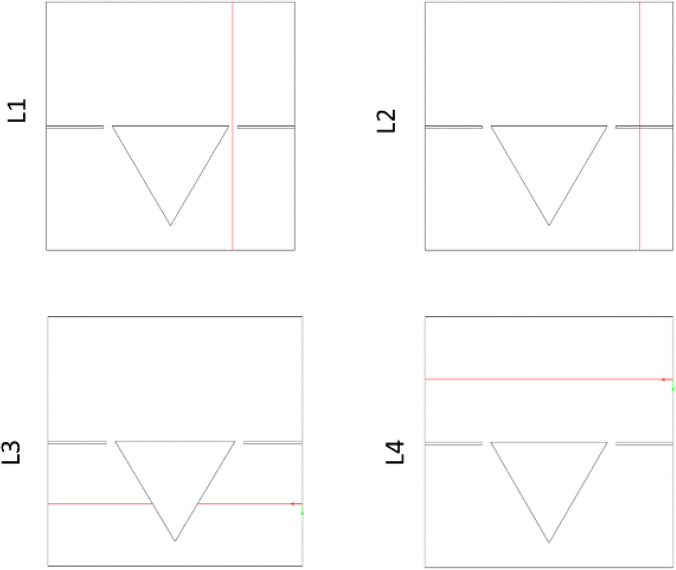

Fig. 6.

Cutlines for different regions of the cavity
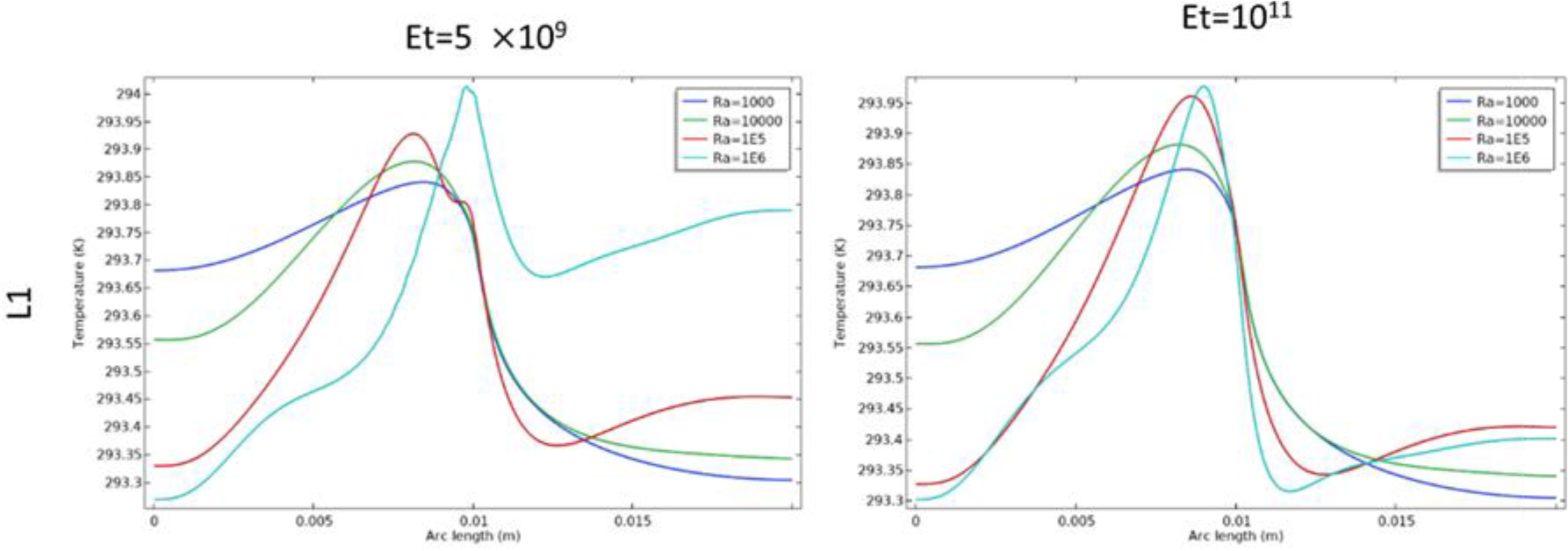

Fig. 7.

Temperature profiles in the region L1 for multiples Rayleigh numbers and Et=5×10⁹, Et=1011
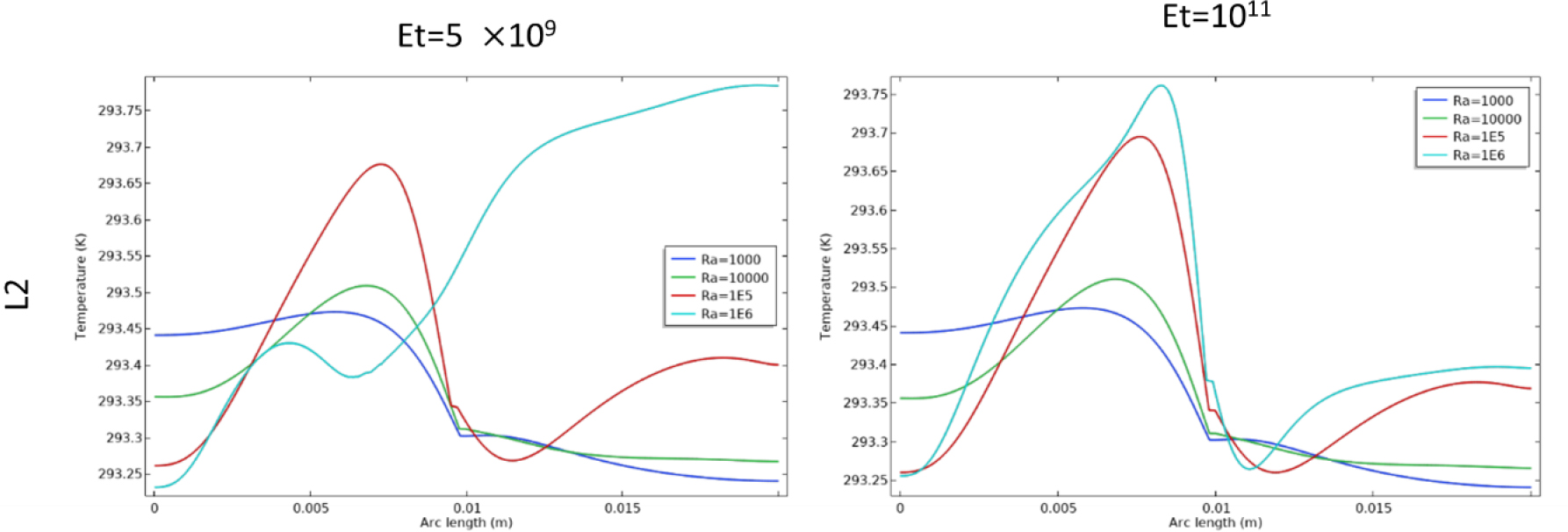

Fig. 8.

Temperature profiles in L2 cutline for variating Rayleigh numbers and Et=5×10⁹, Et=1011
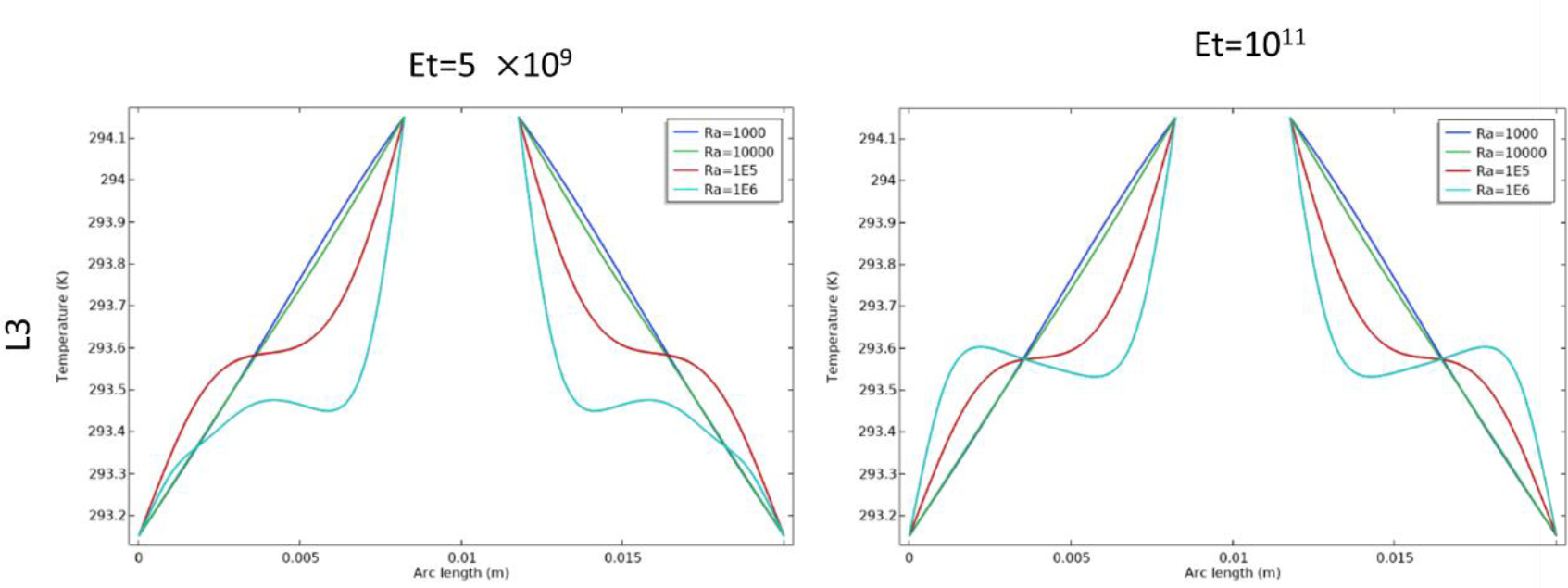

Fig. 9.

Temperature profiles in L3 cutline for different Rayleigh numbers and Et=5×10⁹, Et=1011
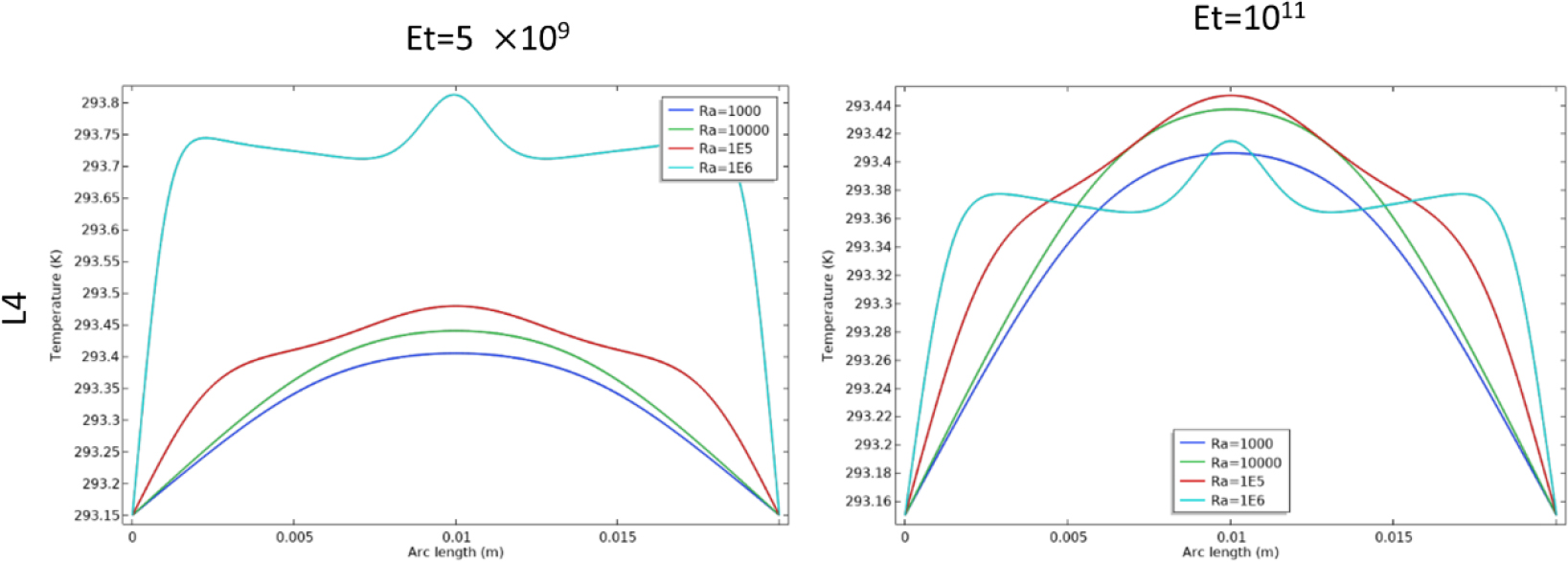

Fig. 10.

Temperature profiles in L4 cutline where Et=5×10⁹, 1011 for different Ra
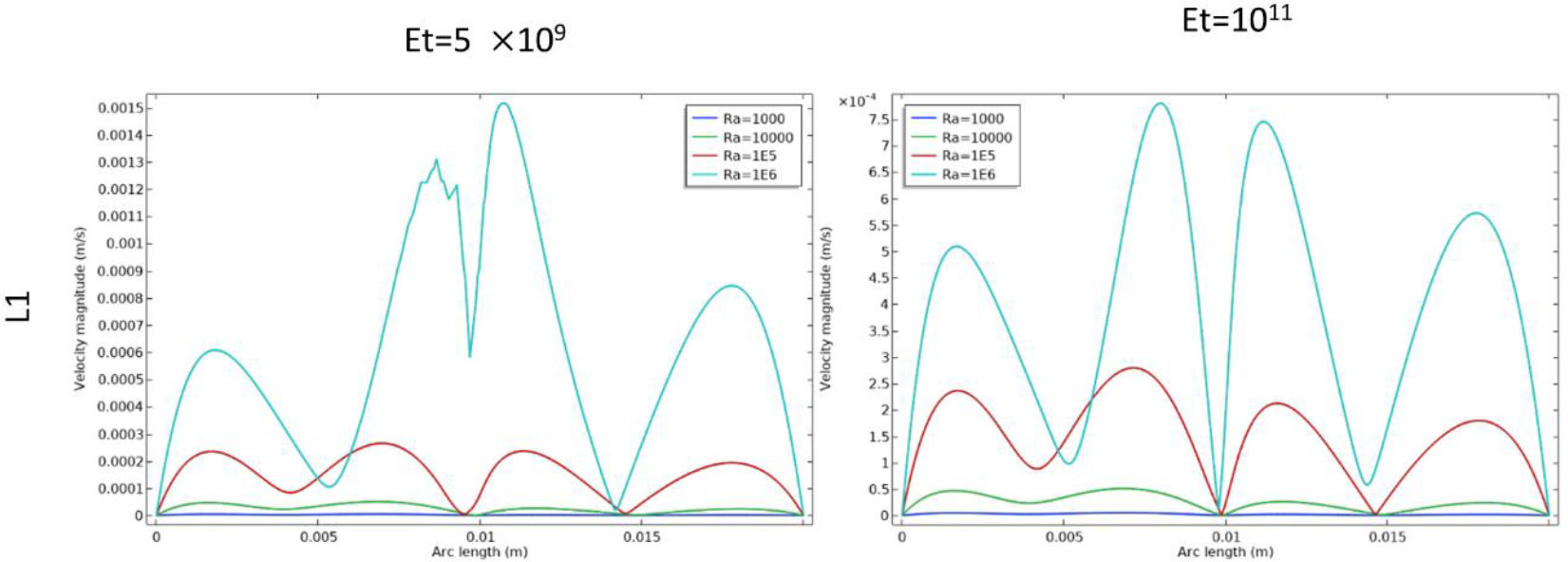

Fig. 11.

Velocity profiles in cutline L1 for different Rayleigh numbers and Et=5×10⁹, Et=1011
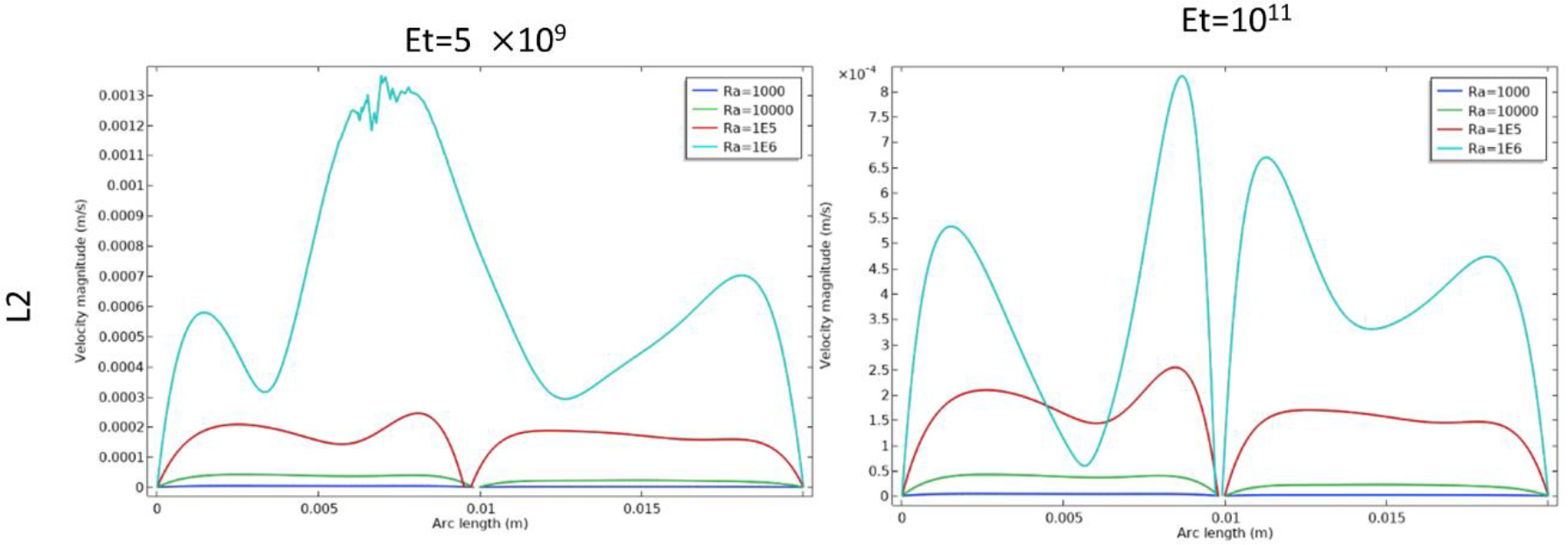

Fig. 12.

Velocity profiles in cutline L2 for different Rayleigh numbers and Et=5×10⁹, Et=1011
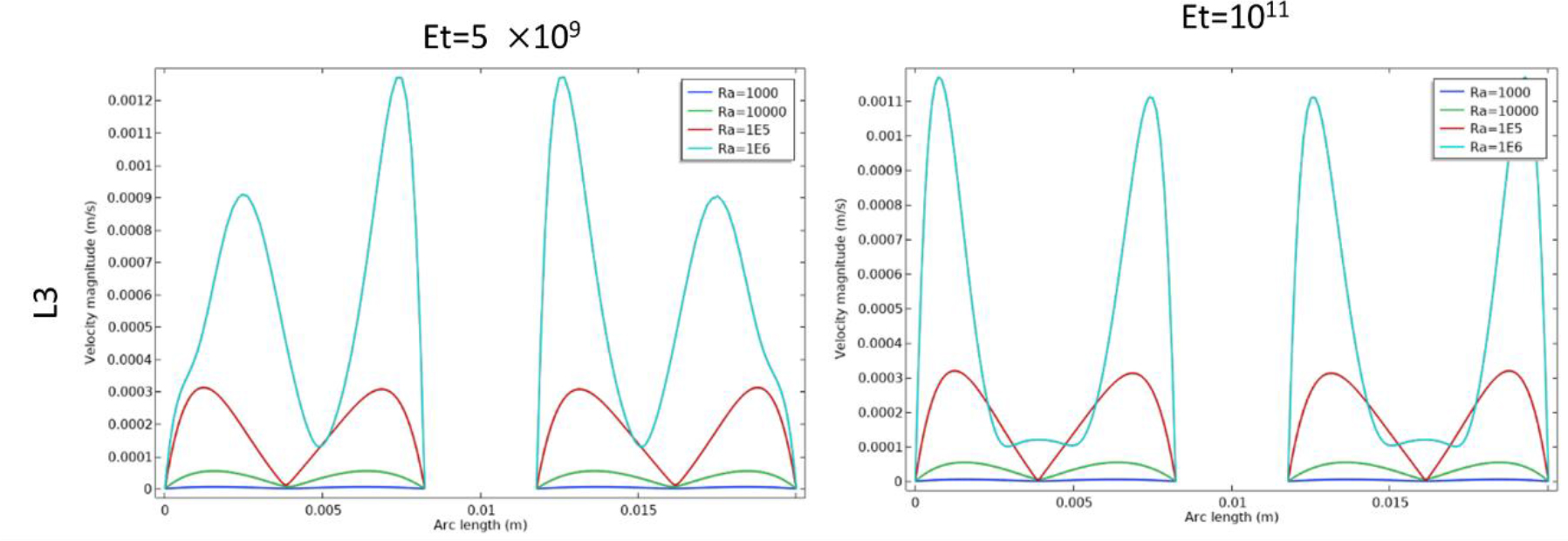

Fig. 13.

Velocity profiles in cutline L3 for different Rayleigh numbers and Et=5×10⁹, Et=1011
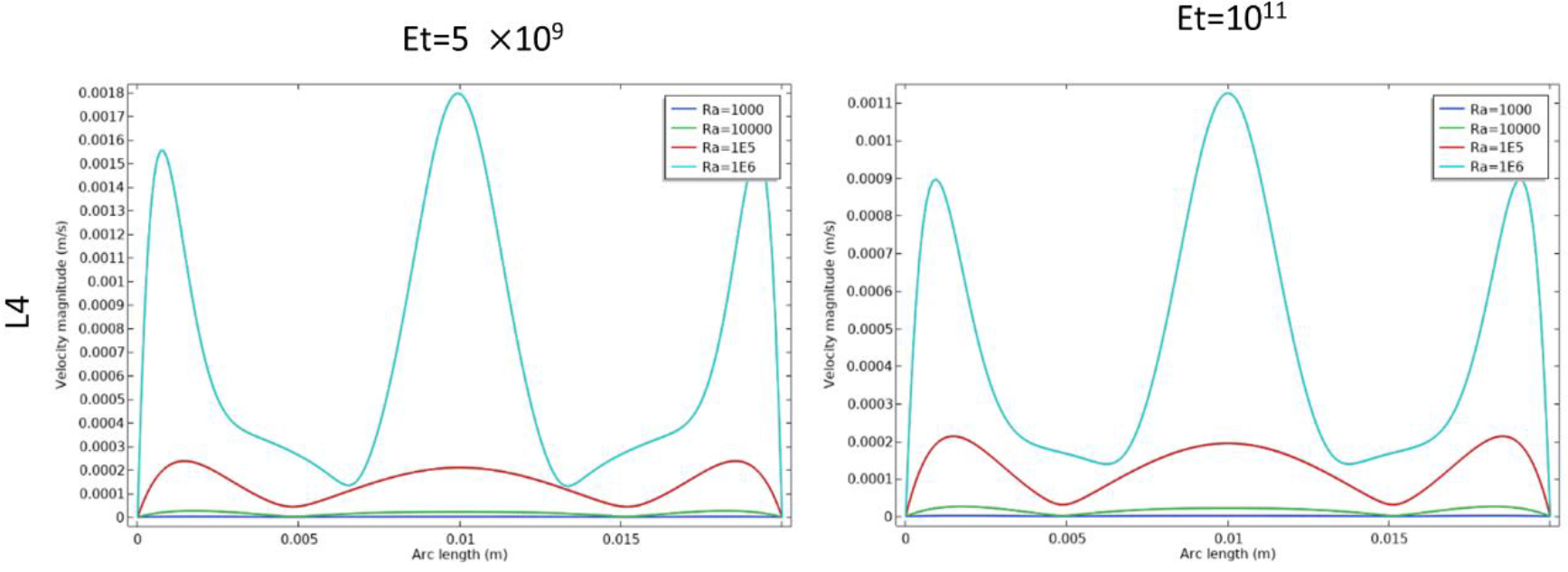

Fig. 14.

Velocity profiles in cutline L4 for different Rayleigh numbers and Et=5×10⁹, Et=1011
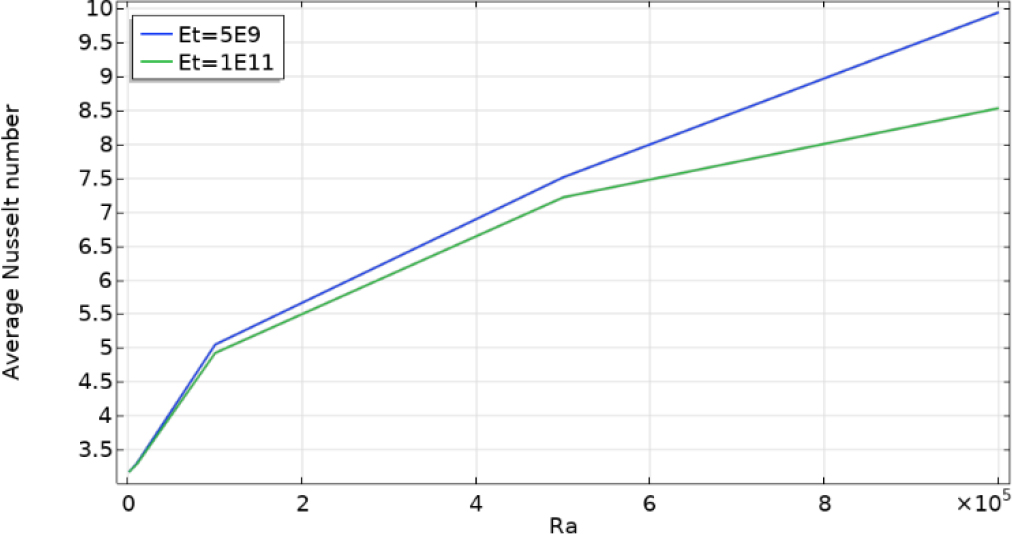

Fig. 15.

Variation of the average Nusselt number as a function of Ra for different Et values

The average Nusselt number for variety of elements number

Number of elements11128139121725468554981
Average Nusselt number4,39884,80614,89054,98294,9829
DOI: https://doi.org/10.2478/ama-2025-0057 | Journal eISSN: 2300-5319 | Journal ISSN: 1898-4088
Language: English
Page range: 496 - 504
Submitted on: Jan 6, 2025
Accepted on: Sep 18, 2025
Published on: Sep 30, 2025
Published by: Bialystok University of Technology
In partnership with: Paradigm Publishing Services
Publication frequency: 4 issues per year

© 2025 Said AZZI, Belkacem BELKACEM, Mohamed BOUZIT, Mohamed BOUHAFS, Atika BENCHERIF, Imadeddine DEHIMI, published by Bialystok University of Technology
This work is licensed under the Creative Commons Attribution-NonCommercial-NoDerivatives 4.0 License.