
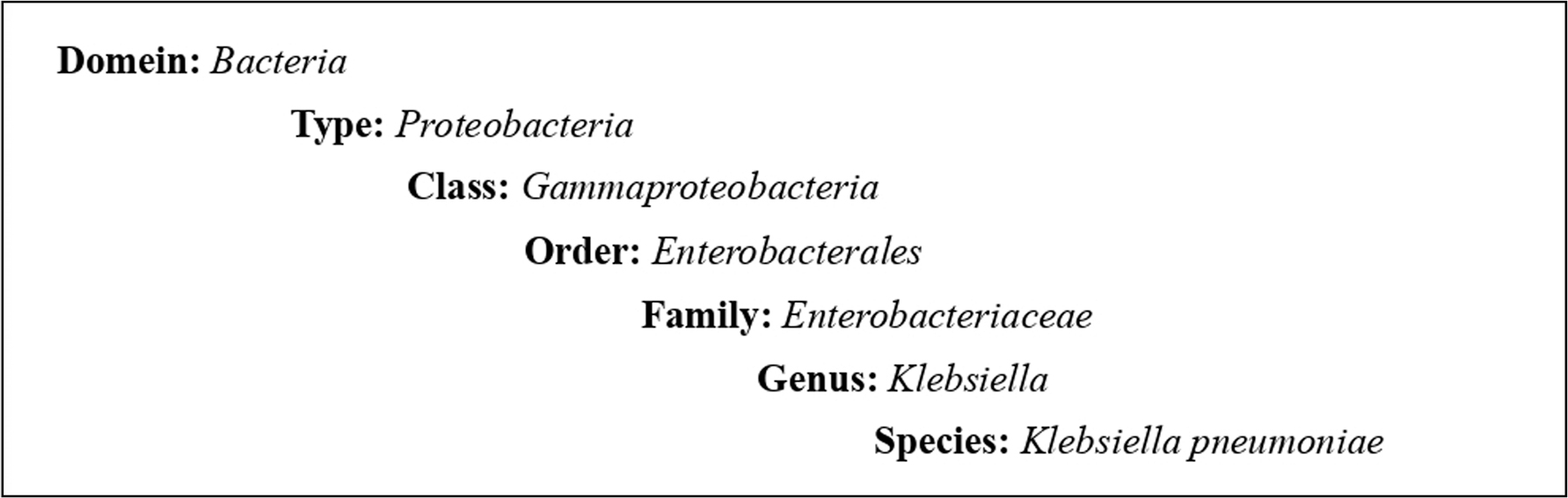
Fig. 1.
The current taxonomic position of the species K. pneumoniae.
Own graphic design according to (Adeolu et al. 2016; Schoch and Karsch-Mizrachi 2020; Dong et al. 2022).
Table I.
Clinical significance of selected Klebsiella species presented in alphabetical order
| Species | Special features | References |
|---|---|---|
| 1. K. aerogenes | The opportunistic pathogen, an etiological agent of nosocomial infections, present in various sewage wastes, chemicals and soil. Commercially important bacterium, „preeminent producer of hydrogen” produced by anaerobic fermentation, used as a substrate in molasses experiments, and a common cause of spoilage in maple sap and syrup. | (Tindall et al. 2017) |
| 2. K. africana | The bacillus isolated from the asymptomatic carriage of the inhabitants of Kenya and Senegal, mainly an opportunistic pathogen. | (McDougall et al. 2021) |
| 3. K. granulomatis | The etiological agent of inguinal granuloma (donovanosis), an infectious disease occurring in tropical and subtropical regions of Southeast Asia, India, Africa and Central America. The diagnosis of donovanosis is based on the history taking, the characteristic clinical picture (no changes in the lymph nodes) and the detection of the presence of vacuole in the tissue smear, the so-called Donovan bodies surrounding bacteria. | (Belda Junior 2020) |
| 4. K. grimontii | A relatively common human pathogen isolated mainly in France, Germany and South Africa. It mainly causes bacteraemia and soft tissue infections. | (Passet and Brisse 2018) |
| 5. K. huaxensis | The opportunistic pathogen. The etiological agent of urinary tract infections (UTIs). | (Hu et al. 2019) |
| 6. K. indica | The opportunistic pathogen. Relatively little described in the scientific literature. | (Gujarati et al. 2020) |
| 7. K. kielensis | The opportunistic pathogen. Relatively little described in the scientific literature. | (Schoch and Karsch-Mizrachi et al. 2020) |
| 8. K. michiganensis | The opportunistic pathogen. First detected in Michigan. The bacterium was first isolated in Europe from blood and rectal swabs from an immunosuppressed patient. | (Seiffert et al. 2019) |
| 9. K. milletis | The opportunistic pathogen. Bacillus mainly transmitted by food. | (Alves et al. 2006) |
| 10. K. oxytoca | The second important species pathogenic for humans after K. pneumoniae. Isolated from pneumonia, and UTIs. Common cause of nosocomial infections in neonatal wards. | (Neog et al. 2021) |
| 11. K. pasteurii | The opportunistic pathogen. Isolated from human and animals stool samples such as cows and turtles. | (Merla, Brisse et al. 2019) |
| 12. K. pneumoniae subsp. ozaenae | The etiological factor of ozena – chronic, atrophic rhinitis, causing halitosis. | (Tachibana et al. 2022) |
| 13. K. pneumoniae subsp. pneumoniae | The most frequently isolated in about 95% of all Klebsiella strains. An opportunistic pathogen. Isolated from: sepsis, endotoxic shock, pneumonia, lung abscesses, infections of the urinary, digestive and biliary tracts. In addition, it causes inflammation of the sinuses, middle ear, inflammation of soft tissues, osteomyelitis, and meningitis in newborns. | (Ali et al. 2022) |
| 14. K. pneumoniae subsp. rhinoscleromatis | Frisch’s bacillus, the etiological agent of heart disease („rhinoscleroma”) known as „Slavic leprosy”, a chronic infectious granulomatous disease of the respiratory tract covering mainly the nasal cavity, as well as the oral cavity, pharynx, larynx, trachea, and bronchi; is now very rare in Poland. | (Fusconi et al. 2018) |
| 15. K. quasipneumoniae | Originally thought to be largely confined to agriculture. However, it may be responsible for causing disease in humans. | (Mathers et al. 2019) |
| 16. K. quasipneumoniae subsp. quasipneumoniae. | The name derives from „quasipneumoniae” which means almost like „pneumoniae”. The opportunistic pathogen. Pathogenicity as in K. pneumoniae, mainly the etiological agent of pneumonia. | (Brisse et al. 2014) |
| 17. K. quasipneumoniae subsp. similipneumoniae | Name derived from „similis” which means similar to „pneumoniae”. The opportunistic pathogen. Pathogenicity as in K. pneumoniae, mainly the etiological agent of pneumonia. | (Brisse et al. 2014) |
| 18. K. quasivariicola | The opportunistic pathogen. First time isolated from a wound. | (Long et al. 2017) |
| 19. K. senegalensis | The opportunistic pathogen. First detected in Senegal. Mainly foodborne pathogen. | (Alves et al. 2006) |
| 20. K. spallanzanii | The opportunistic pathogen. Mainly isolated from human urine, cow feces and farms. cow feces and farms. | (Merla, Brisse et al. 2019) |
| 21. K. steroids | The opportunistic pathogen. Relatively little described in the scientific literature. | (Schoch, Karsch-Mizrachi et al. 2020) |
| 22. K. variicola | These rods account for less than 10% of Klebsiella clinical isolates previously classified as K. pneumoniae. Hypervirulent isolates have been identified, and colistin-resistant isolates of this species are also reported. Abundant in the environment (mainly rivers), edible plants, e.g. root, leaves, banana stem, sugar cane stem, corn shoots, rice roots. The etiological agent of mastitis in cattle. | (Rodriquez-Medina et al. 2019) |
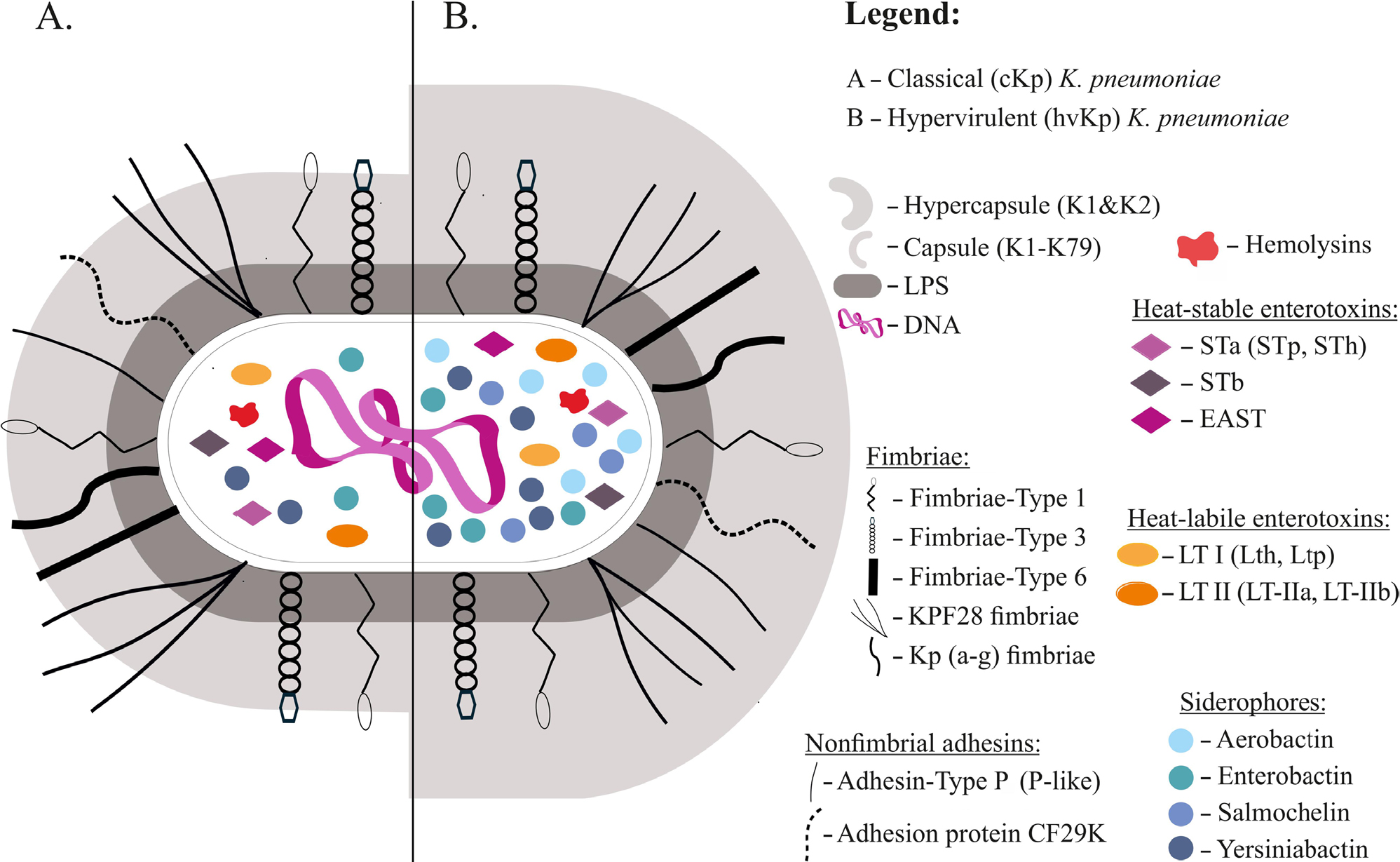
Fig. 2.
Schematic representation of the differences in cell morphology of classical (cKp) and hypervirulent (hvKp) K. pneumoniae, taking into account virulence factors.
Own graphic design according to (Paczosa & Mecsas 2016; Ali et al. 2022; Dai and Hu 2022).
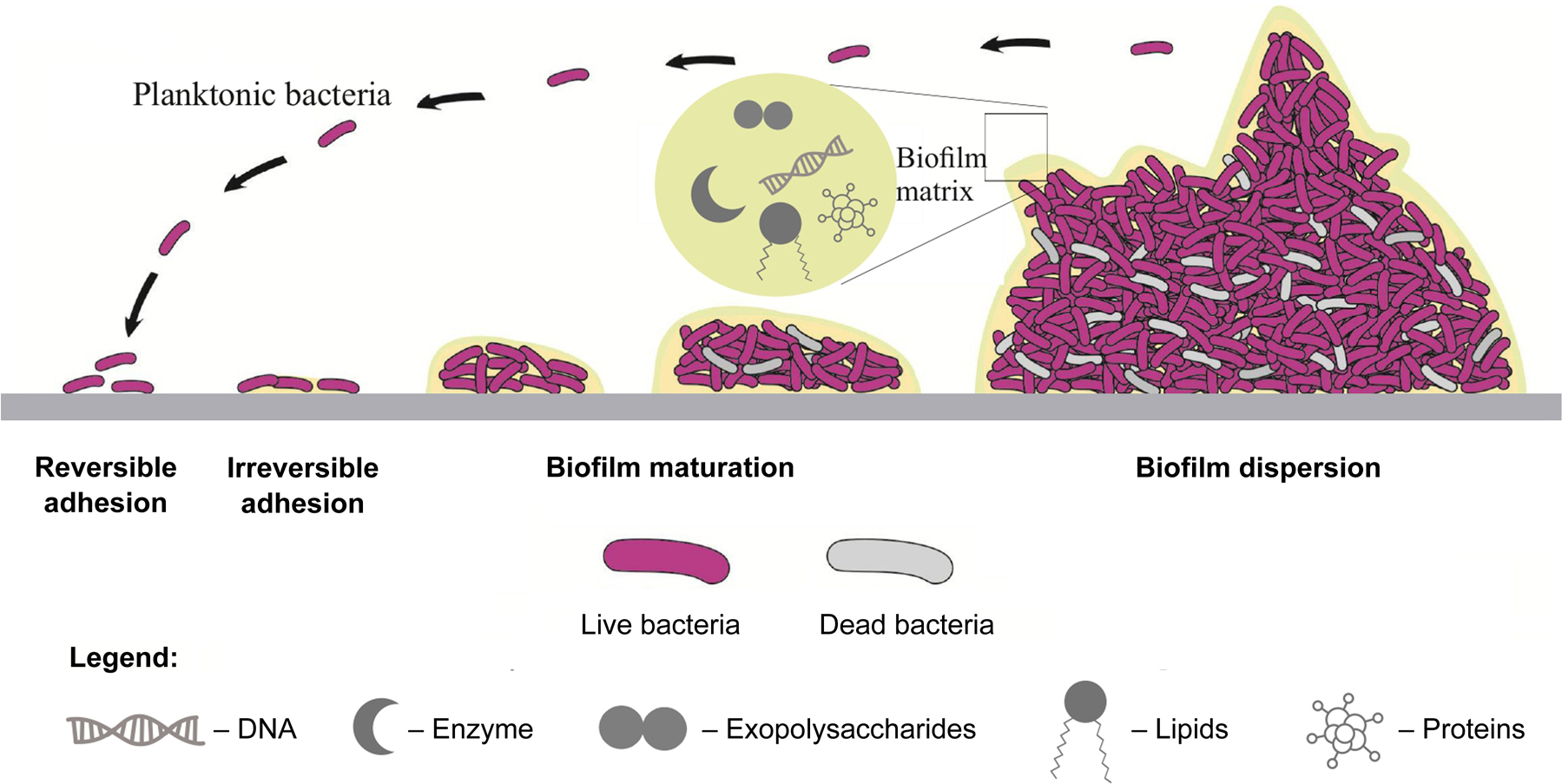
Fig. 3.
Schematic representation of the subsequent stages of bacterial biofilm formation and its extracellular polymeric substance (EPS).
Own graphic design according to (Zhao et al. 2023).
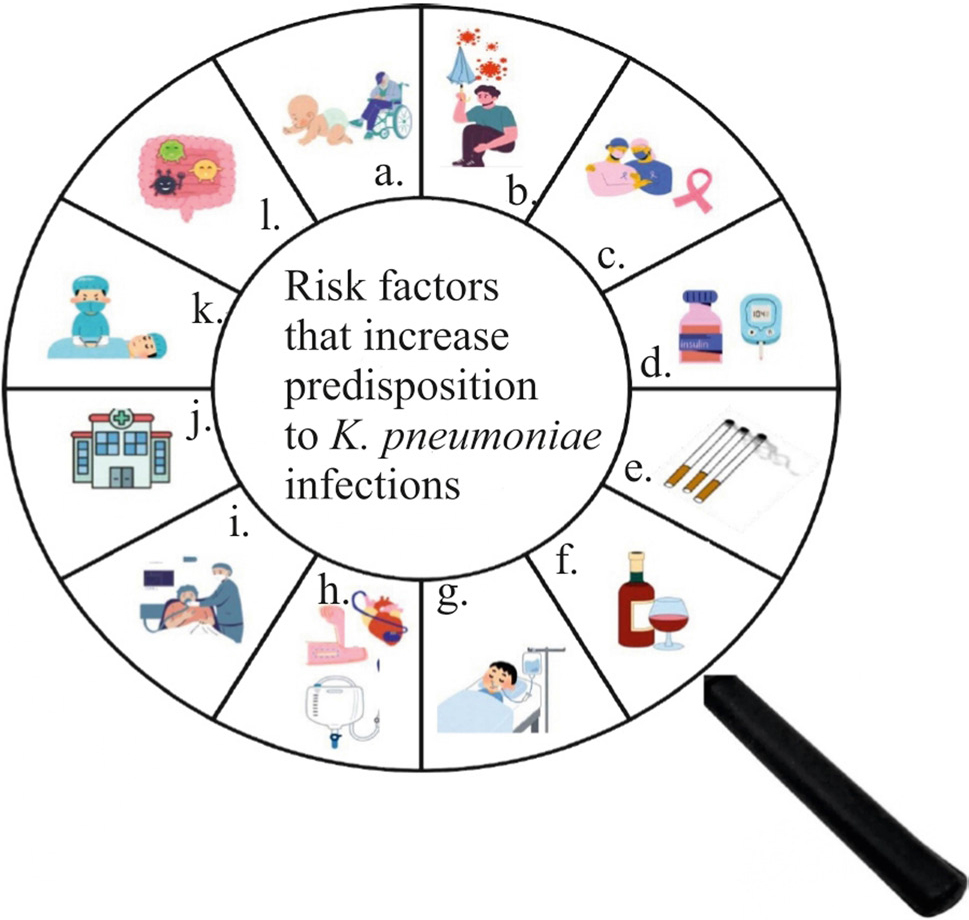
Fig. 4.
Schematic representation of the risk factors that increase predisposition to K. pneumoniaepremature babies, newborns, elderly people), b – lowered immunity, c – debilitating diseases (cancer), d – concomitant diseases (e.g. diabetes), e – smoking, f – alcoholism, g – frequent or long-term hospitalization, h – use of vascular and urological catheters, drains and other implants, i – assisted breathing, j – stay in nursing homes, k – surgical interventions in the abdominal cavity, l – colonization of the gastrointestinal tract by hospital strains.
Own graphic design according to (Mączyńska 2015).
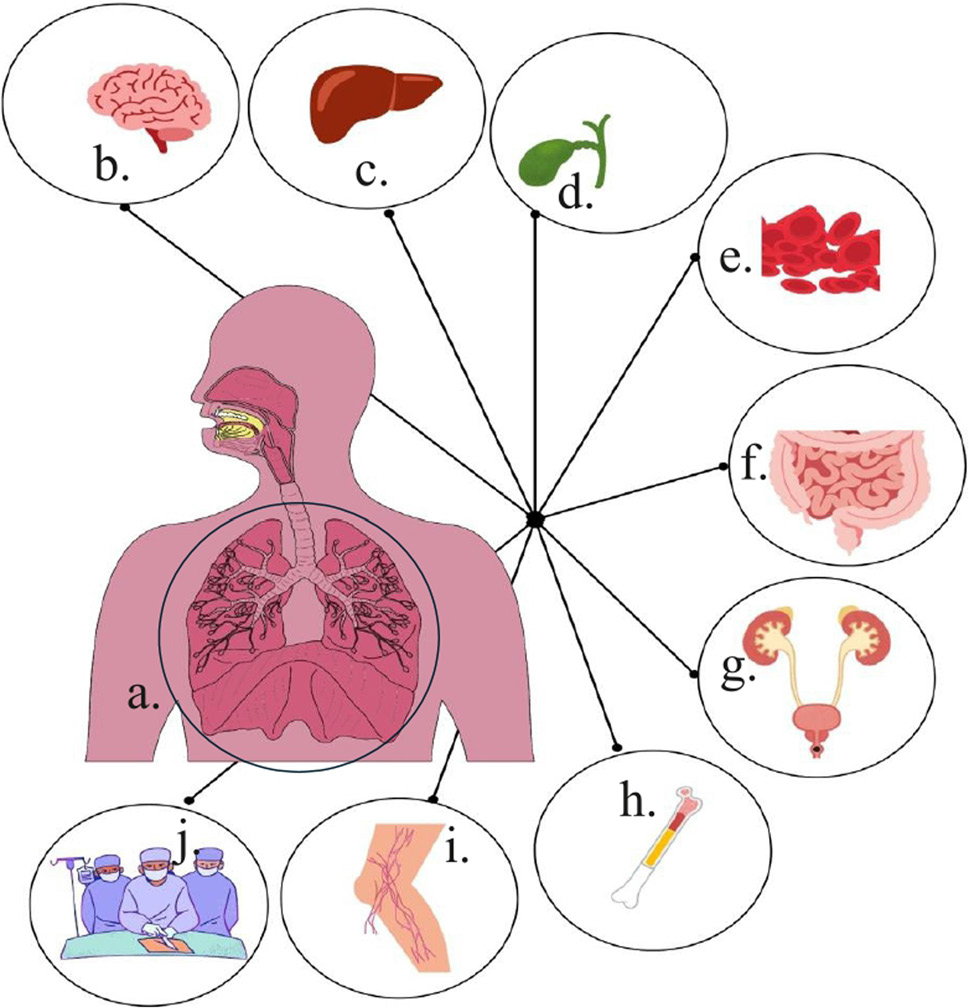
Fig. 5.
Schematic representation of the pathogenicity of K. pneumoniae: a – pneumonia, b – central nervous system infections, c – primary liver abscess, d – cholecystitis, e – septic infections, f – gastrointestinal infections associated with toxin production, g – urinary tract infections, h – bone and joint infection, i – soft tissue infections, j – purulent and wound infections.
Own graphic design according to (Martinez and Baquero 2002; Chang et al. 2021; Ali et al. 2022).
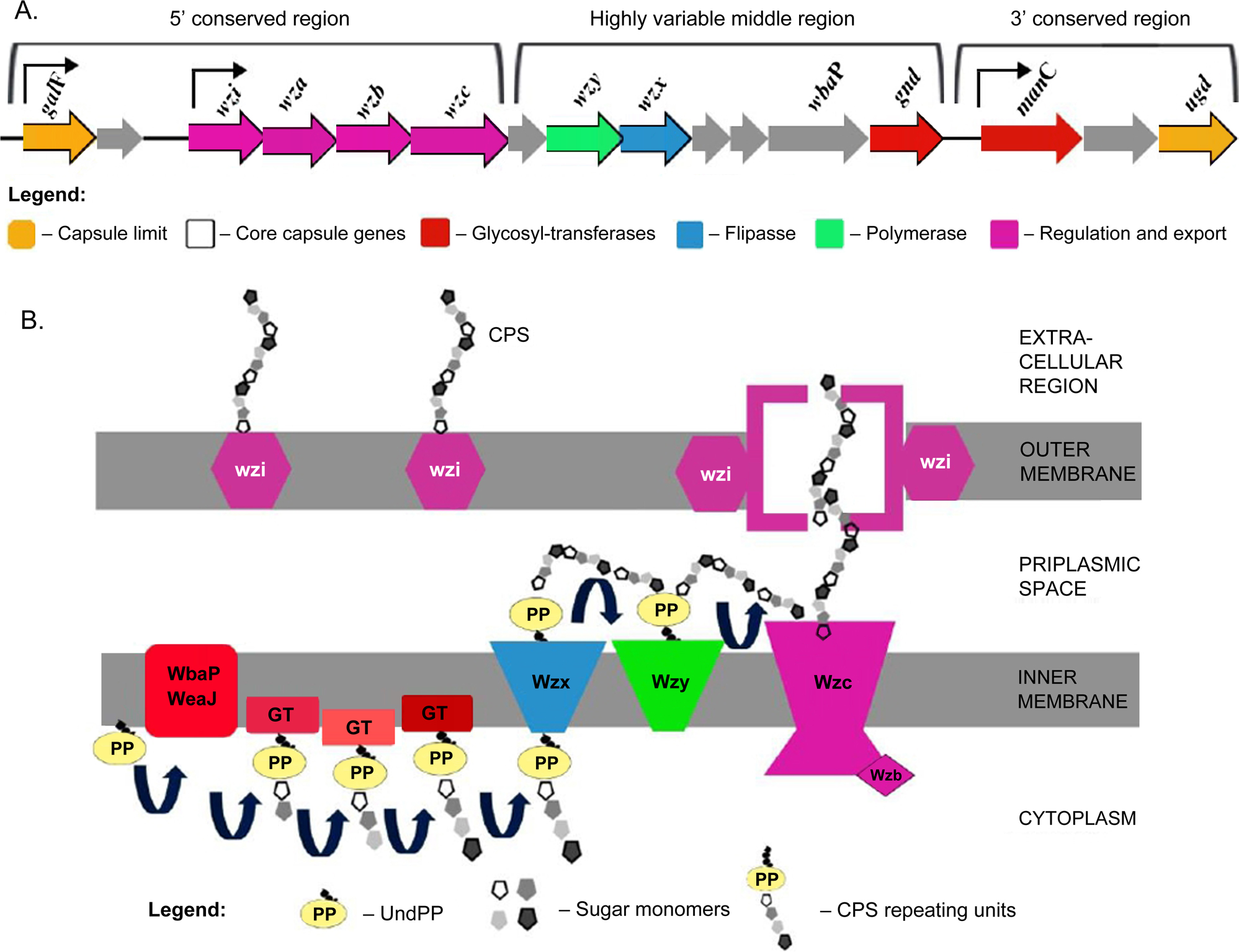
Fig. 6.
(A) Schematic representation of the capsule (CPS) biosynthetic pathway in K. pneumoniae. Own graphic design according to (Patro and Rathinavelan 2019, Rendueles 2020, Patro et al. 2020), (B) Scheme of the representative locus cps system of K. pneumoniae using the K1 serotype as an example. Own graphic design according to (Rendueles 2020, Patro et al. 2020).