
Introduction
Parkinson’s disease is a complex, neuro-degenerative condition. Parkinson’s disease and other movement disorders affect more than 8 million people worldwide (van Halteren et al., 2020). In Australia, Parkinson’s disease affects approximately 82,000 people, of whom 18% are still of working age (Parkinson’s Australia, 2019). The estimated average time from onset to death is 12 years.
In 2014, the average lifetime financial cost per patient over this period was estimated at $161,300, and in 2018, the total economic burden was estimated at $12.3 billion (Parkinson’s Australia, 2019).
New South Wales (NSW) is a state in Australia. Within NSW, public healthcare services are organised geographically into Local Health Districts (LHDs), which are responsible for delivering healthcare to defined populations within their geographic regions. Western Sydney Local Health District (WSLHD) is the LHD in which this service operates and from which this work originates.
In 2021, Treasurer Dominic Perrottet and Health Minister Brad Hazzard announced an $8.6 million package in the 2021–2022 New South Wales (NSW) Budget to support people living with movement disorders, including Parkinson’s disease. The funding aimed to increase the number of specialist nurses and allied health staff across NSW to improve patient quality of life. In addition, it provided support for not-for-profit organisations such as Parkinson’s NSW to expand services through initiatives including the Parkinson’s InfoLine, education seminars for consumers, general practitioners and allied health professionals, capacity-building support for Parkinson’s support groups, and investment in Parkinson’s research and evaluation (NSW Liberal Party, 2021).
Each local health district within NSW was empowered to develop its own model of care. Some districts used the funding to enhance allied health clinics, others to employ Parkinson’s nurses, and some to fund specialised physiotherapists. Within the context of our local health district, Western Sydney Local Health District (WSLHD) established a community-based Outreach Nurse Practitioner role to meet the needs of people living with movement disorders. This service is distinct in its ability to deliver advanced practice, patient-centred care in the comfort of the patient’s own home or aged care facility, combining clinical expertise with a holistic approach tailored to individual needs.
The pilot project was developed to provide care for people living with Parkinson’s disease and movement disorders within WSLHD, with the aim of establishing an Integrated and Community Health (ICH) Parkinson’s and Movement Disorders Nurse Practitioner Service.
Gaps in Service
The service sought to provide a mixed-model approach. During the development phase, several gaps in existing services were identified.
Firstly, there were no home-visiting or Residential Aged Care Facility (RACF) visiting neurologists available. As a result, once patients enter RACF care, they often miss out on regular access to specialist expert neurological management, which impacts the optimisation of their Parkinson’s management.
Patients residing in RACFs also faced significant challenges accessing outpatient clinics due to reduced mobility and frailty. Attendance at hospital clinic appointments required patient-specific transport services, often involving prolonged waiting periods and time-limited, rushed consultations. The nurse escorts accompanying these patients frequently lacked sufficient knowledge of the patient’s clinical history, while families sometimes incurred additional costs for nurse escort services.
Hospital staff were under pressure to attend to basic patient needs such as toileting, meals and hygiene during clinic visits, while physicians were often compelled to expedite consultations to accommodate transport schedules. Patients awaiting return to their facilities occupied space in the Patient Discharge Unit, contributing to increased workload and bed blockages.
Additionally, delays in accessing specialist care were common, with routine neurology reviews occurring approximately every six months, further highlighting the need for support in between clinic visits.
These challenges highlighted the necessity for a community-based, nurse practitioner-led service capable of delivering timely, patient-centred care, including comprehensive assessment, diagnosis, and prescribing capabilities, directly within the patient’s RACF or home environment. By addressing these gaps, the Movement Disorders Nurse Practitioner service model aimed to reduce pressure on hospital outpatient and inpatient services, improve equitable access to specialist movement disorders care, and enhance the overall patient and caregiver experience.
Service Delivery Model
The Movement Disorders Nurse Practitioner (NP) service’s inclusion criteria accepts patients residing within the Western Sydney Local Health District (WSLHD) with a confirmed medical diagnosis of a movement disorder such as Parkinson’s disease.
Referrals are accepted from neurologists, geriatricians, or other medical specialists, and may also be made by any clinician within the Western Sydney Local Health District, including nursing staff, allied health professionals, and social workers. This model supports hospitals and facilities that do not have direct access to a neurologist or movement disorders specialist. Direct referrals from general practitioners or residential aged care facilities are generally not accepted; however, exceptions were considered on a case-by-case basis.
Once a referral is accepted, patients are tri-aged according to clinical urgency and scheduled for an initial comprehensive health assessment (CHA) performed by the NP. This assessment includes a detailed review of the patient’s diagnosis, disease duration, and overall clinical status to determine the care required. Complex diagnostic cases or diagnostic revisions may be referred back to the partnering Parkinson’s and Movement Disorders Clinic at Westmead Hospital, a tertiary referral centre. The NP has the capacity to initiate investigations, review current management, and provide recommendations for treatment optimisation. This includes referrals to appropriate specialists for advanced interventions such as Device-Assisted Therapies (DAT) for Parkinson’s disease.
Following the CHA, the NP identifies targeted referrals to allied health services based on the patient’s specific needs. Joint consultations may occur with the NP and allied health team members where appropriate, and in some cases, multiple members of the multidisciplinary team (MDT) may perform concurrent visits for a single patient. The CHA informs the formulation of individualised care plans, which may include assessment and diagnosis, optimisation of therapy, triage of patients, targeted referrals to allied health, education regarding DAT, specialist assessments such as in-home levodopa challenge assessments, and the development of a comprehensive Parkinson’s and Movement Disorders care plan.
The service operates as a flexible, patient-centred, mixed-model delivery system. Consultations are provided in a range of settings based on clinical need, including residential aged care facilities (RACFs), patients’ homes, outpatient clinics, telehealth and inpatient hospital settings if required. This flexible approach ensures care delivery is guided by the patient’s clinical needs, rather than location or institutional constraints.
This free-flow mixed model is centred on the clinical needs of the patient as the basis of format for care delivery.
The NP’s role in service delivery aims to maximise patient and carer comfort, reduce unnecessary travel, assist allied health in developing targeted care plans, expedite hospital discharges with community support, avoid unnecessary hospital presentations or readmissions, provide timely access to expert advice, and improve adherence to care. Completion of care is determined by clinical need rather than fixed timeframes. Once the care plan has been implemented and treatment goals achieved, the patient is discharged back to the ongoing management of their general practitioner and treating specialist, such as a neurologist or geriatrician.
Aim
The aim of this study is to evaluate the clinical impact of a community-based Movement Disorders Nurse Practitioner service within an Australian metropolitan local health district using a mixed method evaluation. The secondary aim is to assess the financial feasibility and sustainability of the service
Study Design
This study was conducted as a retrospective medical record review of patients managed by the Movement Disorders Nurse Practitioner service between 1 January 2022 and 31 December 2025. There are no external financial funding or conflicts of interest.
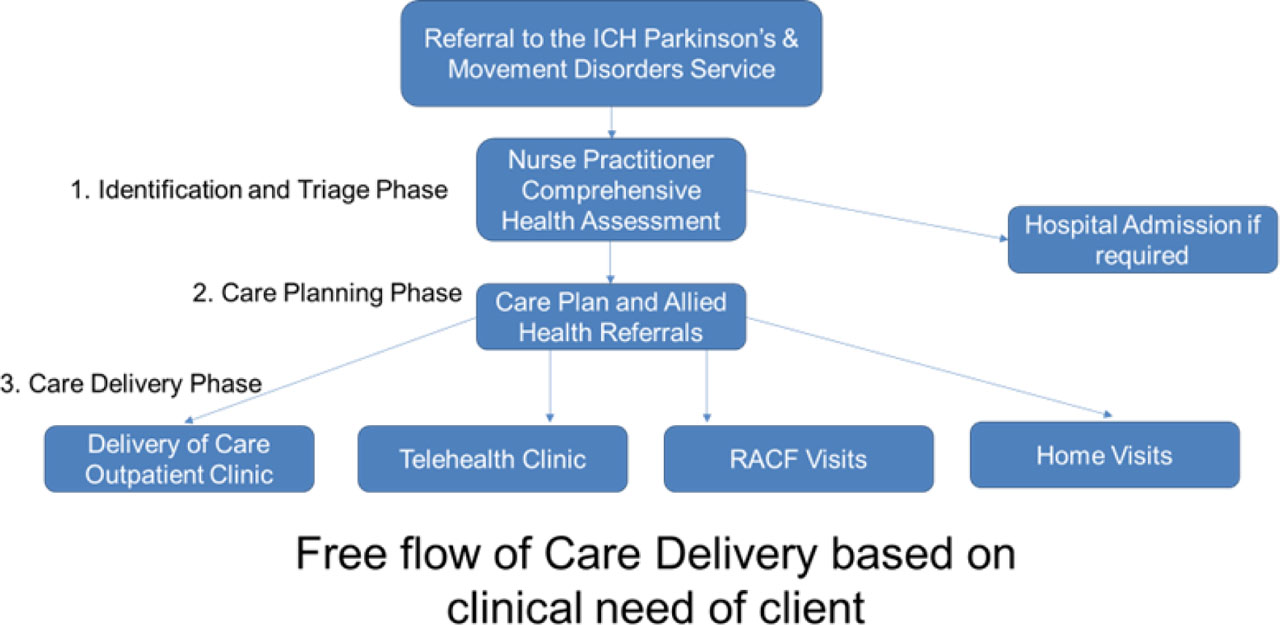
Diagram 1.
Mixed Model Care Delivery Flow Chart
This research project was reviewed and approved by the Western Sydney Local Health District (WSLHD) Human Research Ethics Committee (HREC) under project number ‘2601-02 QA’ classified as a Quality Assurance Project.
Participants and Eligibility
For the purposes of this evaluation, only patients who had documented Clinical Global Impression–Severity (CGI-S) scores both at baseline and at completion of their episode of care were eligible for inclusion in the quantitative analysis. Patients without complete paired CGI-S data were excluded from the primary outcome analysis.
A total of (n=51) patients met these inclusion criteria and had complete pre- and post-intervention CGI-S documentation available for review.
Outcome Measures
The primary outcome measure was change in symptom severity as assessed using the Clinical Global Impression–Severity (CGI-S) scale. The Clinical Global Impression–Improvement (CGI-I) scale was also reviewed to evaluate overall clinical change at the conclusion of care.
Patient-Reported Experience Measures
As part of routine practice, the service incorporated standardised patient-reported outcome and experience measures at completion of care. These measures were collected for service evaluation purposes.
In addition to the Clinical Global Impression–Severity (CGI-S) scale (pre- and post-service), the Clinical Global Impression–Improvement (CGI-I) scale (post-service), the evaluation also included a simple 5-point satisfaction rating (1 = very dissatisfied; 5 = very satisfied).
To supplement the quantitative outcomes, qualitative feedback was collected from patients, providing insights into their experiences and perceptions of the service, including the impact on daily living, access to care, and overall satisfaction.
Results
Symptom Severity (CGI-Severity)
Descriptive analysis of symptom severity using the Clinical Global Impression–Severity (CGI-S) scale demonstrated a shift toward lower illness severity following the intervention. Prior to engagement with the Movement Disorders Nurse Practitioner service, the majority of participants were classified as moderately or markedly ill, with 14 participants (27%) moderately ill and 18 participants (35%) markedly ill.
After receiving the service, the proportion of participants classified as markedly ill decreased to 12 (24%), while those classified as moderately ill increased to 19 (37%), suggesting that the service primarily facilitated a transition from higher to lower severity levels.
Minor increases were also observed in the normal category (0% → 2%), while the borderline ill category remained stable (6%), and the severely ill and extremely ill categories were unchanged. Overall, these findings indicate that symptom severity improved for a substantial proportion of participants, with others remaining stable.
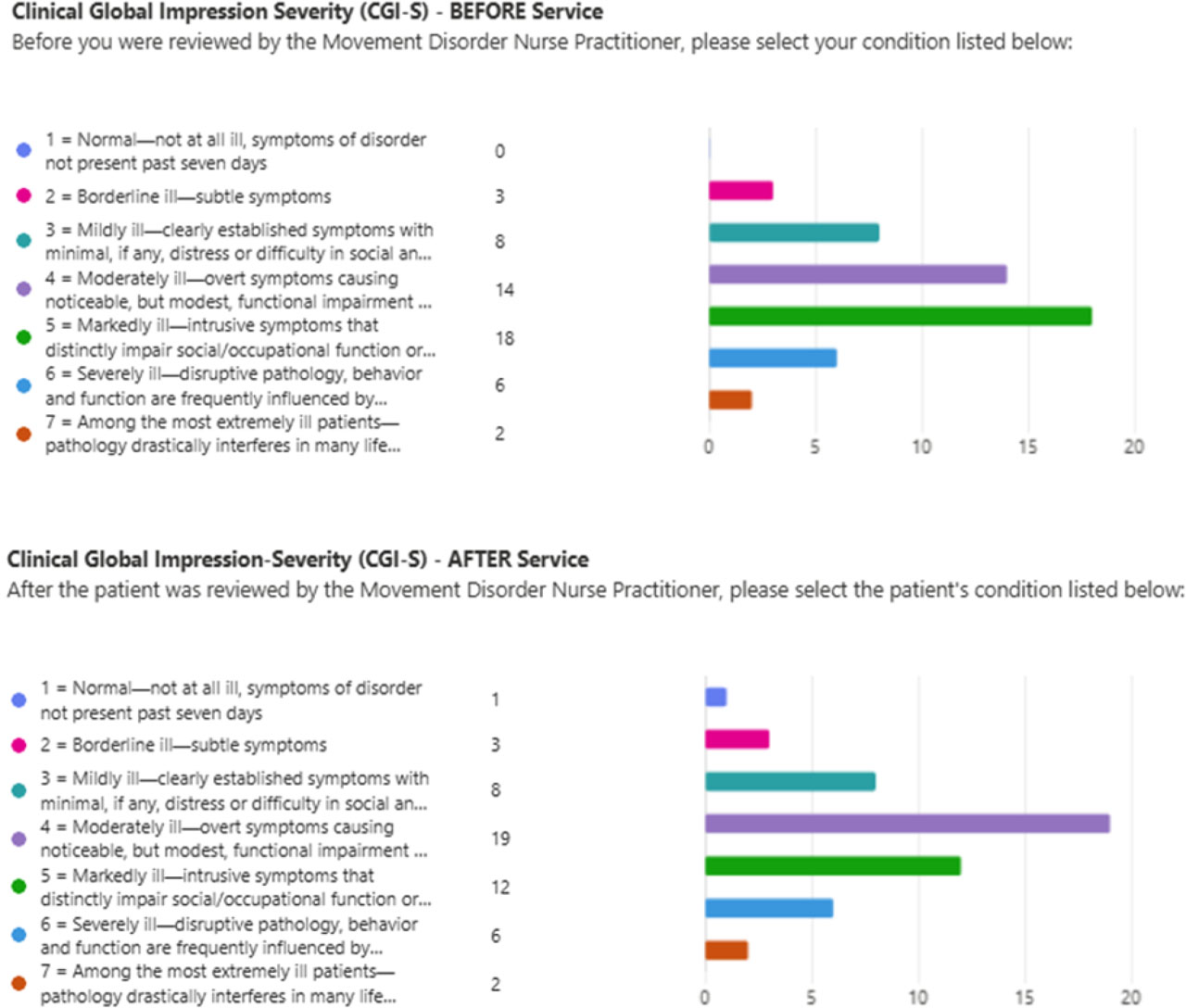
Diagram 2.
Symptom Severity (CGI-Severity) Pre and Post Service
Symptom Improvement (CGI-Improvement)
Assessment of symptom improvement using the CGI-I scale demonstrated that 54% of participants (27/50) experienced at least minimal improvement, 22% (11/50) reported no change, and 24% (12/50) experienced some degree of worsening.
Overall Satisfaction
Patient satisfaction was high, with 87% of participants (44/51) indicating they were “somewhat satisfied” or “very satisfied” with the service. Four participants (8%) were neutral, and three participants (6%) expressed dissatisfaction. Specifically, 33 participants (65%) reported being “very satisfied,” 11 participants (22%) “somewhat satisfied,” four participants (8%) were neutral, two participants (4%) “somewhat dissatisfied,” and one participant (2%) “very dissatisfied.”
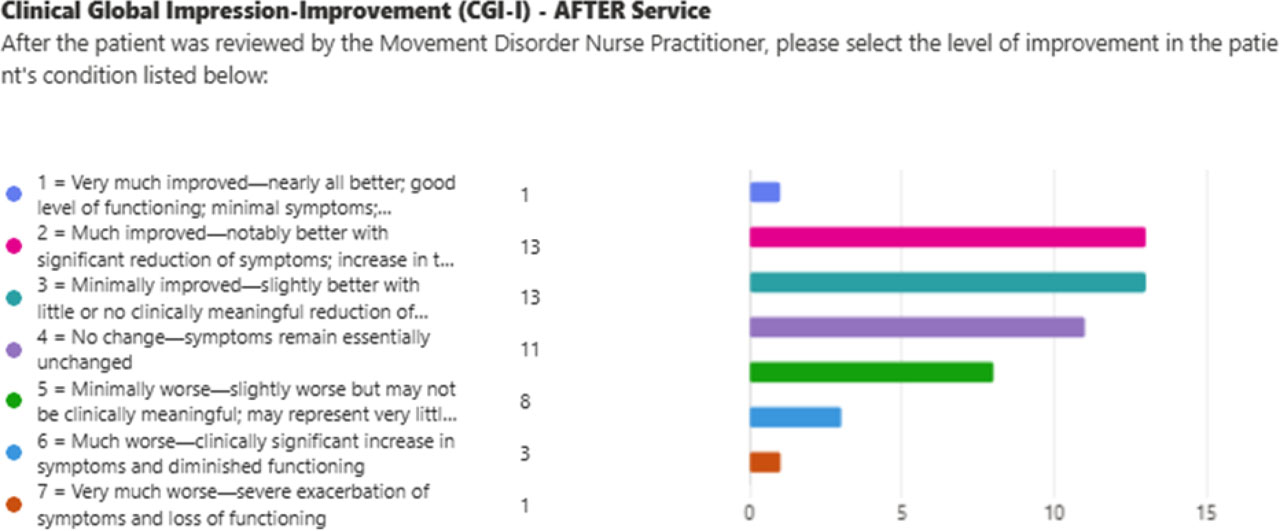
Diagram 3.
Symptom Improvement (CGI-Improvement) Post Service
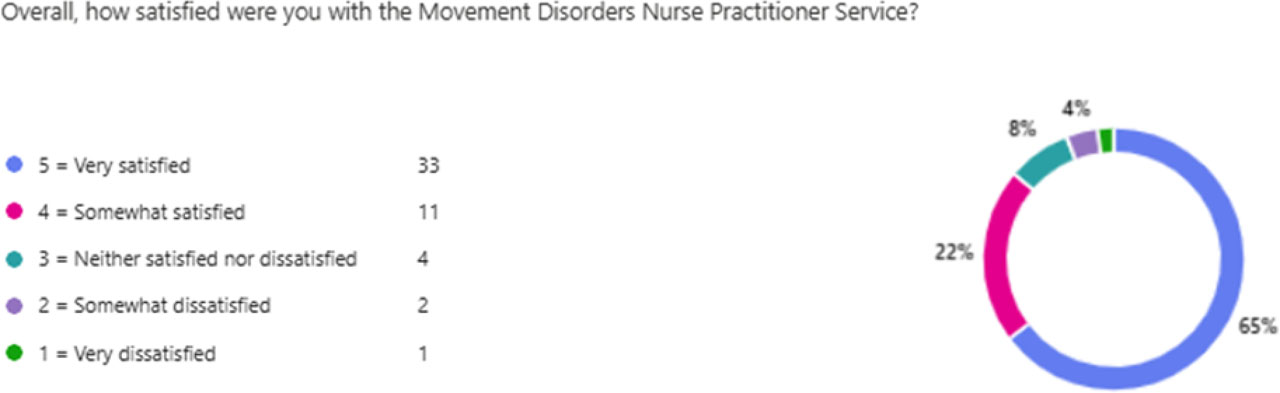
Diagram 4.
Overall Satisfaction
Financial Feasibility and Sustainability of the Model
According to demographic data from the ANNA Movement Disorder Chapter, approximately 33% of Parkinson’s nurses across Australia, and up to 44% at its peak in 2021, do not have permanent funding for their positions (Heaton, Tsui, Williams, 2025). This is partly because organisations, including both private and Local Health Districts (LHDs), are heavily dependent on grant funding to establish positions; once the grant period ends, the position often ceases to exist.
Ideally, grant funding should be treated as a start-up mechanism to initiate positions, with long-term sustainability achieved through internal LHD financial measures, such as National Weighted Activity Units (NWAUs), which are used to evaluate the financial output of services operating under activity-based funding (Independent Health and Aged Care Pricing Authority [IHACPA], 2025).
All financial figures in this report are presented in Australian dollars (AUD). Under the nurse practitioner led model, each occasion of service (OOS) provided by the Movement Disorders Nurse Practitioner (NP) service is graded at a Nurse Practitioner level, which is equivalent to a medical level, with an estimated NWAU value of $340–360 per service event. The current annual base salary for a Nurse Practitioner ranges from approximately $143,000 in the first year to $153,500 from the fourth year onward, excluding superannuation, penalties, allowances, and overtime (The New South Wales Nurses and Midwives’ Association, 2025).
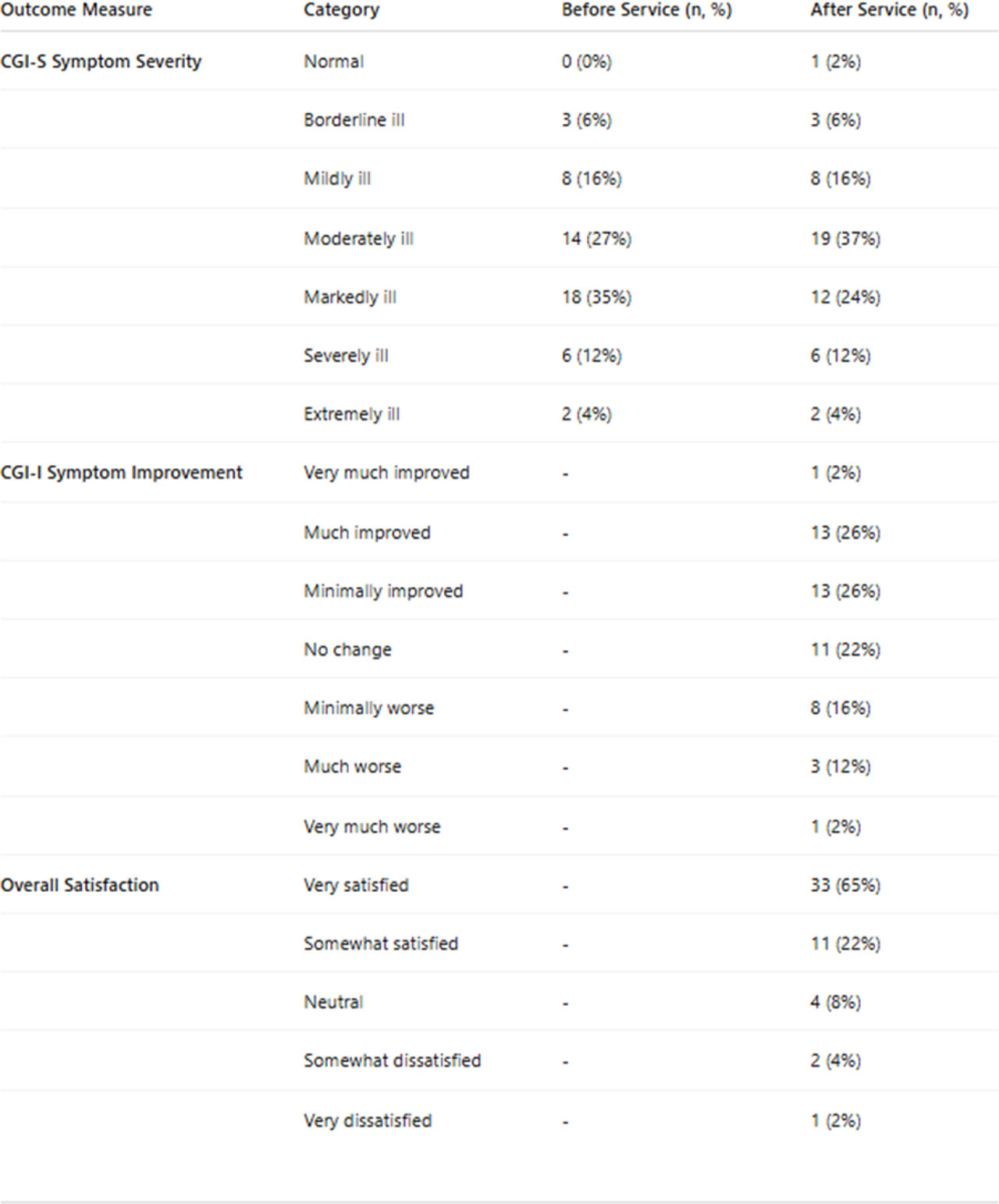
Diagram 5.
Table of All Results
Between 2023 and 2025, the Movement Disorders Nurse Practitioner (NP) service delivered substantial clinical activity, providing a total of 2,741 occasions of service (OOS) and generating AUD $873,322 in revenue, with the 2025/26 figures annualised from half-year data (July–December). Service activity by year was 771 OOS in 2023/24, 982 OOS in 2024/25, and 988 OOS in 2025/26 (annualised), corresponding to an average of approximately 914 OOS and AUD $291,107 in revenue per year.
After accounting for the estimated annual NP salary of AUD $153,500, the service produced an average annual surplus of approximately AUD $137,607, excluding minor operational expenses such as fleet vehicle use, computer equipment, or administrative support. These data demonstrate that the NP service is both clinically impactful and financially sustainable within the Local Health District. In terms of service delivery (see Diagram 7.), the NP utilised a combination of care modalities. Telehealth clinics were particularly important for financial sustainability, as they generated the highest number of OOS due to their efficiency and ease of delivery. Sampling the financial year of 2024–2025, ‘audio consultations’ (357 OOS) were performed approximately 17 times more frequently than audio-visual consultations (20 OOS) as they are easier to perform. These are appropriate in situations where only historical information, such as patient medication responses or side-effect reporting is required. Audiovisual consultations were reserved for pre-booked, longer appointments (40–60 minutes) that required more detailed assessment and coordination and facilitation of video conferencing functions.
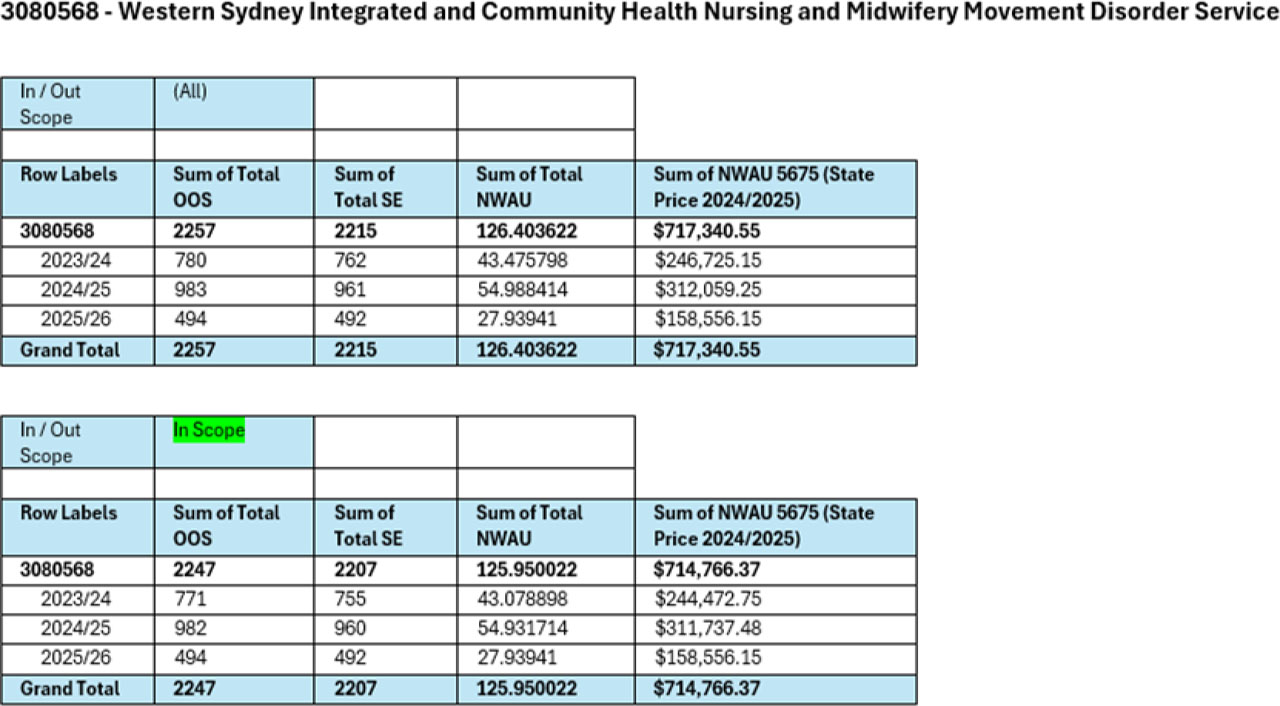
Diagram 6.
Trend of NWAU over 3 Financial Years
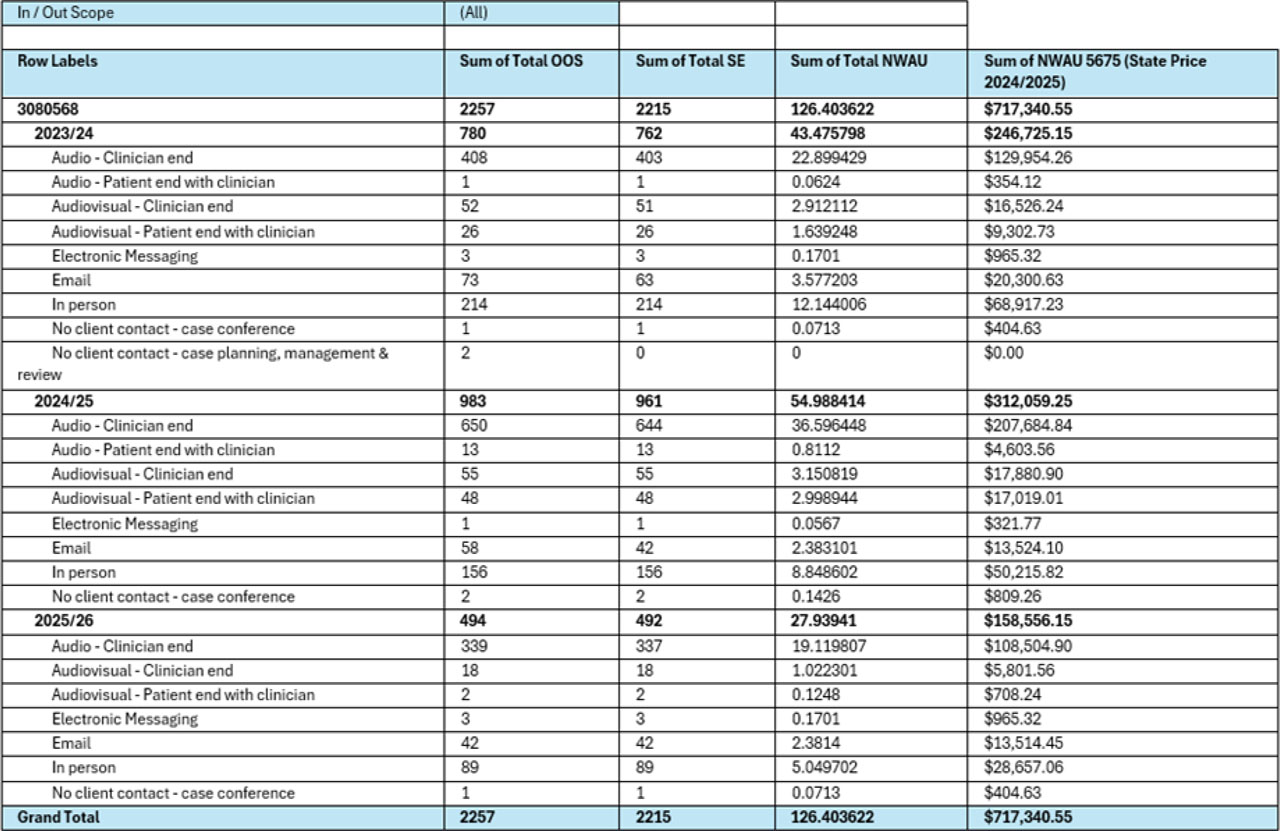
Diagram 7.
Modality of Care over 3 Financial Years
The approximate financial difference between face-to-face ($342), audio ($342), and audio-visual ($344) consultations is minimal, which further incentivises the use of audio consultations for efficiency and revenue generation. While audiovisual consultations can replace some face-to-face appointments when supported by family or clinical staff, they are limited in terms of physical examination, such as rigidity and postural reflexes balance testing, and carry safety risks, including falls.
Qualitative Feedback
The qualitative feedback from patients and carers can be categorised into four main themes: 1. Quality and Expertise of Care, 2. Impact on Patient Quality of Life, 3. Accessibility and Responsiveness of Service, and 4. Challenges or Limitations in Care.
Quality and Expertise of Care
Participants highlighted the specialised skills and personal attention provided by the NP, which complemented the care from busy neurologists. One carer noted, “The nurse practitioner provides a critical and exceptional service as the neurologists are very busy and this service allows more personal care.” Another emphasised the NP’s empathy and ability to navigate complex family dynamics while focusing on manageable symptoms, stating, “The NP has empathy towards my mum, understands the complex family dynamic and remains focused on symptoms that can be managed, with focus on her quality of life.” These responses suggest that patients and families value the NP’s expertise not only in clinical management but also in personalised, compassionate care.
Impact on Patient Quality of Life
The feedback also underscored the positive effect of NP-led care on patients’ wellbeing and outlook. One participant described regular visits as highly meaningful, explaining, “Our visits are very important and valuable to us. It is great to talk with people who fully understand the condition and who improve our mood and symptoms, giving hope that there is still more that can be done to alleviate the symptoms of the disease.”
Another patient reflected on the transformative impact of the NP’s attentive approach, affectionately referring to them as “the brain whisperer” and noting, “They listen and have transformed my life.” These quotes highlight how tailored, informed engagement can significantly enhance patient quality of life and emotional wellbeing.
Accessibility and Responsiveness of Service
Participants also valued the NP’s consistent availability and timely support. One carer explained, “We really appreciate the weekly check-in. It has made a huge difference to mum’s Parkinson’s.” This demonstrates that structured, regular contact from the NP is both reassuring and impactful for patients and families managing a complex, progressive condition.
Challenges or Limitations in Care
Despite the benefits of NP-led care, respondents acknowledged the limitations imposed by disease progression. One participant noted, “It is a very horrible disease and very little can be done in later stage.” This highlights that while the NP’s involvement improves symptom management and support, the progressive nature of Parkinson’s disease inevitably constrains therapeutic outcomes, particularly in advanced stages.
Discussion
There are three main areas that were highlighted from both the quantitative and qualitative data evaluated.
1. Clinical Impact
The findings demonstrate a meaningful clinical shift in illness severity, with patients moving from the “markedly ill” to “moderately ill” category following the intervention. In the context of Parkinson’s disease and other chronic neurodegenerative movement disorders, even modest improvements—or stabilisation without deterioration—are clinically important. These conditions are progressive by nature, and symptom trajectories typically worsen over time despite optimal treatment. Therefore, maintaining stability, preventing decline, or achieving incremental improvement, even minor improvement, should be recognised as positive clinical outcomes.
The shift away from the more severe category suggests that timely assessment, medication optimisation, symptom monitoring, and targeted interventions delivered through this model of care can modify the illness severity trajectory.
Importantly, this demonstrates that structured NP-led community services can produce measurable changes in patient status, even when full reversal of symptoms is not possible. This aligns with contemporary models of chronic disease management, which emphasise reducing symptom burden, preventing complications, and enhancing day-to-day function rather than “curing” the disease. As such, the observed changes represent clinically meaningful gains within the realistic boundaries of managing a degenerative condition.
2. Financial Feasibility and System-Level Value
From a financial perspective, the service model appears feasible and sustainable within the Australian public health context, particularly under funding arrangements that utilise National Weighted Activity Units (NWAU). Services structured in this manner can achieve financial viability and, in many cases, operate at or above breakeven. Efficient capture of NWAU-eligible activities is essential to demonstrating the economic value of these roles within Local Health Districts (LHDs).
Future role development and service expansion should explicitly incorporate mechanisms for accurate NWAU capture and documentation, ensuring activity is translated appropriately into funding.
As demand for chronic disease care continues to rise, models that improve patient outcomes while remaining financially sustainable will be critical. The results of this service highlight that clinically meaningful improvements and financial sustainability are not mutually exclusive; rather, they reinforce each other when the service is structured correctly.
3. Appropriate Role Grading and Work-force Considerations
Although Clinical Nurse Consultants (CNCs) and Clinical Nurse Specialists (CNSs) possess strong clinical expertise, community-based services require advanced and autonomous decision-making. Nurse Practitioners (NPs) are uniquely positioned to provide this due to their legislative authority and advanced scope, which includes comprehensive assessment, diagnosis, prescribing, and independent management planning.
In a community-based setting, where rapid access, timely medication adjustments, and continuity of care are essential, Nurse Practitioners (NPs) can provide immediate interventions without the delays typically associated with traditional referral pathways or the need to defer to medical officers. This reduces disease burden, prevents avoidable presentations to acute care, and supports ongoing symptom stability.
The ability to prescribe, order diagnostics, and implement management changes onsite or during RACF or home visits provides substantial system-wide efficiencies.
Thus, while CNC/CNS roles contribute valuable clinical and educational functions, the NP role brings an essential level of advanced clinical autonomy required for holistic, end-to-end management.
Workforce planning for future community-based services in general as well as specialised Parkinson’s and movement disorder services should recognise the distinct value added by NPs, especially in models prioritising early intervention, ongoing monitoring, and rapid response to symptom fluctuations.
Conclusion
The Movement Disorders Nurse Practitioner–led service demonstrates clear clinical benefit, achieving stabilisation or improvement in symptom severity for patients with movement disorders. When structured with appropriate funding mechanisms and diligent capture of activity, it is financially sustainable and delivers system-wide efficiencies through rapid access, timely interventions, and continuity of care. These findings also highlight that NPs provide advanced practice care that is essential for effective community-based chronic disease management and should be considered a key workforce strategy in future service planning.
Acknowledgements
Special thanks to Diana Udvardi, HERO Co-ordinator, Western Sydney Local Area Health, WSLHD Activity Based Costing - Business Sustainability for her contributions to the financial data provided in the article.