
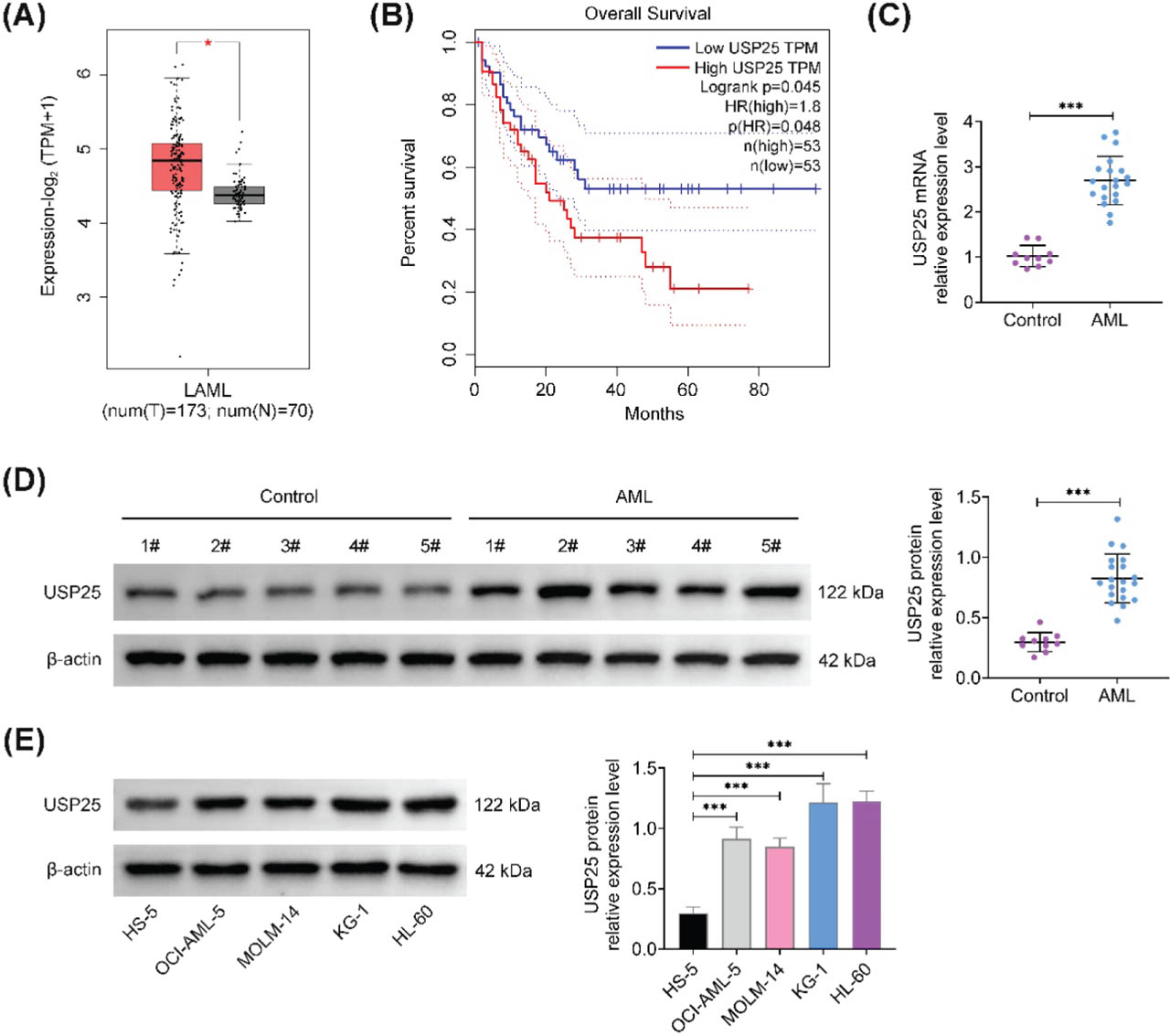
Fig 1.
High expression of USP25 in AML indicated a poor overall survival of patients with AML. (A) Upregulation of USP25 in patients with AML based on the data from the The Cancer Genome Atlas (TCGA) database. (B) The overall survival of patients with AML was analyzed based on the expression of USP25. (C) The relative mRNA expression of USP25 in PBMCs from AML or control peripheral blood was detected by RT-qPCR. Data were expressed after being normalized with β-actin. (D) The relative protein expression of USP25 in PBMCs from AML or control peripheral blood was examined by Western blot. Data were expressed after being normalized with β-actin. (E) The relative protein expression of USP25 in human bone marrow stromal cells HS-5 and four AML cell lines was determined by Western blot. Data were expressed after being normalized with β-actin. *P < 0.05 and ***P < 0.001. AML, acute myeloid leukemia; PBMCs, peripheral blood mononuclear cells; RT-qPCR, real-time quantitative polymerase chain reaction; USP25, ubiquitin-specific peptidase 25.
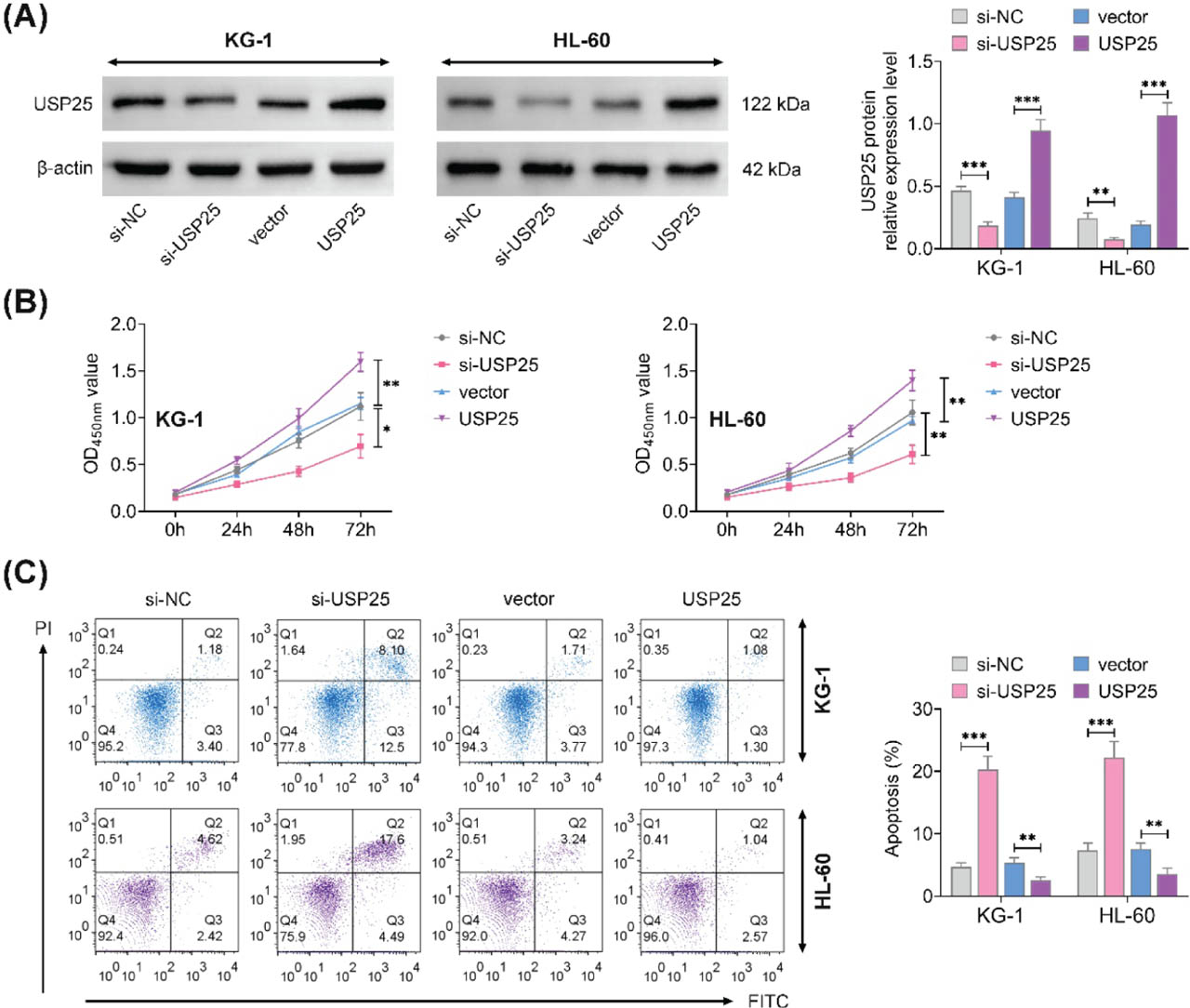
Fig 2.
USP25 promoted proliferation, but suppressed apoptosis in AML cells. si-USP25 and USP25 were transfected into KG-1 and HL-60 cells to downregulate and upregulate the expression of USP25 by Lipofectamine 3000. After 48 h of the transfection, cells were collected for the experiments. (A) The relative protein expression of USP25 was examined by Western blot. Data were expressed after being normalized with β-actin. (B) The cell viability was detected by CCK-8 assays. (C) The apoptosis rate was determined by flow cytometry. *P < 0.05, **P < 0.01, and ***P < 0.001. AML, acute myeloid leukemia; CCK-8, cell counting kit-8; USP25, ubiquitin-specific peptidase 25.
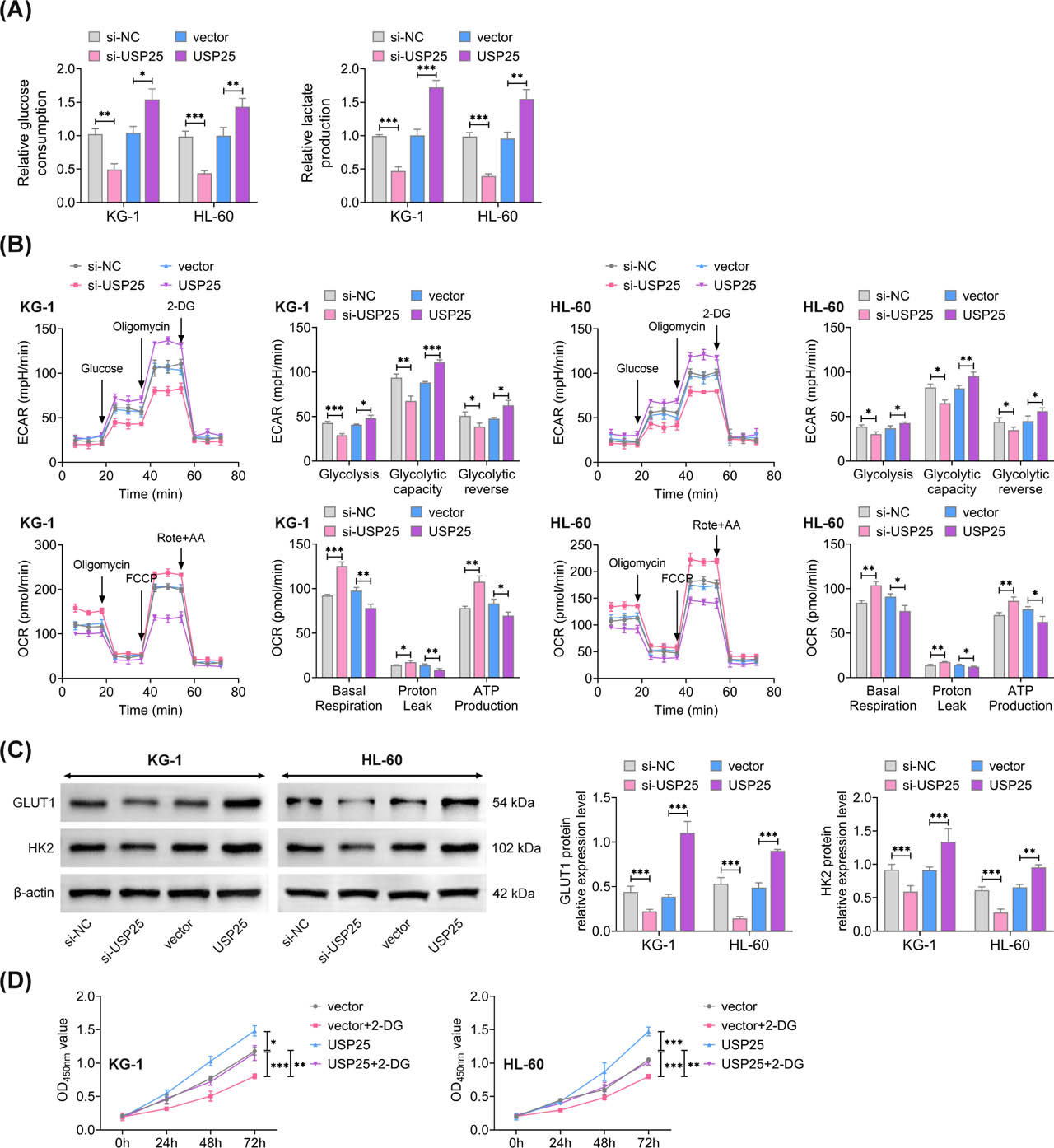
Fig 3.
USP25 enhanced glycolysis in AML cells. (A) Measurement of the level of glucose consumption and lactate production. (B) The ECAR and OCR were detected by an XF96 extracellular flux analyzer. (C) The relative protein expression of GLUT1 and HK2 was examined by Western blot. Data were expressed after being normalized with β-actin. (D) The cell viability was detected by CCK-8 assays after KG-1 and HL-60 cells were treated with the transfection of USP25 and/or 2-DG. *P < 0.05, **P < 0.01, and ***P < 0.001. 2-DG, 2-deoxy-D-glucose; AML, acute myeloid leukemia; CCK-8, cell counting kit-8; ECAR, extracellular acidification rate; GLUT1, anti-glucose transporter type 1; HK2, hexokinase-2; OCR, oxygen consumption rate; USP25, ubiquitin-specific peptidase 25.
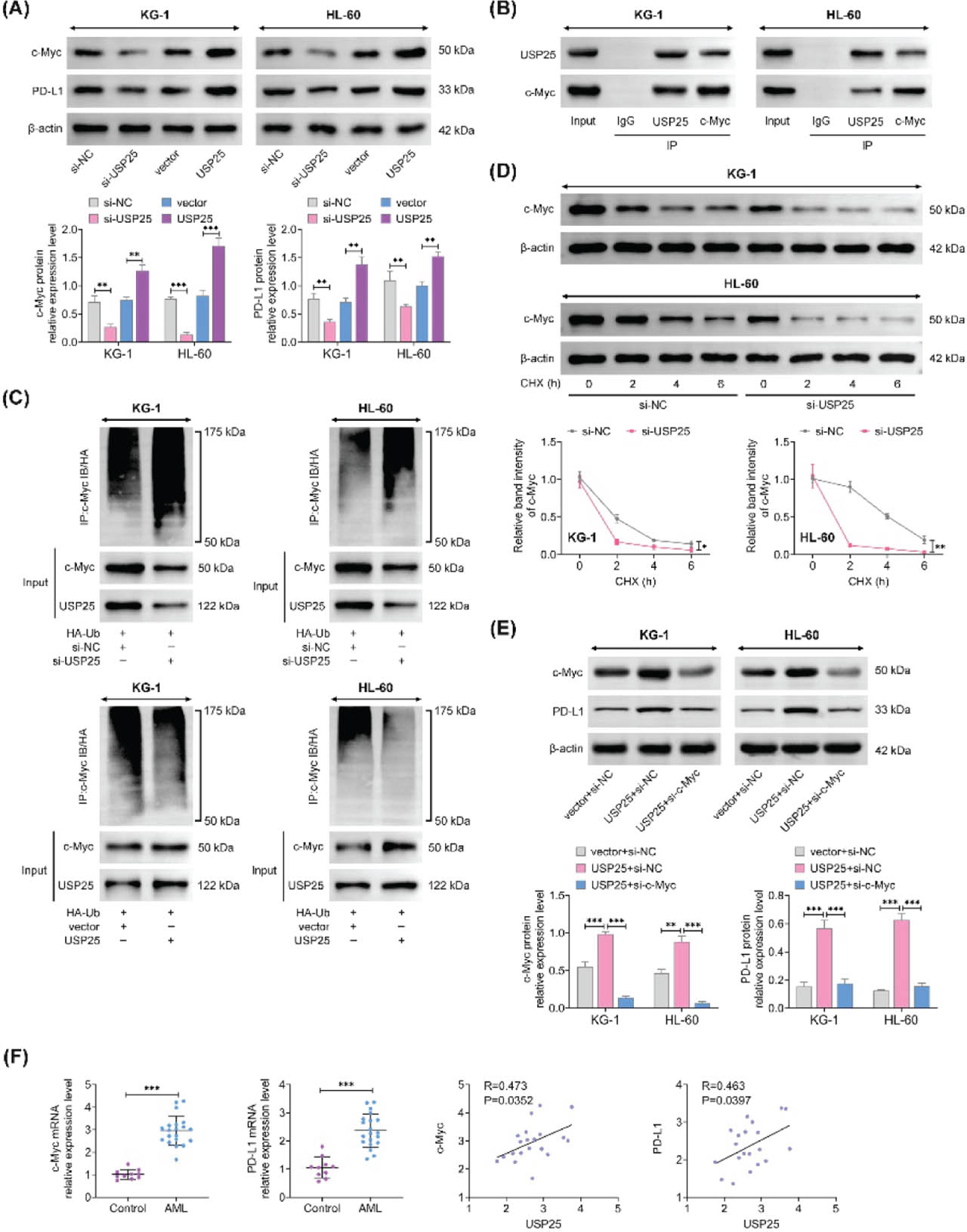
Fig 4.
USP25 deubiquitinated c-Myc and increased the expression of PD-L1 in AML cells. (A) The relative protein expression of c-Myc and PD-L1 was examined by Western blot after KG-1 and HL-60 cells were transfected with si-USP25, USP25, and their corresponding NC. Data were expressed after being normalized with β-actin. (B) The interaction of USP25 and c-Myc was identified by Co-IP assays. (C) Determination of the ubiquitination levels of c-Myc. (D) The protein stability of c-Myc was examined after KG-1 and HL-60 cells were treated with cycloheximide (CHX). Data were expressed after being normalized with β-actin. (E) The expression of PD-L1 in HL-60 and KG-1 cells with upregulated USP25 with or without si-c-Myc was detected by Western blot. Data were expressed after being normalized with β-actin. (F) The relative mRNA expression of c-Myc and PD-L1 was detected by RT-qPCR. Data were expressed after being normalized with β-actin. The USP25 expression was positively associated with the c-Myc expression and the PD-L1 expression. *P < 0.05, **P < 0.01, and ***P < 0.001. AML, acute myeloid leukemia; Co-IP, co-immunoprecipitation; RT-qPCR, real-time quantitative polymerase chain reaction; USP25, ubiquitin-specific peptidase 25.
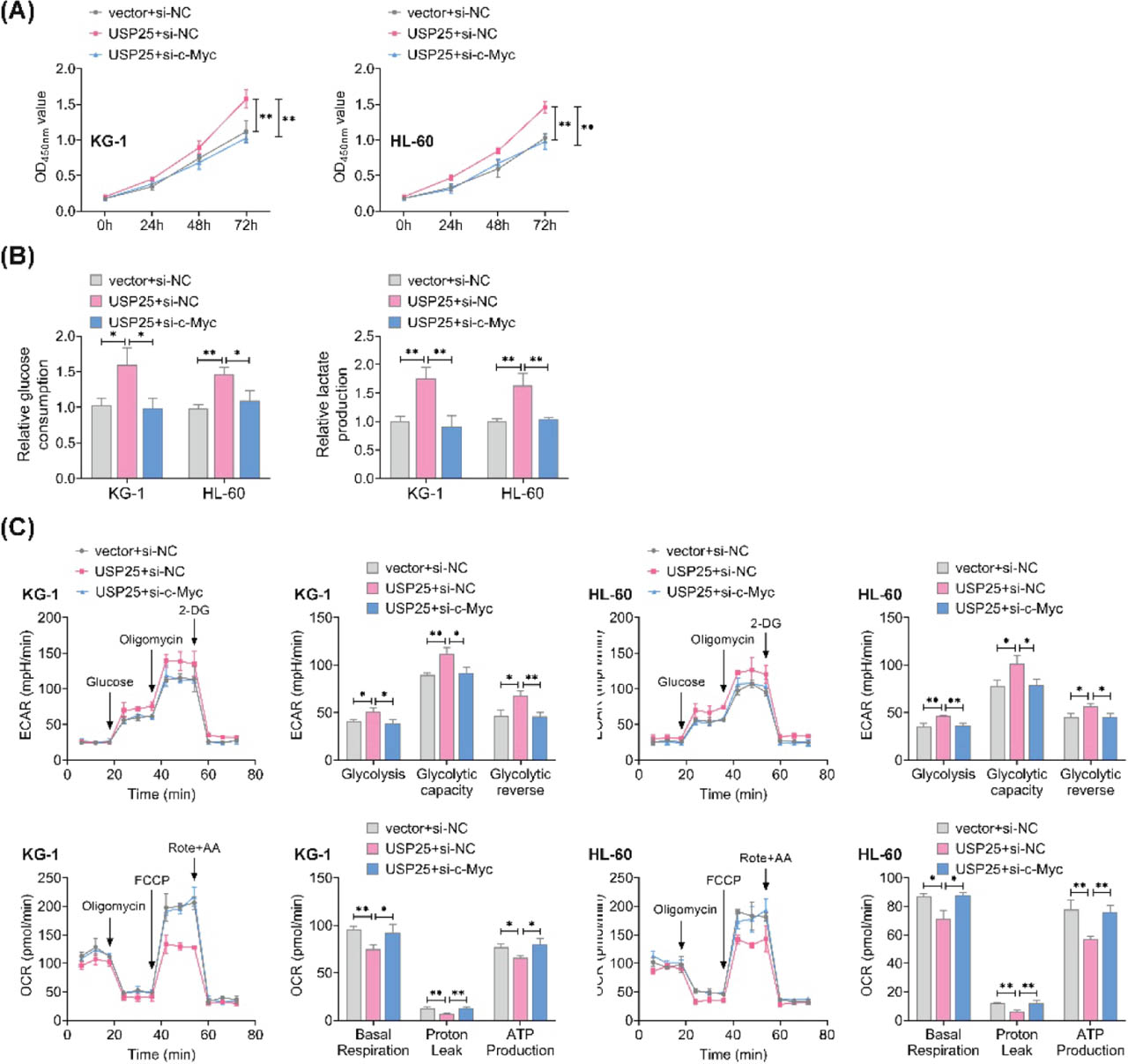
Fig 5.
USP25 enhanced proliferation and glycolysis via c-Myc in AML cells. KG-1 and HL-60 cells were transfected with USP25 and/or si-c-Myc, as well as their corresponding NC. After 48 h of transfection, cells were collected for the experiments. (A) The cell viability was detected by CCK-8 assays. (B) Measurement of the level of glucose consumption and lactate production. (C) The ECAR and OCR were detected by an XF96 extracellular flux analyzer. *P < 0.05 and **P < 0.01. AML, acute myeloid leukemia; CCK-8, cell counting kit-8; ECAR, extracellular acidification rate; OCR, oxygen consumption rate; USP25, ubiquitin-specific peptidase 25.
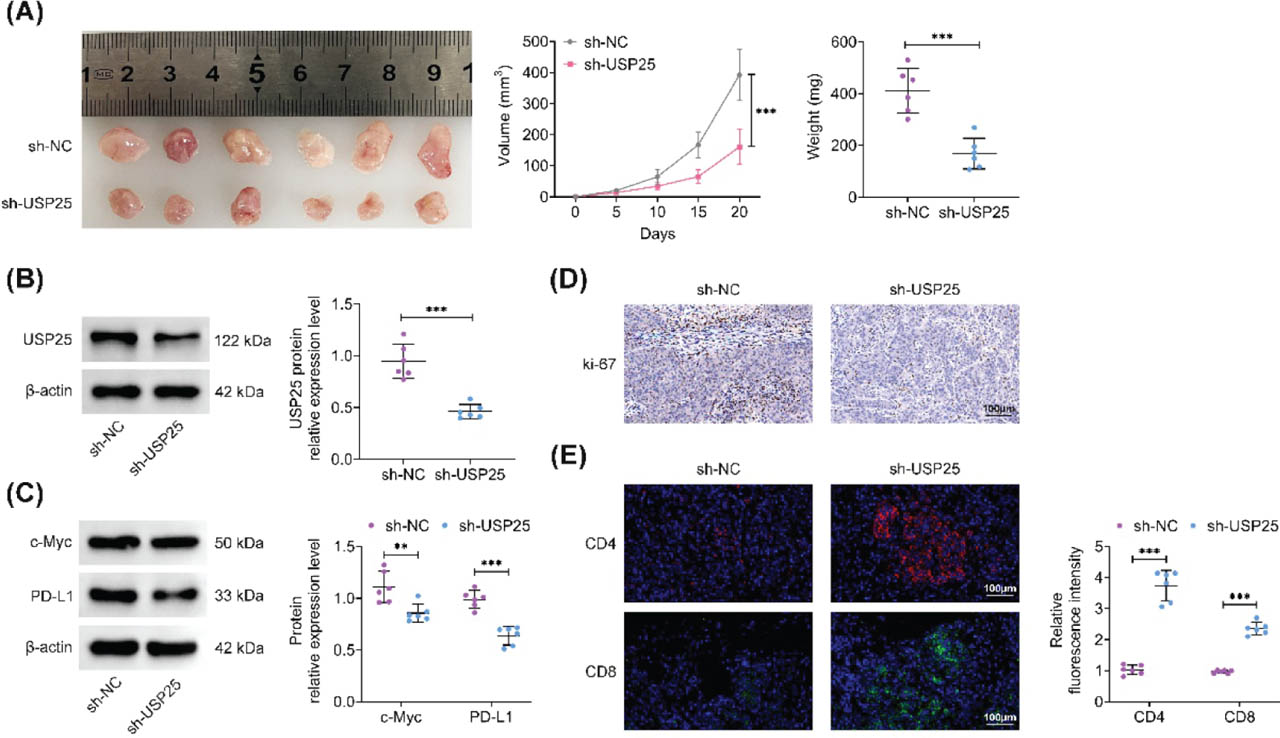
Fig 6.
Knockdown of USP25 inhibited growth and facilitated anti-tumor immunity in vivo. BALB/c nude mice were subcutaneously inoculated with a total of 3 × 10⁶ of HL-60 cells transfected with sh-USP25 or sh-NC into the right flank of nude mice. Besides, C57BL/6J mice intravenously received 5 × 10⁶ C1498 cells transfected with sh-USP25 or sh-NC through the tail vein. (A) Representative images of neoplasms from BALB/c nude mice (Left), monitoring of tumor volume every 5 days for successive 4 weeks, and calculated according to the following formula: volume = 0.5 × length × width2 (Middle), and measurement of tumor weight (Right). (B) The expression levels of USP25 in tumor tissues from BALB/c nude mice were detected by Western blot. Data were expressed after being normalized with β-actin. (C) The expression levels of c-Myc and PD-L1 in tumor tissues from BALB/c nude mice were examined by Western blot. Data were expressed after being normalized with β-actin. (D) The level of ki-67 in tumor tissues from BALB/c nude mice was determined by immunohistochemistry. Scale bar = 100 μm. (E) The expression levels of CD4 and CD8 in tumor tissues from C57BL/6J mice were examined by immunofluorescence experiments. Scale bar = 100 μm. **P < 0.01 and ***P < 0.001. sh-NC, short hairpin RNA negative control; USP25, ubiquitin-specific peptidase 25.