
1. Introduction
The potentially fatal illness known as sepsis is typified by a dysregulated immunological response to infection, which can result in organ failure (Srzic et al. 2022). One of the organs most commonly impacted by sepsis is the kidneys, which usually leads to sepsis-related acute kidney injury (S-AKI). This condition is associated with significant morbidity and alarmingly high mortality rates (Liu et al. 2020; Pais et al. 2024). Even though the pathogenesis of S-AKI is still not fully understood, it is generally acknowledged that acute kidney injury (AKI) can result from the damaging inflammatory cascades that are sent off during sepsis (Kuwabara et al. 2022). Moreover, renal tubular epithelial cell (RTEC) damage in AKI is directly linked to innate immune-mediated inflammation, which in turn causes oxidative stress and apoptosis (Liu et al. 2023).
C-type lectin domain family 5 member A (CLEC5A) is a crucial pattern recognition receptor that helps the body fight off infections from viruses and Gram-positive bacteria (Sung et al. 2020). A key role in the pathophysiology of inflammatory illnesses is played by CLEC5A activation, which triggers the NLRP3 (NLR family, pyrin domain containing protein 3) inflammasome to become active, reactive oxygen species to be produced, and pro-inflammatory cytokines to be secreted (Wu et al. 2013; Chen et al. 2017). For example, CLEC5A plays a critical role in neutrophil extracellular trap (NET) formation and lung inflammation (Sung et al. 2022b). Additionally, CLEC5A is implicated in mediating NET formation induced by Pseudomonas aeruginosa (Sung et al. 2022a). In early-stage chronic obstructive pulmonary disease, CLEC5A is identified as a critical gene that contributes to disease progression through pro-inflammatory mechanisms (Li et al. 2024). It is worth noting that CLEC5A has been identified as a central gene, holding significant value for the early diagnosis of patients with septic shock (Kong et al. 2023). However, little is known about CLEC5A’s function and underlying mechanisms in AKI, which calls for more research.
The NF-κB/NLRP3 (Nuclear Factor Kappa B/NACHT, LRR and PYD domains-containing protein 3) pathway is a well-established pro-inflammatory signaling cascade that significantly contributes to organ damage resulting from sepsis (Guo et al. 2023). Moreover, CLEC5A can trigger inflammatory responses through the activation of the NF-κB/NLRP3 pathway (Wang et al. 2021). This study explored the role of CLEC5A in lipopolysaccharide (LPS)-induced RTEC injury and its underlying mechanism.
2. Methods
2.1. Cell culture
The source of the HK-2 cell line of human renal tubular epithelial cells was Shanghai Enzyme Research Biotechnology Co (Shanghai, China). DMEM/F12 media supplemented with 10% fetal calf serum (Gibco, Hercules, CA, USA) and 1% antibiotics were used to cultivate the HK-2 cells. All of the cells were maintained in an incubator with 5% CO2 at 37°C. The S-AKI cell model was induced by exposing HK-2 cells to 10 μg/mL LPS (Sigma-Aldrich, St. Louis, Missouri, USA) for 24 h at 37°C. Additionally, cells were cultured with phorbol 12-myristate 13-acetate (PMA; Sigma-Aldrich; 20 ng/mL), an NF-κB activator, for 24 h (Qian and Yang 2022).
2.2. Cell transfection
The CLEC5A knockdown lentivirus was purchased from Shanghai Gene Company. The sequence of CLEC5A short hairpin (shCLEC5A) is 5′-GGTGGAAATTGGAATTATA-3′. Cells were transfected with shCLEC5A and control shRNA using Lipofectamine™ 3000 reagent (Thermo Fisher Scientific, Waltham, MA, USA).
2.3. Cell counting kit-8 (CCK-8) assay
The cells were grown for 24 h as previously described after being plated at a density of 5 × 10³ cells per well in a 96-well plate. Subsequently, each well received 10 mL of CCK-8 reagent (Beyotime, China), which was then incubated for 2 h. Thermo Fisher Scientific, used a microplate reader to measure the optical density (OD) at 450 nm.
2.4. Lactate dehydrogenase (LDH) assay
A density of 5 × 10⁴ cells per well was achieved by plating cells in a 96-well plate. Following the previously mentioned 24-h incubation period, 100 μL of the LDH reaction mixture was added to the culture medium, and it was then incubated for 30 min. A microplate reader was then used to measure the OD at 490 nm.
2.5. Enzyme-linked immunosorbent assay (ELISA)
The levels of interleukin (IL)-1β, IL-6, and tumor necrosis factor (TNF)-α were measured using ELISA kits (Beyotime Biotechnology, China).
2.6. Detecting oxidative stress damage
Cells were harvested following the aforementioned procedures, and a test kit (Beyotime) was employed to measure the levels of superoxide dismutase (SOD), glutathione peroxidase (GSH-Px), and malondialdehyde (MDA).
2.7. Western blotting analysis
The RIPA buffer (Beyotime, Shanghai, China) was used to lyse the cells. Using the BCA assay, the concentration of total protein was ascertained. Proteins were moved onto a polyvinylidene difluoride (PVDF) membrane after being separated via polyacrylamide gel electrophoresis. After blocking the membrane with 5% skim milk, the corresponding primary antibodies were incubated for the entire night: CLEC5A (ab313337; Abcam), NLRP3 (ab263899; Abcam), ASC (Apoptosis-associated speck-like protein containing a caspase recruitment domain) (ab283684; Abcam), p65 (ab32536; Abcam), p-p65 (ab53489; Abcam) and GAPDH, Glyceraldehyde-3-phosphate dehydrogenase (ab9485; Abcam) incubated at 4°C. For 1 h, protein bands were treated with secondary antibodies (Abcam, Cambridge, UK) coupled with horseradish peroxidase and subsequently visualized using a ChemiDoc MP system (Bio-Rad) with an ECL kit (Biosharp, Shanghai, China). ImageJ software (National Institutes of Health, Bethesda, MD, USA) was utilized to quantify the relative protein density.
2.8. Statistical analyses
The study employed GraphPad Prism software to analyze the data, and the results are shown as mean ± standard deviation. Student’s t-test or one-way ANOVA (Analysis of Variance) was used to compare groups, and a p-value of <0.05 was deemed statistically significant.
3. Results
3.1. CLEC5A knockdown protects HK-2 cells from LPS-induced injury
First, we looked for CLEC5A expression in LPS-induced HK-2 cells. The findings indicated that CLEC5A expression in HK-2 cells increased following LPS stimulation (Figure 1a), which may indicate that CLEC5A plays a role in the process of LPS-induced HK-2 cell damage. Subsequently, we employed lentiviral transfection to knock down CLEC5A, aiming to elucidate its role in LPS-induced injury of HK-2 cells (Figure 1b). The CCK-8 and LDH tests were used to measure cell damage. The findings showed that LPS increased LDH release while dramatically decreasing HK-2 cell viability. However, knockdown of CLEC5A partially mitigated these detrimental effects induced by LPS (Figure 1c,d). These results suggest that CLEC5A is involved in LPS-induced cell injury in HK-2 cells.
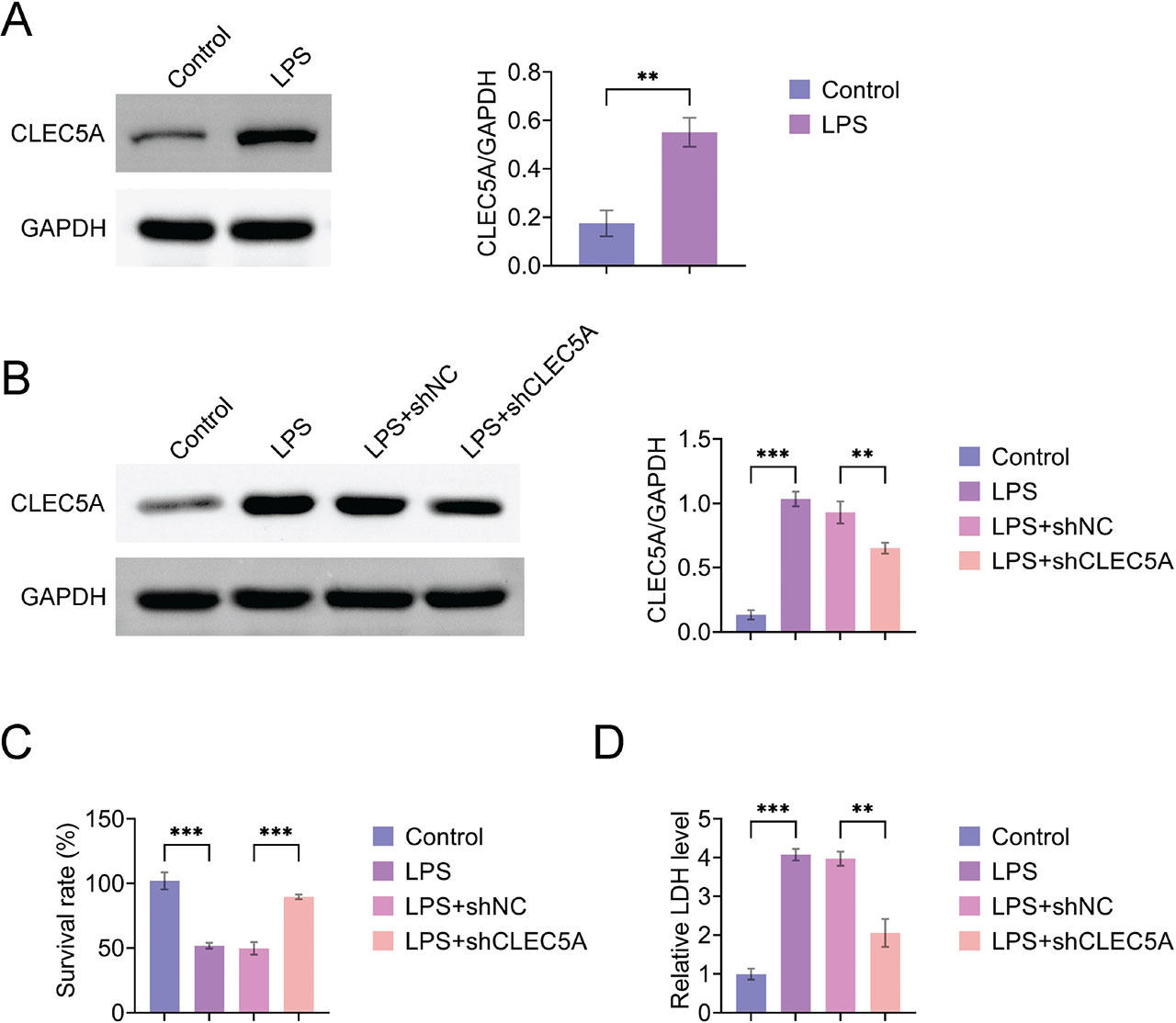
Fig 1.
CLEC5A knockdown protects HK-2 cells from LPS-induced injury. (A, B) Detection of CLEC5A expression in HK-2 cells by Western blotting. (C) CCK-8 assay for cell viability. (D) Measure LDH production using a commercially available LDH release assay kit. Values are presented as mean ± SD. **p < 0.01, ***p < 0.001. n = 3. CCK-8, cell counting kit-8; CLEC5A, C-type lectin domain family 5 member A; GAPDH, LDH, lactate dehydrogenase; LPS, lipopolysaccharide; SD, standard deviation; shNC, shcontrol.
3.2. CLEC5A knockdown improves HK-2 cells from LPS-induced inflammation
Inflammation is a critical driver in the progression of sepsis-associated S-AKI. To investigate this, we employed ELISA to measure the production of inflammatory cytokines by HK-2 cells. The findings showed that LPS markedly increased HK-2 cells’ production of inflammatory factors, such as TNF-α, IL-6, and IL-1β. Nevertheless, CLEC5A knockdown successfully reduced the synthesis of these inflammatory mediators (Figure 2a–c). These findings imply that CLEC5A has a role in the inflammation that LPS causes in HK-2 cells.
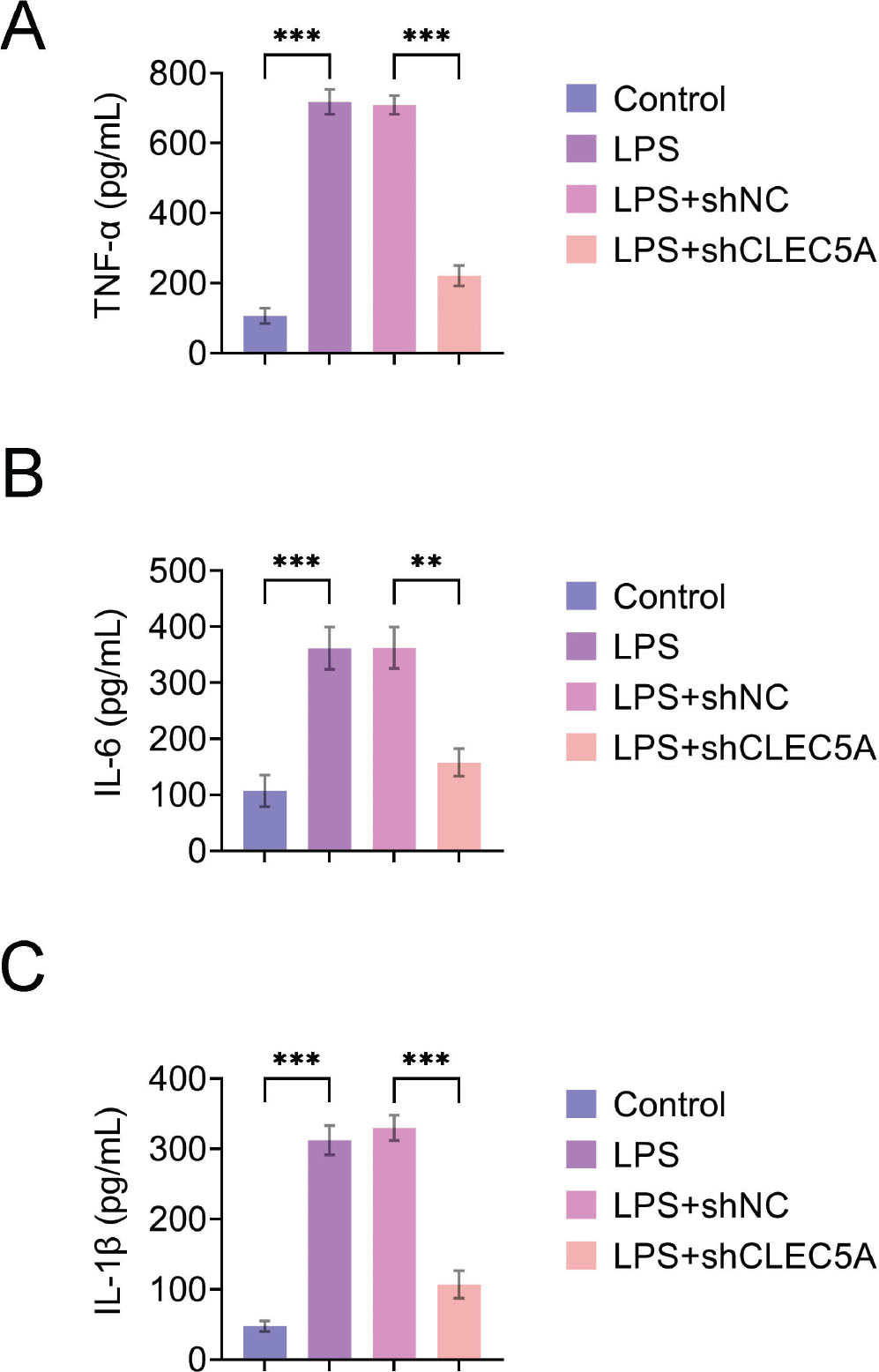
Fig 2.
CLEC5A knockdown improves HK-2 cells from LPS-induced inflammation. ELISA detects TNF-α (A), IL-6 (B), IL-1β, and (C) levels in HK-2 cells culture fluid. Values are presented as mean ± SD. **p < 0.01, ***p < 0.001. n = 3. CLEC5A, C-type lectin domain family 5 member A; ELISA, enzyme-linked immunosorbent assay; IL, interleukin; LPS, lipopolysaccharide; SD, shNC, TNF-α, tumor necrosis factor-α.
3.3. CLEC5A knockdown improves HK-2 cells from LPS-induced oxidative stress
Oxidative stress is also a critical element in the evolution of S-AKI. Oxidative stress levels in cells were assessed using a detection kit. The results revealed that LPS exposure led to decreased activities of SOD and GSH-Px, while the level of MDA increased. Knockdown of CLEC5A partially reversed these changes (Figures 3a–c), highlighting its potential role in modulating oxidative stress in S-AKI.
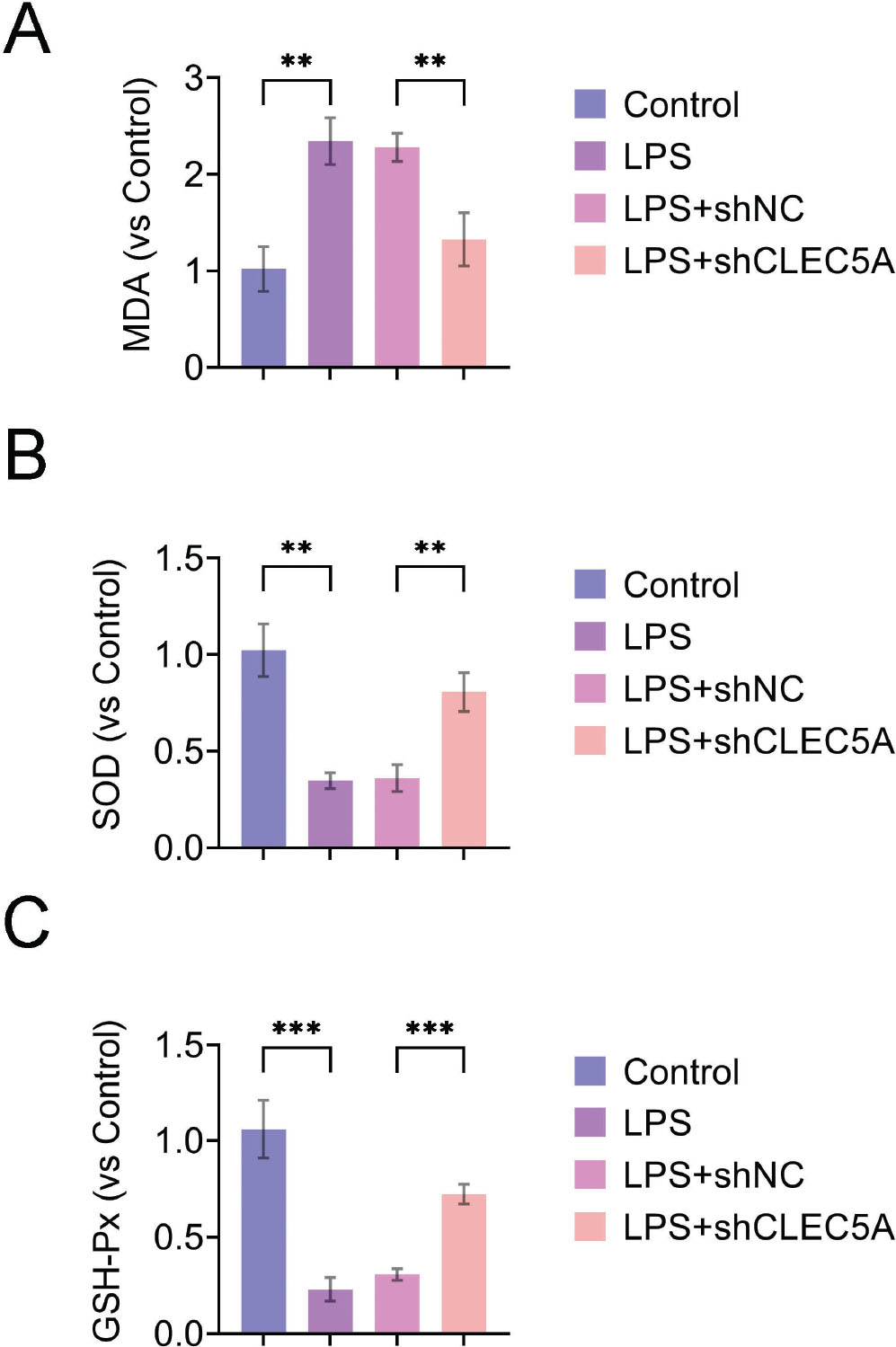
Fig 3.
CLEC5A knockdown improves HK-2 cells from LPS-induced oxidative stress. MDA (A), SOD (B), and GSH-Px (C) levels were measured using commercially available kits in HK-2 cells. Values are presented as mean ± SD. **p < 0.01, ***p < 0.001. n = 3. CLEC5A, C-type lectin domain family 5 member A; GSH-Px, glutathione peroxidase; LPS, lipopolysaccharide; MDA, malondialdehyde; SD, shNC, SOD, superoxide dismutase.
3.4. CLEC5A knockdown can block the activation of NF-κB/NLRP3 signaling pathway
One important regulator of the inflammatory response is the NF-κB/NLRP3 signaling pathway. To find the proteins involved in this process, we employed Western blotting. The findings demonstrated that LPS treatment markedly increased the levels of p-p65, NLRP3, and ASC protein expression, suggesting that the NF-κB/NLRP3 signaling pathway was highly activated, whereas CLEC5A knockdown prevented this activation (Figure 4).
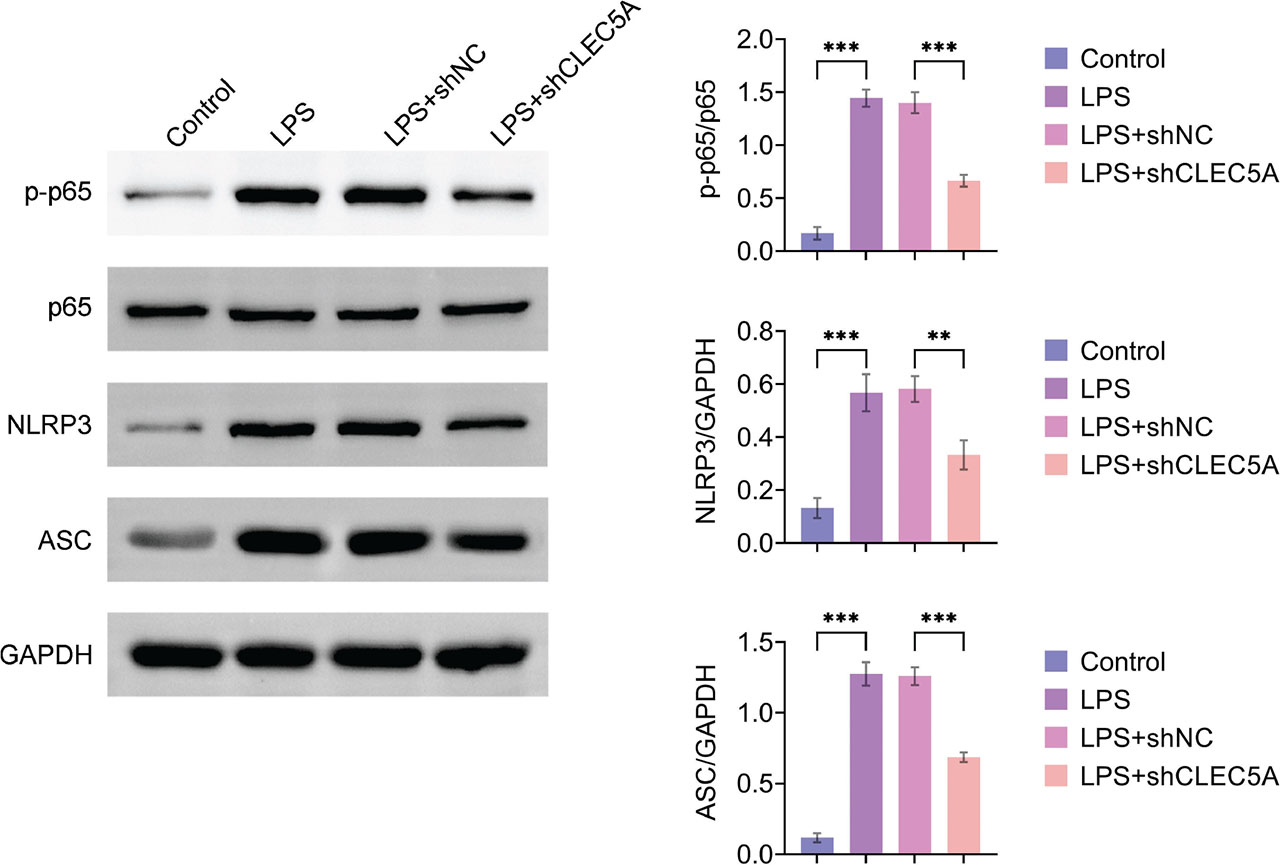
Fig 4.
CLEC5A knockdown can block the activation of NF-κB/NLRP3 signaling pathway. Western blotting to detect p65, p-p65, NLRP3, ASC protein expression. Values are presented as mean ± SD. **p < 0.01, ***p < 0.001. n = 3. ASC, CLEC5A, C-type lectin domain family 5 member A; LPS, lipopolysaccharide; NLRP3, NLR Family, Pyrin Domain Containing Protein 3; SD, shNC.
3.5. Activation of NF-κB reverses the effects of CLEC5A knockdown on LPS-treated HK-2 cells
We used PMA, a particular NF-κB activator, to examine if the NF-κB/NLRP3 pathway is connected to CLEC5A-mediated LPS-induced damage of HK-2 cells. Activation of NF-κB could reverse the cell injury, inflammation, and oxidative stress improved by knocking down CLEC5A (Figure 5). Collectively, these results imply that via inhibiting the NF-κB/NLRP3 signaling pathway, CLEC5A knockdown reduces LPS-induced oxidative stress, inflammation, and damage in HK-2 cells.
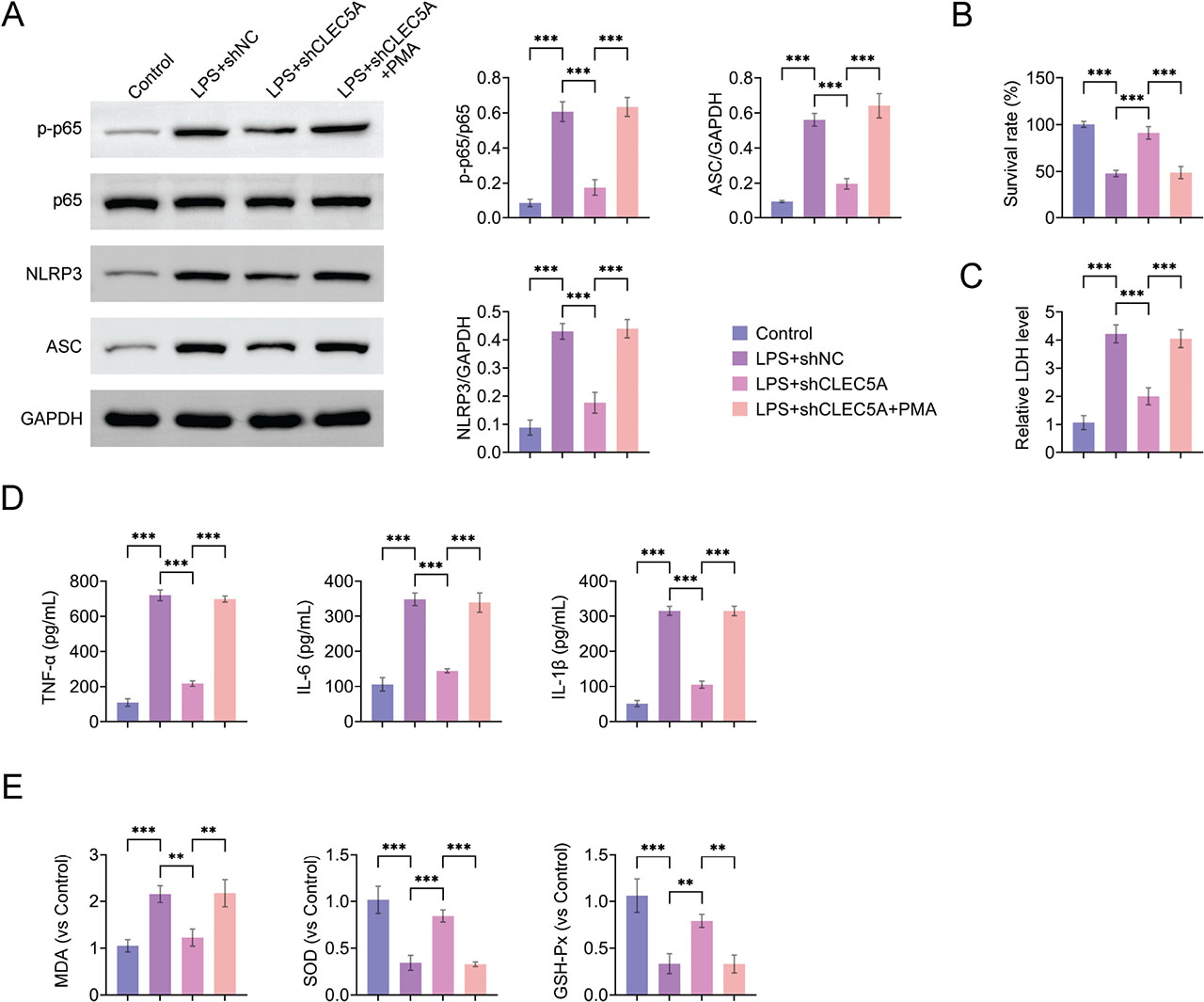
Fig 5.
Activation of NF-κB reverses the effects of CLEC5A knockdown on LPS-treated HK-2 cells. (A) Western blotting to detect p65, p-p65, NLRP3, and ASC protein expression. (B) CCK-8 assay for cell viability. (C) Measure LDH production using a commercially available LDH release assay kit. (D) ELISA detects IL-1β, IL-6, and TNF-α levels. (E) MDA, SOD, and GSH-Px levels were measured using commercially available kits in HK-2 cells. Values are presented as mean ± SD. **p < 0.01, ***p < 0.001. n = 3. ASC, CCK-8, cell counting kit-8; CLEC5A, C-type lectin domain family 5 member A; ELISA, enzyme-linked immunosorbent assay; GSH-Px, glutathione peroxidase; IL, interleukin; LDH, lactate dehydrogenase; LPS, lipopolysaccharide; MDA, malondialdehyde; NF-κB, NLRP3, NLR Family, Pyrin Domain Containing Protein 3; SD, shNC, SOD, superoxide dismutase; TNF-α, tumor necrosis factor-α.
4. Discussion
AKI is a significant global medical challenge, and its co-occurrence with sepsis exacerbates patient morbidity and mortality. Thus, a deeper understanding of the underlying molecular mechanisms is crucial for identifying novel therapeutic strategies for S-AKI (de Boer et al. 2021). RTECs were chosen to investigate the pathophysiology of S-AKI, and it was discovered that LPS-treated cells’ expression of CLEC5A was elevated in response to stress. By inhibiting the NF-κB/NLRP3 signaling pathway, CLEC5A knockdown can reduce oxidative stress, inflammation, and cell damage in RTECs.
Oxidative stress and the associated inflammation are common features and key drivers in the development and progression of AKI and its related complications (Aranda-Rivera et al. 2021). LPS is implicated in the pathogenesis of septic AKI and is commonly used to induce S-AKI models. Pro-inflammatory cytokines like TNF-α, IL-1β, and IL-6 are overproduced when LPS stimulation occurs, usually resulting in strong inflammatory reactions (Wu et al. 2020). Additionally, during inflammation, the balance between oxidants and antioxidants is disrupted, with oxidants prevailing and inducing oxidative stress (Xu et al. 2023). Previous research has indicated that excessive inflammation and oxidative stress in the kidney can cause renal epithelial cell damage (Zhang et al. 2022). Knockdown of CLEC5A exhibits notable protective effects against cell injury, inflammation, and oxidative stress. According to these results, CLEC5A levels may be a useful biomarker for S-AKI. However, its clinical relevance needs to be validated through the analysis of clinical samples.
One conventional pro-inflammatory signaling cascade is the NF-κB pathway, and S-AKI is known to be an inflammatory disease that is strongly linked to NF-κB activation (Liu et al. 2020). Research indicates that NF-κB can be activated by LPS, thereby regulating the expression of numerous inflammatory mediators and influencing macrophages as well as other inflammatory factors and cytokines (Marko et al. 2016). Activation of NF-κB signaling promotes the formation of NLRP3 inflammasomes, further generating inflammatory responses (Pei et al. 2022). Our research shows that CLEC5A knockdown could prevent the NF-κB/NLRP3 signaling pathway from being activated, which would ameliorate the oxidative stress, inflammation, and damage caused by LPS to RTEC cells.
5. Conclusion
In summary, the findings of this study indicate that knockdown of CLEC5A can mitigate renal tubular injury and diminish inflammation and oxidative stress by suppressing NF-κB/NLRP3 activation in S-AKI. Targeting CLEC5A might represent a promising therapeutic strategy for S-AKI. However, further investigation using animal models is required to elucidate the effects of CLEC5A knockdown on S-AKI.
Acknowledgments
Not applicable.
Notes
[2] Availability of Data and Materials
All data generated or analyzed during this study are included in this published article.
The datasets used and/or analyzed during the present study are available from the corresponding author on reasonable request.
[3] Conflicts of interest Competing Interests
The authors state that there are no conflicts of interest to disclose.
[5] Contributed by Author’s Contribution
Conceptualization, Methodology, and Writing – Original Draft were performed by Zunjiang Chen; Formal analysis, Resources, and Investigation were performed by Chengfeng Pan; Formal analysis, Visualization and Data Curation were performed by Xuexiu Chen; Project administration, Supervision, and Validation were performed by Shangli Xie; Validation, Supervision, and Writing – Review and Editing were performed by Yuechuan Lin and Xingken Fan. All authors read and approved the final manuscript.