Have a personal or library account? Click to login
Significance of the LL-37 Peptide Delivered from Human Cathelicidin in the Pathogenesis, Treatment, and Diagnosis of Sepsis Cover

Significance of the LL-37 Peptide Delivered from Human Cathelicidin in the Pathogenesis, Treatment, and Diagnosis of Sepsis

Open Access
|Sep 2025

Figures & Tables

Fig 1.

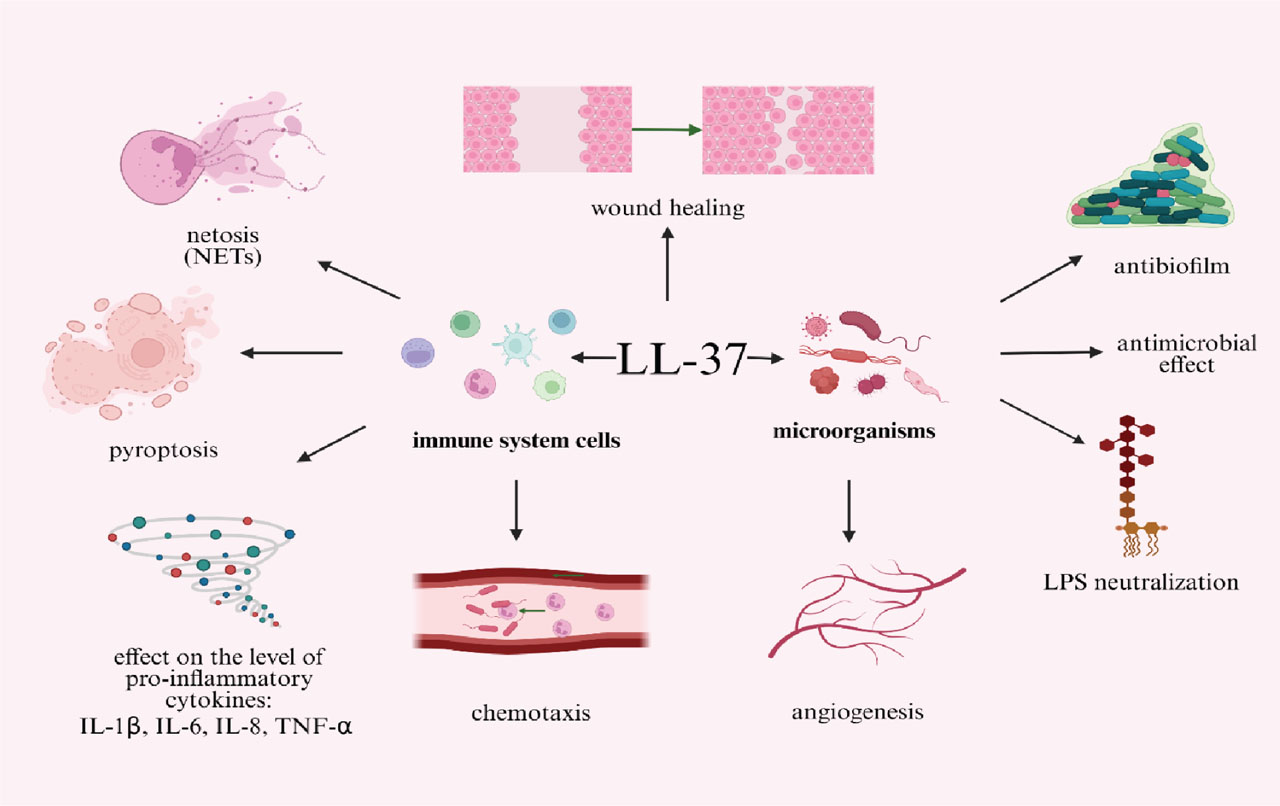
The pleiotropic function of human cathelicidin LL-37. In the extracellular environment, the LL-37 peptide has various functions resulting from its ability to activate certain plasma membrane receptors and/or to insert into the plasma membrane, thereby disrupting the integrity of the plasma membrane. LL-37 may also interact with substances that build microbial cells and components of the biofilm matrix. IL, interleukin; LPS, lipopolysaccharide; NETs, neutrophil extracellular traps; TNF-α, tumor necrosis factor-α.
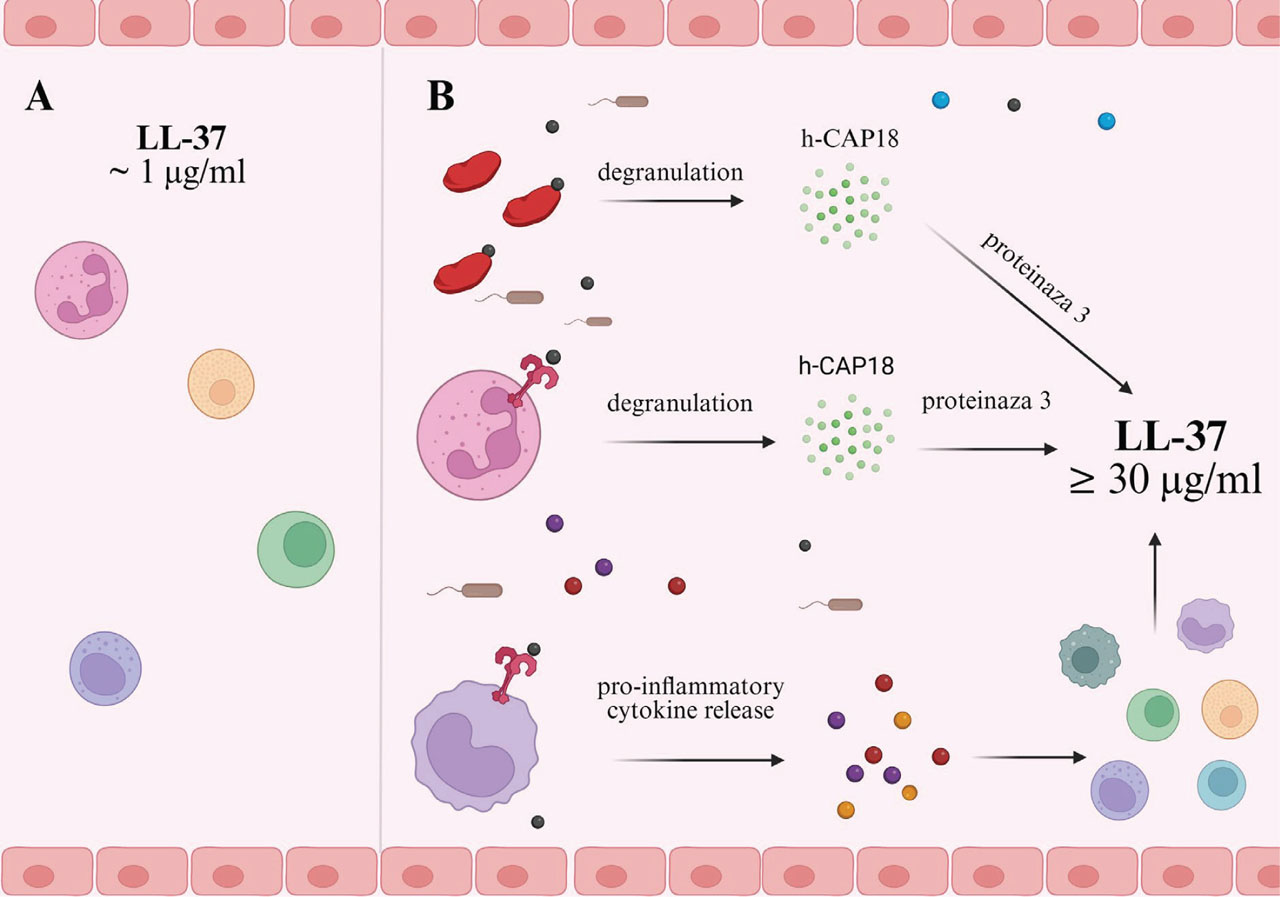

Fig 2.

Scheme of LL-37 peptide expression by immune cells during homeostatic balance (A) and during sepsis (B).
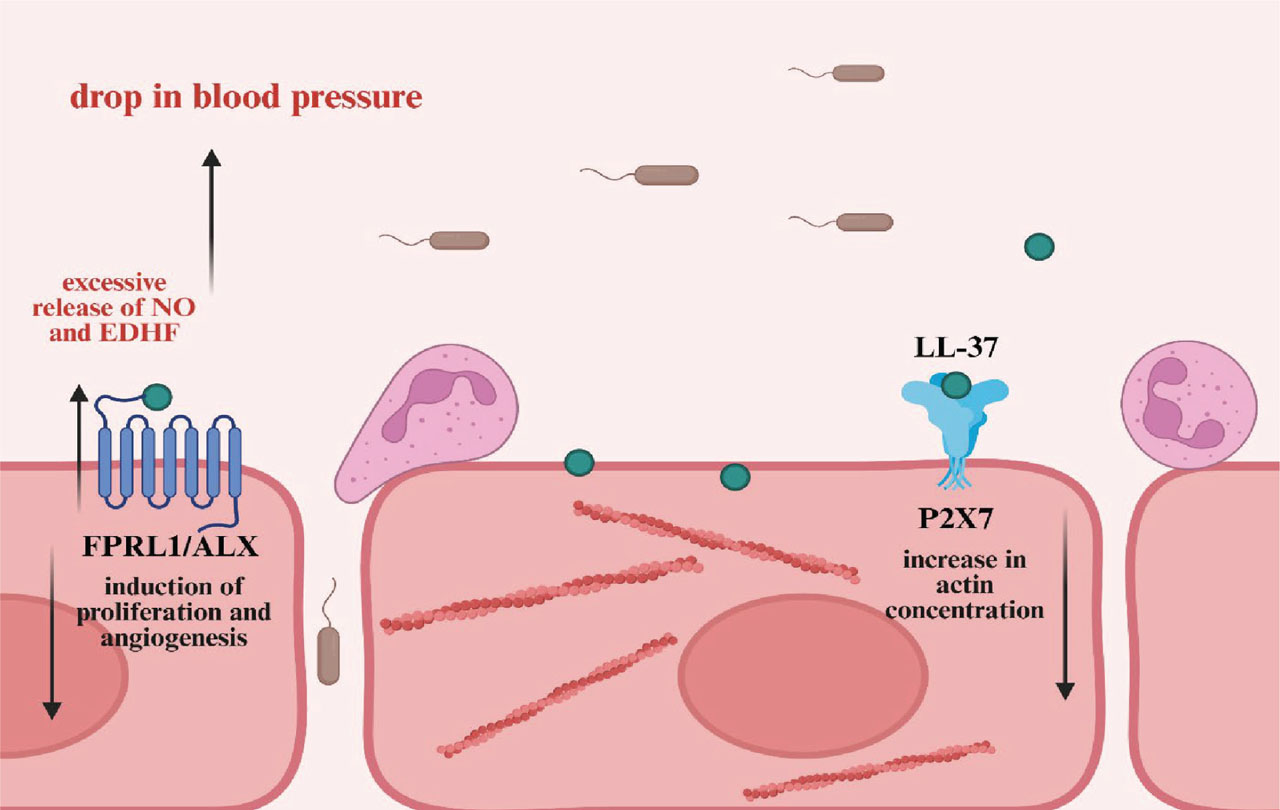

Fig 3.

Ability of the peptide LL-37 to regulate the stiffness and cytoskeleton organization of the endothelial cell. EDHF, endothelium-derived hyperpolarizing factor; FPRL1/ALX, formyl peptide receptor-like 1/lipoxin A4 receptor; NO, nitric oxide; P2X7/purinergic channel receptor.
Language: English
Submitted on: Apr 17, 2025
Accepted on: Jun 7, 2025
Published on: Sep 7, 2025
Published by: Hirszfeld Institute of Immunology and Experimental Therapy
In partnership with: Paradigm Publishing Services
Publication frequency: 1 issue per year

© 2025 Angelika Mańkowska, Paulina Paprocka, Grzegorz Król, Agata Lesiak, Jakub Spałek, Ewelina Piktel, Sławomir Okła, Piotr Bijak, Wiesława Niklińska, Bonita Durnaś, Robert Bucki, published by Hirszfeld Institute of Immunology and Experimental Therapy
This work is licensed under the Creative Commons Attribution-NonCommercial-NoDerivatives 4.0 License.