
1. Introduction
Dry eye disease (DED) is one of the most prevalent ocular disorders worldwide, affecting millions of individuals, with its incidence expected to increase as the global population ages (Hakim and Farooq 2022). According to the TFOS DEWS II Definition and Classification Report, DED is defined as “a multifactorial disease of the ocular surface characterized by a loss of homeostasis of the tear film, accompanied by ocular symptoms, in which tear film instability and hyperosmolarity, ocular surface inflammation and damage, and neurosensory abnormalities play etiological roles” (Hakim and Farooq 2022). Although traditionally associated with older individuals, growing evidence indicates a rising prevalence among younger populations, attributed to prolonged use of digital devices, environmental changes, and contact lens wear (Hakim and Farooq 2022). DED etiology is complex and multifactorial, involving autoimmune conditions, hormonal fluctuations, chronic inflammation, contact lens use, environmental factors, and infections (Jackson et al. 2022; Stapleton et al. 2024). Clinically, DED is characterized by reduced tear production and/or tear film instability resulting in persistent dryness of the corneal and conjunctival surfaces, which presents both subjectively and objectively. Patients often report symptoms, such as dryness, redness, itchiness, and sensitivity to irritants, with objective clinical signs including reduced tear production, as measured by the Schirmer test, increased tear evaporation assessed by tear break-up time (TBUT), and ocular surface damage (Zhang et al. 2025). Regardless of the underlying cause, a shared pathogenic feature of DED is inflammation, where glandular diseases or dysfunctions alter tear composition, resulting in increased tear osmolarity, which subsequently induces the production of pro-inflammatory mediators on the ocular surface (Safir et al. 2024). Given the limitations and potential side effects of current treatment strategies, a deeper understanding of DED pathogenesis and molecular mechanisms is essential for the development of more effective therapeutic interventions (Safir et al. 2024).
Annexin A1 (ANXA1), formerly known as lipocortin-1, is a 37 kDa glucocorticoid-regulated protein that binds calcium and phospholipids, and has been widely recognized for its anti-inflammatory and pro-resolving properties (Foo et al. 2019). In addition to modulating inflammation, ANXA1 regulates diverse cellular processes, including proliferation, differentiation, and apoptosis (Foo et al. 2019; Wu et al. 2021; Xu et al. 2021). Emerging evidence has demonstrated its involvement in inflammatory resolution in various pathological conditions. For example, ANXA1 has been shown to play a protective role in diabetic nephropathy and mitigate cerebral ischemia-reperfusion injury by activating the Formyl Peptide Receptor 2 (FPR2)/Alipoprotein Lipid X (ALX)-dependent Adenosine Monophosphate-activated Protein Kinase (AMPK)-mechanistic Target of Rapamycin (mTOR) signaling pathway (Wu et al. 2021; Xu et al. 2021). Despite these known effects, its relevance in DED remains poorly understood, and the underlying molecular mechanisms have not yet been clearly defined.
Pyroptosis is a form of programmed cell death distinct from apoptosis and necrosis, primarily characterized by its inflammatory nature and essential role in host defense against infections (Ren et al. 2023; Yang et al. 2023). In contrast to apoptosis, which is generally non-inflammatory and characterized by cell shrinkage and DNA fragmentation, pyroptosis involves cellular swelling, rupture of the plasma membrane, and the release of pro-inflammatory intracellular contents into the extracellular environment, which is predominantly mediated by inflammasome activation, leading to caspase-1 cleavage and initiation of downstream inflammatory signaling (Luan et al. 2023). Growing evidence indicates that pyroptosis plays a pathogenic role in various ocular diseases, including DED (Luan et al. 2023). Mechanistically, pyroptosis in DED involves activation of NOD-like receptor family pyrin domain containing (NLRP)1 and NLRP3 inflammasomes, caspase-1 cleavage, and the release of interleukin (IL)-1β, accompanied by gasdermin D (GSDMD)-mediated pore formation on the cell membrane (Luan et al. 2023). The subsequent release of inflammatory mediators not only amplifies local inflammation but also disrupts epithelial cell integrity, thereby exacerbating the clinical manifestations of DED. Given its pivotal contribution to disease progression, targeting pyroptosis represents a promising therapeutic strategy for mitigating ocular surface inflammation and preserving tissue homeostasis in DED.
Tripartite motif-containing protein 72 (TRIM72) is an E3 ubiquitin ligase that plays a vital role in oxidative stress responses and membrane repair. In parallel, nuclear factor erythroid 2-related factor 2 (Nrf2) functions as a central regulator of antioxidant defenses by controlling the expression of a range of cytoprotective genes, including heme oxygenase-1 (HO-1). HO-1, in turn, exerts potent anti-inflammatory and antioxidant effects through heme degradation into biliverdin, carbon monoxide, and free iron, thereby alleviating oxidative injury and suppressing inflammation (Yao et al. 2025). Together, the TRIM72/Nrf2/HO-1 signaling pathway forms a crucial defense mechanism that mitigates oxidative stress and maintains cellular homeostasis.
Building on these findings, this study investigated the reduced expression of ANXA1 in DED and hypothesized that its overexpression may improve disease manifestations by modulating the TRIM72/Nrf2/HO-1 pathway. As pyroptosis can promote epithelial injury and inflammation in DED, inhibiting this process may offer therapeutic benefits. Therefore, we also aimed to determine whether ANXA1 overexpression suppresses pyroptosis by activating the TRIM72/Nrf2/HO-1 axis, thereby alleviating dry eye symptoms and providing a potential therapeutic approach.
2. Materials and Methods
2.1. Animal model
Male C57BL/6 mice (approximately 8 weeks old) were purchased from SLAC (Slack Laboratory Animal Co., Ltd, Shanghai, China). All animals were housed under sterile conditions, and all experimental procedures were approved by the Ethics Committee of Shanxi Provincial Eye Hospital, affiliated with Shanxi Medical University. DED was induced by topical instillation of benzalkonium chloride (BAC; B9754, Sigma-Aldrich, St. Louis, MO, USA). Specifically, 5 μL of 0.2% BAC in sterile saline was administered bilaterally to the central ocular surface using a calibrated micropipette (Eppendorf Research Plus, 2–20 μL range) twice daily (9:00 and 17:00) for 14 consecutive days, following a standardized and previously established DED induction protocol (Li et al. 2022b). Mice were monitored for the development of DED signs, which were objectively assessed by measuring tear film stability and tear secretion using fluorescein TBUT and the Schirmer test, respectively. The Sham group was subjected to identical handling and procedures, including bilateral instillation of 5 mL sterile saline (0.9% NaCl) twice daily with the same calibrated micropipette but without BAC exposure. As subjective symptoms could not be assessed in the animal model, evaluation was limited to these objective parameters. Tear production was assessed by the Schirmer test, performed by placing filter paper strips in the lower eyelid for 5 min and measuring the wetting length.
2.1.1. Schirmer test
Tear production was assessed using standardized sterile filter paper strips. Initially, Whatman #41 strips (0.5 mm width) were inserted into the temporal lower eyelid for 60 s without anesthesia to estimate tear secretion. For formal testing, EagleVision strips (5 mm width) were placed in the lateral third of the lower eyelid for 5 min under controlled conditions (ambient temperature 23 ± 1°C, humidity 40%–60%), also without anesthesia. Upon removal, the wetting length (mm) was immediately measured under Fluorescein TBUT magnification, from the notch to the furthest point of moisture penetration. Three consecutive measurements per eye were performed, and the average value was calculated. The examiners were blinded to group assignments.
2.1.2. Fluorescein TBUT
Tear film stability was evaluated by instilling 0.5 μL of 1% sodium fluorescein (BioGlo) onto the ocular surface using a sterile strip. Under cobalt blue light, the time interval between the last complete blink and the first appearance of a dry spot on the corneal surface was recorded in seconds. Three consecutive readings were obtained for each eye and averaged.
2.2. Cell culture and establishment of the cell model
Human corneal epithelial (HCE-T; Accegen, TC3663) cells were cultured in Dulbecco's Modified Eagle Medium (DMEM) supplemented with 10% fetal bovine serum at 37°C in a humidified atmosphere containing 5% CO2. To establish an in vitro DED-like model, cells at approximately 80% confluence were exposed to 2 mL of 0.0005% BAC solution (Sigma-Aldrich, B9754) per 6-well plate for 24 h based on established in vitro dry eye models. The 0.0005% BAC working solution was freshly prepared by diluting a 0.02% (w/v) stock solution in complete DMEM immediately before use. The duration of BAC exposure was determined based on preliminary time-course experiments. Control cells were treated with an equivalent volume of sterile saline solution under identical conditions. For TRIM72 depletion, TRIM72-specific siRNAs (Riobio, Guangzhou, China) were transfected into BAC-induced DED HCE-T cells at a final concentration of 50 nM using Lipofectamine 2000 (Invitrogen), according to the manufacturer's instructions.
2.3. Adenoviral infection
ANXA1-overexpressing adenoviral vectors (Ad-ANXA1) were employed in both animal and cell-based experiments. For in vivo studies, Ad-ANXA1 (Vector Biolabs, Malvern, PA, USA) was administered intraperitoneally at a dose of 10 μL per mouse. In parallel, for in vitro experiments, HCE-T cells were infected with Ad-ANXA1 at a multiplicity of infection of 5 plaque-forming units (PFU) per cell. Successful overexpression of ANXA1 was confirmed by immunoblot analysis. To control for non-specific effects related to adenoviral infection, negative control (NC) animals and cells received adenoviral vectors lacking the ANXA1 gene (Ad-NC). Furthermore, in the DED mouse model, siRNA targeting TRIM72 (siTRIM72) (2 μg/eye) was co-administered with Ad-ANXA1 (1 × 10⁸ PFU/eye) via intravitreal injection using a sterile 33-gauge Hamilton syringe, administered using a fine needle under sterile conditions to specifically target and deplete TRIM72 expression in the ocular tissue.
2.4. Cholecystokinin-8 (CCK-8) assay
HCE-T cells were cultured and subsequently incubated for 24 h, 48 h, and 72 h before assessment. At each time point, the cells were treated with CCK-8 reagent (C0038, Beyotime, China) and incubated for an additional 4 h. After incubation, absorbance at 450 nm was measured to determine cell viability, reflecting metabolic activity.
2.5. TUNEL staining
For apoptosis detection, HCE-T cells from each group were harvested and snap-frozen. The cells were first washed with phosphate-buffered saline (PBS), lysed, and then rapidly frozen in liquid nitrogen for 60 s before storage at −80°C. The frozen samples were sectioned and subsequently fixed in formaldehyde. After washing in PBS, apoptosis was assessed using a commercial cell apoptosis detection kit (Roche, Germany). The apoptotic cells were visualized and quantified under a microscope (Olympus), and manual counting was performed to calculate the percentage of apoptotic cells.
2.6. Quantitative polymerase chain reaction (qPCR)
Total RNA was isolated from HCE-T cells using TRIzol reagent (TaKaRa, Japan). Complementary DNA was synthesized by reverse transcription using an RT reagent kit (Takara). qPCR was conducted with SYBR Ex Taq™ II (Takara) to assess gene expression levels. The primer sequences used were as follows: ANXA1, forward 5'-AGAAGAAGATGAGCGAGTGG-3' and reverse 5'-TGGTCTTTGTCACAGCAGTG-3'; β-actin, forward 5'-AGAGGGAAATCGTGCGTGAC-3' and reverse 5'-CAATAGTGATGACCTGGCCGT-3'. Relative gene expression levels were calculated using b-actin as the internal control.
2.7. Immunoblot
Proteins were extracted following cell lysis using the RIPA buffer (Beyotime, Beijing, China), and protein concentrations were determined using the Bicinchoninic acid assay. Equal amounts of total protein were subjected to SDS-PAGE and transferred onto polyvinylidene difluoride (PVDF) membranes. To block non-specific binding, membranes were incubated in Tris-buffered saline with Tween 20 (TBST) buffer containing 5% bovine serum albumin for 1 h at room temperature. Following blocking, membranes were incubated overnight at 4°C with primary antibodies specific for ANXA1 (1:500, ab214486, Abcam), NLRP1 (1:500, ab36852, Abcam), cleaved caspase-1 (C-caspase-1, 1:500, ab207802, Abcam), IL-1β (1:500, ab283818, Abcam), GSDMD-1 (1:500, ab210070, Abcam), TRIM72 (1:500, ab308199, Abcam), Nrf2 (1:500, ab62352, Abcam), HO-1 (1:500, ab305290, Abcam), and glyceraldehyde-3-phosphate dehydrogenase (GAPDH, 1:3000, ab8245, Abcam), the latter serving as the internal loading control. The next day, the membranes were incubated with species-appropriate secondary antibodies for 1 h at room temperature. The protein bands were visualized using a chemiluminescent substrate, and images were captured accordingly. Densitometric analysis was performed using ImageJ software. Relative protein expression levels were calculated by normalizing band intensities to GAPDH, which served to verify uniform protein loading across samples.
2.8. Statistical analysis
All statistical analyses were performed using GraphPad Prism version 5.0 (GraphPad Software, Inc., San Diego, CA, USA). Data are presented as the mean ± standard deviation (SD). Differences among groups were assessed using one-way analysis of variance followed by Tukey's Honestly Significant Difference post hoc test. To avoid bias, group allocation remained blinded until after the statistical analyses. A p-value of <0.05 was considered indicative of statistical significance.
3. Results
3.1. ANXA1 expression was reduced in the DED model
To investigate the potential involvement of ANXA1 in the pathogenesis of DED, its expression levels were first evaluated. Compared with the Sham group, DED mice exhibited significantly decreased ANXA1 expression, as demonstrated by both qPCR and immunoblot analyses (Figures 1a and 1b). To establish an in vitro DED model, HCE-T cells were exposed to BAC, a commonly used inducer of DED-like conditions. Consistent with the in vivo findings, ANXA1 mRNA and protein levels were significantly downregulated in BAC-treated HCE-T cells, as confirmed by qPCR and immunoblot assays (Figures 1c and 1d), thereby indicating that ANXA1 expression is suppressed in both in vivo and in vitro models of DED.
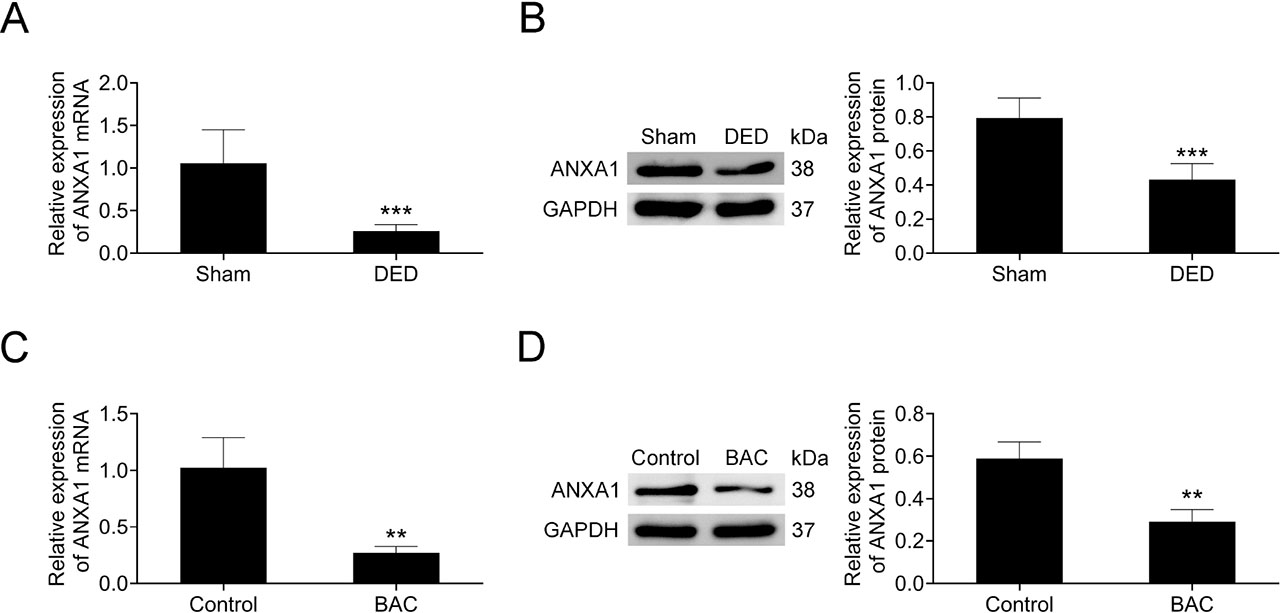
Fig 1.
ANXA1 expression was reduced in the murine DED model. (A) qPCR analysis showing ANXA1 mRNA levels in the eyes of mice from the Sham and DED groups. (B) Immunoblot analysis illustrating ANXA1 protein expression in the eyes of Sham and DED mice. (C) qPCR analysis of ANXA1 mRNA levels in HCE-T cells following treatment with control or BAC for 24 h. (D) Immunoblot analysis of ANXA1 protein expression in HCE-T cells treated with control or BAC for 24 h. **p < 0.01, ***p < 0.001, DED or BAC vs Sham or control. ANXA1, annexin A1; BAC, benzalkonium chloride; DED, dry eye disease; HCE-T, human corneal epithelial; qPCR, quantitative polymerase chain reaction.
3.2. ANXA1 overexpression in vivo improved tear function and reduced pyroptosis
To examine the functional role of ANXA1 in DED, we assessed the effects of its overexpression in vivo. ANXA1 was upregulated by administering Ad-ANXA1 in DED mice. Immunoblot analysis confirmed a significant increase in ANXA1 expression in ocular tissues following Ad-ANXA1 infection (Figure 2a). Fluorescein strip and Schirmer tests demonstrated that DED mice exhibited reduced tear film stability and secretion, as indicated by decreased Butyrate (BUT) and wetting length. Notably, ANXA1 overexpression significantly restored TBUT and wetting length, suggesting an improvement in tear function and production (Figure 2b). Furthermore, immunoblot assays revealed elevated expression of pyroptosis-related markers, including NLRP1, C-caspase-1, IL-1β, and GSDMD-1, in DED mice, indicating enhanced pyroptotic activity. Importantly, these increases were significantly suppressed following ANXA1 overexpression (Figure 2c). Collectively, these findings suggest that ANXA1 overexpression in vivo mitigates pyroptosis while improving tear secretion and stability in DED mice.
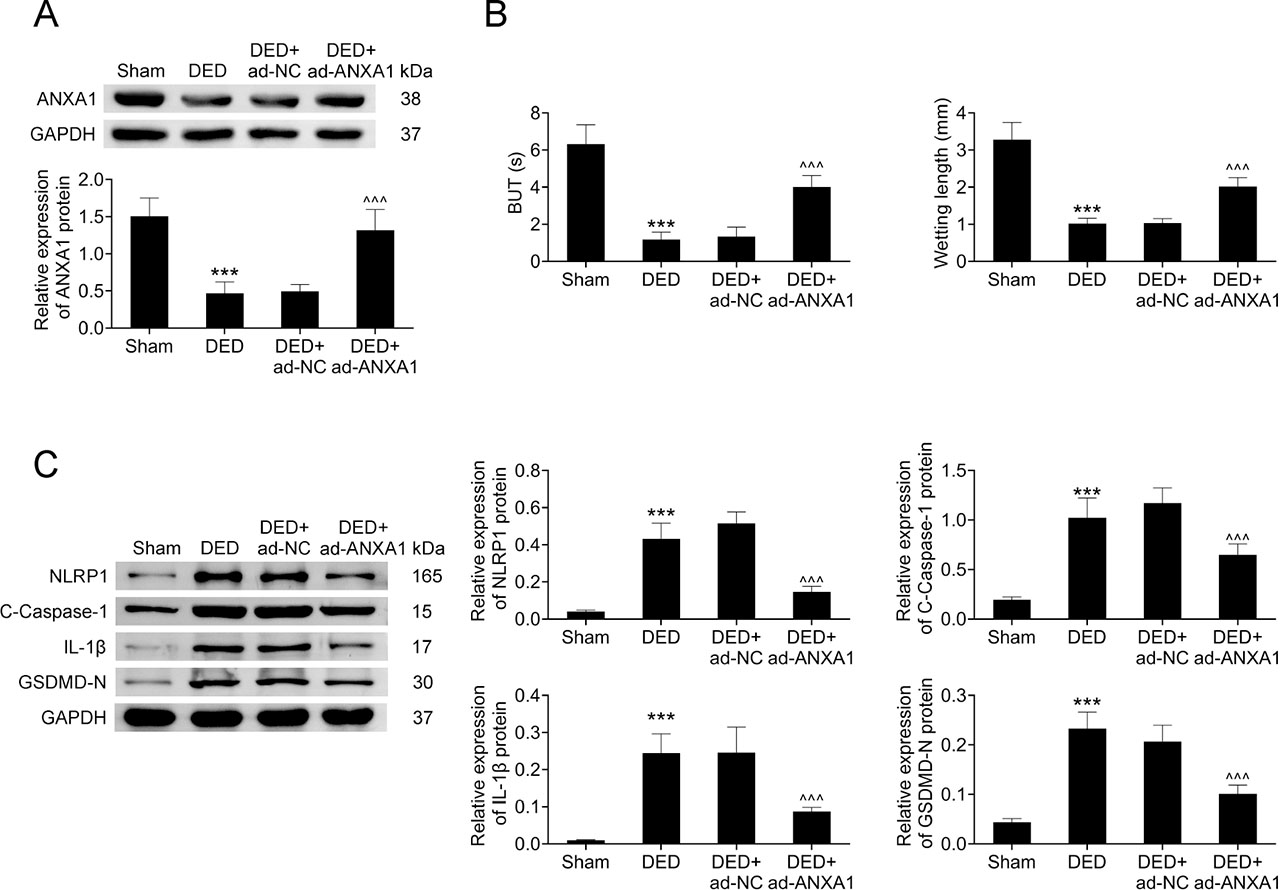
Fig 2.
ANXA1 overexpression in vivo improved tear function and attenuated pyroptosis. (A) Immunoblot analysis showing ANXA1 protein expression in the eyes of Sham and DED mice following infection with Ad-NC or Ad-ANXA1. (B) Tear film stability and secretion were assessed using fluorescein break-up time (TBUT, left) and Schirmer test (wetting length, right) in Sham and DED groups after infection with Ad-NC or Ad-ANXA1. (C) Immunoblot analysis demonstrating the expression levels of NLRP1, C-caspase-1, IL-1β, and GSDMD-1 in ocular tissues of Sham and DED mice following Ad-NC or Ad-ANXA1 infection. ***p < 0.001, DED vs Sham, ^^p < 0.01, ^^^p < 0.001, DED + Ad-ANXA1 vs DED + Ad-NC. Ad-ANXA1, ANXA1-overexpressing adenoviral vectors; ANXA1, annexin A1; C-caspase-1, cleaved caspase-1; DED, dry eye disease; GSDMD, gasdermin D; IL, interleukin; NC, negative control; NLRP, NOD-like receptor family pyrin domain containing; TBUT, tear break-up time.
3.3. ANXA1 overexpression promoted proliferation and inhibited pyroptosis in HCE-T cells
The functional relevance of ANXA1 in vitro was further investigated using BAC-induced HCE-T cells. ANXA1 expression was significantly upregulated following infection with Ad-ANXA1, as confirmed by immunoblot analysis (Figure 3a). CCK-8 assays revealed that BAC treatment suppressed the proliferation of HCE-T cells, as reflected by reduced OD450 values. In contrast, ANXA1 overexpression significantly enhanced the proliferation of BAC-treated cells (Figure 3b).
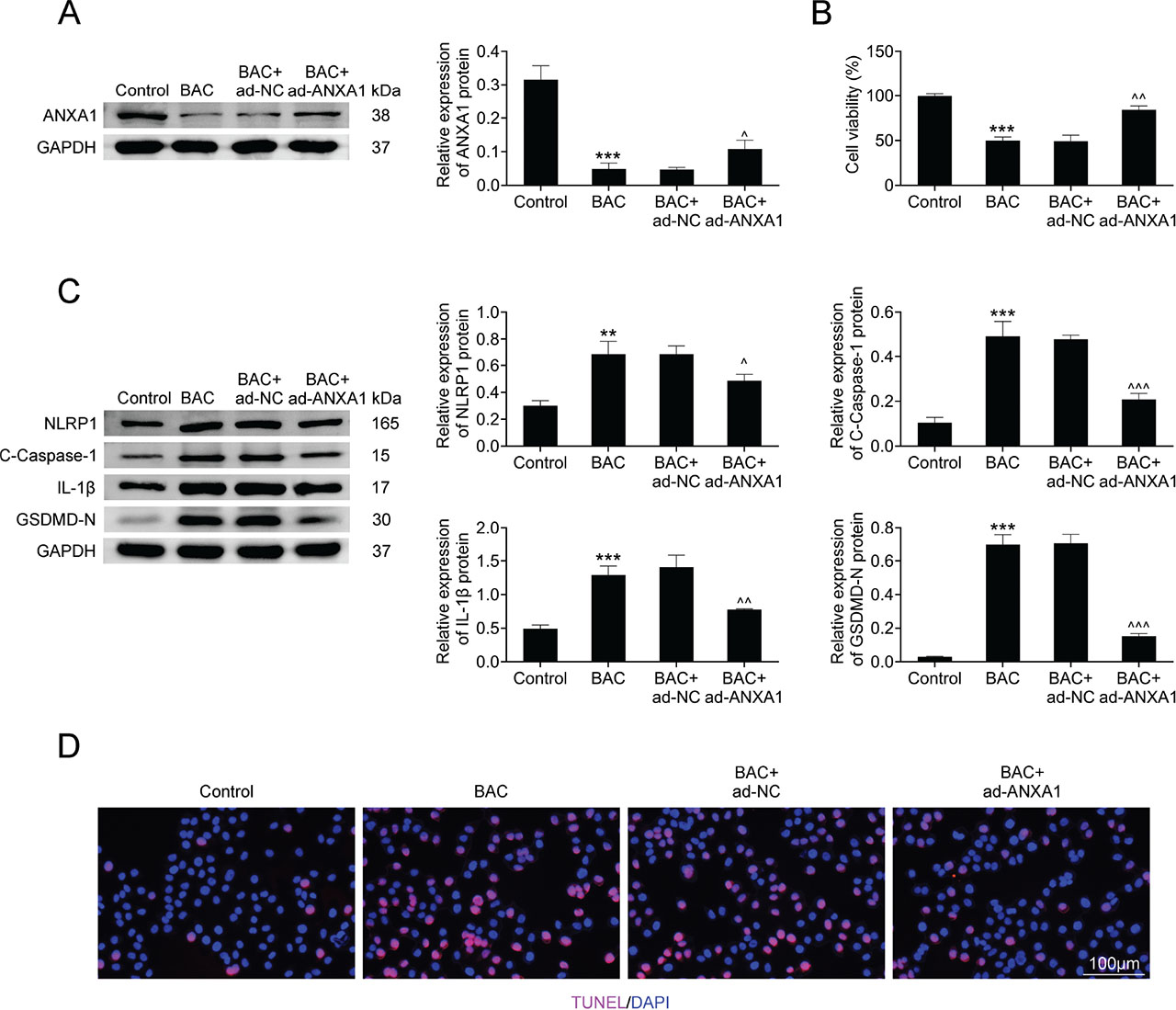
Fig 3.
ANXA1 overexpression promoted proliferation and inhibited pyroptosis in HCE-T cells. (A) Immunoblot analysis showing ANXA1 protein expression in HCE-T cells treated with control or BAC, and after infection with Ad-NC or Ad-ANXA1 for 24 h. (B) CCK-8 assay demonstrating the proliferative capacity of HCE-T cells after control or BAC treatment, and following Ad-NC or Ad-ANXA1 infection for 24 h, with OD450 values measured. (C) Immunoblot analysis of NLRP1, C-caspase-1, IL-1β, and GSDMD-1 expression in HCE-T cells treated with control or BAC and infected with Ad-NC or Ad-ANXA1 for 24 h. (D) TUNEL staining to assess apoptosis levels in HCE-T cells treated as indicated. Red fluorescence indicates TUNEL-positive apoptotic cells. Scale bar, 100 mm. **p < 0.01, ***p < 0.001, BAC vs control, ^p < 0.05, ^^p < 0.01, ^^^p < 0.001, BAC + Ad-ANXA1 vs BAC + Ad-NC. Ad-ANXA1, ANXA1-overexpressing adenoviral vectors; ANXA1, annexin A1; BAC, benzalkonium chloride; C-caspase-1, cleaved caspase-1; GSDMD, gasdermin D; HCE-T, human corneal epithelial; IL, interleukin; NC, negative control; NLRP, NOD-like receptor family pyrin domain containing.
Similarly, BAC stimulation markedly elevated pyroptosis markers, including NLRP1, C-caspase-1, IL-1β, and GSDMD-1, whereas ANXA1 overexpression attenuated their expression (Figure 3c). Furthermore, TUNEL assays demonstrated increased apoptotic cell death following BAC treatment. However, ANXA1 overexpression significantly reduced the percentage of TUNEL-positive cells, indicating its anti-apoptotic effect (Figure 3d). Taken together, these results indicate that ANXA1 overexpression promotes cell proliferation while inhibiting both pyroptosis and apoptosis in BAC-induced HCE-T cells.
3.4. ANXA1 overexpression enhanced the TRIM72/Nrf2/HO-1 axis
To further investigate the underlying mechanism by which ANXA1 modulates DED progression in vivo and in vitro, we assessed the expression of TRIM72, Nrf2, and HO-1. Immunoblot analysis revealed that the expression of these regulators was significantly reduced in the ocular tissues of DED mice, with ANXA1 overexpression significantly restoring their expression levels (Figure 4a), while TRIM72, Nrf2 and HO-1 expressions were also decreased in BAC-treated HCE-T cells. However, ANXA1 overexpression was associated with significant upregulation of these proteins, indicating activation of the TRIM72/Nrf2/HO-1 axis (Figure 4b). Collectively, these findings suggest that ANXA1 positively regulates this signaling pathway in both in vivo and in vitro models of DED.
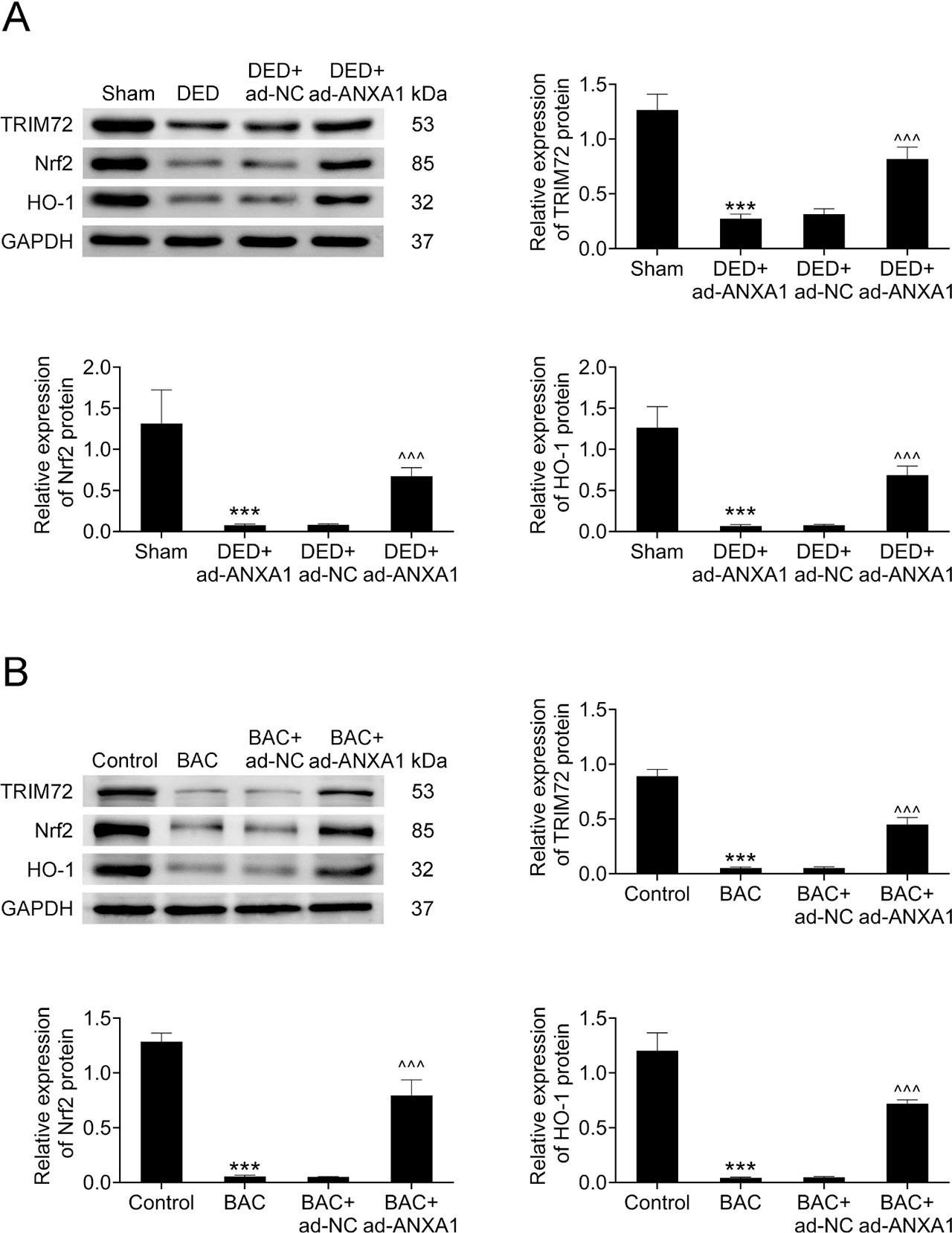
Fig 4.
ANXA1 overexpression enhanced the TRIM72/Nrf2/HO-1 signaling axis. (A) Immunoblot analysis showing the expression of TRIM72, Nrf2, and HO-1 in the eyes of Sham and DED mice infected with Ad-NC or Ad-ANXA1. (B) Immunoblot analysis showing TRIM72, Nrf2, and HO-1 expression in HCE-T cells treated with control or BAC and infected with Ad-NC or Ad-ANXA1 for 24 h. *** p < 0.001, DED or BAC vs Sham or control, ^^^p < 0.001, Ad-ANXA1 vs Ad-NC. Ad-ANXA1, ANXA1-overexpressing adenoviral vectors; ANXA1, annexin A1; BAC, benzalkonium chloride; DED, dry eye disease; HCE-T, human corneal epithelial; HO-1, heme oxygenase-1; NC, negative control; Nrf2, nuclear factor erythroid 2-related factor 2; TRIM72, tripartite motif-containing protein 72.
3.5. TRIM72 inhibition reversed ANXA1-mediated improvements in DED
To further validate the above findings, both DED animal models and BAC-treated HCE-T cell models were employed. ANXA1 was overexpressed via adenovirus-associated AAV9 vectors administered to mice and HCE-T cells. Subsequently, TRIM72 expression was silenced using siRNAs to assess its role in ANXA1-mediated effects. In DED mice, ANXA1 overexpression was found to significantly improve tear film stability and secretion. However, after TRIM72 knockdown, these improvements were abolished. Specifically, siTRIM72 administration markedly decreased TBUT and Schirmer wetting length compared with the Ad-ANXA1 group (p < 0.01), indicating that depletion of TRIM72 reversed the therapeutic effects of ANXA1 overexpression (Figure 5a). Consistent with these findings, CCK-8 assays revealed that ANXA1 overexpression promoted the proliferation of BAC-induced HCE-T cells. In contrast, TRIM72 knockdown significantly suppressed this proliferative effect in the presence of ANXA1 overexpression (Figure 5b).
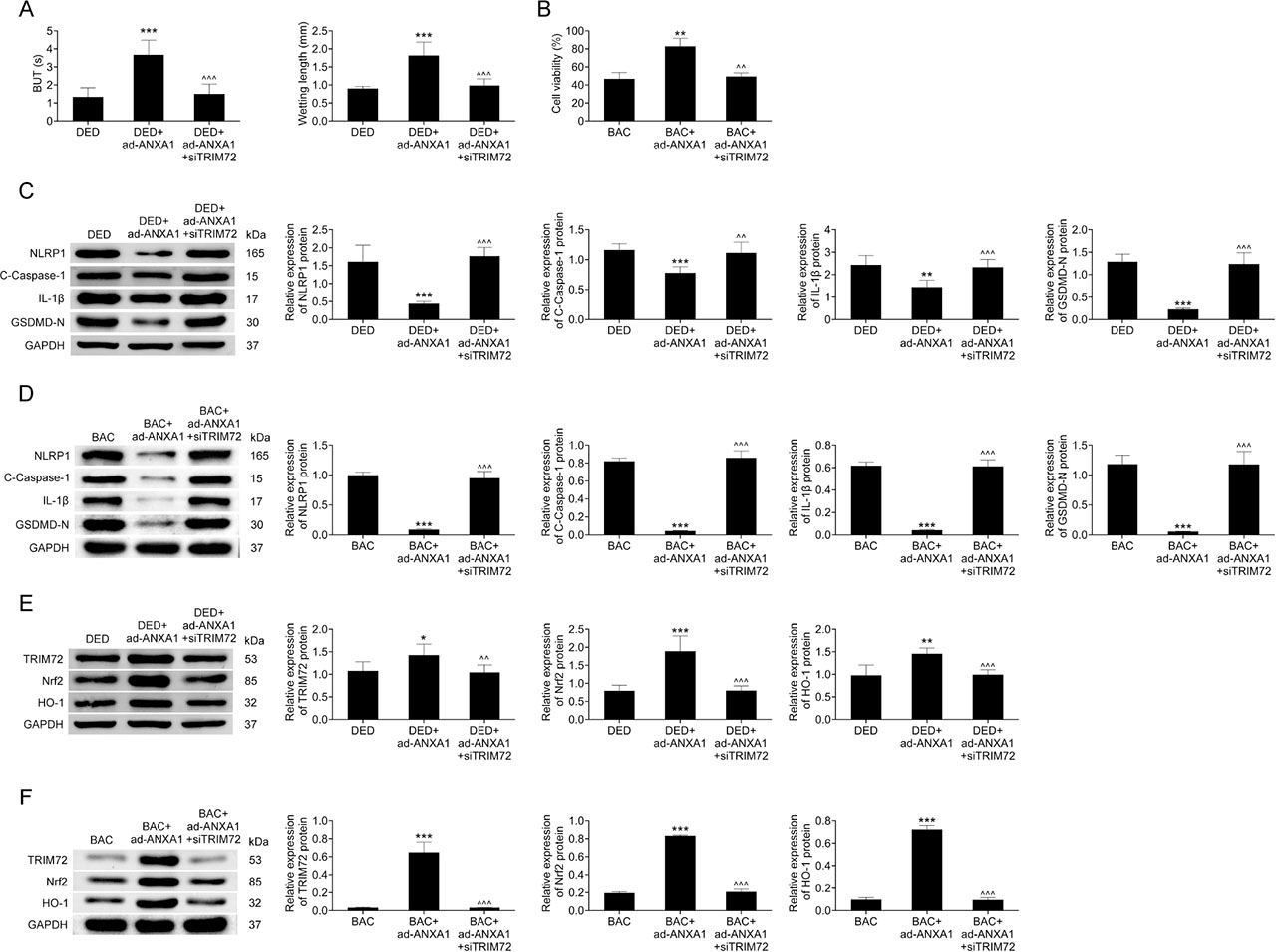
Fig 5.
TRIM72 inhibition reversed ANXA1-mediated improvements in DED parameters. (A) Tear film stability and secretion were evaluated using fluorescein break-up time (TBUT, left) and Schirmer test (wetting length, right) in the indicated groups. (B) CCK-8 assay showing the proliferative capacity of HCE-T cells under the indicated treatment conditions. (C) Immunoblot analysis demonstrating the expression of NLRP1, C-caspase-1, IL-1β, and GSDMD-1 in ocular tissues of mice in the indicated groups. (D) Immunoblot analysis showing NLRP1, C-caspase-1, IL-1β, and GSDMD-1 expression in HCE-T cells under the indicated treatments. (E) Immunoblot analysis of TRIM72, Nrf2, and HO-1 expression in the eyes of mice in the indicated groups. (F) Immunoblot analysis of TRIM72, Nrf2, and HO-1 expression in HCE-T cells under the indicated treatments. **p < 0.01, ***p < 0.001, DED or BAC vs Sham or control, ^^p < 0.01, ^^^p < 0.001, si-TRIM72 + Ad-ANXA1 vs si-NC + Ad-ANXA1. Ad-ANXA1, ANXA1-overexpressing adenoviral vectors; ANXA1, annexin A1; BAC, benzalkonium chloride; C-caspase-1, cleaved caspase-1; DED, dry eye disease; GSDMD, gasdermin D; HCE-T, human corneal epithelial; HO-1, heme oxygenase-1; IL, interleukin; NC, negative control; NLRP, NOD-like receptor family pyrin domain containing; Nrf2, nuclear factor erythroid 2-related factor 2; TBUT, tear break-up time; TRIM72, tripartite motif-containing protein 72.
Moreover, immunoblot analyses demonstrated that ANXA1 overexpression reduced the expression of pyroptosis markers, including NLRP1, C-caspase-1, IL-1β, and GSDMD-1, in both DED mice and BAC-treated HCE-T cells (Figures 5c and 5d). However, TRIM72 depletion reversed this suppression, leading to increased expression of these pyroptosis markers despite ANXA1 overexpression (Figures 5c and 5d).
To further clarify the underlying mechanism, TRIM72 knockdown was independently performed in DED mice via intravitreal injection of siTRIM72 and in BAC-treated HCE-T cells through transfection. In both models, ANXA1 overexpression significantly upregulated TRIM72, Nrf2, and HO-1. However, silencing TRIM72 abolished this effect, resulting in reduced expression of these proteins (Figures 5e and 5f). Collectively, these results demonstrate that inhibition of TRIM72 reverses the protective effects of ANXA1 overexpression, including improvements in tear film parameters, cell proliferation, and suppression of pyroptosis. These findings highlight the essential role of the TRIM72/Nrf2/HO-1 signaling pathway in mediating the beneficial effects of ANXA1 in DED.
4. Discussion
DED is a prevalent ocular condition characterized by a multifactorial etiology and manifested by both subjective symptoms, such as dryness, redness, and irritation, and objective clinical signs, including reduced tear production (Schirmer test <10 mm/5 min), increased tear evaporation (TBUT <10 s), and ocular surface damage; all of which were quantitatively assessed in this study (Li et al. 2022b; Singh et al. 2022). The pathogenesis of DED involves a complex interplay of inflammatory mediators, oxidative stress, and cellular injury, ultimately leading to disruption of the ocular surface and tear film integrity (Li et al. 2022b). Despite the availability of various treatment options, current therapeutic approaches remain limited and are frequently associated with side effects, thereby requiring novel and more effective therapeutic strategies (Singh et al. 2022). In this study, we investigated the role of ANXA1 in DED and assessed its therapeutic potential. Notably, ANXA1 expression was significantly reduced in both in vivo and in vitro DED models, consistent with previous reports highlighting its anti-inflammatory properties (Li et al. 2022b). Overexpression of ANXA1 in vivo markedly improved tear production and function and reduced pyroptosis, indicating its protective effect against DED-related ocular damage.
Moreover, this study identified a novel mechanism whereby ANXA1 mitigates DED progression via the TRIM72/Nrf2/HO-1 signaling axis. Specifically, our data demonstrated that: (1) ANXA1 overexpression restored tear film parameters, with TBUT and Schirmer values increased by 62% and 58%, respectively, compared with DED controls, which was associated with suppression of NLRP1/caspase-1 activation, and (2) these protective effects were dependent on TRIM72, as its knockdown abolished the beneficial actions of ANXA1 (p < 0.01). ANXA1, a glucocorticoid-regulated protein, is well recognized for its anti-inflammatory and pro-resolution functions, as well as for its regulatory roles in cell proliferation, differentiation, and apoptosis (Foo et al. 2019; You et al. 2024). In the context of DED, our findings revealed that ANXA1 expression was significantly diminished, in line with its known anti-inflammatory function. Importantly, restoration of ANXA1 expression through adenoviral overexpression improved tear film stability and secretion while concurrently reducing pyroptosis in ocular tissues. These results are consistent with previous studies demonstrating the ability of ANXA1 to resolve inflammation in other pathological conditions, such as diabetic nephropathy and cerebral ischemia-reperfusion injury.
Studies have also demonstrated the involvement of ANXA1 in various ocular diseases, including uveitis, diabetic retinopathy, and age-related macular degeneration, highlighting its broad role in ocular health (Casarin et al. 2023; You et al. 2024). In these conditions, ANXA1 has been shown to exert anti-inflammatory effects, protect against oxidative stress-induced injury, and facilitate tissue repair. Furthermore, its therapeutic potential has been suggested in other disorders, such as periodontitis and allergic or eosinophilic diseases, where its regulatory functions on inflammation and immune responses are well recognized (Casarin et al. 2023; Irie et al. 2023). Consistent with these observations, this study underscores the therapeutic relevance of ANXA1 in DED. Specifically, ANXA1 overexpression improved tear function and attenuated pyroptosis, which may represent a novel approach for DED management through modulation of the TRIM72/Nrf2/HO-1 signaling pathway.
Pyroptosis has been increasingly recognized as a key contributor to DED pathophysiology by compromising epithelial integrity and amplifying inflammatory responses (Chen et al. 2020, 2022). In this study, ANXA1 overexpression significantly inhibited pyroptosis in BAC-induced HCE-T cells, suggesting that ANXA1 exerts a protective effect against epithelial damage and inflammation in DED. These findings support the concept that ANXA1 not only possesses anti-inflammatory properties but also actively regulates cell death pathways. In addition, ANXA1 has previously been shown to suppress the production of pro-inflammatory cytokines and enhance the clearance of apoptotic cells, thereby facilitating the resolution of inflammation in various diseases, including diabetic nephropathy (Li et al. 2022a). Its role in modulating oxidative stress responses further reinforces its potential as a protective factor against inflammation-induced tissue injury in DED.
While previous studies have provided valuable insights into the role of ANXA1 in osmotic stress responses (Fernandez-Torres et al. 2022), this study elucidates a novel mechanism whereby ANXA1 regulates pyroptosis through the TRIM72/Nrf2/HO-1 pathway in BAC-induced DED models, highlighting a distinct mechanistic focus and expands the current understanding of ANXA1's function in inflammatory cell death regulation within the context of DED.
Despite the promising findings of this study, several limitations should be acknowledged. First, the use of a single DED model and cell line may restrict the generalizability of the results, as different experimental models and cell types could exhibit variable responses to ANXA1 overexpression. Second, although the study demonstrated the involvement of the TRIM72/Nrf2/HO-1 axis in ANXA1-mediated pyroptosis regulation, the precise molecular mechanisms underlying these effects remain incompletely understood and warrant further investigation. Third, the long-term impact of ANXA1 overexpression on ocular health, including the potential for adverse effects, has not been assessed and should be addressed in future studies. Additionally, although the BAC-induced DED models employed here successfully recapitulated key features of DED, including impaired tear production, reduced tear film stability, and ocular surface inflammation, they represent a chemical injury model. This paradigm does not fully reflect the multifactorial nature of clinical DED, which can involve neuropathic, autoimmune, and meibomian gland dysfunction-related components. Therefore, validation of ANXA1's therapeutic potential across diverse DED models, such as scopolamine-induced or autoimmune dacryoadenitis models, will be essential to confirm the broader applicability of these findings.
In conclusion, this study highlights the therapeutic potential of ANXA1 in DED. ANXA1 overexpression improved tear production and function and suppressed pyroptosis, suggesting that modulation of this pathway may represent a novel and promising approach for treating DED.
Acknowledgments
Not applicable.
Notes
[1] Financial disclosure Funding
This research did not receive any specific grant from funding agencies in the public, commercial, or not-for-profit sectors.
[2] Ethics Approval
Ethical approval was obtained from the Ethics Committee of Shanxi Provincial Eye Hospital Affiliated Shanxi Medical University.
[3] Contributed by Author Contributions
Conceptualization, Methodology, and Writing – Original Draft were performed by Li Zhang; Formal analysis, Resources, and Investigation were performed by Peng Chen; Formal analysis, Visualization and Data Curation were performed by Pengfei Han; Project administration, Supervision, and Validation were performed by Huizhe Fu; Validation, Supervision, and Writing – Review and Editing were performed by Bin Sun. All authors read and approved the final manuscript.