
1. Introduction
Pneumonia is an important cause of death and morbidity in children (de Benedictis et al. 2020). The main pneumonia symptoms in children are cough, fever, and breath shortness. Severe patients are prone to high fever (Li et al. 2024a). Pediatric pneumonia is usually caused by a combination of viral and bacterial infections (Sathe et al. 2024; Turer et al. 2024). Therefore, antiviral drugs and antibiotics are the main treatments. However, due to the serious adverse reactions, the abuse of antibiotics and other common problems, the efficacy of conventional western medicine treatment has declined (Turer et al. 2024). Therefore, it is very important to find more active and effective strategies to combat pneumonia. Further elucidation of its molecular mechanism and the screening of key targets against pediatric pneumonia are still urgent.
The MBD1–4 proteins, as methylated protein readers, are actively involved in DNA transcriptional suppression and/or heterochromatin formation, and are responsible for maintaining and interacting with DNA methylation sets (Lei and Zhang 2022). In addition, MBD protein 2 (MBD2) is associated with immune system function (Chen et al. 2022; Lei and Zhang 2022). MBD2 expression is upregulated in renal injury, and inhibition of MBD2 can alleviate apoptosis (Sun et al. 2021). Serum MBD2 levels were upregulated in patients with severe asthma (Chen et al. 2022). Endotracheal administration of MBD2 siRNA decreased MBD2 and prevented ovalbumin-stimulated allergic airway inflammation in mice (Wu et al. 2022a). Increased MBD2 promotes cigarette smoke–stimulated pulmonary hypertension (Cheng et al. 2016). Inhibition of MBD2 can inhibit the expression of p53 and signal transducer and activator of transcription (STAT)-3 in RAW264.7 macrophages stimulated by lipopolysaccharide (LPS) (Wang et al. 2021). However, the effect and mechanism of MBD2 in pediatric pneumonia are still unclear.
STAT-3 is a transcription factor that mediates the expression of pro-inflammatory cytokines, including interleukin (IL)-17, IL-23, and IL-8 (Xiong et al. 2024). Most importantly, IL-6 is an important STAT-3 activator in the inflammatory process, and the IL-6-STAT-3 axis is known as a key target for the treatment of COVID-19 stimulated cytokine storms (Li et al. 2024b). Cytokines and STAT-3 are vital in the pathogenesis of chronic inflammation (Demaria and Poli 2012). In chronic inflammation, elevated cytokines, especially IL-6, could activate the Janus kinases (JAK)/STAT axis (Demaria and Poli 2012).
Herein, we aimed to clarify the role of MBD2 in an in vitro pneumonia model of LPS-stimulated WI-38 cells and to uncover the underlying mechanism.
2. Materials and Methods
2.1. Cell culture, treatment, and transfection
Human WI-38 cells were obtained from ATCC and maintained in Dulbecco’s modified Eagle’s medium (10% fetal bovine serum) at 37°C, 5% CO2. The cells were incubated with LPS (5 μg/mL, 10 μg/mL, and 20 μg/mL; Sigma, USA) for 24 h. Lipofectamine®3000 reagent (Invitrogen, Carlsbad, CA, USA) was co-transfected with si-negative control (NC) and si-MBD2 (Purchased from Riobio, Guangzhou, China), respectively.
2.2. Quantitative polymerase chain reaction (qPCR)
Tissue and cellular RNA were extracted using Trizol reagent (TaKaRa, Kusatsu, Shiga, Japan). Total RNA was then reverse transcribed by the RT reagent Kit (Takara). Quantitative PCR assay was performed using SYBR Ex TaqTM II (Takara).
The used primers were listed as below: MBD2: AAGTGATCCGAAAATCTGGGC, TGCCAACTGAGGCTTGCTTC, GAPDH: AGAAGGCTGGGGCTCATTTG, AGGGGCCATCCA CAGTCTTC.
2.3. Cell counting kit-8 (CCK-8) assay
WI-38 cells were seeded into 96-well plates and incubated. The cells were then maintained and cultured with CCK-8 solution (C0038, Beyotime, Shanghai, China) for 4 h. The OD450 value was subsequently measured.
2.4. Cell apoptosis
For the detection of apoptosis, Annexin V/PI staining was performed according to the manufacturer’s protocol (Sigma-Aldrich, St. Louis, MO, USA).
2.5. Enzyme-linked immunosorbent assay (ELISA)
The levels of tumor necrosis factor (TNF)-α, IL-6, and IL-1β in the culture supernatant were assessed using ELISA kit.
2.6. Immunoblotting
The extracted proteins were separated by sodium dodecyl sulfate–polyacrylamide gel electrophoresis (SDS-PAGE) and transferred to polyvinylidene fluoride (PVDF) membranes. The membranes were incubated with 5% bovine serum albumin for 1 h. Primary antibodies targeting MBD2 (Abcam, Cambridge, United Kingdom, ab188474, 1:500), Bax (Abcam, ab32503; 1:1000), cleaved caspase-3 (Abcam, ab32042; 1:1000), STAT-3 (Abcam, ab68153, 1:500), p-STAT-3 (Abcam, ab267373, 1:500), and glyceraldehyde-3-phosphate-dehydrogenase (GAPDH) (Abcam, ab8245, 1:3000) were used. The secondary antibodies were then added to the membrane for 1 h and the signals were visualized. The signaling was determined through the use of enhanced chemiluminescence kit (Beyotime, Beijing, China).
2.7. Statistics
GraphPad software (San Diego, CA, USA) was used to perform statistical analysis. Data are represented as mean ± SD. The p < 0.05 was considered as significant difference.
3. Results
3.1. MBD2 was highly expressed in LPS-stimulated WI-38 cells
To evaluate the effects of MBD2 on the progression of pneumonia, we first used a pneumonia cell model using WI-38 cells treated with LPS for 24 h. We observed that LPS treatment suppressed the growth of WI-38 cells at concentrations of 5 μg/mL, 10 μg/mL, and 20 μg/mL, as confirmed by CCK-8 assays (Figure 1a). Subsequently, the expression of MBD2 was determined by immunoblot assays, and we noticed its expression was upregulated in LPS-stimulated WI-38 cells compared with control at 48 h time point (Figure 1b). Similarly, qPCR assays showed that MBD2 mRNA levels were upregulated in LPS-stimulated WI-38 cells (Figure 1c). Subsequently, MBD2 siRNAs were transfected into WI-38 cells to decrease its expression after LPS treatment. Immunoblotting confirmed the silencing efficiency in in LPS-treated WI-38 cells (Figure 1d). Interestingly, MBD2 knockdown further increased the growth ratio of WI-38 cells after LPS treatment (Figure 1e). Therefore, MBD2 was highly expressed in LPS-stimulated WI-38 cells and promoted cell growth.
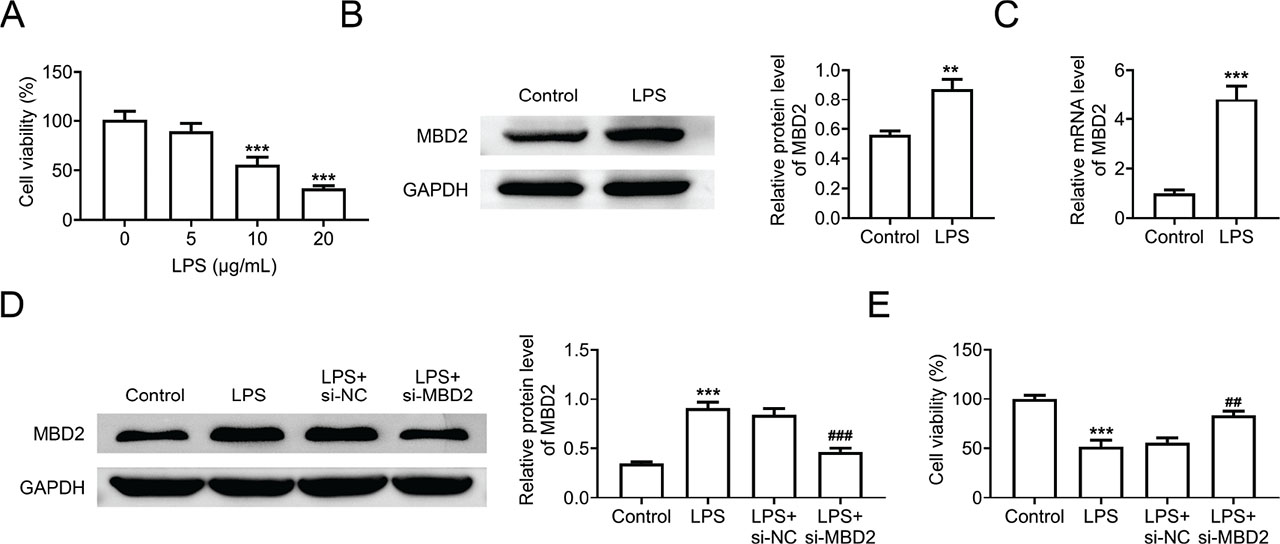
Fig 1.
MBD2 was highly expressed in LPS-stimulated WI-38 cells. (A) CCK-8 assays indicated the growth of WI-38 cells upon the treatment of LPS at the concentration of 5 μg/mL, 10 μg/mL, and 20 μg/mL for 24 h. The OD450 value was measured. (B) Immunoblot assays showed the expression of MBD2 in WI-38 cells upon the treatment of LPS for 24 h. The relative expression of MBD2 was quantified. (C) qPCR assays showed the mRNA levels of MBD2 in WI-38 cells upon the treatment of LPS for 24 h. (D) Immunoblot assays showed the expression of MBD2 in WI-38 cells upon the treatment of LPS and transfection of si-NC or si-MBD2 for 24 h. (E) CCK-8 assays showed the growth of WI-38 cells upon the indicated treatment. The relative expression of MBD2 was quantified. *p < 0.05, **p < 0.01, ***p < 0.001, LPS vs. control, #p < 0.05, ##p < 0.01, ###p < 0.001, si-MBD2 vs. si-NC. CCK-8, cell counting kit-8; GAPDH, glyceraldehyde-3-phosphate-dehydrogenase; LPS, lipopolysaccharide; MBD2, MBD protein 2; NC, negative control; qPCR, quantitative polymerase chain reaction.
3.2. Knockdown of MBD2 alleviates production of cellular inflammatory cytokines in LPS-stimulated WI-38 cells
Then, we determined the effects of MBD2 on the inflammation of LPS-stimulated WI-38 cells. qPCR assays showed that LPS increased the mRNA levels of inflammatory cytokines, including IL-1β, IL-6, and TNF-α, whereas the knockdown of MBD2 suppressed the mRNA levels of these factors, in LPS-stimulated MBD2 cells (Figure 2a). Consistently, ELISA assays also revealed that MBD2 knockdown suppressed the secretion of IL-1β, IL-6, and TNF-α (Figure 2b). Therefore, knockdown of MBD2 inhibits the production of cellular inflammatory cytokines in LPS-stimulated WI-38 cells.
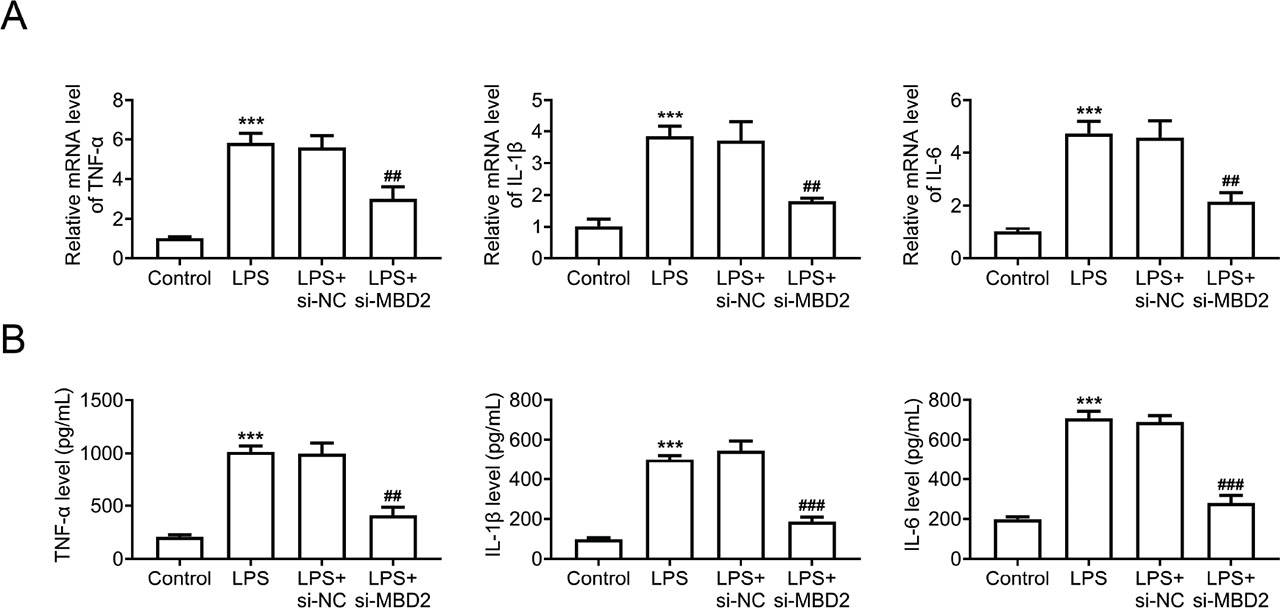
Fig 2.
Knockdown of MBD2 alleviates production of cellular inflammatory cytokines in LPS-stimulated WI-38 cells. (A) qPCR assays showed the mRNA levels of TNF-α, IL-1β, and IL-6 in WI-38 cells upon the treatment of LPS and transfection of si-NC or si-MBD2 for 24 h. (B) ELISA showed the secretion levels of TNF-α, IL-1β, and IL-6 in WI-38 cells upon the treatment of LPS and transfection of si-NC or si-MBD2 for 24 h. *p < 0.05, **p < 0.01, ***p < 0.001, LPS vs. control, #p < 0.05, ##p < 0.01, ###p < 0.001, si-MBD2 vs. si-NC. ELISA, enzyme-linked immunosorbent assay; IL, interleukin; LPS, lipopolysaccharide; MBD2, MBD protein 2; NC, negative control, qPCR, quantitative polymerase chain reaction; TNF-α, tumor necrosis factor-α.
3.3. Knockdown of MBD2 alleviates apoptosis in LPS-stimulated WI-38 cells
We then examined the effects of MBD2 on apoptosis of WI-38 cells following LPS incubation. Flow cytometry assays indicated that LPS stimulated the apoptosis, whereas MBD2 knockdown by siRNAs restrained apoptosis of LPS-stimulated WI-38 cells, with the decreased percentage of apoptosis cells at quandrant 2 and 3 (Figure 3a). Furthermore, we confirmed that the expression of Bax and cleaved caspase-3 was increased in LPS-stimulated WI-38 cells after MBD2 knockdown, while MBD2 ablation suppressed the expression of these proteins, indicating reduced apoptosis (Figure 3b). Therefore, knockdown of MBD2 alleviates apoptosis in LPS-stimulated WI-38 cells.
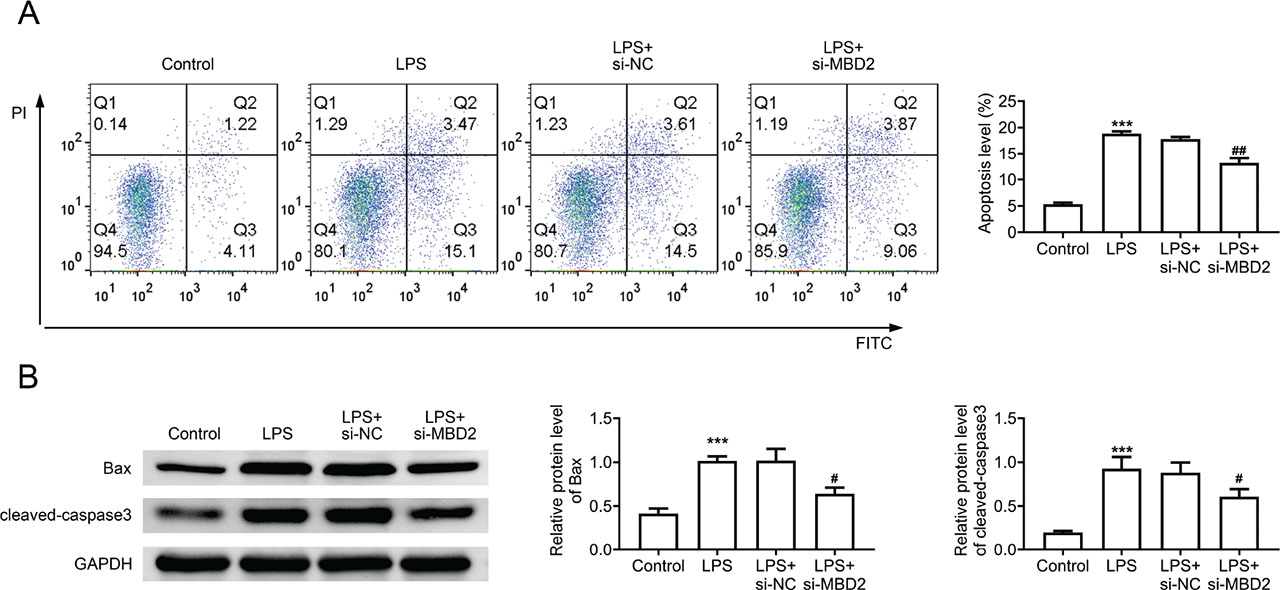
Fig 3.
Knockdown of MBD2 alleviates apoptosis in LPS-stimulated WI-38 cells. (A) Flow cytometry assays showed the apoptosis of WI-38 cells upon the treatment of LPS and transfection of si-NC or si-MBD2 for 24 h. (B) Immunoblot assays showed the expression of Bax and cleaved caspase-3 in WI-38 cells upon the treatment of LPS and transfection of si-NC or si-MBD2 for 24 h. *p < 0.05, **p < 0.01, ***p < 0.001, LPS vs. control, #p < 0.05, ##p < 0.01, ###p < 0.001, si-MBD2 vs. si-NC. GAPDH, glyceraldehyde-3-phosphate-dehydrogenase; LPS, lipopolysaccharide; MBD2, MBD protein 2; NC, negative control.
3.4. Knockdown of MBD2 regulates the STAT-3 pathway in LPS-stimulated WI-38 cells
We then investigated the mechanism by which MBD2 knockdown suppressing LPS-stimulated cell apoptosis and inflammation. A previous study indicated the key role of STAT-3 pathway in these processes. Therefore, we determined the effects of MBD2 knockdown on LPS-stimulated WI-38 cells. Immunoblotting showed that the phosphorylation levels of STAT-3 were upregulated in WI-38 cells (Figure 4). Interestingly, the phosphorylation levels of STAT-3 were decreased in LPS-stimulated WI-38 cells, suggesting the suppression of STAT-3 pathway (Figure 4). Therefore, knockdown of MBD2 suppresses the STAT-3 pathway in LPS-stimulated WI-38 cells.
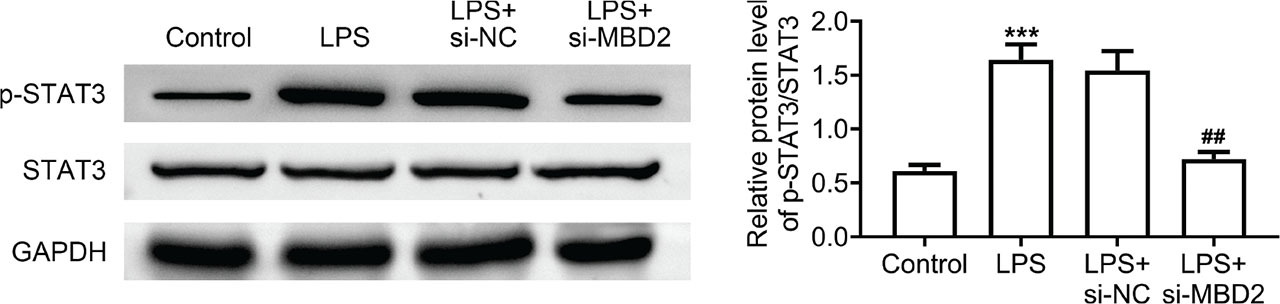
Fig 4.
Knockdown of MBD2 regulates the STAT-3 pathway in LPS-stimulated WI-38 cells. Immunoblot assays showed the expression and phosphorylation levels of STAT-3 in WI-38 cells upon the treatment of LPS and transfection of si-NC or si-MBD2 for 24 h. *p < 0.05, **p < 0.01, ***p < 0.001, LPS vs. control, #p < 0.05, ##p < 0.01, ###p < 0.001, si-MBD2 vs. si-NC. GAPDH, glyceraldehyde-3-phosphate-dehydrogenase; LPS, lipopolyssacharide; MBD2, MBD protein 2; NC, negative control, STAT-3, signal transducer and activator of transcription-3.
4. Discussion
Pneumonia remains a leading cause of morbidity and mortality in children, predominantly driven by viral and bacterial infections (Jain et al. 2015). The progression of pneumonia is often accompanied by severe inflammatory responses and cell apoptosis, which exacerbate lung tissue damage and impair respiratory function (Sathe et al. 2024). Understanding the molecular mechanisms underlying these processes is crucial for developing targeted therapies to mitigate the disease’s impact.
This study sheds light on the critical role of MBD2 in regulating inflammation and apoptosis in an in vitro model of LPS-stimulated pneumonia using WI-38 cells. We observed that MBD2 is significantly upregulated in LPS-treated WI-38 cells, correlating with increased levels of pro-inflammatory cytokines and apoptotic markers. These findings highlight the dual role of MBD2 in mediating both inflammatory responses and apoptosis during pneumonia progression.
MBD2 is a member of the MBD protein family, known for its involvement in DNA methylation and transcriptional repression (Wang et al. 2021; Chen et al. 2022). MBD2 plays a vital role in immune responses (Chen et al. 2022; Lei and Zhang 2022). For instance, MBD2 expression is elevated in conditions such as renal injury and severe asthma, where it contributes to inflammation and apoptosis (Sun et al. 2021). This study builds on this knowledge by demonstrating that MBD2 knockdown can attenuate LPS-stimulated inflammation and apoptosis in WI-38 cells.
Mechanistically, we found that MBD2 knockdown leads to suppression of the STAT-3 pathway. STAT-3 is a key transcription factor activated by cytokines such as IL-6 and plays a central role in promoting inflammatory responses and cell survival (Wang et al. 2018). In this study, LPS treatment increased STAT-3 phosphorylation, which was significantly reduced upon MBD2 knockdown. This suggests that MBD2 may facilitate LPS-stimulated inflammation and apoptosis through the activation of the STAT-3 pathway.
MBD2 acts as a reader of methylated CpG dinucleotides and is involved in transcriptional repression and chromatin remodeling (Cheng et al. 2016; Wu et al. 2022a). It has been implicated in various biological processes (Cheng et al. 2016; Wu et al. 2022a). MBD2’s role in inflammation and apoptosis, as demonstrated in thisstudy, is consistent with its function as a transcriptional regulator (Sun et al. 2021). By binding to methylated DNA, MBD2 can recruit other proteins to form repressive chromatin structures, thereby modulating gene expression. This regulation can influence the expression of cytokines and apoptotic factors, which are critical in the context of inflammatory diseases like pneumonia. The suppression of the STAT-3 pathway by MBD2 knockdown suggests that MBD2 may directly or indirectly interact with components of this signaling cascade, further highlighting its importance in inflammatory regulation. These insights into MBD2’s function could pave the way for new therapeutic strategies targeting this protein to control inflammation as well as apoptosis in pneumonia and potentially other inflammatory conditions.
STAT-3 is a vital transcription factor involved in various cellular processes, including inflammation, immunity, and cell survival (Tang et al. 2021; Wang et al. 2023; Zhao and Jing 2023). Upon activation by cytokines such as IL-6, STAT-3 undergoes phosphorylation, dimerizes, and translocates to the nucleus to drive the expression of target genes (Wang et al. 2023). These target genes include various pro-inflammatory cytokines and factors involved in cell survival and proliferation (Wu et al. 2022b; Hojo et al. 2023). In the context of pneumonia, the IL-6/STAT-3 signaling axis is particularly relevant as it can exacerbate inflammatory responses and tissue damage (Wu et al. 2022b; Hojo et al. 2023). Our findings that MBD2 knockdown reduces STAT-3 phosphorylation suggest that MBD2 positively regulates STAT-3 activity in LPS-stimulated pneumonia. This regulation may occur through direct interaction with the STAT-3 promoter region or indirectly by modulating upstream signaling molecules. The inhibition of STAT-3 activation following MBD2 knockdown underscores the potential of targeting the MBD2/STAT-3 axis as a therapeutic approach in treating pneumonia and other inflammatory diseases.
Despite the promising findings, our study has several limitations. First, our model limits the generalizability of the results to in vivo systems. While WI-38 cells provide a useful model for studying pneumonia at the cellular level, the complex interactions within an entire organism may yield different outcomes. Second, the study focuses on a single cell line, and the effects of MBD2 knockdown may differ in different cell types or primary cells derived from patients with pneumonia. Lastly, the precise molecular mechanisms by which MBD2 regulates the STAT-3 pathway and other potential signaling pathways remain to be fully elucidated.
Future research should aim to validate these findings in animal models of pneumonia to better understand the in vivo relevance of MBD2 in regulating inflammation and apoptosis. Additionally, exploring the role of MBD2 in other cell types involved in pneumonia, such as immune cells and epithelial cells from different parts of the respiratory tract, could provide a more comprehensive understanding of its functions.
Moreover, investigating the potential therapeutic applications of targeting MBD2 could pave the way for new treatments for pneumonia. Given the involvement of the STAT-3 pathway in various inflammatory diseases, MBD2 inhibitors might have broader applications beyond pneumonia, potentially benefiting conditions characterized by excessive inflammation and apoptosis.
In conclusion, our study identifies MBD2 as a crucial regulator of inflammation and apoptosis in LPS-stimulated pneumonia, mediated through the STAT-3 pathway. These findings highlight the potential of MBD2 as a therapeutic target for treating this debilitating disease.
Abbreviations
- COVID-19:
Coronavirus Disease 2019;
- CpG:
Cytosine-phosphate-Guanine;
- DNA:
Deoxyribonucleic Acid;
- FITC:
Fluorescein Isothiocyanate;
- IL-1β:
Interleukin-1 beta;
- MBD1-4:
Methyl-CpG-binding domain protein 1 to 4;
- mRNA:
Messenger Ribonucleic Acid;
- p-STAT3:
phosphorylated Signal Transducer and Activator of Transcription 3;
- SD:
Standard Deviation;
- si-MBD2:
small interfering RNA targeting MBD2;
- si-NC:
small interfering RNA Negative Control;
- siRNA:
small interfering RNA.
Acknowledgments
Not applicable.
Notes
[2] Ethics Approval
This article does not contain any studies with human participants or animals performed by any of the authors.
[3] Contributed by Author Contributions
Yao Chen, Liqun Lu—designed the study and carried them out; Yao Chen, Liqun Lu—supervised the data collection, Yao Chen, Liqun Lu—analyzed the data, Yao Chen, Liqun Lu—interpreted the data, Yao Chen, Liqun Lu—prepared the manuscript for publication and reviewed the draft of the manuscript. All authors have read and approved the manuscript.