Have a personal or library account? Click to login
IL-17B Inhibits Hepatocellular Carcinoma Cell Proliferation Cover

Figures & Tables

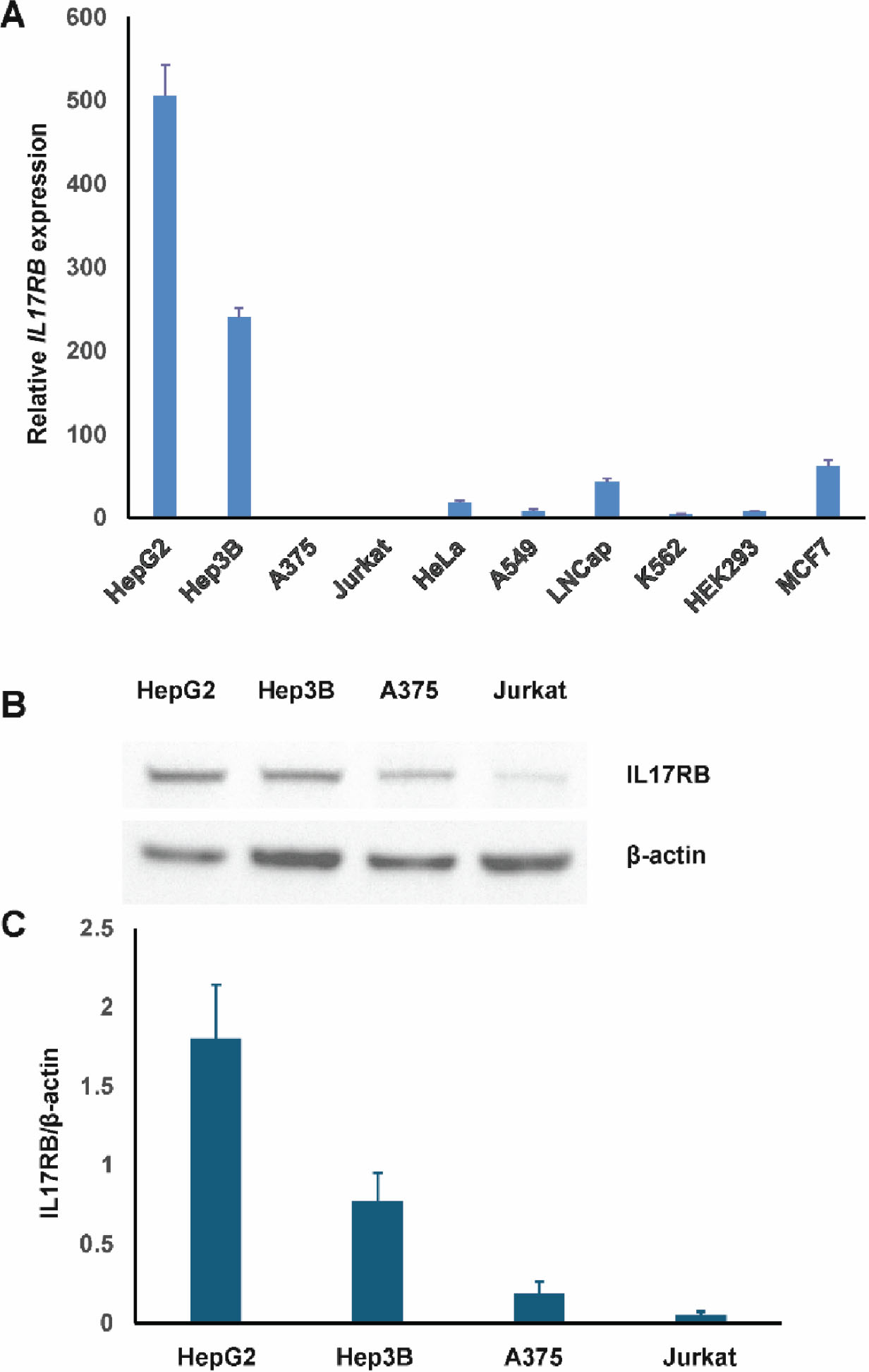
Fig 1.

Expression of human IL-17RB in cells of different origins. (A) mRNA levels of IL-17RB in selected cell lines. The results are presented as the means ± SDs, n = 4. (B) Protein levels of IL-17RB in HepG2, Hep3B, A375, and Jurkat cell lines, with β-actin used as a loading control. (C) Densitometric analysis of the Western blot bands was performed using ImageJ (https://imagej.net/ij/). The results are shown as the means ± SDs, n = 3. SDs, standard deviations.
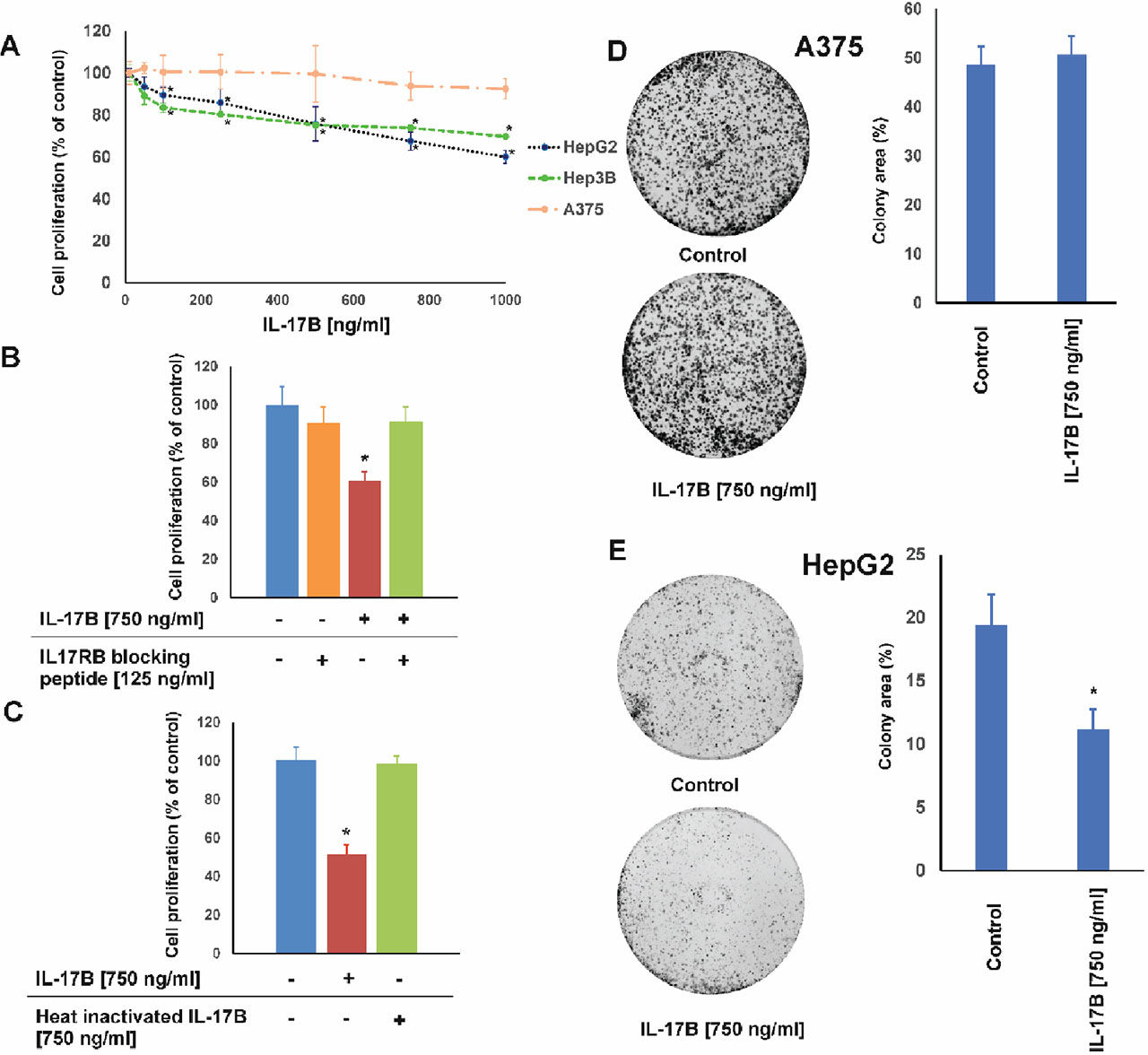

Fig 2.

IL-17B inhibits the proliferation of HCC cell lines with high IL-17RB expression. (A) BrdU assay results show the effects of increasing concentrations of IL-17B on the proliferation of HepG2, Hep3B, and A375 cells. The results are presented as the means ± SDs, n = 4, with * indicating statistical significance at p < 0.05. (B) The addition of an IL-17RB-blocking peptide inhibited the effects of IL-17B on HepG2 cell proliferation, as determined by the BrdU assay. The data are presented as the means ± SDs (n = 6), with * indicating statistical significance at p < 0.05. (C) Effects of native and heat-inactivated IL-17B on HepG2 proliferation. The results are presented as the means ± SDs, n = 4, with * indicating statistical significance at p < 0.05. (D) Colony formation assay results show the effect of IL-17B on A375 cells, with colony area values shown in the right panel. The results are presented as the means ± SDs, n = 3. (E) Colony formation assay results show the effect of IL-17B on HepG2 cells, with colony area values displayed in the right panel. The results are presented as the means ± SDs, n = 3, with * indicating statistical significance at p < 0.05. HCC, hepatocellular carcinoma; SDs, standard deviations.
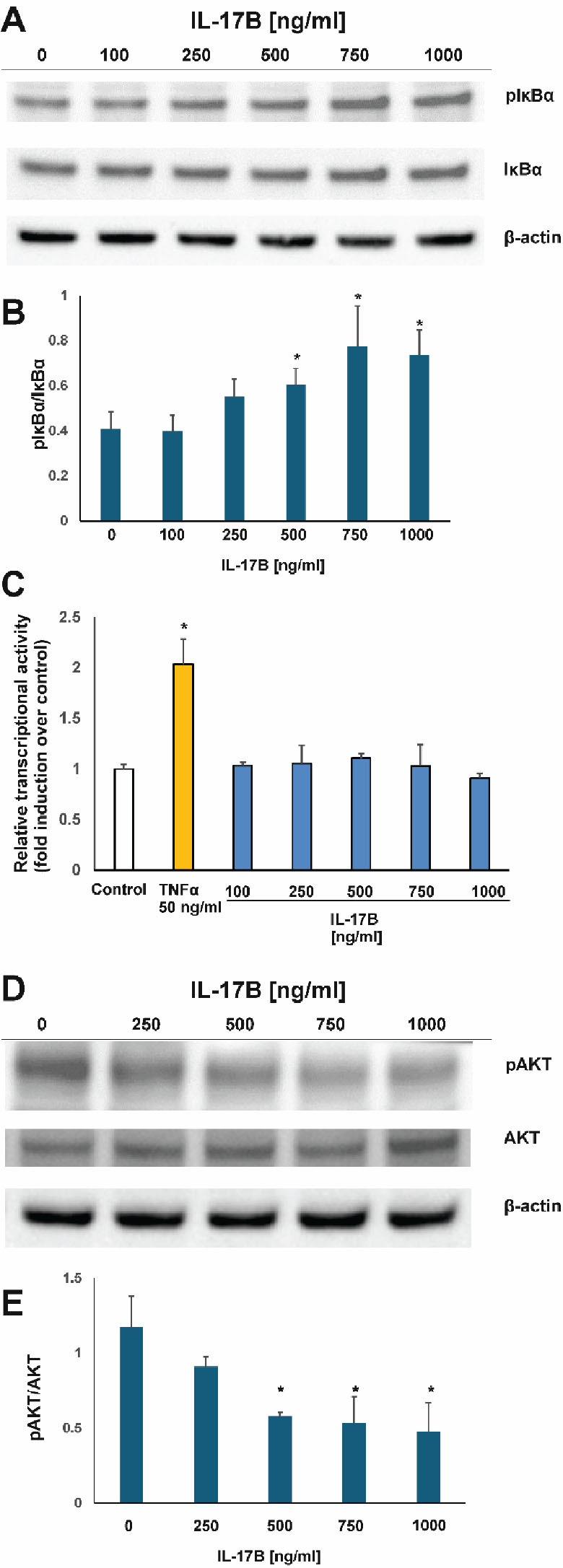

Fig 3.

IL-17B induces the phosphorylation of IκBα without activating NF-κB and concurrently inhibits AKT phosphorylation. (A) Effects of increasing concentrations of IL-17B on IκBα phosphorylation in HepG2 cells treated with the cytokine for 24 h, as determined by Western blotting. Total IκBα and β-actin levels are also shown. (B) Densitometric analysis of the pIκBα/IκBα ratio from three independent experiments was performed using ImageJ. *Indicates statistical significance at p < 0.05. (C) IL-17B does not trigger NF-κB-dependent transcription in HepG2 cells, as evidenced by transient transfection with an NF-κB reporter plasmid. After seeding, the cells were transfected with the reporter plasmid and pCMV-SEAP (transfection control). Following a 24-h treatment with IL-17B and TNF-α (positive control), the cells were harvested and lysed, and luciferase activity was measured. The results were normalized to Secreted Alkaline Phosphatase (SEAP) activity and are presented as the means ± SDs (n = 6). *Indicates statistical significance at p < 0.05. (D) Effects of increasing concentrations of IL-17B on AKT phosphorylation in HepG2 cells treated with the cytokine for 24 h, as determined by Western blotting. Total AKT and β-actin levels are also shown. (E) Densitometric analysis of the pAKT/AKT ratio from three independent experiments was performed using ImageJ. *Indicates statistical significance at p < 0.05. SDs, standard deviations; TNF-α, tumor necrosis factor-α.
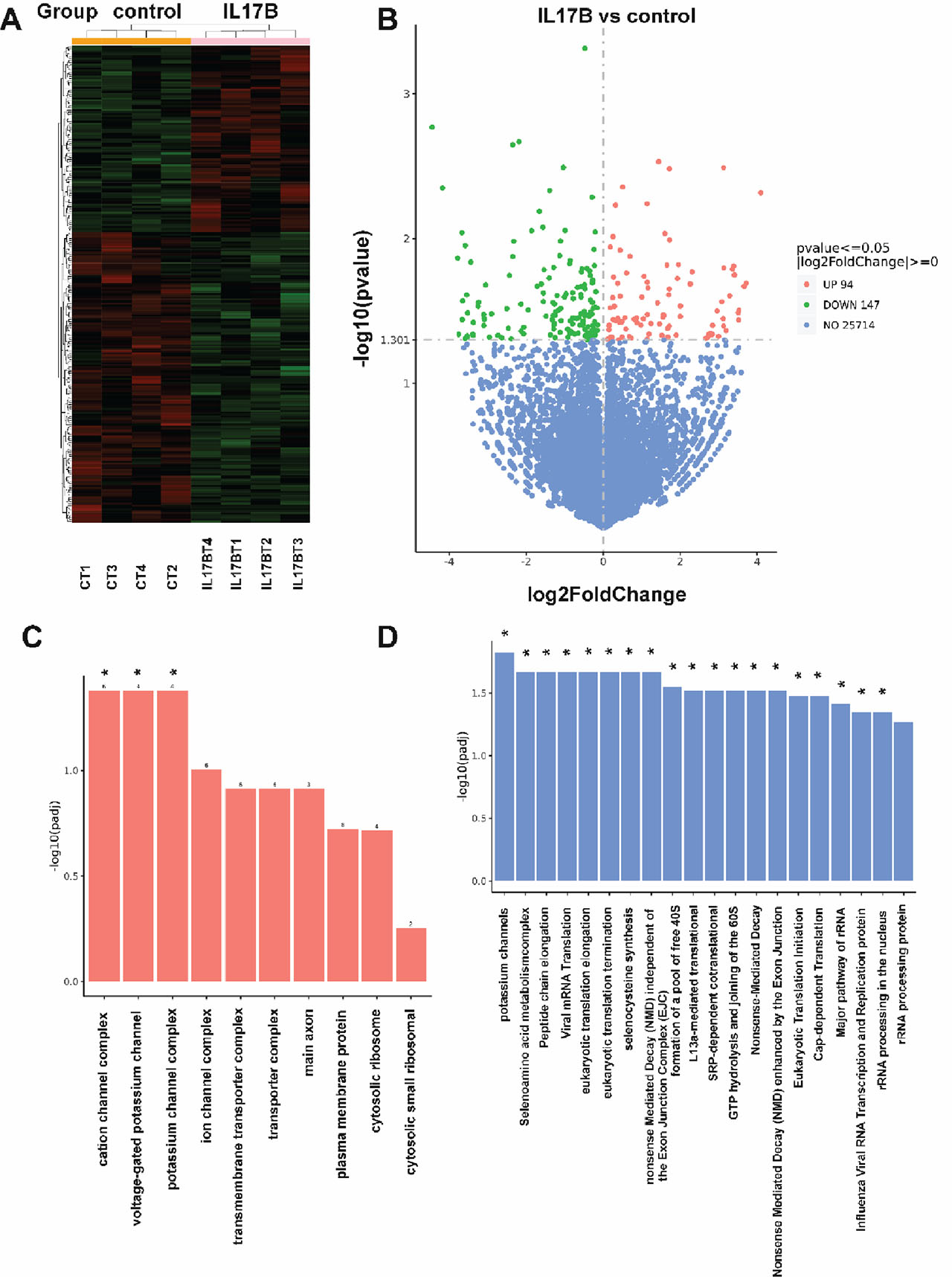

Fig 4.

RNA-seq analysis revealed that IL-17B (750 ng/mL) altered the transcriptomic profile of HepG2 cells. (A) Hierarchical clustering heatmap displays differentially expressed genes across all the samples. The FPKM cluster analysis results are shown, where each column represents an individual sample (IL-17B-treated vs. control), and each row corresponds to a specific gene. Red indicates high gene expression levels, whereas green signifies low gene expression levels. (B) Volcano plot illustrates differentially expressed genes in HepG2 cells treated with 750 ng/mL of IL-17B for 24 h. Genes with a log2(fold change) of 1 and a p-adjusted value of 0.05 were considered significantly different. The red dots represent genes whose expression was significantly upregulated, the blue dots indicate genes whose expression was significantly downregulated, and the gray dots represent genes whose expression did not significantly change. (C) Results of GO (cellular component) enrichment analysis of significantly differentially expressed genes after IL-17B treatment of HepG2 cells. (D) Reactome pathways associated with the differentially expressed genes after IL-17B treatment of HepG2 cells. FPKM, fragments per kilobase of transcript per million mapped reads; GO, gene ontology; RNA-seq, RNA sequencing.
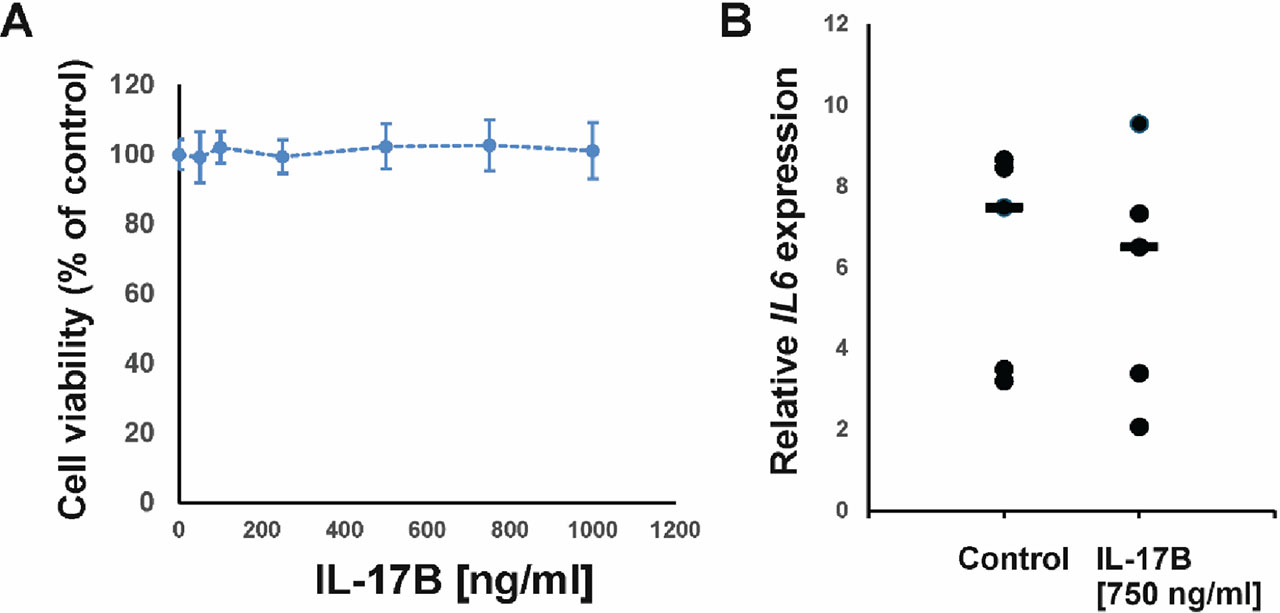

Fig 5.

Effects of IL-17B on human primary monocytes. (A) IL-17B does not affect the viability of human primary monocytes, as determined by the CellTiter-Glo® Luminescent Cell Viability Assay (Promega). Human primary monocytes were treated with increasing concentrations of IL-17B for 48 h. After incubation, the cells were lysed, and luminescence was measured. Data are presented as mean ± SD (n = 6). (B) Effect of IL-17B (750 ng/mL) on IL6 expression in human primary monocytes. Cells were treated with IL-17B (750 ng/mL) for 48 h, after which they were collected and subjected to RNA isolation. Data are shown as dot plots with bars indicating the median values from five individual donors. SD, standard deviation.
Language: English
Published on: Jun 17, 2025
Published by: Hirszfeld Institute of Immunology and Experimental Therapy
In partnership with: Paradigm Publishing Services
Publication frequency: 1 issue per year

© 2025 Joanna Pastwińska, Iwona Karwaciak, Kaja Karaś, Daria Grabarczyk, Anna Sałkowska, Marcin Ratajewski, published by Hirszfeld Institute of Immunology and Experimental Therapy
This work is licensed under the Creative Commons Attribution-NonCommercial-NoDerivatives 4.0 License.