
Table 1
Description and composition of disinfectant formulations used in the study
| Abbreviation | Active compound and its concentration | Recommended use |
|---|---|---|
| F1Alc | Ethanol 70 % | General disinfection |
| F2Alc | Ethanol 57 % and isopropyl alcohol 6 % | Cleaning and disinfection of surfaces and non-invasive medical instruments |
| F3Alc | Isopropyl alcohol 70 % | Cleaning and disinfection of surfaces and non-invasive medical instruments |
| F4Oxy | Hydrogen peroxide 15 g/L | Cleaning and disinfection of invasive and non-invasive medical devices |
| F5Oxy | Hydrogen peroxide 15 g/L and phenoxyethanol 5 g/L | Surface cleaning and disinfection |
| F6QAC | Isopropyl alcohol 17 %; didecyldimethylammonium chloride 2.3 g/L | Surface disinfection |
| F7QAC | Alkyldimethylbenzilammonium chloride 2.6 g/L; didecylmethyl ammonium chloride 2.6 g/L; alkylethylbenzilammonium chloride 2.6 g/L | Cleaning and disinfection of surfaces and non-invasive medical instruments, including the ones sensitive to alcohol |
| F8CHX | Chlorhexidin gluconate 8 g/L in 80 % ethanol | Hand disinfection and hand preparation for surgery |
Table 2
Description and antibiotic susceptibility profile of clinical bacterial isolates used in the study
| Species | Origin | Resistant to: | Susceptible to: |
|---|---|---|---|
| Escherichia coli DSM 498 | Laboratory microbank | - | AMC, TZP, CAZ, CAZ-AVI, CPM, MEM, IMI, AK, CN, CIP, FOF, COL |
| Staphylococcus aureus ATCC 25923 | Laboratory microbank | - | AMC, AZI, CTX, E, ETP, IMI, P |
| Candida albicans ATCC 10231 | Laboratory microbank | - | AmB, AFG, MFG, CAS, FLZ |
| Klebsiella pneumoniae (carbapenem-resistant) | Urine culture | AMP, AMC, CXM, SXT, NOR, CIP, LEV, CRO, CTX, TZP, CPM, ETP, MEM, IMI | COL, CAZ-AVI |
| Klebsiella pneumoniae (extended spectrum beta-lactamase-resistant) | Faeces sample | AMP, AMC, CXM, SXT, CN, CAZ, CRO, CTX, TZP, CPM | AK, MEM |
| Acinetobacter baumannii (carbapenem-resistant) | Tracheal aspirate | CN, AK, TZP, MEM, IMI | AMS, COL |
| Pseudomonas aeruginosa (carbapenem-resistant) | Haemoculture | MEM, IMI | AK |
| Staphylococcus aureus (methicillin-resistant) | Nasopharyngeal swab | CLOX, E, AZI, CLA, CLI, CIP, MOXI, LEV | SXT, CN, RD, VAN, TEC, LZD, MUP |
| Enterococcus faecium (vancomycin-resistant) | Perianal swab | AMP, VAN, TEC | LZD |
[i] Antibiotic abbreviations: AK – amikacin; AMC – amoxicillin + clavulanic acid; AMP – ampicillin; AMS – ampicillin + sulbactam; AZI – azithromycin; CAZ – ceftazidime; CAZ-AVI – ceftazidime-avibactam; CIP – ciprofloxacin; CLA – clarithromycin; CLI – clindamycin; CLOX – cloxacillin; CN – gentamicin; COL – colistin; CPM – cefepime; CRO – ceftriaxone; CTX – cefotaxime; CXM – cefuroxime; E – erythromycin; ETP – ertapenem; FOF – fosfomycin; IMI – imipenem; LEV – levofloxacin; LZD – linezolid; MEM – meropenem; MUP – mupirocin; MOXI – moxifloxacin; NOR – norfloxacin; P – benzylpenicillin; RD – rifampicin; SXT – trimethoprim-sulfamethoxazole; TEC – teicoplanin; TZP – piperacillin-tazobactam; VAN – vancomycin. Antifungal medication abbreviations: AmB – amphotericin B; AFG – anidulafungin; MFG – micafungin; CAS – caspofungin; VOR – voriconazole; FLZ – fluconazole
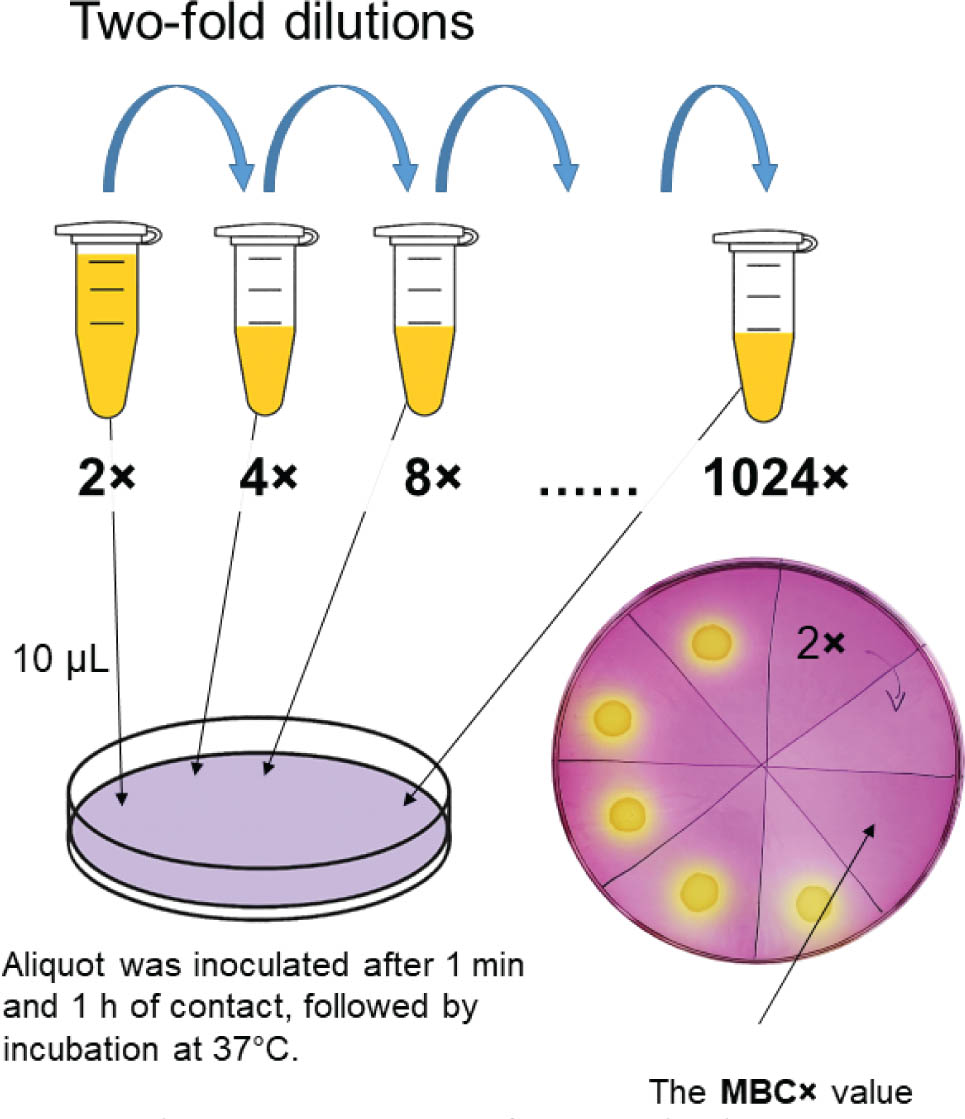
Figure 1
Schematic representation of MBC× value determination
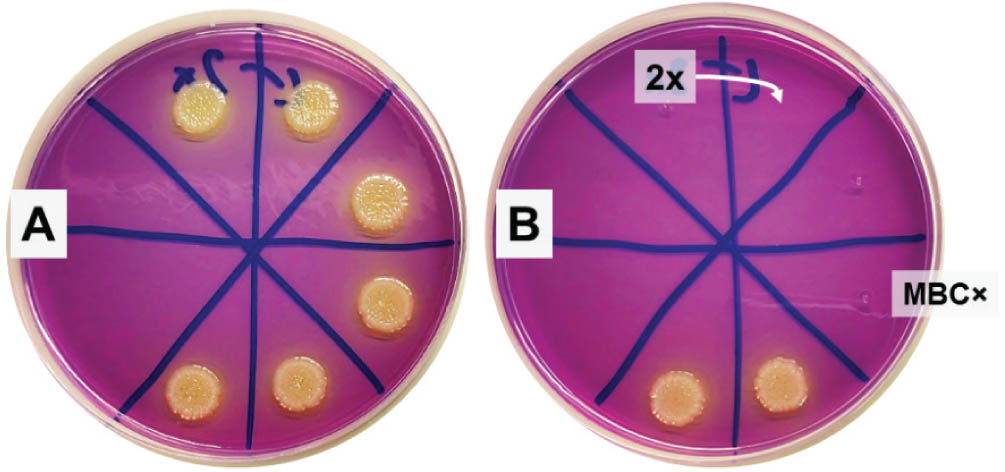
Figure 2
Dey-Engley agar neutralisation experiment. On plate A, 5 µL of the disinfectant at the corresponding concentration was first inoculated. After 1 min, 5 µL of the bacterial suspension was added to the same spot. On plate B, a standard MBC assay was performed, showing the MBC× value at a 16× dilution after 1 min of contact. If the agar effectively neutralised the disinfectant, bacteria from the suspension should grow without inhibition, as shown in the figure above. The images presented correspond to K. pneumoniae/F5Oxy testing
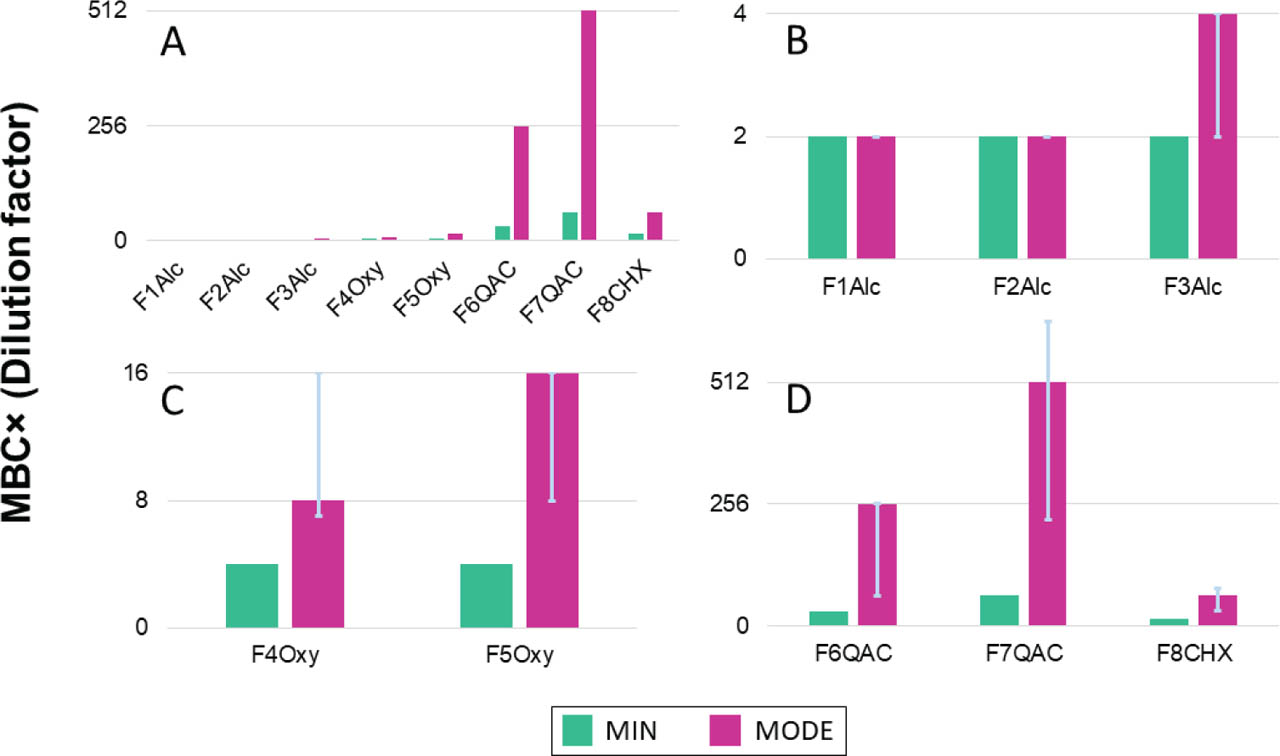
Figure 3
Mode and minimal MBC× values for all the tested bacterial strains combined, expressed as dilution factors of tested disinfectants after 1 min of contact. A) all the tested formulations; B) alcohols; C) peroxides; D) quaternary ammonium compounds and chlorhexidine. Error bars represent the interquartile range (Q1–Q3) of mode values
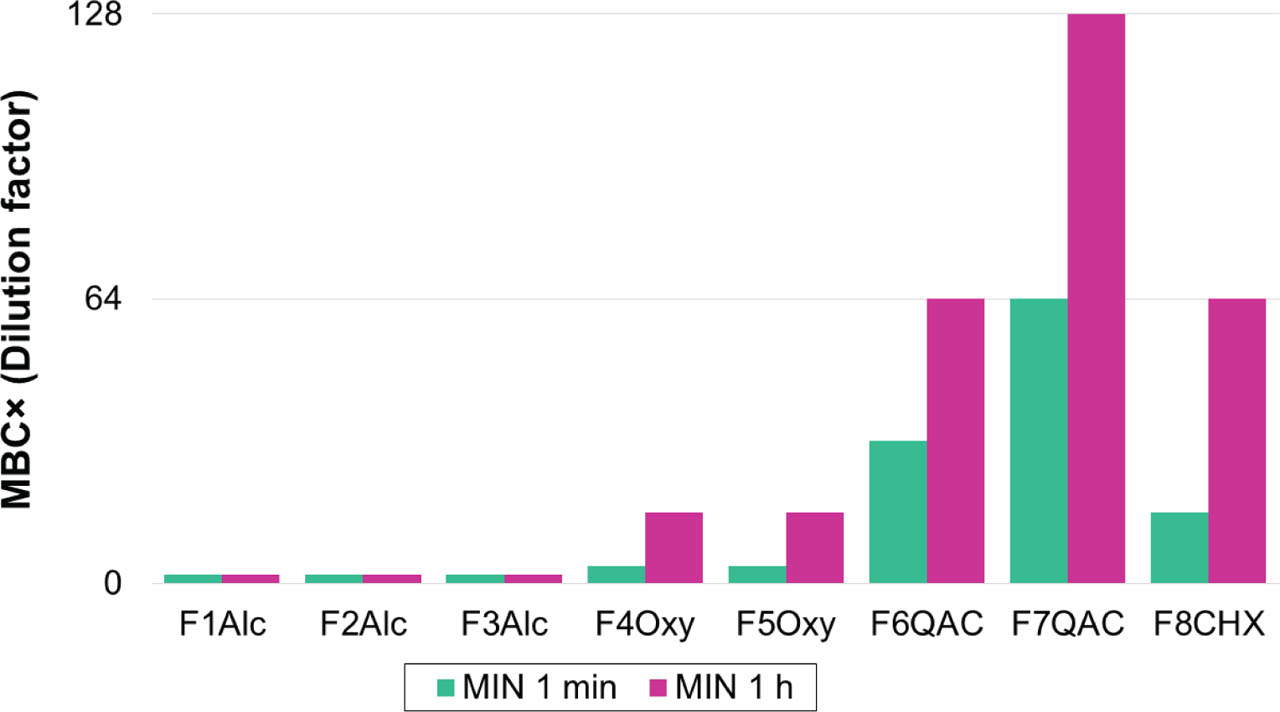
Figure 4
Minimum MBC× values for all bacterial strains, expressed as dilution factor of disinfectants after 1 m and 1 h of contact
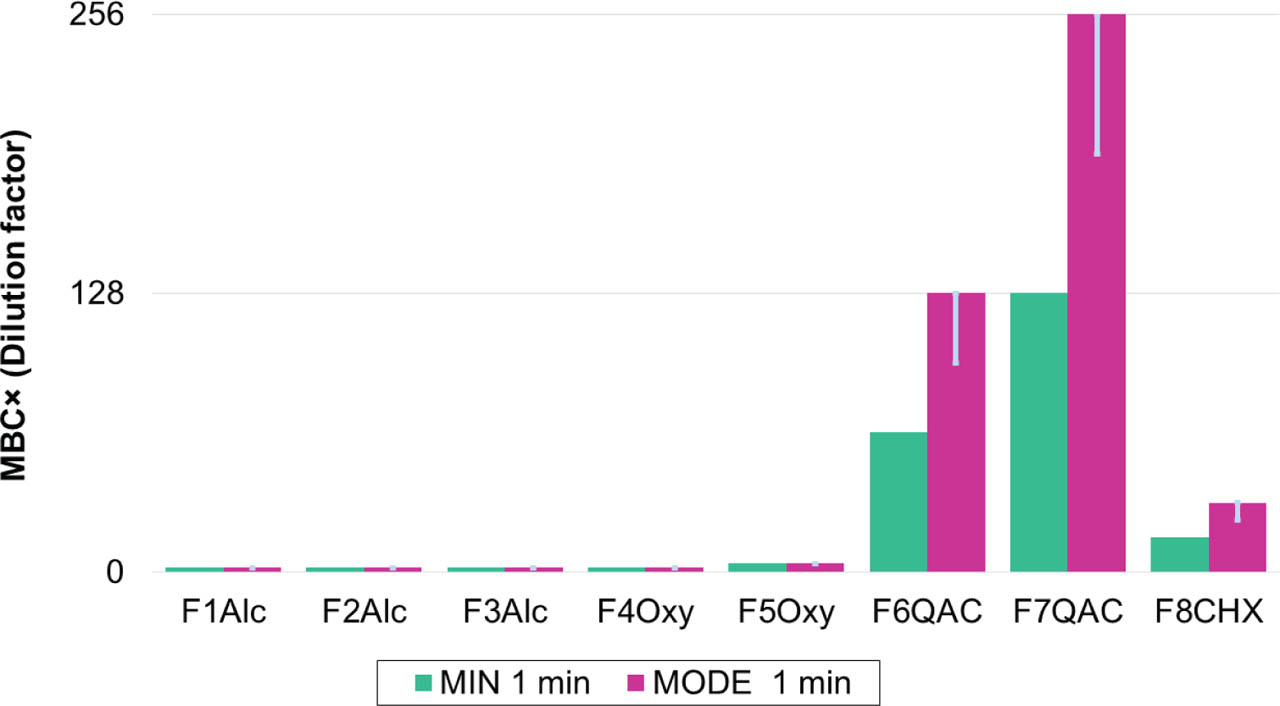
Figure 5
Mode and minimal MBC× values for C. albicans, expressed as dilution factor of disinfectants after 1 min of contact. Error bars represent the interquartile range (Q1–Q3) of mode values
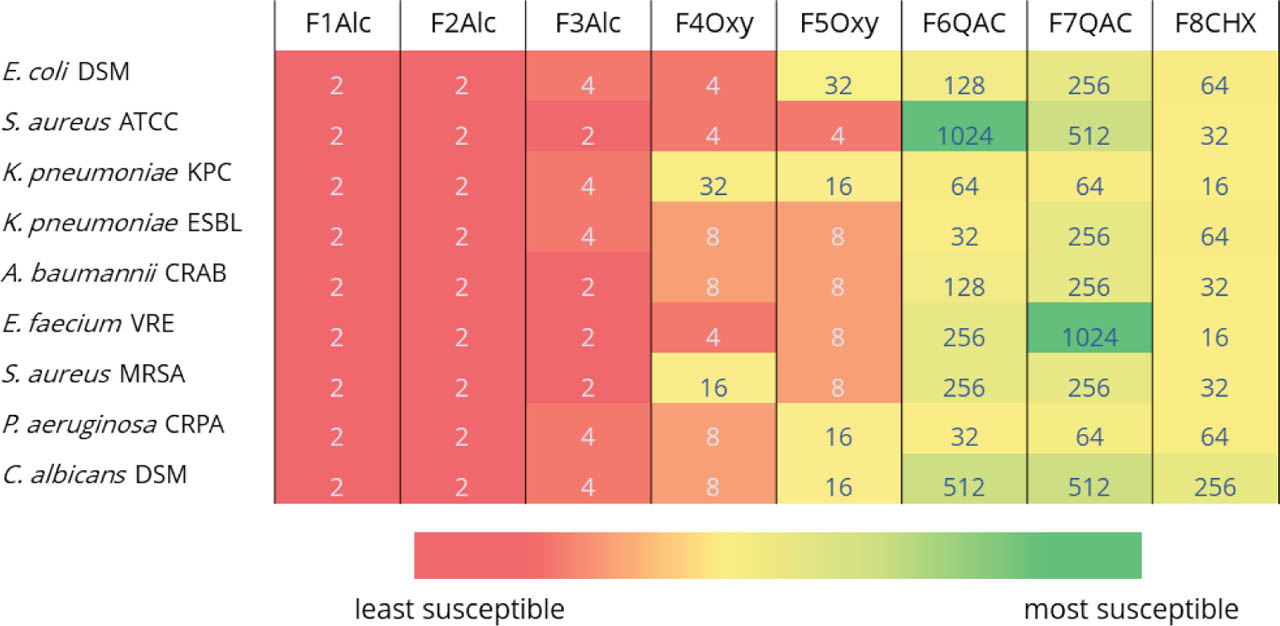
Figure 6
Heat map of disinfectant efficacy against the tested strains based on the minimum MBC× values after 1 min of contact (also shown as numerical values). Red tones denote more resilient strains requiring more concentrated formulations for bactericidal effect, whereas green tones indicate more susceptible strains, for which highly diluted formulations remain bactericidal