
Table 1
The size ranges, types, and sources of microplastics
| Sources | Primary: plastic products, accidental losses, surface run-off, and industrial abrasives. Microbeads, pellets, microfibers, and tire dust. Secondary: degraded plastics (from bottles, bags, packaging, paint coating, and abrasive materials) released from waste depots, landfills, and recycling facilities. |
| Usage areas | Individual consumers: cosmetics and personal care products, plastic bags, containers, bottles, caps, cups, plates, spoons, and straws. Industry consumers: raw materials, construction, packaging, agriculture greenhouse-sheets, pots, pipes, nutrient prills, textile products, and terrestrial transportation (tires and tire dust). Producers/converters: plastic producers and recyclers. Entry points into the ocean: water and wastewater, rivers, coastline, and atmosphere. |
| Shapes | Fibres, fragments, beads, foams, films, pellets, granular plastics. |
| Composition | Polyethylene (packaging), polystyrene (foam products), polypropylene (containers and ropes), polyester (textiles), polyamide (fabrics), and polyethylene terephthalate (PET, bottles and packaging). |
| Size (diameter) | 25 mm–5 mm (mesoplastics); ≤5 mm–1 mm (microplastics), <1 mm–1 µm (mini-microplastics); <1 µm (nanoplastics). |
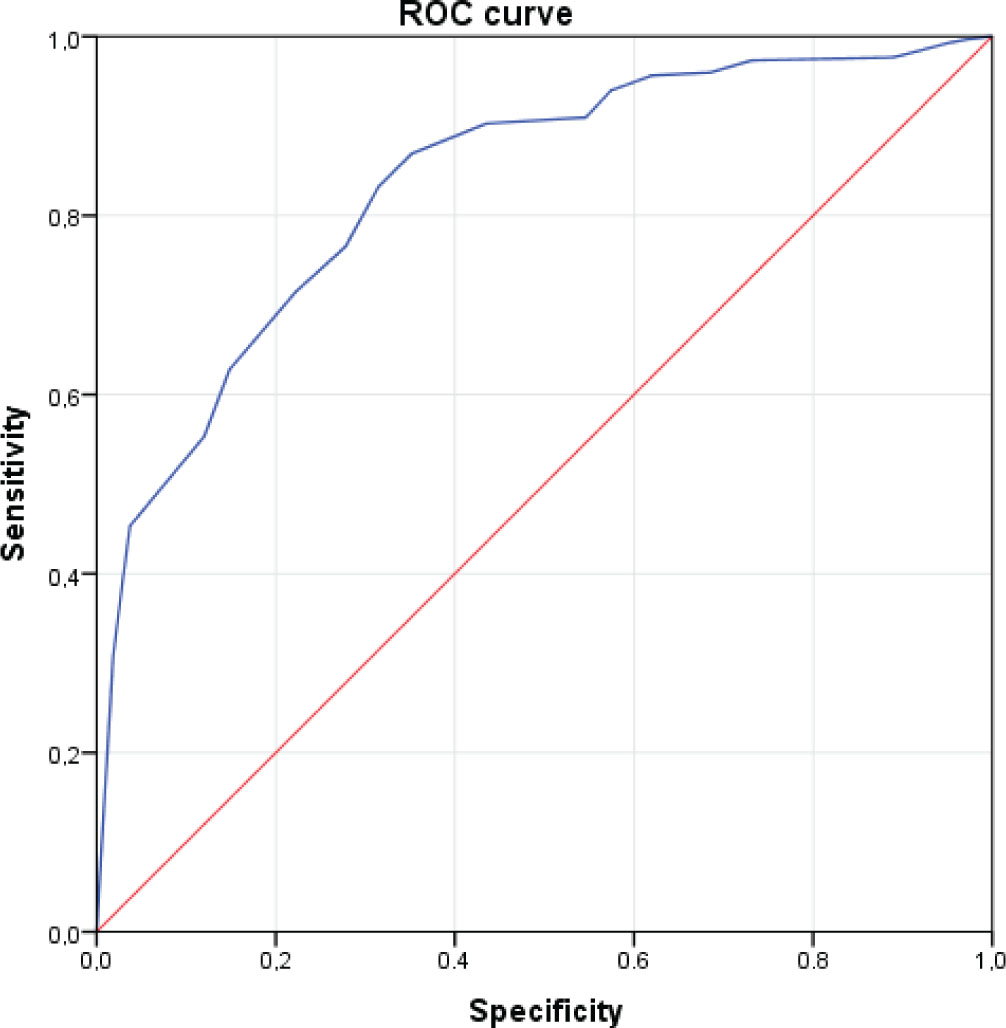
Figure 1
ROC curve illustrating the predictive value of the scale
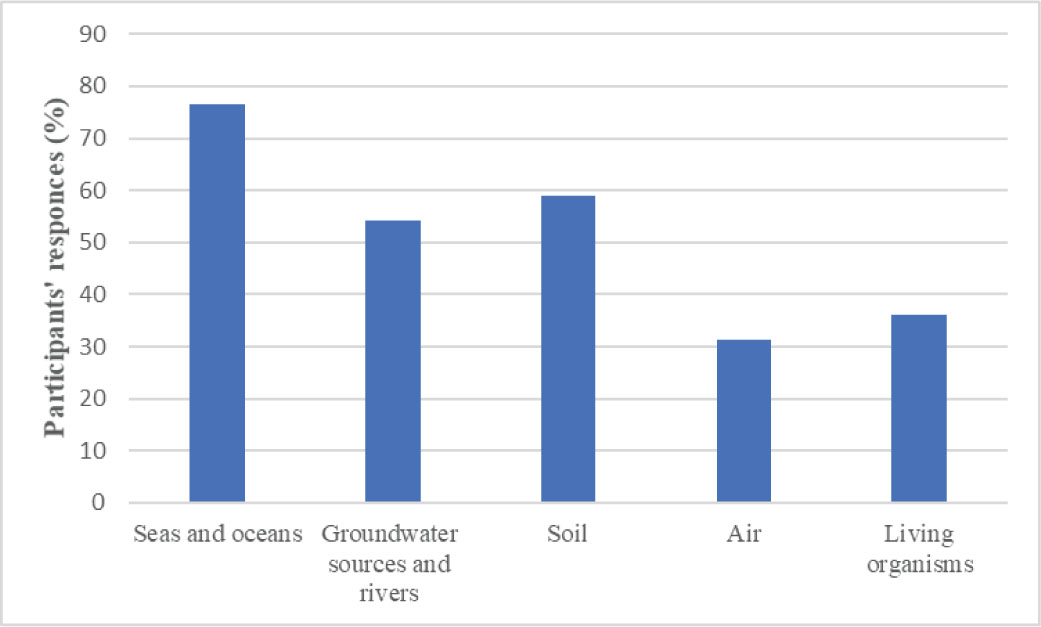
Figure 2
How many participants find that microplastics is present in living organisms, air, soil, and water (%)
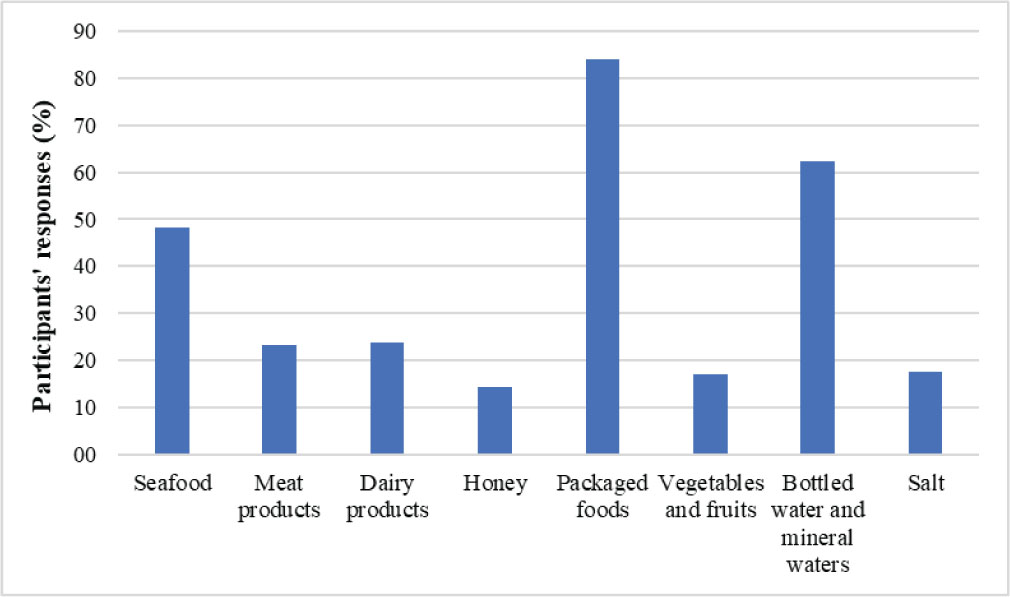
Figure 3
How many participants find that microplastics is present in food and drinking water
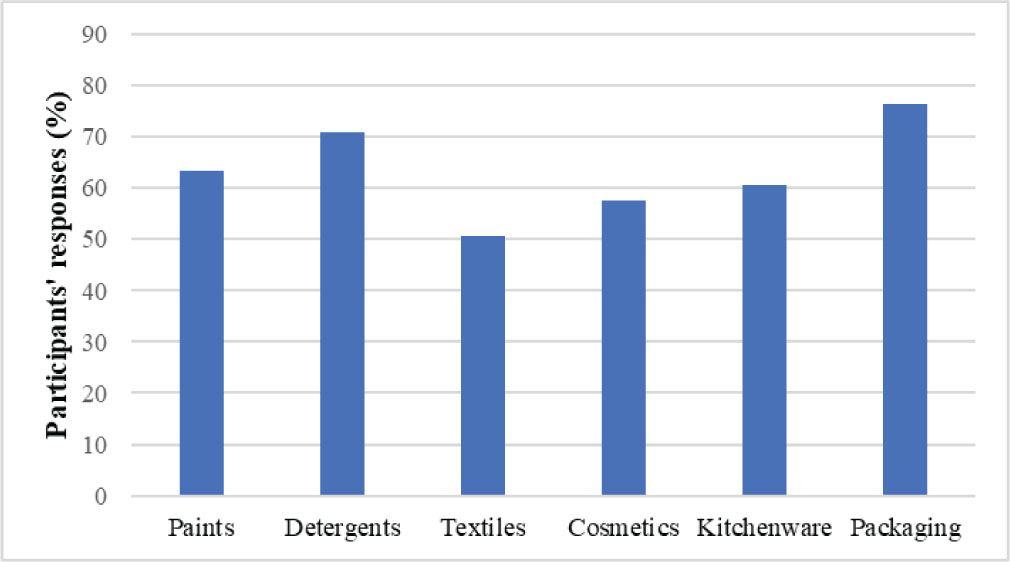
Figure 4
How many participants find that microplastics is present in household products
Table 2
Comparison of the Microplastic Pollution Awareness Scale (MPAS) scores by sociodemographic characteristics
| Number (Percentage) | MPAS score | Statistical analysis (Z/H; p) | ||
|---|---|---|---|---|
| Average ± SD | Median (Min–Max) | |||
| Gender | ||||
| Women | 237 (58.3) | 23.78±4.51 | 25 (11–28) | −2.656; |
| Men | 169 (41.7) | 22.45±4.98 | 24 (11–28) | 0.008* |
| Age | ||||
| Under 40 | 239 (58.9) | 23.70±4.64 | 25 (12–28) | −2.795; |
| 40 and above | 167 (41.1) | 22.43±4.89 | 23 (11–28) | 0.005* |
| Marital status | ||||
| Married | 249 (61.4) | 22.59±5.00 | 24 (11–28) | −3.001; |
| Unmarried | 157 (38.6) | 24.10±4.29 | 26 (12–28) | 0.003* |
| Education | ||||
| Primary school and below | 86 (21.2) | 20.60±5.04 | 21 (11–28) | 70.428; |
| Secondary school | 107 (26.4) | 21.64±4.83 | 22 (11–28) | <0.001* |
| University and above ** | 213 (52.5) | 25.00±3.81 | 27 (12–28) | |
| Income (N=397) | ||||
| Low | 91 (22.9) | 22.85±4.86 | 24 (11–28) | 11.620; |
| Moderate | 212 (53.4) | 22.69±4.96 | 25 (11–28) | 0.003* |
| High ** | 94 (23.7) | 24.72±3.77 | 26 (13–28) | |
| Working status | ||||
| Employed | 206 (50.7) | 23.13±4.83 | 24 (11–28) | −0.284; |
| Unemployed | 200 (49.3) | 23.24±4.74 | 25 (11–28) | 0.777 |
| Residence | ||||
| Rural | 39 (9.6) | 21.95±5.20 | 24 (11–28) | −1.645; |
| Urban | 367 (90.4) | 23.36±4.67 | 25(11–28) | 0.100 |
| Socioeconomic level of the place of residence | ||||
| Developed | 63 (15.5) | 24.94±4.06 | 26 (11–28) | |
| Developing | 175 (43.1) | 23.50±4.60 | 25 (11–28) | 17.221; |
| Underdeveloped** | 168 (41.4) | 22.19±4.99 | 23 (11–28) | <0.001* |
Table 3
Comparison of the Microplastic Pollution Awareness Scale (MPAS) score by self-reported knowledge and behavioural characteristics about the environment and microplastics
| Number (%) | MPAS score | Statistical analysis (Z/H; p) | ||
|---|---|---|---|---|
| Average ± SD | Median (Min–Max) | |||
| Environmental awareness | ||||
| Yes | 377 (92.9) | 23.45±4.66 | 25 (11–28) | −3.131; |
| No | 29 (7.1) | 20.20±5.08 | 20 (11–28) | 0.002* |
| The state of reacting to those who are insensitive to the environment | ||||
| Never ** | 37 (9.1) | 21.51±5.08 | 22 (12–28) | 7.597; 0.059 |
| Sometimes | 233 (57.4) | 23.10±4.79 | 24 (11–28) | |
| Often ** | 82 (20.2) | 24.10±4.47 | 25.5 (11–28) | |
| Always | 54 (13.3) | 23.55±4.53 | 25 (13–28) | |
| Disposing of garbage in a recyclable manner and knowing the recycling symbol | ||||
| Yes | 289 (71.2) | 23.67±4.74 | 25 (11–28) | −3.667; |
| No | 117 (28.8) | 21.97±4.67 | 22 (11–28) | <0.001* |
| Participants’ level of knowledge about MPs according to their own statements | ||||
| Low level | 105 (25.9) | 23.05±5.01 | 25 (11–28) | |
| Moderate level | 164 (40.4) | 24.69±3.80 | 26 (11–28) | 68.297; |
| Good level | 34 (8.4) | 25.56±3.81 | 27 (13–28) | <0.001* |
| Do not know ** | 103 (25.4) | 20.13±4.73 | 20 (11–28) | |
| Thinking that microplastics can accumulate in the human body | ||||
| Yes | 359 (88.4) | 23.77±4.47 | 25 (11–28) | −5.923; |
| No | 47 (11.6) | 19.11±4.86 | 19 (11–28) | <0.001* |
| Thinking that residues from detergents and cosmetics are removed with water | ||||
| Yes | 93 (22.9) | 21.10±5.00 | 22 (11–28) | −5.045; |
| No | 313 (77.1) | 23.82±4.52 | 25 (12–28) | <0.001* |
| Using plastic kitchenware | ||||
| Yes | 382 (94.1) | 23.13±4.82 | 24 (11–28) | −0.436; |
| No | 24 (5.9) | 24.00±3.99 | 25 (14–28) | 0.663 |
| Heating food in plastic storage containers in the microwave | ||||
| Yes | 59 (14.5) | 21.74±4.42 | 21 (14–28) | −2.829; |
| No | 347 (85.5) | 23.45±4.79 | 25 (11–28) | 0.005* |
| Frequency of consuming seafood | ||||
| Rarely | 106 (26.1) | 22.91±5.11 | 25 (11–28) | |
| Occasionally | 229 (56.4) | 23.22±4.55 | 24 (11–28) | 0.674; |
| Frequently | 71 (17.5) | 23.46±5.01 | 25 (12–28) | 0.714 |
| Frequency of consuming processed and/or packaged foods | ||||
| Rarely | 120 (29.5) | 22.97±4.64 | 24 (11–28) | 1.253; |
| Occasionally | 170 (42.0) | 23.27±4.76 | 24 (11–28) | 0.535 |
| Frequently | 116 (28.5) | 23.36±4.86 | 25 (12–28) | |
| Reading the ingredients of purchased products | ||||
| Yes | 226 (55.7) | 23.28±4.78 | 25 (11–28) | −0.114; |
| No | 180 (44.3) | 23.17±4.68 | 24 (11–28) | 0.909 |
| To refrain from purchasing a product based on the contents specified in the ingredients | ||||
| Yes | 246 (60.6) | 23.68±4.61 | 25 (12–28) | −2.510; |
| No | 160 (39.4) | 22.48±4.88 | 23 (11–28) | 0.012* |
| Use of plastic bottles or demijohns as drinking water | ||||
| Yes | 316 (77.8) | 23.32±4.73 | 25 (11–28) | −0.975; |
| No | 90 (22.2) | 22.83±4.81 | 24 (11–28) | 0.330 |
| Leaving drinking water in plastic bottles under the sun for a long time | ||||
| Yes | 48 (11.8) | 22.04±5.56 | 24 (11–28) | −1.192; |
| No | 358 (88.2) | 23.35±4.65 | 25 (11–28) | 0.233 |
| Use of paper/cardboard cups | ||||
| Yes | 280 (69.0) | 23.20±4.83 | 24 (11–28) | −0.416; |
| No | 126 (31.0) | 23.13±4.68 | 25 (11–28) | 0.677 |
| Tea bag consumption | ||||
| Yes | 203 (50.0) | 23.38±4.81 | 25 (11–28) | −1.098; |
| No | 203 (50.0) | 23.04±4.68 | 24 (11–28) | 0.272 |
| Use of plastic feeding bottles/plastic water bottles for your child (N=379) | ||||
| Yes | 152 (40.1) | 22.68±4.68 | 23.5 (11–28) | −1.569; |
| No | 227 (59.9) | 23.36±4.83 | 25 (11–28) | 0.117 |
| Thinking that microplastics can pass into breast milk (N=396) | ||||
| Yes | 290 (73.2) | 23.97±4.48 | 26 (11–28) | −5.155; |
| No | 106 (26.8) | 21.33±4.84 | 22 (11–28) | <0.001* |
Table 4
Multiple logistic regression analysis of self-reported microplastic knowledge* and some sociodemographic variables (Model 1)
| Sociodemographic variables | OR | 95 % CI for OR | p | ||
|---|---|---|---|---|---|
| Lower | Upper | ||||
| Gender | Man | 1 | |||
| Women | 1.576 | 0.987 | 2.516 | 0.057 | |
| Educational status | Primary school and below | 1 | |||
| Secondary school | 1.498 | 0.827 | 2.712 | 0.183 | |
| University and above | 5.067 | 2.844 | 9.028 | <0.001 | |
| Development level of the place of residence | Low | 1 | |||
| Medium | 1.388 | 0.857 | 2.248 | 0.182 | |
| High | 2.345 | 1.042 | 5.277 | 0.040 | |
Table 5
Multiple logistic regression analysis of self-reported microplastic knowledge* and attitudes and behaviour related to microplastics (Model 2)
| Attitudes and behaviour | OR | 95 % CI for OR | p | ||
|---|---|---|---|---|---|
| Lower | Upper | ||||
| Disposing of garbage in a recyclable manner and knowing the recycling symbol | No | 1 | |||
| Yes | 2.294 | 1.392 | 3.781 | 0.001 | |
| Thinking that microplastics can accumulate in the human body | No | 1 | |||
| Yes | 2.574 | 1.249 | 5.303 | 0.010 | |
| Thinking that residues from detergents and cosmetics are removed with water | Yes | 1 | |||
| No | 1.907 | 1.103 | 3.297 | 0.021 | |
| Heating food in plastic storage containers in the microwave | Yes | 1 | |||
| No | 2.826 | 1.503 | 5.313 | 0.001 | |
| Thinking that microplastics can pass into breast milk | No | 1 | |||
| Yes | 2.026 | 1.200 | 3.422 | 0.008 | |