
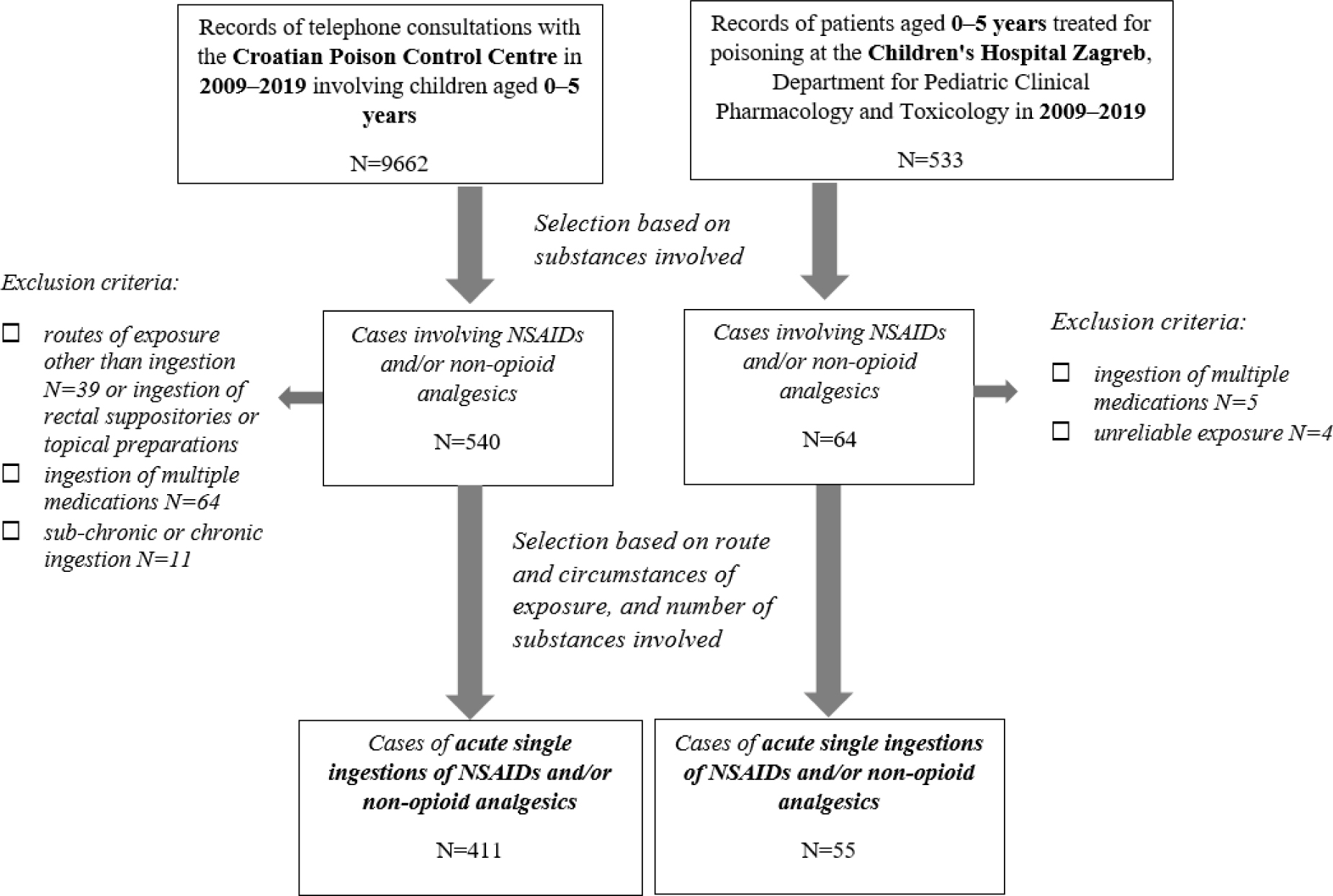
Figure 1
Data selection and extraction
Table 1
Patient demographics and circumstances of exposure (2009–2019)
| CPCC cases (N=411) | CHZ cases (N=55) | |
|---|---|---|
| Age, median (IQR)* | 2.5 (2.0–3.0) | 2.9 (2.2–3.7) |
| Male sex, N (%*) | 188(46) | 32 (53) |
| Drug ingested, N (%) | ||
| ibuprofen | 191(46) | 26 (47) |
| paracetamol | 79 (19) | 14 (25) |
| ketoprofen | 59(14) | 9 (16) |
| diclofenac | 44 (11) | 5 (9) |
| acetylsalicylic acid | 22 (5) | 1 (2) |
| other** | 16 (4) | – |
| Circumstances of exposure | ||
| unsupervised child ingested the drug left within reach | 386(94) | 54 (98) |
| dosing error made by parents/caregivers | 25 (6) | 1 (2) |
Table 2
Profile of patients ingesting ibuprofen and paracetamol above maximum daily doses
| Ibuprofen (MDD 30 mg/kg) | Paracetamol (MDD 960 mg) | |||
|---|---|---|---|---|
| CPCC cases (N=121) | CHZ cases (N=15) | CPCC cases (N=35) | CHZ cases (N=4) | |
| Ingested dose in mg/kg, median (range) | 60 (32–270)* | 86 (34–256)* | 86 (36–218)* | 145 (86–203)* |
| Above toxic threshold of 200 mg/kg, N (%) | 2 (2) | 1 (7) | 1 (3) | 1 (25) |
| Symptomatic, N (%) | 7 (6)* | 7 (47)* | 1 (3) | 3 (75) |
| Doses in symptomatic patients, median (range) | not investigated | 72 (34–256) | not investigated | 145 (135–155) |
| Clinical effects, N (%) | ||||
| vomiting | not investigated | 3 (20) | not investigated | 2 (50) |
| diarrhoea | – | 1 (25) | ||
| abnormal laboratory findings | 5 (33)** | 2 (50)*** | ||
1 CPCC – Croatian Poison Control Centre; CHZ – Children’s Hospital Zagreb; MDD – maximum daily dose calculated from the Croatian register of medicines (9). The toxic threshold for ibuprofen was set at 200 mg/kg, above which gastrointestinal symptoms have been reported, and the threshold for serious adverse effects was set 400 mg/mg. The toxic threshold for paracetamol was set at 200 mg/kg, above which hepatotoxicity can be expected. Symptoms were investigated only in CHZ records, because they included all medical outcomes, while CPCC records included only the symptoms which occurred by the time of the telephone call.