
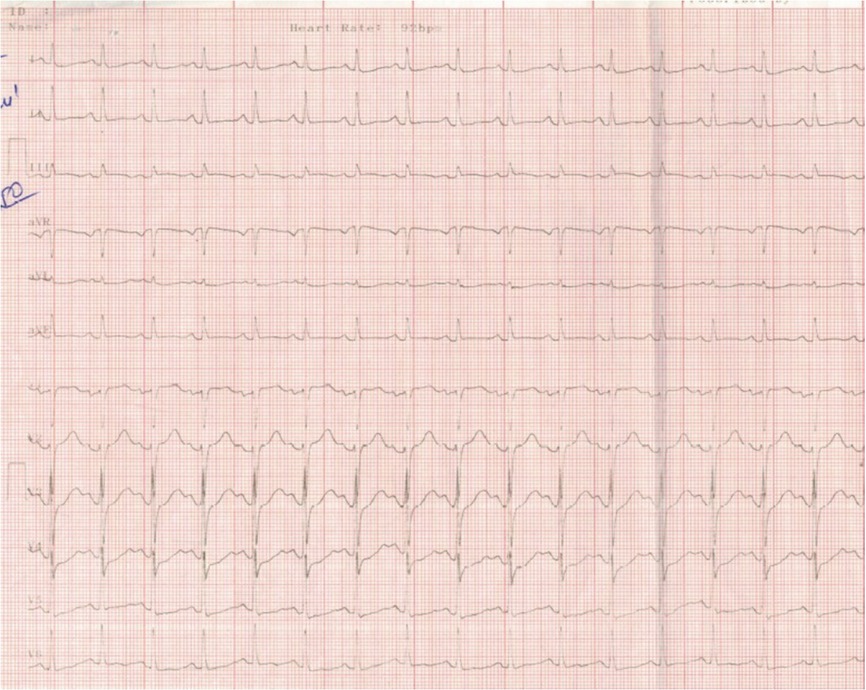
Figure 1A
Electrocardiogram monitoring showing acute STEMI in inferior territory. ECG upon ED admission shows sinus rhythm, ST segment depression in V3-V4, and flat T waves in D1, aVL, V5-V6
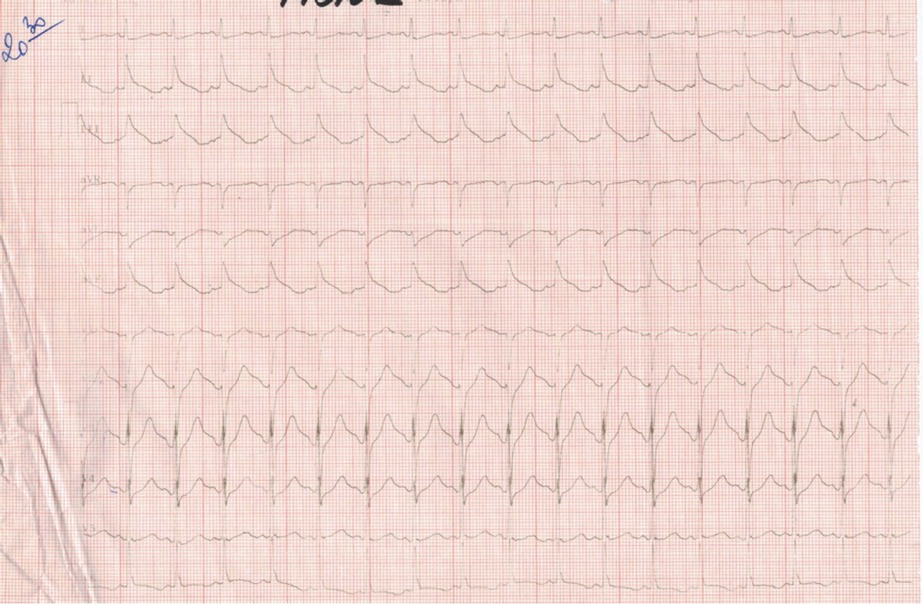
Figure 1B
Electrocardiogram monitoring showing acute STEMI in inferior territory. ECG 26 hours after admission showed important ST segment elevation in leads DII, DIII, aVF, with S-T segment depression in aVL, flat T waves in DI, and V6, and sinus tachycardia
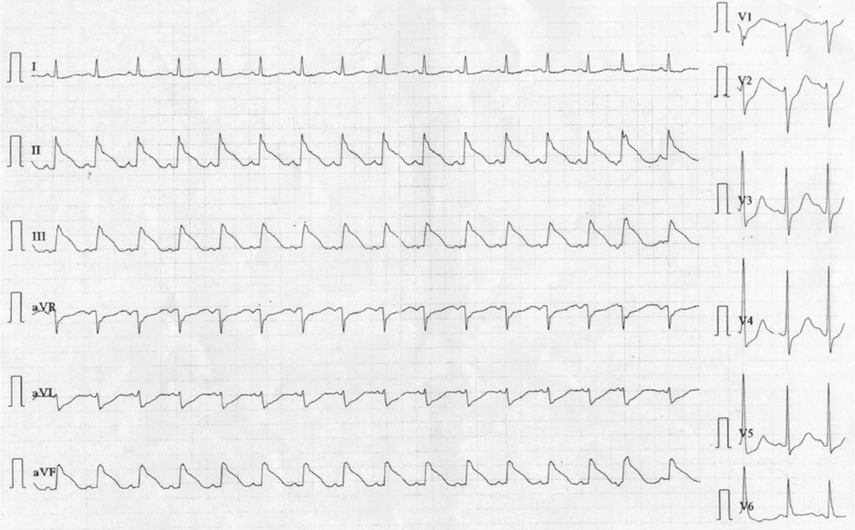
Figure 1C
Electrocardiogram monitoring showing acute STEMI in inferior territory. ECG at the Cardiology Department revealed acute ST-elevation in inferior territory and sinus tachycardia
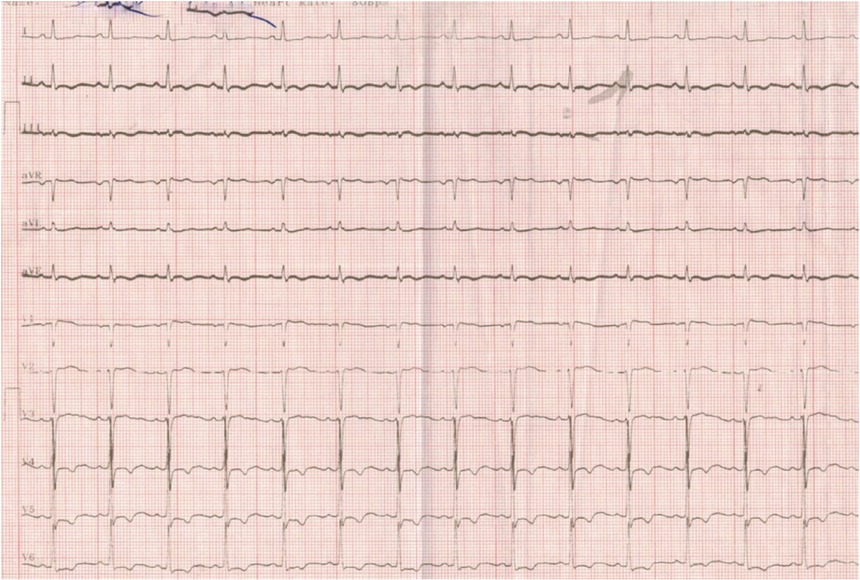
Figure 1D
Electrocardiogram monitoring showing acute STEMI in inferior territory. ECG before discharge showing persistence of ischaemic changes in the inferolateral territory
Table 1
Case reports of myocardial infarction following organophosphate poisoning
| Author | Onset after OP exposure | Type of poisoning | Type of myocardial infarction | Coronary angiogram | Outcome |
|---|---|---|---|---|---|
| Tkaczyk Jędrzej et al. (25) | In the same day, after admission | Voluntary | Type 1 | Three-vessel coronary disease | Dead |
| Karasu-al. (6) Minareci et | After 1–2 h | Accidental | Type 1 | 90 right % coronary stenosis of artery the | Recovered |
| Ayyadurai et al. (28) | Upon admission | Voluntary | Type 2 | Patent coronaries | Recovered |
| Kidiyoor et al. (3) | After 7 days | Voluntary | Type 2 | Left anterior descending artery 20 coronary % obstruction (autopsy) | Dead |
| Kuo et al. (26) | after Second admission night | specified Not | Inferolateral STEMI | No stenotic thrombosis artery or | Dead |
| Pankaj and Krishna (24) | After 5 days | specified Not | STEMI | Postponed | Recovered |
| Joshi et al. (23) | After 2 days | Voluntary | STEMI | Not performed | Recovered |
| Aydın (22) and Küçüktepe | At admission | Accidental | STEMI | Not specified | Recovered |
| Kumar et al. (16) | After 3 days | Voluntary | Inferolateral STEMI | Not performed | specified Not |
| Mdaghri et al. (21) | After 20 hours | specified Not | Endocardial ischaemia | Not specified | Dead |
| Lionte et al. (4) | 24 hours after admission | Voluntary | Anteroseptal STEMI | (pathology Not performed confirmed diagnosis) | Dead |