
Table 1.
Characteristics of patients with Langerhans cell histiocytosis included in the study
| Parameters | Total study group single-system | LCH form | |||
|---|---|---|---|---|---|
| multi-system | |||||
| n/% | |||||
| Total | 43/100% | 34/79.1 | 9/20.9 | ||
| Sex | male | 25/58.1% | 19 | 6 | |
| female | 19/41.9% | 15 | 3 | ||
| Age | ≤3 years | 18/41.9% | 12 | 6 | |
| >3–10 years | 13/30.2% | 11 | 2 | ||
| ≥10 years | 12/27.9% | 11 | 1 | ||
| System | bones | 38/88.4% | 31 | 7 | |
| skin | 11/25.6% | 3 | 8 | ||
| lungs | 5/11.6% | 0 | 5 | ||
| pituitary gland | 4/9.3% | 0 | 4 | ||
| neck lymph nodes | 2/4.6% | 0 | 2 | ||
| liver | 1/2.3% | 0 | 1 |
Table 2.
Clinical and radiological symptoms in patients diagnosed with LCH
| Patient no. | Age at LCH diagnosis in years (age at the onset of oral lesions) | Sex | Diagnosed form of LCH | Clinical symptoms of stomatognathic system | Radiological symptoms | Other organs/systems, symptoms | |
|---|---|---|---|---|---|---|---|
| Clinical picture | Location | ||||||
| 1 | 0.33 | female | M-S | third degree loose mandibular teeth, vivid red gingiva, bleeding on compression | alveolar part of the mandible | osteolytic bone lesions | skin, bones lungs, diabetes insipidus |
| 2 | 0.87 | male | S-S bone | alveolar mandible expansion in the region of teeth 81–83 | unilateral mandible | osteolytic right mandibular lesion | no other symptoms |
| 3 | 1.01 | male | S-S skin | gingivitis, loosening of teeth 71, 72, 81 | gingiva | none | typical skin lesions on the chest |
| 4 | 1.15 | male | M-S | gingivitis, tooth loosening | palate | none | papular lesions on the skin, exophthalmos, liver |
| 5 | 1.44 | female | M-S | ulcer-like palatal lesions in the region of molars, root exposure and loosening of teeth 74, 75 | bilaterally involved palate in the region of molars and the alveolar part of the mandible | none | skull bones, orbit, lungs |
| 6 | 2.16 | male | M-S | periodontal destruction, exposed bifurcation of the first primary maxillary and mandibular molars | maxilla and mandible | osteolytic lesions in the region of roots of first primary molars | skin lesions on the head, abdomen and back, liver infiltration |
| 7 | 4.16 | female | M-S | mandibular expansion in the region of tooth 46 with gingival thickening and reddening in this region | Unilaterally involved mandible in the region of right molars | osteolytic lesions in the region of permanent molars and second primary molars, resorption of distal root of tooth 85, partial resorption of tooth bud 45 | neck lymph nodes, mediastinum, orbital tumour, skull bones, non-specific lesions in the lungs, liver |
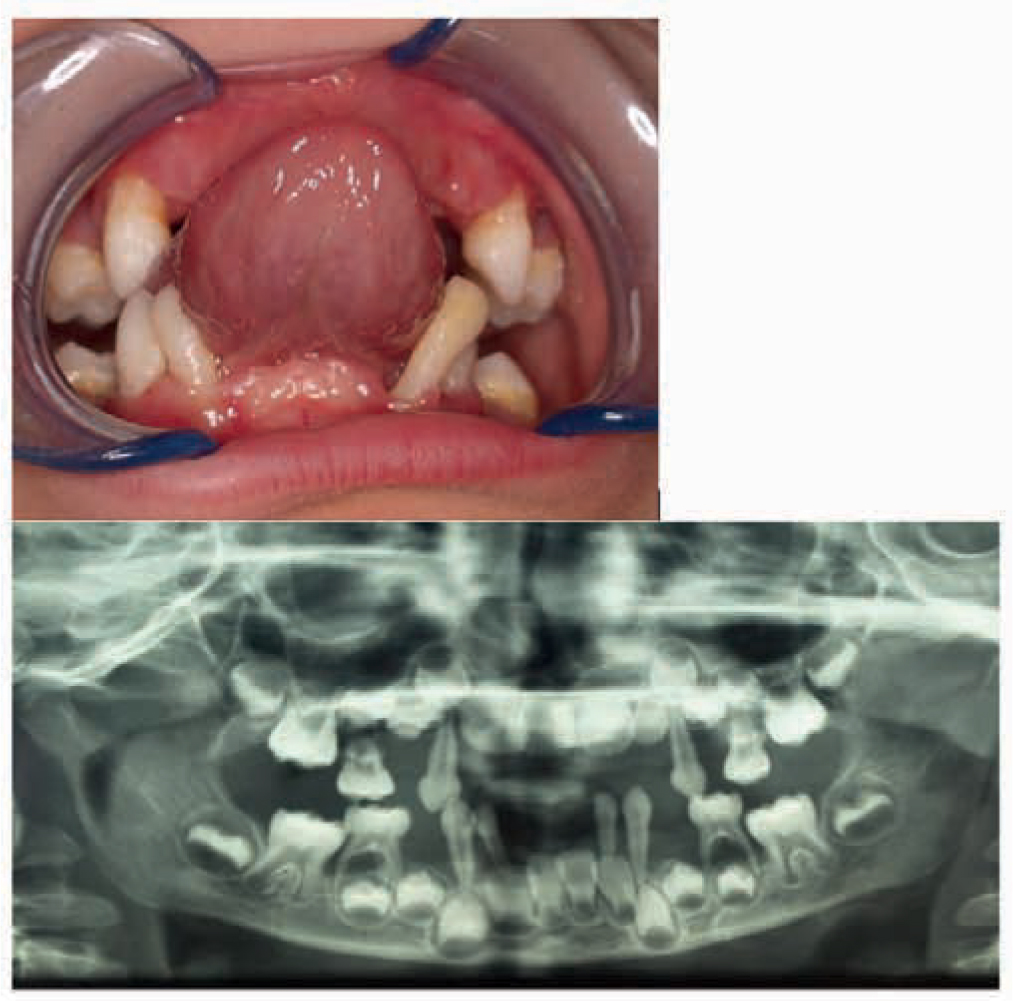
Figure 1.
A 4-year-old patient. Premature loss of incisors and first maxillary and mandibular molars, generalised decrease in the translucency of the alveolar maxillary and mandibular bone with pronounced bone atrophy in the region of right mandibular cuspid and second mandibular molars, as well as root resorption of second mandibular molars
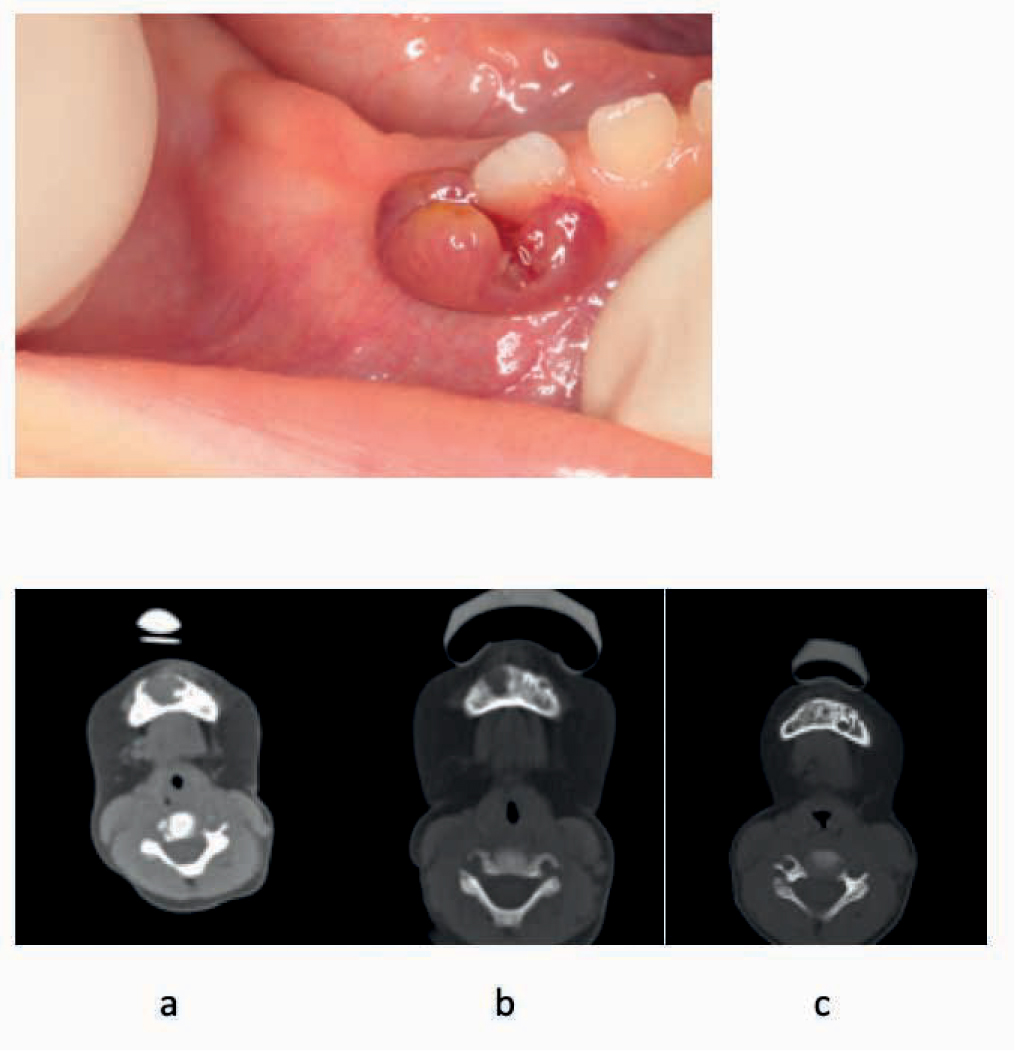
Figure 2.
A 10-month-year-old patient. Alveolar mandible expansion in the region of teeth 81-83 in the single-system LCH. Image of oral cavity lesions on computed tomography before treatment (a), 6 months after the start of treatment (b) and after completion of the therapy (c)
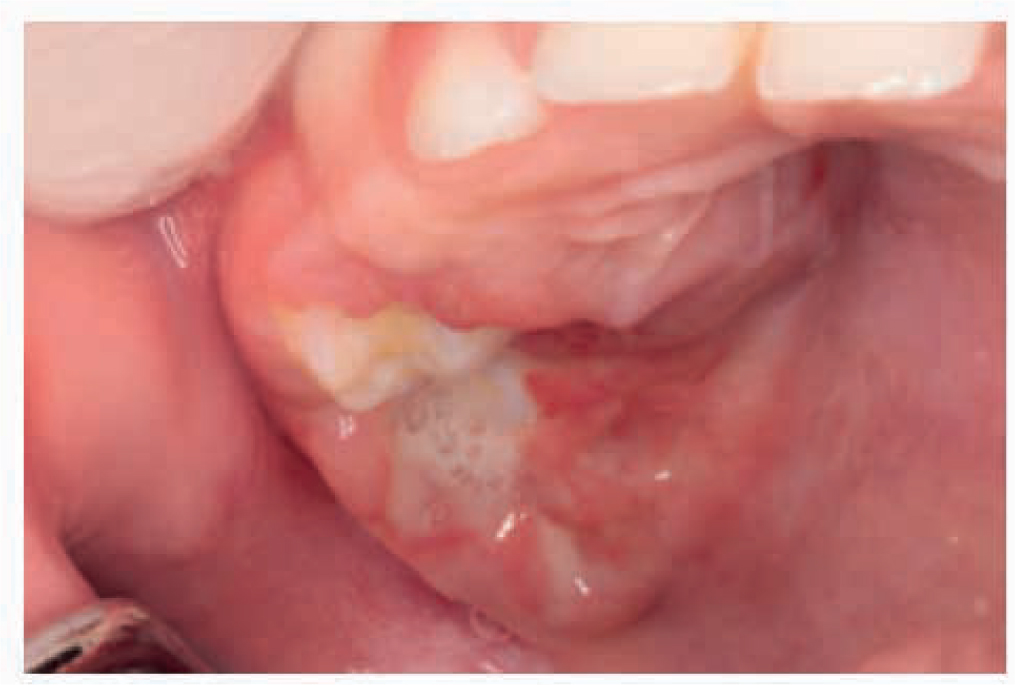
Figure 3.
A 1,5 -year -old patient. Ulcer-like palatal lesions in the region of molars in the multi-system LCH