Have a personal or library account? Click to login
Characterization of bioactive substances MHGF-68 on tumour cell lines with LiveFlow In Vitro Technology Cover

Characterization of bioactive substances MHGF-68 on tumour cell lines with LiveFlow In Vitro Technology

Open Access
|Jun 2021

Figures & Tables

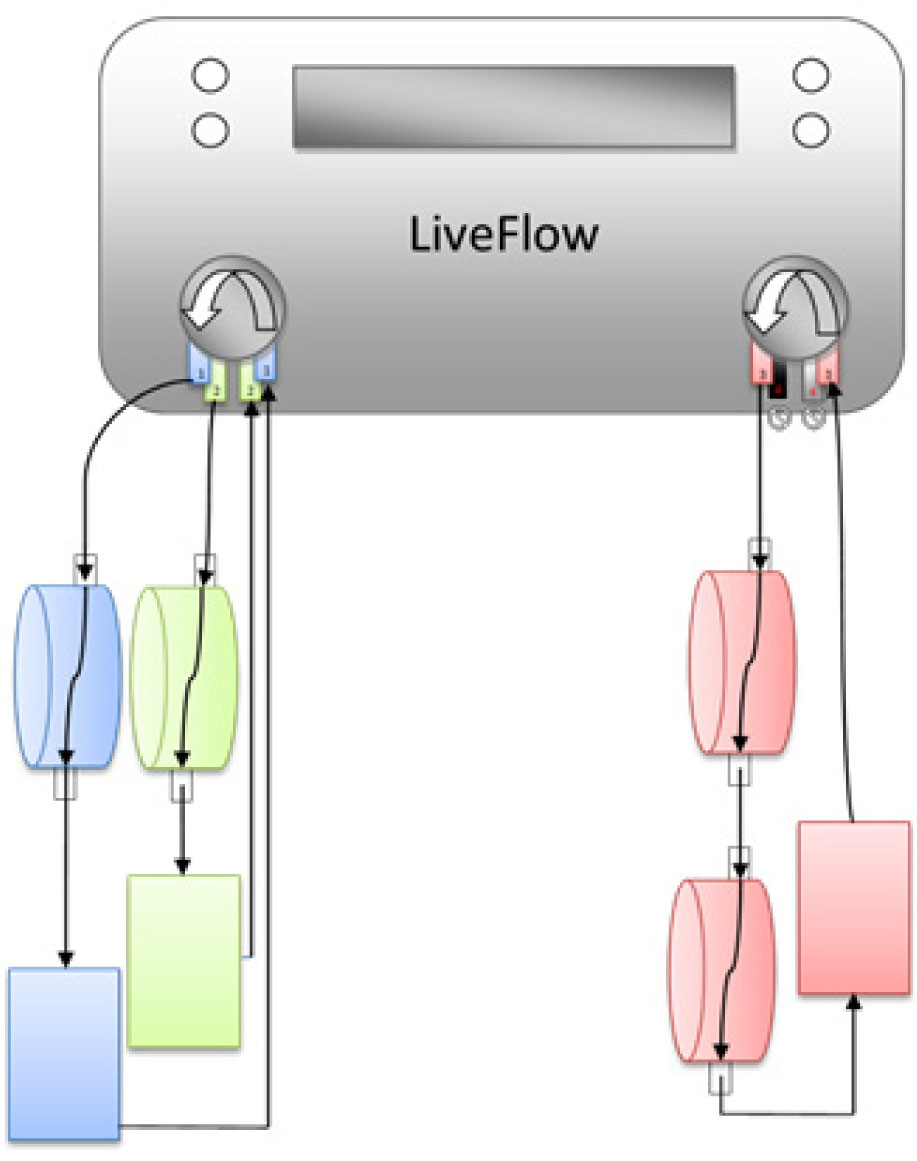
Figure 1

LiveFlow system scheme. Blue and green – LiveBox with samples, parallel circuits of medium, Red – controls, series circuit of medium.
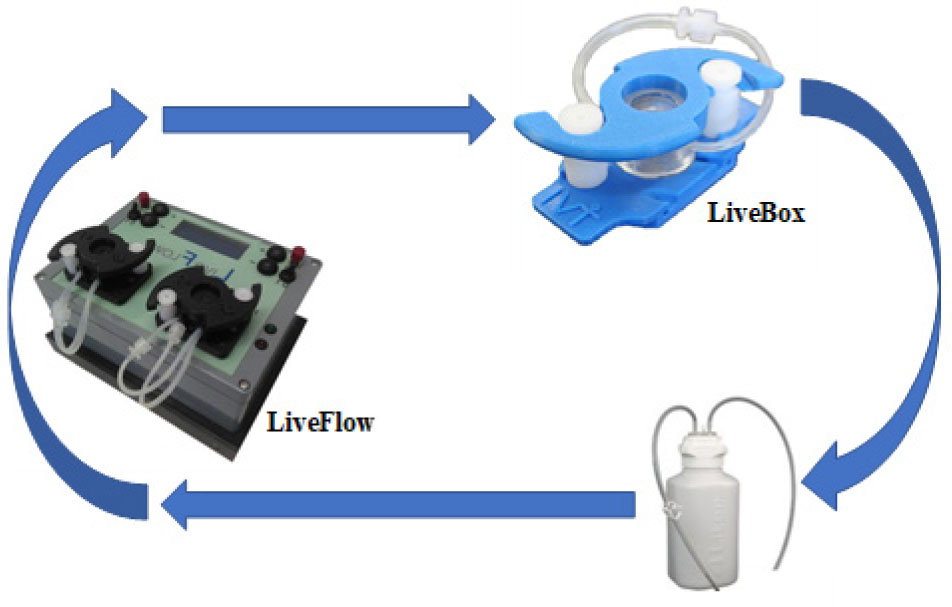

Figure 2

Scheme of dynamic cultivation using LiveFlow (IVTech). LiveBox with adherent cell line on the glass slide inside, reservoir with cultivation medium and LiveFlow ensuring continual flow of the medium.
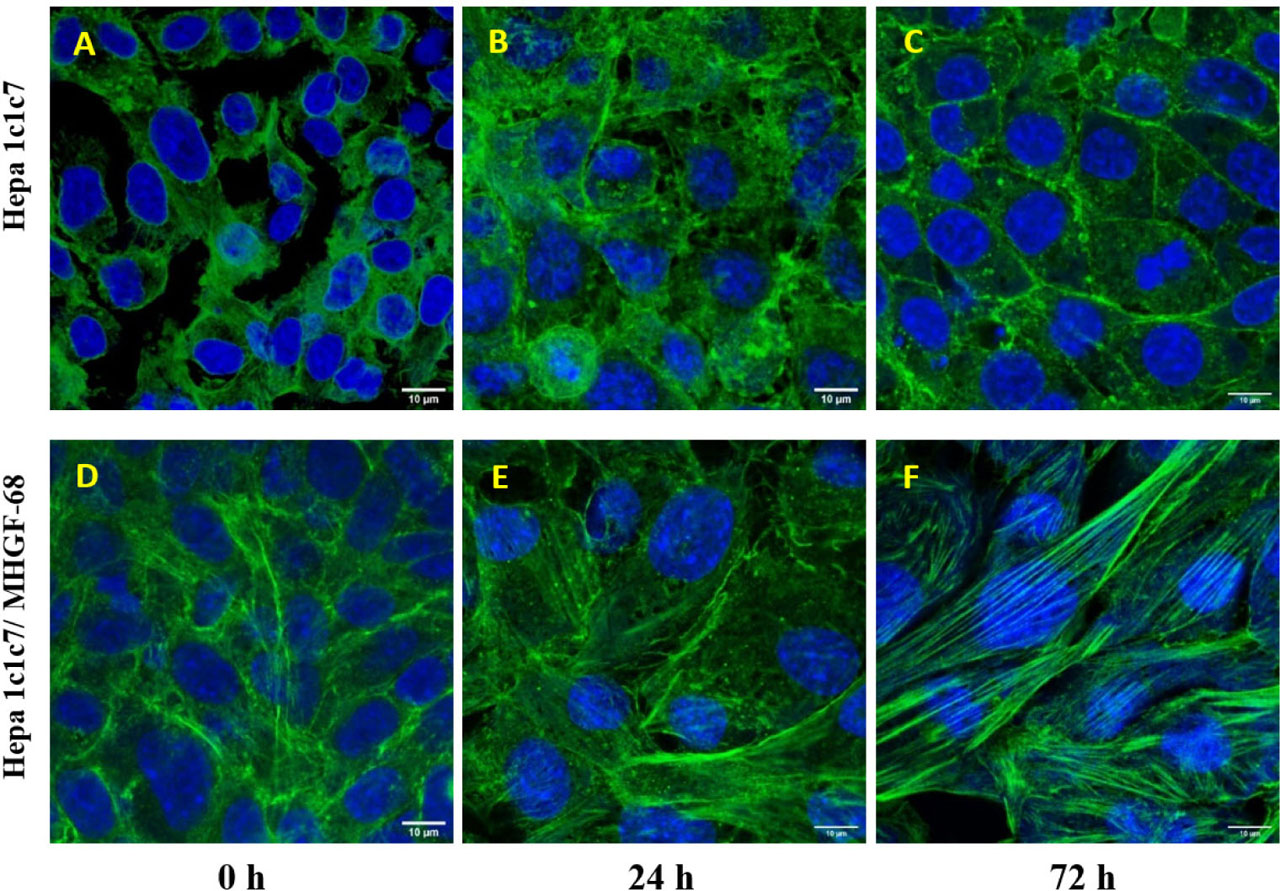

Figure 3

Distribution of actin filaments in Hepa1c1c7 cells incubated with MHGF-68 after dynamic cultivation.Hepa1c1c7 cells were incubated with MHGF-68. After 0, 24 and 72 h, the cells were fixed and labeled with Alexa Fluor 555 phalloidin. Nuclei were stained with DAPI. The intracelular distribution of actin filamets (green) and nuclei (blue) were imaged by confocal laser scanning fluorescence microscopy (Leica TCS SP8 AOBS) with HC PL APO CS2 63×/1.40 OIL lens.A Hepa1c1c7 untreated, 0 h cultivation B Hepa1c1c7 untreated, 24 h cultivation C Hepa1c1c7 untreated, 72 h cultivation D Hepa1c1c7 + MHGF-68, 0 h cultivation E Hepa1c1c7 + MHGF-68, 24 h cultivation F Hepa1c1c7 + MHGF-68, 72 h cultivation
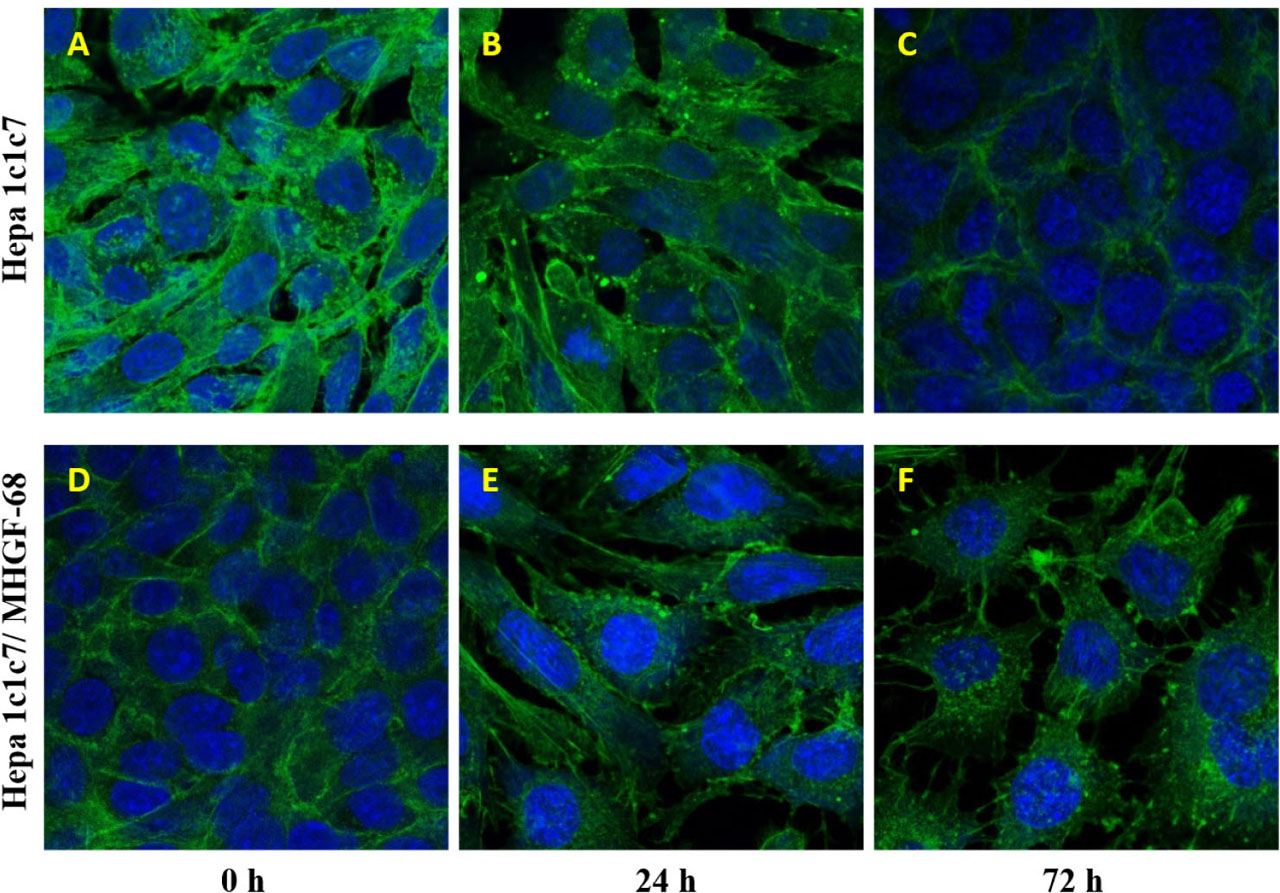
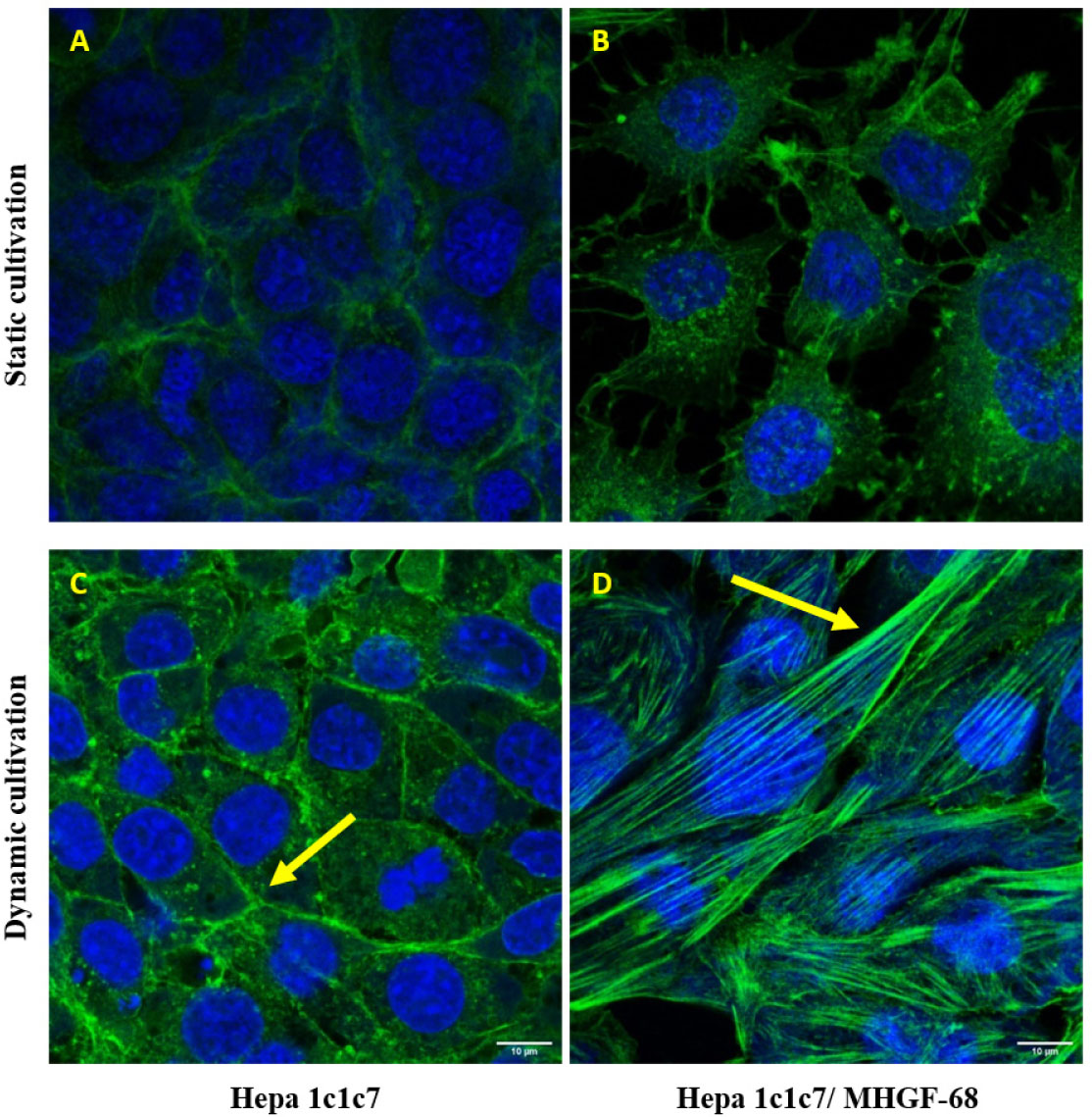
Figure 4

Distribution of actin filaments in Hepa1c1c7 cells incubated with MHGF-68 after static cultivation.Hepa1c1c7 cells were incubated with MHGF-68. After 0, 24 and 72 h, the cells were fixed and labeled with Alexa Fluor 555 phalloidin.Nuclei were stained with DAPI. The intracelular distribution of actin filamets (green) and nuclei (blue) were imaged by confocal laser scanning fluorescence microscopy (Leica TCS SP8 AOBS) with HC PL APO CS2 63×/1.40 OIL lens. A Hepa1c1c7 untreated, 0 h cultivation B Hepa1c1c7 untreated, 24 h cultivation C Hepa1c1c7 untreated, 72 h cultivation D Hepa1c1c7 + MHGF-68, 0 h cultivation E Hepa1c1c7 + MHGF-68, 24 h cultivation F Hepa1c1c7 + MHGF-68, 72 h cultivation

Figure 5

Distribution of actin filaments in Hepa1c1c7 cells incubated 72 h with MHGF-68 after static and dynamic cultivation.Hepa1c1c7 cells were incubated with MHGF-68. After 72 h, the cells were fixed and labeled with Alexa Fluor 555 phalloidin. Nuclei were stained with DAPI. The intracelular distribution of actin filamets (green) and nuclei (blue) were imaged by confocal laser scanning fluorescence microscopy (Leica TCS SP8 AOBS) with HC PL APO CS2 63×/1.40 OIL lens.A Hepa1c1c7 untreated, static cultivation B Hepa1c1c7 + MHGF-68, static cultivation C Hepa1c1c7 untreated, dynamic cultivation D Hepa1c1c7 + MHGF-68, dynamic cultivation

Comparison of IVTech, in vitro and in vivo testing_

In vitroIn vivoIVTech (advanced cell culture systems)
Lack of human complexityEthically controversialHuman organ environment simulation
Lack of side effects testsTime ineffectiveMulti-organ models
Lack of geometrical complexityExpensive (2–30 times more than in vitro)3D and dynamic cell cultures
Cells cultivated in static conditionsNo high-throughput monitoringReal time monitoring
Language: English
Page range: 24 - 29
Submitted on: Nov 11, 2020
Accepted on: Mar 22, 2021
Published on: Jun 18, 2021
Published by: Comenius University in Bratislava, Faculty of Pharmacy
In partnership with: Paradigm Publishing Services
Publication frequency: 2 issues per year
Related subjects:

© 2021 R. Hodoši, E. Nováková, K. Macková, M. Molitorisová, M. Šupolíková, published by Comenius University in Bratislava, Faculty of Pharmacy
This work is licensed under the Creative Commons Attribution-NonCommercial-NoDerivatives 3.0 License.