
1. INTRODUCTION
Historic buildings embody the cultural, traditional, and architectural identity of a community and constitute an essential component of national heritage. Some of these are particularly important in terms of their unique architecture, construction period and as such, they are the subject of focused conservation and protection. Historic structures with centuries-long histories frequently necessitate revitalisation or reconstruction, as a result of deterioration over time or damage sustained during armed conflicts. Such interventions enable not only the restoration of the historical significance and aesthetic value of heritage buildings, but also promote spatial cohesion within the historical context. Such ventures also make it possible to create new development elements in the context of the building, while emphasising their contemporary character. Revitalization is defined as a complex, interdisciplinary process involving spatial, technical, architectural, and urban transformations that are closely linked to social and economic changes and undertaken in the public interest. The revitalization process requires an interdisciplinary approach [1], which should be integrated from the earliest stages of project planning and preparation. This approach encompasses not only technical assessments and interventions – such as the rehabilitation of structures, restoration of architectural forms, or modernization of installations - but also non-technical dimensions, including economic, cultural, and educational considerations [2]. Contemporary interpretations of revitalization increasingly extend the concept beyond urban areas to include individual buildings, reflecting the evolving nature of the term. In this context, revitalization must not be limited to engineering solutions alone, but approached within a broader, interdisciplinary framework that aligns with the foundational principles of revitalization. Such an approach emphasizes the understanding of a building as an inseparable component of the wider spatial and social fabric [3]. The complexity of the revitalization process lies in the need to implement architectural and spatial modifications while simultaneously recognizing and preserving the historical context of the building [4, 5]. Such activities are usually undertaken in the public interest and include restoration of the revitalised area to its former functions, the creation of new ones and the creation of conditions for its further development [6, 7].
However, the revitalisation of historic buildings requires solving many conservation problems [8]. Architectural monuments are increasingly recognised as the common heritage of humanity, which underpins the search for international standards for their protection and restoration [9]. The establishment of the International Council on Monuments and Sites (ICOMOS) was a significant step towards establishing a universally accepted principles which assumes that changes to the historic fabric should be avoided as much as possible, and any necessary changes should be clearly visible, which helps prevent the falsification of history [10]. Methods of modern revitalisation aimed at saving technically degraded monuments, which in the process of revitalisation are expanded and receive a new function adapting them to modern requirements, are discussed in [7, 9]. The process of revitalisation of historic buildings is naturally connected with understanding of technical problems and should be preceded by thorough historical research, an analysis of functional aspects, and finally a diagnosis of the technical condition [11, 12, 13], followed by a judicious selection of construction techniques and technologies. However, modern technologies popular today, such as 3D modelling [14, 15, 16] or non-invasive methods of assessing the technical condition of a facility using ground penetrating radar [17] and ultrasound [18, 19], significantly facilitate the process of planning the reconstruction of the facility, without significant interference in the historic tissue.
The subject of this paper is a case study of the revitalization of the roof truss and attic of the Archcathedral Basilica in Frombork. This study presents an innovative integration of diagnostic approaches, combining traditional building diagnostics – focused on assessing the technical condition - with principles derived from sustainable development. Priority was given to preserving existing historic fabric, limiting the use of new materials, and avoiding high-emission construction processes, ensuring that the intervention remained environmentally responsible. The project serves as an example of adapting an unused, difficult-to-access part of the building into a functional museum space. The implemented solutions are based on emphasising and exposing the original aesthetic value of the existing building, and therefore the cultural importance that the building has as a representative example of retaining attention to historic substance whilst creating additional space for cultural purposes. This study adopts a structured research framework grounded in explicitly formulated research aims, hypotheses, and evaluation criteria. Its overarching objective is to examine the historical and architectural significance of the Frombork Archcathedral while simultaneously conducting an interdisciplinary diagnosis of the condition of its medieval timber structure. Furthermore, the study seeks to critically assess the effectiveness of the conservation and adaptation measures implemented during the revitalisation process and to interpret the resulting outcomes in relation to the methodological assumptions established at the outset.
2. HISTORICAL BACKGROUNG AND ARCHITECTURAL DESCRIPTION OF THE ARCHCATHEDRAL BASILIC IN FROMBORK
Frombork is a small city located in northern Poland, next to the Kaliningrad region, situated on the shore of the Vistula Lagoon, part of the Baltic Sea basin. It’s convenient defensive location (three hills with sharp slopes) made Frombork an ideal place for a castle, cathedral and the seat of a bishop. The earliest documented reference to “castrum dominae nostrae” dates back to 1278. In 1288, Bishop Henry Fleming relocated the seat of the Warmian diocese from Braniewo to Frombork. This chapter was entrusted with the care of the cathedral, as well as the organization and oversight of liturgical functions. From that period onward, the settlement evolved as two distinct components: the Cathedral Hill and the adjacent town [20]. Brick fortifications on Frombork’s Cathedral Hill were constructed from the early 14th century, forming part of the Cathedral Complex alongside adjacent structures such as the Chapter House, Curator's House, and New Vicarage. By 1330, the eastern defences were completed together with the Chapter House (documented in 1305) and a school. The western area was developed by the late 14th century, with slopes cleared and ground levelled. In 1329, Pope John XXII granted indulgences for building a new cathedral, noting that the existing structure was not yet brick. The construction commenced with the eastern chancel, which was consecrated in 1342, and subsequently continued with the erection of the nave. Fortifications and buildings on the hill underwent modernization from the late 14th through the 16th centuries [21].
In the Middle Ages, the fortified cathedral complex was subjected to sieges by Polish, Teutonic, and Czech forces. Bishop Maurycy Ferber modernized the defences in the 16th century, including a barbican built in 1537 (Figure 1b). Following the fire in 1551, a new roof truss was constructed. Later renovations were limited to repairs and chapel additions in the 17th and 18th centuries. The complex suffered significant damage during Swedish invasions (1626–1630, 1655–1660) and was ultimately destroyed in World War II [20, 22].
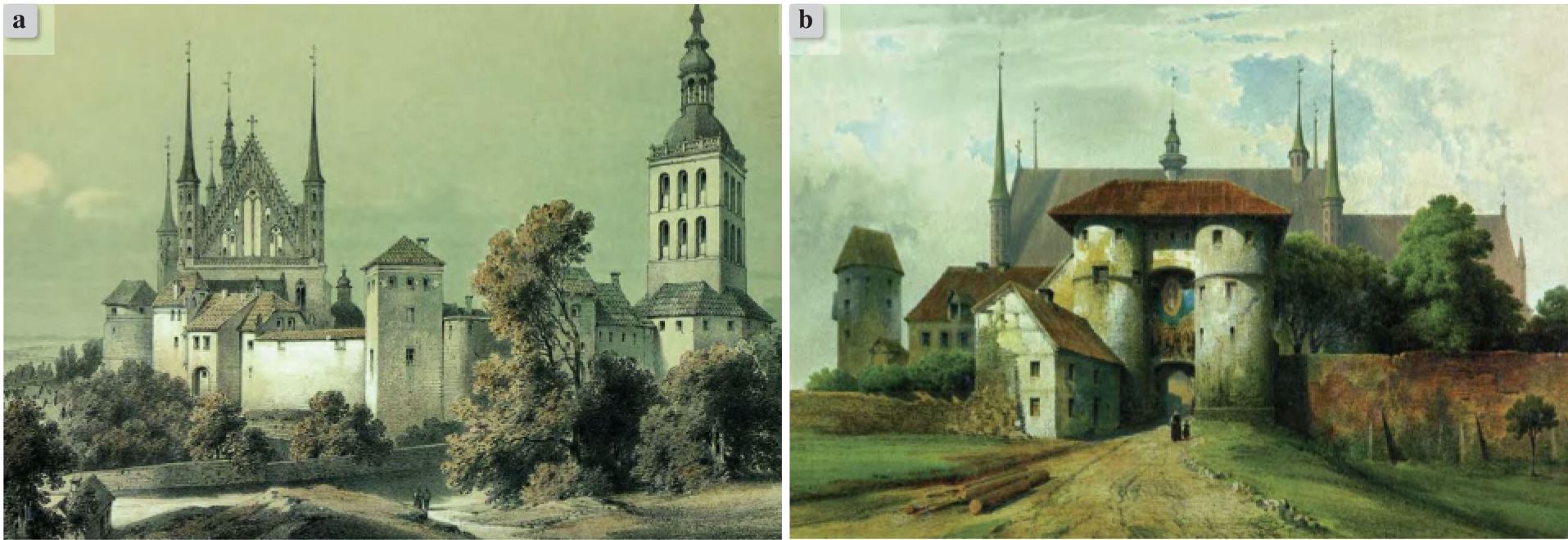
Figure 1.
Lithographs of F. von Quast from the mid-nineteenth century a) cathedral hill from the west side; b) south gate
The cathedral complex situated on the fortified hill in Frombork is considered one of the most artistically significant heritage sites in both Poland and the wider global context. Despite multiple destructions and limited early modern alterations, it has preserved the core elements of its medieval architectural design. The Archcathedral Basilica is a Gothic brick hall church comprising a central nave with two flanking aisles. It measures approximately 97 meters in total length – 60 meters for the nave and 29 meters for the chancel – and spans between 12.4 meters in the chancel and 25.2 meters in the nave. The vault rises to a height of 16.5 meters at the bosses. The eastern end comprises a five-bay chancel with a straight termination, accompanied by a northern sacristy and a late 15th-century two-bay St. George’s chapel to the south. The western nave entrance is marked by a porch, with a two-bay, low vestibule added to the southern side during the late Middle Ages. The cathedral was predominantly built of brick, utilizing monk bond in the chancel and lower nave, and Flemish bond in the upper nave and porch, while stone was applied for the foundations and specific architectural elements. Its towerless western façade, distinguished by a triangular gable flanked by octagonal corner turrets, is unique within the Teutonic Knights’ architectural tradition. The nave and chancel of the cathedral are topped with a gable roof structure. The roof truss above the chancel, the oldest section of the structure, was constructed from timber felled between 1333 and 1336, incorporating some reused elements from the previous church. The nave’s roof truss, dating to the 16th century, was rebuilt following the fire of 1551, with timber sourced between 1550 and 1552. The roof framework features a beam ceiling supported by three tiers of collar beams in the chancel and six tiers in the nave [23, 24].
3. ADAPTABILITY POSSIBILITIES AND INVESTMENT PLANNING
Adapting an existing building to new functional conditions involves a series of challenges, including working with new structural systems, the possibility of introducing changes, repairs or replacements, and complying with current regulations such as building codes, fire safety standards, etc. [7]. Changing the function of a building with great historic significance (even partially), is often a difficult task and requires the conservator's permission. The Act on the Protection and Care of Monuments regulates the requirements of conservation protection, limiting the free disposal of these objects, particularly concerning their modification [16]. Moreover, in accordance with the aforementioned act, some of the most valuable monuments are entered in the provincial register of monuments, which imposes on investors the requirement to seek agreement on any work on such objects with the provincial conservator of monuments. Monuments of particular importance for the culture of Poland appear on Poland's official national Historic Monuments List. The significance of a historical monument is underscored by its designation through a formal act of the President of the Republic of Poland. Currently, this highest distinction has been awarded to 129 monuments [25], including Archcathedral Basilica in Frombork together with the cathedral complex.
Investment aimed at restoring the splendour of one of the most significant monuments in north-eastern Poland and providing wider access to the facility for visitors due to its unique character was preceded by the preparation of complex documentation to provide a detailed assessment and analysis of the state of preservation, establishing the causes of damage and examining how these could be rectified within current regulations. For this purpose, but also to increase the effectiveness of the intended investment, numerous studies were prepared, among others, archival research, an architectural inventory, dendrochronological analysis, microbiological analysis and technical opinion regarding leaks in the higher parts of the walls and vaults. Information, opinions, and conclusions included in the aforementioned documentation, as well as The Venice Charter's provisions emphasizing a clear distinction between all newly added elements and the original elements [26], served as the foundation for formulating detailed guidelines and developing comprehensive design solutions. Furthermore, in accordance with the principles of sustainable development, a comprehensive analysis of visitor needs was conducted, along with an assessment of the planned changes’ impact on the local environment and community. The study included the evaluation of current and projected tourist flows, user expectations, and the accessibility of museum spaces for diverse visitor groups. This approach ensures that the revitalization process not only preserves the cultural heritage values but also addresses contemporary user requirements, thereby guaranteeing the long-term functionality and durability of the historic site.
The analysis of both technical and social needs made it possible to define strategic directions for action, which formed the basis for developing a detailed plan of necessary works. These included, among others, the renovation of the roof covering and structural truss, the adaptation of the attic space to accommodate tourist circulation, and the creation of a permanent museum exhibition. Based on the outcomes of this analysis, an investment budget was prepared, accompanied by an assessment of financial feasibility. Given the complexity of the project and the significant costs associated with its implementation, it was necessary to divide the investment process into several stages. The primary objective was to eliminate the most serious threat to the historic fabric of the cathedral, namely the significant dampness affecting the structure. This approach aligns with the principles set out in the Venice Charter, which emphasize the importance of preserving the authenticity of materials and structure by addressing the root causes of deterioration, while limiting intervention to the minimum necessary. At the same time, this strategy reflects the principles of sustainable conservation, aimed at ensuring the long-term durability and usability of the heritage site, while respecting its historical, environmental, and social values. The conducted analysis identified several causes of dampness affecting the cathedral, one of the key factors being the installation of a stormwater drainage system in its surroundings after World War II, at the turn of the 1960s and 1970s. During the work, the area was significantly raised, which had a negative impact on the dampness of the walls. Another source of moisture causing destructive processes within elements of significant historical value (e.g. polychromes on the vaults) were leaks in the roof covering (Figure 2) causing moisture in the roof truss as well as higher parts of the perimeter walls and vaults. Lack of proper understanding of the causes of excessive moisture and numerous repairs caused the technical condition of the cathedral to deteriorate from year to year.
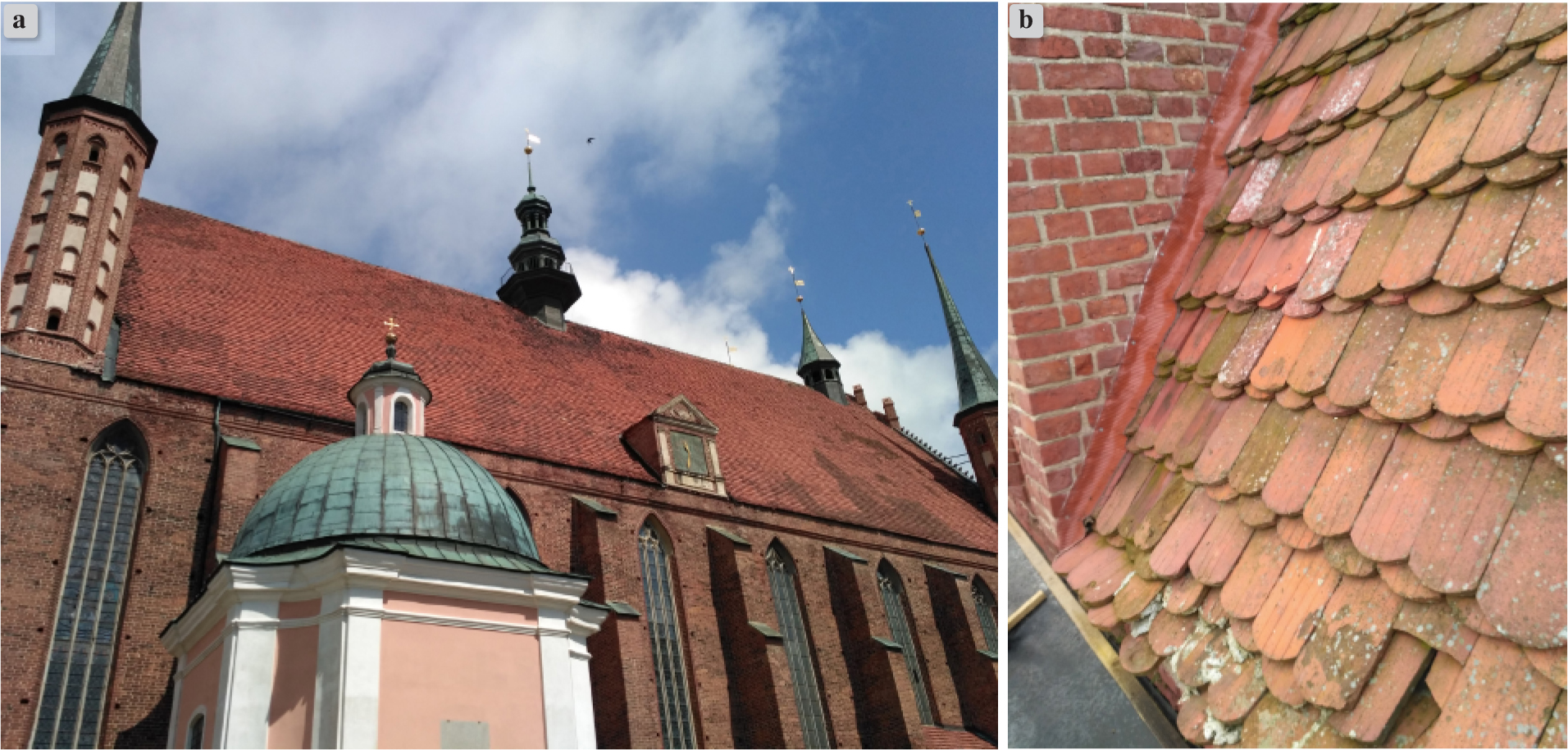
Figure 2.
Condition of preservation of the south nave roof slope a) overall view b) zoomed area (visible broken and destroyed roof tiles)
This article focuses on selected stages of the investment project aimed at the revitalisation of the Cathedral Hill, representing the first step toward restoring the splendour and ensuring the protection of the most valuable structure within the complex. The analysed activities include the renovation of the cathedral’s roof and the adaptation of its attic space, both treated as distinct and sequentially implemented phases of the investment process. The first stage included roof renovation, which had not been done in such a comprehensive way since the cathedral was founded [21, 22, 24]. Starting with the great roof fire in 1551, the roof renovation works initially included only partial replacement of lead sheet roofing with ceramic roofing in 1646. A further renovation took place after the Swedish wars, when the roof and turrets were renovated between 1630 and 1631. In the second half of the 17th century, the roof over the western porch was rebuilt and the roofs repairs (with partial replacements of the truss above the nave) were carried out between 1839 and 1842. Since then, in the interwar period and in 1986-91, the roofs were repaired again and at that time sheathing from boards with roofing felt insulation was introduced. The second stage included the adaptation of the unused part of the cathedral (its attic) for museum and exhibition purposes.
4. ROOF REVITALISATION WORK
The primary objective of the roof renovation was to eliminate the causes of moisture infiltration, repair existing damage, stabilize the roof truss, and prevent further degradation of the historic structure, while simultaneously securing the long-term structural integrity and functional performance of the building.To achieve optimal results, the work was divided into stages. Their implementation, based on interdisciplinary collaboration among experts in monument conservation, architecture, engineering, and natural sciences, enabled a detailed assessment of the building's condition, identification of the causes of its deterioration, and ensured high-quality execution.
Stage I – Research and evaluation of the cathedral roof elements
Stage II – Identification of the causes of degradation
Stage III – Development of technical solutions to preserve and restore the historic fabric and eliminate causes of degradation
Stage IV – Execution of construction and conservation works.
The subsequent section presents a comprehensive account of each phase of the project, detailing the scope of activities carried out and the methodologies implemented.
Stage I, involving dendrochronological analysis, made it possible to determine whether the roof truss had been preserved in its original form and to identify the period from which its individual elements originated. The study revealed that the roof truss over the presbytery was constructed from timber felled between 1333 and 1336. Additionally, some reused elements from an earlier church were identified within the structure, the oldest of which dates back to 1289. In contrast, the roof truss over the main nave is over one hundred years younger. It was constructed using timber from trees felled between 1550 and 1552. Both the nave truss and the central turret structure were built simultaneously, between 1551 and 1552. The timber likely came from local sources, although the possibility of short-distance water transport cannot be excluded [23]. The sampled and analyzed materials clearly confirm the significant historical value of both the presbytery and nave trusses. Owing to the uniqueness and heritage importance of this timber structure, any intervention must be limited to the absolute minimum and preceded by a case- by-case assessment of the technical condition of damaged elements by a team of conservation and engineering specialists during the execution of works.
Stage II involved the preparation of technical assessments [27, 28], which revealed that the condition of the roof covering was poor, with numerous leaks roof tiles of various formats, degraded due to long use. However, the technical condition of the wooden elements of the roof truss was described as good. The most significant deterioration was identified in the zones where the ceiling beams interfaced with the masonry walls. The greatest damage to the perimeter walls was also noticed in this area. Moisture in the cresting area was caused by the incorrect execution of the eaves of the sheathing and the lack of roof flashing. As a result of these deficiencies, rainwater that got under the roof tiles along the entire height of the roof surface was not discharged outside into the eaves but dripped onto the wall crown, subsequently infiltrating the masonry or flowing down onto the vault surfaces. Moreover, observations during heavy rainfall revealed that the significant volume of rainwater flowing from the large roof area, combined with the minimal extension of the eaves beyond the wall edge, caused water to accumulate at the base of the structure, flooding the walls near the ground (plinth area). Several months of monitoring allowed for assessment of the impact of wind-driven rain on the cathedral’s façades. Strong gusts of wind, related to the cathedral’s exposed hilltop position – especially from the Vistula Lagoon side – caused rainwater to penetrate the wall structure, thereby accelerating its deterioration.
Stage III involved the use of information obtained from the two preceding stages, which focused on analyzing the condition of the existing historic fabric. Based on this data, solutions were developed to effectively eliminate the causes of degradation while preserving the structural integrity and historical authenticity of the building.
The scope of this stage included:
complete replacement of the roof covering,
supplementation of the board sheathing,
replacement of flashing elements,
local repairs of the roof truss structural components using traditional carpentry techniques and carefully selected wood species and cross-sections.
The scope of these works did not interfere with the existing structural solutions nor alter the historic appearance of the cathedral.
The next step involved the introduction of solutions not previously applied in the building, aimed at extending the durability of both the roof and the façades. The greatest challenge was to reach a compromise between the conservation authorities’ requirements and the engineering team’s proposals. Ultimately, the overriding goal was to ensure the long-term protection of the structure, which led to the acceptance of modern technical solutions as a necessary measure against ongoing degradation. As a result of these agreements, it was decided to modify the original historic solutions by installing a rainwater drainage system – gutters and downspouts (Figure 5b) – which were absent in medieval architecture. An additional compromise involved the implementation of dampers, which facilitate effective and safe water drainage from the historic structure.
Stage IV involved the implementation of previously planned renovation works. Despite an earlier, detailed assessment of the technical condition of the roof truss, the limited accessibility and lack of lighting in the attic space significantly hindered the full identification of all elements requiring intervention in the form of repairs or supplementary work. Nevertheless, during the course of the renovation, it was determined that the vast majority of the structural elements could be preserved in their existing state without the need for replacement (Figure 3).
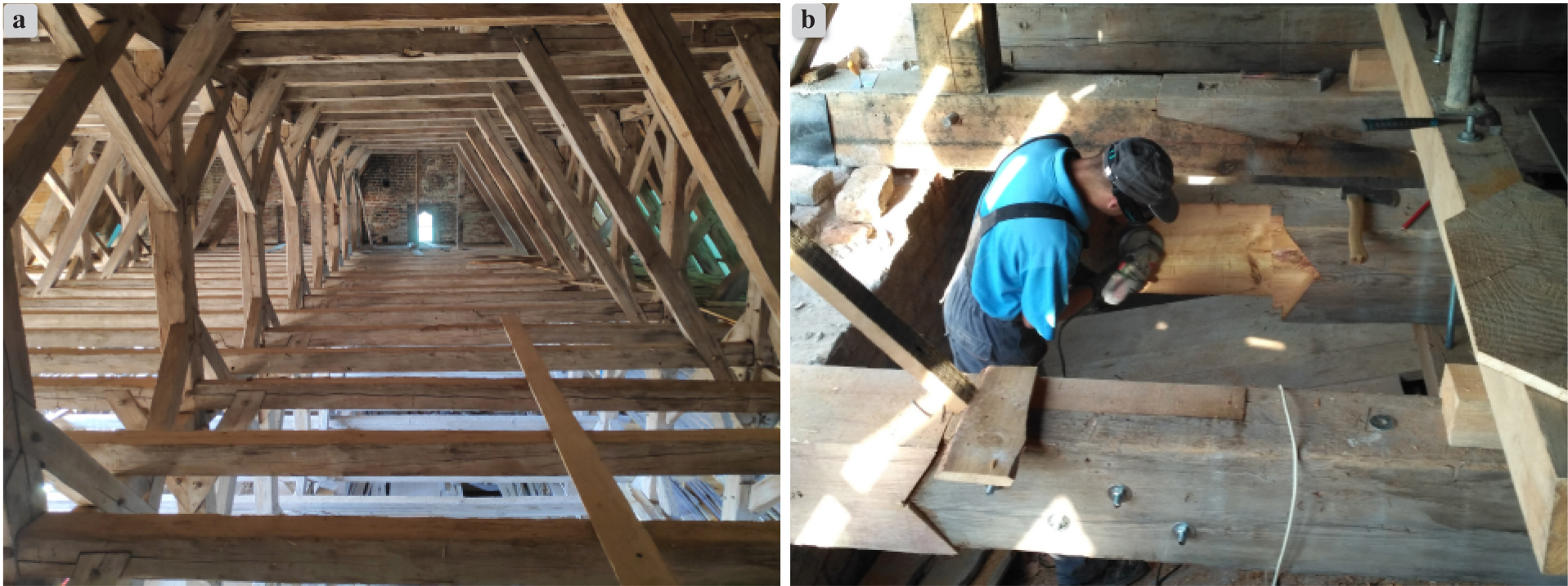
Figure 3.
The internal part of roof truss a), structural elements, b) work on replacing the beam
However, local repairs were necessary in the form of fleeces and filling in missing beam fragments. Moreover, loose carpentry joint repairs were necessary in many places. The rafters and the ends of the parts of ceiling beams bearing on the wall (maintaining the existing cross-sections) were partially replaced (Figure 4b). Roof sheathing made in the 1980s was replaced with new ones made of overlapping boards. In order to reduce the effects of wetting the walls, it was essential to correct roof flashings and extend the eaves overhang that involved the introduction to the roof structural system of chantlates (Figure 4c). In consultation with the conservation services, it was recognised that the proposed solution would not change the roof geometry visibly and would significantly reduce the moisture of walls, both in the eaves and plinth area.
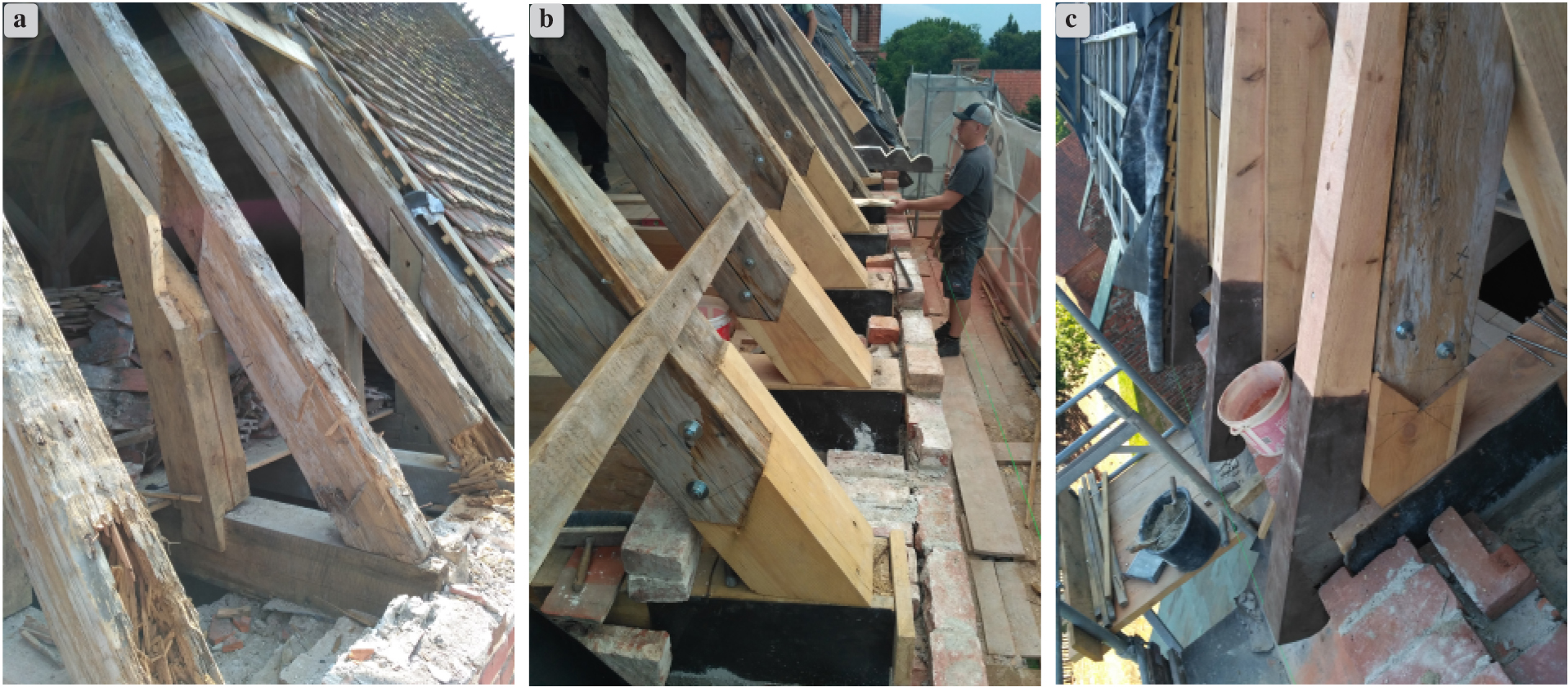
Figure 4.
The eaves zone of the roof a) damaged ends of rafters and floor beams; b) repaired rafter ends; c) correction of the eaves’ length by the use of chantlates
The final stage of the roof renovation was a covering made of plain tiles arranged in a lace pattern. However, during repair works on ceiling beams, roof tiles, probably from the period of roof renovation and replacement of its covering, were found in the haunches. During archaeological research conducted at the same time on the cathedral hill, fragments of roof tiles were found that clearly indicated the original method of covering the roof of the cathedral. In consultation with the conservation services, it was decided to recreate the covering in its original form using monk-nun roof tiles, thus restoring the historic appearance of the roof (Figure 5a).
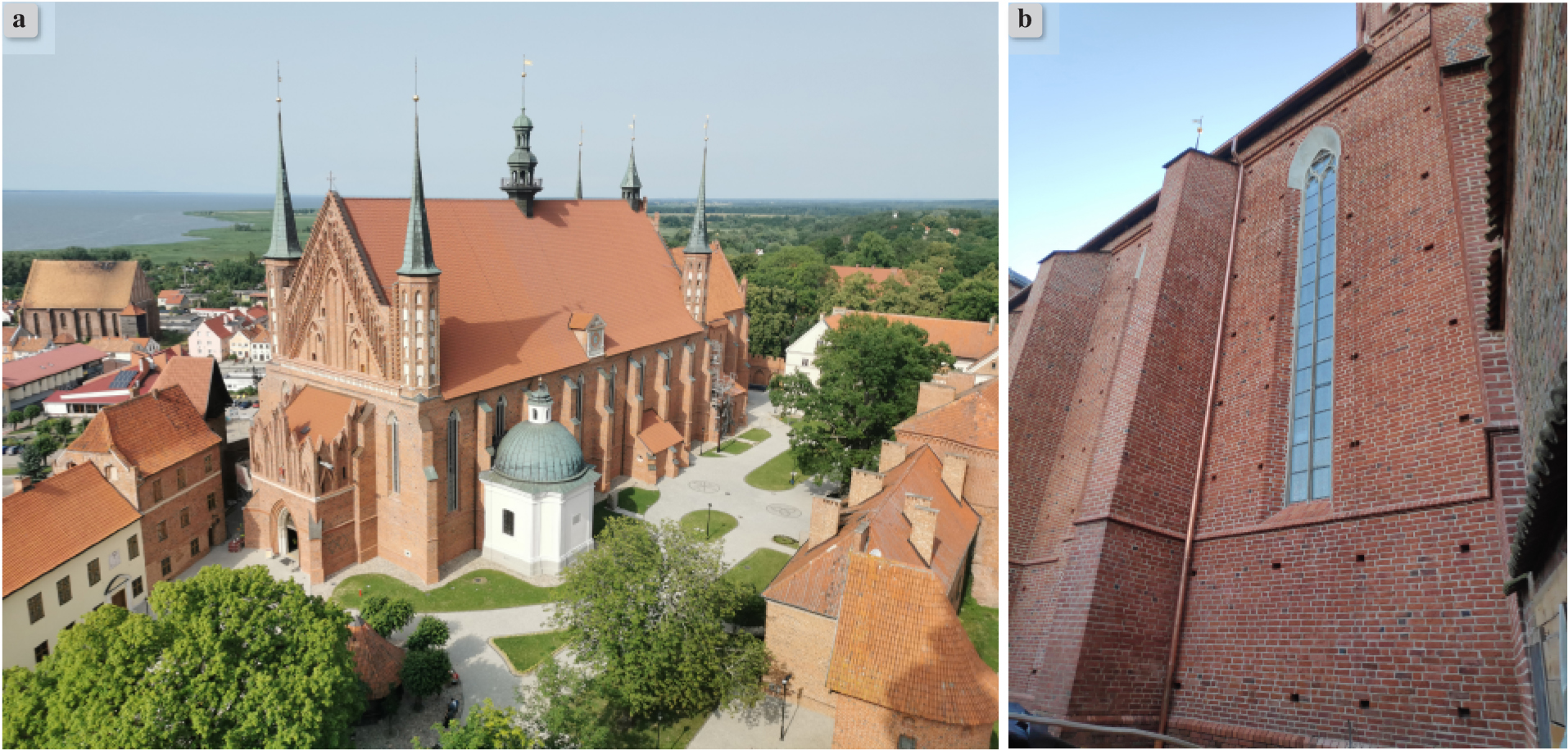
Figure 5.
a) the Archcathedral after renovation works with new roofing, b) the rainwater drainage system
Owing to a comprehensive analysis of the roof's technical condition and interdisciplinary collaboration among experts in monument conservation, architecture, structural engineering, and natural sciences, the underlying causes of moisture infiltration were effectively addressed, the structural stability of the roof truss was secured, and the progressive deterioration of the historic building was successfully mitigated. The renovation works were carried out with respect for the historical fabric, preserving the majority of original structural elements and restoring the roof covering using traditional monk–nun tiles. A thorough assessment of the building proved essential to the success of the project, enabling precise identification of deterioration mechanisms and the selection of appropriate, technically sound conservation solutions.
5. ATTIC ADAPTATION FOR MUSEUM AND EXHIBITION PURPOSES
A conscious approach to the revitalisation of historic buildings enables both the emphasis and preservation of their most important values, as well as the creation of new ways of functioning, using modern technologies and taking into account new conditions. An excellent example of respecting the historic structure while introducing new function is the adaptation of non-habitable attic space for exhibition purposes. During the investment planning process, the principles guiding effective revitalization of historic buildings were adopted. This approach not only ensured the preservation of the authenticity and integrity of the heritage structure, but also allowed it to gain new meaning and function, adapted to the needs of contemporary users.
The aforementioned assumptions, the tenets of the Venice Charter [26], and the pursuit of solutions consistent with the principles of sustainable development [29, 30, 31, 32] were the basic guidelines for the design process. In accordance with the adopted principles, a team consisting of the author (the project coordinator), user representatives, people responsible for preparing the exhibition, the designers, and representatives of conservation services developed the range of work that would allow a potential recipient to display individual architectural elements of this part of the cathedral in a clear and attractive way and ensure the safety of visitors. These measures constitute a representative example of effective interdisciplinary cooperation, which is a fundamental prerequisite in the process of historic building adaptation.
The principal objective was to respect the historical context and to limit intervention in the historical tissue of the attic to an absolute minimum. The venture made it possible for visitors to admire the multi-level roof truss structure (6 levels of collar beams), constituting a valuable monument of carpentry art. Due to the enormous historical value of the attic space, it was obvious that it had to remain unchanged, which influenced the decision to arrange the attic space in the form of an educational path with photograms showing the history of the object and its architectural detail (Figure 6). The exhibition also included equipment enabling tourists to get acquainted with the traditional construction techniques used at that time and learn about the history of the cathedral’s construction [33].
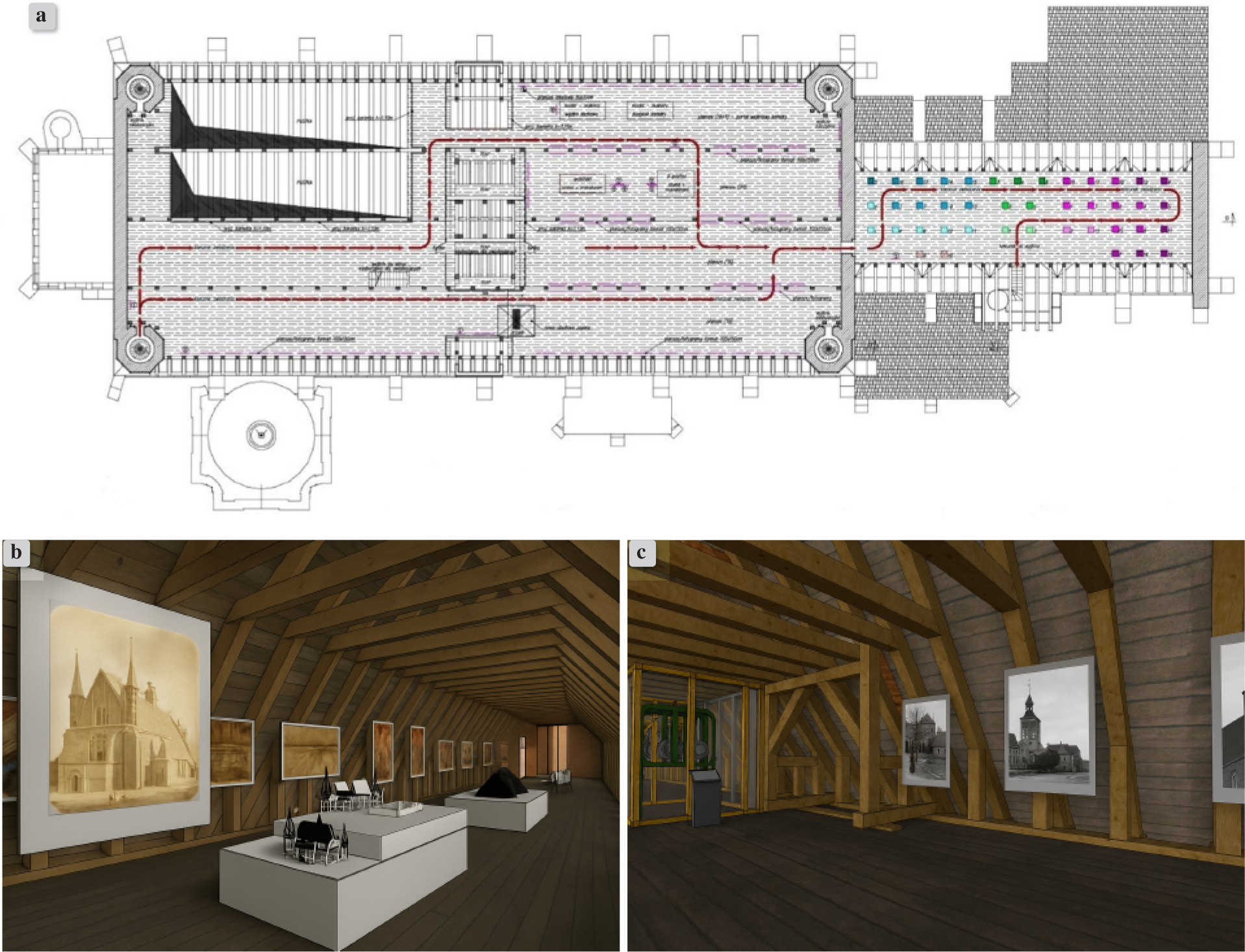
Figure 6.
Adaptation of cathedral’s attic for museum purposes a) attic floor plan with designated visitor circulation path, b), c) visualization of the exhibition
However, this approach, during the adaptation phase, required the resolution of numerous complex and demanding design decisions. A fundamental difficulty was communicating the cathedral’s nave with the attic space in a way that ensures the safety of visitors. The only communication routes between the cathedral ground floor and the attic were narrow, spiral staircases with winder steps located in the corner turrets of the nave and a similar staircase located in the chancel. The following circulation scheme communication routes were proposed: the entrance to the attic from the nave via the existing staircase in the southwest tower and the descent through a staircase located in the chancel part. An additional significant challenge, resulting from the historic character of the cathedral, was the inability to adapt planned escape routes to currently applicable fire protection regulations set in [34], as well as to install fire protection devices such as indoor hydrants or automatic smoke ventilation essential for the safety of visitors. The situation required a fire safety expertise involving departures from current regulations and the substitution of solutions that would ensure the safety of visitors as well as the historic building itself in the case of fire. An analysis of evacuation conditions assumed the presence of a maximum of 30 people at the same time in the attic. To mitigate risks, the attic was equipped with emergency and evacuation lighting, along with a fire detection and alarm system. Natural ventilation in the form of windows with blinds (in the gable walls) as well as eaves and ridge joints was intended to remove smoke from the attic space.
Beyond ensuring visitor safety, the scope of intervention was deliberately restricted to the absolute minimum, in line with internationally recognized principles of heritage conservation, which emphasize the maximal preservation of original fabric and advocate intervention only when deemed necessary to ensure structural integrity or functional viability. The primary technical measures focused on correcting the existing wooden floors, which, due to significant deformation of the ceiling beams, were unsuitable for further use. To restore the functionality of the flooring, the beams were levelled by screwing square beams to their side surfaces that were also a supporting structure for the new wooden floor (Figure 7a).This approach was selected for its reversibility and the ability to control the extent of intervention in the original structure. Demolition work of the existing floor provided access to the crystal vaults above the nave. Interesting elements of the cathedral's architecture were exposed (Figure 7b). One of the interesting elements of the building was a clock mechanism, which owing to its technical and historical value was exposed by making a glass casing, combining protective and educational functions. Other works included the implementation of security measures in the form of balustrades.
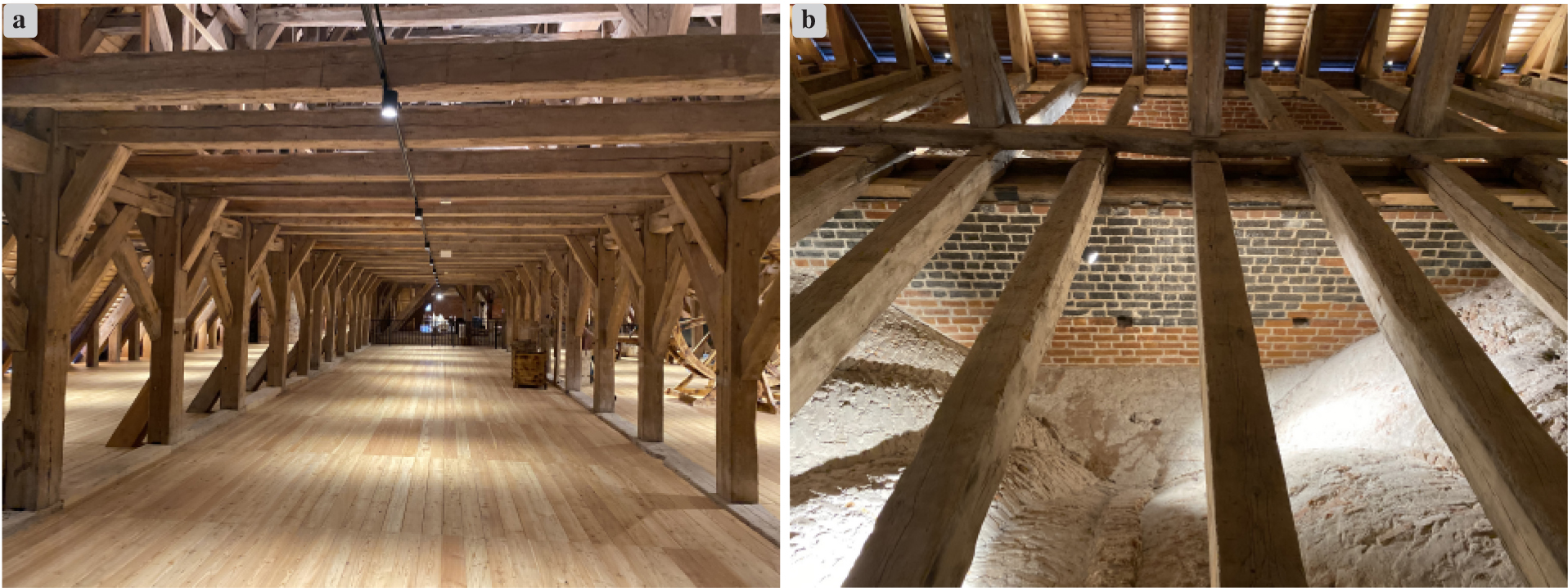
Figure 7.
The attic space after renovation a), roof truss and wooden floor; b) vaults over the nave
The adaptation of the cathedral’s attic exemplifies the principles of sustainable development, in which meeting the needs of the present community without limiting its development for future generations is a fundamental objective. The idea of adapting the previously unused parts of historic buildings is a good way to attract visitors and teach others. The outcomes of the work not only enhanced the functional use of the attic space but also contributed to a deeper understanding of the concealed layers and technical solutions embedded within the historical structure of the cathedral. This approach reflects a balanced integration of preservation, adaptation, and knowledge dissemination, aligning with contemporary standards in the field of heritage conservation.
6. CONCLUSIONS
Revitalized historic structures serve not only as tangible testimonies to the richness of European cultural heritage, but also play a crucial role in preserving social identity, cultural continuity, and the unique local character of urban environments. Contemporary approaches to the revitalization of heritage buildings – particularly those with centuries of history – require an interdisciplinary and multiphased methodology that integrates technical, conservation, and socio-cultural considerations. Properly planned and executed conservation efforts must be grounded in a comprehensive analysis of the building, encompassing the identification of its architectural and historical values, an in-depth diagnosis of deterioration processes, as well as a critical assessment of previous interventions and structural modifications. Such an approach aligns with internationally recognized heritage protection standards, including the Venice Charter (1964), which underscores the importance of preserving authenticity and minimizing excessive or speculative reconstructions. The adaptation of historic buildings for contemporary use should not aim at replicating past solutions verbatim, but rather encourage a creative, informed, and context-sensitive design strategy that bridges the historical essence of the site with current functional and technological demands. The objective is to achieve a balanced integration between tradition and innovation, enabling the building to acquire new meaning while retaining its cultural and architectural integrity. Exemplary revitalization projects are those that subtly reveal and enhance the aesthetic, spatial, and structural qualities of a monument, while avoiding the application of historically imitative or visually dominant architectural elements detached from the original context. Such an approach contributes not only to the broader architectural discourse but also to the advancement of sustainable heritage conservation practices. Moreover, all ventures connected with historical buildings should consider the principles of the Venice Charter, adopted in 1964 by the Second International Congress of Architects and Technicians of Historical Monuments [26].
The successful revitalisation of the Archcathedral Basilica in Frombork, inscribed on Poland’s register of Historic Monuments, not only reinstated the architectural integrity of the monument and effectively arrested its progressive deterioration, but also constitutes a significant contribution to the advancement of contemporary conservation theory and practice. The project demonstrates that interdisciplinary diagnostic procedures – integrating dendrochronological dating, microbiological assessment and structural analysis – can substantially enhance methodological standards for the examination and intervention in medieval timber structures. The evaluation of project outcomes, conducted with reference to the adopted methodological assumptions, confirms that the conservation strategy based on minimal, reversible and evidence-based measures ensured the structural stabilisation of the historic roof truss, mitigated critical material and mechanical risks, and preserved the authenticity of the historic fabric while meeting modern safety, accessibility and durability requirements. The massive commitment of all construction process participants in this undertaking has resulted in awarding it the title Zabytek Zadbany 2023 in the nationwide competition of the Minister of Culture and National Heritage. However, the main goal for the renovation works carried out on the Cathedral Hill was to save an object of enormous historical value, important both for the local community and history researchers as well as crucial from the point of view of the promotion of Poland.
Moreover, the adaptive reuse of the historic attic for exhibition and educational purposes illustrates a broader paradigm shift in heritage conservation: historic buildings are increasingly regarded not as static artefacts to be preserved unchanged, but as dynamic cultural resources capable of generating knowledge and fostering community engagement. This perspective aligns with contemporary heritage theory, which emphasises the complementary nature of preservation and transformation. By demonstrating how minimal, reversible interventions can safeguard the historic fabric while accommodating contemporary functional requirements, the revitalisation of the Frombork Archcathedral offers an important contribution to the advancement of sustainable conservation practice. It provides a coherent model for integrating historic substance with modern use without compromising authenticity, thereby enriching both the theoretical and practical discourse of European heritage conservation.
The implemented conservation measures – designed as minimal, reversible and compatible with the historic fabric – proved adequate in stabilising the medieval timber truss, improving structural safety and preventing further deterioration while preserving material authenticity, in full alignment with the principles of the Venice Charter. The adaptation of the attic space demonstrated that the methodological assumption of integrating conservation with contemporary functional requirements was achieved, enhancing accessibility and educational value without compromising the monument’s integrity. Overall, the outcomes validate the adopted methodology and highlight its suitability for revitalisation projects involving complex historic structures.