
1. INTRODUCTION
Palliative care facilities can be designed in line with the Sustainable Development Goals (SDGs), which address key global challenges by promoting health, sustainability, and equity. A particularly relevant directive within the United Nations’ SDGs is Goal 3, “Ensure healthy lives and promote well-being for all at all ages,” which emphasizes full social inclusion in access to healthcare. Ensuring equitable access requires addressing disparities related to age, socioeconomic status, and cultural background, as highlighted in SDG 10. Palliative care responds directly to these challenges by offering a comprehensive, personcentered approach for patients with life-limiting illnesses. It is defined as the prevention and relief of suffering for both patients and their families facing problems associated with life-limiting illnesses. This involves addressing not only physical discomfort but also psychological, social, and spiritual suffering. According to the World Health Organization (WHO) [1], this form of care plays a critical role in improving quality of life and should be integrated into primary health services. As a matter of equity and dignity, its global availability is essential for universal health coverage [2]. In this context, the architectural design of care environments becomes a critical factor in supporting holistic and dignified care.
In Poland, access to palliative care remains limited, leading to long waiting times and insufficient support for many patients. The 2019 report of the Supreme Audit Office (NIK) indicated that the average waiting time for hospice admission was five days for inpatient facilities, seven days for adult home hospices, and four days for pediatric hospices. Maximum delays reached 76 days for inpatient care and 134 days for home care [3]. In the Greater Poland Voivodeship, the scale of the problem is difficult to assess due to the absence of mandatory reporting on waiting lists, which prevents accurate estimation of how many patients are awaiting care or those who died before admission. The report also highlighted the restricted availability of hospice services. Under Polish law, access is primarily granted to patients with oncological diseases, who represent almost 90% of hospice admissions. Yet, according to the World Health Organization (WHO), cancer patients account for only 39% of those requiring palliative care in Europe. This indicates a substantial unmet need.
Other indicators also illustrate disparities in access to palliative care facilities. The European Association for Palliative Care (EAPC) guidelines recommend providing around 100 beds per 1 million inhabitants to ensure adequate access to inpatient palliative care [4]. The Greater Poland Voivodeship, which was the focus of the study, meets this requirement with an average rate of 107.8 beds per 1 million inhabitants. Unfortunately, a spatial analysis of the distribution of palliative care facilities presents a less optimistic picture. These facilities are located in only 19 out of 35 districts, and the 100-bed-per-million-inhabitants threshold is met in only 13 out of 35 districts.
A review of the literature highlights a historical shift in the perception of death and dying, transitioning from a natural process occurring at home to a medicalized experience within institutions [5, 6]. This shift has influenced the way end-of-life care spaces are designed, often failing to consider the emotional needs of patients. Additionally, controversies surround the role of hospices in society and their perception as places of suffering [7, 8].
The architectural quality and atmosphere of hospice spaces significantly influence patient comfort and well-being [9, 10]. A homelike atmosphere is defined by various spatial and design elements, including a less institutional feel, recognition of patient individuality (e.g., opportunities for personalization), and spaces that accommodate family stays and support patient rituals [11]. However, many facilities in Poland are often architecturally inadequate to meet patients' emotional needs, negatively affecting their well-being and comfort [12], [13].
The concept of the healing environment in healthcare architecture highlights the role of space in supporting patient well-being. Research by Ulrich [14] showed that elements such as daylight or views of nature can not only reduce stress but also alleviate pain, which is of particular importance in palliative care. Similarly, Linton [15] emphasized the value of a holistic, human-centered approach that addresses comfort and emotional needs alongside therapy. Today, evidence-based and experience-based design frame architecture as an active tool that promotes comfort, safety, and dignity in care settings.
This study aims to identify key spatial features that support the process of dignified dying, which may serve as the basis for developing design guidelines that promote the well-being of terminally ill patients. The hypothesis posits that creating homelike environments, incorporating elements such as appropriate lighting, finishing materials, and access to nature, can significantly enhance patients’ comfort and wellbeing [16].
Beyond identifying design-related challenges in the interior architecture of hospices in the Greater Poland Voivodeship, this study also addresses a significant gap in the literature regarding spatial strategies that support patient well-being in palliative care. The existing body of research is insufficient to establish comprehensive guidelines for creating supportive environments. Ultimately, the study seeks to emphasize the importance of a holistic design approach that responds not only to medical needs but also to the emotional and spiritual dimensions of care for individuals in the end of life.
2. MATERIALS AND METHODS
To explore the impact of the interior architecture of inpatient hospices on the quality of life of palliative care patients and validate conclusions from the literature review, a survey was conducted among employees and volunteers of hospices in the Greater Poland Voivodeship. The selection of this research group stemmed from the fact that these individuals observe and respond to patient needs daily, providing reliable insights into the requirements of users of such facilities.
The study adopted a quantitative approach, utilizing a questionnaire developed specifically for this study. The survey questions were developed based on a literature review, particularly influenced by findings from the study "The Opinion of Poles on Palliative Care" [17]. That study focused on the opinions of individuals not professionally involved in medicine, which may have meant respondents expressed only their perceptions of palliative care. In contrast, this research targeted professionals involved in palliative care to gain deeper insight into the actual needs and experiences of patients.
Furthermore, research highlights that engaging medical staff in the design process supports the creation of environments promoting privacy and safety, which is crucial for ensuring optimal care [11]. In interior design, facilities created through participatory approaches are more likely to adapt to social changes and meet users' cultural, emotional, spiritual, and practical needs. Increasingly, design processes involve users directly rather than solely focusing on them. Understanding user needs – patients and staff in this context – is sought by integrating them into the design process [18]. Participation, leveraging the knowledge and experiences of various stakeholders, can comprehensively enhance the design process of medical facilities.
Due to the limited number of inpatient palliative care facilities in the Greater Poland Voivodeship, recruiting the research group was challenging, which influenced its size, comprising 24 respondents, including doctors, nurses, medical caregivers, and volunteers with experience in inpatient and home hospice care. Inclusion criteria were current or previous professional or volunteer experience in palliative care and informed consent to participate. Exclusion criteria included lack of palliative care experience and being underage. While the research group does not replace the direct voice of patients, it represents their perspective due to their involvement in palliative care processes. This approach ensures the study avoids placing additional strain on vulnerable patients.
The research tool was a questionnaire developed specifically for this study consisting of 26 questions divided into seven sections:
Sections 1–3: Sociodemographic questions regarding age, gender, education, position, and work experience in palliative care.
Section 4: Questions about palliative care from the perspective of medical staff knowledge and experience.
Section 5: Questions on the optimal atmosphere in inpatient hospices, including interior aesthetics, noise levels, lighting, and access to nature.
Section 6: Detailed questions about inpatient hospice operations, covering infrastructure, equipment, and service availability for patients and their families.
Section 7: Questions about patient living spaces, focusing on functional needs and architectural quality.
The questionnaire included single-choice questions, Likert-scale questions, and open-ended questions. The tool underwent a pilot study with eight individuals experienced in palliative care to ensure question clarity and validity.
Participants were recruited through direct contact with hospice facilities, professional associations, social media, and targeted emails to specific medical personnel profiles. The survey was available electronically via Microsoft Forms. Participation was voluntary and anonymous, and no incentives were offered. Before starting the survey, respondents were informed about the study's purpose, anonymity, and their right to withdraw at any stage without explanation. Data collection took place between April and June 2024.
3. RESULTS AND DISCUSSION
This study aimed to understand how hospice architecture affects the comfort and well-being of terminally ill patients from the perspective of medical staff and to formulate guidelines for designing spaces that support patient well-being in palliative care. The survey conducted among hospice staff and volunteers in the Greater Poland Voivodeship provides valuable insights into preferences for designing palliative care spaces, which may be crucial for improving their quality.
The analysis of sociodemographic data revealed that the majority of respondents were women (87%), reflecting trends in the healthcare sector, where professions such as nursing are predominantly female. The diversity of occupations and roles held by respondents, including nurses, psychologists, and volunteers, provides a broad spectrum of perspectives on the needs of hospice patients.
3.1. Preferences for hospice atmosphere
One of the key findings is the strong preference among medical staff for a homelike atmosphere in hospices. When asked to compare a homelike and clinical atmosphere, 88% of respondents favored a homelike environment. This supports the research hypothesis and aligns with previous studies emphasizing the importance of homelike settings for palliative care patients [19, 16]. According to respondents, a homelike atmosphere can be achieved through both aesthetic and functional means. Such an environment can reduce stress and anxiety in patients, which is crucial during the end-of-life stage [20].
Respondents indicated that anxiety is the most significant burden for terminally ill patients (45%), surpassing physical pain or loneliness. Emotional support and the presence of loved ones (58%) were identified as the most effective means of alleviating anxiety. This aligns with Cicely Saunders' concept of “total pain”, which encompasses physical, emotional, social, and spiritual suffering [21]. Creating additional spaces for family presence and farewells is essential to address this primary need for patient comfort.
Furthermore, when comparing a clinical atmosphere to that of a resort, the majority of respondents (63%) preferred the resort-like atmosphere as appropriate for the function of an inpatient hospice. This suggests that relaxing and aesthetic elements may play an important role in enhancing patient comfort. However, in the final comparison, a homelike atmosphere was preferred over a resort-like atmosphere by 83% of respondents, underscoring the importance of creating environments that resemble a home.
Interestingly, medical staff were more likely than the general population to identify hospices as the optimal setting for end-of-life care. Unlike previous studies by Kurpas, Łukaszyk, and Mroczek [17] or Wieczorek [22], where most respondents preferred home-based palliative care, this study suggests that medical staff recognize the benefits of professional hospice care. These differences may stem from the medical staff's experience in providing comprehensive palliative care, which is often challenging to achieve at home. Respondents evaluated the optimal conditions in a hospice using a 5-point Likert-scale and rated intimacy, a sense of family, professionalism, tranquility, and dignity as the highest. This highlights their potential significance for patients in the context of hospice care. As shown in Figure 1., sterility was the only aspect rated negatively, aligning with the preference for a homelike atmosphere over a clinical one.
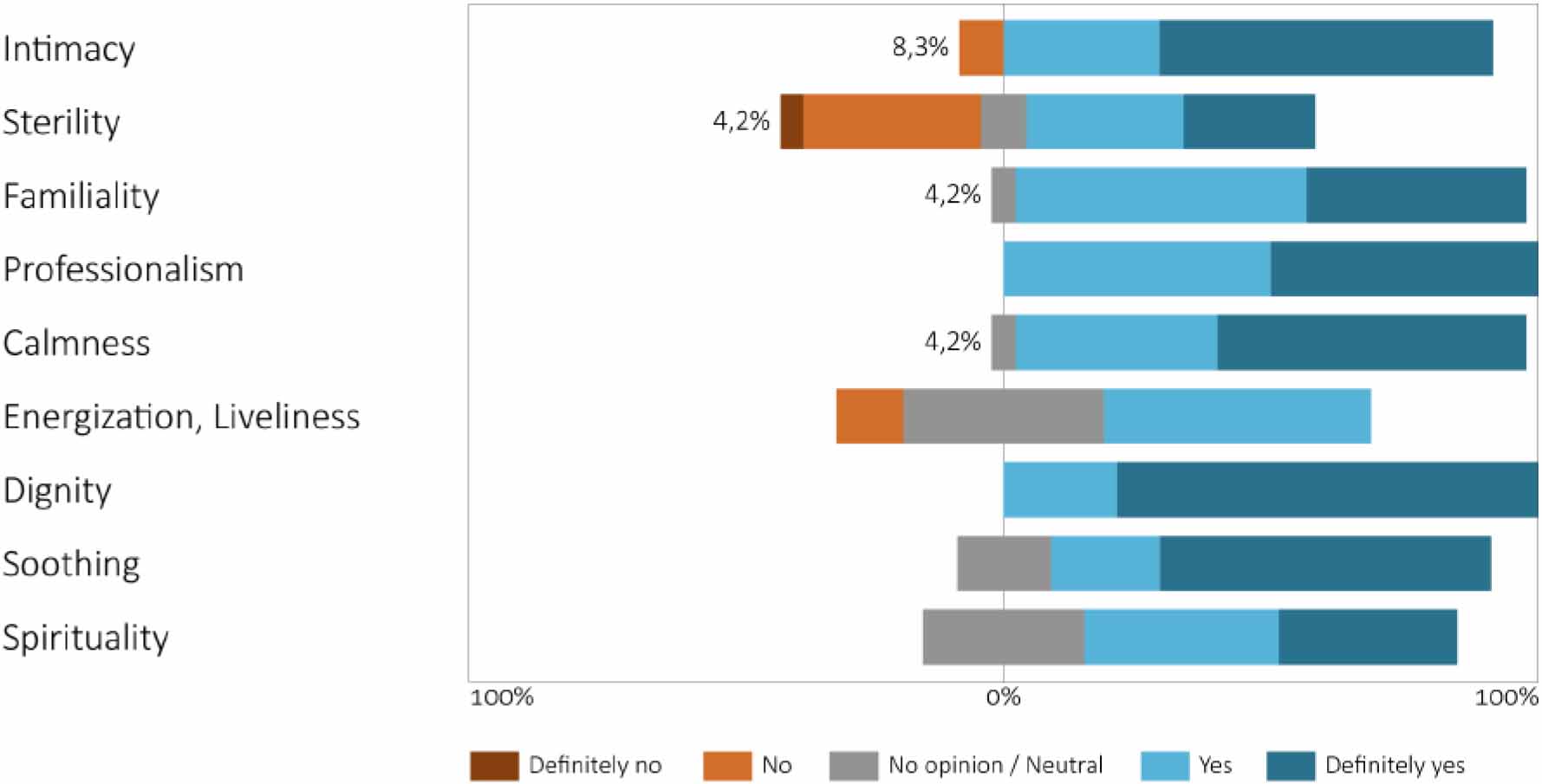
Figure 1.
Optimal characteristics of the hospice atmosphere as perceived by the respondents
3.2. The importance of shared and private spaces
The strong preference for single- and double-occupancy rooms (96% of responses combined) underscores the importance of privacy and intimacy during the final stages of life. The lack of interest in four-person rooms suggests that larger shared spaces are perceived as less comfortable and less conducive to meeting individual patient needs.
Respondents highlighted essential room features, such as a bed, storage for personal belongings, a lift, and a private bathroom. Notably, the inclusion of an extra chair or armchair for a family member was emphasized, reflecting the importance of family presence in alleviating patient anxiety. Conversely, low interest in having a kitchenette within the room (41.7% of respondents considered it unnecessary or unnecessary) suggests that this feature could be excluded from room designs without impacting patient or family satisfaction (Fig. 2).
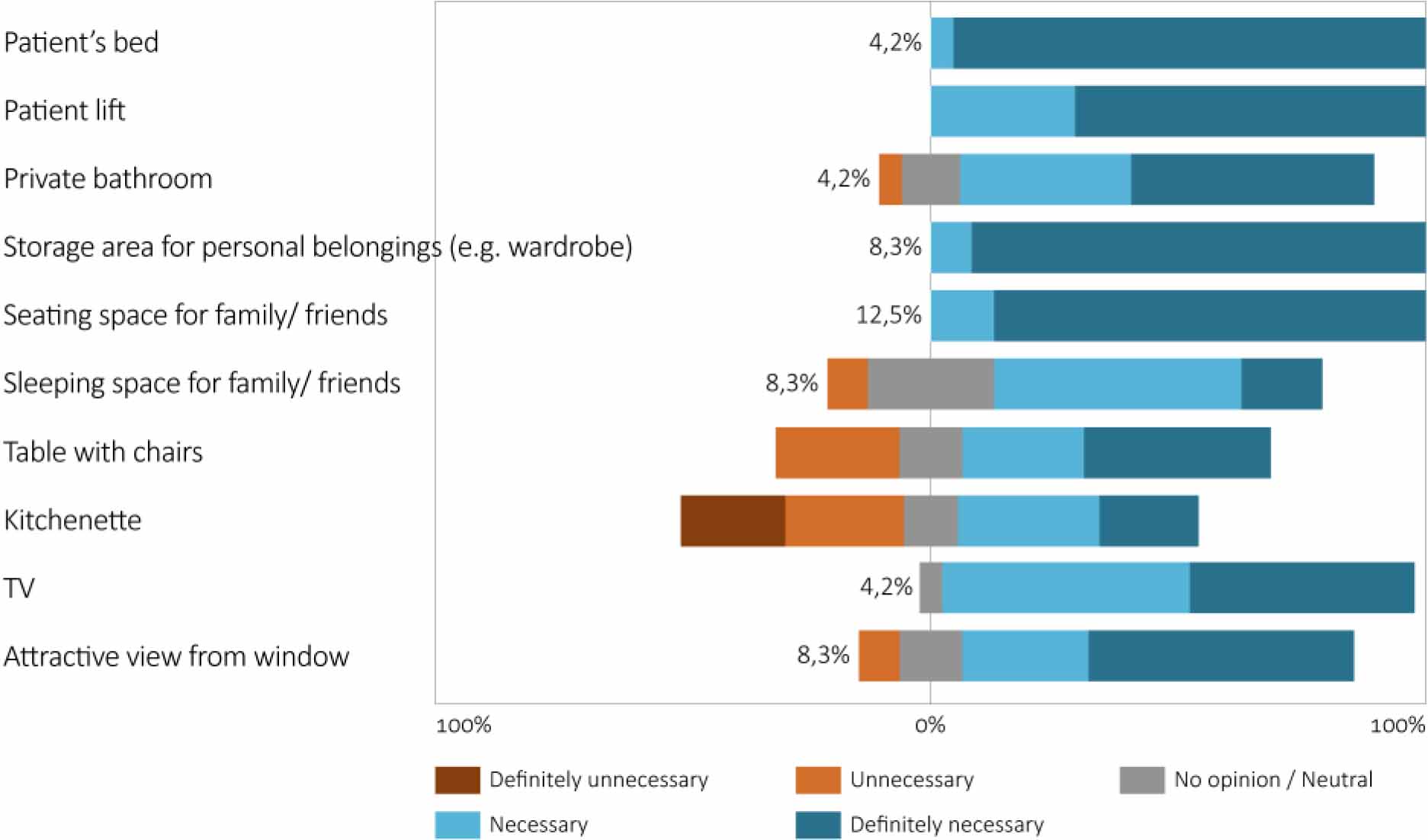
Figure 2.
Importance of the essential patient's room features from the perspective of medical staff
The most commonly utilized spaces in hospice facilities were identified as the shared living room, chapel, and outdoor areas. This indicates the need for designing spaces that promote social interactions and provide access to nature. Scientific evidence widely supports the positive impact of green spaces and natural environments on patient well-being [23]. In contrast, areas such as communal kitchens, exercise rooms, and quiet rooms were less frequently used. This could be attributed to the advanced health conditions of patients or the overlap of these functions with those of private rooms. However, mixed opinions on creative spaces and libraries suggest that, for some patients, these areas may serve as valuable emotional or spiritual support elements (Fig. 3).
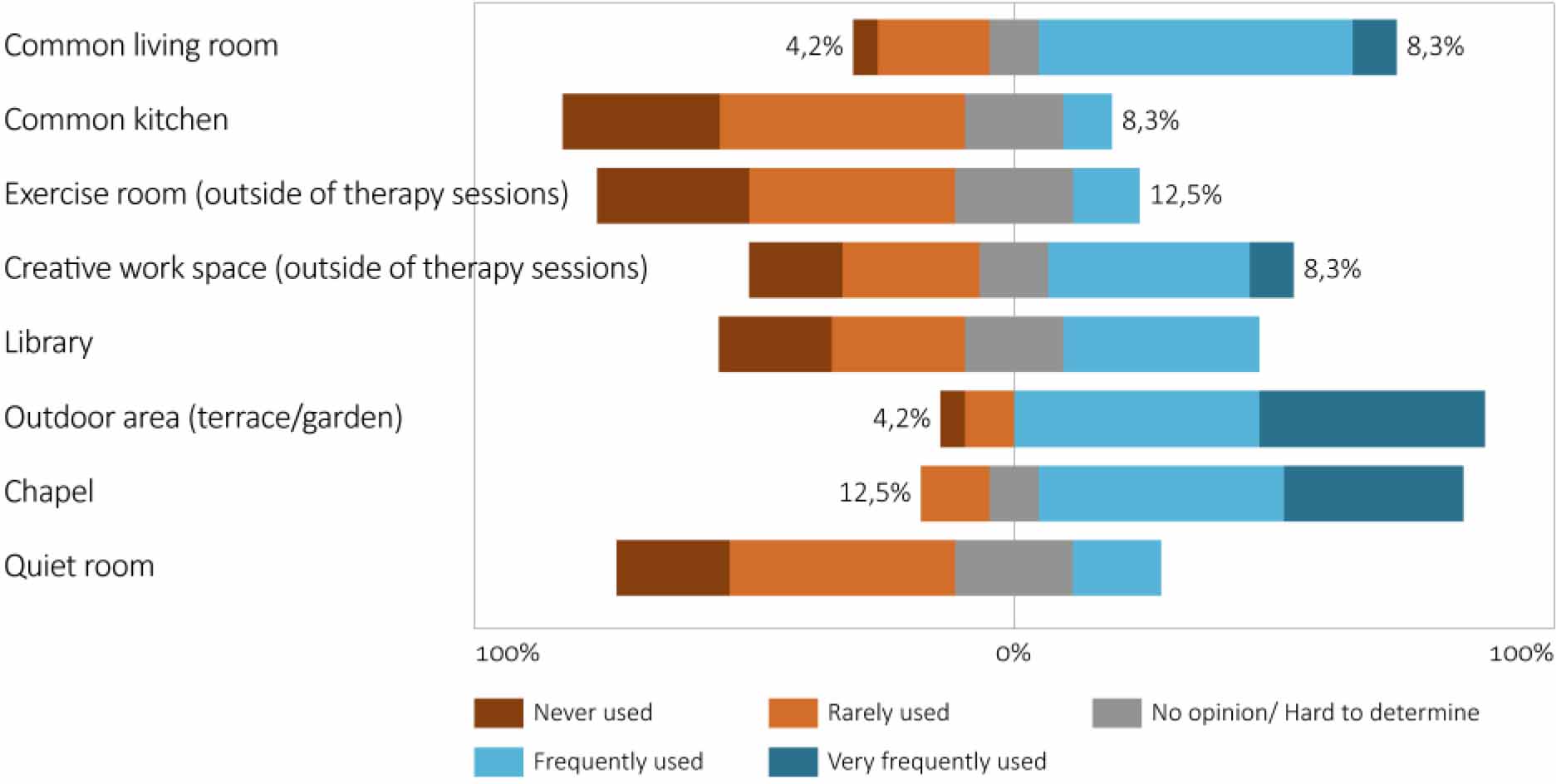
Figure 3.
Assessment of frequency of use of listed spaces by patients from the perspective of medical staff
4. CONCLUSIONS
The results of this study reveal significant differences in preferences for end-of-life care settings based on the specific characteristics of the respondent group. In prior research such as “The Opinion of Poles on Palliative Care” [15], where respondents were not professionally involved in healthcare, the home was overwhelmingly perceived as the ideal place for dying. The home was associated with intimacy, comfort, family closeness, and a familiar environment.
Conversely, in this study, hospice staff unanimously indicated that hospices, provided they maintain a homelike atmosphere, are the best environment for end-of-life care. They emphasized that hospices offer professional medical care and psychological support that is difficult to provide at home while still ensuring warmth and security. This divergence may arise from the medical staff's direct experience with the needs and emotions of terminally ill patients, enabling them to understand what can best support patients in the final stage of life by combining professionalism with empathy and experience.
4.1. Implications for interior design
The findings of this study have significant implications for designing inpatient hospice interiors, offering a basis for developing design guidelines to support patient well-being. Creating spaces with a homelike character, incorporating elements such as warm lighting, natural finishing materials, and access to nature, can significantly enhance patient comfort and overall experience.
The study highlights the importance of private spaces that foster dignity, intimacy, and personalization. The preference for single- and double-occupancy rooms indicates the need to prioritize these layouts in future hospice designs. Personalization can be supported by allowing patients and their families to incorporate personal items into the room design, enhancing the sense of familiarity and comfort. Essential features such as private bathrooms, sufficient storage, and accommodations for family members, like an additional armchair or bed, should be standard in patient rooms.
Common spaces, including shared living rooms and outdoor areas, are vital for facilitating social interactions and providing a sense of normalcy for patients and families. Access to green spaces or gardens can offer restorative effects, reducing stress and improving emotional well-being. Designing chapels or spiritual spaces is equally important, as they provide an environment for reflection and solace.
Given the crucial role of family presence in alleviating patient anxiety, the inclusion of family-focused spaces is essential. Design elements such as family lounges, spaces for extended stays, and areas for quiet goodbyes can create an environment that supports both patients and their loved ones during emotionally challenging times.
The findings also underline the need to avoid sterile, overly clinical environments, which can exacerbate feelings of anxiety and alienation in patients. Aesthetic features that soften institutional atmospheres, such as warm color schemes, comfortable furnishings, and carefully curated lighting, are key to creating a sense of home within a medical facility.
5. SUMMARY
This study confirms the hypothesis that hospice interior architecture significantly impacts the comfort and well-being of terminally ill patients. By emphasizing a homelike atmosphere, privacy, and spaces that foster emotional and social connections, hospice environments can better support the needs of patients and their families.
The preferences and insights provided by hospice staff and volunteers are invaluable for shaping design strategies. Their experiences highlight the importance of creating inclusive, emotionally supportive, and user-centered environments. However, understanding the needs of all hospice users, including patients and families, requires further research involving these groups to ensure holistic design solutions.
The findings from the Greater Poland Voivodeship study are applicable on a national scale, offering insights into the broader context of palliative care in Poland. By addressing the emotional, spiritual, and practical needs of terminally ill patients, interior design can play a pivotal role in advancing palliative care practices and ensuring dignity and well-being during the final stages of life.
ACKNOWLEDGMENT
The authors wish to express their heartfelt gratitude to the community of palliative care professionals and volunteers who participated in this study. Their invaluable insights, derived from interactions with terminal patients, greatly contributed to the relevance of the research findings.