
1. INTRODUCTION
Socialization is a learning process that forms the basis for human freedom and uniqueness. Moreover, it provides people with a sense of personal identity and the ability to think and act independently, which is achieved through the environment [1]. In this respect, urban and architectural spaces, for example the open spaces of residential complexes, can be considered as a platform for human activities that create a reciprocal relationship between the environment and the inhabitants of the complexes. Whereby the densification of urban areas has led to a deterioration of social ties, resulting in an erosion of the collective feelings and emotional dependencies that prevailed in previous cultures [2]. The absence of communal spaces between dwellings, which are considered essential for fostering social bonds, has led to a decline in social engagement, resident tranquillity and opportunities for growth and innovation. Indeed, people are now forced to live in apartment blocks for a number of reasons. Not only are they unable to enjoy the benefits of communal living, but they also feel that their privacy and private lives are compromised. This problem has disrupted the lives of residents and, over time, has led to increasing isolation and alienation between people. It is therefore crucial to find a balance between people's loneliness and their social connection. This can be achieved through the use of both physical and cultural-social concepts that provide psychological fulfillment [3]. With increasing urbanisation, the Iranian strategy of building mass housing in the form of apartment complexes as a means of meeting housing needs has expanded rapidly. The strategy of creating tiny dwellings without considering the diverse human needs and psychological effects has led to numerous problems and disruptions in the individual and social lives of residents [4].
The rapid growth of urbanization has led to significant changes in the design of residential complexes, where density and functionality often take precedence over the social well-being of residents. While these designs can meet the demand for housing, they often fail to foster social cohesion, leading to negative consequences such as increased isolation and lower quality of life. Social isolation, especially in urban environments, is a growing problem. Studies show that in densely populated urban areas, a lack of social interaction can lead to negative mental and physical health outcomes, including increased stress, anxiety and depression [5, 6]. In addition, social isolation is associated with a lower sense of community, decreased civic engagement and a decline in overall life satisfaction [7]. Research also shows that the design of open spaces plays a crucial role in mitigating these problems. Open spaces that promote interaction between neighbors can strengthen social bonds, promote a sense of belonging and improve the overall well-being of residents [8, 9]. However, in many modern housing complexes, the physical design of these spaces is not geared towards supporting such interactions, leaving residents isolated and unable to communicate with each other. While previous studies have examined the relationship between urban open spaces and social interactions [10, 11], there is a lack of research that focuses specifically on housing complexes and the impact of detailed design elements such as pathways, seating and green spaces. Furthermore, studies have often ignored the cultural and regional context in which these spaces exist. For example, there is little research on how open spaces in Iranian residential complexes influence social interactions, although cultural practices, social norms and climatic conditions can significantly affect the way residents use and interact with these spaces.
Also, there is a notable lack of studies that focus in-depth on the analysis of specific design features such as spatial organization, accessibility or environmental qualities effecting social interactios of countries such as Iran. In Iranian cities, residential complexes often serve as microcosms of different social groups, and their open spaces are expected to cater to different cultural, social and recreational needs. However, little research has been done on the specific role of these spaces in promoting social interactions. Now that the function of open spaces in residential development in Iran has been pushed back and converted into roads for motorised traffic, these spaces are not only no longer suitable for satisfying social needs, they are also the cause of the dissolution of social ties. Cultural traditions and values have also been neglected. Considering the necessity of social relations and interactions between people and the neglect of this importance in current designs, as well as the lack of scientific studies in this context, the present study is an attempt to investigate and identify the effective factors in the design of open spaces in residential complexes and to offer solutions that improve relations between neighbours and promote social interactions among residents. In this regard, it tries to answer questions such as “How does the design of open spaces affect neighbor interactions?” and “What features of the design of open spaces increase a sense of belonging?”. Therefore, the study examines the impact of open spaces in residential complexes on enhancing social interactions between residents and aims to explore 1) strategies to alleviate congestion and alleviate feelings of loneliness, 2) design approaches for open spaces that promote neighbourly presence and relationships, 3) solutions to improve comfort and pro itmote care for children and the elderly in these areas, and 4) frameworks to enhance residents’ sense of community. To this end, the behavior and social relationships of people in the neighbourhood will first be examined. Subsequently, the role of open spaces in residential complexes and their influence on the social interactions of residents will be analysed. In this context, three residential complexes in Tabriz, Iran, with different design patterns were selected and analysed by means of a field study and survey. Finally, practicable options for achieving the research objectives were presented. Accordingly, the findings of this study aim to fill these gaps by providing a deeper understanding of how specific design elements — such as spatial organization, pathways, seating, and green spaces — can be optimized to promote social cohesion, increase resident satisfaction, and foster a stronger sense of community and belonging. Unlike previous research, which often provides general findings or focuses on public spaces rather than residential complexes, this study focuses on the specific design features of open spaces in residential neighborhoods. By conducting field studies and surveys in the socio-cultural context of Tabriz, Iran, this study introduces a regional perspective that has been largely overlooked in previous studies. In doing so, it not only expands the existing theoretical framework, but also provides practical recommendations for urban planners, architects and designers to create residential complexes that promote social interaction and community engagement. Through these contributions, the study enhances both the theoretical understanding of the relationship between open space design and social interaction and actionable solutions for real-world application in residential environments.
2. LITERATURE REVIEW
Most studies have provided a general overview of the characteristics of sustainable development in the architecture and common open spaces of residential complexes. Since the 1970s, humanistic conceptions of open space have been criticised and revised due to the emergence of social problems, leading to the creation of extensive social behaviors and human interaction with each other [12]. In this context, it is worth mentioning the creation of residential complexes known as cohousing, which aimed to improve people's social life and create a harmonious group experience based on democratic methods for residents, leading to the achievement of sustainability [13]. In such housing developments, people are encouraged to live together and engage in communal activities, while at the same time ensuring residents' control over their individual lives and thoughts is maximised. Indeed, people in such complexes are used to having a lot of money, which is mostly fed with their own. Therefore, a kind of balance is established between people's private and social life [14]. After the emergence of this idea, many studies have been conducted to revitalise and strengthen people’s social relationships in different areas. For instance, Gehl [8], with the aim of investigating the relationship between public space and social life in cities and housing estates, shows that the design of public spaces should be such that people can linger, pause and have social interactions. Places that offer more opportunities for sitting and communal activities create more social interactions. Muhuri and Basu [15] have shown that public spaces such as gardens and courtyards play an important role in improving social cohesion and that residents who regularly interact in these public spaces build stronger social relationships. Nowzari et al [16] investigated how the spatial design of semi-public areas in residential complexes affects social interactions. This study focussed on the concept of human realm and showed that appropriate design of green spaces, lighting and access to these spaces can promote social interactions. Complexes that had diverse open spaces and defined territories experienced more interactions than other complexes.
Du et al [17] investigated how the built environment in residential neighborhoods affects the sense of belonging to the community through neighbourly interactions and satisfaction with the community. They found that both objective and subjective aspects of the neighborhood significantly influence social cohesion and that neighborhood interactions play a key role in enhancing a sense of belonging and reducing social isolation. Askarizad [18] has investigated the characteristics of public open spaces that contribute to social interactions in residential neighborhoods. This research shows that factors such as accessibility, visibility and the presence of meeting places are very important to encourage residents to interact with each other. Yadollahi et al [19] In examining the effective factors for residents’ social interactions and the design of public spaces in residential complexes, they suggest that spatial design according to residents’ social needs and the creation of common spaces increases the sense of belonging to the neighborhood and leads to social sustainability. Bahador and Bavar [20] argue in favour of improving connections between residents and elevating social sustainability in residential complexes by restoring neglected interactive areas and addressing residents' social needs. Their findings indicate that current public spaces between apartment blocks are inadequate due to issues such as difficult access, inadequate control and security. They recommend that designers and developers consider the social needs of residents and improve the quality of interaction spaces.
3. THEORETICAL FRAMEWORK
3.1. The importance of social interactions
Socializing is a community experience that offers the opportunity to relieve the stress of everyday life, pursue leisure activities and bring people together. Furthermore, there is a platform that facilitates the presence of users as well as freedom of speech and expression within the area. Improving social relationships increases the potential to attract individuals and foster a vibrant communal atmosphere in public open spaces [21]. Social interaction is the establishment of a relationship between two or more people that elicits a response from them. Such reactions are known to both parties. Social engagement takes place physically, in the form of a glance or by initiating a discussion. This requires people to define suitable events and activities that lead to people’s roles in space and participation in social groups [22]. Social interaction at different levels is facilitated by consistent and stable social relationships, which are supported by the availability of public open or semi-open spaces. The open area greatly facilitates contacts, conversations and the conduct of social activities among the residents of residential communities [23]. The designer’s task is to create environments that increase residents’ comfort and facilitate physical and mental development. The architecture of open spaces can positively or negatively influence sociability, the harmony of the environment and the comfort of the residents [24].
3.2. The importance of open spaces in residential complexes
The public or communal areas located between the residential buildings serve several households and must be given special consideration in their design. Open spaces in residential complexes foster creativity, enhance social interaction, facilitate communication and provide places for relaxation and recreation, which contributes significantly to the enrichment of the living environment [25]. The open spaces of residential complexes provide an appropriate boundary between public outdoor spaces and private residential areas, and the established distance prevents other people from having access to enclosed spaces. Open spaces are also important to ensure security and prevent easy access to private areas. It should be noted that the purpose of open spaces in residential complexes is mainly to respond to activities [26]. As part of the built environment, the open spaces of residential complexes fulfill the basic needs of users and their collective communication. By attracting people, they create a sense of belonging and play an important role in increasing the vitality of the environment. However, since the planning and design of public spaces often do not take into account the needs of the residents, but only create volume without considering the needs of the users, most public spaces have not been built to the satisfaction of the residents and have created an unpleasant environment for them [27].
3.3. Factors influencing social interactions in open spaces
Social settings are seen as an opportunity for people to experience social relationships. Public space, with its potential capacities, offers all citizens this opportunity to create and perform disruptive and unstable social actions. People also form social relationships based on their needs and on the basis of certain expectations, norms and roles [28]. Needs include the capacity to see and observe people, as well as events in the environment that influence spatial response. In addition, people's desire for complexity and the ability to explore the space can be met by creating different areas and vantage points, as well as varied activities that provide variety, interest and new experiences while providing movement for visitors. In this respect, the urge to build interpersonal and supra-personal social relationships leads to more people spending time in public spaces. This increases the number of encounters and the friendliness of the space. The activity in public space causes the physical space to interact with the psychological expectations of the users, resulting in a coexistence that is the outcome of a co-creation and coexistence between the body of the public space and interpersonal or supra-personal actions [29].
The physical quality of public space is related to accessibility, location, physiological comfort and safety. In addition, the presence of natural elements in public spaces increases excitement and invites passers-by into these spaces, which includes pleasant experiences and people's health [30]. Effective factors that encourage people to be present and interact in the space are among the influential factors in improving the physical aspects of public spaces. For this reason, it is necessary to have appropriate physical facilities and social density to enable communication between different age groups in society, social interaction and collective activities within the means of individuals. In this context, the provision of a sufficient number of facilities according to the resident population in residential complexes can effectively contribute to the regulation of social interactions [31].
3.4. Open spaces in residential complexes and social interactions
Residential complexes have been considered the most complicated and basic function in architecture for the last two centuries and therefore have a lot of impact on the behavior of the inhabitants and their relationships. Open spaces as inseparable parts of residential complexes are important from the point of view of social relations as well as from the point of view of structure and cityscape. Gehl [8] has focused his research on the interaction of sociological and psychological issues with the public spaces of the city and considers social activities as one of the basic activities of people in the open spaces of the city. He believes that the role of such spaces in the emergence of encounters, conversations and the performance of social activities is of great importance. Furthermore, the preservation of peace is one of man's basic needs and this aspect should be taken into account when designing open spaces. Residents tend to feel a sense of peace and comfort in their living environment and the open space should be designed to meet this need. Distracting noises, inappropriate lighting and high access to private spaces are some of the things that can affect residents' peace of mind. Properly designed open spaces can provide residents with a sense of calm and security. Research shows that having spaces for social interaction alongside areas that provide residents with privacy and quiet can create a balance between social interaction and maintaining individual tranquility. Special areas such as small gardens or living areas restricted to families can help with this problem [32]. On the other hand, maintaining privacy in residential complexes can be a challenge, especially in open communal spaces such as courtyards, parks and terraces. In terms of architecture, these spaces should be designed to allow social interaction while still preventing unwanted intrusion into private spaces [33]. If residents feel that their privacy is respected, they are more willing to participate in social interactions. On the other hand, invasion of privacy can lead to tensions and limit social interactions. For example, appropriate spacing between residential units and the creation of semi-private areas can help to create social interactions without violating privacy [34]. Residents’ satisfaction with open spaces in residential complexes is another factor that is directly related to the design quality of open spaces in residential complexes. Design elements that provide comfort, safety, esthetics and a variety of uses can have a positive impact on resident satisfaction. Spaces that allow residents to socialize, play, exercise and relax are more welcome and the desire to use them is greater [35]. According to research by Seaman et al [36], residents’ desire to spend time in open spaces depends on the design of these spaces as inviting and pleasant. Open spaces that respond to the various needs of residents (such as green spaces, public recreation areas, playgrounds and walking paths) not only contribute to resident satisfaction, but also become the basis for more social interaction. The presence of shade, suitable furniture and planned social activities can encourage people to use open spaces more. Another important factor in resident satisfaction and willingness to use open spaces is the feeling of security and ease of access to these spaces. Social safety (presence of others, public visibility and supervision) and physical safety (sufficient light and safe access) are among the things that play an important role in residents' decision to use open spaces [37].
Children need spaces where they can play, be physically active and learn. Research shows that outdoor play not only has a positive effect on children's physical development, but also promotes the development of their social skills. Creating safe and attractive play spaces in residential complexes can increase social communication between children and parents and provide a platform for social interaction between different residents [38]. Elders need spaces that are conveniently accessible, safe and provide opportunities for social and physical activities. Designing spaces that meet the physical needs of older people (e.g. safe walkways, comfortable benches and access to public spaces) can help to promote their social interactions with other residents and strengthen their sense of belonging to the community. Open spaces that offer older people the opportunity to engage in social activities help to reduce feelings of loneliness and improve their mental health [39]. In general, security should be carefully considered when designing open spaces for children and older people. For children, physical safety (e.g. preventing access to dangerous areas and safe play equipment) is very important. For older people, easy and convenient access to open spaces, the use of smooth and obstacle-free surfaces and adequate lighting can increase feelings of security and comfort. In addition, creating spaces that provide the opportunity for informal gatherings and everyday interactions can help to strengthen the sense of neighborhood. These spaces should be comfortable and accessible and provide amenities such as benches, children’s play areas and green spaces so that residents feel a greater need to be present and communicate with each other. Common spaces such as central courtyards or communal living areas allow people to interact naturally with their neighbors [40]. Open spaces with good visibility and sufficient lighting can increase residents' sense of security and encourage them to interact more with their neighbors. Such spaces facilitate reinforcement of social relationships, fostering a heightened inclination to engage in social activities and to uphold public spaces, thereby enhancing quality of life and augmenting security and a sense of societal belonging [41].
4. METHOD
According to the objective, the present study is an applied study, and as far as the method is concerned, it is a survey. A questionnaire was used to collect the necessary information. After studying and determining the relevant concepts and theoretical definitions, a questionnaire was created to investigate the role of open space in social interactions in residential complexes. The statistical community in this research consists of three residential complexes: Saeb, Sazeman-e Ab, and Shahid Tajallaei in Tabriz, Iran. The sample of cases is based on the use of infrastructures such as open spaces, different public spaces with different identities in terms of vitality, dynamism, legibility and activity, as well as environmental behavior and level of use. Users were selected from open spaces to create social interactions. The number of households selected for statistical sample size in each complex was based on simple random sampling method and Cochran formula 66 for Saeb Complex, 114 for Sazemane-Ab, and 91 for Shahid Tajallaei Complex. While distributing the questionnaire, an attempt was made to survey a statistical sample of all age groups and genders. The proposed questions were formulated in simple language and distributed randomly to the residents of these communities. Narrative validity was achieved through content validity and formal validity by interviewing the professors and obtaining their agreement to the indicators. The reliability of the questionnaire was also assessed using the Cronbach's alpha method. The alpha coefficient obtained for the social interaction variable was 0.84 and was classified as high. After data collection, the information obtained was evaluated in the form of frequency distribution tables, statistical information and diagrams in order to analyze it. Subsequently, the relationship between the variables was analyzed using statistical tests such as the one-way analysis of variance and the t-test for a single variable in Spss 26.
Considering the research objectives, the questions of the questionnaire were classified in order to investigate the four main factors mentioned in the theoretical framework of the research. The distribution of questions was organized according to the factor under investigation. Questions 1 to 3 were related to the evaluation of the factor “maintaining the peace and privacy of the residents of the complex”. In this context, this question was asked to assess the level of protection of residents’ privacy in a situation where they live in a complex with many residents: In this residential complex, the privacy of my life is well protected. To assess the impact of the interactions of many residents on the peace of daily life and the privacy of families, this question was asked: Despite the large number of residents in this residential complex, peace and individual life were not disturbed. To measure the role of spatial design and placement of units that may affect residents’ sense of privacy, the following question was asked: The design and type of entrance doors of the different units in the blocks of this complex is such that individual privacy is not maintained. Questions 4 through 9 were designed with the factor “resident satisfaction and desire to be present in the complex” in mind. Thus, to evaluate the ability of the open spaces of the housing complex to create tranquility, the residents answered this question: The housing complex where I live has open spaces that can create relaxation and reduce the fatigue of my daily work. To evaluate the visual appeal of open spaces that encourage residents to observe the vistas outside the house, this question was asked: The outdoor areas of my house are designed in such a way that I tend to stand behind the window of the house and look at the outdoor areas. The sixth question, Are the open spaces of my residential complex are such that I can walk comfortably, was asked with the aim of measuring the possibility of quiet and comfortable use of the spaces for walking. The seventh question, I can use the various facilities and spaces in my housing estate to spend my leisure time, was asked to find out whether residents can use the various facilities in the complex to spend their leisure time. This question was asked to evaluate the feeling of safety and satisfaction with the design of the paths: The design of the paths for cars and pedestrians around the complex is such that I feel completely satisfied and safe. To measure the attractiveness of the open spaces for all family members and their willingness to use these spaces, this question was posed: The design of the open spaces of the residential complex is such that it is attractive to all family members and they use these spaces with interest.
Questions 10 to 14 were asked in order to analyse the factor “consideration of children and elderly people in the design of the housing complex”. In this context, this question was asked to measure the effectiveness of the use of open spaces for children: Most children use the open spaces of the complex to play. To find out whether children use the indoor spaces of the buildings instead of open spaces, the following question was asked: Most children use the indoor spaces of the buildings, such as corridors, stairs, lifts and lobbies. This question was asked to measure parents’ feelings of safety when children play in open spaces: When children play, parents have a complete sense of calm and safety. To assess the impact of children playing on the peace and quiet of other residents, this question was asked: Children playing in the area causes noise and disturbs the peace and quiet of neighbours. The question of how our residential complex provides suitable conditions and ideas for older people to go for walks, exercise and talk to each other? was asked to assess the extent to which the open spaces of the residential complex provide suitable conditions for the daily activities of older people. Finally, questions 15 to 21 were asked to assess the “residents’ sense of neighbourliness” factor as follows: – I am familiar with many residents in this group even in other blocks; – I like to meet my neighbours in common areas such as lifts and stairs and chat with them for a while; – I had a tendency that our group had a room designated for neighbours to get together regularly and do activities together; – If I need to talk, I can easily find trustworthy people to talk to among my neighbours; - The behavior of the residents of this group and how they treat each other is not important to me; - The residents of this group know that they can easily get help from their neighbors if they have problems; - Being a member of this living group means being a member of a group of friends. Each of the questions in the questionnaire was presented in the form of a message sentence about the complex in which the residents live and they expressed their opinion on a five-point Likert scale. The survey was completed during the week and at different times of the day. The data collection lasted 6 days and each survey took 6–8 minutes to complete.
5. CASE STUDY
Based on the concept of this study, to measure the impact of open spaces in residential complexes on residents' social interactions, selecting an area that embodies a significant connection between the built environment and social interactions concerning human presence was essential. In this respect, three residential complexes like Saeb, Sazeman-e Ab, and Shahid Tajallaei situated in different neighborhoods of Tabriz City, Iran, were chosen as case study sites (Figure 1). One of the reasons for selecting these three complexes was the presence of differences in the physical characteristics, design, and facilities of their open spaces, as this allows for the comparison of the effects of these designs on the social interactions of the residents. These distinctions included size, accessibility, available amenities (benches, green spaces, playgrounds, and sports), design pattern, and design type (public or private spaces). Another reason for choosing these complexes was the disparity in population density. The purpose was to figure out if complexes with higher population density would naturally provide more opportunities for residents to connect socially. In contrast, complexes with lower population density may require the constraction of opes spaces to promote social interactions.
– Saeb Complex: It is situated northeast of Tabriz and has seen organized based on liner block arrangement. This complex with a total area of 73.000 m2 includes 700 residential units, 2800 residents, 10% open space, and no amenities and entertainment services.
– Sazeman-e Ab Complex: It is situated southeast of Tabriz and has seen organized based on periphery block arrangement. This complex with a total area of 60.000 m2 includes 400 residential units, 1200 residents, 60% open space, and a variety of facilities and entertainment services.
- Shahid Tajallaei Complex: It is situated south side of Tabriz and has seen organized based on spread block arrangement. This complex with a total area of 83.000 m2 includes 700 residential units, 2100 residents, 50% open space, and some facilities and entertainment services.
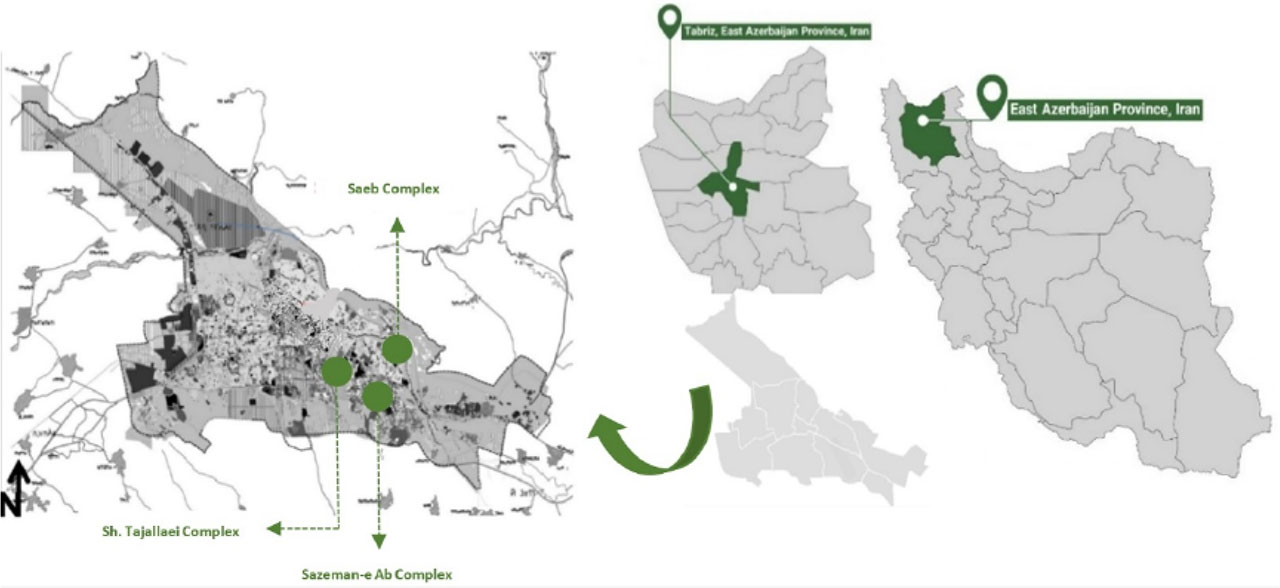
Figure 1.
Location of the neighborhoods in the city of Tabriz [Source: www. https://ashwood.ir/tabriz/]
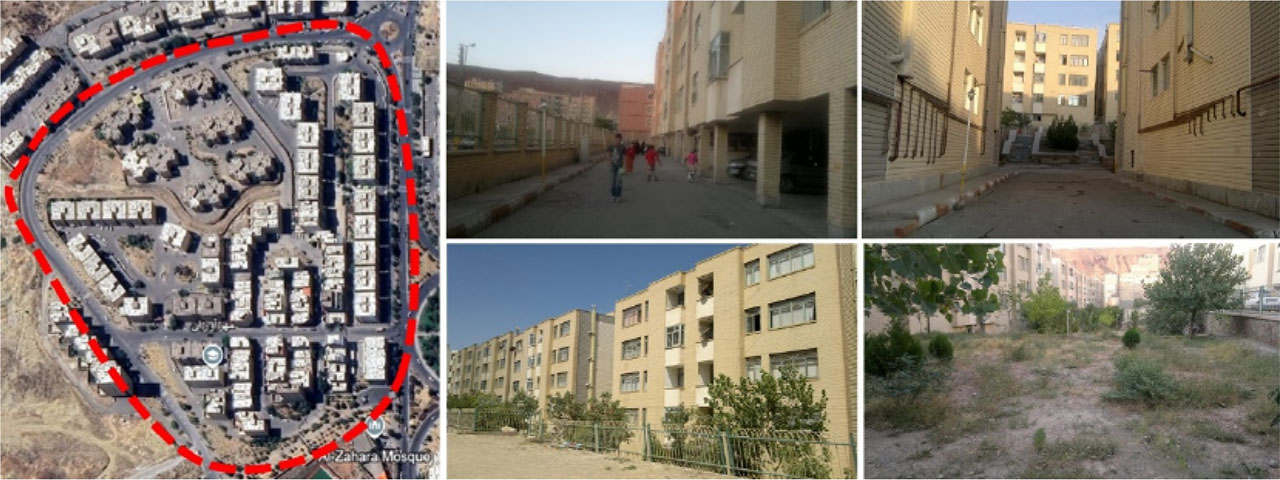
Figure 2.
The palcement and general view of the Saeb complex [Top view: Google Map; photographs: Author]
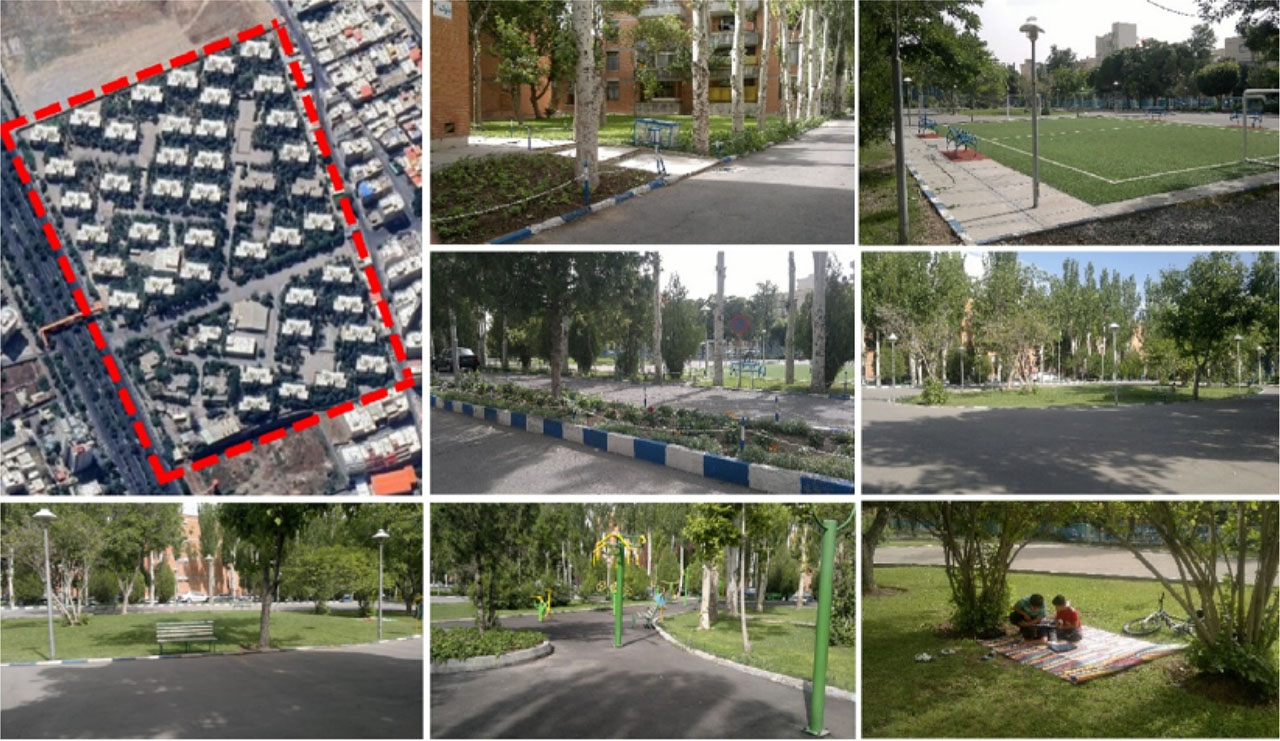
Figure 3.
The palcement and general view of the Sazmane-e Ab complex [Top view: Google Map; photographs: Author]
6. FINDINGS AND DISCUSSION
In line with the conceptual structure of the study, data collection and analysis were carried out. The findings show the criteria that are very valuable to people and have a great influence on the perception of open spaces and the creation of social interactions in their residential environment. The first factor examined in the questionnaire was “maintaining the peace and privacy of the residents of the complexes”. It was found that it is necessary to create social interactions and successful communication between people in order to have a desirable level of solitude and sufficient peace in their lives. Therefore, the three-question questionnaire sought to measure and compare the level of privacy and trinquillity of the people in these three complexes. Table 2 and Figure 5 show that the rating of Sazeman-e Ab (M=4.58, SD=1.84) is higher than that of Shahid Tajallaei (M=3.01, SD=1.02) and Saeb (M=2.43, SD=0.76), and that the residents of Sazeman-e Ab have more peace and privacy. The results of the questionnaires showed that the residents of Saeb complex are more understanding of congestion and suffer more from noise and congestion.
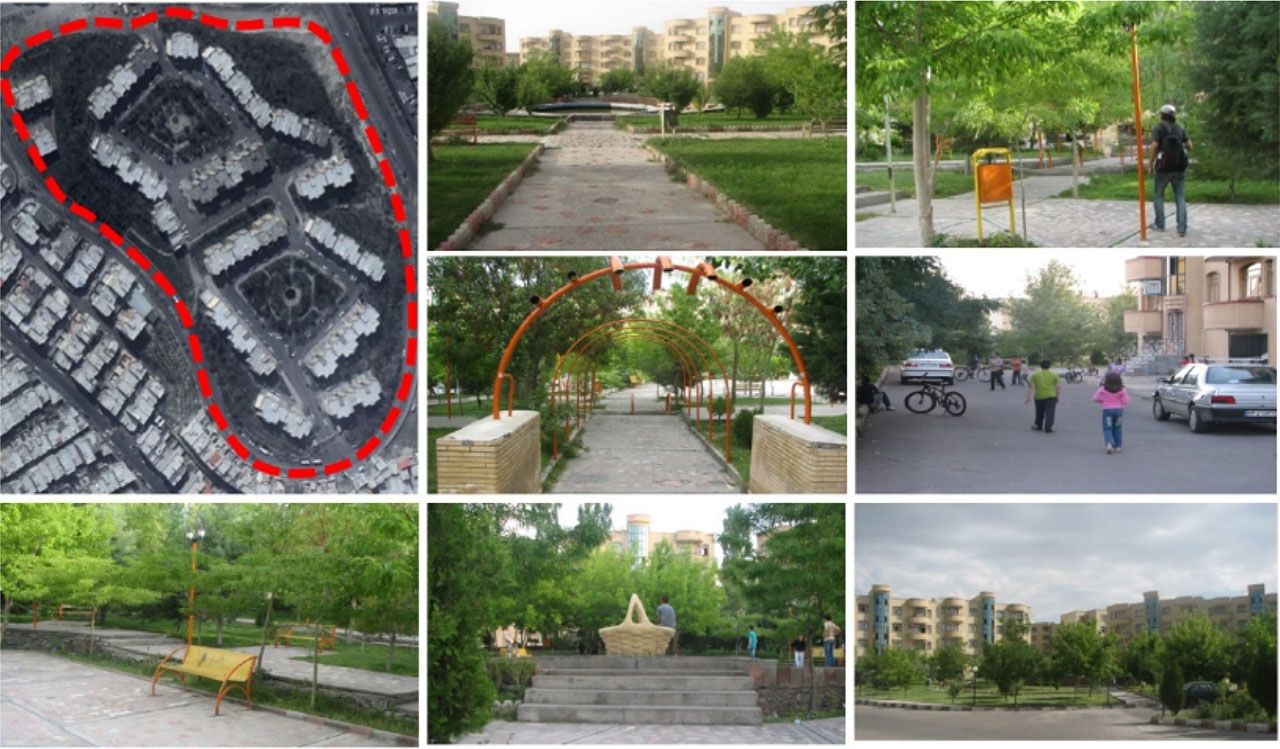
Figure 4.
The palcement and general view of the Shahid Tajallaei complex [Top view: Google Map; photographs: Author]
Table 1.
Data analysis of the factor one [Source: Author]
| Maintaining the peace and privacy of the residents of the complexs | |||
|---|---|---|---|
| Saeb Complex | Sazeman-e Ab Complex | Shahid Tajallaei Complex | |
| M | 2.43 | 4.58 | 3.01 |
| Std | 0.76 | 1.84 | 1.02 |
| Std.er | 0. 195 | 0.3 | 0.126 |
| Significance Level | 0.001 | 0.000 | 0.000 |
| Qestions Evaluated |
| ||
The findings related to the first factor indicate that the residential complex of the Sazeman-e Ab has been able to fulfill the needs of the residents from the perspective of architecture and exterior design. This may indicate the appropriate balance established in the design of the open and semi-open spaces, the organization of the access routes and the layout of the housing units (see Figure 3). In this regard, one of the most important factors affecting tranquility and privacy is the way in which public and private spaces are separated. This means that in the aforementioned complex, public spaces such as entrances, passageways and common areas have been designed to make residents feel comfortable. The public spaces are designed in such a way that they only have a minimal impact on the private spaces, e.g. the residential units. Another important point in this complex is the design of the entrance doors and passageways. The results of the questionnaire show that the existence of a large number of inhabitants did not affect the tranquility of individual life. This is due to the use of corridors and separate entrances for blocks or units, which avoids unwanted clashes between residents. The design of entrances and passageways that prevent clustering and constant collisions is one of the most important factors in maintaining privacy and peace. In addition, appropriate landscaping with plants and green spaces has been used in this complex as an element to create natural privacy between the units and the public spaces. Green spaces can play an effective role in reducing noise and preventing direct views of the residential units, which has a positive impact on residents’ peace and privacy. The way the blocks are arranged and how far apart they are is another important consideration. The blocks in this complex are adequately distanced, ensuring that each unit lacks a direct view of the others, so enhancing privacy and minimizing noise and unwanted interactions.
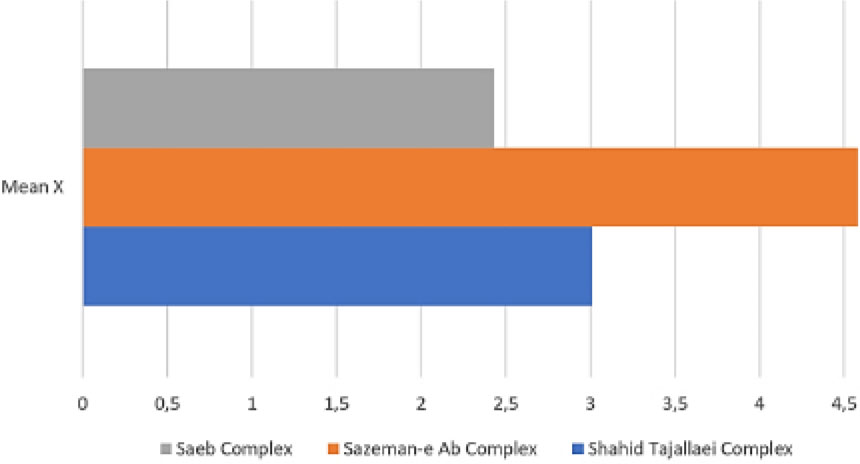
Figure 5.
Graphical data analysis of the factor one [Source: Author]
In view of the discussion on the importance of open spaces in residential complexes for promoting interaction and communication among residents, the second factor assessed in the questionnaire was “residents' satisfaction and their desire to be present in the complex”. Considering the results and the points obtained, as the Saeb residential complex was designed in a linear pattern, sufficient open space for the buildings was not considered. It is clear that the residents' responses to the questions related to this complex were all negative and received a low score (M=1.34, SD=0.43). Although this residential complex has open spaces, the existing open spaces play the role of filling the remaining spaces between the buildings due to the lack of attention to the design principles. In addition, the use of the area by residents is limited due to the encroachment of cars and footpaths and the lack of provision of dedicated areas for playing, walking or sitting, and resident satisfaction is lower. In contrast, the open spaces of Sazeman-e Ab (M=3.62, SD=1.720) and Shahid Tajallaei (M=4.21, SD=0.902) residential complexes are such that residents have a great desire to spend time there, considering the appropriate design of the environment, the creation of spatial diversity, the use of different vegetation and the consideration of the variety of different functions such as sitting and walking, so that more favorable conditions for creating neighborly relations have been created (see Table 3 and Figure 6).
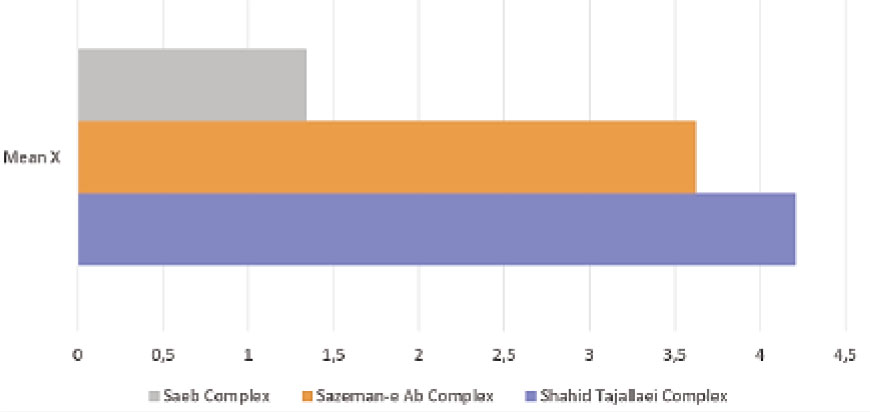
Figure 6.
Graphical data analysis of the factor two [Source: Author]
Table 2.
Data analysis of the factor two [Source: Author]
| Resident satisfaction and desire to be present in the complex | |||
|---|---|---|---|
| Saeb Complex | Sazeman-e Ab Complex | Shahid Tajallaei Complex | |
| M | 1.34 | 3.62 | 4.21 |
| Std | 0.43 | 1.720 | 0.902 |
| Std.er | 0. 107 | 0.181 | 0.143 |
| Significance Level | 0.000 | 0.001 | 0.000 |
| Qestions Evaluated |
| ||
On-site investigations and comparisons found that the design of the spaces in the Saeb complex could not provide visual diversity, natural shading or relaxing factors such as water features, plants or comfortable furniture for residents to relax and interact. The lack of these elements has led to the open spaces being perceived as monotonous and cold by the residents and the desire to use them has decreased (see Figure 2). As the design of windows, visual access to open views and the attractiveness of green spaces are very important in creating a connection between indoor and outdoor spaces, this relationship is not optimal in the Saeb complex due to the less than optimal design of windows, soulless views or green spaces. Inadequate is not properly designed.
As can be seen in Table 4 and Figure 7, the “Sazemane Ab” complex scored the highest (M=4.11, SD=1.324) and the Saeb complex the lowest (M=1.64, SD=0.663) when analysing factor three, “Consideration of children and the elderly in the design of the housing complex”. The Sazeman-e Ab complex has managed to attract residents by designing safe, attractive and diverse open spaces for children. These spaces are specifically designed for children, providing them with play equipment and spaces that encourage their creativity and physical activity.
By adhering to safety standards, parents also feel safer and have more confidence in the children playing in the garden. In addition, the play area for the children is located in such a way that they do not disturb other residents. This complex has also created ideal conditions for older people, such as suitable walking paths, low-pressure sports fields and social places suitable for conversation. These venues have enhanced physical fitness and generated additional social opportunities for this demographic.
There are no open spaces for children to play in the Saeb complex. They have to use the indoor spaces or the entrance of the blocks to play. This problem shows that not enough attention is paid to the children’s needs for exercise and recreation. Parents' sense of insecurity: The design of the open spaces in this complex has failed to create a sense of calm and security for parents, as they are not close to areas with high car traffic and there are no protective physical barriers. This complex is also lacking in terms of providing suitable spaces for older people. The lack of walkways, green spaces or social spaces has meant that older people are less encouraged to use these spaces. The lack of separation of play areas from the living areas or the lack of application of soundproofing measures, such as the planting of trees or the use of soundproof walls, has deprived residents and older people of peace and quiet.
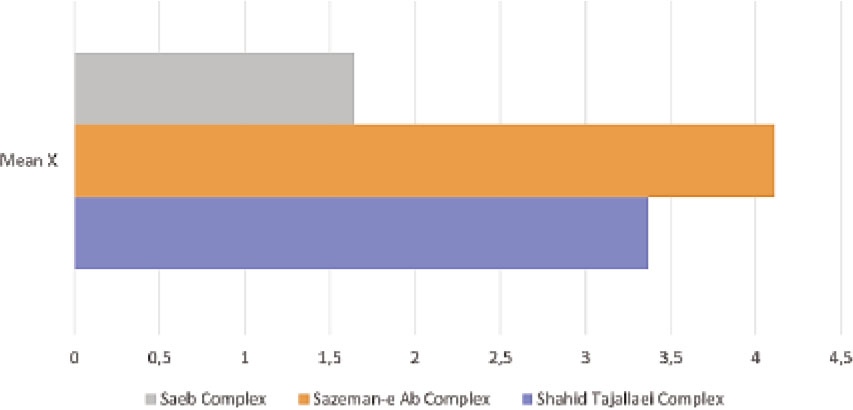
Figure 7.
Graphical data analysis of the factor three [Source: Author]
Table 3.
Data analysis of the factor three [Source: Author]
| Consideration of children and elderly people in the design of the housing complex | |||
|---|---|---|---|
| Saeb Complex | Sazeman-e Ab Complex | Shahid Tajallaei Complex | |
| M | 1.64 | 4.11 | 3.37 |
| Std | 0.663 | 1.324 | 0.987 |
| Std.er | 0. 139 | 0.191 | 0.38 |
| Significance Level | 0.000 | 0.001 | 0.001 |
| Qestions Evaluated |
| ||
Table 4.
Data analysis of the factor four [Source: Author]
| Residents’ sense of neighborhood | |||
|---|---|---|---|
| Saeb Complex | Sazeman-e Ab Complex | Shahid Tajallaei Complex | |
| M | 1.61 | 3.14 | 3.81 |
| Std | 0.52 | 1.11 | 1,222 |
| Std.er | 0. 127 | 0.221 | 0.96 |
| Significance Level | 0.001 | 0.001 | 0.000 |
| Qestions Evaluated |
| ||
As can be seen in Table 5 and Figure 8, the Shahid Tajallaei complex received the highest score (M=3.81, SD=1.222) in the analysis of factor four, “residents’ sense of neighborhood”. The design of spaces such as courtyards, pathways and stairs was undertaken in such a way as to increase the possibility of informal and friendly encounters between residents. Residents can easily meet in these shared spaces and these informal interactions reinforce a sense of familiarity and social security (see Figure 3). In contrast, the Saeb complex with the lowest score (M=1.61, SD=0.52) has problems with the design of open spaces and spatial organization, which has led to a decrease in social interactions between residents. For example, there are no communal spaces in this complex that are suitable for informal meetings between residents, or these spaces are designed in such a way that people do not want to use them. This has limited communication between residents and reduced the sense of neighborliness. The absence of communal places for residents to congregate and engage in social activities significantly diminishes the sense of community inside this complex. In the absence of such venues, inhabitants hardly have the chance to engage directly with one another.
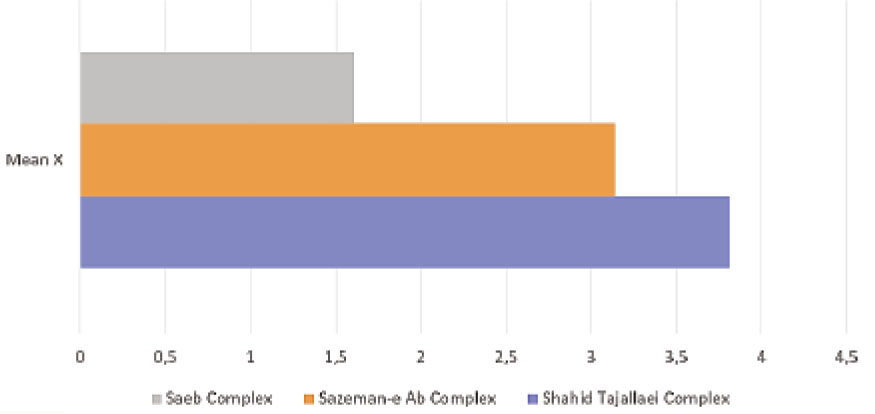
Figure 8.
Graphical data analysis of the factor four [Source: Author]
7. CONCLUSION
Social activities are formed in the field of social relationships. In recent years, the use of open spaces in settlements has undergone many changes that play a major role in people's satisfaction with the use of open spaces in residential communities and the interaction between people and the environment. The quality of the environment is thus shaped by the behaviors and social structures that have fostered the growth of individuals by creating contexts for socialization and sociability. The lack of attention by planners and designers of residential communities to physical-spatial standards to meet human needs can lead to major problems for residents. The analysis of the role of open spaces in the social interactions of residents of residential complexes shows that effective spatial design and organization can have a significant impact on the quality of neighborhood relationships, residents' satisfaction with their living environment and the preservation of their peace and privacy. The main objective of this study was to assess the impact of the open spaces of residential complexes on residents’ social interactions in order to strengthen and expand these spaces as channels that incorporate place and social aspects. Therefore, this study analyzed the relationship between the extent of use of open spaces and the emergence of social interactions in residential communities based on four main factors. The findings of the study show that suitable open spaces with an inviting and safe design can provide the necessary platform for promoting social interaction among residents and strengthen the sense of belonging to the community and neighborhood. In contrast, the lack of such spaces or their unfavorable design leads to a decrease in social interaction and an increase in isolation among residents. Successful housing complexes in the area, such as the Shahid Tajallaei complex and the Sazeman-e Ab complex, have been able to provide a suitable platform for social interaction and foster a sense of neighborhood by creating efficient, safe and suitable community spaces for all age groups, especially children and the elderly. In residential complexes such as the Saeb complex, satisfaction and social interaction are at their lowest due to a lack of suitable spaces for communal activities, the lack of security and tranquility in open spaces, and because the needs of different groups of residents are ignored. Based on the objectives of the current study and taking into account the four main factors studied, solutions to improve the social interactions of residents of housing complexes can be presented as follows:
– Starting from the first factor, maintaining the peace and privacy of the residents of the complexes, it is possible to define an appropriate hierarchy of private spaces in general; the entrances of the housing units should be designed so as not to overshadow other units; an appropriate division was made between the blocks; semi-private plots were considered for each of the blocks; by planting trees and plants, the view from the public spaces to the houses was eliminated and by creating various activities in the area, the sense of belonging to the community was strengthened.
– Concerning the implementation of the second factor of the study, the satisfaction of the residents and the desire to be present in the site, solutions were proposed such as the separation of pedestrian and cycle paths, the development of multifunctional open spaces, the improvement of security in the common areas to increase the presence of residents, and the promotion of diversity (by creating different levels, the creation of hills and lawns, etc.), the introduction of variations in the layout of the site, and the introduction of a variety of different types of spaces.), the introduction of variations in the paths through curves and changes of direction to increase the attractiveness for pedestrians, and the integration of plants that are suitable for the temperature and climate of the region (creation of a microclimate).
– In light of the third research factor, it is important to consider how to better meet the needs of older adults and children in the open spaces of residential complexes. Some ideas include providing a variety of seating with adequate shade or the ability for older people to adjust, encouraging older adults who are less mobile by creating barrier-free pathways and open space amenities, and establishing areas for entertainment and group activities. Individuals setting up areas where children can play safely. For the sake of parents, places with different features for different children's activities, as well as places where parents can sit (in this case in addition to supervising the children), and it is recommended to take precautions to ensure that the noise of children's sports does not disturb the neighboors.
– In order to enhance the sense of neighborhood among residents, as the fourth factor of the research, issues like creating common spaces and facilities where residents can gather, considering social inputs such as cultural similarity and ethnicity in the design, creating spaces for group entertainment, the involvement of residents in the organisation, equipping and repair of different parts of the complex, the development and maintenance of plant elements in semi-private and public areas by residents, the possibility of physical changes and the decoration of public spaces for a special ceremony by the residents of the complex as useful for different social groups. In this way, the proposed solutions show architects, urban designers and planners of residential environments that, in order to improve the quality of life in residential complexes, it is necessary and inevitable to pay attention to the design of open spaces and adapt them to the social and cultural needs of the residents.
It is worth noting that although this study provides valuable insights, it also has some limitations. The study was conducted in three residential complexes in Tabriz, Iran, which means that the results may be influenced by the specific cultural, economic and social characteristics of the region. Furthermore, while the sample size is appropriate for the scope of the study, it may not be representative of the full diversity of experiences in the housing complexes. Future research could address these limitations by expanding the geographic scope and including a larger, more diverse sample. In addition, external factors such as economic conditions, climate, and availability of community resources were not examined in depth in this study. Future research should consider these elements to better understand the broader dynamics that influence social interactions. Taking these constraints into account will allow planners and architects to create open spaces that are not only functional, but also responsive to the particular social and cultural needs of different populations. By incorporating these considerations, this study contributes to the growing body of knowledge on the design of residential environments that promote social well-being and community cohesion.
ACKNOWLEDGMENTS
I offer my endless gratitude to all participants who supported me in conducting study process.