
1. INTRODUCTION. MOSAIC – HISTORY AND PRESENT DAY
As regards scientific and professional discourse, the diverse use of the term “mosaic” obscures the context, meaning and pragmatics of the discourse and creates different ways of interpretation and understanding at the epistemological level. In this manuscript, the phenomenon is considered an important issue mainly because of the differences in how the subject of mosaic is treated within different academic fields and disciplines, namely: art, architecture, visual communication and media studies.
Early uses of mosaic referred to it as an artistic and decorative technique rather than a means of expression of the visual arts, equally with paint-based techniques. The image creates a contemporary tradition of understanding and evaluating mosaic as a form of artistry rather than as an artistic media or art form [1]. In the field of visual arts studies, mosaic is recognised and evaluated as a separate form of the visual arts, an artistic medium and methodology of artistic creation; it is also a historical artistic technique and a valuable contemporary visual arts discipline, which is an integral part of a complex field of study on the practice and theory of the visual arts. In this context, mosaic works and artists of the past and present attract the interest of art historians and art theorists. Similarly, the present and past mosaic creations are primarily studied by mosaic artists. A work of art as a purely intentional object consists of the following: the creative experience of the author or the reproductive experience of the viewer, occurring in acts of consciousness which result from an intentional focus on an object; the physical foundation of the work, ensuring its inter-subjectivity; the work itself as an intentional object, the result of what is constituted as the object of intentional acts of consciousness [2]. According to Ingarden, the “real foundation of existence” does not constitute any of the strata of the work of art and does not belong to it; this claim implies that the reality or materiality of the work falls beyond the field of the viewer’s attention [3]. However, mosaics can be, and should be, treated according to Marshall McLuhan’s views in terms of the medium is the message [4].
The history of mosaic dates back to the 4th millennium BC, but its full development is considered to be in the 6th-4th centuries BC. The main centres of this decorative technique were in Mesopotamia, ancient Greece, the Roman Empire and Byzantium [5, 6].
Initially, it was used only for flooring or to decorate sculptures. It was not until the Christian era that wall mosaics became popular. It originated as a floor decoration when it began to be strengthened by embedding pebbles in gypsum mortar or clay. However, the oldest mosaics discovered were not the floor ones, but the wall ones; they were made of fired clay rather than pebbles [7]. The earliest mosaics thus date from around five thousand years ago. Most of them have been discovered in Mesopotamia; the city of Ur in Iraq is famous for a number of discoveries of this kind. Mosaics were made of marble, alabaster, mother-of-pearl, lapis lazuli, gold, or silver. They were used to decorate walls and pillars, as well as small utility objects [8]. It was only later that techniques began to be used to create mosaics from glass elements. The original functional assumption of the mosaic was its decorativeness, which over time evolved into an element of architectural detail complementing the architecture. Through the dispersion of civilizations that decorated their architecture with mosaics and engaged in this artistic craft, mosaics took on different forms, and the materials used for their production were relatively different. Civilizations inhabiting Central America and nearby areas used mother-of-pearl, reptile scales or stones such as malachite or gabbro, as the key function of the mosaic was to extract light [9]. The Renaissance saw a shift from mosaic to painting. This was largely due to the fascination with new techniques and the possibilities that painting and sculpture offered artists. For several centuries mosaic was perceived as outdated and old-fashioned, mainly because it was extremely laborious. It required not only artistic imagination, but also enormous amount of work to process the material, mainly colourful stones. Stone was then considered too common and trivial for ‘real’ artists to deal with. Simply put: this wonderful, most durable raw material was looked upon with a certain contempt10. If the return of mosaic to a kind of fashion were regarded from the purely visual point of view, this revival could be traced back to the beginning of the last century. In 1900, Antonio Gaudi used mosaic to decorate the surfaces of buildings, domes or even chimneys. He put mosaic on the pedestal of art and restored its lost value. Mosaic triumphed because it is not only beautiful, but also durable and can be used almost anywhere. To this day, the capital of Catalonia delights with its multi-colored form, and the mosaics used in the context of architecture enhance the aesthetics of the space, creating unique elements of public and architectural spaces. By emphesizing the mosaic, which is an integral part of the place, an attractive urban space is created surrounded by additional artistic value, which adds valuable character and effectively encourages people to explore.
In addition to its rich historical heritage, over the past few decades, mosaic has gained a new lease of life; this form of artistic expression and a creative hobby has been experiencing its renaissance. Mosaic has become a valuable artistic medium which is used by both professional artists and representatives of a variety of other artistic disciplines. The popularity and acceptance of mosaic art in the 20th century was independent of cultural, ethnic or religious differences, practically across the world [11]. An essential part of the discourse of contemporary visual arts worldwide evaluates mosaic art as part of the broader artistic heritage of traditional art disciplines in both positive and pejorative terms. This recognition and acceptance of the mosaic heritage is characterised at semantic level by adjectives such as: traditional, typical, ancient or classical art forms, techniques and disciplines [12]. The contemporary art world has a limitless and diverse approach to its heritage. This means constant debate and reassessment of what can or should be considered imaginative and creative, and which examples of creativity are unimaginative artistic reproductions [13, 14]. Present-day research in the visual arts focuses mainly on artistic, experimental, subjective, discursive, philosophical and socio-political issues [15]. Therefore, contemporary artistic expressions tend to be more dynamic, fluid, hybrid and multidisciplinary. These features reflect the principles of radical avant-garde art in the 20th century. Modern artistic expression and practice show a tendency and ability to invent new forms of visual arts, while addressing previously existing questions and challenges. As a result, contemporary artistic expression is not designed using the formal-visual possibilities offered by the well-known media or artistic techniques such as mosaic, but instead it is based on a variety of original visual ideas and diverse conceptual principles [16].
Mosaic as a medium in today’s global art world is able to provide artists with opportunities to express themselves authentically and creatively in both contemporary and traditional art. Furthermore, mosaic is appreciated as a valuable and challenging discipline. Regardless of these arguments, mosaic is practiced by a relatively small number of professional artists and craftspeople worldwide and does not have a large visual arts audience. Compared to other, numerous and diverse, traditional and current contemporary visual arts techniques, mosaic remains peripheral to the general and widespread interest in the visual arts. It is only recently, due to the growing focus on creative self-expression, that mosaic as a creative hobby has been engaging new performers with social and cultural profiles other than art professionals. This situation is a new cultural phenomenon, opening up interesting social, cultural and economic development prospects for mosaic as a form of expression of global creative culture and for the global community of its creators [17]. On the other hand, as far as the world of historical mosaic is concerned, the field of mosaic conservation is well established, developed and is a joint venture of the global art conservation industry.
2. METHODOLOGY
Mosaic represents a historical artistic and also decorative technique. Examples can be seen in urban space and in the interiors design In the field of visual arts, it is a separate form of communication, which is reflected in digital presentations such as video mapping. Visual communication consists of form and content (function), which are components of many planes of design expression, including applied graphics, design, or architecture.
Visual communication is one of the components of social communication, which is included in the deliberations on mosaics in this text. The attempt to analyse and interpret the meaning of mosaic based on research methodology is important for communication and culture of image, art, architecture and urban planning. The usefulness and functionality of the visual message, combined with a decorative form, unleash timeless content, a value pursued by researchers, artists and designers. Space with discovered inspirations gives an advantage for further development. Polish mosaics from the last century, scarcely explored, are such areas for research. Unfortunately, many of these works have not survived; however, there is still photographic and technical documentation, based on which research and analyses are made. In order to understand and study the mosaic by Ignacy Jan Bieniek, the concept developed by Bo Bergström (2008) was used, according to which an image contains a number of components, and their meaning depends not only on the artist, but especially on the viewer. The author presents a methodology for image understanding and analysis which is a universal language for exploring a nonexistent image (the mosaic was destroyed during construction work in 2000), documented only in photographs and descriptions. He begins his image interpretation with narrative forms which refer to what the viewer sees and how the viewer sees it. According to Bergström, dramatic narration does not consider attempts to interpret the image. The space for interpretation is very limited. Confined space becomes an area for interaction between the viewer and the action observed. The non-dramatic narration allows the viewer to have an open interpretation. Reflections, opinions, interpretations become an integral part of the visual reception of the content with a full range of open and closed fields of expression. The viewer arranges the received content to form a whole. The subjectivity used in this method does not allow for an unambiguous interpretation of a given work. By assuming the viewer as an individual with a given scope of knowledge, emotions and a specific cultural context, we allow for a lack of unambiguity in the universal interpretation of a given work. Moreover, the excessive role of the recipient may result in the author and his message being moved away from his original intentions. The interaction, indirect technique is a combination of the two previous ones (dramatic and non-dramatic), and occurs by means of the Internet. An image is interpreted according to several basic features, which are perceived during the interaction between the image and the viewer [19]. This method allows for a more reliable and understandable interpretation of the work, without taking away from the recipient's meaning while still preserving the artist's assumptions.
The message building strategy is located in the content that is related to (in this case) social needs, in dimensions defined by strengths, weaknesses, opportunities, and threats. Another element of the analysis is the message in the communicative dimension in the areas of communication, art, architecture, urban planning and design. Intention, proximity and reception refer to communication in the areas mentioned. Maslow’s pyramid of human needs highlights the importance of the image (mosaic) in various contexts ranging from communication to the dimension of architecture and urban planning. Higher needs (self-actualisation, esteem, belonging) determine the level of interpretation of the mosaic content. The lower ones (security and physiological needs) can be interpreted in a more symbolic but also rational way [20].
The analysis of a specific image according to Roland Barthes is based on the theory of semiotics and the concept of “studium” and “punctum”. “Studium” refers to the interest in the image that appears in the cultural and social context. The analysis is carried out based on general and widely shared knowledge that allows us to touch upon the elements of style, composition and history. “Punctum” is an element of emotional dominance in the image that allows for the arousal of a positive or negative stimulus in a specific recipient. It is therefore a subjective analysis of a given recipient, which takes on various forms. It can often also be an unintentional action of the creator, who arouses the emotions of one person, and at the same time does not have a dominant influence on another person. We must take into account that the reception of a given work by an individual can significantly differ depending on the knowledge, well-being or context in which a given recipient is located [21].
The message built by the sender for the receiver, inspirations and interpretations in rational and irrational dimensions, plastic arts in architecture and their meaning together with defining the dominant element in urban space can form the basis for the discussion about the mosaic by Ignacy Jan Bieniek from Bielsko-Biała. Typography and its first meaning referred to an established layout, a composition in a publication, while later the definition was subordinated to the study of typesetting, fonts, printed publications. In the context of visual mosaic analysis, it is necessary to refer to the potential areas of typesetting, fonts and their initial origins. Creators use the characteristic styles of typography, selectively or fully, when presenting content as images. Text, in turn, provides an understanding of the creator’s message. The author addresses the text to the viewer, thus trying to attract attention.
Images have the power of documenting human history, from prehistoric paintings to contemporary visual messages, which are created using various methods and techniques and recorded for generations to come. Hue can determine the colour of an object, depending on the wavelength of light falling on the object, which either absorbs or reflects it. In every dimension of communication, the colour of a graphic object or a 3D object is important for self-expression by the sender and the receiver.
3. RESULTS
3.1. Mosaic as a tool for visual communication in urban space
The city, being a distinctively organised space, is a historical construct. The motivation of previous generations was to create an area that was safe, easy to protect, orderly and predictable. The space established was a cultural expression of the need for order and control, as opposed to wild, chaotic and dangerous nature [22]. Every area shaped by humans is an expression of their culture: it reflects a certain technical level, corresponds to a certain structure of society and its behaviour [23]. As regards the city, the man-made space has become culture in itself. This means that it has also become a message, a vehicle of worldview and social norms. However, paradoxically, because when an architectural form is created it becomes an environment [24], the culturally shaped spatial arrangement became as obvious to the viewer as natural space after some time. Its meanings have also taken on the characteristics of ‘objective’ truths, of the eternal order of nature; this is where the persuasive power of architecture has been coming from for centuries. According to some researchers of urban communities, the architectural space of today’s city is close to nature in yet another way: in industrial cities, conurbations and urbanised areas, urban tissue appears in the collective consciousness as “another nature”, threatening human existence [25]. The constantly changing modern world incorporates the transformation of public spaces into its sphere of change. This is because there are certain functions of urban space which are not related to urbanisation processes - it forms a kind of background for social interactions of local communities and is part of their identity. This identity is shaped by space and its components, creating and being created by places which are important from the perspective of experiences of both individuals and larger communities [26].
The need to be surrounded by unique and beautiful objects is not the only condition for the role of art in public urban space. Apart from admiring works of art that have been widely recognised as artistically valuable, or even distinguished by being exhibited in a public place, we often feel like interacting with the encountered creations. The function of art is also to allow the community to touch, test, try out an object, or even to provide a situation in which a person not involved in the art world has the opportunity to create small-scale urban architecture. Another aspect is the possibility of identifying a given place through an art object; it becomes a signpost, a point of reference, thus acquiring a new value. A work of art in a public place has an educational role, too: it brings us closer to art, provides an opportunity for direct contact with it and gives a sense of accessibility and availability. It can also be a documentation of an important event for the city. Last but not least, art in urban space creates an opportunity for the artist to reach a very wide audience with his or her message. Even if the contact is unintentional and accidental, it may lead to positive interaction and feedback [27].
Introducing works of art and effects of artists’ work into open urban space makes it possible to interact with art on a permanent basis and without restrictions. Contact with art is not sufficient if it is limited to admiring its visual qualities. Touching an object gives the opportunity to feel its texture; thanks to these additional stimuli we are able to express a more comprehensive opinion about it. If the size and the author’s intention allow for it, climbing on the sculpture, sitting on it or some other form of interaction can be another step towards a thorough understanding of the object. Thanks to such measures, we can overcome the distance separating us from art, we even become a part of it, thus expanding its meaning [28]. The user’s perception of urban space is not only dictated by its functional or communicative layout. Artistic objects are important for the inhabitants of a city - they are associated with sentiment, they are an integral part of the space. They are also of great value to tourists, offering them the opportunity to link an important place with a memorable sculpture [29].
3.2. Mosaics in Poland
Mosaics were created in Polish urban space from the beginning of the 1950s, especially in the second half of the following decade and in the first half of the 1970s. It can be said that mosaic enjoyed great success in Poland during this period, with its form and function based on propaganda values. Mosaics were used by the communist authorities to promote historical ideas which strengthened the political system of the People’s Republic of Poland.
The doctrine of socialist realism, which had existed since the 1930s, first in Soviet art and later in other socialist countries, defined a new programme for the development of civilisation, culture and science; it also formulated new demands for cities, which were to provide spatial frameworks for the activities of the working class (as well as the intelligentsia deriving from it), rising to the leading social position in the new socialist world [30]. The aim of the urban-planning postulates, guided by the Marxist philosophy, was the systematic, calculated and fundamental reconstruction of political, social and economic life in order to meet the needs of the working class [31].
Mosaics functioned in public space (cities) on the facades and interiors of buildings such as railway stations, community centres, health centres, where they served a decorative and communicative role. The designs were usually made of “poor” materials, i.e. waste glass, ceramics, stones, which made it possible to create large-scale wall compositions. Thanks to the lack of material limitations and the simple technology of arranging wall compositions, the mosaic boom swept through Poland. What was important for mosaic was the subject, the choice of location, the date of opening-presentation of the work (it was usually the anniversary of an important historical event which was promoted by the authorities of the time), and the celebration of large-scale anniversary meetings at the mosaic. It cannot be generalised that all Polish mosaics from the 1950s–1980s period were dictated by political propaganda; there were also many universal and symbolic compositions, which decorated venues for sport, leisure and education. Very few have survived to the present day; changes to urban planning, knocking down factories or insulating buildings have all contributed to the disappearance of mosaics from urban space. However, there are still a few outstanding wall compositions which can be admired on the walls of public buildings. One of them is a mosaic by Zygmunt L is on a wall of the railway station building in Gliwice; its colourful abstract design on ceramic tiles still embellishes the interior of the station. Another example is a sports-themed mosaic which also decorates the hall of the railway station in Bytom.
3.3. The Millennium of the Polish State – Ignacy Bieniek’s magnum opus
Ignacy Bieniek (1925–1993) was a painter, sculptor, illustrator and designer of applied arts. He lived and worked in Poland. He practised easel painting and wood carving; he also created mosaics. To a large extent, his artistic work was connected with the Polish mountains and their inhabitants. It referred to the folk culture of these areas. Ignacy Bieniek’s work has been exhibited in Poland and abroad. His creations can be found in the collections of museums in Bielsko-Biała and Nysa in Poland and on the streets of Polish cities.
The main field of Ignacy Jan Bieniek’s work was mosaic. During his life, the artist produced a number of wall compositions. Unfortunately, due to the changes which took place in Poland after 1989, many of these works (mosaics, paintings, stained glass), together with the buildings, came under the auspices of private entrepreneurs; however, they did not always take proper care of them. Most of them were destroyed. Bieniek's lost works include the mosaic which used to decorate the brick fence of the factory halls in Partyzantów Street in Bielsko-Biała. The same happened to the largest, most famous mosaic in Leszczyńska Street: it was destroyed during the construction of the nearby shopping centre.
Ignacy Bieniek spent four years, from 1966 to 1969, working on his monumental masterpiece. The mosaic consisted of eighty-six compositions depicting historical events and the mythology of the Podbeskidzie region. The work was created as community service for the people of the region to commemorate the 700th anniversary of the city foundation and the Millennium of the Polish State. People close to the artist recall that the actual work was preceded by a period of long deliberation and careful design. Bieniek was not sure whether he would achieve this aim. He had many opponents who disturbed him while he was working. A friend of the artist remembers that the completion of the mosaic was in danger of being interrupted, so the author quickly changed the plan of the masonry works. At night, he and his masons moved the scaffolding to the other end of the wall and began work there. By the time the communist authorities realised what had happened, Bieniek had managed to carry the masonry work so far that no one could prevent him from continuing with the project. Ignacy Bieniek personally travelled to various factories in Poland to obtain materials for his compositions. These were pieces of glass, stone, metal, ceramic waste. The artist often spent afternoons at the wall, analysing every metre of the work.
When completed, the mosaic was 76 metres wide, 8 metres high, with a total of over 500 square metres of compositions made of stone, glass, ceramic waste, metal, etc. (the artist’s son calculated that the wall measured exactly 608 square metres). The artist received a letter of congratulation from the Minister of Culture and Art for his artistic work for the city. The mosaic was the subject of numerous press articles, the work was a topic of interest for the radio and television. Many people were interested in Bieniek's work at the time, and he became a very popular artist. Notes about him appeared in the introductions to exhibition catalogues. The visual aspect of the mosaic from Leszczyńska Street confirms its value in terms of art with a transfer to compositional qualities. The themes of the designed panels were connected with the history of the Polish State as well as the region of Cieszyn Silesia and Bielsko-Biała, which shows the artist’s great respect for history and the need to commemorate it in the urban space. The size of the mosaic introduced the viewer into the area of influence of the monumental geometrical panels strengthening the wall of the factory building, decorated with materials obtained from post-production waste, which included glass, stone, ceramics and other [32].
3.4. The narration
Within the dramatic narration (Figs. 1–3), there is a gigantic wall with spatial ornamentation arranged in square and rectangular geometrical forms which add to the monumental effect of the object. Tension is raised by a group of soldiers marching evenly along the wall. The soldiers are walking in pairs in two groups of 12. The 12-person groups are separated by a single soldier. The contrast between the men and the wall (which is four times the average height of the men) shows its magnitude and communicative power in the urban space. In the next photograph (Fig. 2), the image frame is slightly wider and shows the pavement across the street, thus allowing a wider spectrum of image perception to be captured. There is a car moving in the opposite direction to the one in Fig. 1, where the movement of the people is directed to the right. The car and the diffused glow in the distance add a mysterious, austere dimension, thus inviting a comparison to a surrealist painting or a dream. Fig. 3 shows the wall with two kinetic objects: a cyclist and a car preparing to overtake the man on the bicycle. On the left side of the picture, the protruding branches of a leafless tree create a certain situational drama; they indicate the time of year (autumn or early spring).
The mosaic is presented in the full urban layout dimension, in the perspective of the street and the city. Particular graphic, visual simplifications of the mosaic (white and grey vertical and horizontal stripes) indicate deliberate compositional decisions made by the author. This form shows a certain graphic rhythm. The open diagonal composition emphasises the monumentality of the object (over 500 square metres). An additional element that emphasises the dynamics of the image is the pavement in the perspective. It is possible to superimpose a tri-division grid that outlines strong and weak points on the documented composition. This tripartite division may be followed by the golden ratio with the content and compositional weight of ¾ versus ¼. The roughness of the vertical wall and the horizontal pavement with the street show the visual differentiation of the object in the space.
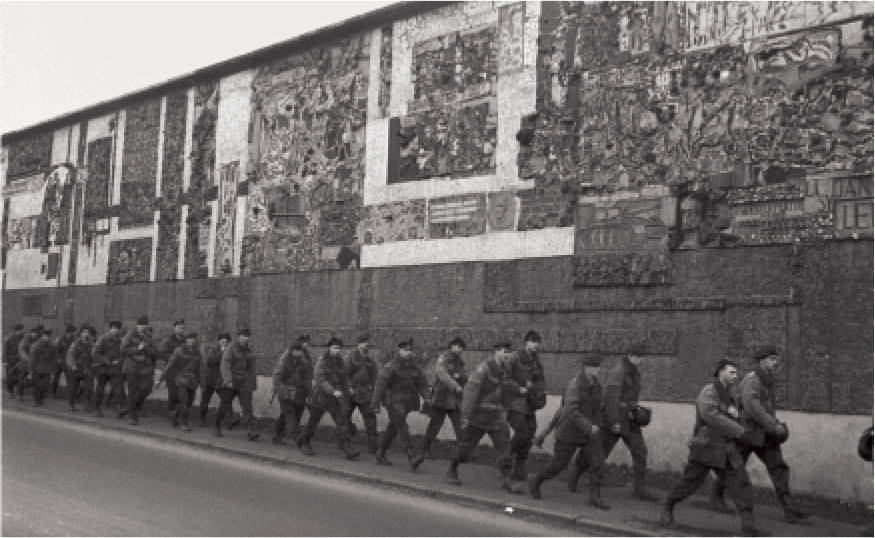
Figure 1.
The mosaic in Leszczyńska Street in Bielsko-Biała. Photographed by Marcin Płużek
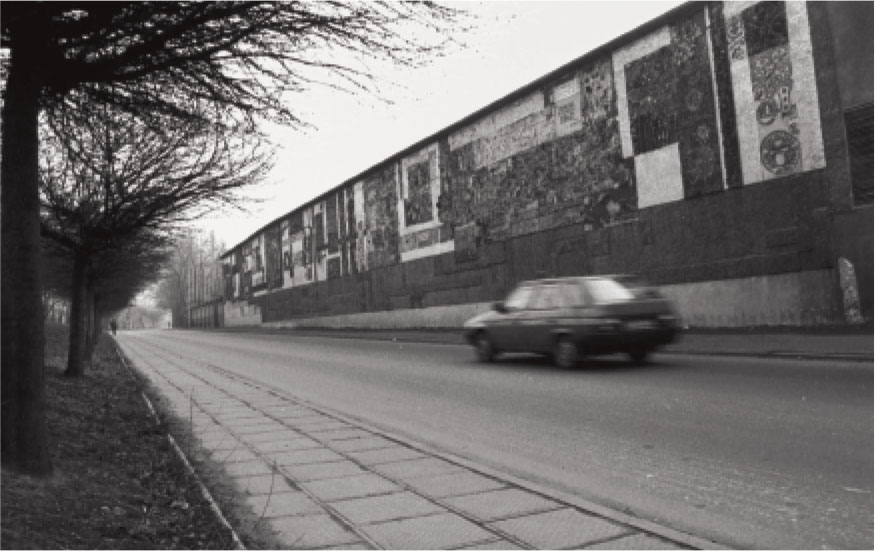
Figure 2.
The mosaic in Leszczyńska Street in Bielsko-Biała. Photographed by Marcin Płużek
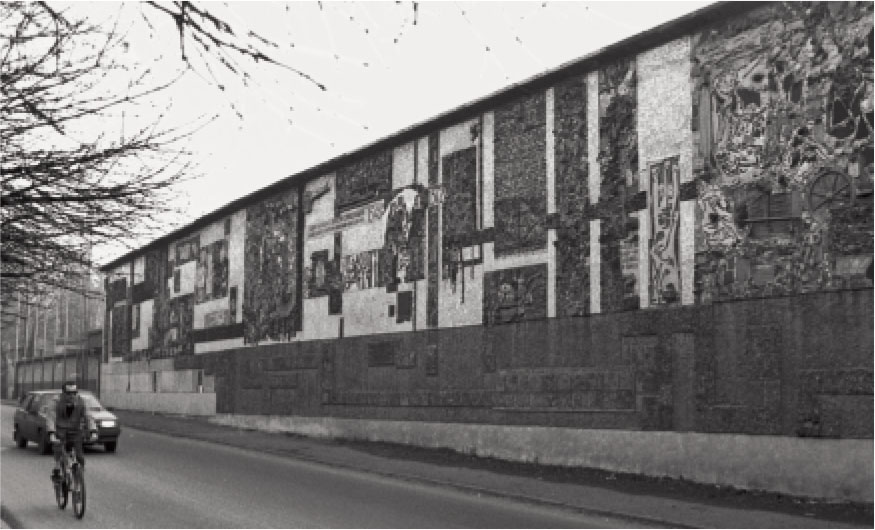
Figure 3.
The mosaic in Leszczyńska Street in Bielsko-Biała. Photographed by Marcin Płużek
3.5. The strategy and message
The mosaic on the factory wall had three functions. The first one was to strengthen the wall of the industrial building. The spinning machines, which generated vibrations while working, led to the cracking of the factory wall and the risk of its collapse. This function was an asset for the wall construction. The second one was the visual aspect of the wall in the urban space. The mosaic was defined as a very strong point for the city of Bielsko-Biała in terms of advertising and propaganda (the most important newspapers in Poland and other countries of the Socialist Bloc wrote about it). The mosaic was made as community service to commemorate the 1000th anniversary of the Polish State, the 700th anniversary of the city of Bielsko-Biała and the 150th anniversary of the local factory. The third function was an educational one: it presented the history of Poland.
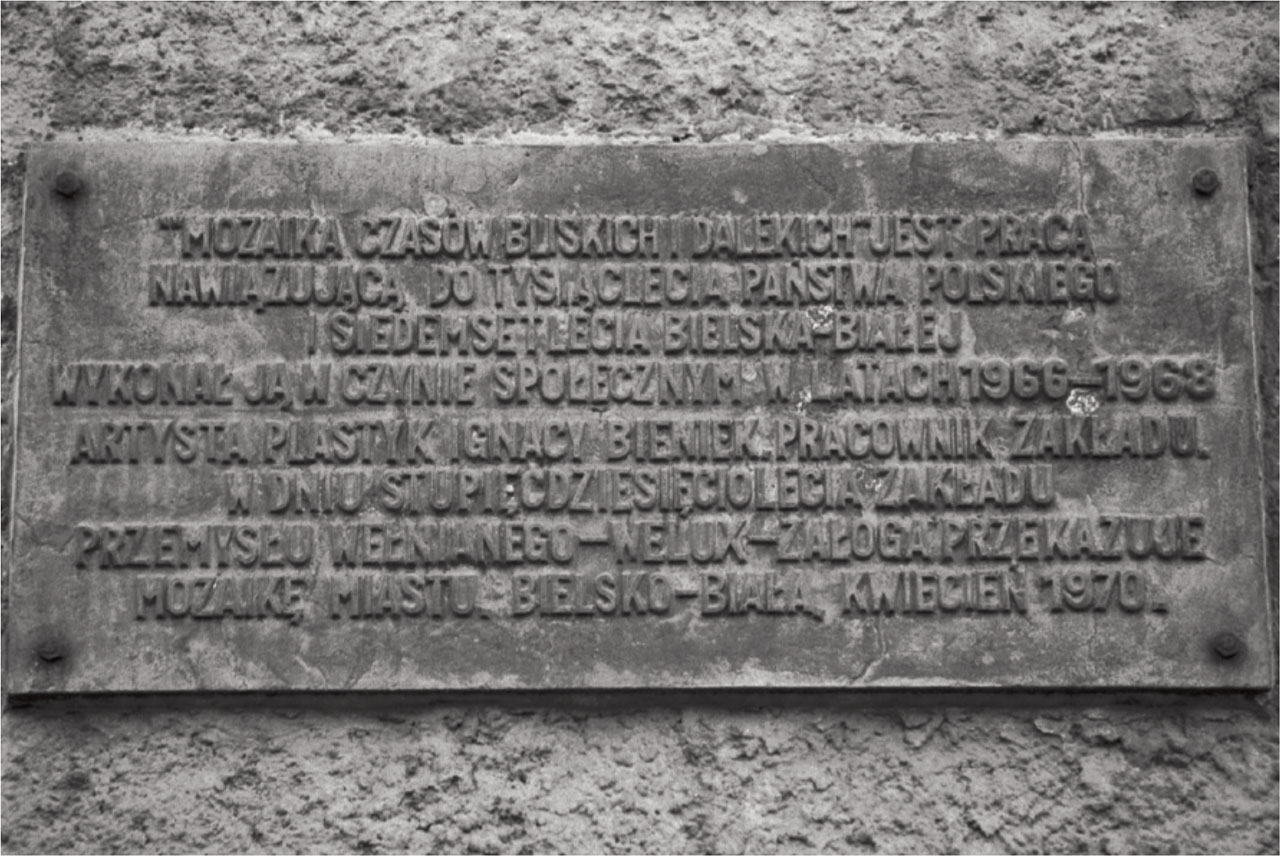
Figure 4.
The mosaic in Leszczyńska Street in Bielsko-Biała. Photographed by Marcin Płużek
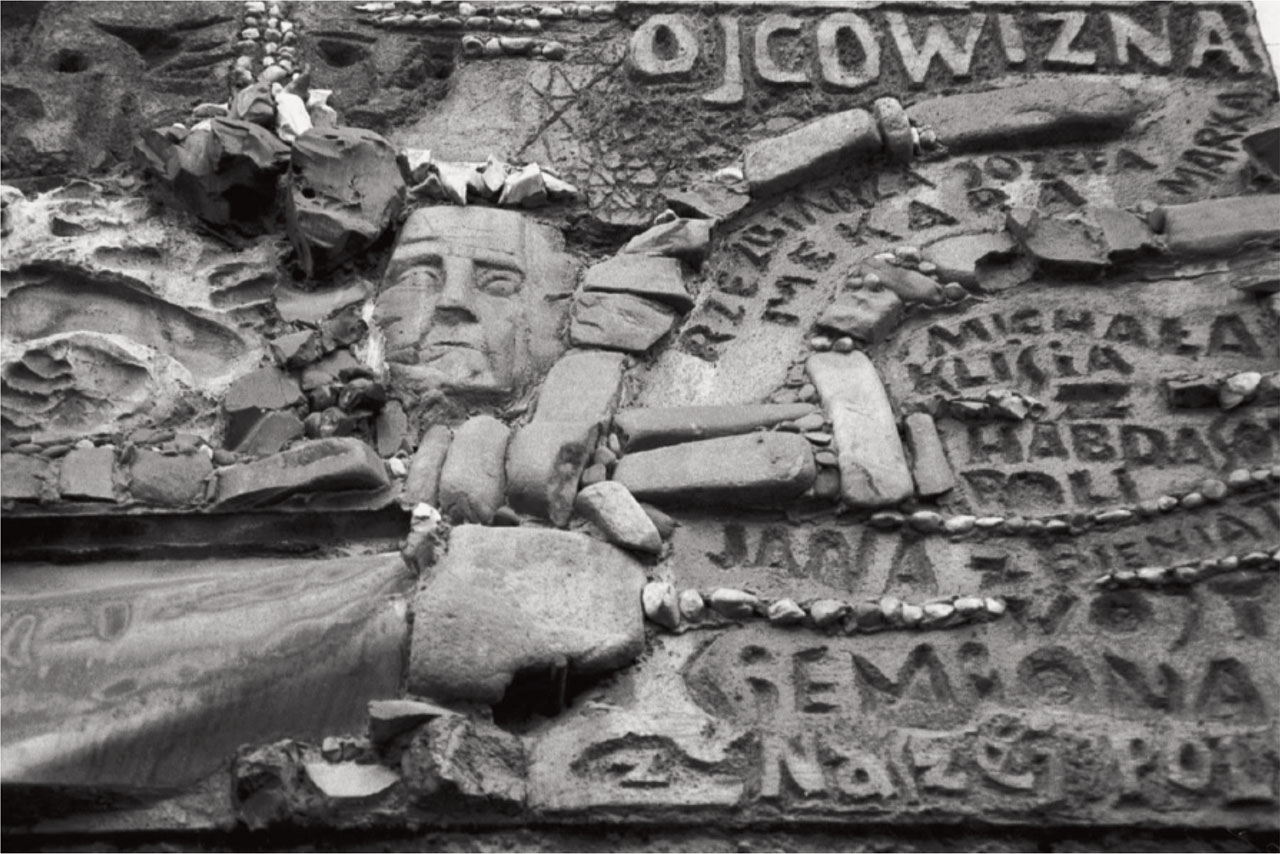
Figure 5.
The mosaic in Leszczyńska Street in Bielsko-Biała. Photographed by Marcin Płużek
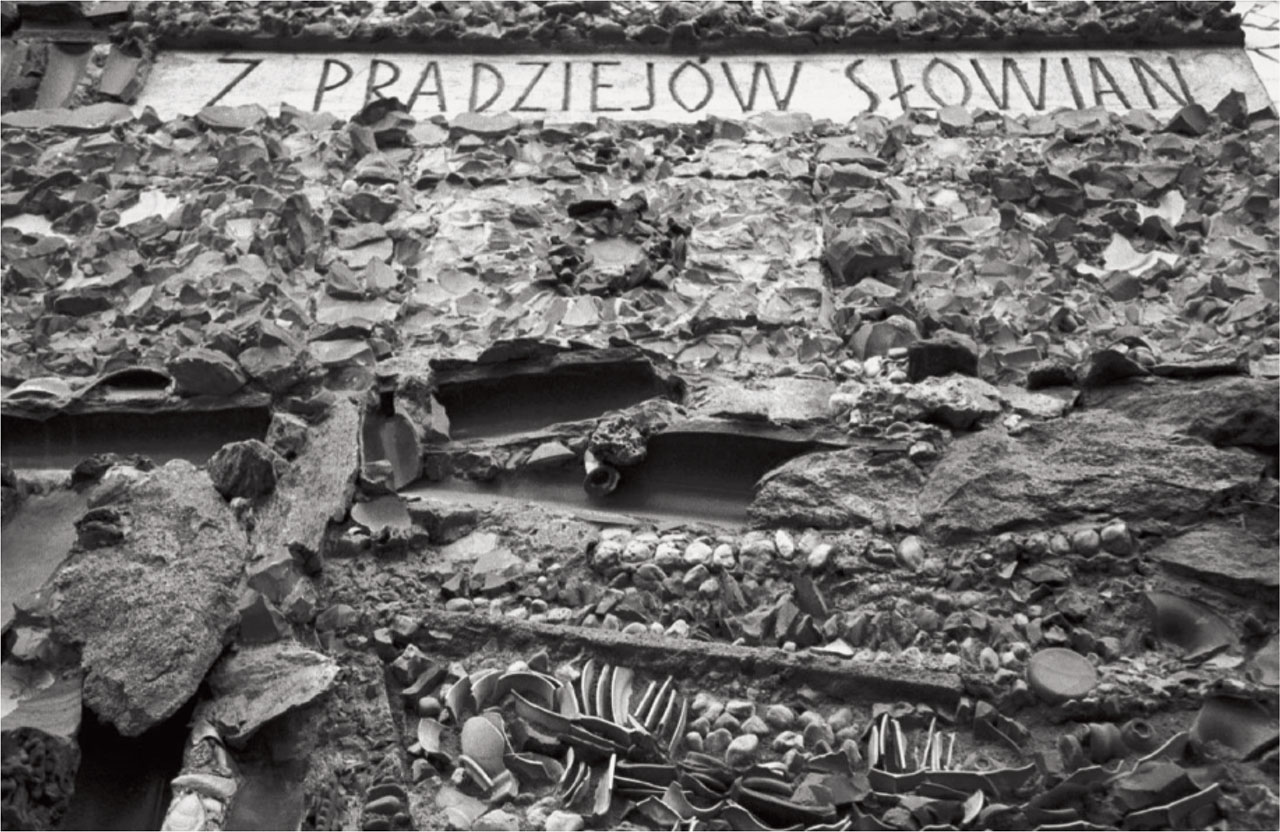
Figure 6.
The mosaic in Leszczyńska Street in Bielsko-Biała. Photographed by Marcin Płużek
The roughness of the vertical wall (Fig. 4) and the horizontal pavement create a stage for the characters. The idea of a stage and this type of movement may refer to the scenography from Tadeusz Kantor’s plays [33], who built it from so-called poor objects.
The author of the mosaic highlights the important words PATRIMONY (Polish: OJCOWIZNA) (Fig. 5) which have a historical dimension and are emotionally linked with tradition and the region. The inscriptions refer to the names and surnames of his friends and students. He was close to the famous sculptor Prof. Józef Marek, with whom he spent his university years in Kraków in the 1940s/1950s. He knew and frequently met Wojciech Siemion, a popular actor and folk art enthusiast. He mentions the name of his mentee and friend Prof. Michał Kliś, as well as many other local artists and people from his circle. The plaque contains a text commemorating the opening of the mosaic for the inhabitants of Bielsko-Biała, in which he described the subject matter of the mosaic.
The text appears in the form of blocks. From a distance, it is invisible and illegible. However, it provides information that the author of the mosaic wrote down the messages he wanted to share with the viewer. He used simple fonts, without any additional ornamentation. The inscription on the wall reads: FROM THE EARLIEST HISTORY OF THE SLAVS (Polish: Z PRADZIEJÓW SŁOWIAN) (Fig. 6), clearly communicating to the viewer what visual content was presented. The compositions here are seemingly abstract; however, upon closer examination, it becomes apparent that the author of the mosaic incorporated a number of ceramic elements which refer to the tradition of the Slavs, who used to make earthenware. These are also forms which may suggest the vastness of forests and meadows on which people lived: their homesteads, dishes, tools, footprints, furnace traces etc.
There is also a knight and an eagle – symbols of Polishness (Fig. 7).
The wall displays the names of the cities: Katowice, Zielona Góra, Szczecin, where the artist lived, worked and created (Fig. 8). Subsequent compositions, with figures of a man and a woman in the costumes from the Stanisław August times, bear the dates of 1548 and 1572, which refer to the history of Poland and the Bielsko-Biała and Cieszyn regions (Fig. 9).
The next composition shows a medallion with the date 1860 and an annotation THE VILLAGE OF SZCZYRK (Polish: WIEŚ SZCZYRK) (Fig. 10); it is probably a reference to the history and tradition of the village: shepherding, clothmaking and wood production. Lenino-Berlin, Westerplatte, Gdańsk refer to the historical and educational form of the mosaic and its content (Figs. 11 and 12).
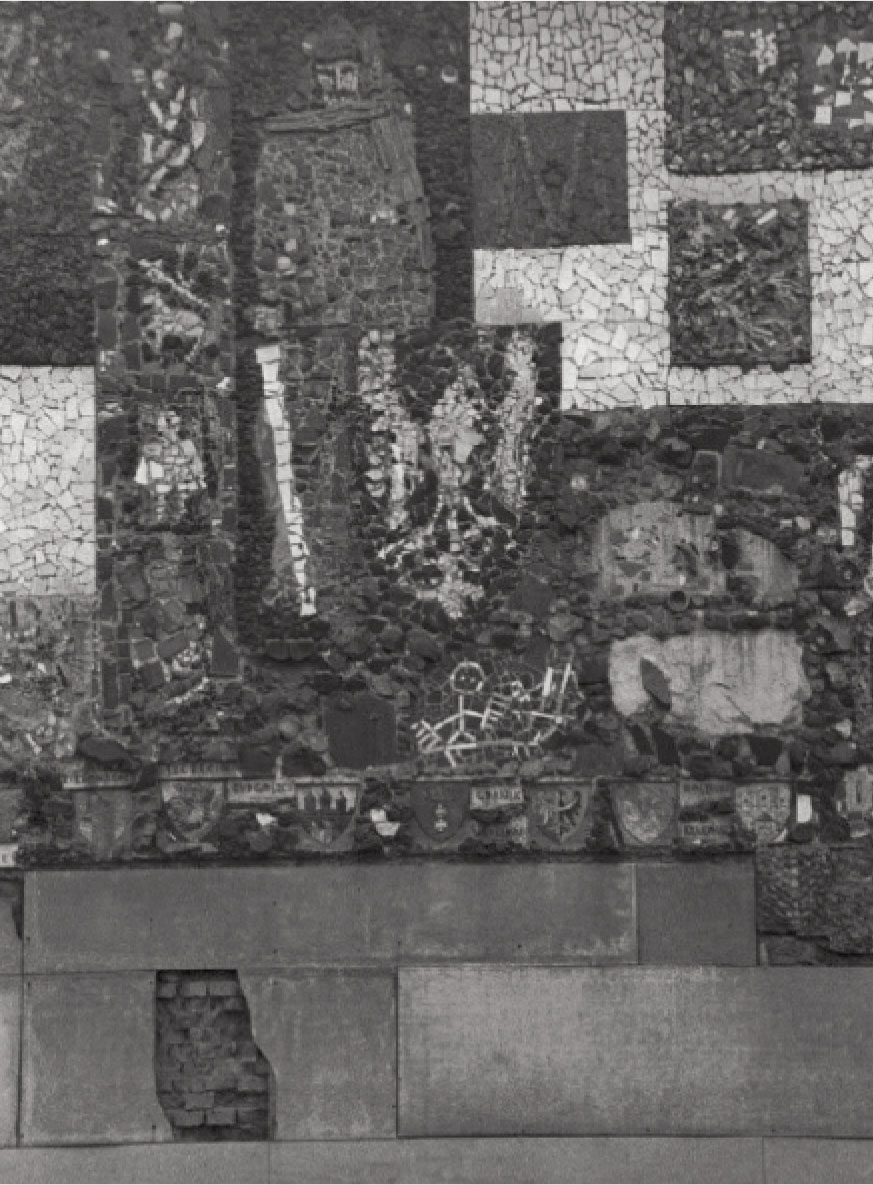
Fig. 7.
The mosaic in Leszczyńska Street in Bielsko-Biała. Photographed by Marcin Płużek
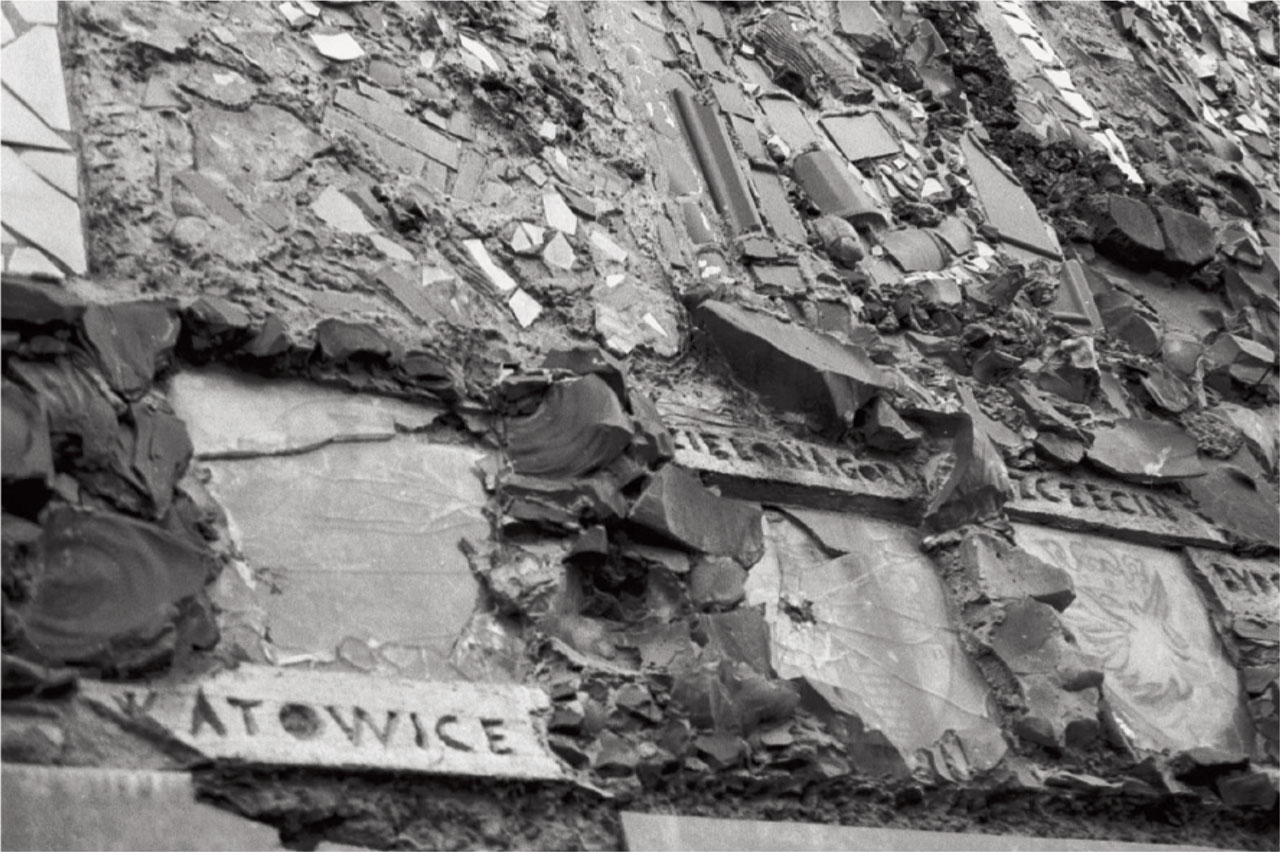
Figure 8.
The mosaic in Leszczyńska Street in Bielsko-Biała. Photographed by Marcin Płużek
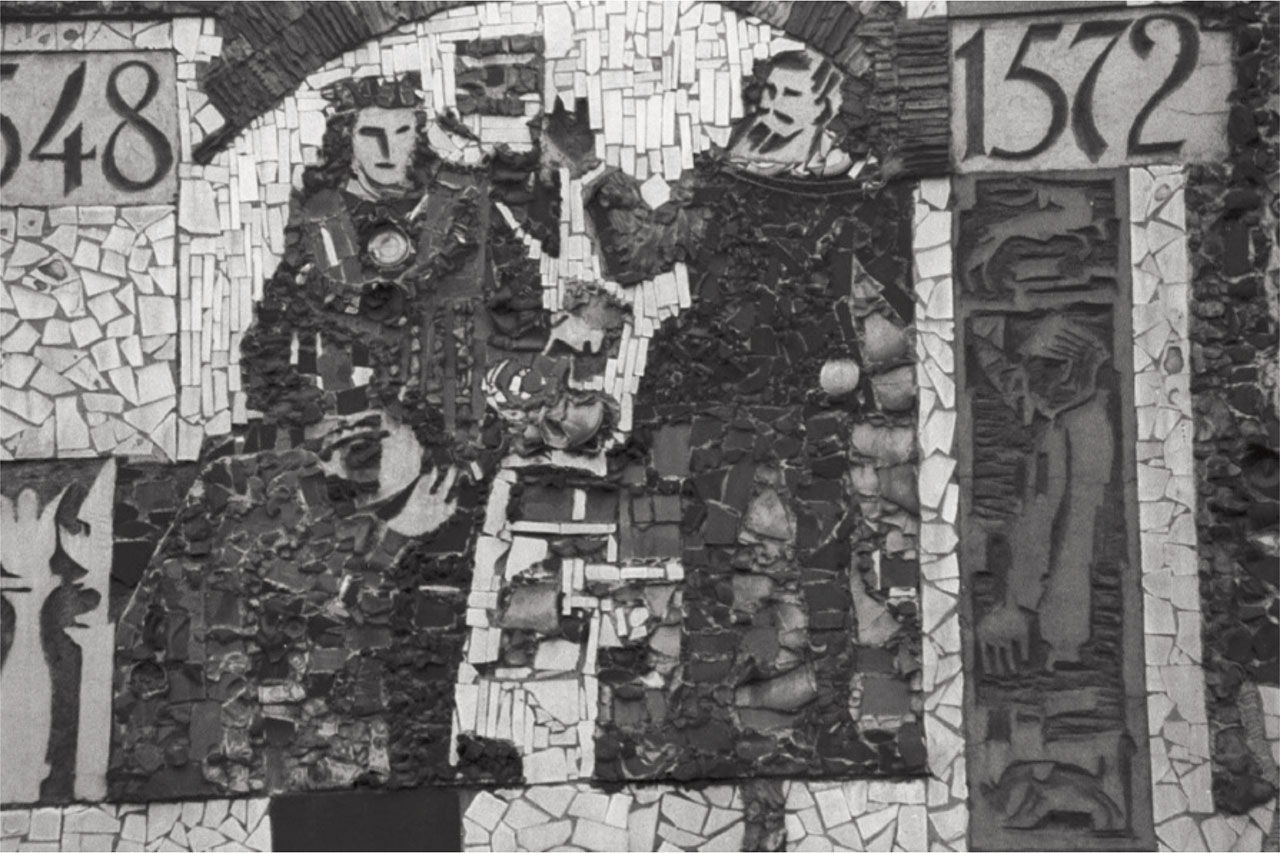
Figure 9.
The mosaic in Leszczyńska Street in Bielsko-Biała. Photographed by Marcin Płużek
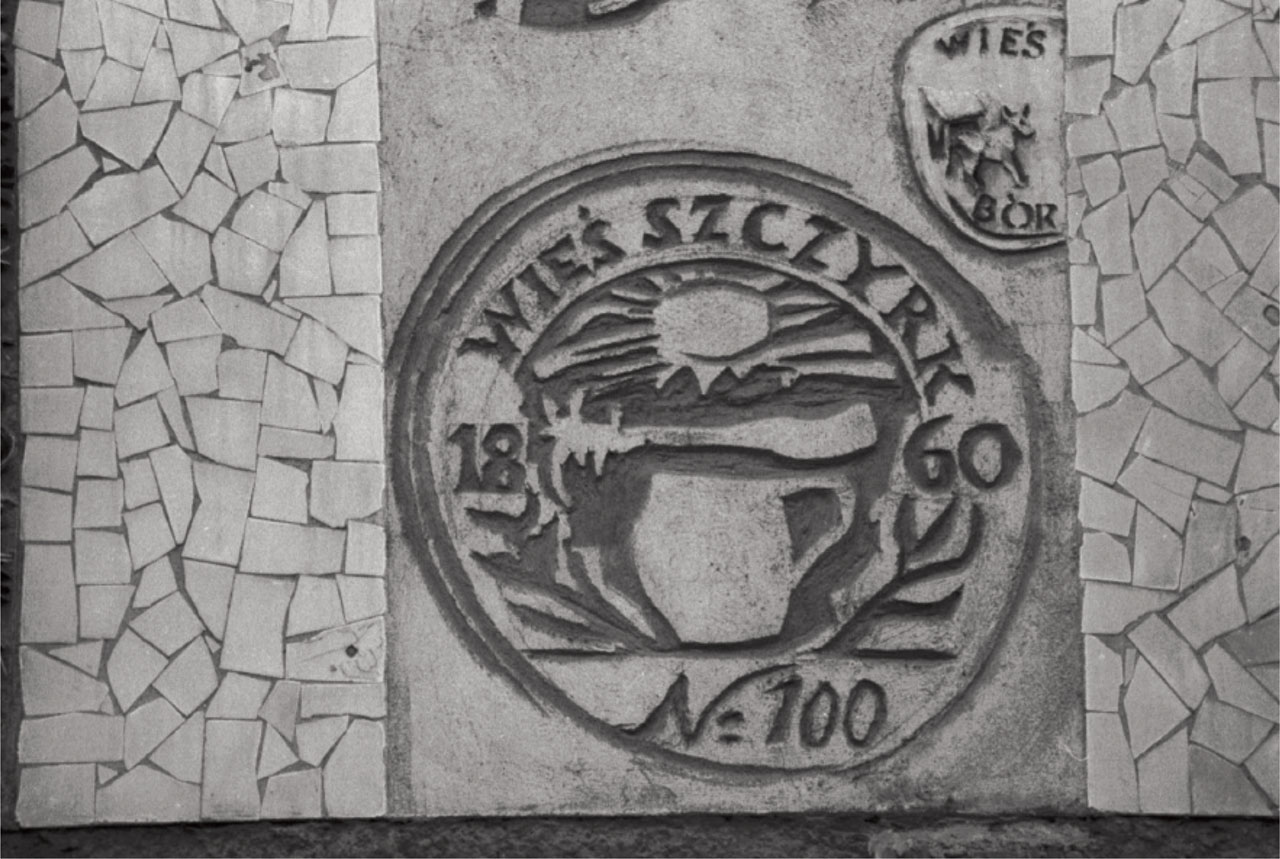
Figure 10.
The mosaic in Leszczyńska Street in Bielsko-Biała. Photographed by Marcin Płużek
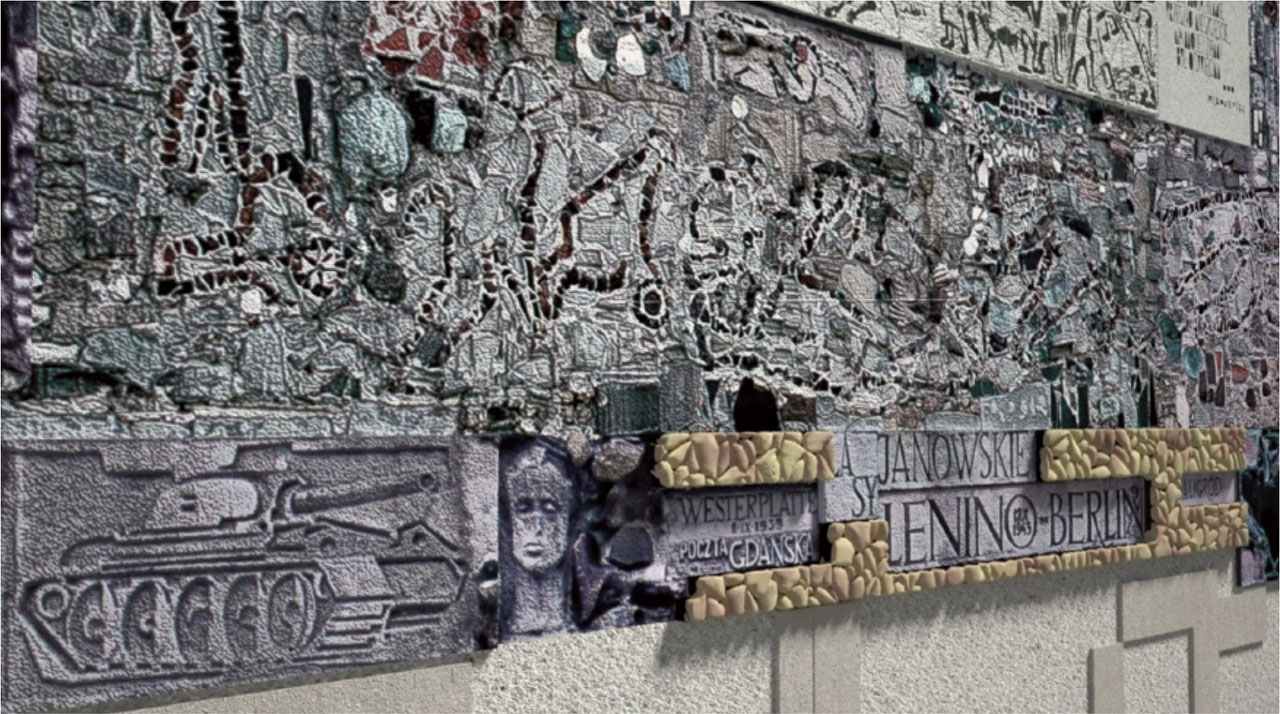
Figure 11.
An attempt at digital reconstruction in 3D software. Made by Łukasz Szubart, Krzysztof Groń
Digital reconstruction with a recreation of the original war-themed mosaic. On the wall of the building, the author of the mosaic designed images and typography with details referring to the Lenino-Berlin battle route during the Second World War, such as a tank or a soldier's face as well as the names of places where famous battles took place. The supernatural abstract form refers to the atrocities of war. Analogies can be found with Goya’s paintings or Pablo Picasso’s “Guernica”.
Typography – as an old formula for the composition of a printed publication. Literally interpreted, it can refer to a carefully considered geometric arrangement built on the basis of geometric figures. Such a composition may have a direct reference to the architecture functioning in urban space in the 1960s and 1980s. At the end of the 1990s, modern architecture and new forms of urban space design began to replace the aforementioned formula. Typography also refers to the fonts used in a publication. What is the typography of Ignacy Bienek like? It is certainly original, legible, linear, sans-serif (without redundant ornaments). It had to be this way, because the authorities of the time did not allow for variety and uniqueness (Figs. 4 and 13).
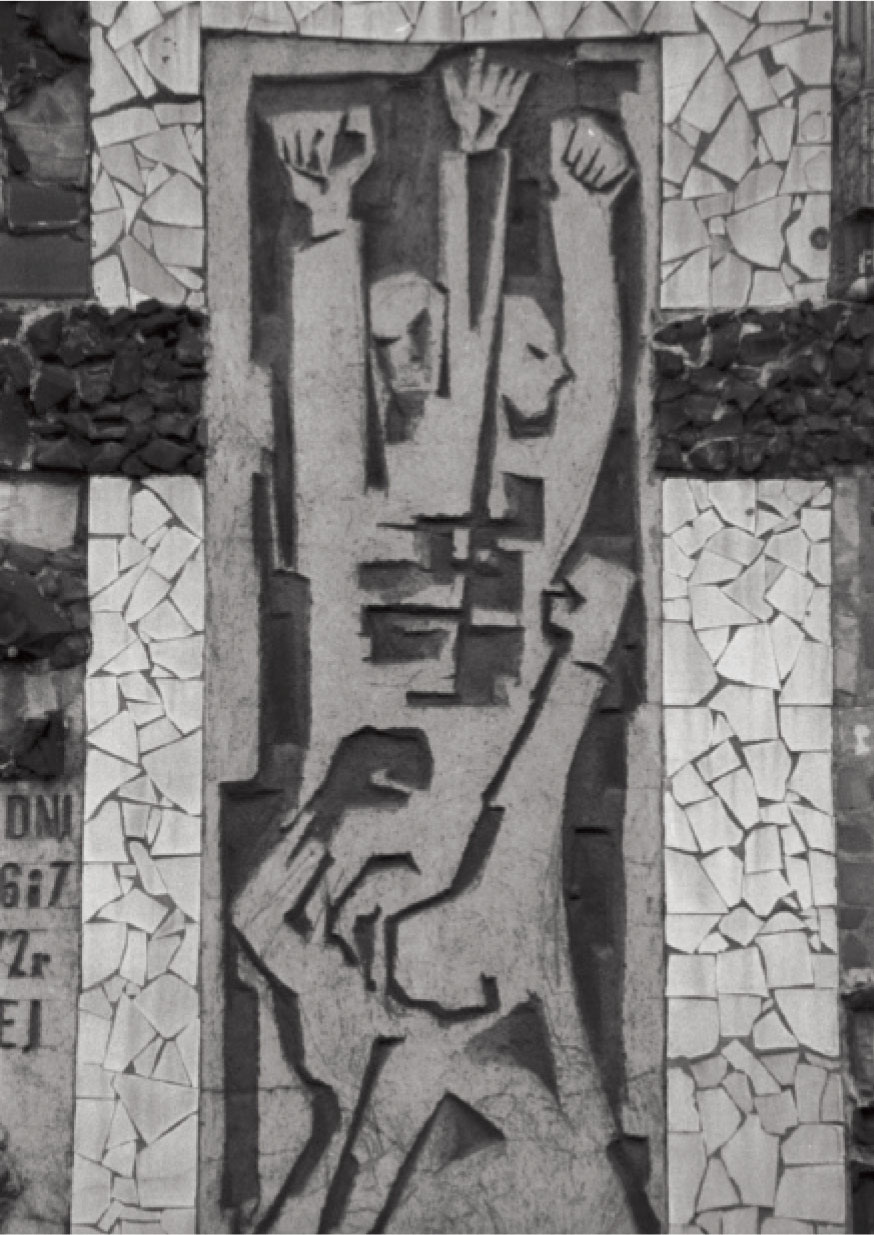
Figure 12.
The mosaic in Leszczyńska Street in Bielsko-Biała. Photographed by Marcin Płużek
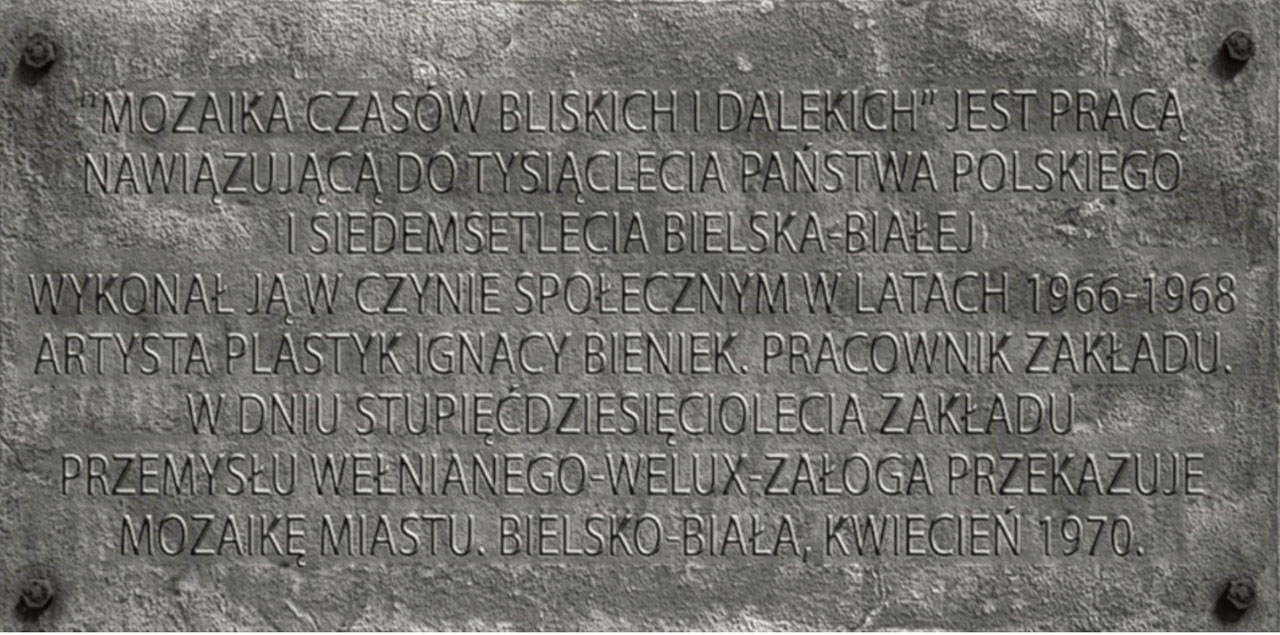
Figure 13.
An attempt at digital reconstruction in 3D software. Made by Łukasz Szubart, Krzysztof Groń
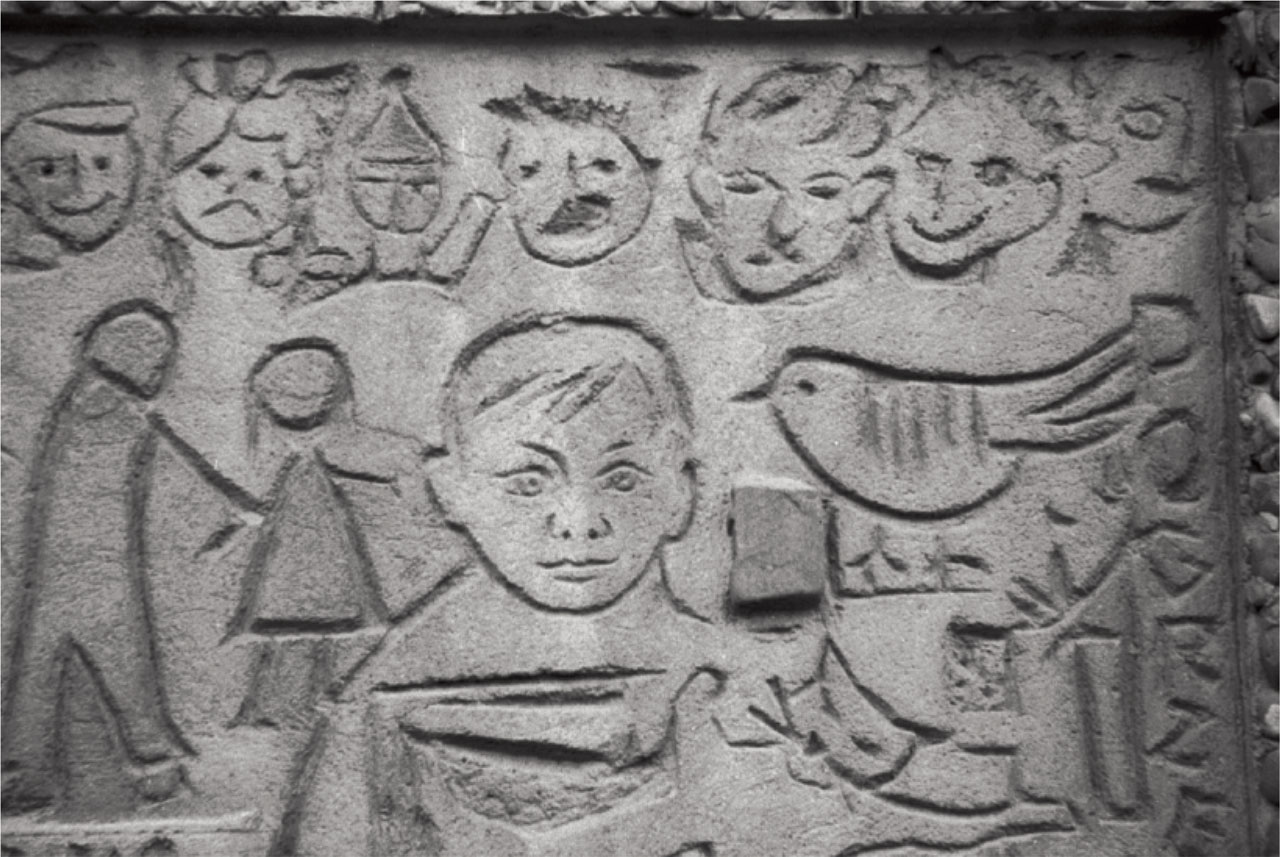
Figure 14.
The mosaic in Leszczyńska Street in Bielsko-Biała. Photographed by Marcin Płużek
The compositions and paintings presented on the wall create a unified formula, but they could also exist independently. They are made using various techniques in order to achieve artistic diversity but also to provide a visual message. Fig. 14 shows a fragment of the mosaic with human faces and animal shapes. Linear simplified forms as ascetic drawings indicate the austerity of the message, the faces and their emotions. The grey structure of the concrete emphasises their expression.
The author may have been referring to the greyness of those times: similar clothes, people’s behaviour, workplaces, a certain social matrix which did not fit his character. This greyness reflected the powerlessness of the individual in those times. This might be illustrated by a story from the time when the mosaic was being built. Local officials wanted to forbid Ignacy Bieniek from continuing the construction; when the artist heard about this, he moved the scaffolding to the end of the wall and started the next construction stage from the other side. After a few weeks, when the officials announced the closure of the mosaic, they were astonished to see that the construction work had started from two sides. Finally, they changed their decision and allowed the project to be completed. The mosaic shows, among other things, a scene of granting craft rights to the Bielsko weavers, as well as moving episodes from the tragic September 1939 and the battles of the partisan units.
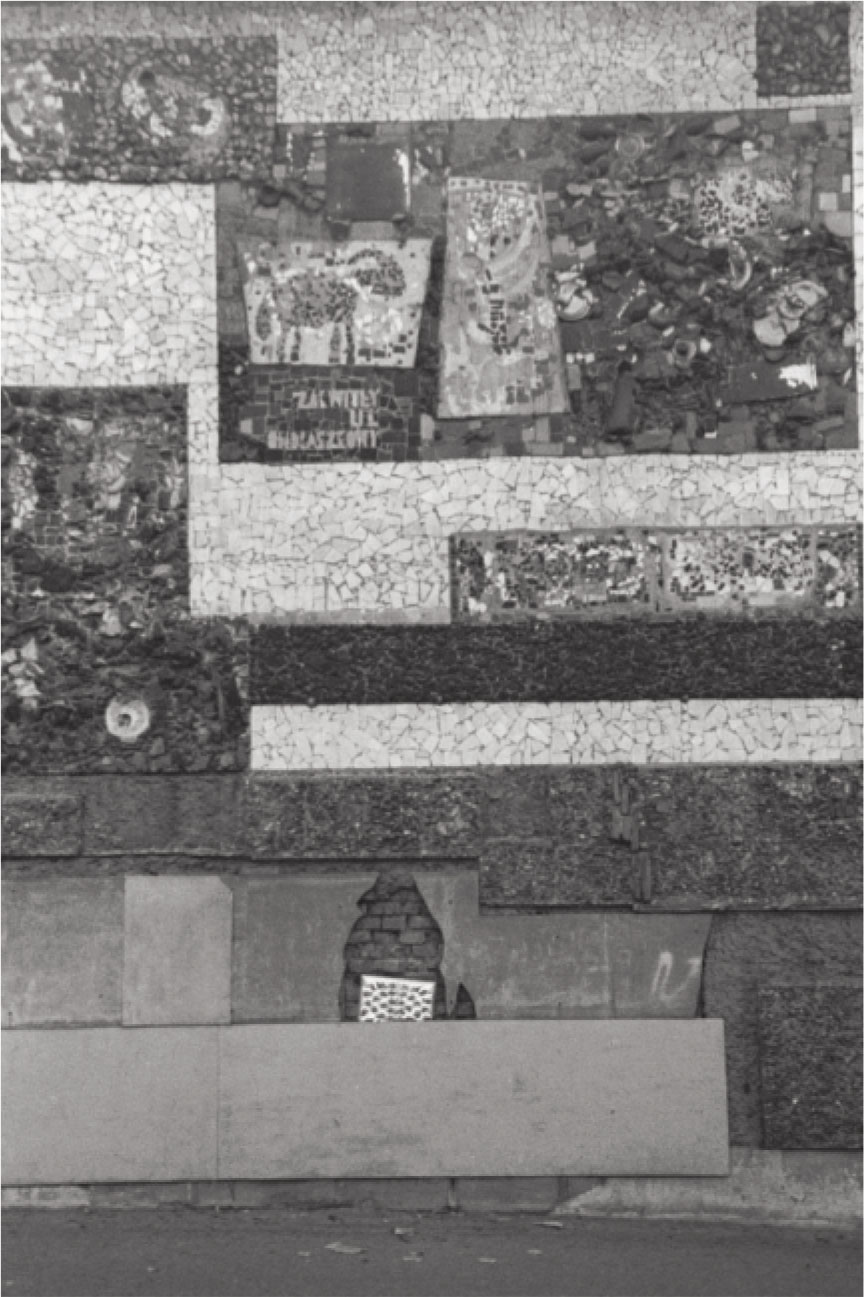
Figure 15.
The mosaic in Leszczyńska Street in Bielsko-Biała. Photographed by Marcin Płużek
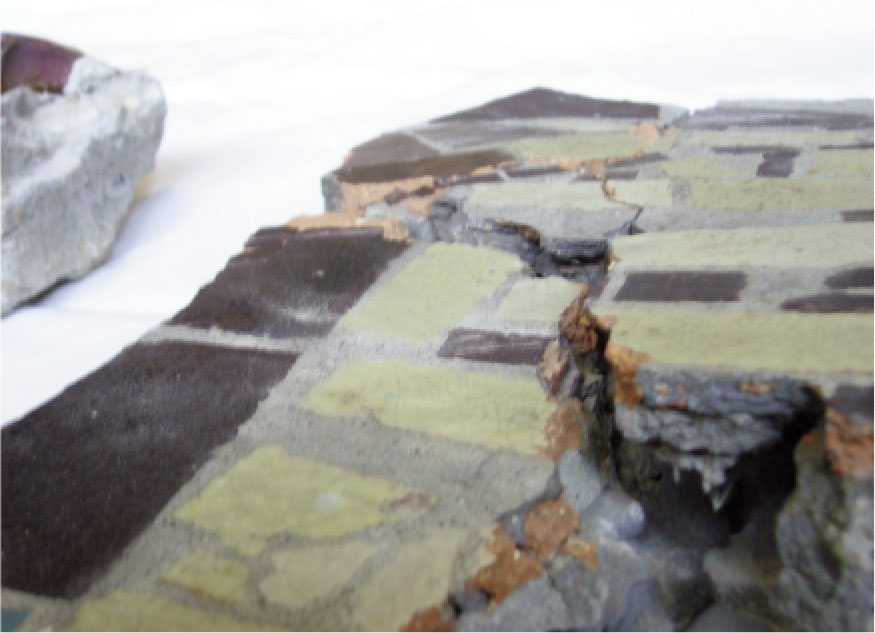
Figure 16.
The mosaic in Leszczyńska Street in Bielsko-Biała. Photographed by Marcin Płużek

Figure 17.
The materials used to build the mosaic. Photograph taken by Grzegorz Bieniek after the mosaic was demolished
The mosaic supplements this ‘ordinariness’ with images of a goat, sheep and abstract landscapes (Fig. 15). The author also used them in his easel paintings, making thematic references to his home town.
Black and white photographs of the mosaic capture its character in the graphic aspect. In fact, the mosaic was made of waste coloured glass (Figs. 16 and 17). The monochromatic depiction of the wall composition, together with the value of the natural sunlight, builds the atmosphere. Black-and-white photographs reflect this mood, adding extra effects with the use of filters and lenses.
4. CONCLUSIONS
Bieniek’s mosaic was an example of a monumental composition blended into the architecture of the city, which used its artistic form and function to communicate, thus giving the place a unique character. The social dimension of the work was embedded in the process of completing the mosaic, which Ignacy Bieniek created without any payment for his work.
The mosaic was made as a grassroots community initiative, so it could contain very individual creative interpretations prepared by the artist. It was not a commissioned artwork. It also had an artistic and educational aspect, which was reflected in meetings of young people at the wall to discuss particular themes from the history of the Polish State and the region of Bielsko-Biała and Cieszyn. The artistic value of the work was located in the designed concrete panels containing compositions of coloured glass, waste ceramics, stones, wire and other available durable post-production materials (nowadays such form of material use could be referred to as an ecological attempt to recycle and reuse resources).
For decades, this huge mosaic installation embedded in the urban space was an important feature of the city, and over time it became a valuable component of the identity of that place. Identity is understood as the relationship between the environment perceived by people, together with its historically established components: content (culture, tradition of the place) and form. It determines the character of a place, understood from architectural, urban, communicative, cultural and sociological points of view. The sense of distinctiveness of a place, generated by components such as the urban mosaic described in this article, is based on a number of factors that differentiate a given community from others; one of them is undoubtedly space, which allows a person to self-identify on the basis of certain fundamental and, above all, permanent features, standing in contrast to a dynamically changing reality. Urban space is therefore not only a place of interaction, an architectural and urban arrangement, but also a background for events, a transmitter of art and mass communication. It is also an elementary component of the identity of local communities. Identity assumes the existence of relatively permanent meanings, but it also triggers a continuous process of reconstruction, correlation and reinterpretation. This existence within a certain invariability over time, generating a link between the past, the present and the future, opens up new areas for defining urban spaces and the communities living in them. No place can fully exist without its identity, which is created by elements building an eclectic construction of architecture, art, history and tradition, and at the same time constituting a communication transmission belt for present and future generations.