
Table 1.
List of research methods used in the project
| Research method | Main analyse criteria |
|---|---|
| Exploratory walks involving volunteers (n=22) |
|
| Exploratory walks involving patients (n=8) |
|
| Mapping the behaviours |
|
| Space Syntax methodology |
|
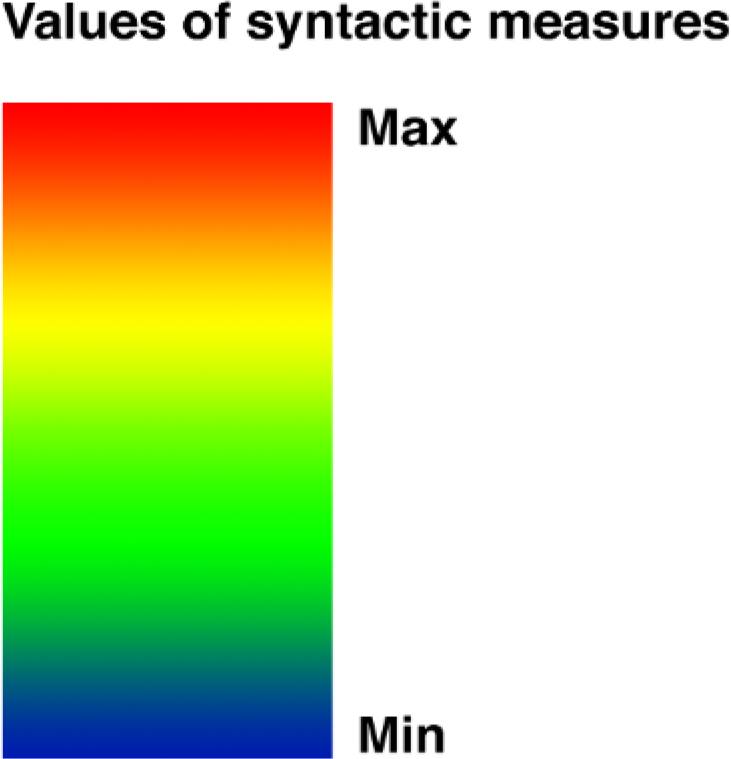
Figure 1.
Legend of the values of syntactic measures
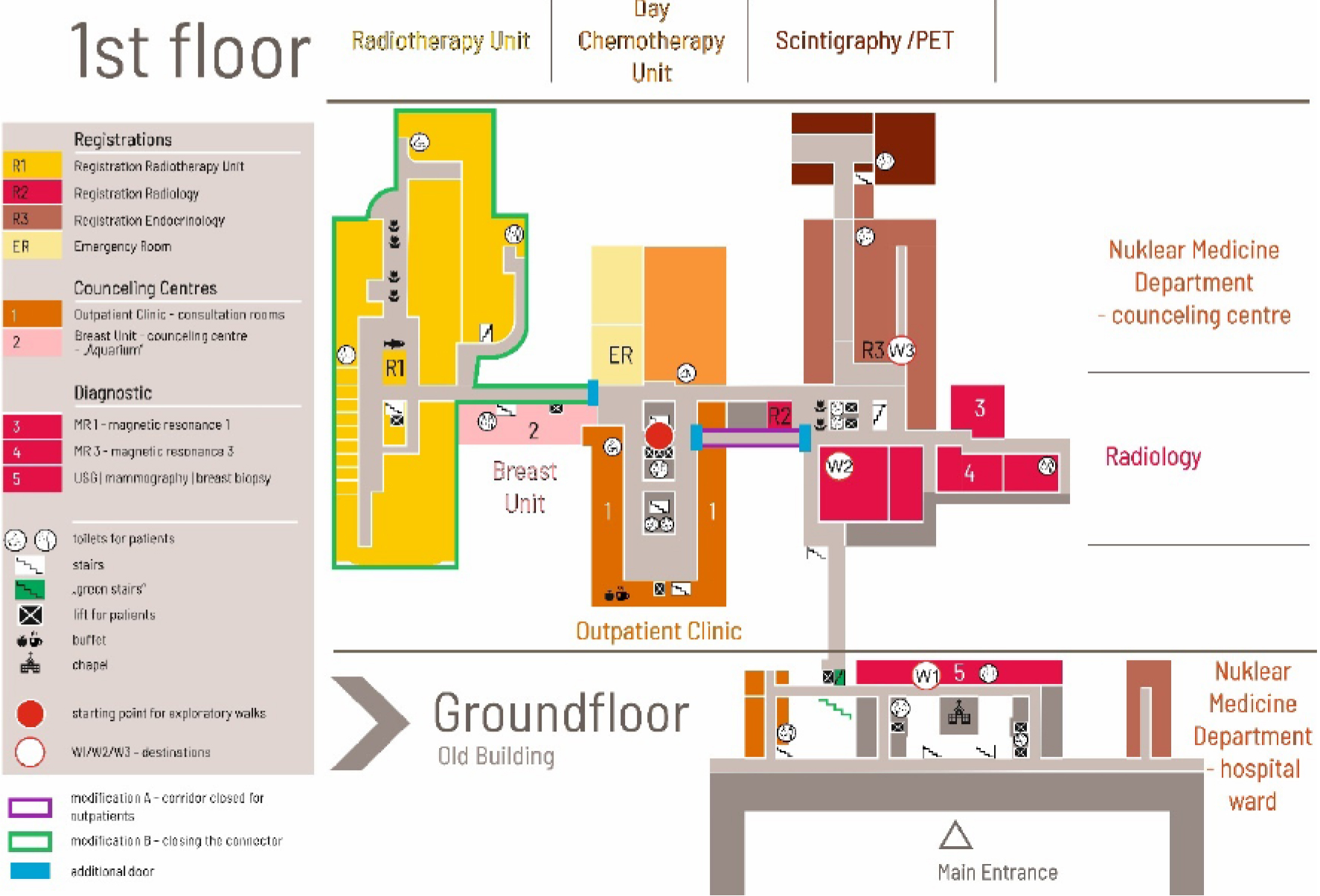
Figure 2.
First floor of the National Institute of Oncology in Gliwice; two variants of the changes made. Variant A and Variant B in Model 1
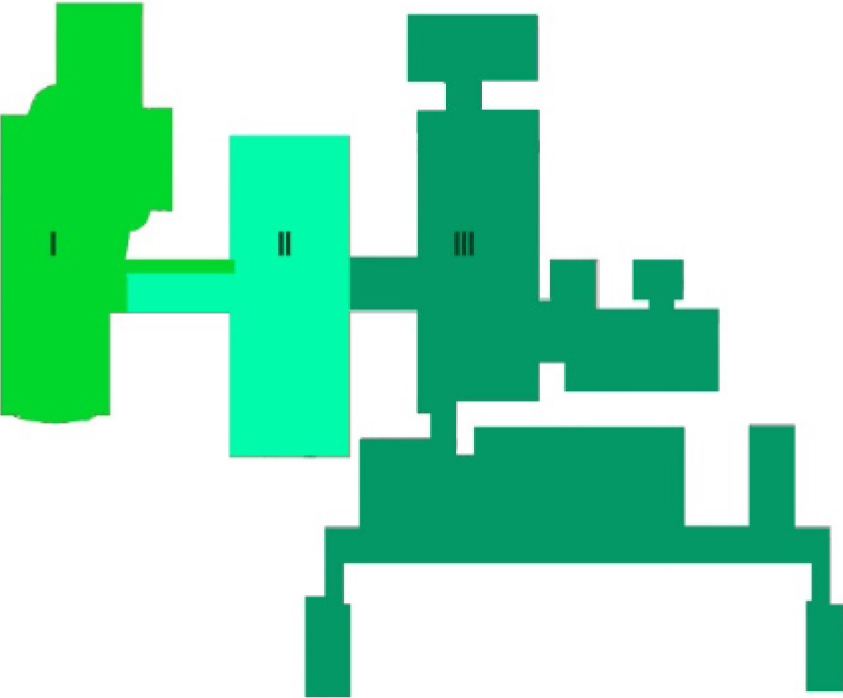
Figure 3.
Diagram of the conventional division of the first floor of the National Institute of Oncology in Gliwice
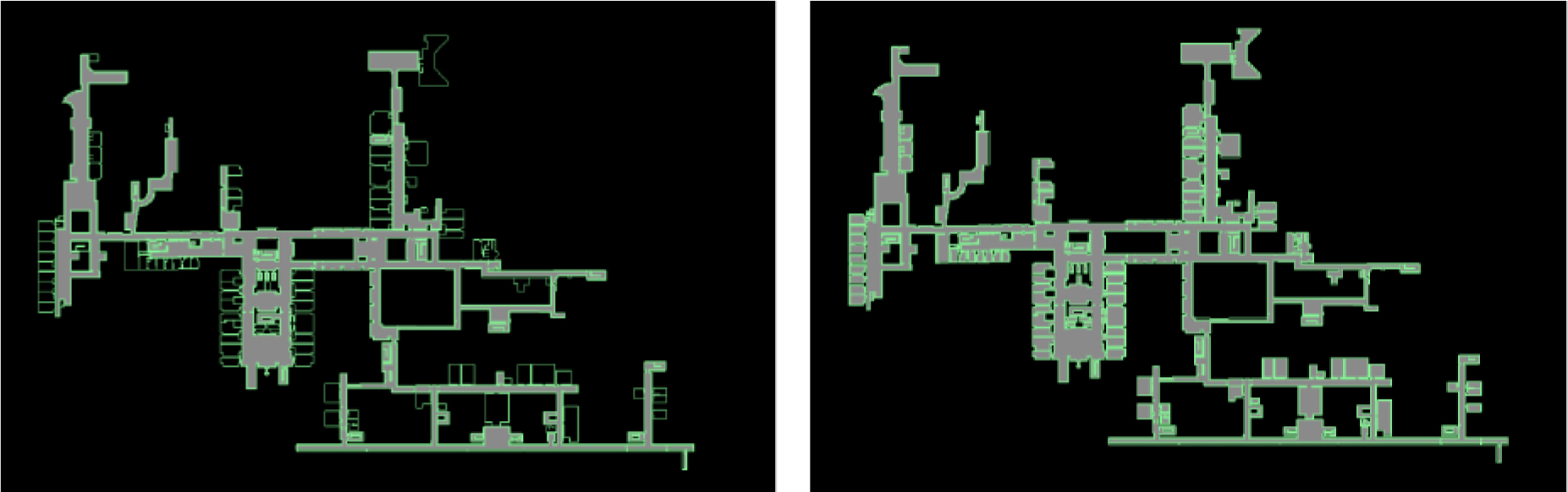
Figure 4.
Left: Model 1 – Branch divided into closed and open spaces (accessible to external users). Open spaces filled with paint. Right: Model 2 – all offices open to users.
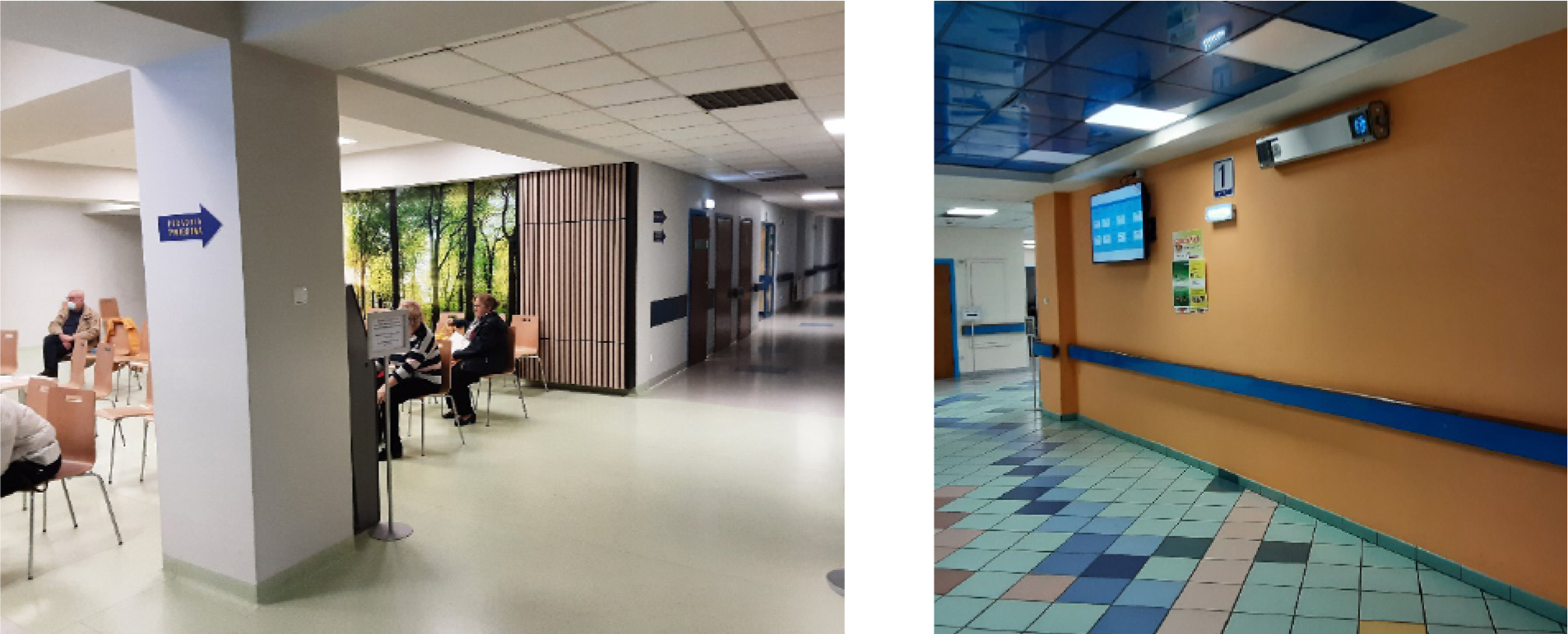
Figure 5.
The indicated decision points. Left: waiting room. Right: main hall by the patient lifts
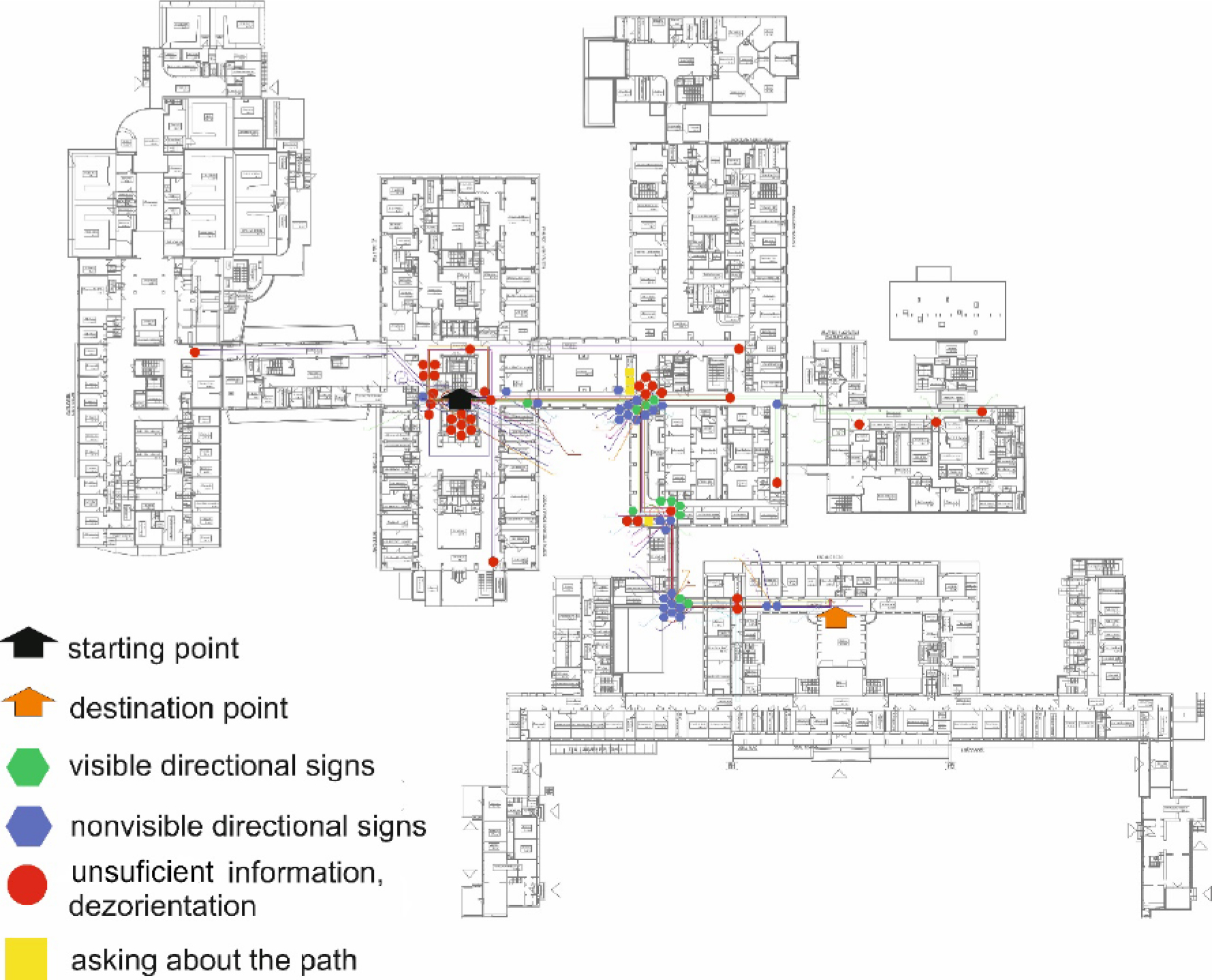
Figure 6.
Example results of users’ behaviour mapping for the patient route to mammography registration (W1)
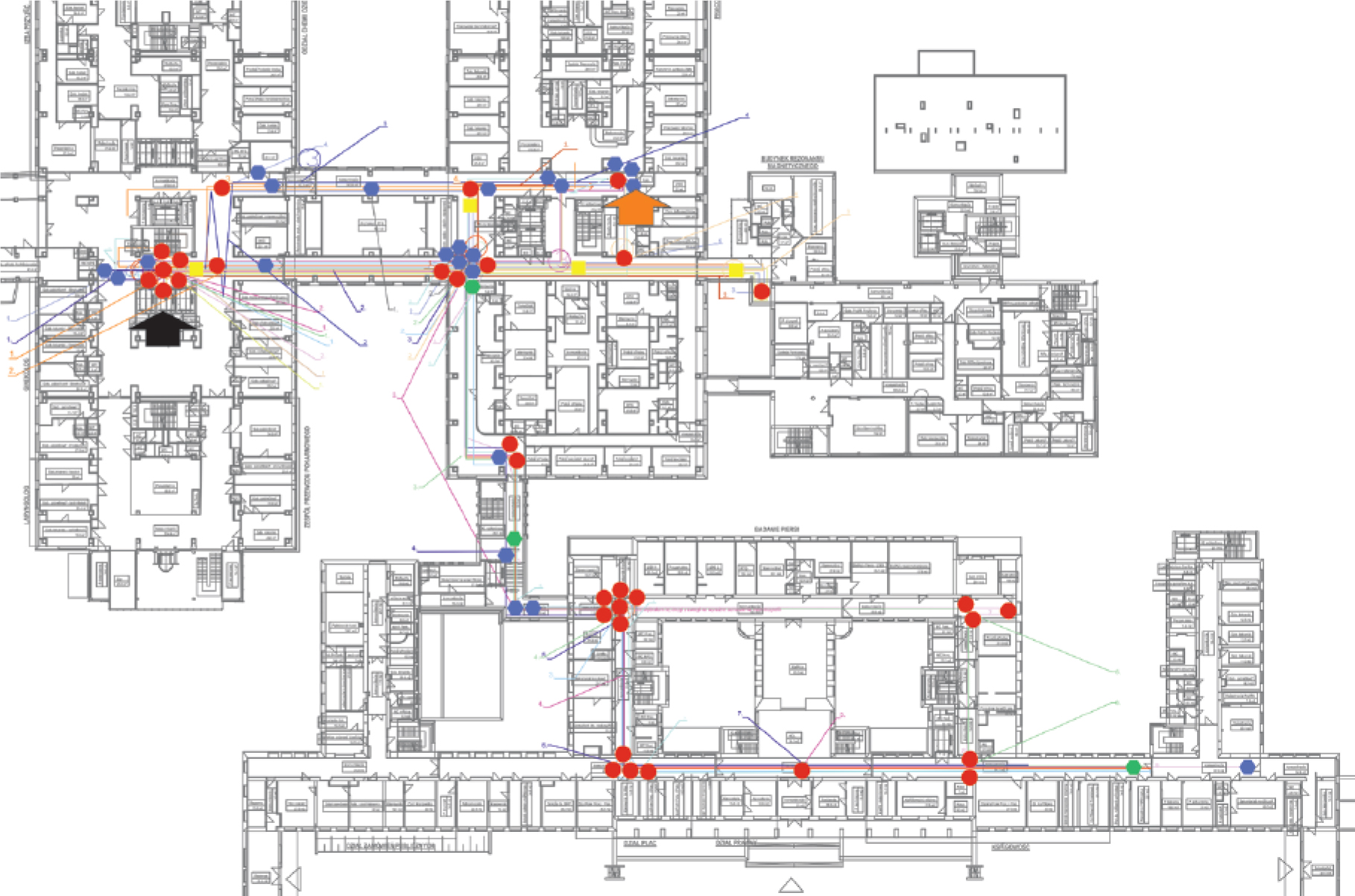
Figure 7.
Results of users’ behaviour mapping for the patient route to Nuclear Medicine Department (W3)
Table 2.
Main results of research walks
| Criteria of analysis | Characteristics of the indicated features of the space | Proposed methods of further research |
|---|---|---|
| A. spatial features determining orientation in the building | ||
| A1. Legibility of the communication layout | illegibility of the communication layout, numerous staircases that are not distinguished in the communication space | S |
| A2. Characteristic elements in the space (landmarks) | few landmarks to help remember routes, | Q |
| A3. Visual accessibility of the destination/decision point | insufficient differentiation of the target points in the communication space (no colour codes, no characteristic elements of the equipment) | S |
| A4. Zoning of the functional areas in the building, difference in areas and buildings at the site | No clear functional zones, no colour codes applied consistently, Excessive colour elements without a coherent system | Q/S |
| A5. Number of changes in direction along each route | multiple changes of direction | S |
| A6. Location of vertical communication | Failure to distinguish the location of staircases in the communication space | S |
| B. features of the existing visual identity system | ||
| B1. Visibility of visual identification system | Location of signage in areas not visible from the initial decision point | Q/S |
| B2. Legibility of the signage system | Directional signage located under the ceiling is not always legible | Q |
| B3. Characteristic signs in the circular area | Individual landmarks, e.g., fishes, pots of greenery, murals with nature motives | Q |
| C. behavioural factors | ||
| C1. Overloading of distractors and obscuring elements | Too much information posted, information posted is misleading (no update of information posted) | Q |
| C2. Cognitive bariers | Unintelligible names of medical functions | Q |
| Explanation: Q – qualitative research; S – simulation research | ||
Table 3.
Wayfinding experiences indicated by patients and staff (in terms of criteria included in Table 2)
| Criteria of analysis | Meaning of the indicated space features | Behavioural interpretation |
|---|---|---|
| A. spatial features determining orientation in the building | ||
| A2. Characteristic elements in the space (landmarks) | Confusing movement to destination, asking people/staff for directions | Stress, sense of confusion, |
| A4. Zoning of the functional areas in the building, difference in areas and buildings at the site | Unconscious movement to destination, difficult finding the desired location, | The embarrassment of having to ask staff for directions |
| B. features of the existing visual identity system | ||
| B1. Visibility of visual identification system | Location of signage in areas not visible from the initial decision point, difficult to find the right sign | Visual and cognitive barriers |
| B2. Legibility of the signage system | Directional signage located under the ceiling is not always legible, too little signage to see from a distance, and incomprehensible names of the locations | Visual barriers |
| B3. Characteristic signs in the circular area | Individual landmarks, e.g. fishes, pots of greenery, green steps | Difficulties in building the mental maps |
| C. behavioural factors | ||
| C1. Overloading of distractors and obscuring elements | Older patients have indicated confusion with many information and inconsistent nomenclature | Confusion, stress |
| C2. Cognitive bariers | Unintelligible names of medical functions | Confusion |
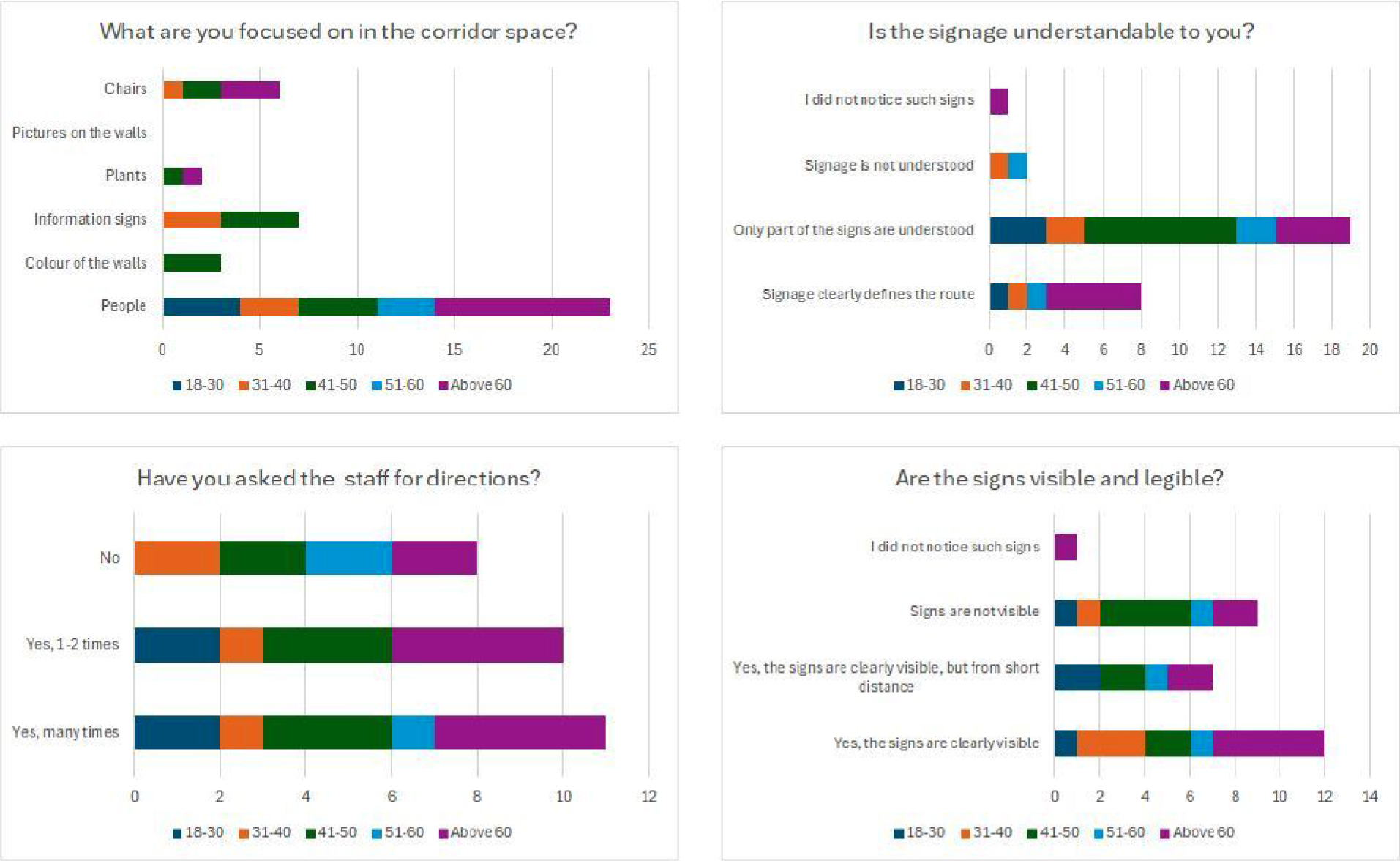
Figure 8.
Survey results regarding the criteria of analysis according to the age groups
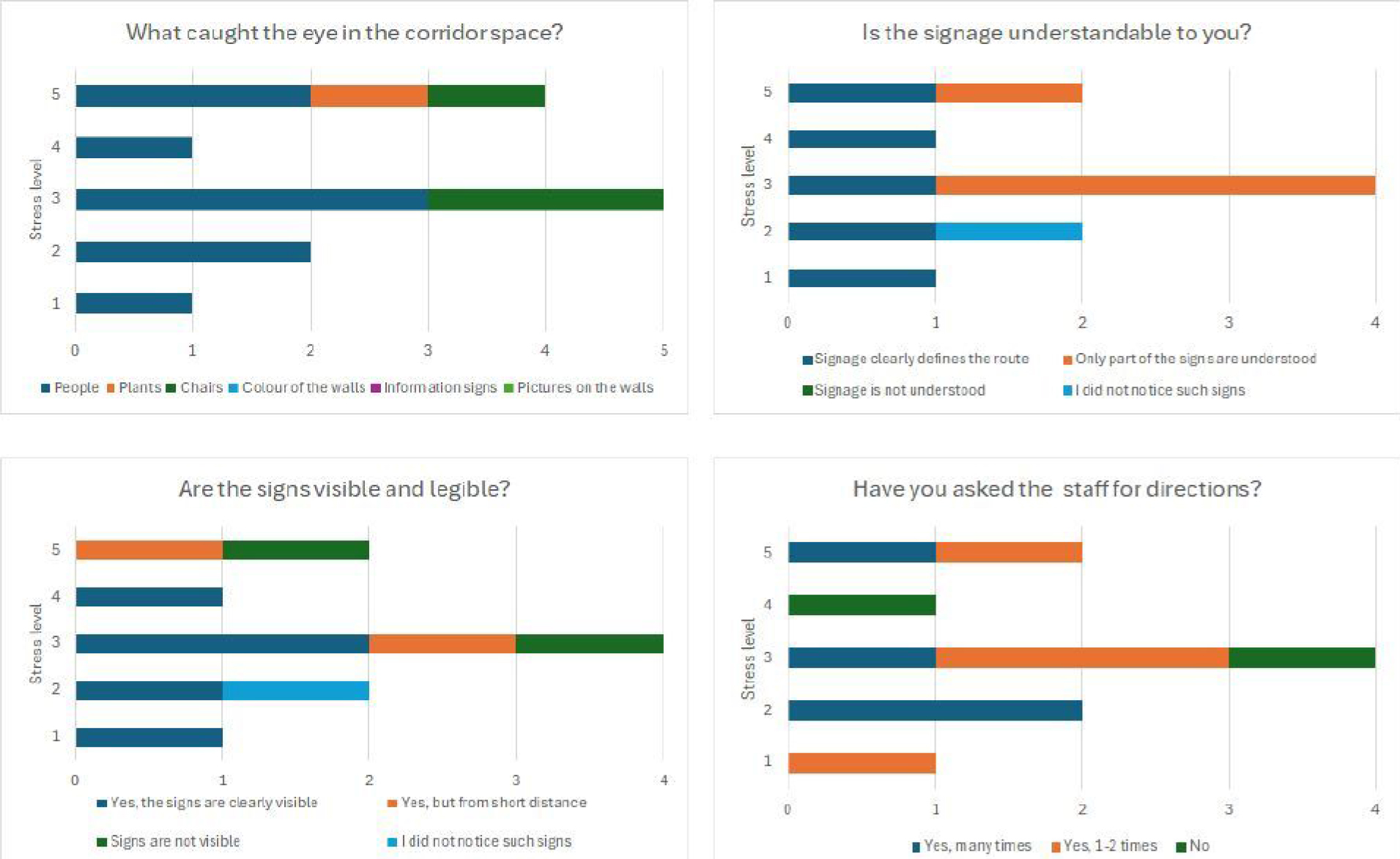
Figure 9.
The obtained data were analysed and grouped according to the specific of each factor (as it is presented in Table 3)
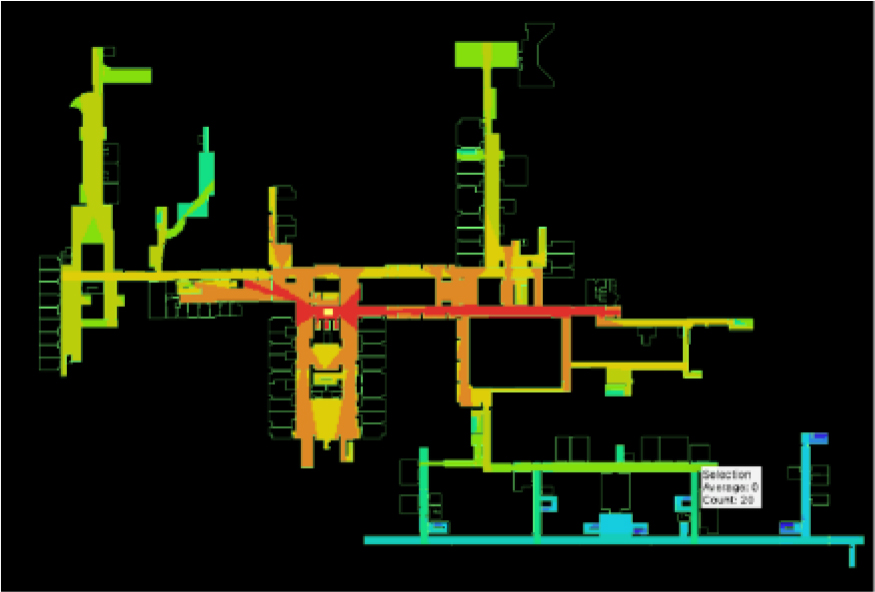
Figure 10.
Visual step depth for the starting point
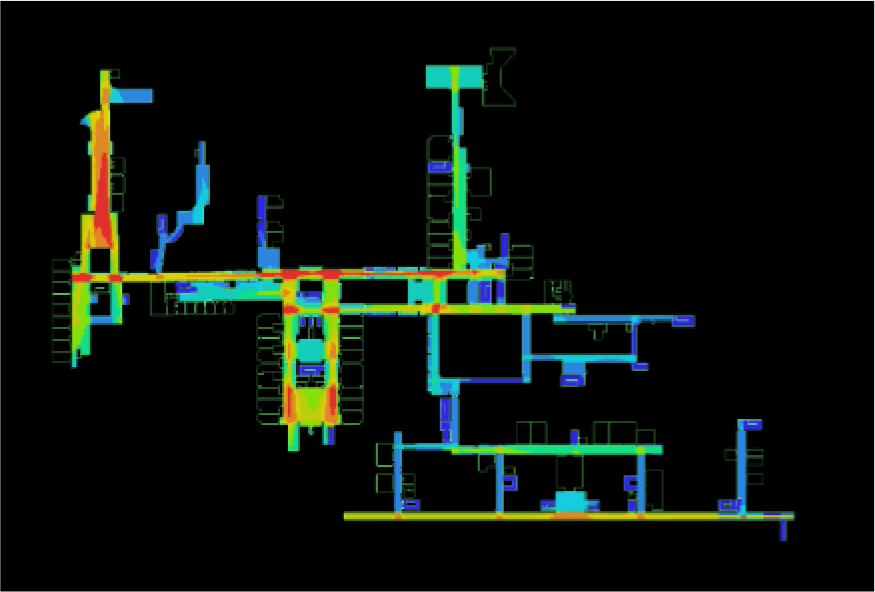
Figure 11.
VGA analysis of model 1 connectivity parameter (min. 15 – max. 2163)
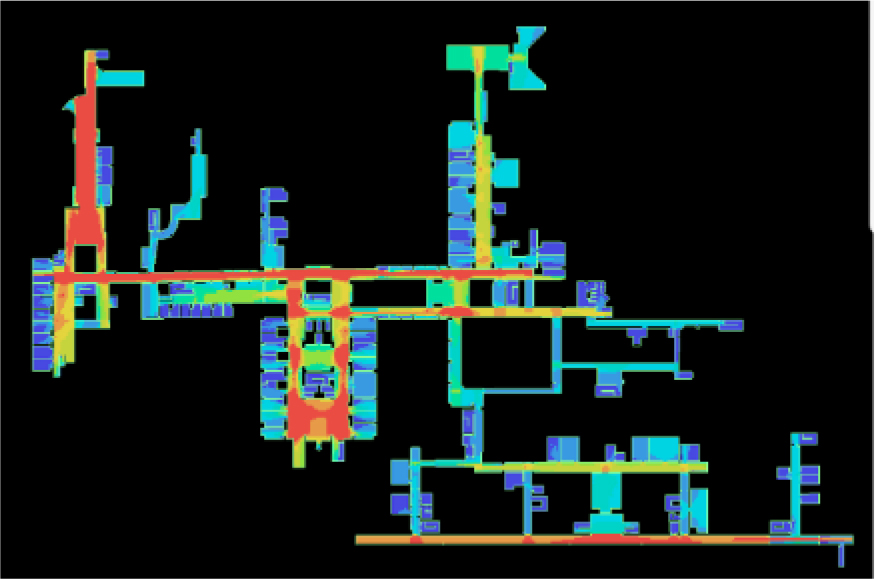
Figure 12.
VGA analysis of model 2. Connectivity parameter (min. 6 – max. 2208)
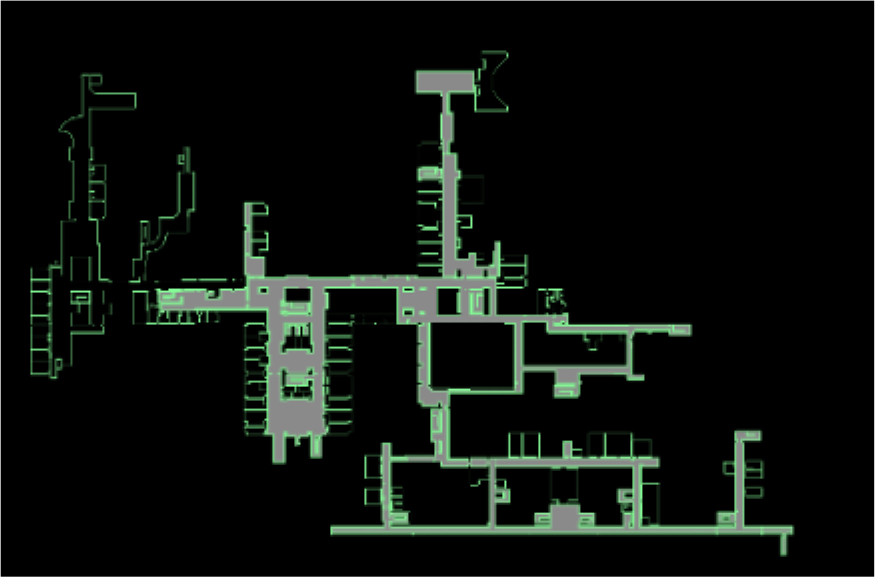
Figure 13.
Variant A in Model 1: One corridor closed to users
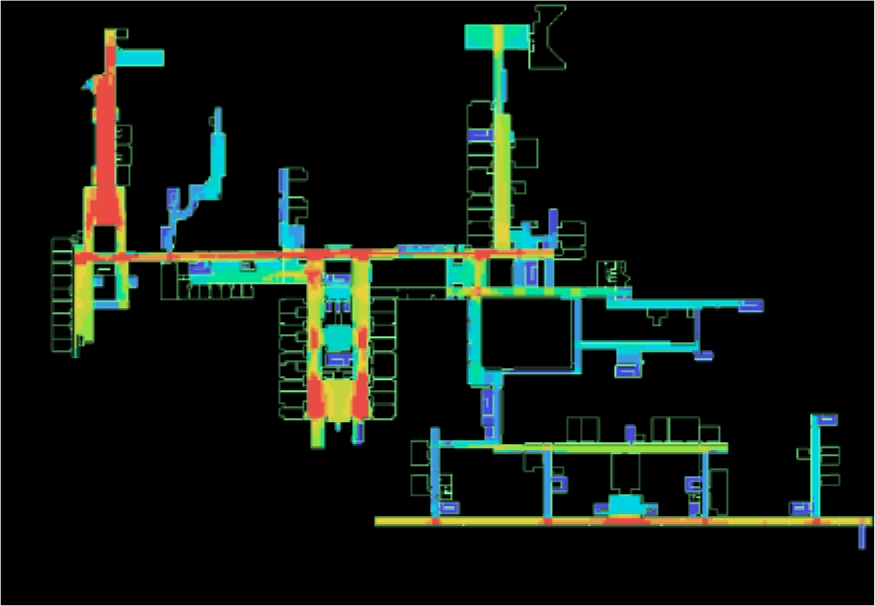
Figure 14.
VGA analysis for Variant A in model 1. Connectivity parameter (min 4 – max 629)
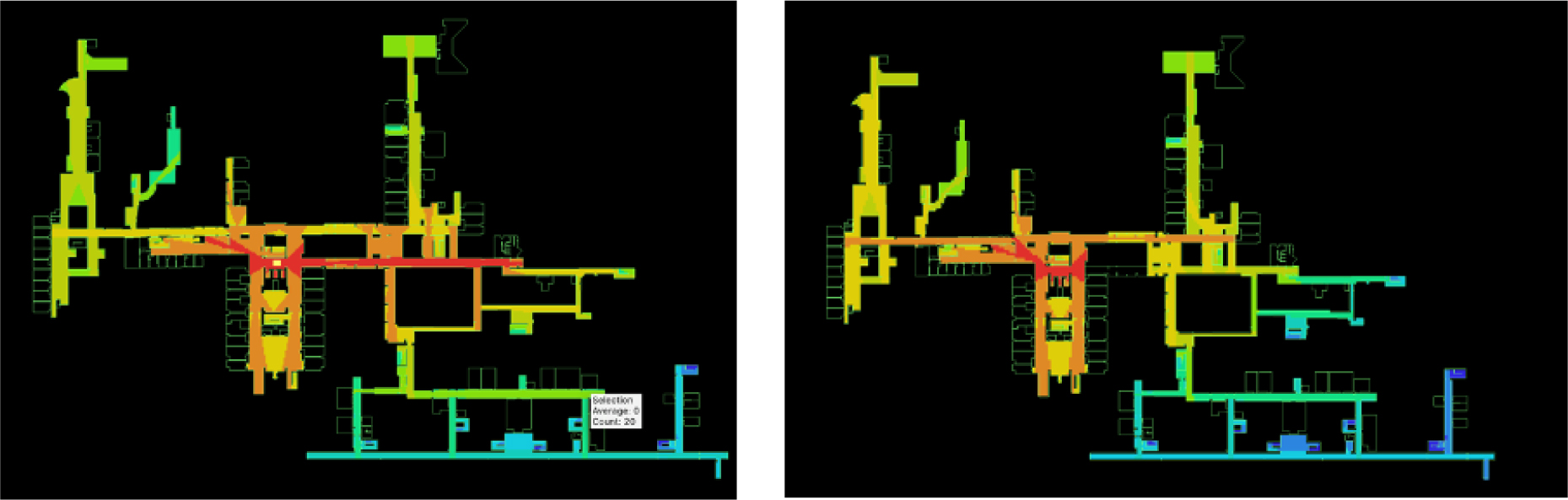
Figure 15.
Visual step depth – comparison of the situation before and after the Variant A
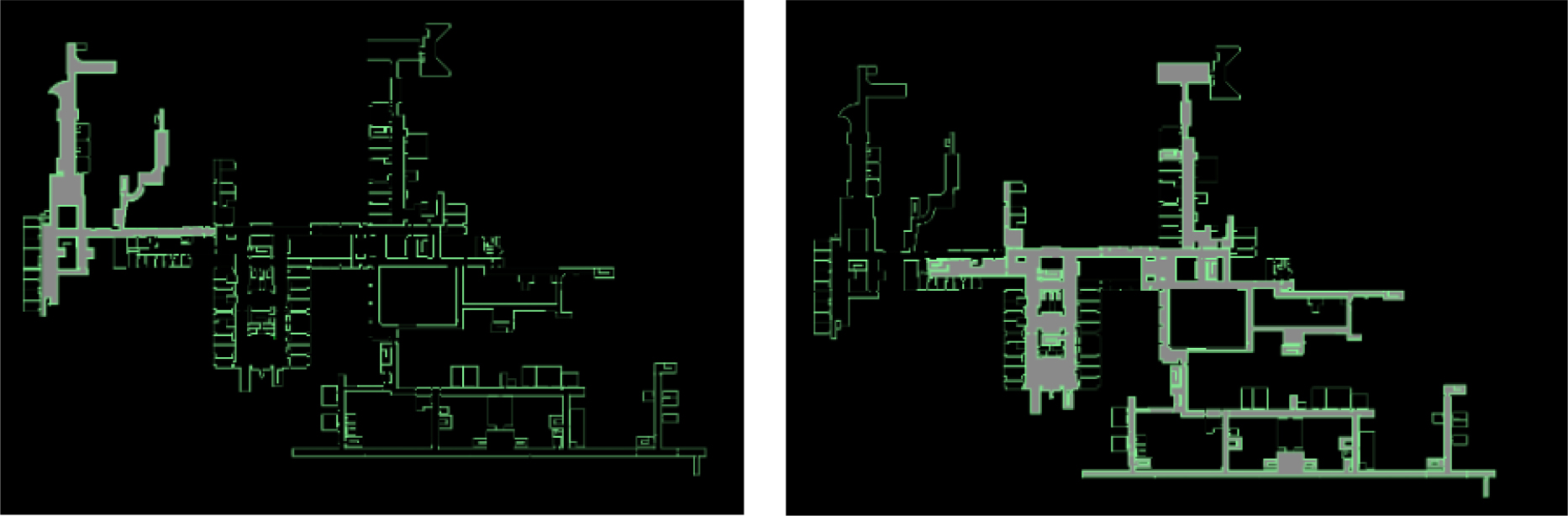
Figure 16.
Variant B in Model 1. Separate the two zones (right and left) by adding one door and closing one corridor in the section leading to the diagnostic imaging space to outside users
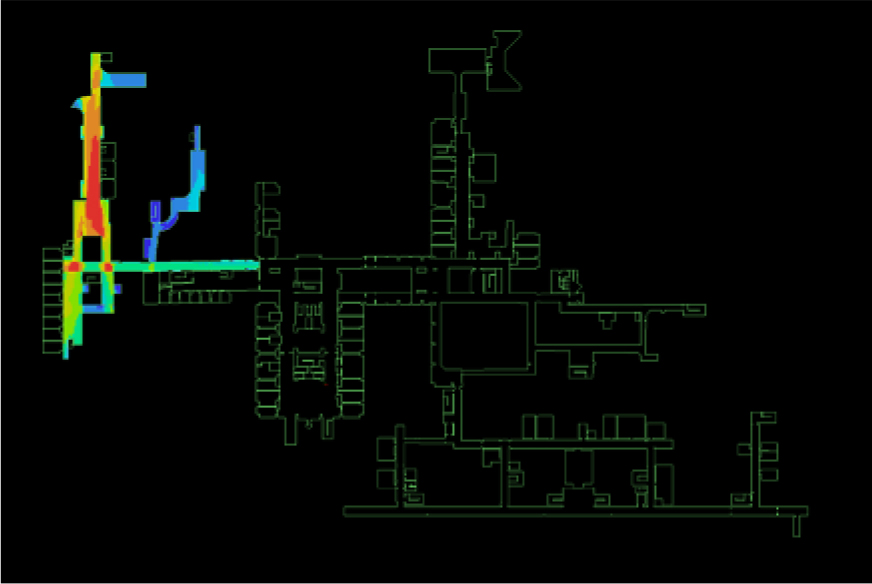
Figure 17.
VGA analysis for variant B in model 1 – part I. Connectivity parameter (min. 26 – max. 1635)
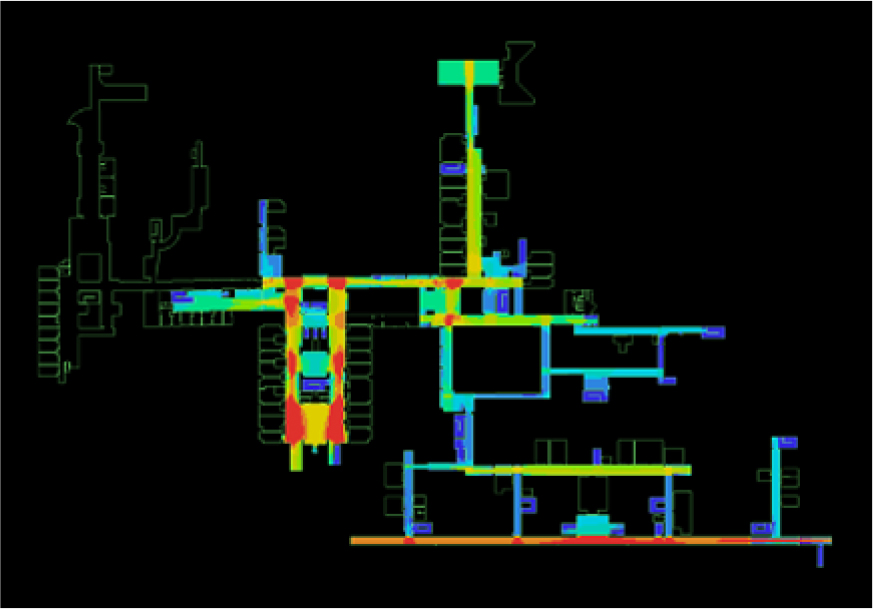
Figure 18.
VGA analysis for variant B in model 1 – part II and III. Connectivity parameter (min. 15 – max. 1605
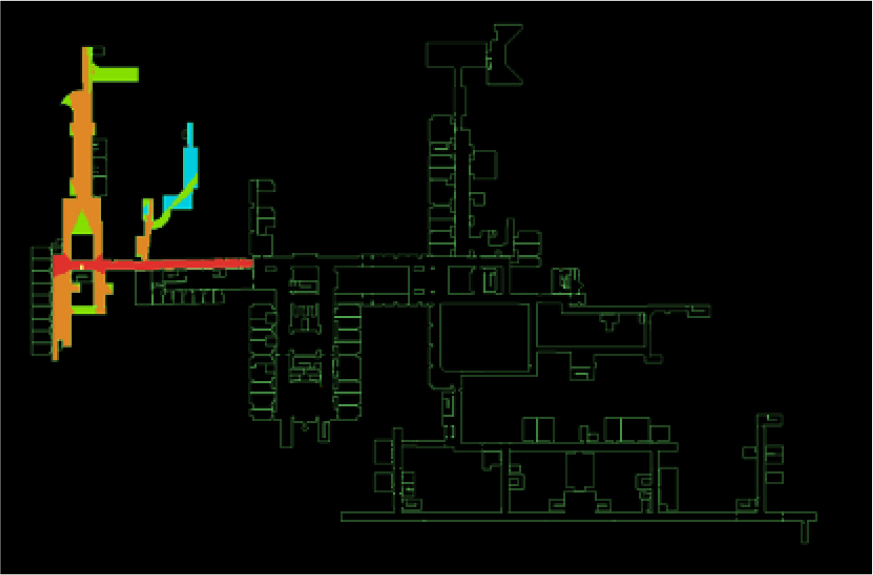
Figure 19.
Visual step depth for variant B – part I
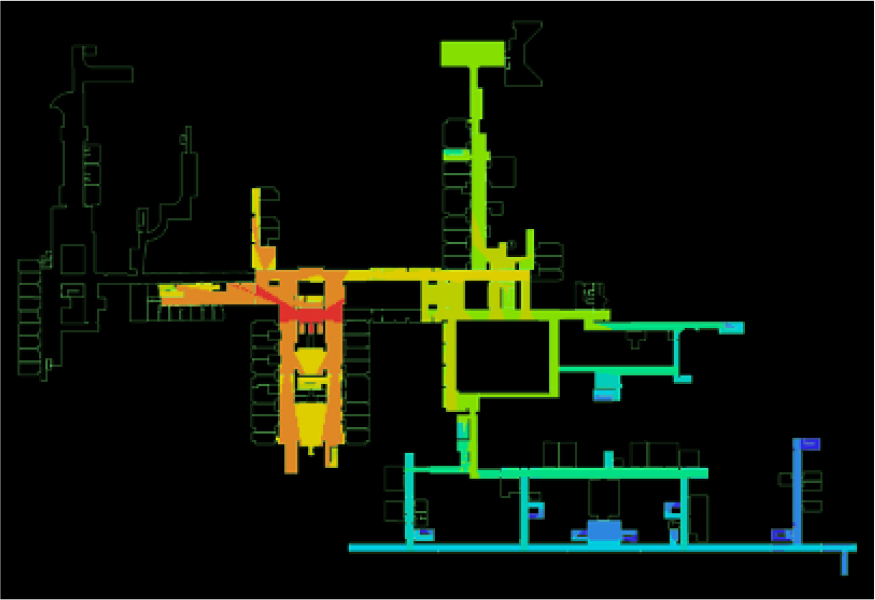
Figure 20.
Visual step depth for variant B – part II and III
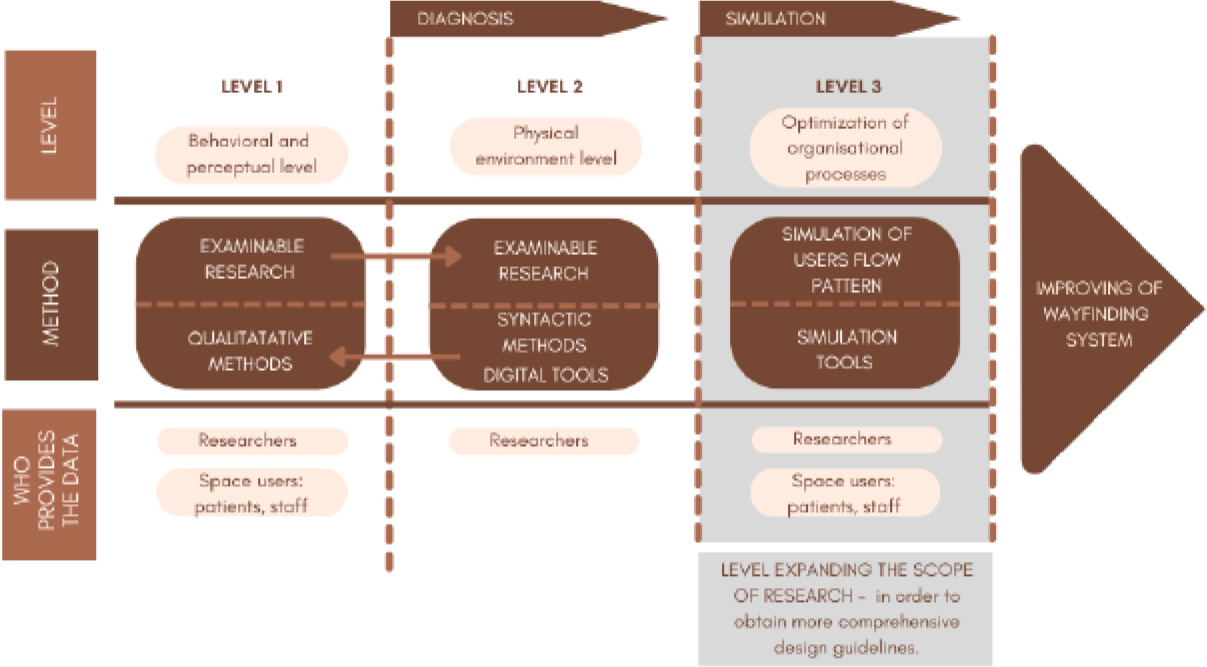
Figure 21.
A diagram of the process of examining the space of complex buildings in terms of wayfinding systems
Table 4.
The identified key issues for planning the research on wayfinding systems in hospitals
| Main architectural components of wayfinding system | Exploratory walks Detected results | Space Syntax Detected results | Complementary simulation method |
|---|---|---|---|
| legibility of the communication layout | * | * | * |
| Characteristic elements in the space (landmarks) | * | * | |
| Visual accessibility of the destination/decision point | * | * | * |
| Zoning of the functional areas in the building, difference in areas and buildings at the site | * | * | |
| Visibility of visual identification system | * | * | |
| Legibility of the signage system | * | * | |
| Number of changes in direction along each route | * | * | |
| Overloading of distractors and obscuring elements | * | * | |
| Characteristic points and functions in the circular area | * | * |