
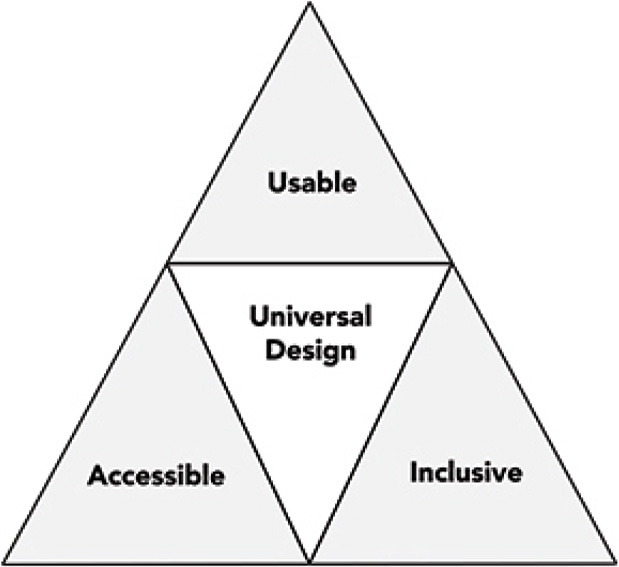
Figure 1.
UD relation diagram [32]
Table 1.
Universal design principles [32]
| Principles | Guidelines |
|---|---|
|
|
|
|
|
|
|
|
|
|
|
|
|
|
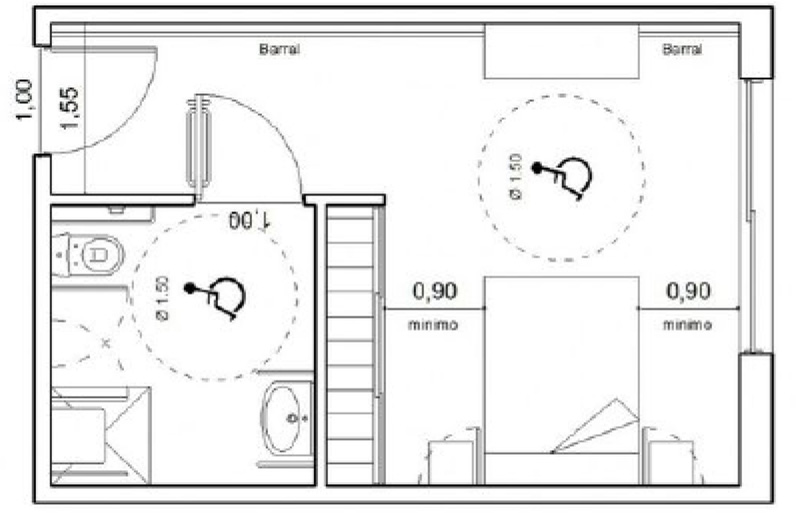
Figure 2.
Movement area in the WC and space requirement at the long side of a wheelchair user’s bed [Edited by Author from Ref. 39]
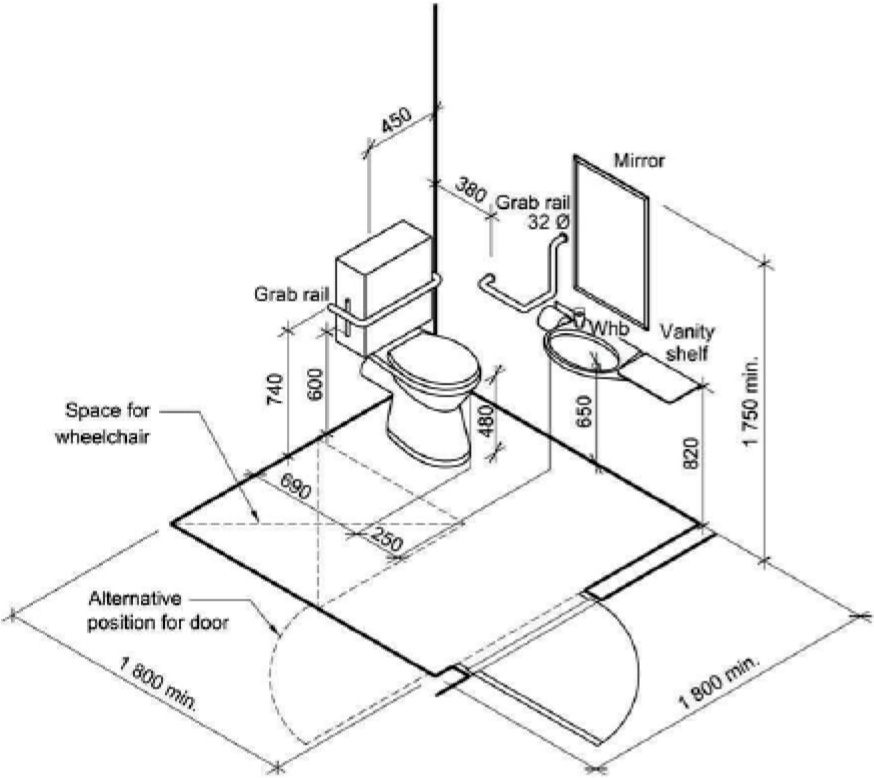
Figure 3.
Measurements of the WC from the front view Universal design principles [32]. [Edited by Author from Ref. 39]
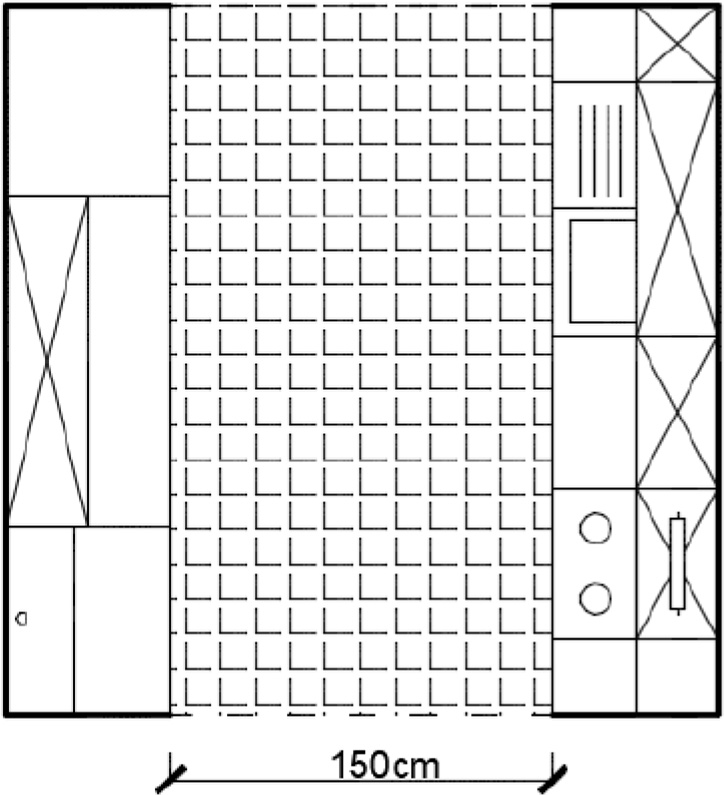
Figure 4.
Movement area in a double-space kitchen [Edited by Author from Ref. 39]
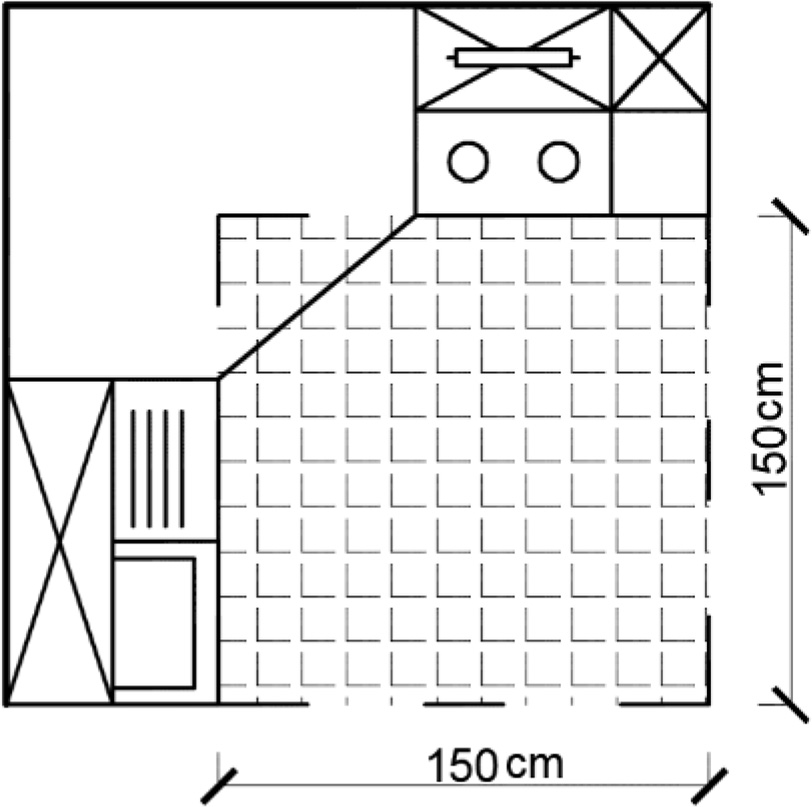
Figure 5.
Movement area in an L-layout kitchen [Edited by Author from Ref. 39]
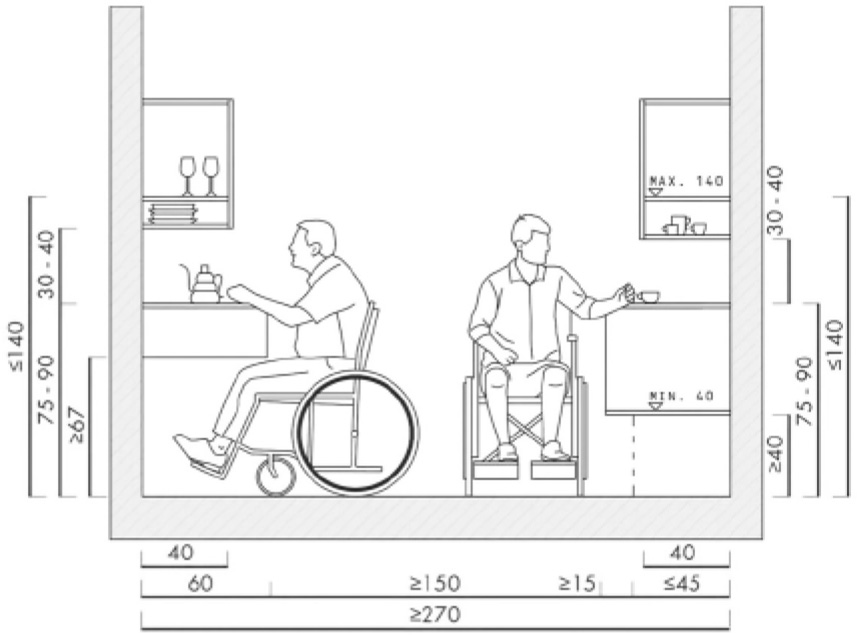
Figure 6.
Front view of the standard kitchen measurements [Edited by Author from Ref. 39]
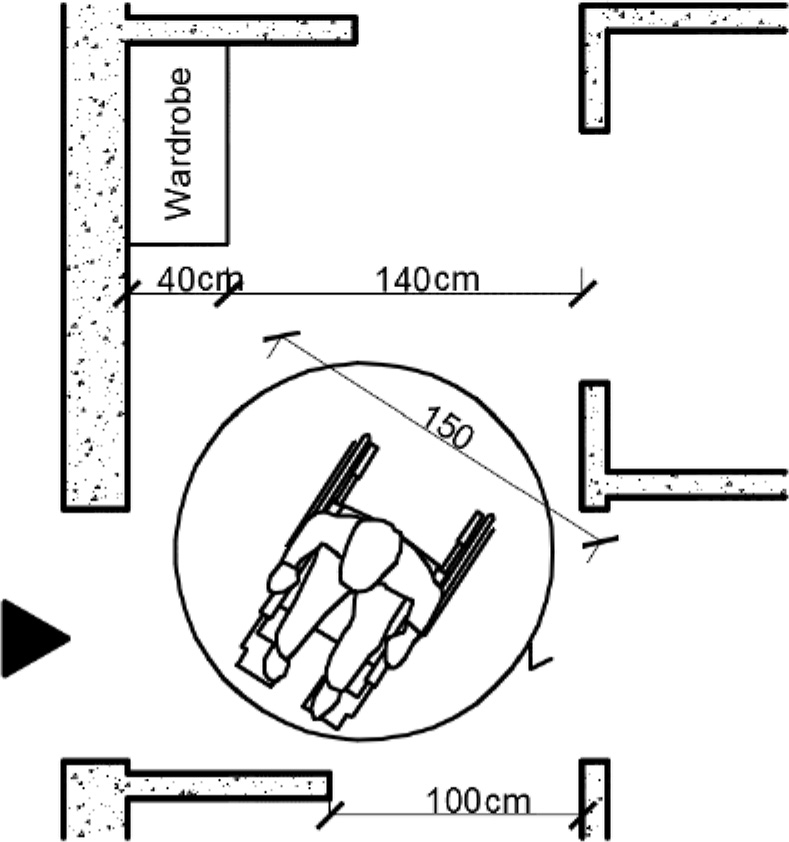
Figure 7.
The transverse layout of entrance area [Edited by Author from Ref. 39]
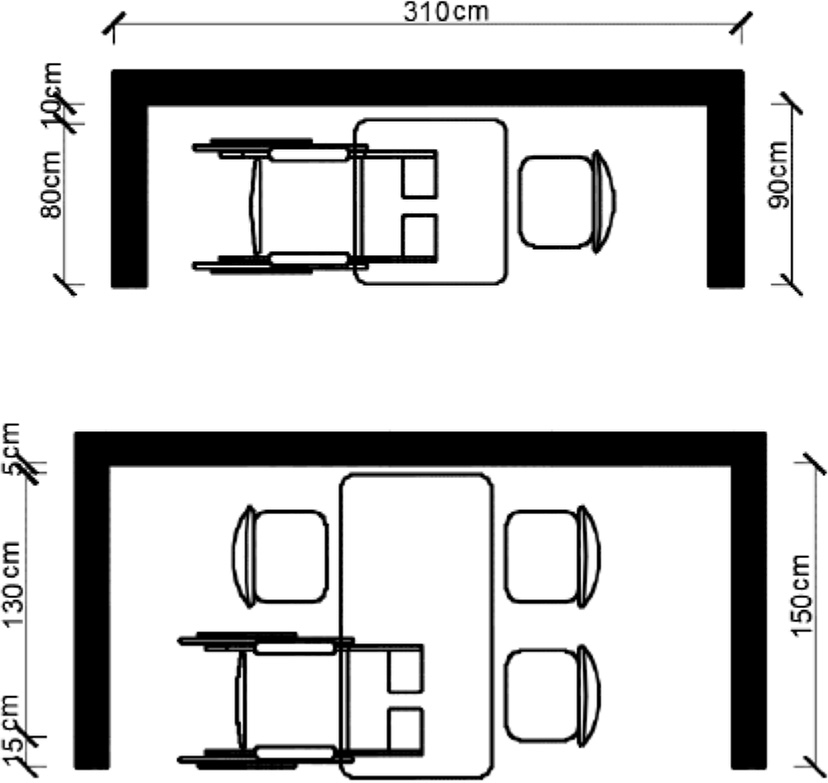
Figure 8.
Dining area layout for two or four people [Edited by Author from Ref. 39]
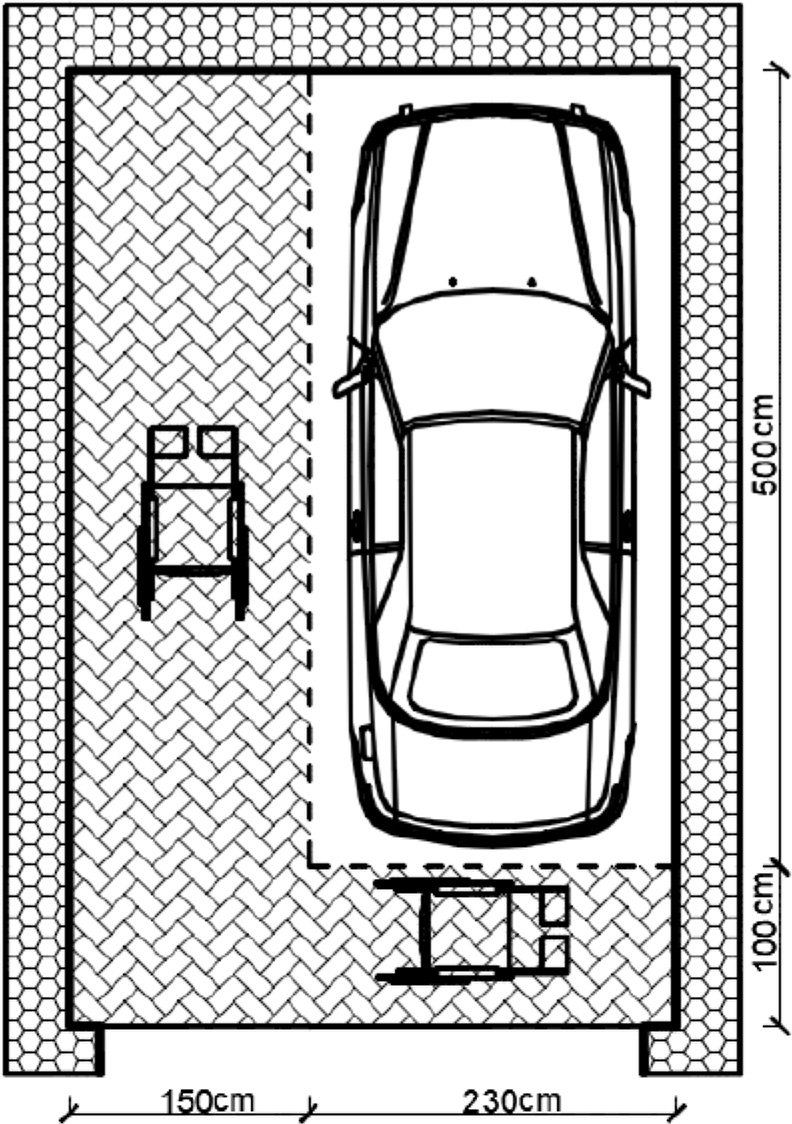
Figure 9.
Space requirement in a garage [Edited by Author from Ref. 39]
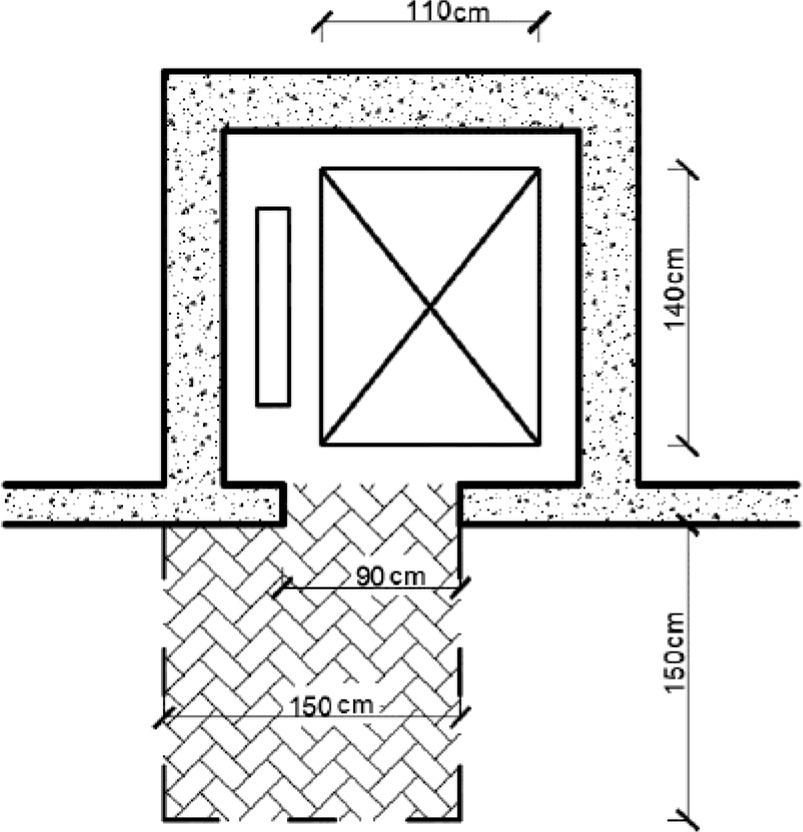
Figure 10.
Plan of the lift [Edited by Author from Ref. 39]
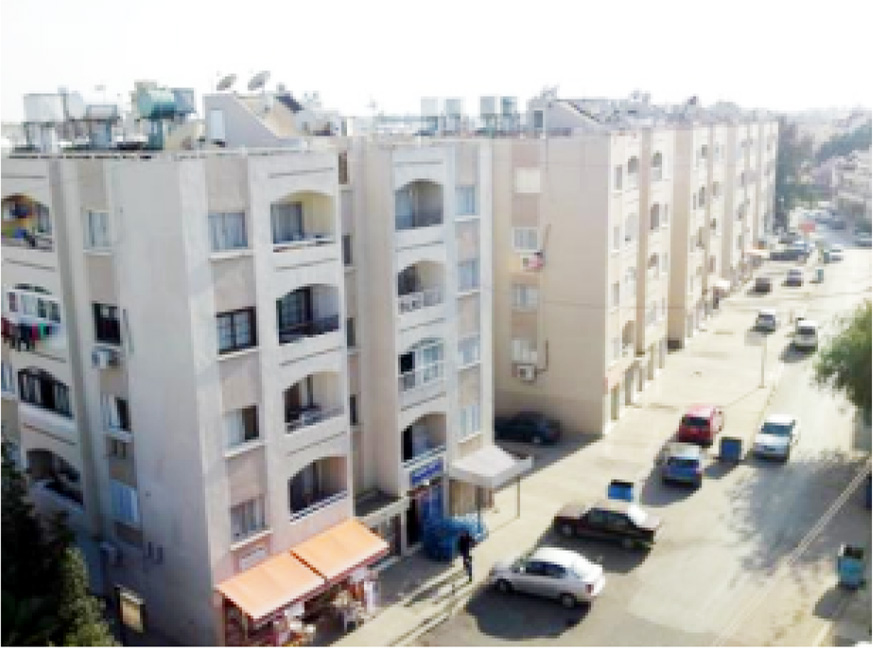
Figure 11.
Street view [43]
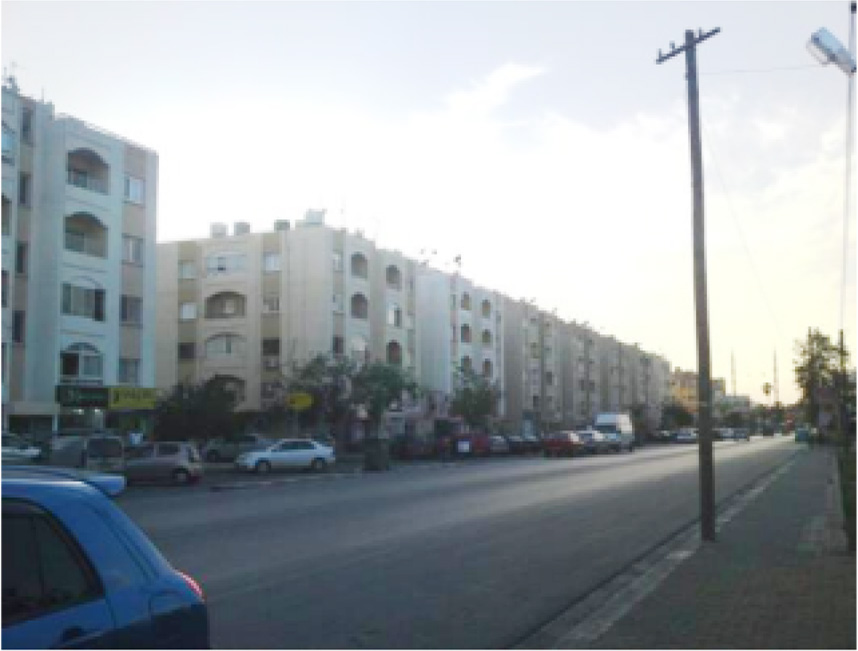
Figure 12.
Cross view [43]
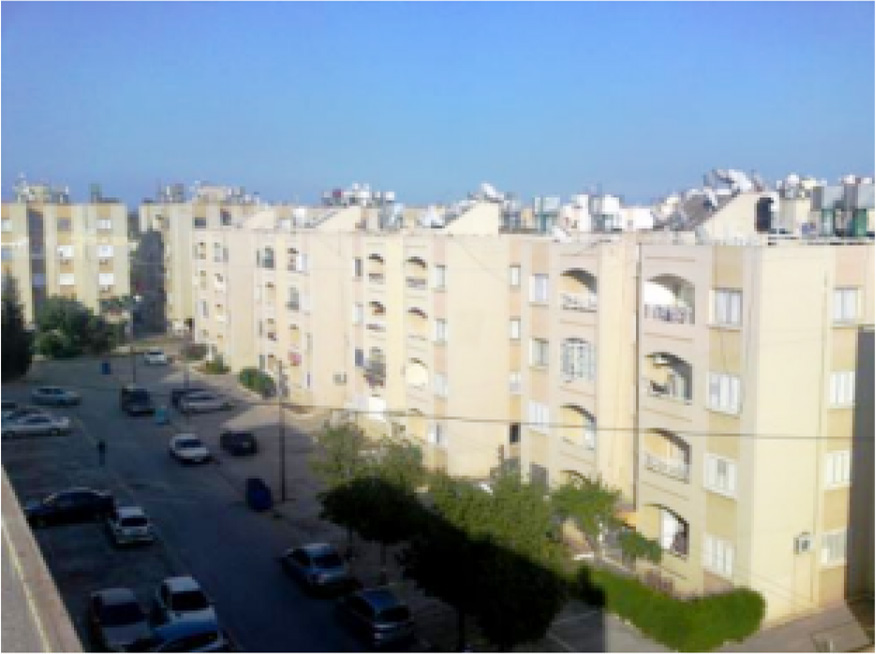
Figure 13.
Front view [43]
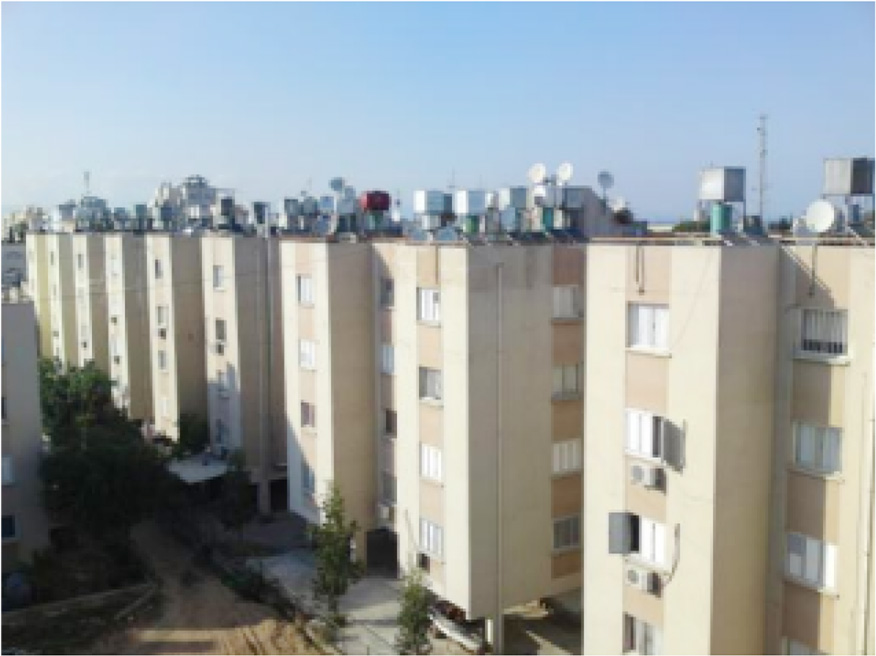
Figure 14.
Rear view [43]
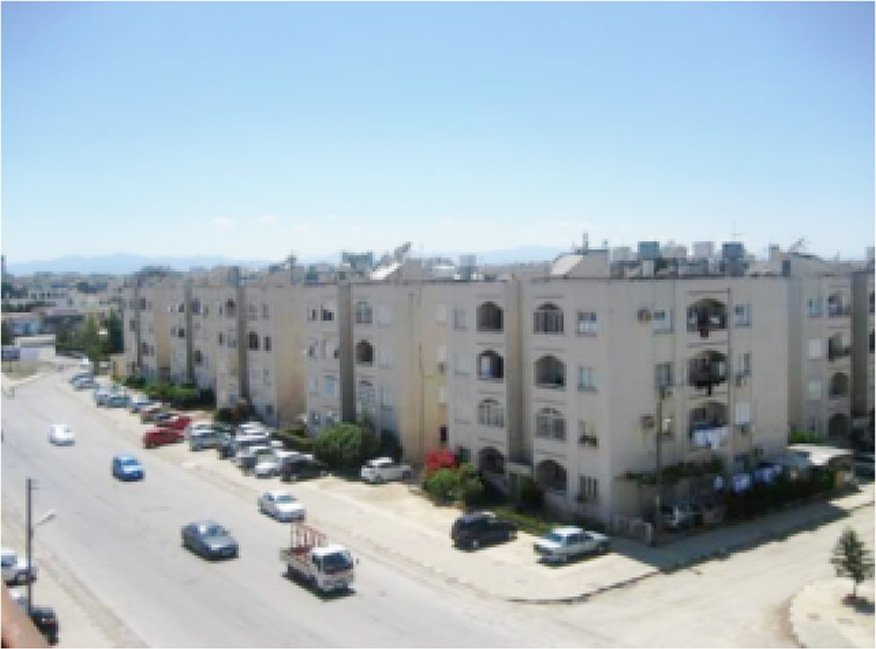
Figure 15.
View from the location [43]
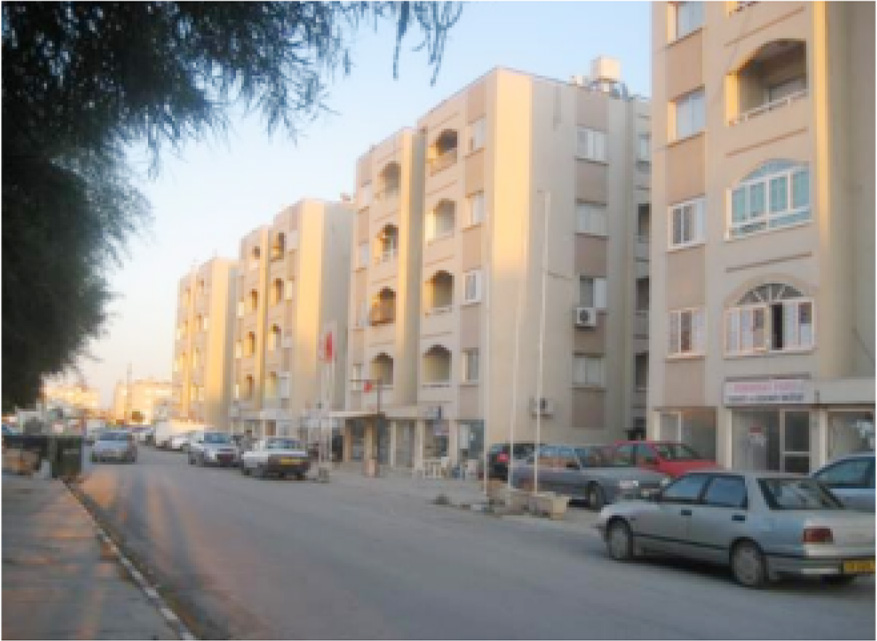
Figure 16.
View from the location [43]
Table 2.
The size guidelines for flats that have only one person using a wheelchair (Area in m2) (Author, 2022)
| Name of the Spaces | 1 person | 2 people | 3 people |
|---|---|---|---|
| Bedroom | 16.0 | 24.0 | 16.0 |
| Living area | 20.0 | 20.0 | 22.0 |
| Kitchen | 8.0 | 9.0 | 9.0 |
| Dining room | 6.0 | 6.0 | 10.0 |
| Bathroom | 6.0 | 7.0 | 7.0 |
| Spare room (washing machine) | 1.0 | 1.0 | 1.0 |
| Corridor | 5.0 | 6.0 | 6.0 |
| Total area | 62.0 | 73.0 | 91 |
Table 3.
Demographics of respondents (Author, 2022)
| Frequency | Percentage | |
|---|---|---|
| Gender | ||
| Male | 74 | 51.4 |
| Female | 70 | 46.6 |
| Age | ||
| 18–30 | 93 | 63.7 |
| 31–40 | 26 | 17.8 |
| 41–50 | 13 | 8.9 |
| 51–60 | 7 | 4.8 |
| 61 + | 7 | 4.8 |
| Education | ||
| Bachelor’s degree | 88 | 60.3 |
| Master's degree | 32 | 21.9 |
| PhD or higher | 26 | 17.8 |
| Residence | ||
| Nicosia | 84 | 61.8 |
| Girne | 24 | 17.6 |
| Mağusa | 28 | 20.6 |
| House Typology | ||
| Bungalow | 6 | 4.1 |
| Semi-detached house | 11 | 7.5 |
| Apartment | 99 | 66.4 |
| Duplex | 15 | 10.3 |
| Others | 17 | 11.6 |
| Disability | ||
| Yes | 20 | 13.7 |
| No | 126 | 86.3 |
| Someone to help if disabled | ||
| Yes | 39 | 33.9 |
| No | 76 | 66.1 |
Table 4.
Satisfaction rating of the accessibility features of the residential spaces. Satisfaction Rate on a scale of 1 (Very Poor) to 5 (Very Good) (Author, 2022)
| Accessibility features | Mean Quality | Remark |
|---|---|---|
| Location of house/accessibility | 3.53 | Good |
| Streets leading to the house | 3.25 | Fair |
| The width of the sidewalks leading to the house | 3.14 | Fair |
| The surface of the sidewalks leading to the house | 3.16 | Fair |
| Curb ramp of the sidewalks | 3.05 | Fair |
| Maintenance of the sidewalks | 3.10 | Fair |
| Lighting of the streets next to the house | 3.27 | Fair |
| Width of the parking space | 3.23 | Fair |
| Distance from the car parking space to the house | 3.51 | Good |
| Levelled approach to the entrance of the house | 3.37 | Fair |
| Ramp gradient to the entrance of the house | 3.23 | Fair |
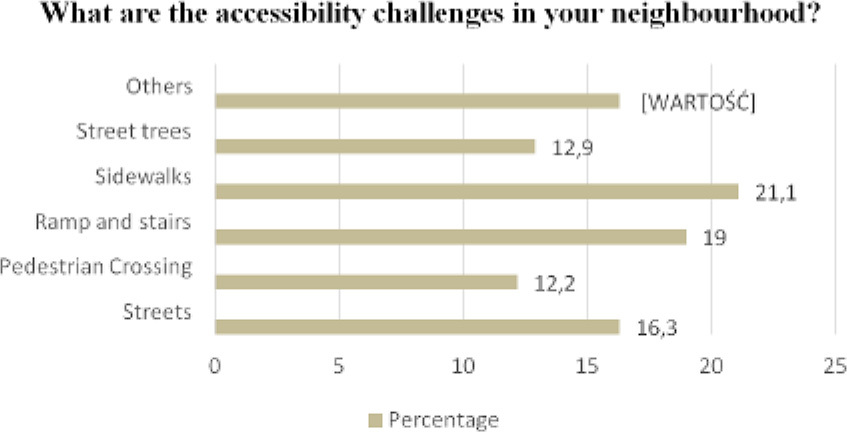
Figure 17.
Chart representation of the major accessibility challenges the residents face in their neighbourhood (Author, 2022)
Table 5.
Satisfaction rating of the house design features of the residential spaces. Satisfaction Rate on a scale of 1 (Very Poor) to 5 (Very Good) (Author, 2022)
| House design features | Mean Quality | Remark |
|---|---|---|
| Type of house | 3.35 | Fair |
| Building material | 3.36 | Fair |
| Width of doorways | 3.38 | Fair |
| Width of hallways | 3.36 | Fair |
| Height of windows and doors | 3.52 | Good |
| Space for turning of wheelchairs in all rooms (Kitchen, living room, Sitting room) | 2.96 | Fair |
| Bedroom (Size, Material, Application, lighting, ventilation etc.) | 3.34 | Fair |
| Bathroom (Size, Material, Application, lighting, ventilation etc.) | 3.16 | Fair |
| Bathroom layout | 3.23 | Fair |
| Kitchen (Size, Material, Application, lighting, ventilation etc.) | 3.37 | Fair |
| Living room (Size, Material, Application, lighting, ventilation) | 3.58 | Good |
| Lift | 3.12 | Fair |
| Handrails | 3.26 | Fair |
| Floor coverings | 3.29 | Fair |
| Height of switches, sockets and service controls | 3.33 | Fair |
| Natural lighting and ventilation | 3.28 | Fair |
| Rent/Cost of acquisition | 3.01 | Fair |
| Overall quality of house for persons with disability | 2.96 | Fair |
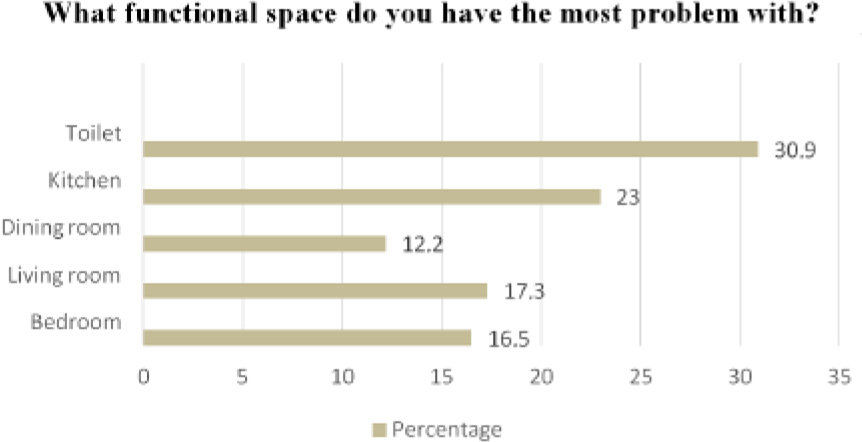
Figure 18.
Chart representation of the functional spaces that most of the residents have a problem with (Author, 2022)
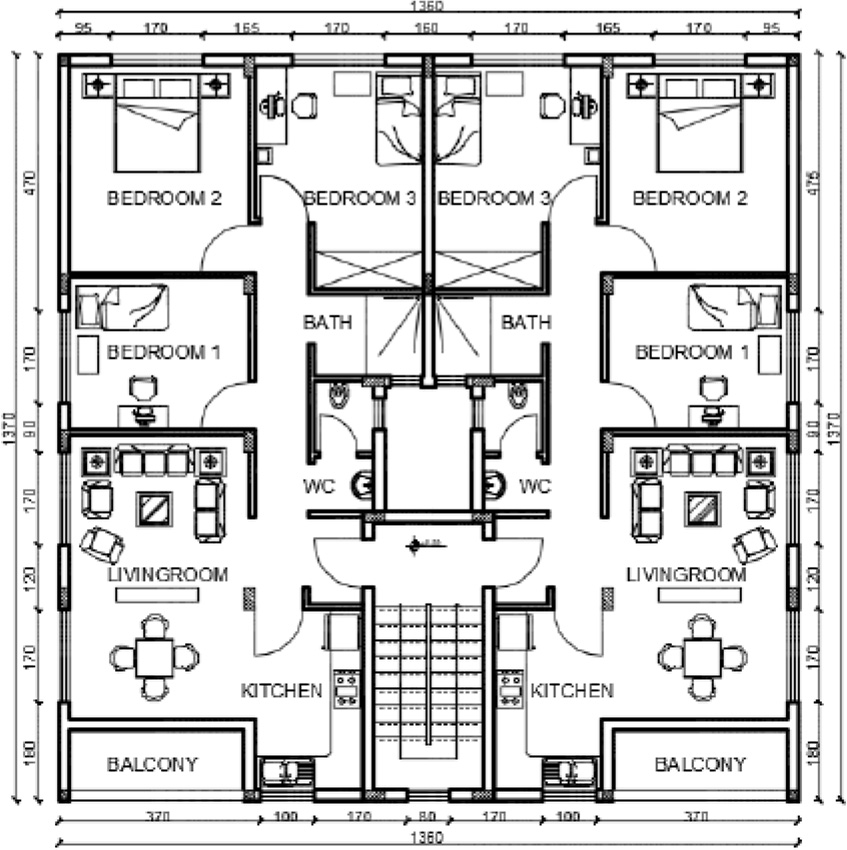
Figure 19.
The plan of the two flats each with 85m2 (Source: Edited by Author, 2022)
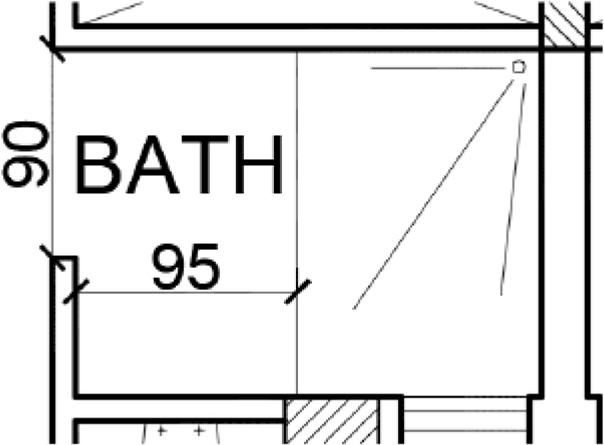
Figure 20.
Movement area by the bath (Source: Edited by Author, 2022)
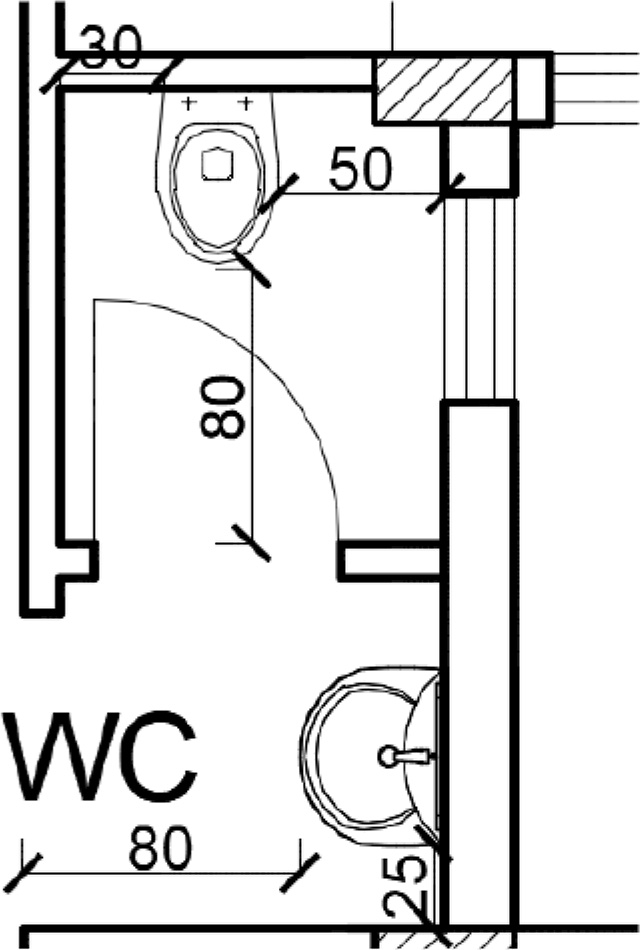
Figure 21.
The area of the movement next to the washbasin and WC (Source: Edited by Author, 2022)
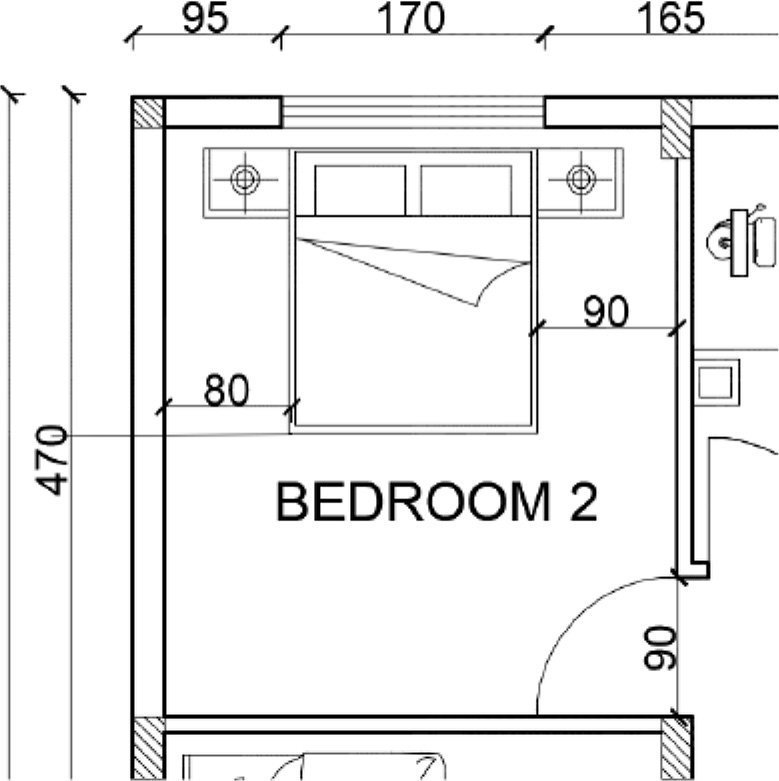
Figure 22.
Bedroom 1 space for a wheelchair user at the long side of the bed and door measurements (Source: Edited by Author, 2022)
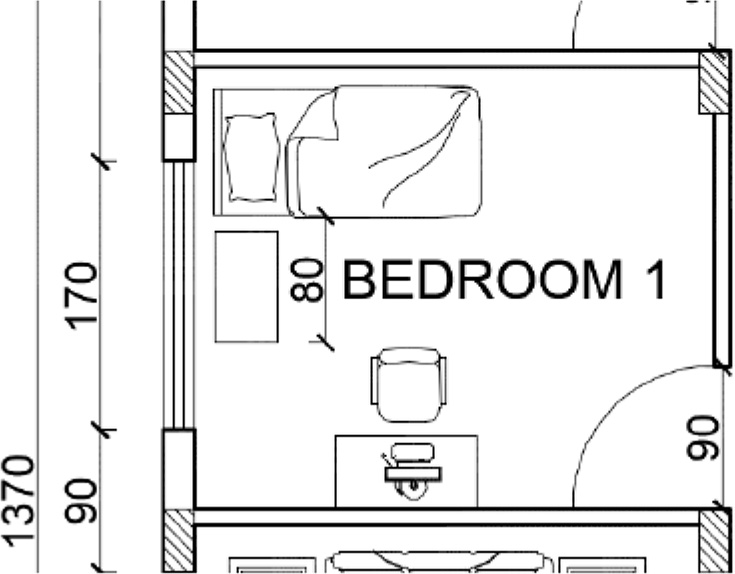
Figure 23.
Bedroom 2 space for a wheelchair user at the long side of the bed and door measurements (Source: Edited by Author, 2022)
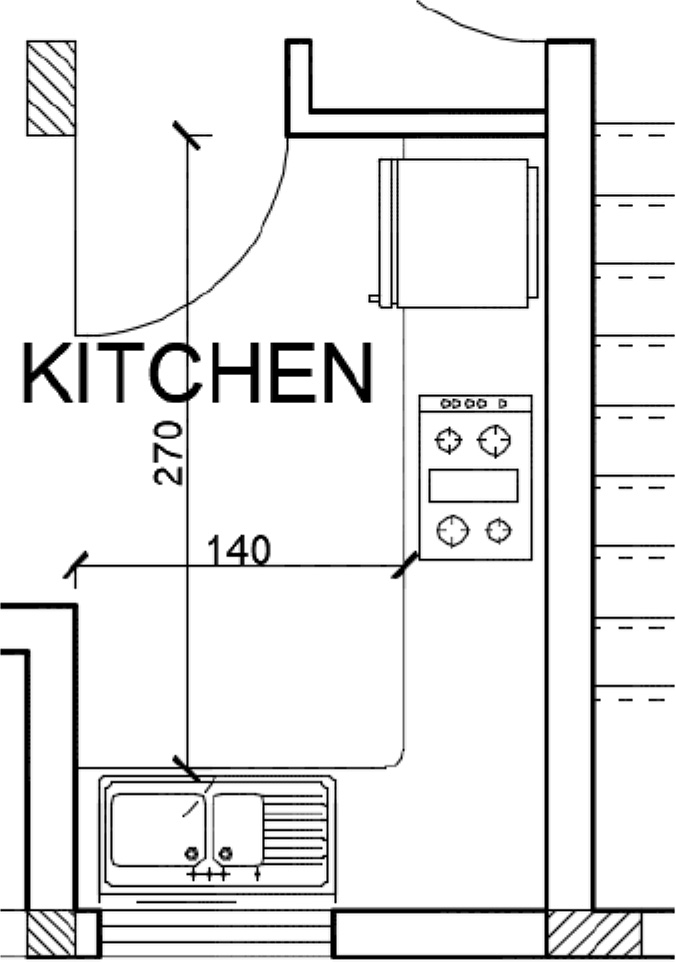
Figure 24.
The area of movement in the L-layout kitchen (Source: Edited by Author, 2022)
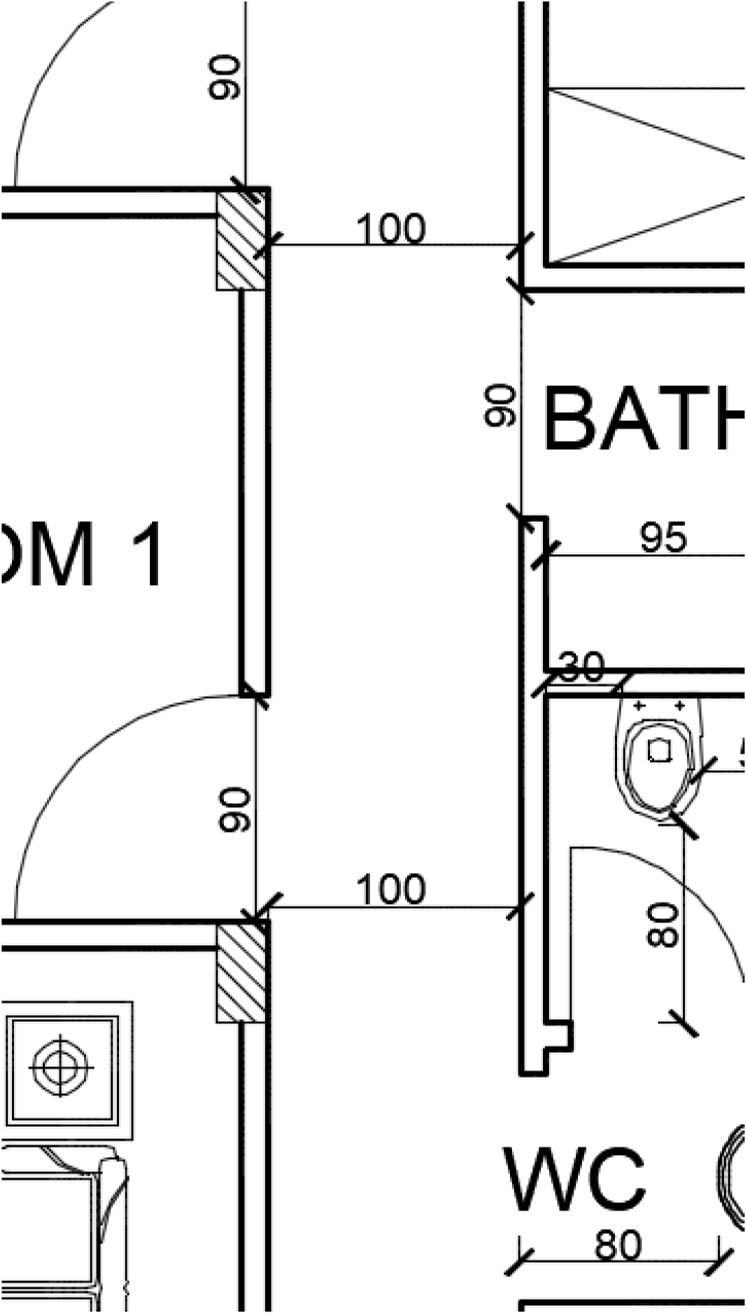
Figure 25
Circulation (Source: Edited by Author, 2022)
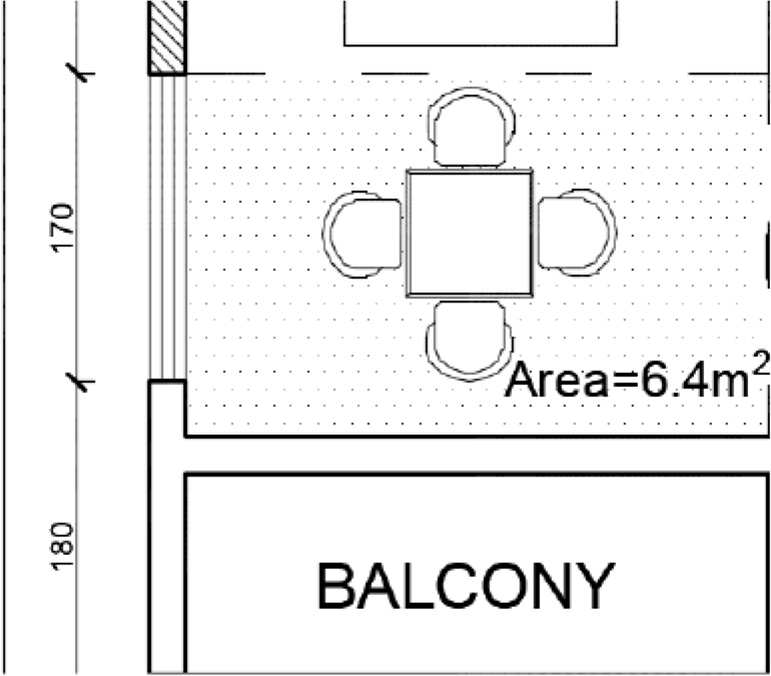
Figure 26.
Dining area (Source: Edited by Author, 2022)
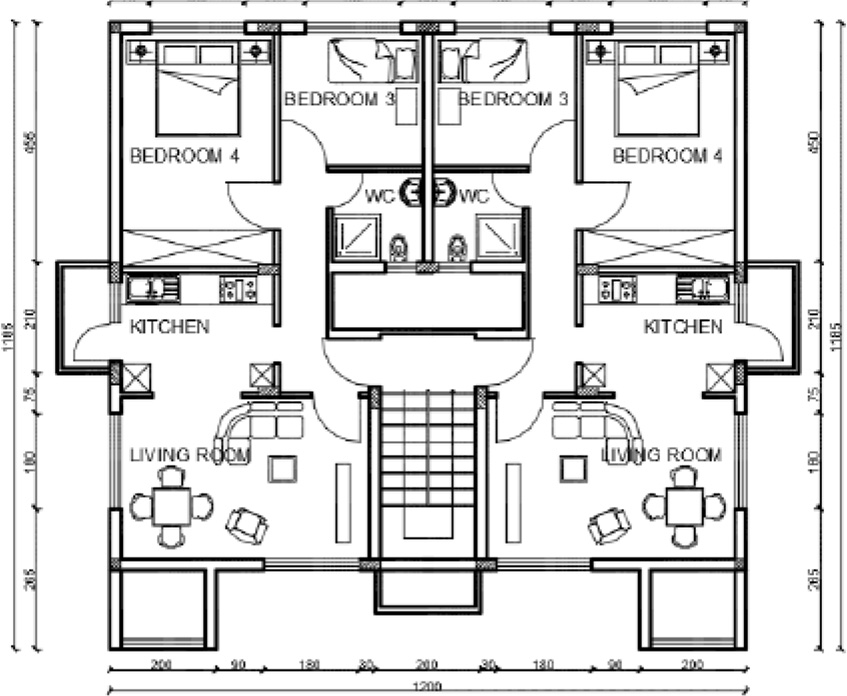
Figure 27.
The plan of the two flats each with 60 m2 (Source: Edited by Author, 2022)
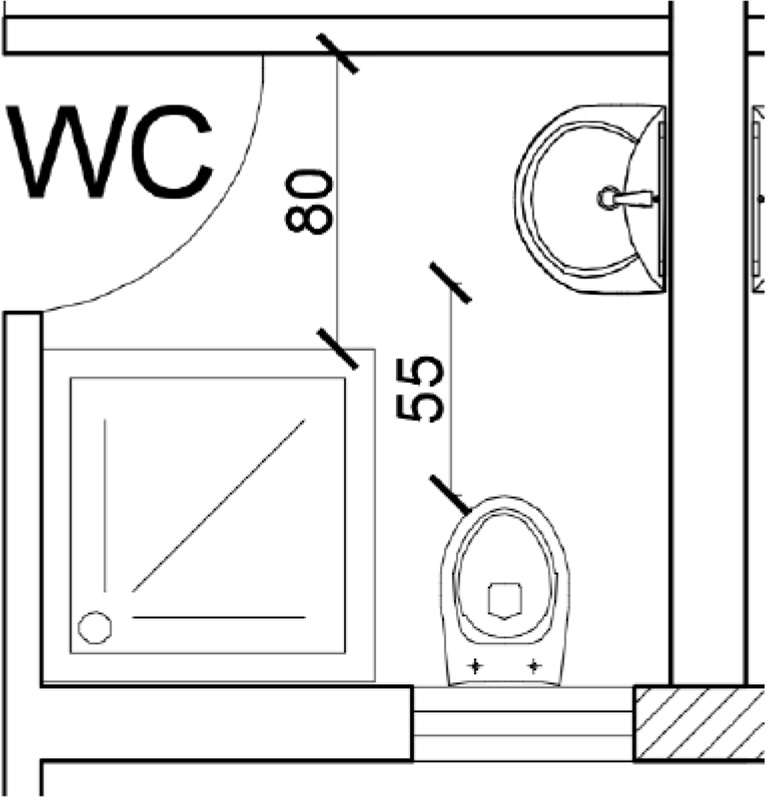
Figure 28.
The movement space in front of the shower and WC, and next to the washbasin (Source: Edited by Author, 2022)
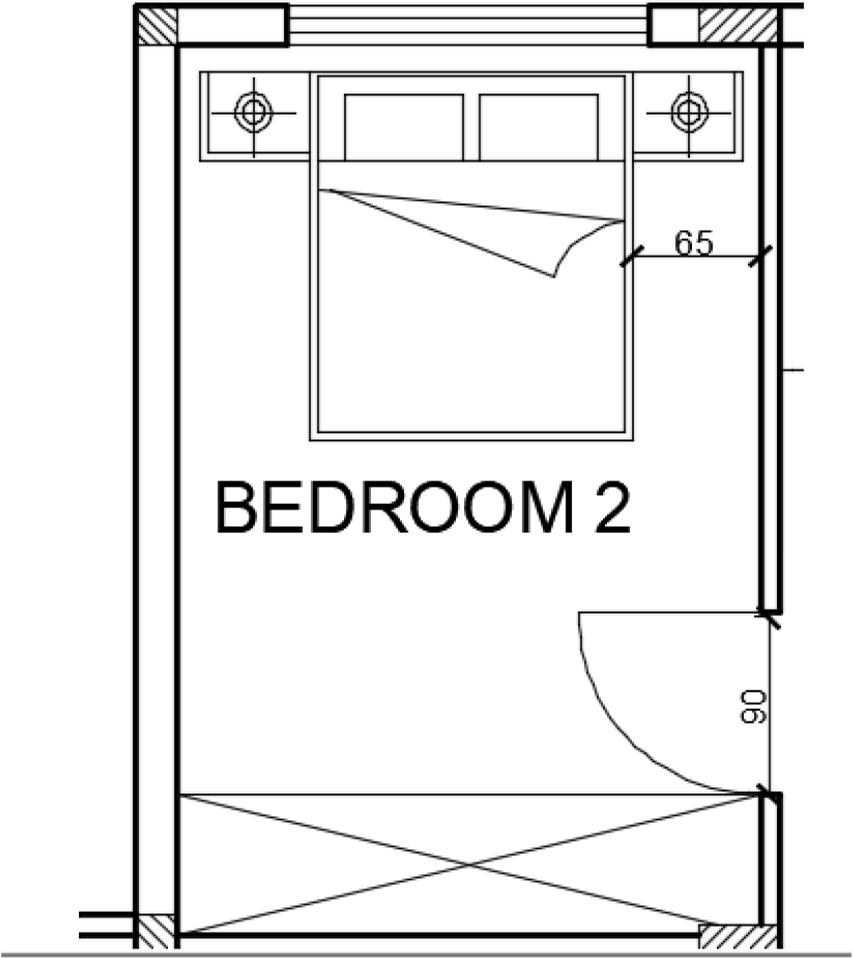
Figure 29.
The door size and space alongside the bed (Source: Edited by Author, 2022)
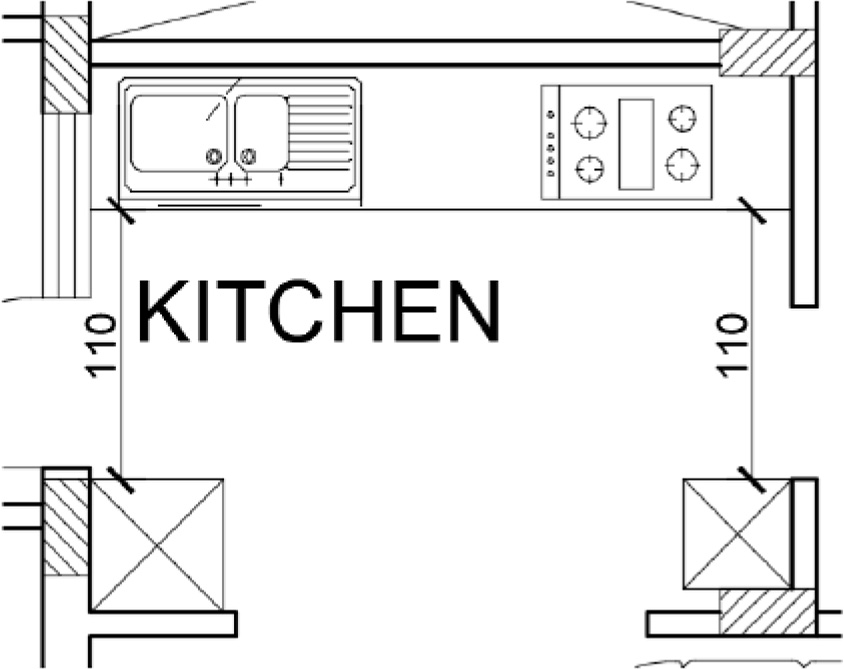
Figure 30.
The space in the kitchen (Source: Edited by Author, 2022)
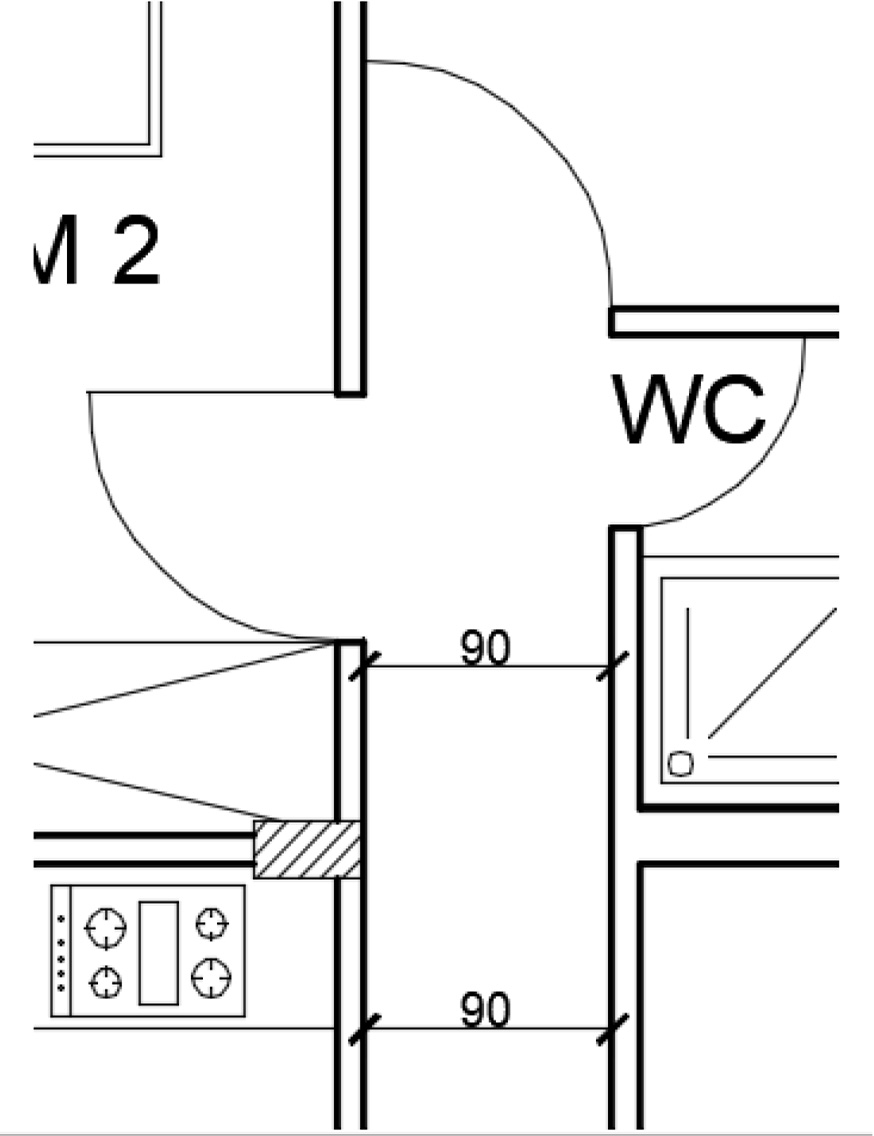
Figure 31.
Circulation (Source: Edited by Author, 2022)
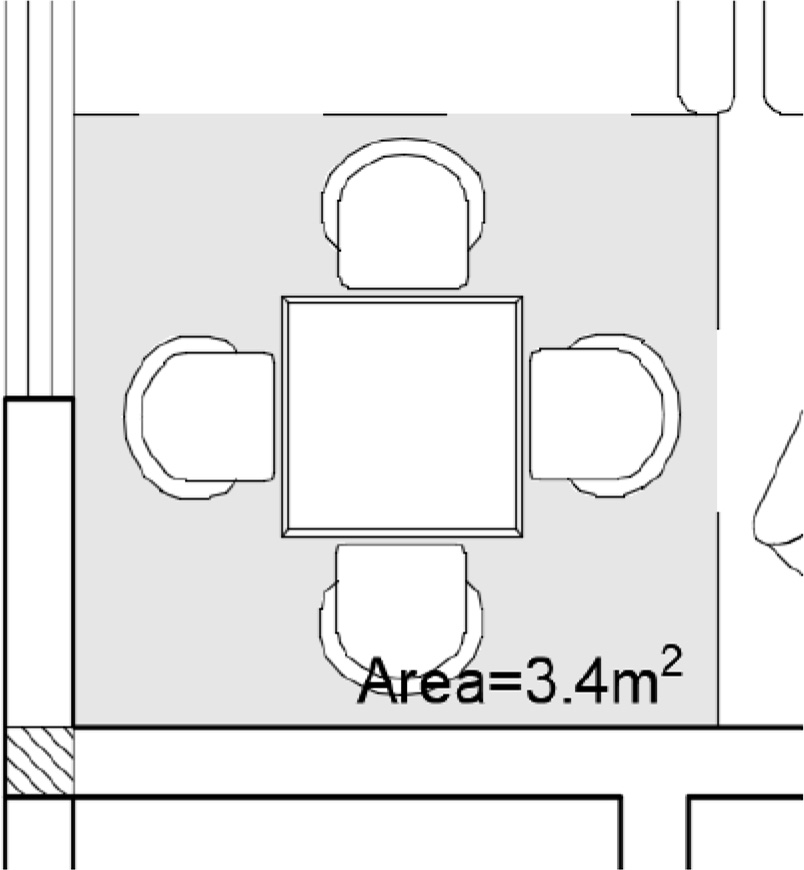
Figure 32.
The space of the dining area (Source: Edited by Author, 2022)