
Table 1.
Spatial features and elements that influence urban ventilation processes, along with sources in the literature; a study by the authors
| Spatial feature/element | Model | Literature | |
|---|---|---|---|
| 1 | Aeration corridors (aerosani tary corridors) | 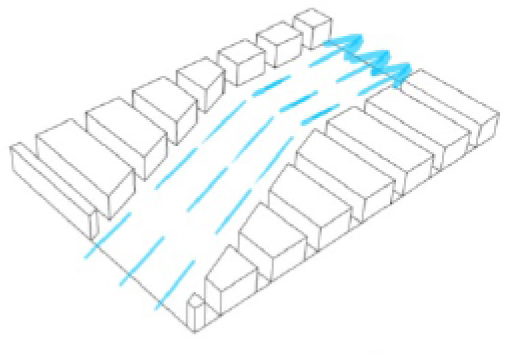 | Daniels, K. (1998), Błazejczyk K., Kuchcik M., Milewski P. and others (2014), Mabon L, Kondo K., Kanekiyo H., Hayabuchi Y., Yamaguchi A. (2019) |
| 2 | Orientation of the street layout | 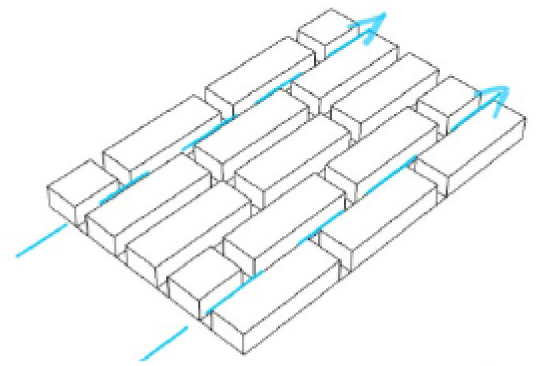 | Gandemer J. (1978), Oke T.R.(1988), Bottema M. (1993), Daniels K. (1998), Krautheim, M., Pasel, R., Pfeiffer, S.,&Schultz-Granberg, J. (2014) |
| 3 | Compactness, formation of closed interiors | 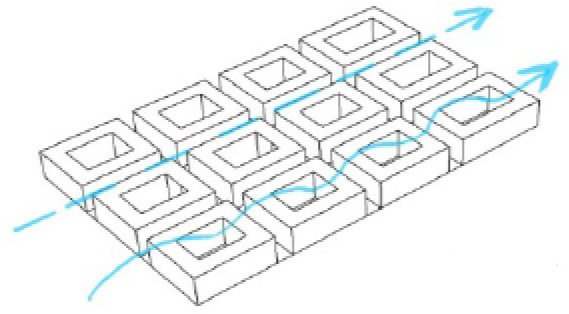 | Hussain M., Lee B. E. (1980), Oke T. (1988),Bottema M. (1993), Daniels, K. (1998),Krautheim, M., Pasel, R., Pfeiffer, S.,&Schultz-Granberg, J. (2014) |
| 4 | Building development porosity | 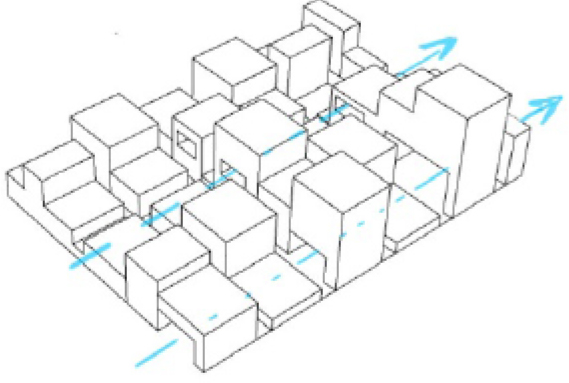 | Priyadarsini R., Wong N.H. (2005), Krautheim, M., Pasel, R., Pfeiffer, S. &Schultz-Granberg, J. (2014), Yuan C. (2018) |
| 5 | Forms that support vertical ventilation - chimneys, towers | 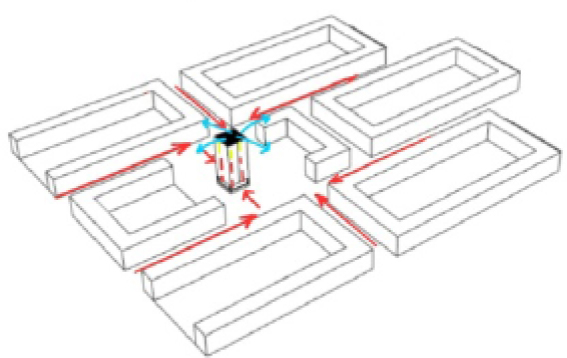 | Priyadarsini R., Wong N.H. (2005), Flaga A., (2018), Guttikunda S, Jawahar P (2020) |
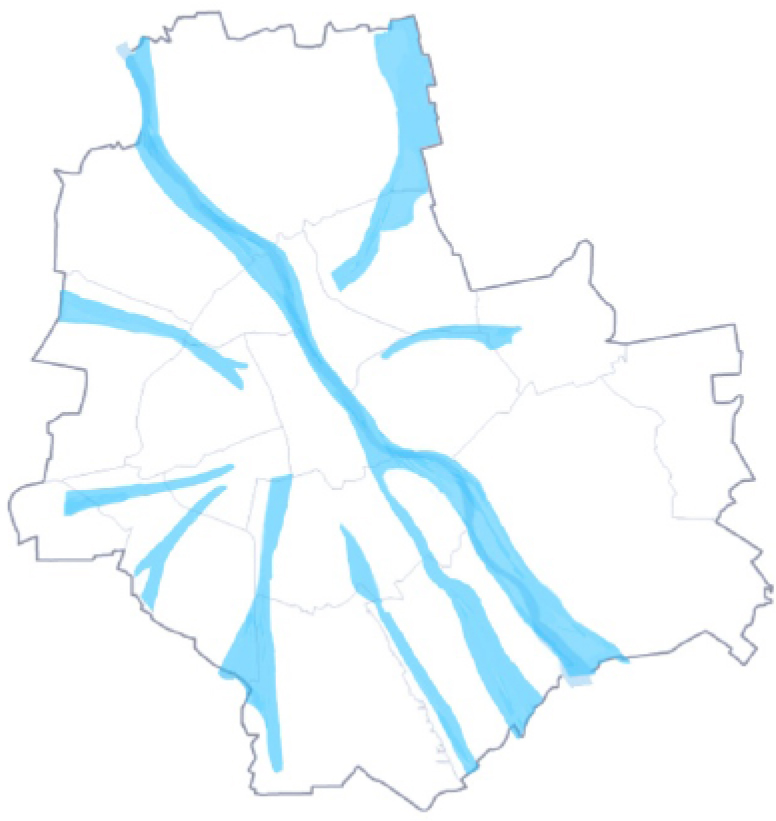
Figure 1.
Scheme of the plan of Warsaw with aeration corridors; developed on the basis of [14]
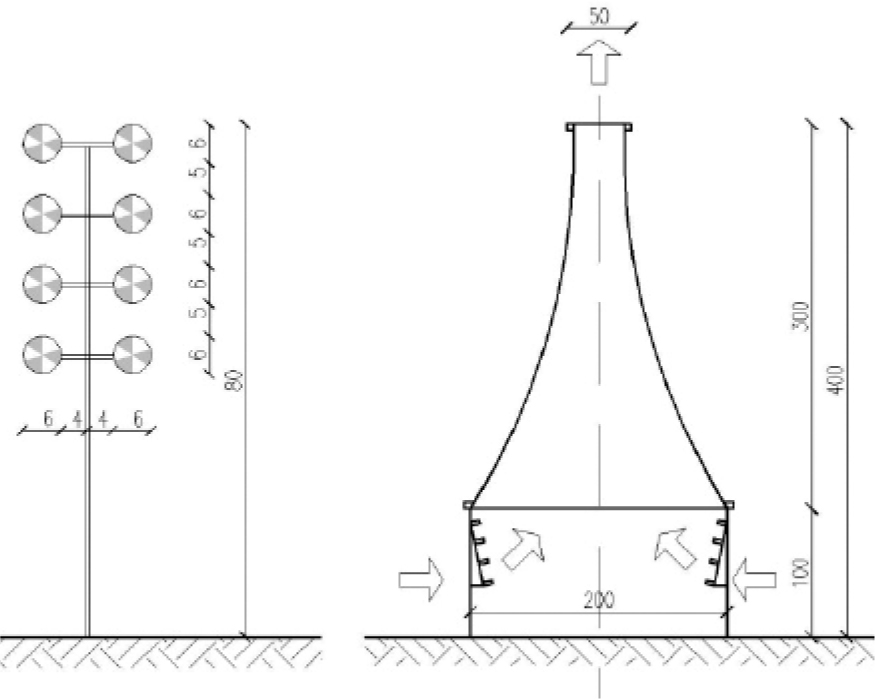
Figure 2.
Scheme of the ventilation tower (left) and the ventilation chimney (right); developed on the basis of [17]
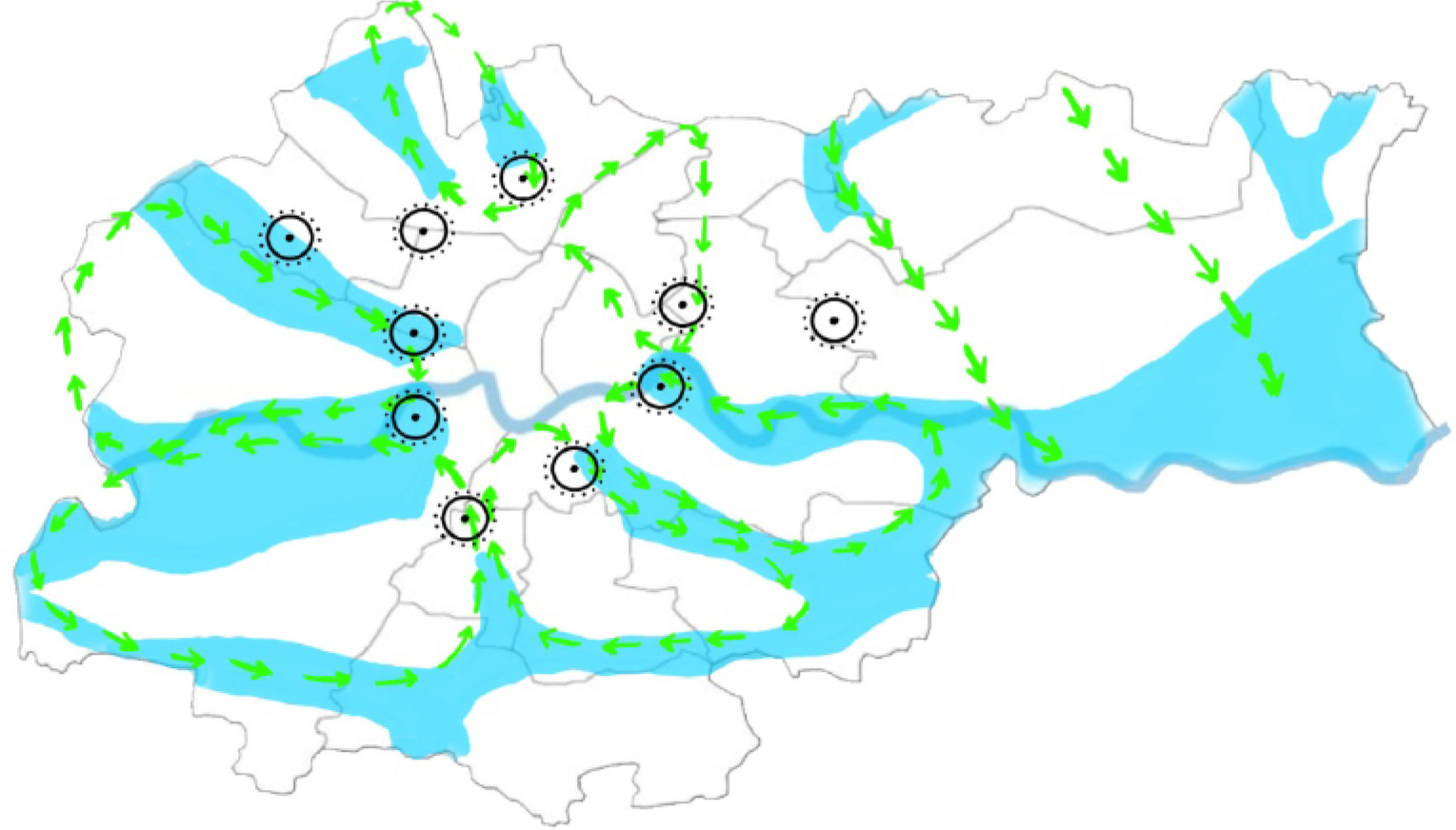
Figure 3.
Plan of Cracow with aeration corridors (in blue) and a diagram of the operation of ventilation towers (circulation is marked with arrows), and the potential location of ventilation chimneys (marked with black circles); developed on the basis of [15, 17]
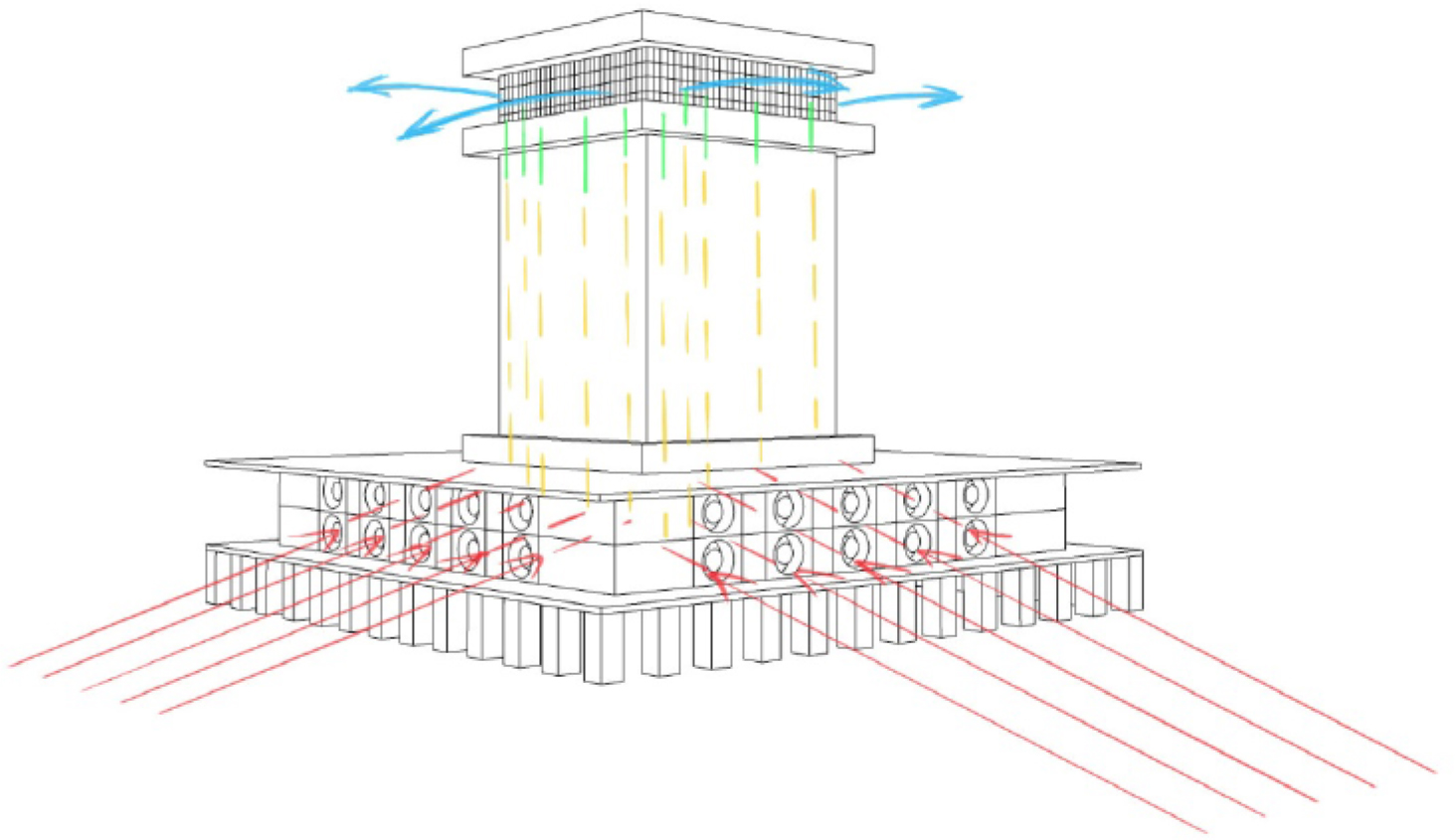
Figure 4.
Scheme of operation of the smog tower in New Delhi; developed on the basis of [18]
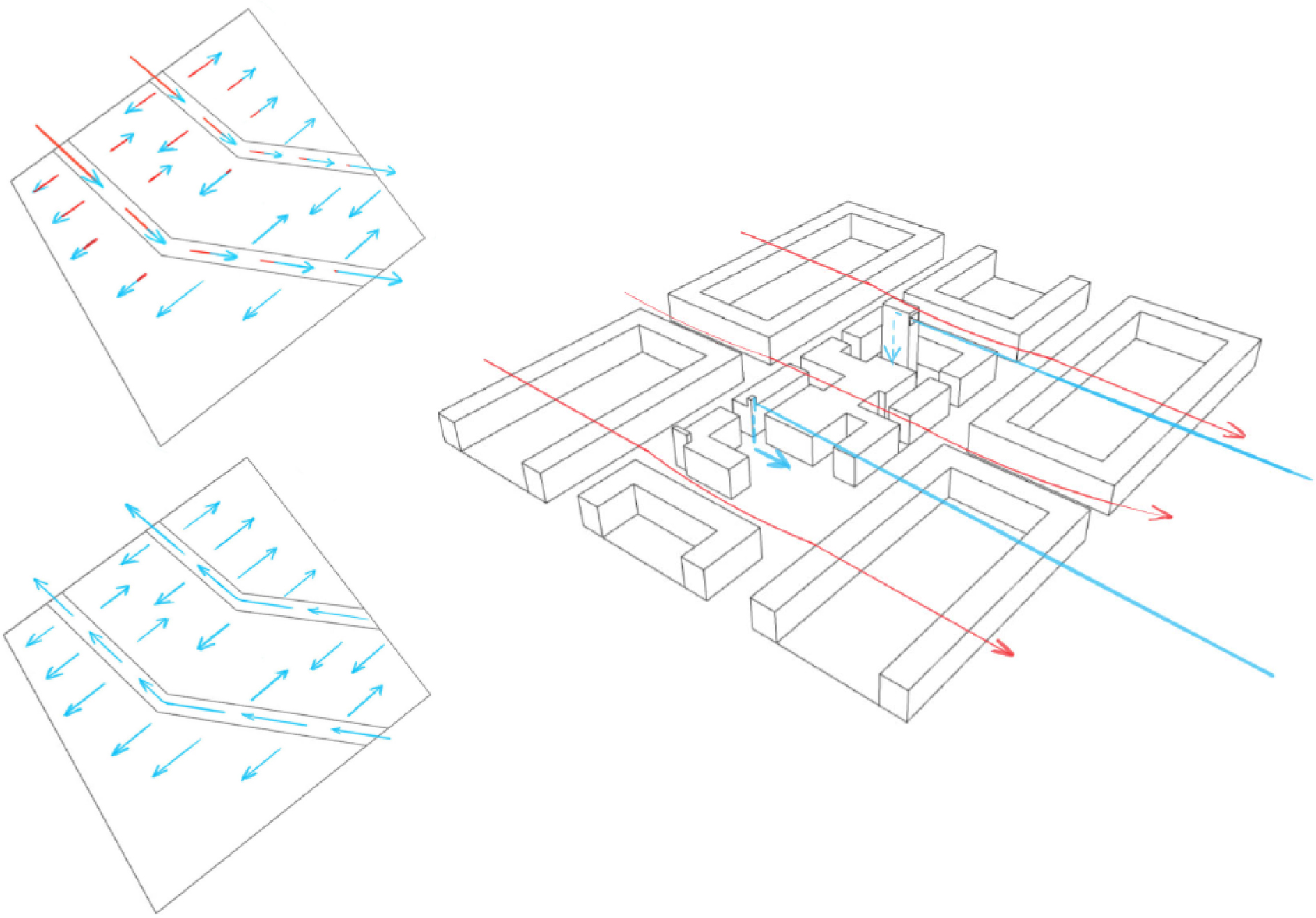
Figure 5.
Diagram of aeration corridors operation with hot north-westerly winds (top left) and cooler east winds (bottom left); ventilation diagram of the space between buildings (right); developed on the basis of [3]
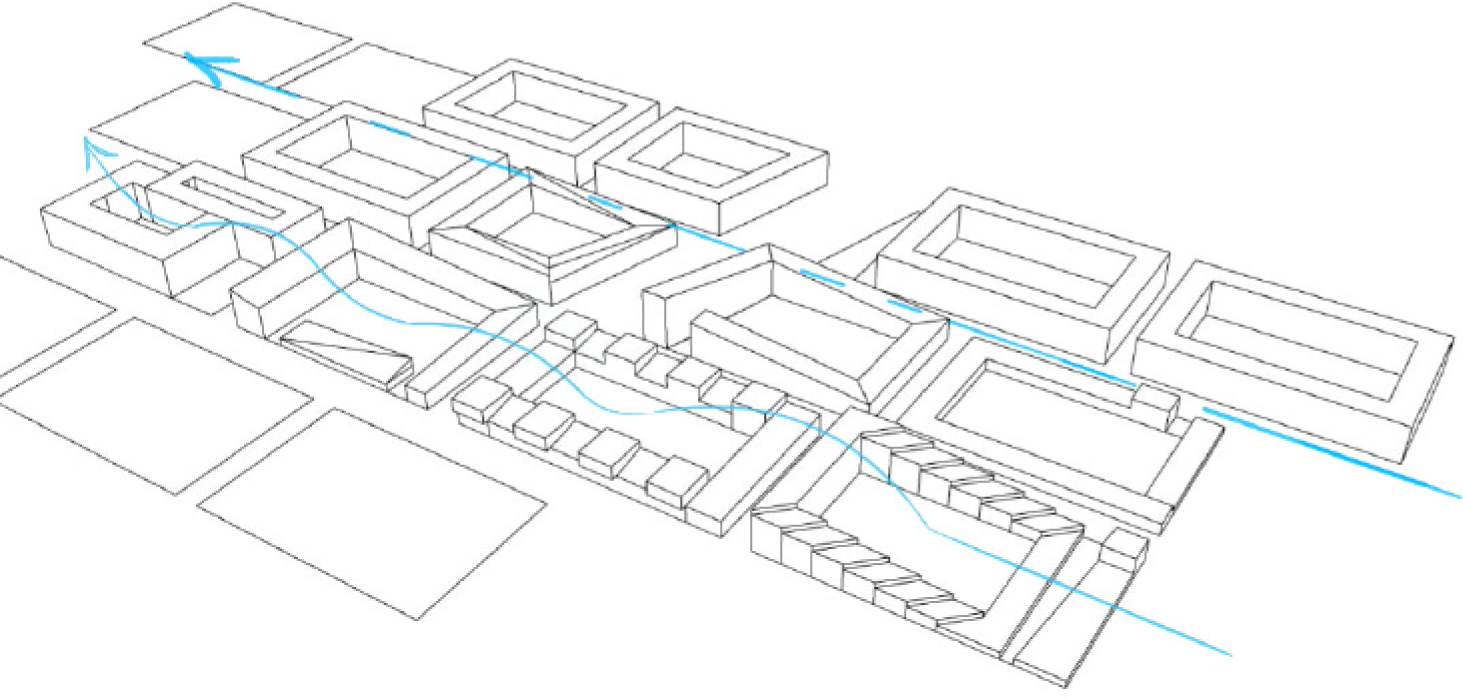
Figure 6.
Diagram of the wind flow through the structure of quarter buildings in Jätkäsaari; developed on the basis of [3]
Table 2.
Synthesis of the analysis of 5 cities in terms of ventilation strategies that take advantage from the building development shape; C – conditions, S – solutions; a study by the authors
| City | Warsaw | Cracow | New Dehli | Masdar City | Helsinki - Jätkäsaari | |
|---|---|---|---|---|---|---|
| C | Climate | Continental humid | Continental humid | Subtropicalhumid | Desert | Continental humid |
| Area | 517 km2 | 327 km2 | 1483 km2 | 6 km2 | 0.68 km2 | |
| Population | 1.8 mln | 0.8 mln | 26 mln | 0.05 mln | 0.018 mln | |
| Erectionprocess | gradual | gradual | gradual | from scratch | from scratch | |
| Mainconcern | UHI, smog | smog, UHI | smog | UHI, smog | UHI, smog | |
| S | Corridors | + | + | - | + | - |
| Direction | - | - | - | + | + | |
| Compactness | - | - | - | + | + | |
| Porosity | - | - | - | + | + | |
| Verticalelements | - | + | + | + | - | |