
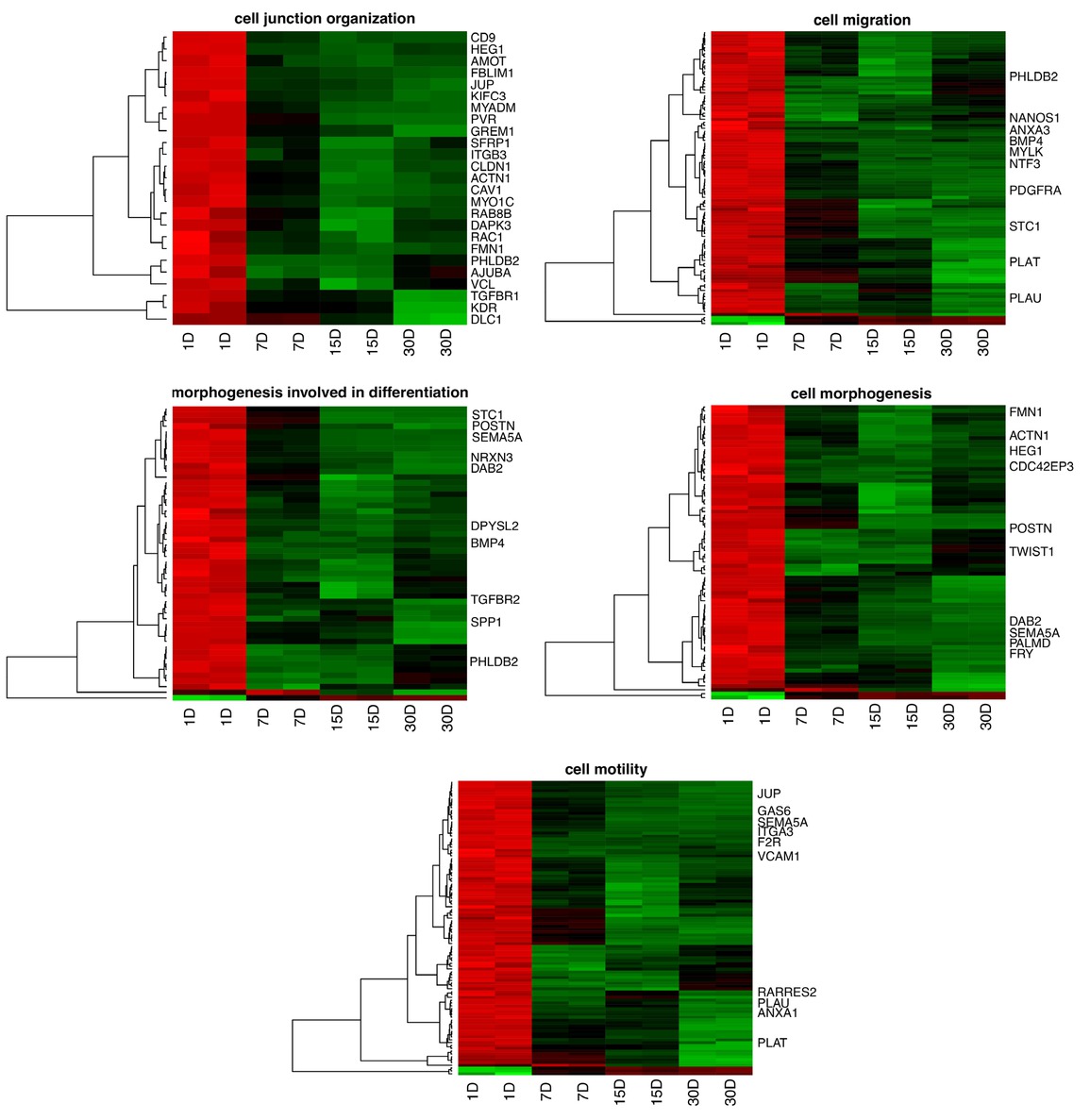
Figure 1
Heatmaps presenting differentially expressed genes involved in “cell junction organization”, “cell migration”, “cell morphogenesis involved in differentiation”, “cell morphogenesis” and “cell motility” based on GO BP terms. Each row on the Y axis represents a single transcript. The red color indicates downregulated genes while the green are upregulated
Table 1
The 10 most significantly upregulated and all of the downregulated genes involved cellular morphogenesis, junction and migration
| Gene symbol | Gene name | Fold change | Adj.p.val |
|---|---|---|---|
| DKK1 | dicKKopf WNT signaling pathway inhibitor 1 | 34.81 | <0.05 |
| ANXA3 | annexin A3 | 34.27 | <0.05 |
| KIAA119S | KIAA1199 | 27.73 | <0.05 |
| VCAM1 | vascular cell adhesion molecule 1 | 26.69 | <0.05 |
| HTR2B | 5-hydroxytryptamine (serotonin] receptor 2B, G protein-coupled | 24.33 | <0.05 |
| CTGF | connective tissue growth factor | 18.97 | <0.05 |
| TQFBR2 | transforming growth factor, beta receptor II (70/30l<Da) | 15.71 | <0.05 |
| STC1 | stanniocalcin 1 | 14.96 | <0.05 |
| CD74 | CD74 molecule, major histocompatibility complex, class II invariant chain | 14.18 | <0.05 |
| SEMA5A | sema domain, seven thrornbcsponüin repeats (type 1 arid type Hike), transrnembrane domain [TM) and short cytoplasriic domain, (semaphorin}5A | 13.15 | <0.05 |
| SLC7A8 | solute carrier family 7 (amino acid transporter light chain, L system], member 9 | -2.00 | <0.05 |
| DFNB31 | deafness, autosomal recessive 31 | -2.01 | <0.05 |
| COL1A1 | collagen, type I, alpha 1 | -2.03 | <0.05 |
| CDC42SE1 | CDC42 small effector 1 | -2.04 | <0.05 |
| TSFBR3 | transforming growth factor, beta receptor III | -2.05 | <0.05 |
| HMGB1 | higri mobility group box 1 | -2.05 | <0.05 |
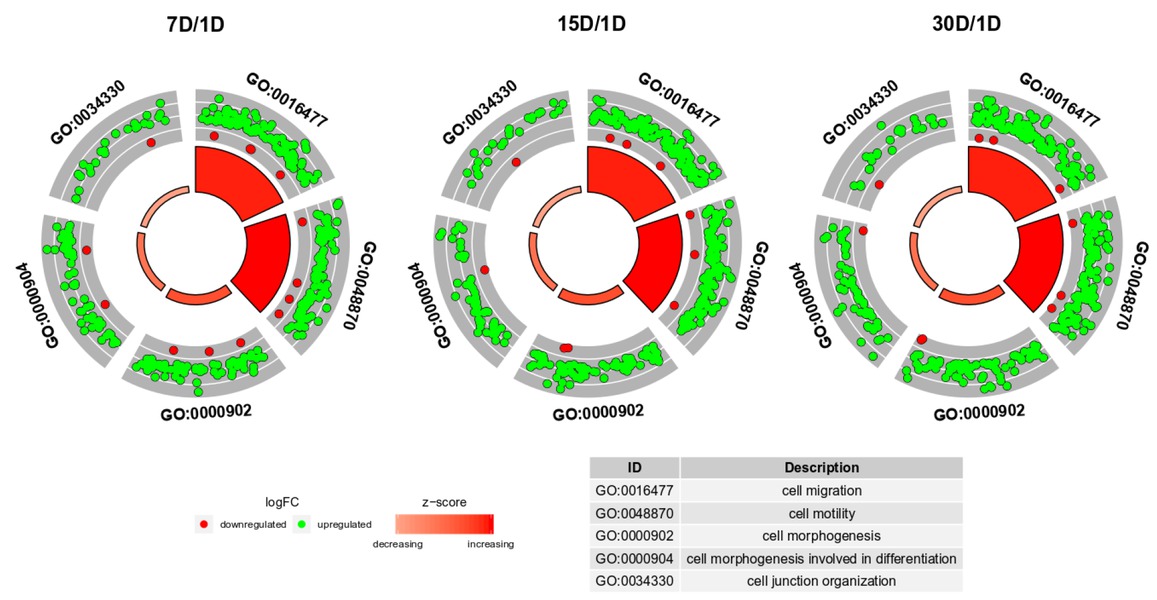
Figure 2
The circular scatter plots of differentially expressed genes involved in “cell junction organization”, “cell migration”, “cell morphogenesis involved in differentiation”, “cell morphogenesis” and “cell motility” GO BP terms. Each dot represents a single gene. The z-scores were presented as segments of inner circles
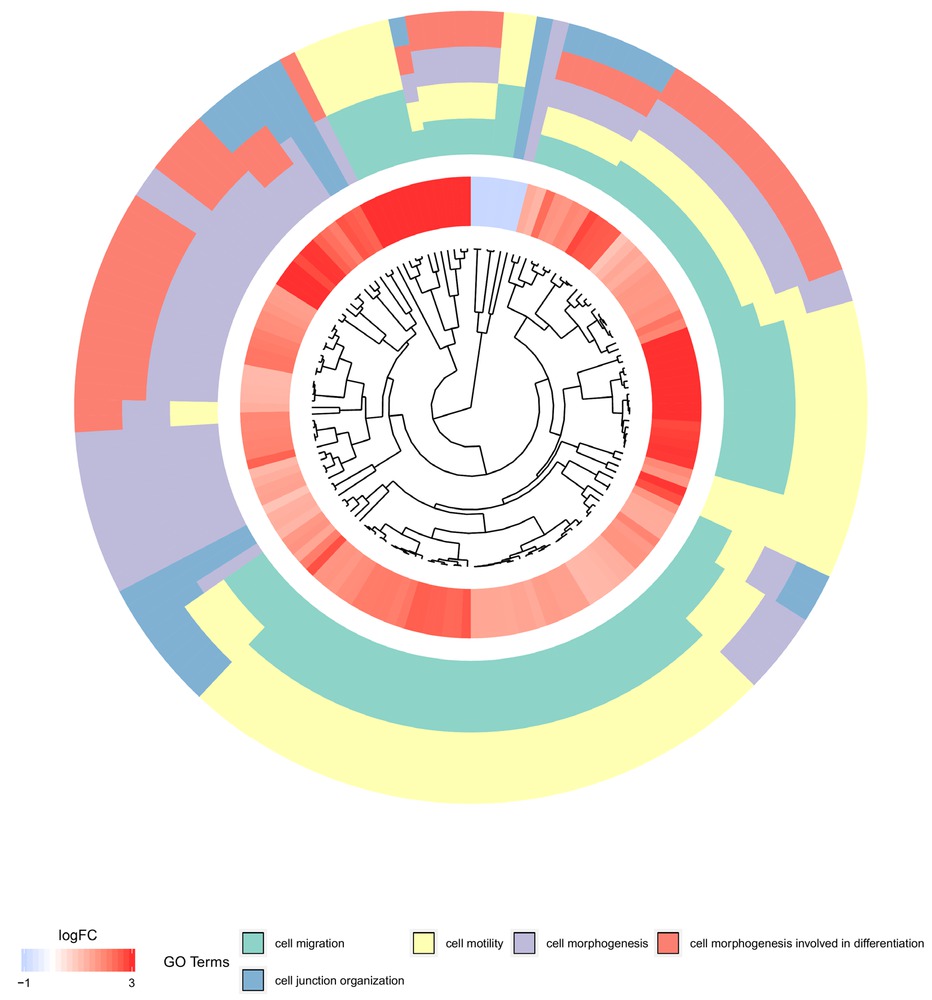
Figure 3
The dendrogram of differentially expressed genes involved in “cell junction organization”, “cell migration”, “cell morphogenesis involved in differentiation”, “cell morphogenesis” and “cell motility” GO BP terms. The DEGs were clustered based on their logFC values
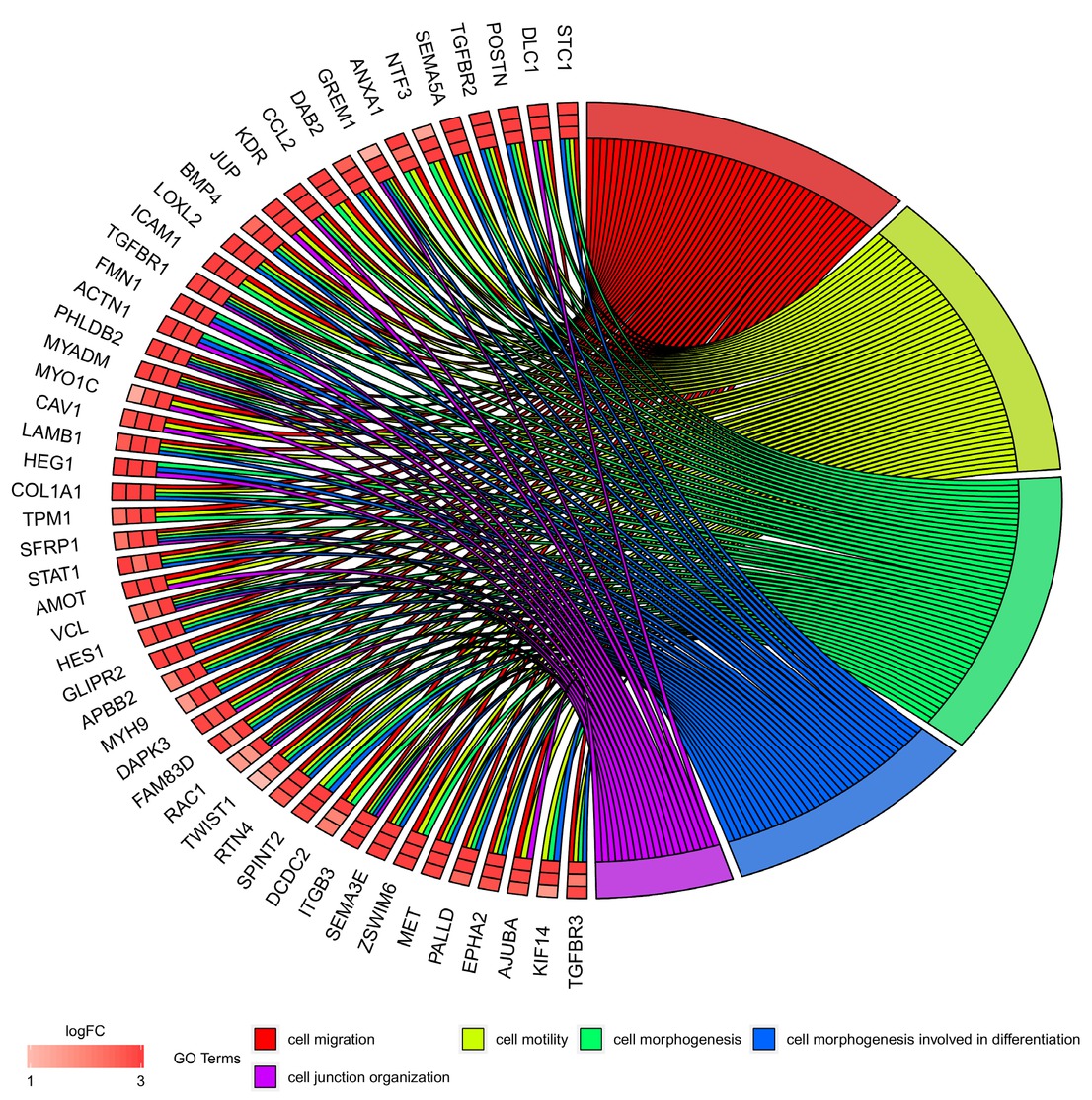
Figure 4
Analysis of enriched gene ontological groups involved in cellular morphogenesis, junction and migration. The network plot presenting the linkages of genes and GO BP terms
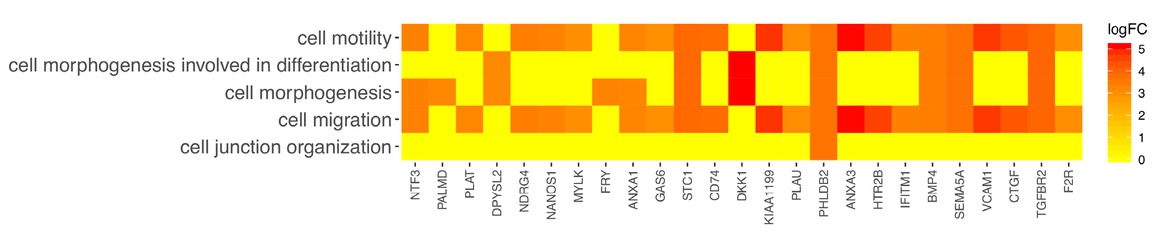
Figure 5
Heatmap presenting the relationship between genes and selected GO BP terms. The yellow color of tiles indicates the absence of logFC values
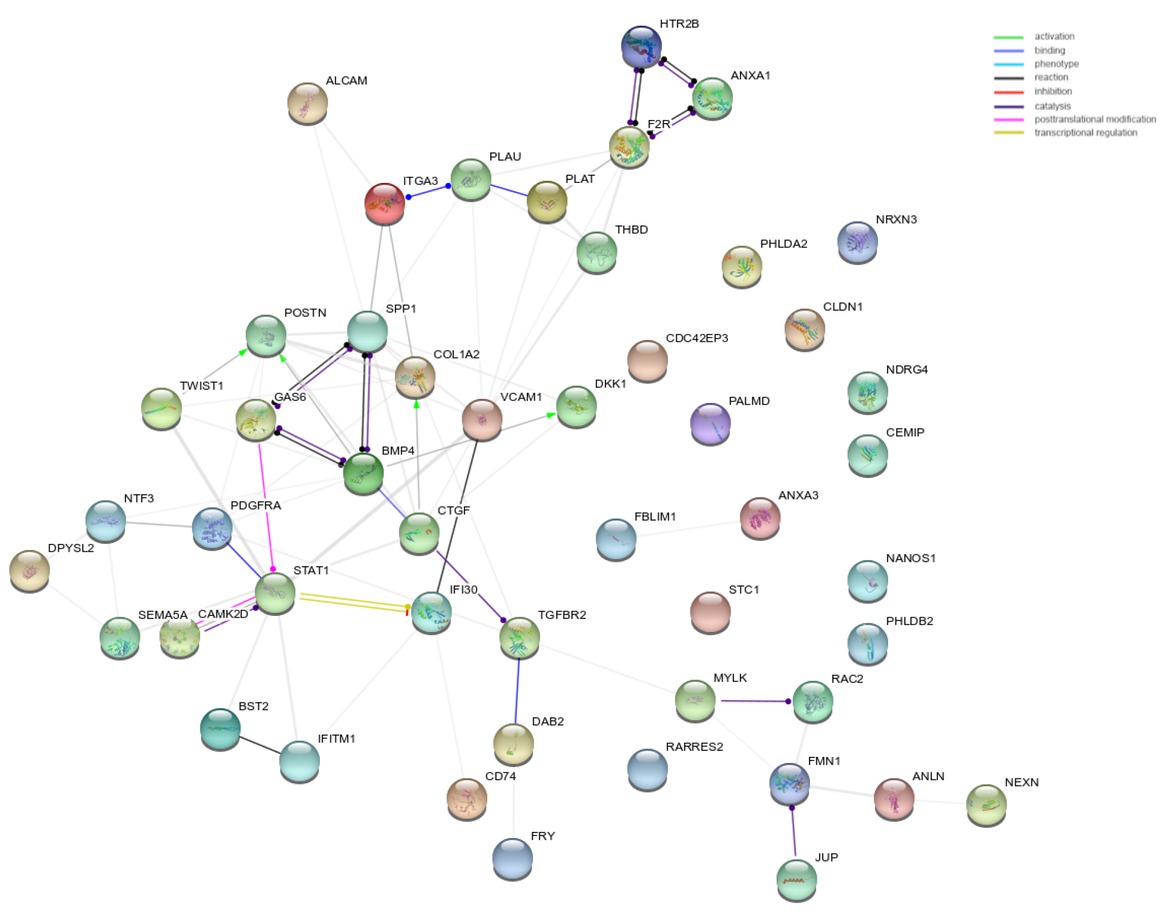
Figure 6
Interaction network of proteins encoded by 50 most changed DEGs belonging to “cell junction organization”, “cell migration”, “cell morphogenesis involved in differentiation”, “cell morphogenesis” and “cell motility” GO BP terms. The network was generated by STRING software. Network nodes represent proteins. Empty nodes indicate proteins of unknown 3D structure
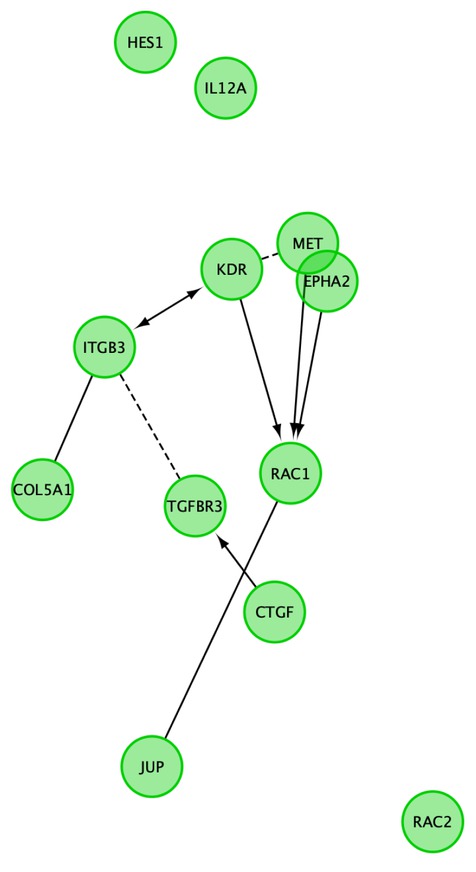
Figure 7
Reactome FI network for “Cell migration”. “--->” indicates activating/catalyzing, “-“ FIs extracted from complexes or inputs and “---” predicted FIs
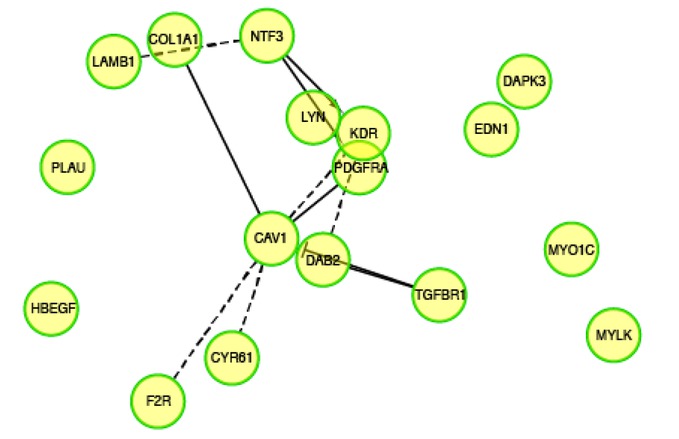
Figure 8
Reactome FI network for “Positive regulation of cell migration”. “--->” indicates activating/catalyzing, “-“ FIs extracted from complexes or inputs and “---” predicted FIs