
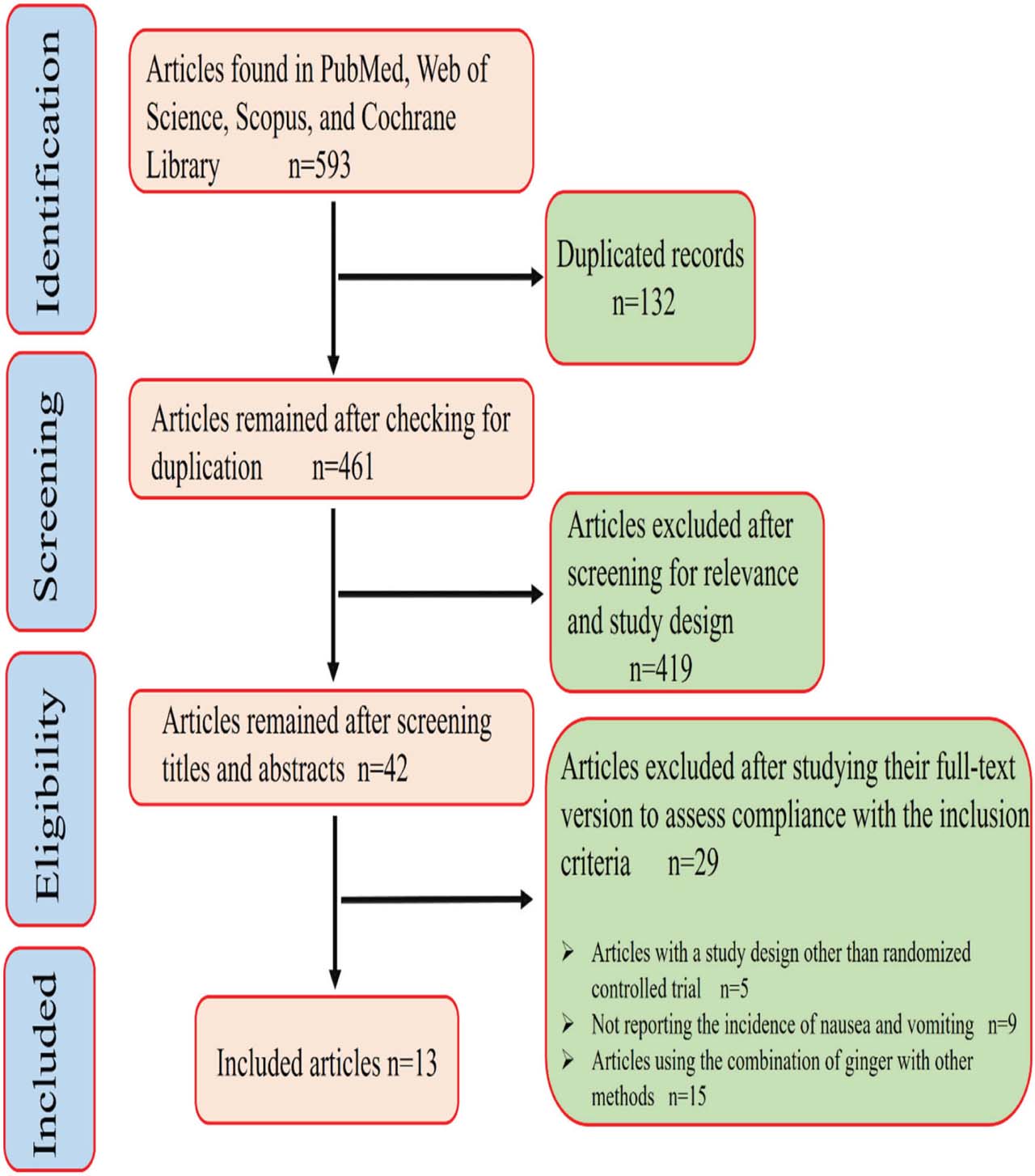
Figure 1.
Systematic search flowchart.
Table 1.
Study characteristics
| First author name | Publication year | Age (years, mean) | Country of study | Gender | Ginger dose | Length of treatment with ginger | Standard antiemetic regimen received in all groups | Number of participants in the ginger group | Number of participants in the comparator group | Type of cancer | Type of comparator | Type of chemotherapy | Reference |
|---|---|---|---|---|---|---|---|---|---|---|---|---|---|
| Ansari et al. | 2016 | 48.6 | Iran | Women | 500 mg twice per day | For 3 d | None | 57 | 62 | Breast cancer | Placebo | Doxorubicin-based chemotherapy | [8] |
| Bossi et al. | 2017 | 59.1 | Italy | Both | 160 mg/d | The treatment ranged from 42 d to 56 d | Standard antiemetic prophylaxis for nausea/vomiting, including NK-1 receptor antagonists, 5-HT3 receptor antagonists, and dexamethasone | 121 | 123 | Mostly lung cancer and head and neck cancer | Placebo | High-dose cisplatin | [9] |
| Crichton et al. | 2024 | 59 | Australia | Both | 1.2 g/d | Administered from the day of chemotherapy and continuing for 5 d for chemotherapy cycles 1 through 3 | Standard antiemetic prophylaxis, including NK-1 receptor antagonists, 5-HT3 receptor antagonists, and dexamethasone | 51 | 52 | Heterogeneous | Placebo | Doxorubicin-based chemotherapy | [20] |
| Fahimi et al. | 2010 | 50.53 | Iran | Both | 1 g/d | For 3 d | Standard antiemetic regimens, including 5-HT3 antagonist (granisetron) and corticosteroid (hydrocortisone) | 36 | 36 | Particularly lung cancer and solid tumors | Placebo | Cisplatin-based regimens | [21] |
| Konmun et al. | 2017 | 53 | Thailand | Both | 6-gingerol 10 mg twice per day | Since 3 d before chemotherapy for 12 weeks | None | 40 | 41 | Solid tumors, mainly breast and ovarian cancer | Placebo | Heterogeneous, including anthracycline- and platinum-based chemotherapy | [22] |
| Li et al. | 2018 | 57 | China | Both | 500 mg/d | For 5 d beginning on the first day of chemotherapy | Standard antiemetic therapy (5-HT3 receptor antagonists) | 71 | 69 | Lung cancer | Placebo | Cisplatin-based regimens | [23] |
| Manusirivithaya et al. | 2004 | 46.5 | Thailand | Women | 1 g/d | For 5 d since the start of chemotherapy | Dexamethasone | 43 | 43 | Ovarian cancer and cervical cancer | Placebo | Cisplatin-based regimens | [11] |
| Panahi et al. | 2012 | 51.8 | Iran | Women | 1.5 g/d | For 4 d from the initiation of chemotherapy | Granisetron plus dexamethasone | 37 | 41 | Breast cancer | Absence of ginger | Heterogeneous, such as docetaxel, epirubicin, and cyclophosphamide | [19] |
| Pillai et al. | 2011 | 15.7 | India | Both | 1 g/d | From days 1 to 3 of the chemotherapy cycle | Ondansetron and dexamethasone | 27 | 30 | Bone sarcoma | Placebo | Cisplatin/doxorubicin-based chemotherapy | [12] |
| Shokri et al. | 2017 | 52.7 | Iran | Women | 2 g/d | For 6 cycles of chemotherapy | Not reported | 20 | 29 | Ovarian cancer | Placebo | Platinum-based adjuvant chemotherapy | [13] |
| Zick et al. | 2009 | 55.7 | United States | Both | 1 g/d and 2 g/d | For 3 d | 5-HT3 receptor antagonists and/or aprepitant | 83 | 46 | Heterogeneous | Placebo | Heterogeneous | [10] |
| Uthaipaisanwong et al. | 2020 | 53.9 | Thailand | Women | 2 g/d | Prescribed in odd cycles in the cross-over trial | Dexamethasone and ondansetron | 23 | 24 | Gynecologic cancer | Placebo | Carboplatin/paclitaxel | [24] |
| Kadhim et al. | 2021 | Not reported | Iraq | Both | 1.5 g/d | For the first 5 d of the chemotherapy cycle | Not reported | 30 | 30 | Heterogeneous | Absence of ginger | Not reported | [18] |
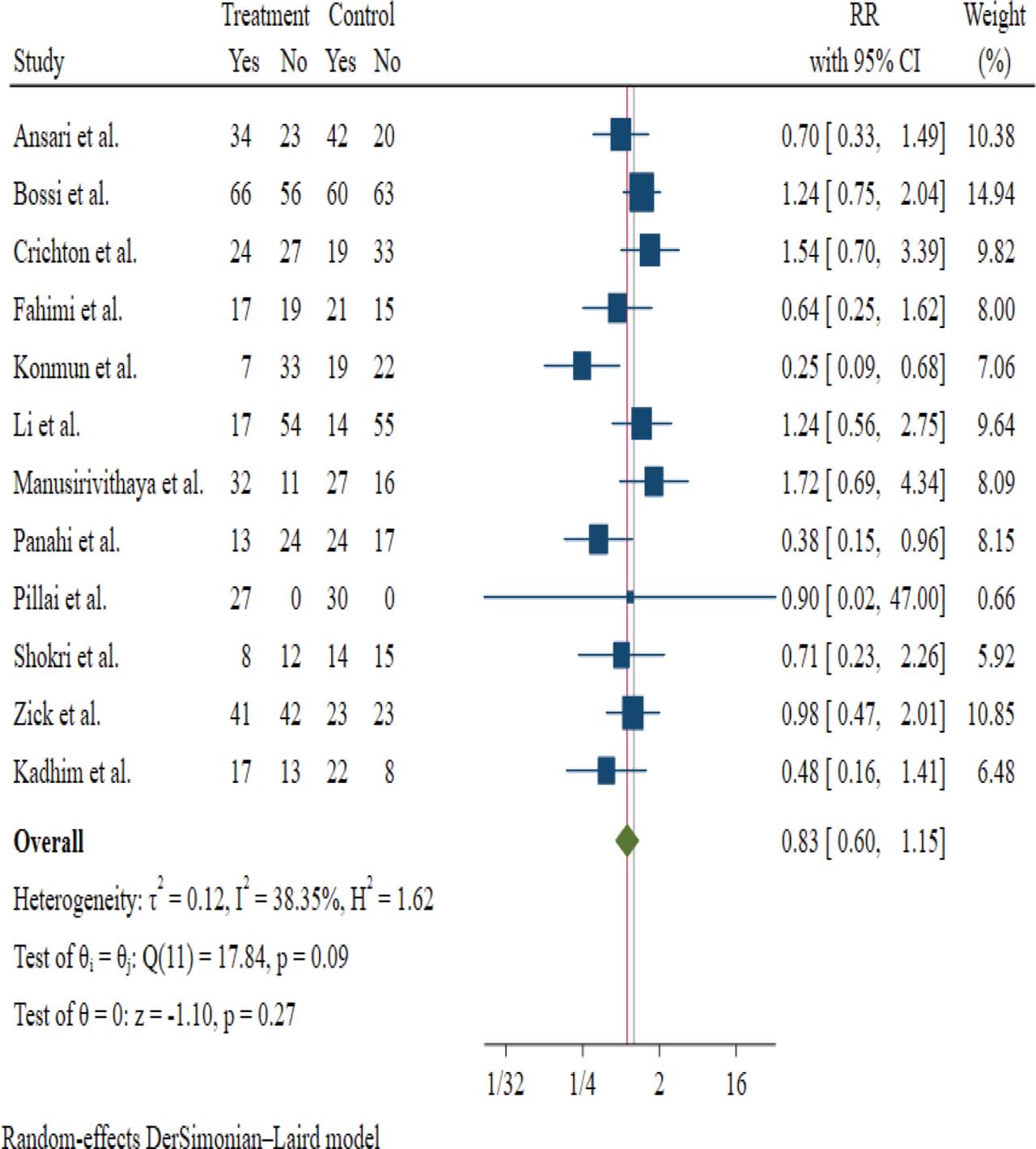
Figure 2.
The effect of ginger on chemotherapy-induced nausea in the acute phase.
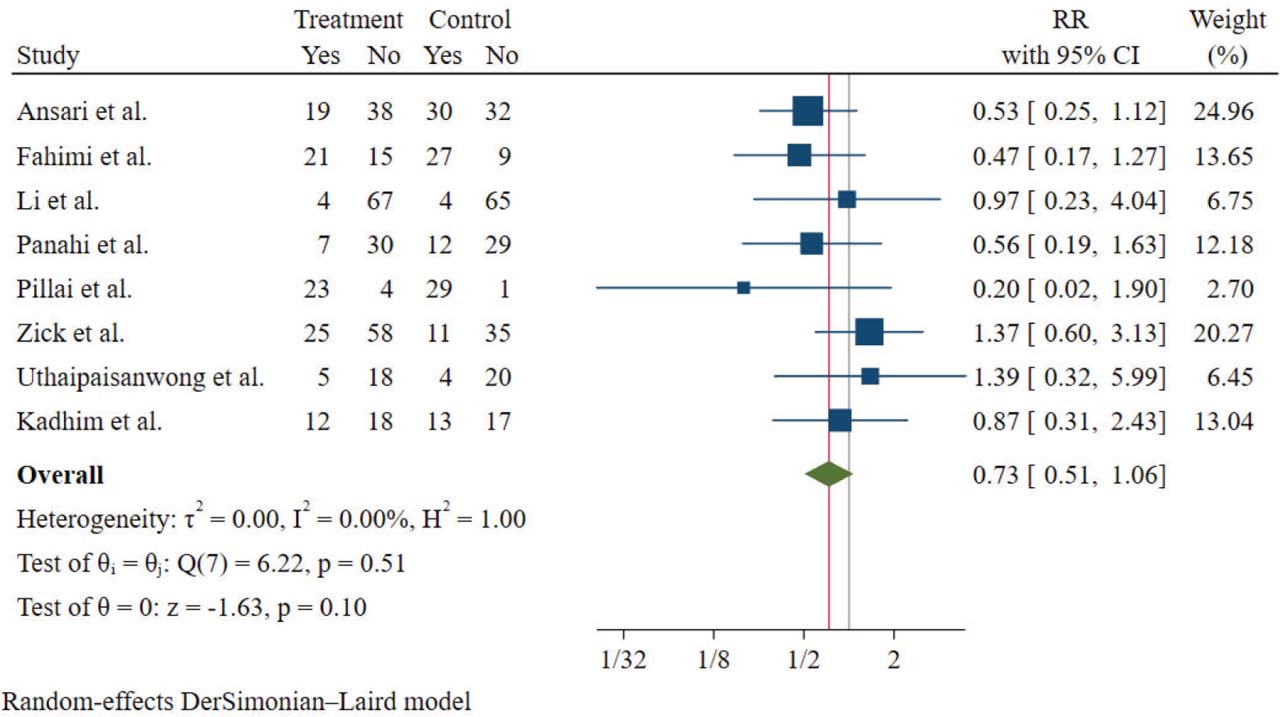
Figure 3.
The effect of ginger on chemotherapy-induced vomiting in the acute phase.
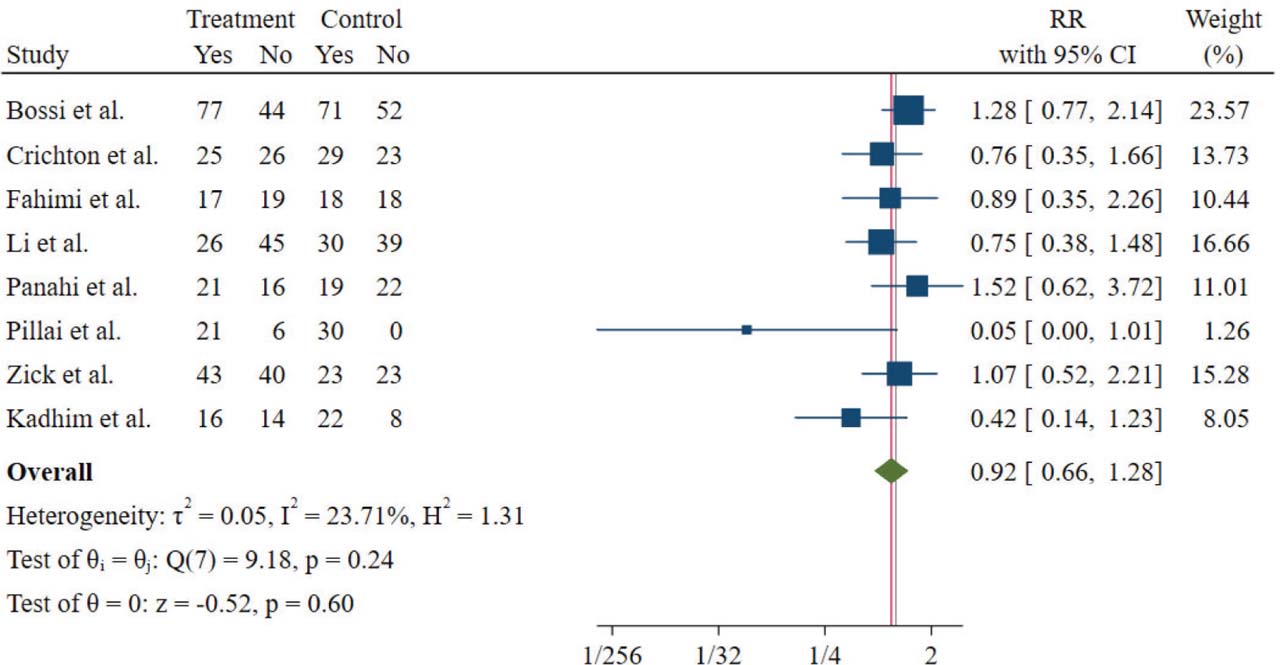
Figure 4.
The effect of ginger on chemotherapy-induced nausea in the delayed phase.
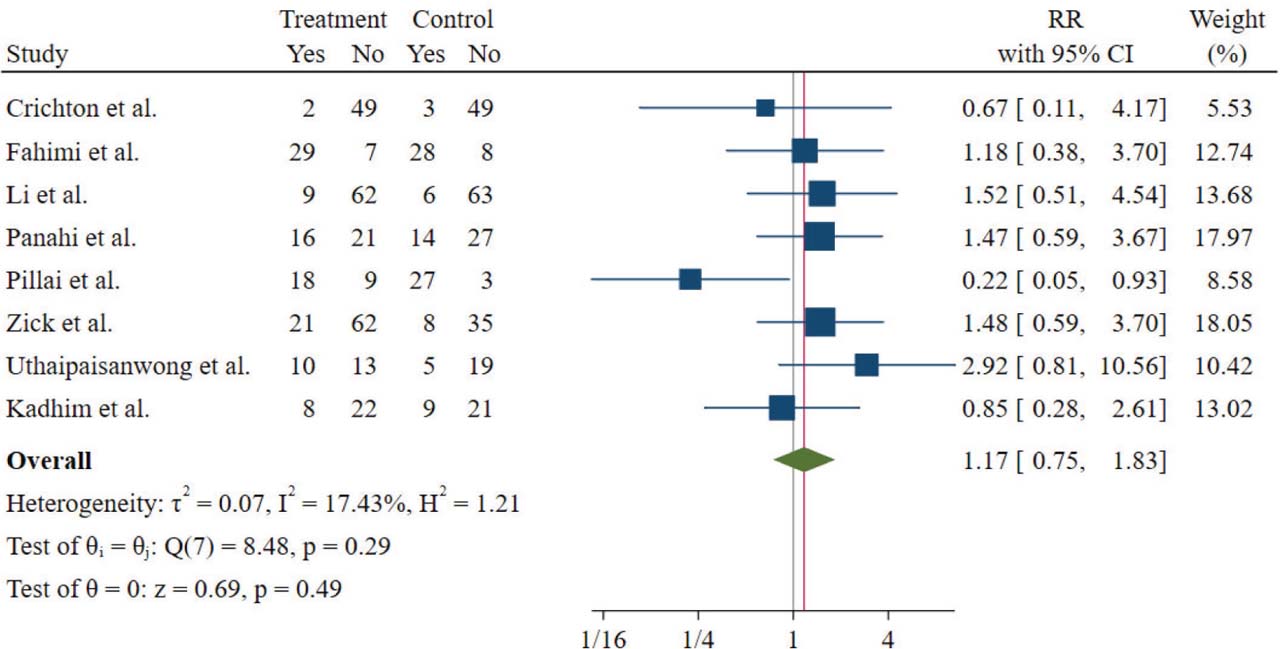
Figure 5.
The effect of ginger on chemotherapy-induced vomiting in the delayed phase.
Supplementary Material 2.
Risk of bias assessment based on the revised Cochrane risk-of-bias tool for randomized trials (RoB2).
| Trial/author name | Random sequence generation | Allocation concealment | Selective reporting | Blinding (participants and personnel) | Blinding (outcome assessment) | Incomplete outcome data | Other sources of bias |
|---|---|---|---|---|---|---|---|
| Ansari et al. | Low | Unclear | Low | Unclear | Unclear | Low | Low |
| Bossi et al. | Low | Low | Low | Low | Low | Low | Low |
| Crichton et al. | Low | Low | Low | Low | Low | Low | Low |
| Fahimi et al. | Low | Unclear | Low | Low | Low | Low | Low |
| Konmun et al. | Low | Unclear | Low | Low | Low | Low | Low |
| Li et al. | Low | Low | Low | Low | Low | Low | Low |
| Manusirivithaya et al. | Low | Low | Low | Low | Low | Low | Low |
| Panahi et al. | Low | Low | Low | High | High | Low | Low |
| Pillai et al. | Low | Low | Low | Low | Low | Low | Low |
| Shokri et al. | Low | Unclear | Low | Unclear | Unclear | Low | Low |
| Zick et al. | Low | Low | Low | Low | Low | Low | Low |
| Uthaipaisanwong et al. | Low | Low | Low | Low | Low | Low | Low |
| Kadhim et al. | Low | Low | Low | High | High | Low | Low |
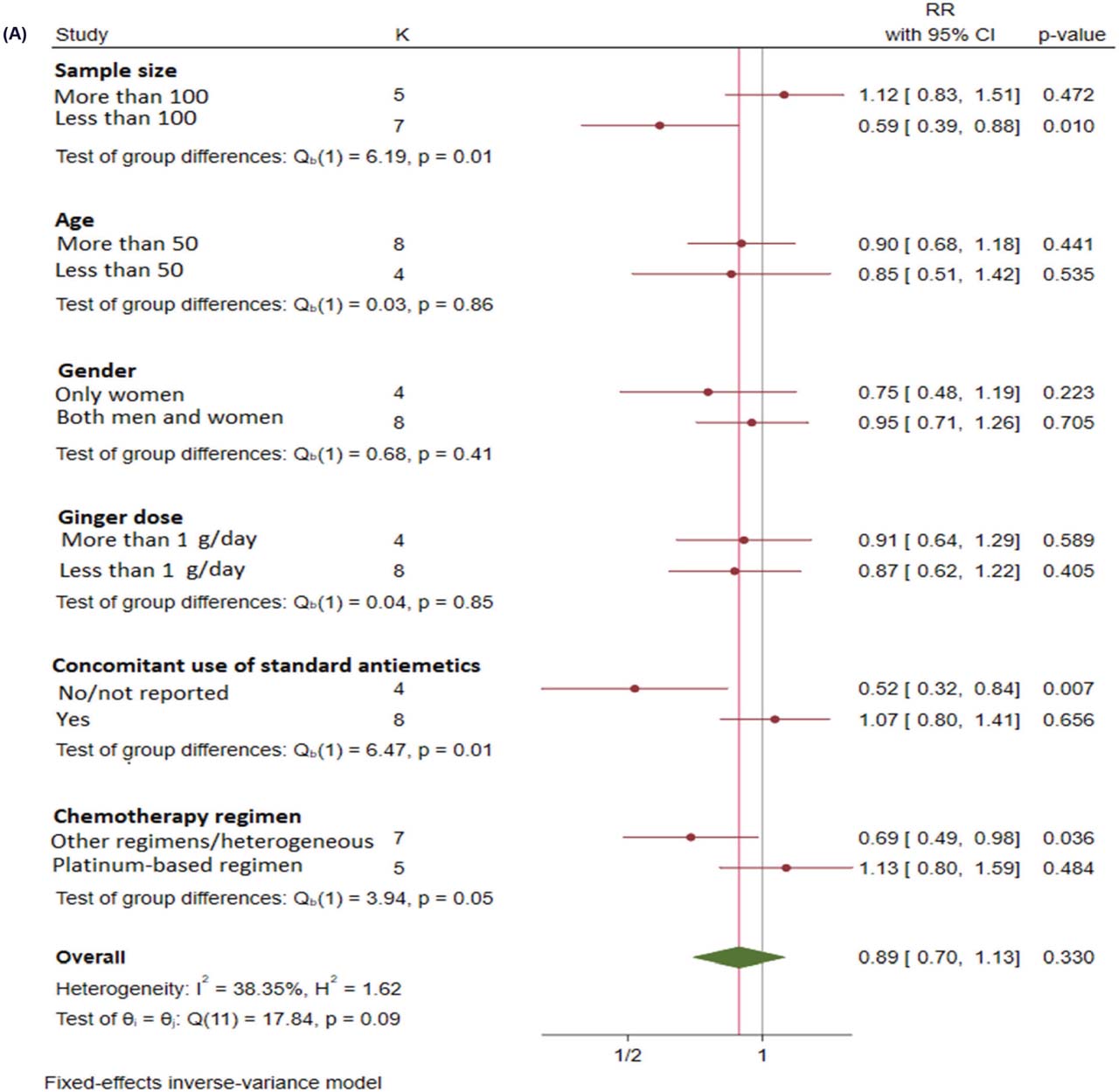
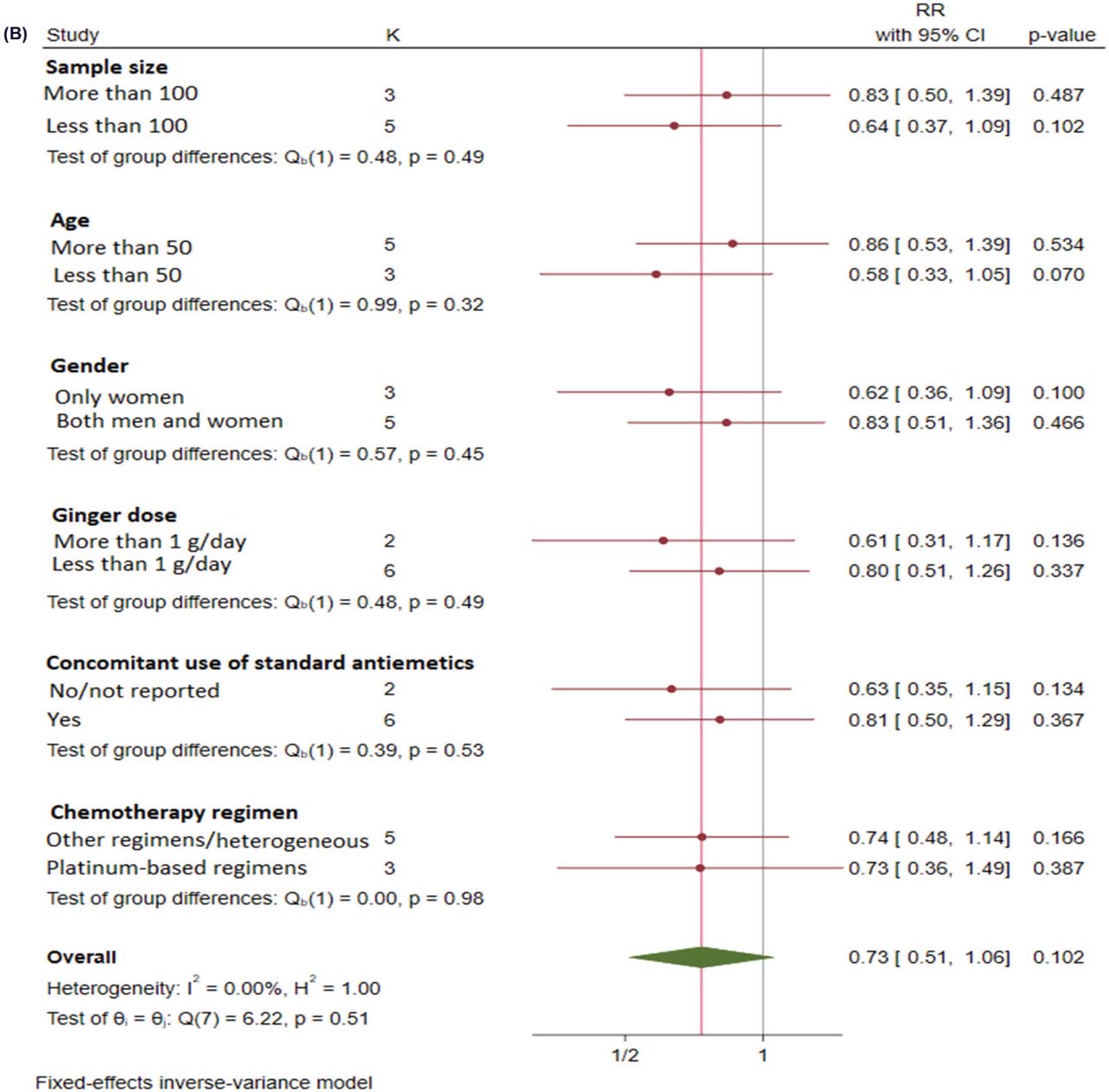
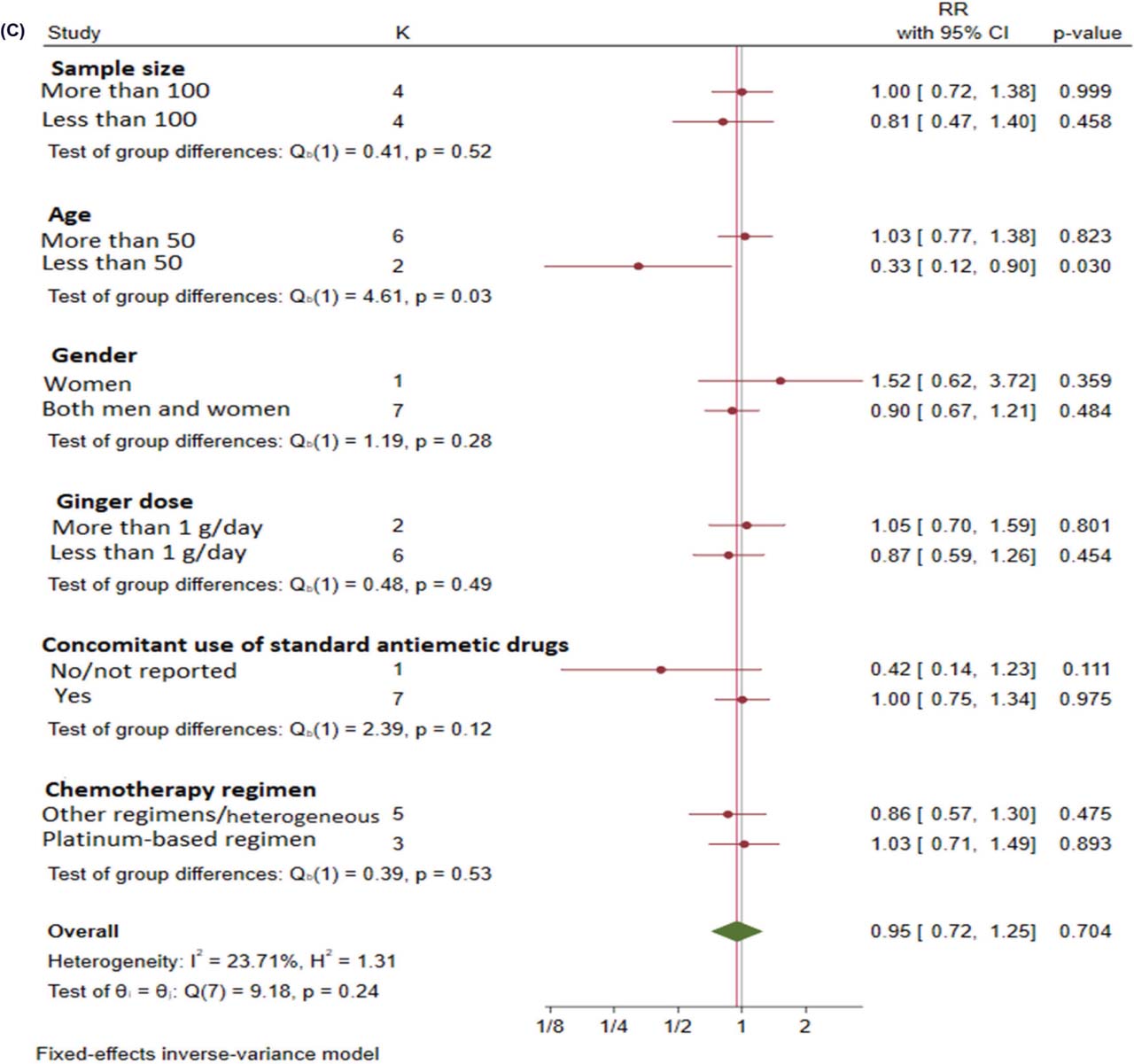
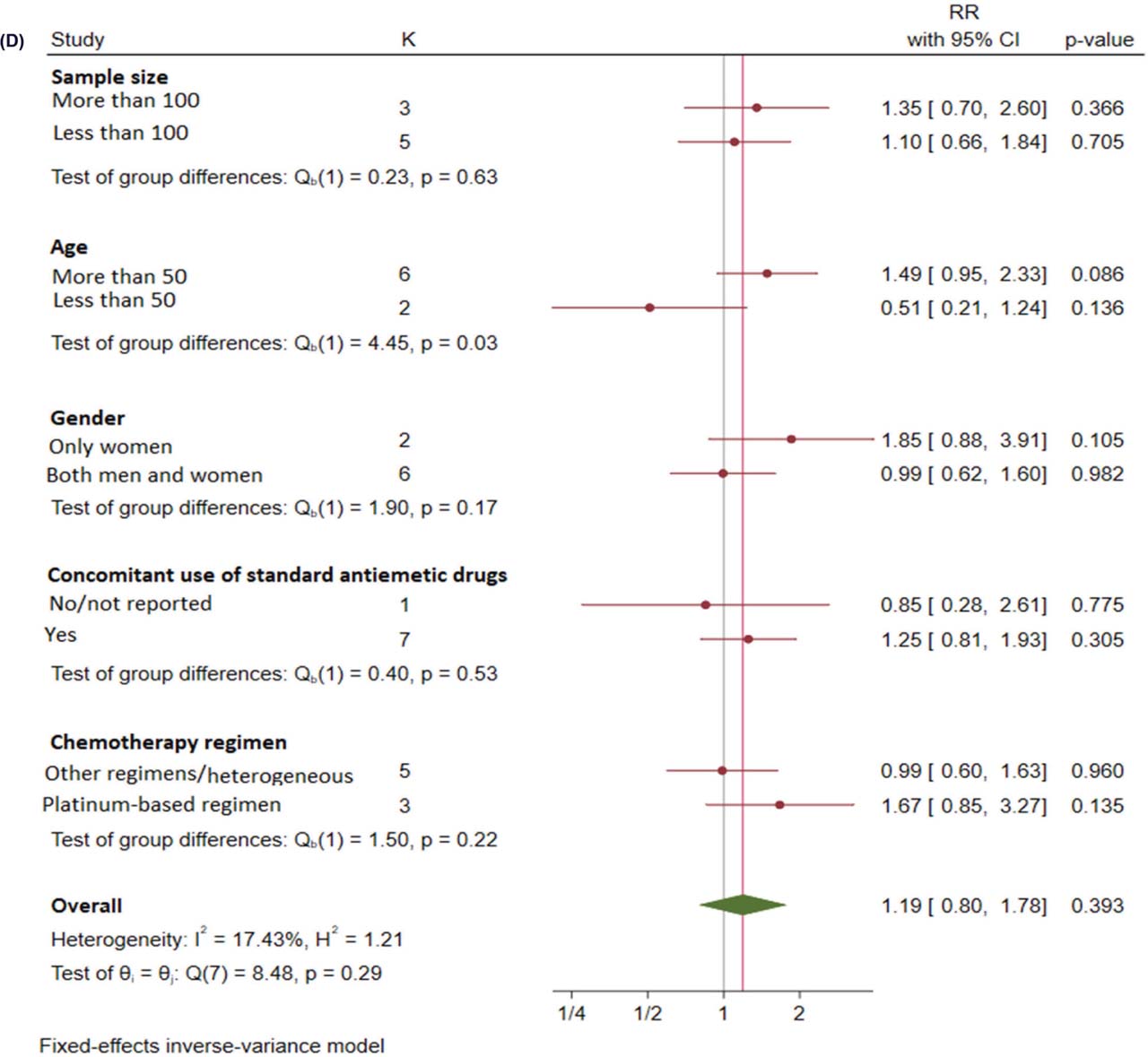
Supplementary Material 3.
(A) Subgroup analysis for acute nausea. (B) Subgroup analysis for acute vomiting. (C) Subgroup analysis for delayed nausea. (D) Subgroup analysis for delayed vomiting.
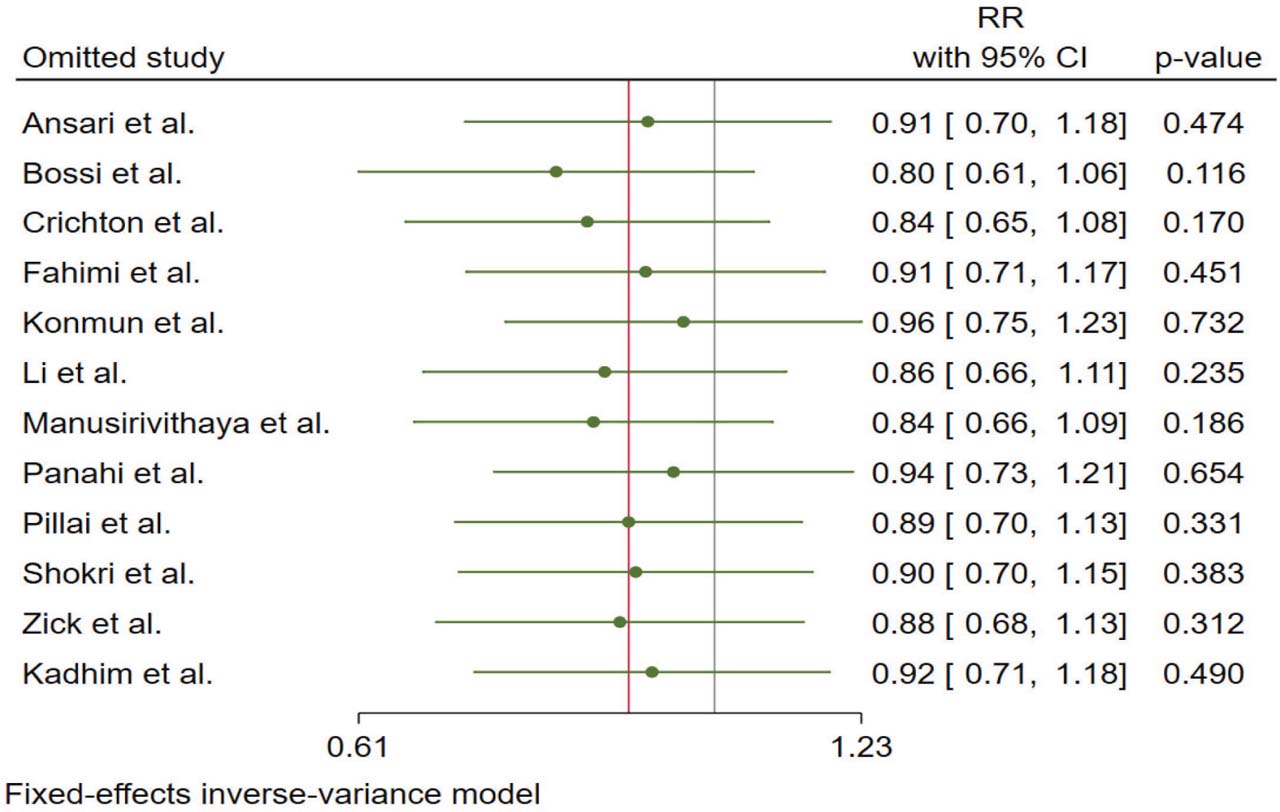
Supplementary Material 4.
Sensitivity analysis for acute nausea using the leave-one-out test.
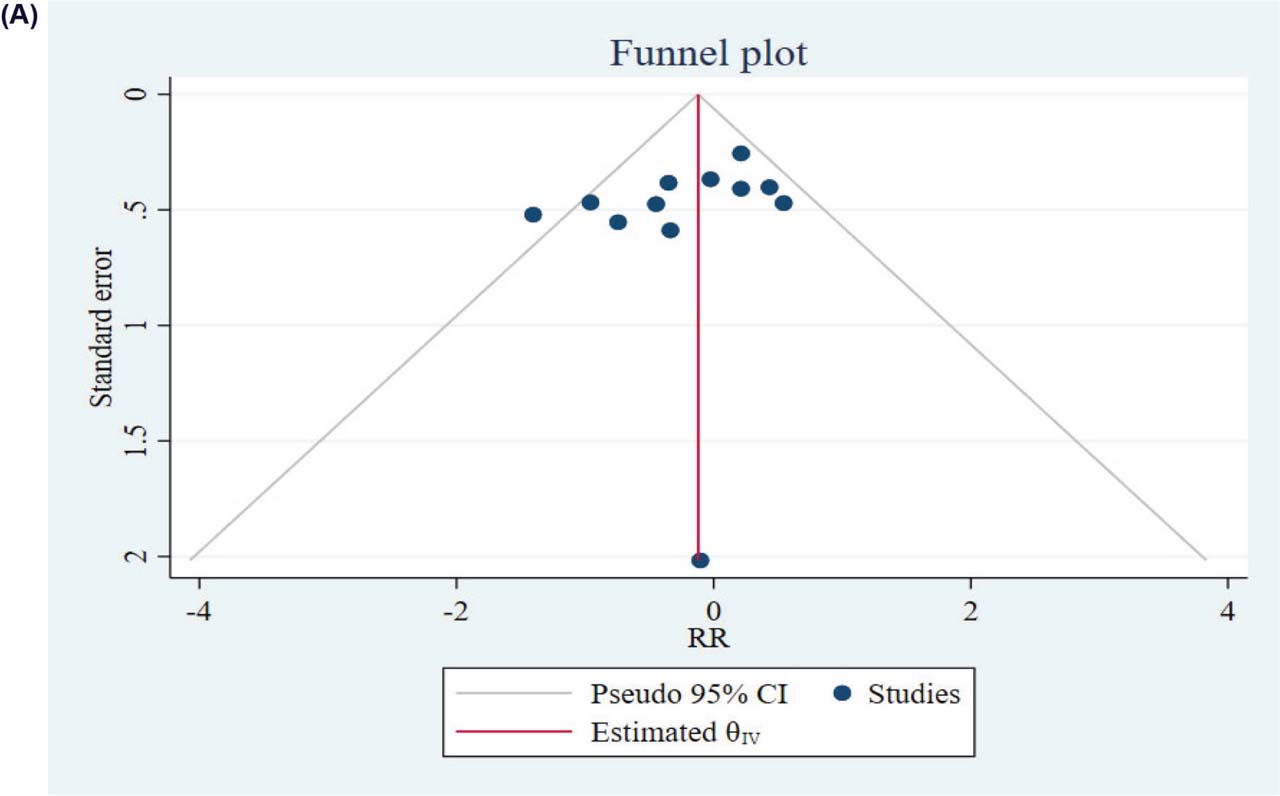
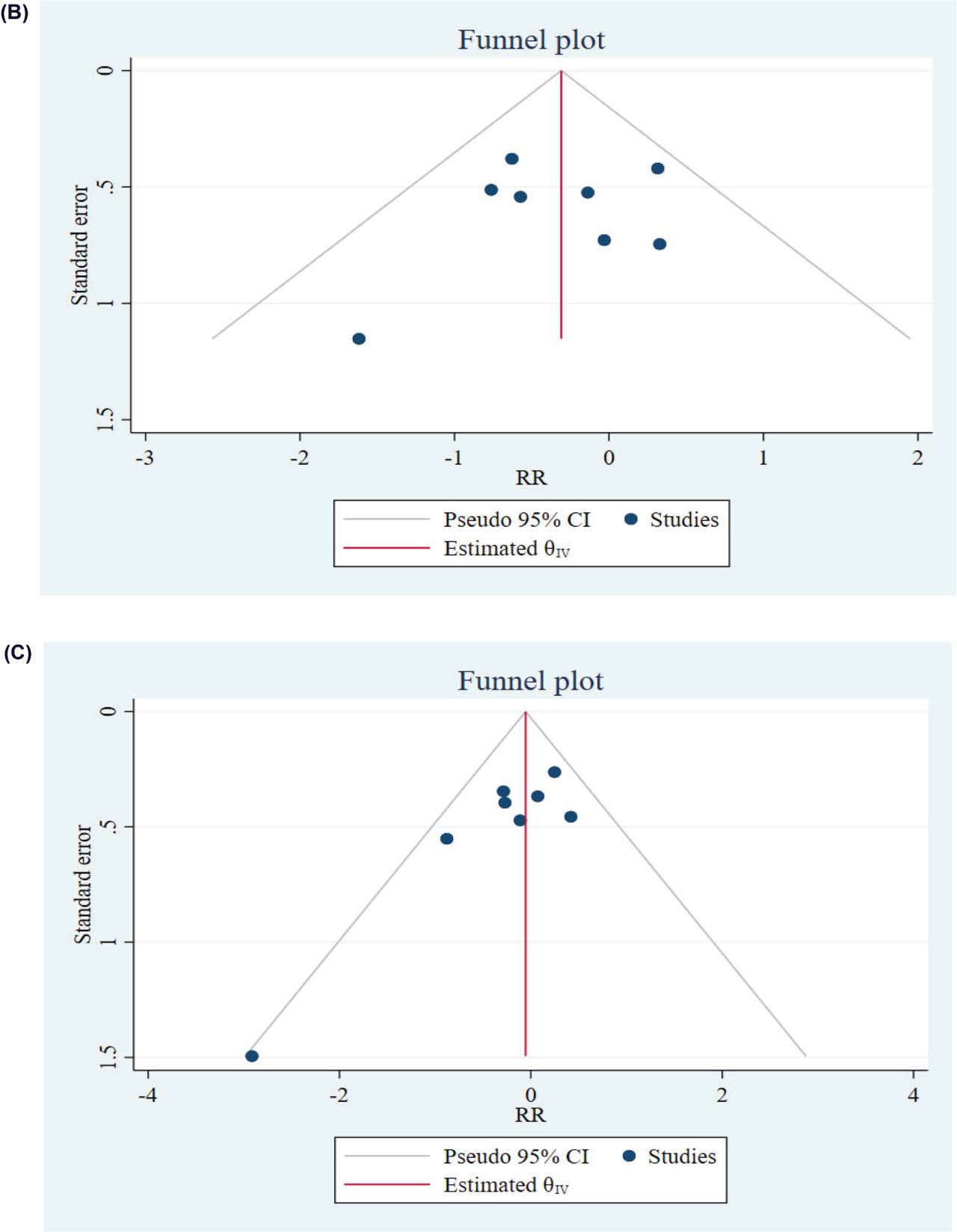
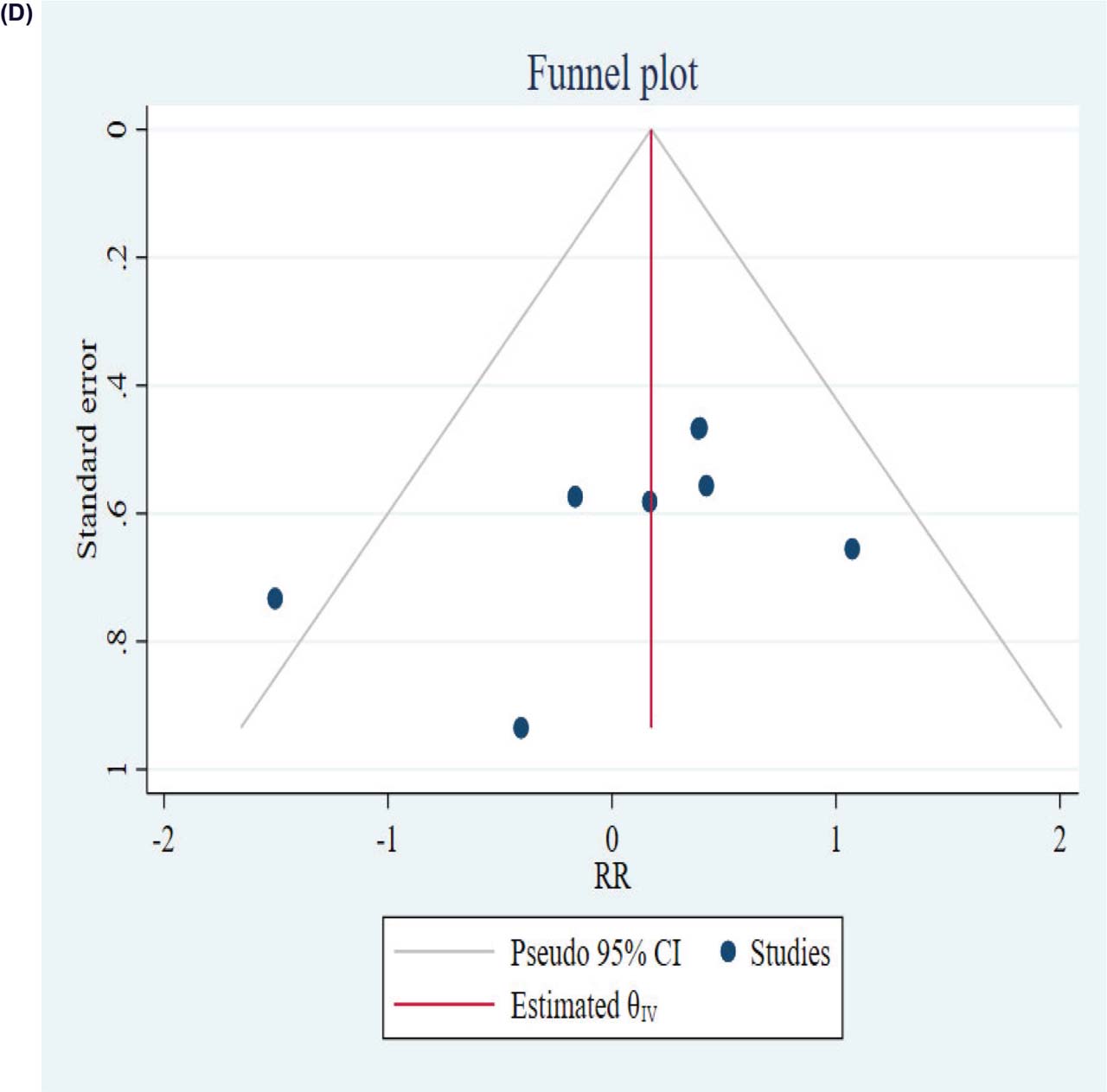
Supplementary Material 5.
(A) Funnel plot for visually assessing publication bias for acute nausea. (B) Funnel plot for visually assessing publication bias for acute vomiting. (C) Funnel plot for visually assessing publication bias for delayed nausea. (D) Funnel plot for visually assessing publication bias for delayed vomiting.