
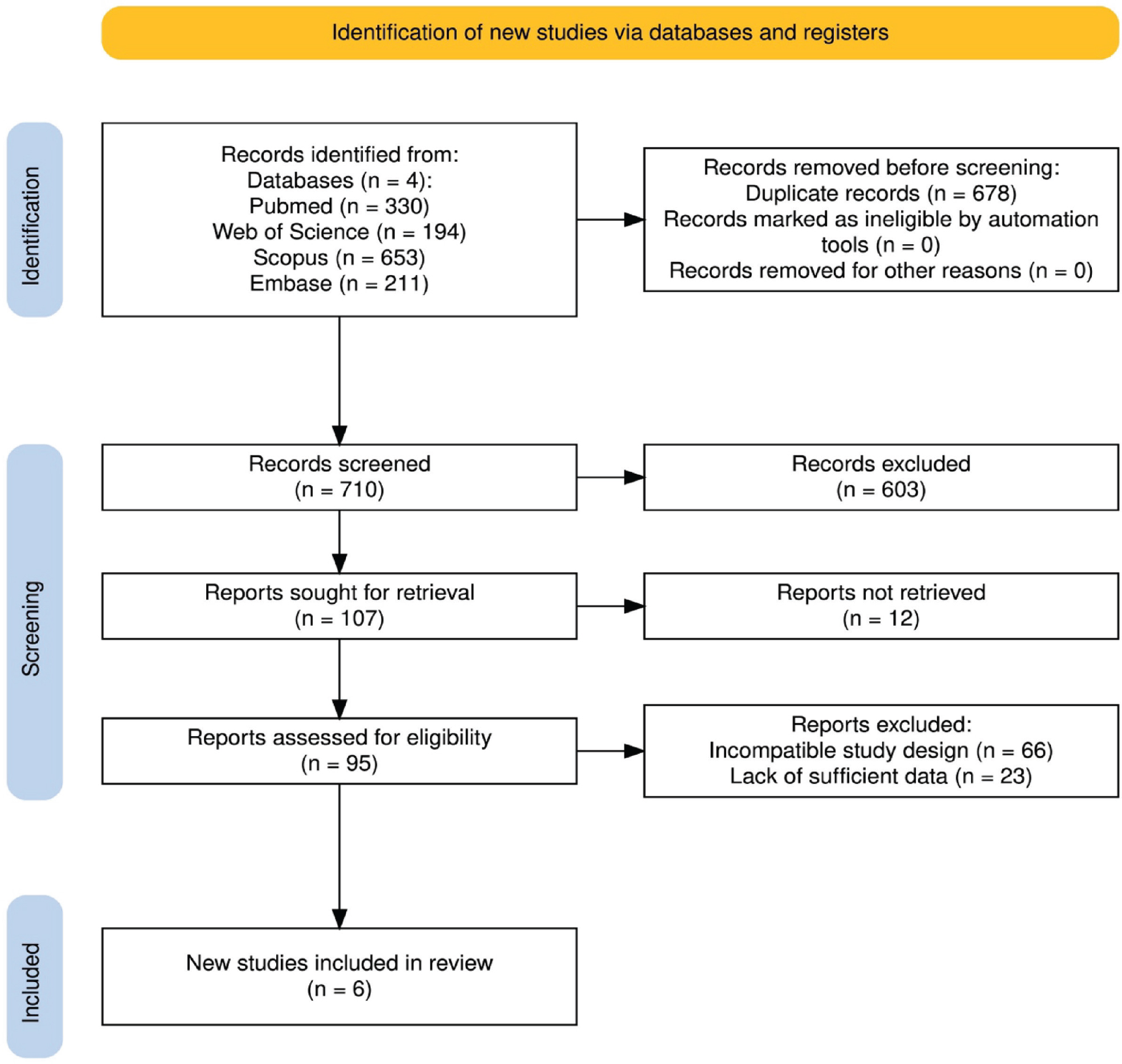
Figure 1.
PRISMA flow diagram for the study selection process for this meta-analysis.
Table 1.
Characteristics of the included papers
| Study characteristic | Location | Study design | Participants (mothers) | Fetus number | % Boys | Maternal iron assessment | Neonatal/infant assessment | Iron supplementation | Key findings |
|---|---|---|---|---|---|---|---|---|---|
| Hernández-Martínez et al. [7] | Spain | Prospective longitudinal | 216 | Singleton | 49.5% | SF andTS at 10-15, 24-27, and 33-34 weeks of gestation | NBAS at 48-72 h postpartum | Systematic iron supplementation from -week 15, mean dose 48.9 mg/d | ID in first/second trimesters weakly predicted NBAS ANS scores; in third trimester, predicted NBAS motor, state organization, and robustness/endurance scores. |
| Aranda et al. [22] | Spain | Prospective longitudinal | 210 | Singleton | 47.6% | Hb levels at third trimester and delivery | NBAS at 48-72 h postpartum | Systematic iron supplementation from -week 15, mean dose 43.9 mg/d | Hemoconcentration risk in third trimester related to decreased neonatal state regulation and alertness; at delivery, to decreased state regulation and poor robustness/endurance. |
| Berglund et al. [23] | Spain | Prospective observational | 331 | Singleton | 51.4% | Ferritin, Hb, transferrin saturation at 34 weeks and at delivery | Bayley III scales of neurodevelopment at 18 months | Iron supplementation at entry (34.4% of mothers) | Maternal ID at 34 weeks associated with lower composite motor scores at 18 months; ID at delivery associated with lower cognitive, receptive, expressive, and composite language scores. |
| Mireku et al. [11] | Benin, Africa | Prospective cohort | 636 | Singleton | N/A | Hb concentration at first and second ANC visits and at delivery | Mullen scales of early learning at 1 year | Oral iron and folic acid after first ANC visit | Inverted U-shaped relationship between maternal Hband infant GM function; Hb concentration between 90 g/L and 110 g/L appears optimal for early GM function; prenatal anemia associated with higher GM scores. |
| Menon etal. [15] | India | Cohort study | 211 (second trimester), 178 (third trimester) | Singleton | N/A | Hb, SF, sTfR at second and third trimester | Infant anthropometric data and neurobe-hav¡oral data at ~3 weeks postpartum | N/A | Infants of non-anemic mothers in the second trimester were heavier, taller and had larger head circumference. Infants of non-anemic mothers in third trimester had higher orientation scores. |
| Mireku et al. [24] | Benin, Africa | Prospective cohort | 636 | Singleton | N/A | Maternal ID was assessed through blood samples taken during the prenatal period | CBSF concentration, Mullen Scales of early learning at 1 year | Oral iron and folic acid after first ANC visit | No association between prenatal ID and CBSF levels or infant cognitive and motor development at 1 year of age. However, possession score and maternal education were related to cognitive development in the infants. |
Table 2.
Quality assessment table
| Study | 1 | 2 | 3 | 4 | 5 | 6 | 7 | 8 | 9 | Total stars |
|---|---|---|---|---|---|---|---|---|---|---|
| Hernández-Martínez et al. [7] | Yes | Yes | Yes | Yes | Yes | Yes | Yes | Yes | Yes | 9 |
| Aranda et al. [22] | Yes | Yes | Yes | Yes | Yes | Yes | Yes | Yes | Yes | 9 |
| Berglund et al. [23] | Yes | Yes | Yes | Yes | Yes | Yes | Yes | Yes | Yes | 9 |
| Mireku et al. [11] | Yes | Yes | Yes | Yes | Yes | Yes | Yes | Yes | Yes | 9 |
| Menon et al. [15] | Yes | Yes | Yes | Yes | Yes | - | Yes | Yes | Yes | 8 |
| Mireku et al. [24] | Yes | Yes | Yes | Yes | Yes | Yes | Yes | Yes | Yes | 9 |
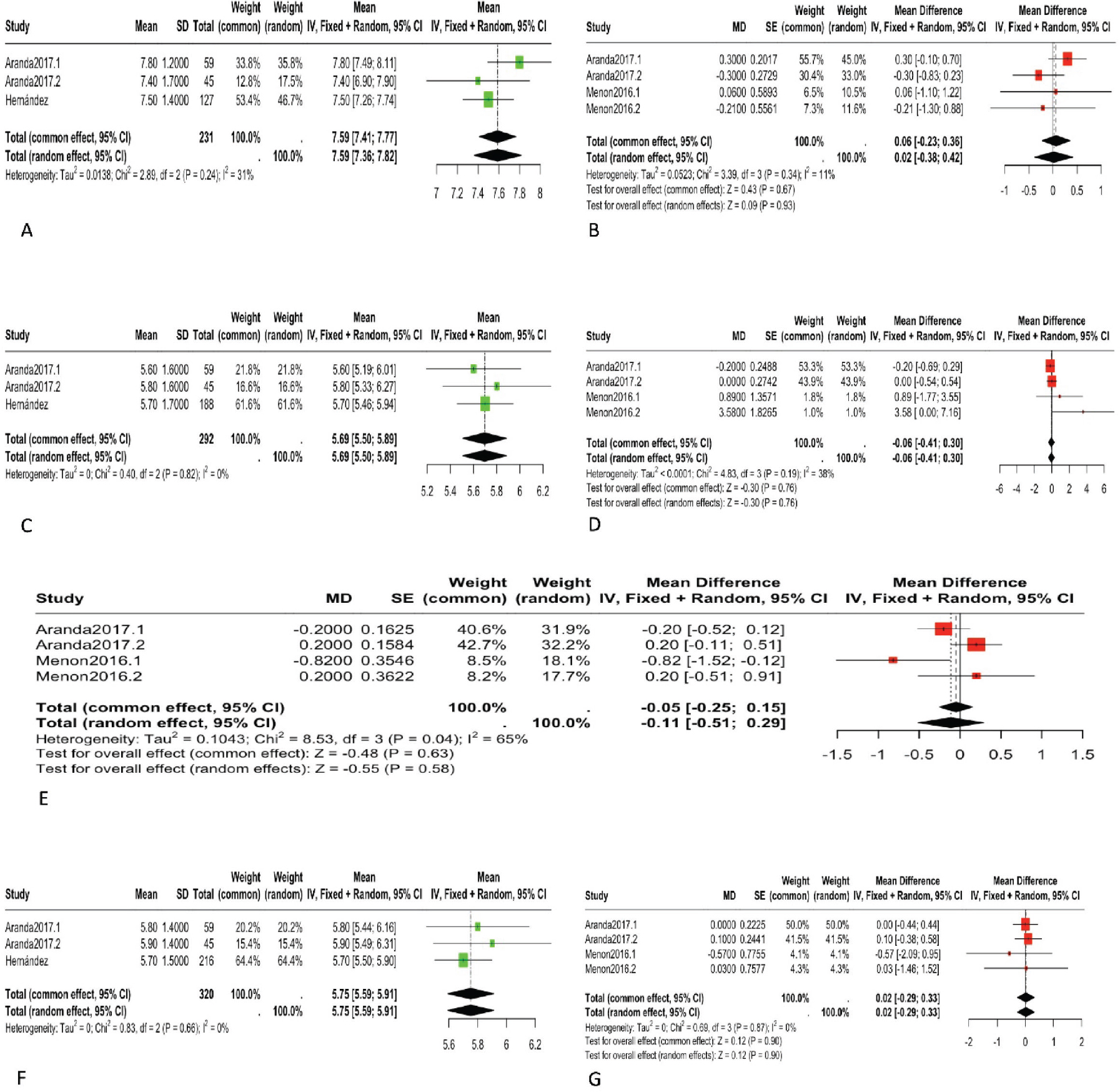
Figure 2.
Results of the NBAS meta-analysis (A) forest plot displaying NBAS habituation scores across the studied samples. (B) A comparison of habituation scores between neonates from mothers with or without anemia. (C) Forest plot illustrating NBAS orientation scores. (D) A comparison of orientation scores between neonates from anemic and non-anemic mothers. (E) Forest plot showing the range of state scores from the NBAS. (F) Forest plot depicting the regulation of state scores in the NBAS. (G) A comparison of the regulation of state scores between neonates from anemic and non-anemic mothers. CI, confidence interval; NBAS, Neonatal Behavioral Assessment Scale; SD, standard deviation; SE, standard error.
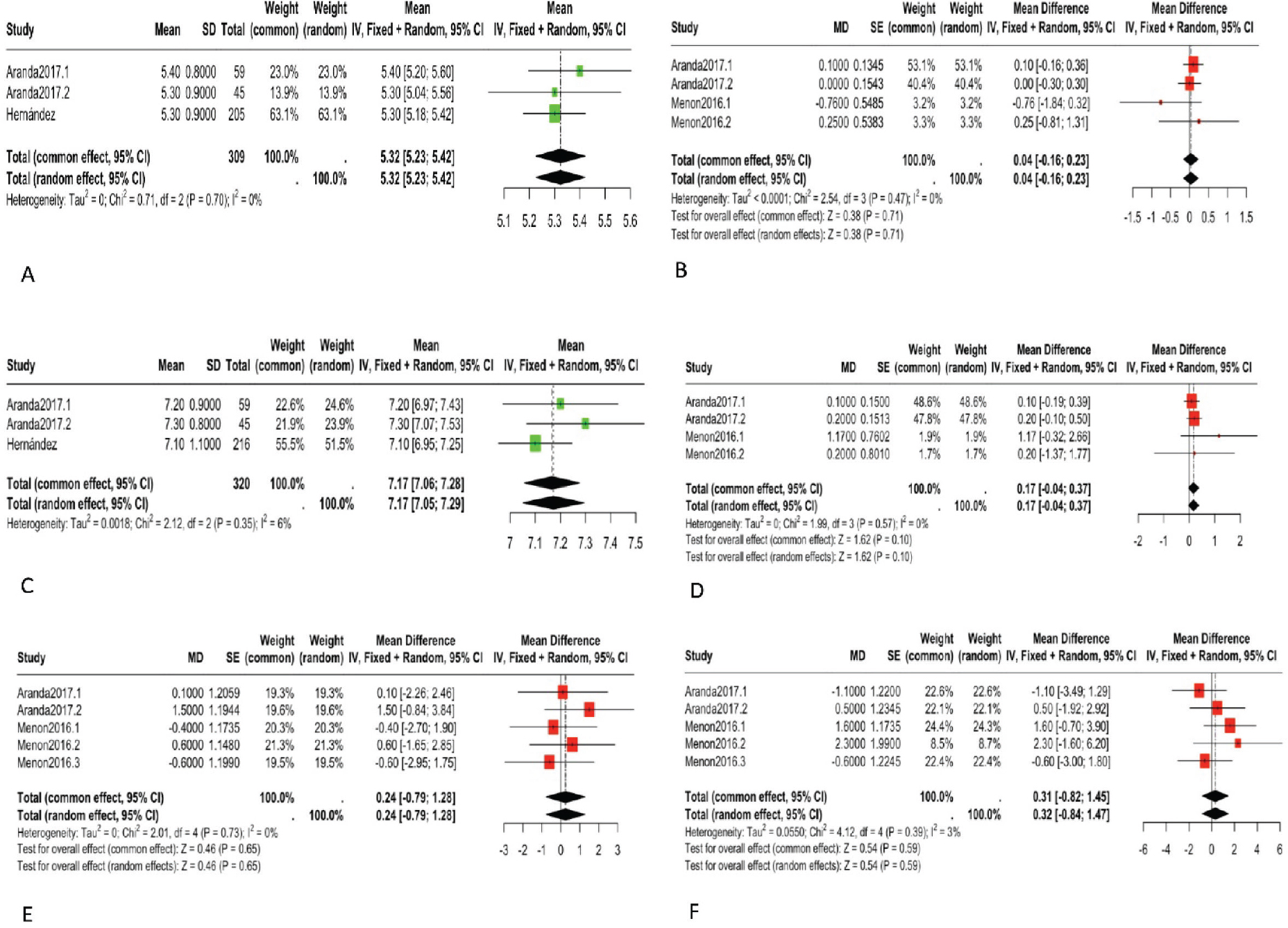
Figure 3.
Additional meta-analysis results for neurodevelopmental outcomes. (A) Forest plot for NBAS motor maturity scores obtained from the studies. (B) A comparison of motor maturity scores between neonates from mothers with or without anemia. (C) Forest plot representing NBAS autonomic stability scores. (D) A comparison of autonomic stability scores between neonates with anemic and non-anemic mothers. (E) Comparative analysis of ELC scores between anemic and non-anemic neonates. (F) A comparison of GM scores between neonates from anemic and non-anemic mothers. CI, confidence interval; ELC, early learning composite; GM, gross motor; MD, NBAS, Neonatal Behavioral Assessment Scale; SD, standard deviation; SE, standard error.