
Table 1.
KDIGO criteria for kidney disease
| General concept | ||

| ||
| Definition | Duration | |
| NKD | GFR > 60 mL/min/1.73 m2 | - |
| AKI |
AKI stage 1:
| <7 d |
| AKD |
| 0–90 d |
| CKD |
| >90 d |
[i] AKD, acute kidney disease; AKI, acute kidney injury; CKD, chronic kidney disease; eGFR, estimated glomerular filtration rate; ESKD, end-stage kidney disease; KDIGO, kidney disease improving global outcomes; NKD, no kidney disease; RRT, renal replacement therapy; SCr, serum creatinine concentration.
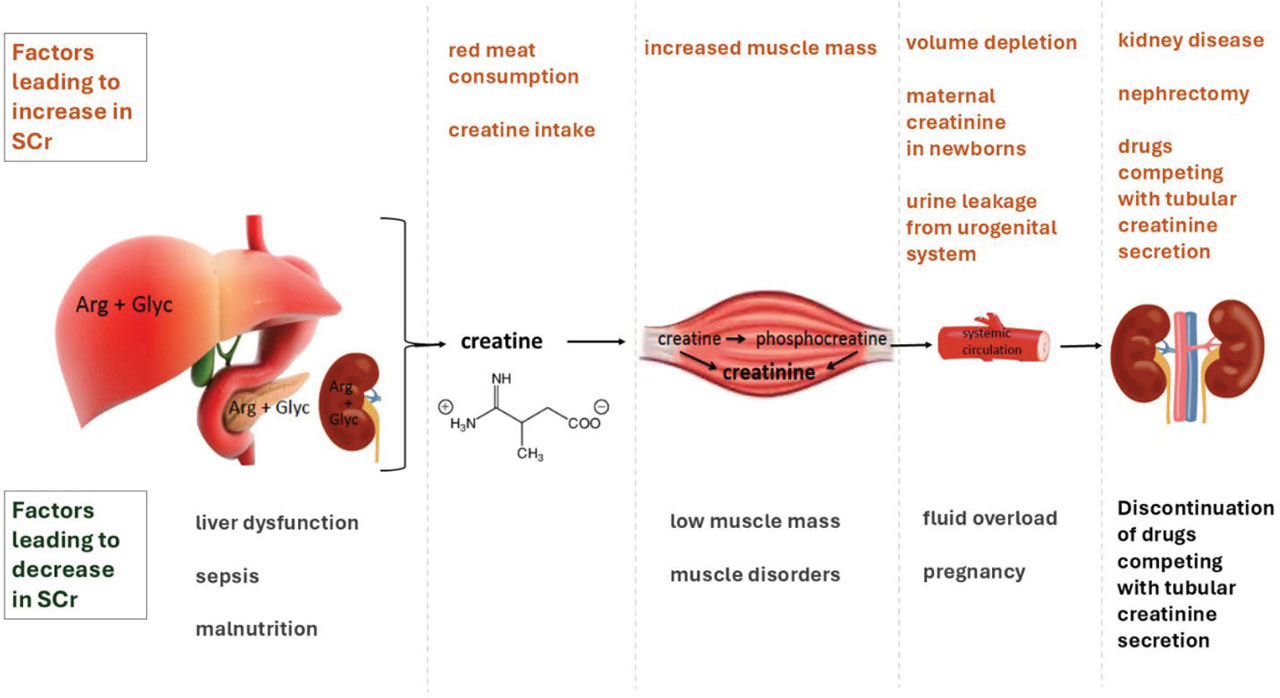
Figure 1.
Factors that affect SCr concentrations. SCr, serum creatinine.
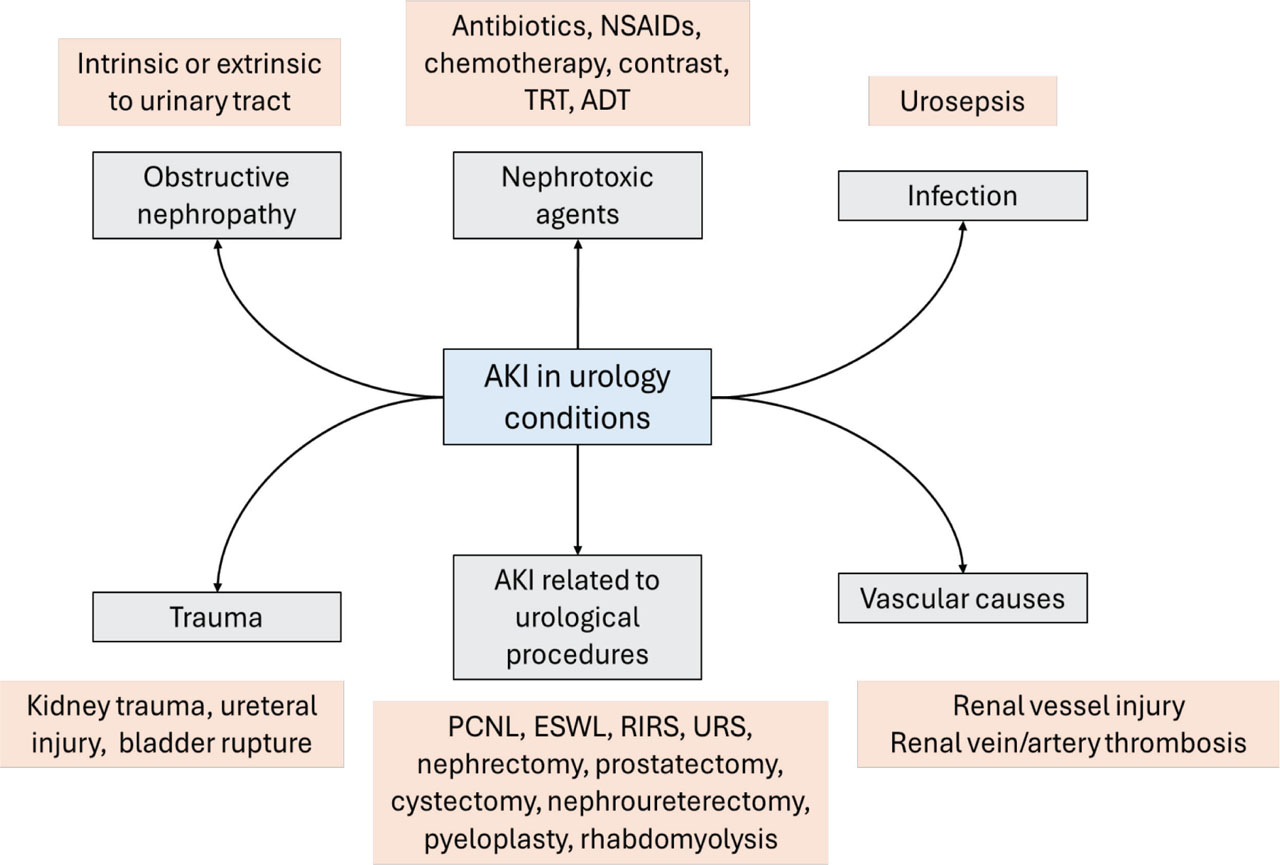
Figure 2.
Differential diagnoses of AKI in urological conditions. ADT, androgen deprivation therapy; AKI, acute kidney injury; ESWL; extracorporeal shockwave lithotripsy; NSAIDs, non-steroidal anti-inflammatory drugs; PCNL, percutaneous nephrolithotomy; RIRS, retrograde intrarenal surgery; TRT, testosterone replacement therapy; URS, ureteroscopy.
Table 2.
Anatomic locations and etiologies of urinary tract obstruction
| Anatomic locations and etiologies of urinary tract obstruction |
|---|
Kidney pelvis
|
Ureter
|
| Posterior to bladder Benign prostatic hypertrophy, cancer, clots |
Extrinsic to urinary system
|
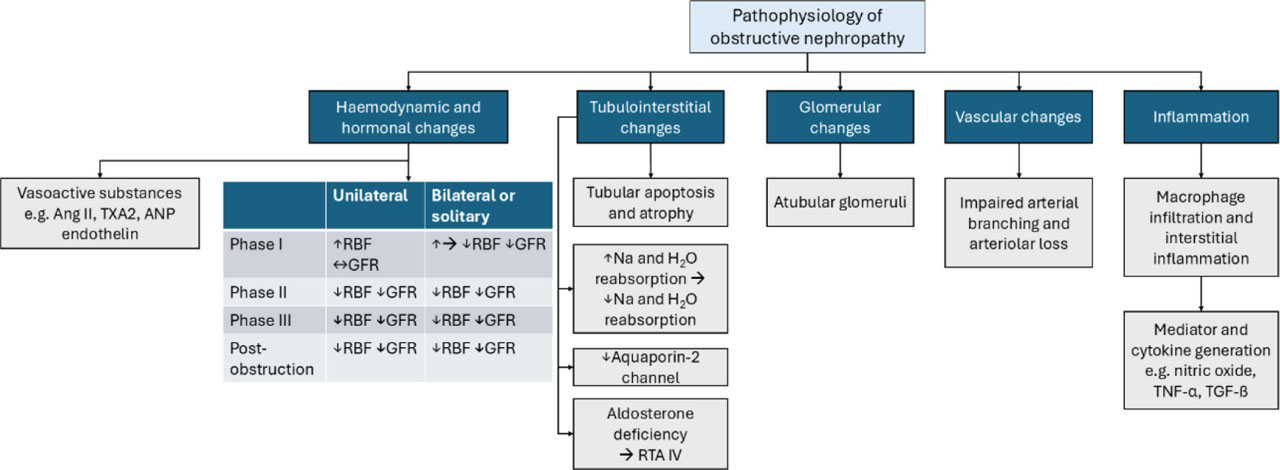
Figure 3.
Functional changes during obstruction. Ang II, angiotensin II; ANP, atrial natriuretic peptide; GFR, glomerular filtration rate; NO, nitric oxide; PGE2, prostaglandin E2; Ptubule, tubular hydrolic pressure; Rafferent, afferent arteriolar resistance; RBF, renal blood flow; Refferent, efferent arteriolar resistance; RTA, renal tubular acidosis; TNF-α, tumour necrosis factor α; TXA2, thromboxane A2.
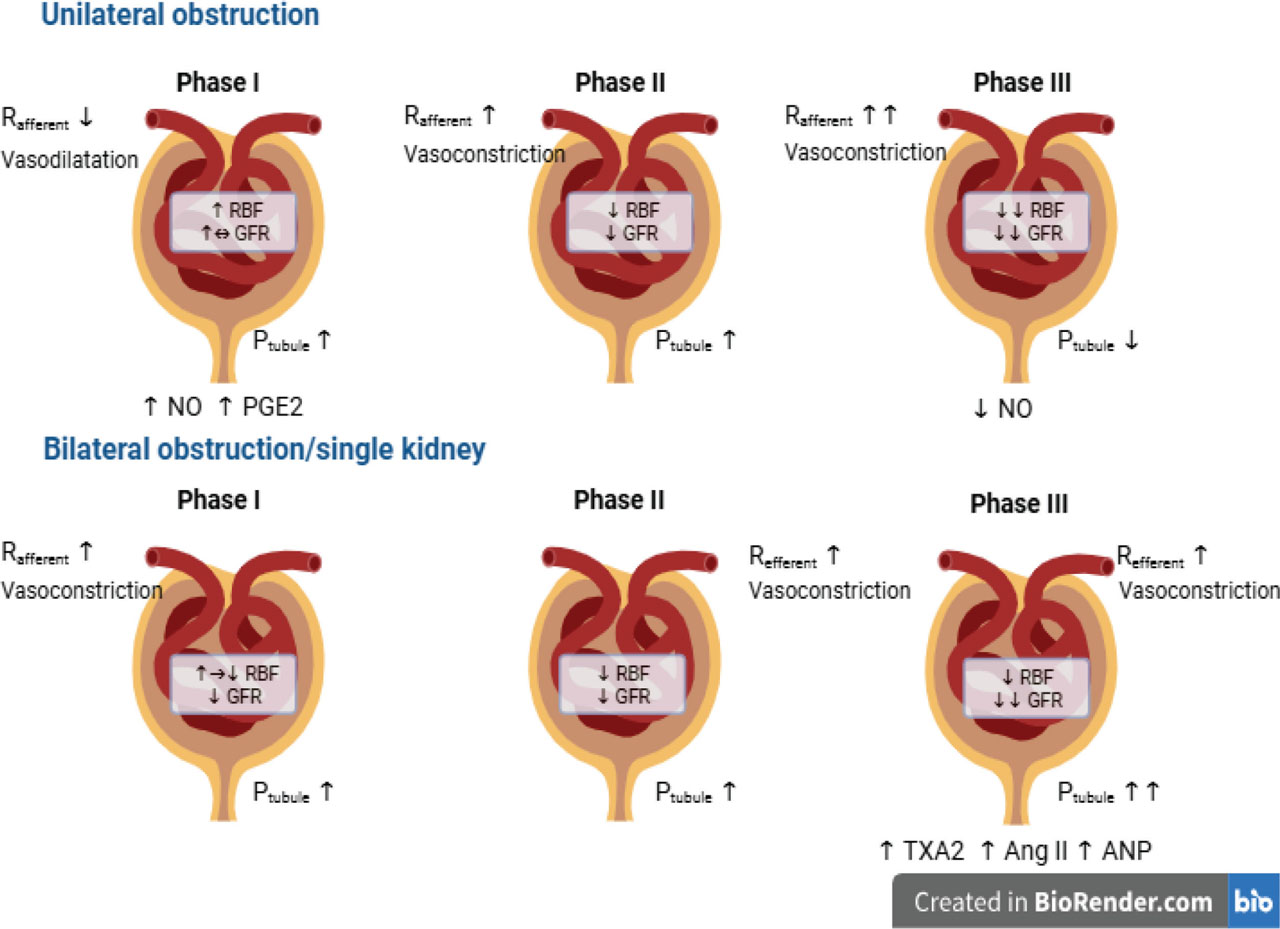
Figure 4.
Pathophysiology of obstructive nephropathy. Ang II, angiotensin II; ANP, atrial natriuretic peptide; GFR, glomerular filtration rate; Na, sodium; RBF, renal blood flow; RTA, renal tubular acidosis; TNF-α, tumor necrosis factor α; TGF-β, transforming growth factor β; TXA2, thromboxane A2.
Table 3.
Risk factors for AKI during urological procedures
| Pre-operative | Intra-operative | Post-operative |
|---|---|---|
|
|
|
[i] ACEI, angiotensin-converting enzyme inhibitors; AKI, acute kidney injury; ASA score, American Society of Anesthesiologists Physical Status Classification; BMI, body mass index; eGFR, estimated glomerular filtration rate; ERAS, enhanced recovery after surgery; LPN, laparoscopic partial nephrectomy; PCNL, percutaneous nephrolithotomy; RALRP, robot-assisted radial laparoscopic prostatectomy; RAPN, robot-assisted partial nephrectomy; RP, radical prostatectomy; WIT, warm ischemic time.